Harvard University May Have Lost $150 Million in Cryptocurrency Trading! Has Liquidated Ethereum and Significantly Reduced Bitcoin ETF Positions

marsbitPublicado em 2026-05-18Última atualização em 2026-05-18

Resumo

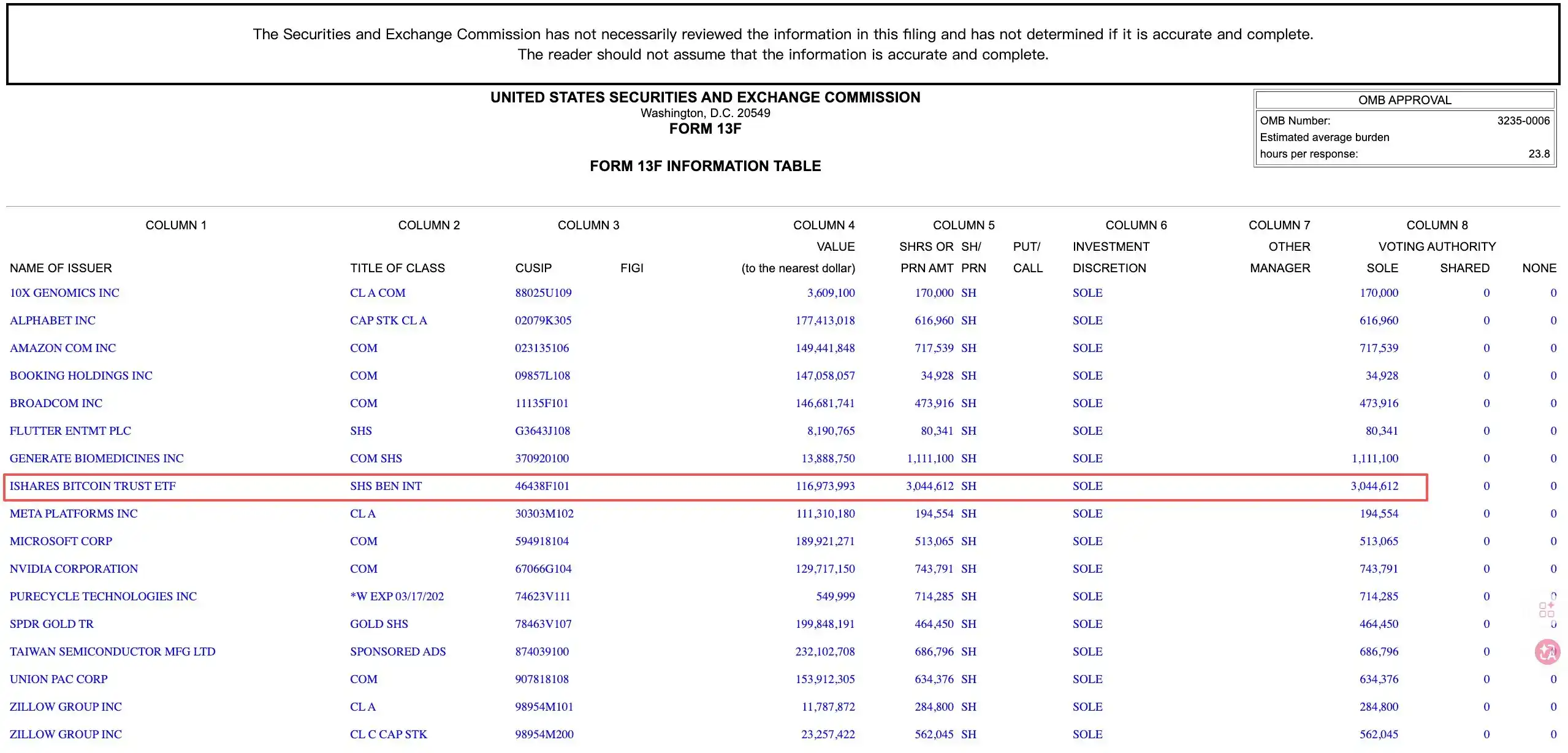
Harvard University's endowment fund, managed by Harvard Management Company (HMC), recently disclosed significant reductions in its cryptocurrency holdings. According to its latest 13F filing, HMC sold its entire position in the BlackRock Ethereum Spot ETF (ETHA) and reduced its stake in the BlackRock Bitcoin Spot ETF (IBIT) by 43% in Q1 2026. This marks a sharp reversal from its peak holdings of $443 million in crypto assets just two quarters prior, bringing the current value to approximately $117 million. Analysis suggests these sales likely resulted in substantial losses. Estimates indicate HMC's Bitcoin ETF trades incurred a roughly 28% loss (over $100 million), while its brief Ethereum position fell about 35% (over $30 million), totaling potential losses exceeding $150 million. The timing of HMC's trades—aggressively adding to Bitcoin near its all-time high in late 2025 and buying Ethereum just before a market downturn—has drawn criticism as potential "buying high and selling low." However, the context points to broader pressures. Harvard faced a $113 million operating deficit in FY2025 due to cuts in federal research funding and a significant tax increase on endowment income. With much of its portfolio locked in illiquid private equity and hedge funds, the highly liquid crypto ETFs presented the most straightforward assets to sell for liquidity and risk management. Furthermore, HMC's Bitcoin ETF holding had grown to 20% of its public portfolio by Q3 2025, prompting nec...

Last weekend, Harvard Management Company (HMC) filed its latest 13F holdings report with the U.S. Securities and Exchange Commission. Its holdings in the BlackRock Bitcoin Spot ETF (IBIT) shrank by 43% compared to the previous quarter, while the Ethereum ETF (ETHA) purchased during the same period was completely liquidated.

In just two quarters, Harvard's public holdings in crypto assets fell from a peak of $443 million to about $117 million. As one of the top-tier institutions managing the world's largest university endowment fund, this move has sparked market questioning: Can even top talent escape the trap of buying high and selling low?

In fact, Harvard's connection with cryptocurrency goes far beyond this. As early as 2018, several Ivy League endowment funds showed keen interest in blockchain technology through venture capital funds focused on cryptocurrencies. It was reported that Harvard, Yale, Brown, and the University of Michigan began quietly purchasing Bitcoin through exchanges like Coinbase around 2019.

Among them, HMC first publicly disclosed its holdings in Q2 2025. According to the 13F filing submitted in August of that year, HMC held approximately 1.9 million shares of IBIT, valued at about $117 million, and simultaneously established a position in the Gold ETF (GLD) worth about $102 million.

Matt Hougan, CIO of Bitwise, interpreted this set of operations as a "depreciation hedge trade," simultaneously betting on Bitcoin and gold to hedge against the risk of global currency oversupply. IBIT thus became Harvard's fifth-largest public holding, surpassing its holdings in Alphabet, Google's parent company.

Entering the third quarter, HMC made a significant increase in its position. As of September 30, 2025, its IBIT holdings expanded to approximately 6.81 million shares, valued at about $443 million, a quarter-over-quarter increase of over 257%. IBIT surpassed Microsoft, Amazon, and Nvidia to become the single largest holding in HMC's publicly disclosed portfolio, accounting for about 20% of its public U.S. stock portfolio.

At that time, facing persistently low expected returns from traditional assets, many university endowment funds were quietly adjusting their investment strategies.

Kim Lew, CEO of Columbia Investment Management Company, stated that expected returns and alpha from traditional asset classes would both be compressed, forcing institutions to move further out on the risk curve. Carlos Rangel of the W.K. Kellogg Foundation bluntly said that the traditional foundation model would be difficult to sustain if an 8% return rate couldn't be achieved.

Simultaneously, even Harvard's own economics professors couldn't sit still. In August 2025, Kenneth Rogoff, former IMF Chief Economist and Harvard economics professor, publicly reflected on his mistaken 2018 prediction—he had predicted that Bitcoin was more likely to fall to $100 than rise to $100,000 within a decade, yet at that time, the Bitcoin price had already exceeded $113,000, representing over a 10-fold increase since his prediction.

Rogoff admitted he had been "overly optimistic about the prospects for sensible crypto regulation in the United States" and had underestimated the demand support for Bitcoin in the global underground economy. The public admission of error by such an academic figurehead provided an additional layer of emotional endorsement for this wave of institutional buying. And Bitcoin subsequently approached its historical peak of $126,000 in October 2025.

In Q4 2025, after the market peaked and began to retreat, HMC adjusted its positions accordingly. IBIT holdings decreased by about 21%, falling to approximately 5.35 million shares valued at about $266 million. Simultaneously, the BlackRock Ethereum Spot ETF (ETHA) appeared for the first time in the report, with a holding of about 3.87 million shares valued at approximately $86.8 million.

As disclosed by Bloomberg ETF analyst James Seyffart, hedge funds were net sellers of Ethereum ETFs this quarter due to the collapse of basis trade returns, becoming the largest net sellers. Harvard precisely entered the market against the trend during this time window, becoming the largest new buyer of Ethereum ETFs for the quarter.

The latest disclosed holdings for Q1 2026 show that ETHA, which had just been established less than a quarter ago, has been completely liquidated. Meanwhile, HMC significantly reduced its IBIT holdings again, cutting its position by about 43%, leaving about 3.04 million shares valued at about $117 million. IBIT has also fallen out of Harvard's top five holdings, surpassed in turn by TSMC, Alphabet, Microsoft, and SPDR Gold Trust.

According to estimates by well-known crypto KOL Chen Jian, HMC's average purchase price for IBIT was around $110,000, with an average selling price of about $80,000, resulting in a loss of approximately 28%, with a paper loss on the Bitcoin portion exceeding $100 million. Regarding Ethereum, the average purchase price for ETHA was about $4,000, and it was liquidated at around $2,600, estimated to incur a single-quarter loss of over $30 million (-35%). Combined, these crypto operations are suspected to have resulted in losses exceeding $150 million.
Is this chasing rallies and selling on dips, or routine institutional rebalancing?

One perspective argues that HMC made its largest-scale increase in position when Bitcoin was near its historical high, then sold more as it fell lower, drawing a classic curve of buying high and selling low. The Ethereum position was even completely liquidated less than a quarter after purchase, almost capturing the entire decline. This is typical behavior of chasing rallies and selling on dips.

Another perspective points out that by the end of Q3, IBIT already accounted for 20% of HMC's public portfolio, a clearly excessive concentration. Subsequent reductions were necessary actions from a risk control standpoint. Moreover, HMC still maintains a base position of about $117 million in IBIT, indicating it hasn't completely exited the market.

However, this round of position reduction must also consider the current real-world pressures Harvard is facing.

Last October, Harvard's financial report for fiscal year 2025 showed that due to the Trump administration halting almost all federal research funding in the spring, Harvard incurred an annual operating loss of $113 million on total revenue of $6.7 billion, marking the first budget deficit since the pandemic.This deficit represents 1.7% of total revenue, with the operating shortfall standing in stark contrast to the $45 million surplus in 2024.
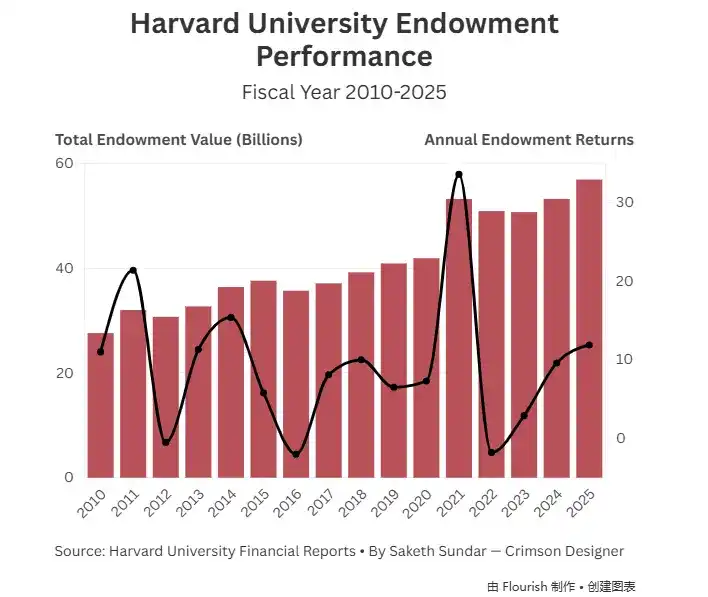
The endowment fund contributes about 37% of Harvard's operating income. In fiscal 2025, it provided approximately $2.5 billion in spending support, but 80% of these funds are restricted by donor purposes and cannot be reallocated at will.

Simultaneously, the Republican tax bill formally signed into effect in July 2025 significantly raised the maximum tax rate on endowment income from 1.4% to 8%. Harvard estimates this will result in an additional annual tax burden of approximately $300 million.

Under such pressure, the asset structure itself determines where cuts are easiest to make.

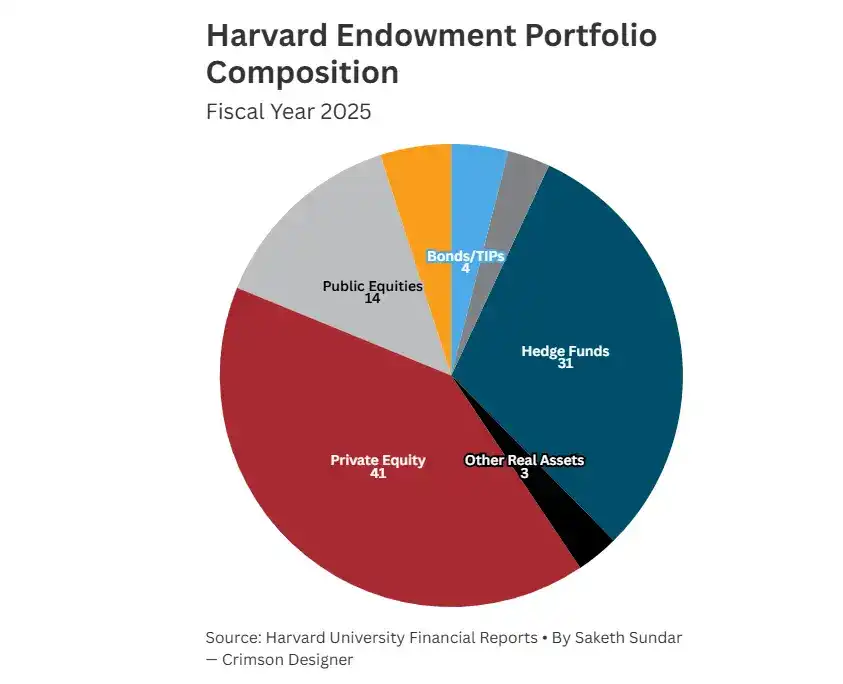
Private equity accounts for about 41% of Harvard's endowment fund, and hedge funds about 31%. These assets have long lock-up periods and extremely high costs for discounted sales. IBIT and ETHA, as intraday-tradable public market ETFs, offer the strongest liquidity and lowest liquidation costs, naturally making them the first targets for adjustment.
Furthermore, N.P. Narvekar, the current CEO of HMC, has revealed plans to retire around 2027 and is currently discussing succession arrangements with the board. In an environment where fiscal pressure, political uncertainty, and leadership transition overlap, holding a large-scale, highly volatile crypto position becomes an additional reputational risk.

In contrast to Harvard's retreat are the distinctly different choices of other institutions. Among them, the Abu Dhabi sovereign fund Mubadala continued to increase its IBIT holdings by about 16% in Q1 2026, raising its position to about $566 million, marking its fifth consecutive quarter of increasing its Bitcoin ETF stake.

As another university endowment fund, Dartmouth maintained its IBIT position unchanged, swapped its Ethereum ETF for a staking version, and added approximately $3.67 million in the Bitwise Solana Staking ETF, becoming one of the first U.S. university endowment funds to extend its crypto allocation beyond Bitcoin and Ethereum.

Brown University kept its 212,500 IBIT shares unchanged, while Emory University exited its small IBIT position, instead increasing its holdings in the Grayscale Bitcoin Mini Trust.

Overall, Harvard's round of operations is the result of the combined effects of fiscal pressure, liquidity needs, and triggered risk budgets, making it difficult to simply attribute it to chasing rallies and selling on dips.

When the world's top university endowment fund enters the crypto market, it does not do so with a crypto-native belief-based approach, but rather with Wall Street's risk-ledger logic. Crypto ETF products certainly provide an institutional entry point, but they also bring institutional-style selling pressure during risk-off periods.


Perguntas relacionadas

QAccording to the article, what was the total estimated loss from Harvard Management Company's cryptocurrency trades?

AThe estimated total loss from HMC's crypto trades was over $150 million. This comprises a loss of over $100 million on Bitcoin (IBIT) and a loss of over $30 million on Ethereum (ETHA).

QWhat were the two main opposing interpretations of HMC's trading activity in the article?

AThe two main interpretations are: 1) That it was classic 'buying high and selling low' behavior, as HMC increased its Bitcoin position near the market peak and then sold as prices fell. 2) That it was a necessary risk control and portfolio rebalancing action, especially after Bitcoin ETF holdings reached 20% of HMC's public portfolio, and that the sales were motivated by liquidity needs.

QWhat specific financial and political pressures did Harvard face that may have influenced its decision to sell its cryptocurrency holdings?

AHarvard faced several pressures: 1) A $113 million operating deficit in fiscal year 2025 due to halted federal research funding. 2) A significant increase in the endowment tax rate from 1.4% to 8%, adding an estimated $300 million in annual tax liability. 3) The liquidity of the cryptocurrency ETFs made them the easiest assets to sell to raise cash, compared to illiquid private equity and hedge fund holdings.

QHow did the trading strategy of other institutions, like Mubadala and Dartmouth, contrast with Harvard's in Q1 2026?

AIn contrast to Harvard's sell-off, Mubadala (Abu Dhabi's sovereign fund) increased its IBIT holdings by about 16% in Q1 2026. Dartmouth College's endowment maintained its IBIT position unchanged, swapped its Ethereum ETF for a staking version, and added a Bitwise Solana Staking ETF, expanding its crypto exposure.

QWhat does the article suggest about how traditional institutions like Harvard approach the cryptocurrency market?

AThe article suggests that traditional institutions like Harvard do not enter the crypto market based on 'crypto-native' belief. Instead, they use a 'Wall Street risk ledger' logic. While crypto ETFs provide an entry point for institutions, they also become a source of institutional selling pressure when these entities need to de-risk or rebalance their portfolios.

Leituras Relacionadas

BNB Chain Releases Research Report, Exploring Post-Quantum Cryptography Migration Path for BSC

BNB Chain, a leading Layer-1 blockchain ecosystem, has released a research report exploring the potential migration path for BNB Smart Chain (BSC) to post-quantum cryptography. The study evaluates replacing traditional cryptographic systems with quantum-resistant alternatives, specifically examining the use of ML-DSA-44 for transaction signing and pqSTARK for aggregating validator consensus signatures. While quantum computers are not currently a practical threat to existing blockchain cryptography, the research represents a proactive effort to ensure long-term network security and infrastructure resilience. The report assessed several core areas of the BSC tech stack, including post-quantum transaction signing, validator signature aggregation, transaction validation, public key storage, and network performance under increased data loads. A key finding is that achieving post-quantum readiness is technically feasible today but requires significant trade-offs in scalability. Test data indicates: • Transaction size would increase from ~110 bytes to ~2.5 kilobytes. • Block size would grow from ~110 kilobytes to ~2 megabytes. • Native transfer TPS would decrease from 4,973 to 2,997. The primary performance bottleneck is not signature verification itself, but the increased network transmission overhead caused by larger transaction and block sizes. Conversely, the pqSTARK aggregation technology proved highly efficient, compressing validator signatures by an approximately 43:1 ratio, which helps manage consensus-layer overhead. The report notes that post-quantum alternatives for areas like P2P handshakes and KZG commitments were not within the scope of this evaluation and require further research and broader ecosystem coordination. BNB Chain emphasizes this work is a research-oriented exploration and not a response to any imminent security threat.

marsbitHá 29m

BNB Chain Releases Research Report, Exploring Post-Quantum Cryptography Migration Path for BSC

marsbitHá 29m

After Developer Numbers Halved: Crypto Isn't Dead, It's Just Giving Up Talent to AI

The title "After a 50% Drop in Developer Count: Crypto Isn't Dead, It's Just Ceding Talent to AI" suggests a shift, not an end. The article analyzes GitHub data showing a significant drop in overall Crypto developer activity from a peak of 45K monthly active developers in 2022 to about 23K in 2026. However, this masks a deeper trend of "talent deleveraging." The exodus consists mainly of newcomers who entered during the bull market for hype-driven roles (e.g., NFT contracts, forked DeFi protocols), with over 50% of developers with less than one year of experience leaving. In contrast, established developers (2+ years of experience) have hit record highs, contributing roughly 70% of the code. They are consolidating in ecosystems with real users and revenue, like Bitcoin and Solana. These experienced builders possess unique skills forged in Crypto's "code is law" environment: the ability to build trust and functional systems from scratch in the absence of external authority or rules, with zero tolerance for error. The article argues that AI's scaling faces structurally similar trust, coordination, and verification problems—particularly regarding compute aggregation, multi-agent incentive alignment, and autonomous payments. Crypto builders are already applying these skills in AI. Examples include CoreWeave (mining to AI compute), OpenRouter (NFT marketplace routing to AI model routing), and projects like Hyperbolic (using crypto-native mechanisms for decentralized compute verification) and EigenLayer (applying restaking logic to AI agent governance). Stablecoin infrastructure is becoming critical for AI agent micro-payments (e.g., x402 protocol). The role of these builders is evolving from writing smart contracts to "designing trusted mechanisms for autonomous AI systems." This shift is reflected in new hiring trends at major exchanges and significant venture capital flowing into the crypto-AI convergence (e.g., funds from Paradigm, Haun Ventures). The article concludes that while developer numbers have halved, the core density of talent has increased, and their uniquely cultivated skills are finding a new, larger stage in the AI era.

marsbitHá 39m

After Developer Numbers Halved: Crypto Isn't Dead, It's Just Giving Up Talent to AI

marsbitHá 39m

After the Developer Count Halved: Crypto Is Not Dead, It's Just Ceding Talent to AI

Following a significant decline in the total number of open-source crypto developers, from a peak of 45K in 2022 to approximately 23K by 2026, this article argues the industry is undergoing a "talent deleveraging" rather than a collapse. The exodus primarily consists of newcomers who entered during the bull market, while the core of experienced developers (2+ years) has grown to a record high, contributing around 70% of code. These established builders are concentrating in ecosystems with real users and revenue, like Bitcoin and Solana. The article posits that crypto has cultivated a unique skill set in building trustless, autonomous systems with near-zero tolerance for error—a capability now finding high demand in the AI era. As AI scales, it faces structural gaps in decentralized compute aggregation, multi-agent coordination/incentive alignment, and autonomous payment infrastructure. Crypto builders are transitioning their expertise to address these exact problems. Examples include CoreWeave (mining to AI compute), Hyperbolic (decentralized compute verification), EigenLayer (extending restaking mechanisms to AI agent governance), and the x402 protocol (enabling AI agent micro-payments via stablecoins). The role of the crypto builder is evolving from writing smart contracts to designing the rule-based, trust-minimized frameworks necessary for AI-native systems. Venture capital is increasingly funding this convergence, viewing it as a structural opportunity rather than a narrative shift. The core talent and systemic design principles from crypto are not disappearing but being re-priced and applied to the foundational challenges of scalable AI.

链捕手Há 43m

After the Developer Count Halved: Crypto Is Not Dead, It's Just Ceding Talent to AI

链捕手Há 43m

Trading

Spot
Futuros

Artigos em Destaque

O que é ETH 2.0

ETH 2.0: Uma Nova Era para o Ethereum Introdução ETH 2.0, amplamente conhecido como Ethereum 2.0, marca uma atualização monumental à blockchain do Ethereum. Esta transição não é meramente uma mudança estética; visa melhorar fundamentalmente a escalabilidade, segurança e sustentabilidade da rede. Com uma mudança do mecanismo de consenso em Proof of Work (PoW), intensivo em energia, para um Proof of Stake (PoS) mais eficiente, o ETH 2.0 promete uma abordagem transformadora ao ecossistema blockchain. O que é ETH 2.0? ETH 2.0 é um conjunto de atualizações distintas e interconectadas focadas na otimização das capacidades e desempenho do Ethereum. Esta reformulação foi projetada para abordar desafios críticos que o mecanismo atual do Ethereum enfrentou, particularmente em relação à velocidade das transações e à congestão da rede. Objetivos do ETH 2.0 Os principais objetivos do ETH 2.0 giram em torno da melhoria de três aspectos centrais: Escalabilidade: Com o objetivo de melhorar significativamente o número de transações que a rede pode manejar por segundo, o ETH 2.0 procura ultrapassar a limitação atual de aproximadamente 15 transações por segundo, alcançando potencialmente milhares. Segurança: Medidas de segurança melhoradas são integrais ao ETH 2.0, especialmente através da resistência aprimorada contra ciberataques e da preservação do ethos descentralizado do Ethereum. Sustentabilidade: O novo mecanismo PoS foi projetado não apenas para melhorar a eficiência, mas também para reduzir drasticamente o consumo de energia, alinhando a estrutura operacional do Ethereum com considerações ambientais. Quem é o Criador do ETH 2.0? A criação do ETH 2.0 pode ser atribuída à Ethereum Foundation. Esta organização sem fins lucrativos, que desempenha um papel crucial no apoio ao desenvolvimento do Ethereum, é liderada pelo co-fundador notável Vitalik Buterin. A sua visão de um Ethereum mais escalável e sustentável tem sido a força motriz por trás desta atualização, envolvendo contribuições de uma comunidade global de desenvolvedores e entusiastas dedicados a melhorar o protocolo. Quem são os Investidores do ETH 2.0? Embora os detalhes sobre os investidores do ETH 2.0 não tenham sido tornados públicos, é sabido que a Ethereum Foundation recebe apoio de várias organizações e indivíduos no espaço da blockchain e tecnologia. Esses parceiros incluem firmas de capital de risco, empresas de tecnologia e organizações filantrópicas que compartilham um interesse mútuo em apoiar o desenvolvimento de tecnologias descentralizadas e infraestrutura de blockchain. Como Funciona o ETH 2.0? ETH 2.0 é notável por introduzir uma série de características chave que o diferenciam do seu predecessor. Proof of Stake (PoS) A transição para um mecanismo de consenso PoS é uma das mudanças de destaque do ETH 2.0. Ao contrário do PoW, que depende da mineração intensiva em energia para a verificação de transações, o PoS permite que os utilizadores validem transações e criem novos blocos de acordo com a quantidade de ETH que apostam na rede. Isso leva a uma maior eficiência energética, reduzindo o consumo em aproximadamente 99,95%, tornando o Ethereum 2.0 uma alternativa consideravelmente mais ecológica. Shard Chains As shard chains são outra inovação crítica do ETH 2.0. Estas cadeias menores operam em paralelo com a cadeia principal do Ethereum, permitindo que várias transações sejam processadas simultaneamente. Esta abordagem melhora a capacidade geral da rede, abordando preocupações de escalabilidade que têm atormentado o Ethereum. Beacon Chain No coração do ETH 2.0 está a Beacon Chain, que coordena a rede e gere o protocolo PoS. Ela atua como uma espécie de organizador: supervisiona os validadores, garante que as shards permaneçam conectadas à rede e monitora a saúde geral do ecossistema blockchain. Linha do Tempo do ETH 2.0 A jornada do ETH 2.0 tem sido marcada por vários marcos chave que traçam a evolução desta atualização significativa: Dezembro de 2020: O lançamento da Beacon Chain marcou a introdução do PoS, preparando o caminho para a migração para o ETH 2.0. Setembro de 2022: A conclusão de “The Merge” representa um momento crucial em que a rede Ethereum fez a transição com sucesso de um quadro PoW para um PoS, anunciando uma nova era para o Ethereum. 2023: O lançamento esperado das shard chains visa melhorar ainda mais a escalabilidade da rede Ethereum, solidificando o ETH 2.0 como uma plataforma robusta para aplicações e serviços descentralizados. Características Chave e Benefícios Escalabilidade Melhorada Uma das vantagens mais significativas do ETH 2.0 é a sua escalabilidade melhorada. A combinação de PoS e shard chains permite que a rede expanda a sua capacidade, permitindo que acomode um volume de transações muito maior em comparação com o sistema legado. Eficiência Energética A implementação do PoS representa um enorme passo em direção à eficiência energética na tecnologia blockchain. Ao reduzir drasticamente o consumo de energia, o ETH 2.0 não só reduz os custos operacionais, mas também se alinha mais estreitamente com os objetivos globais de sustentabilidade. Segurança Aprimorada Os mecanismos atualizados do ETH 2.0 contribuem para uma segurança melhorada em toda a rede. O uso do PoS, juntamente com medidas de controle inovadoras estabelecidas através das shard chains e da Beacon Chain, assegura um maior grau de proteção contra potenciais ameaças. Custos Mais Baixos para os Utilizadores À medida que a escalabilidade melhora, os efeitos sobre os custos de transação também serão evidentes. Aumentada a capacidade e reduzida a congestão, espera-se que isso se traduza em taxas mais baixas para os utilizadores, tornando o Ethereum mais acessível para transações do dia a dia. Conclusão ETH 2.0 marca uma evolução significativa no ecossistema da blockchain do Ethereum. Ao abordar questões fundamentais como a escalabilidade, o consumo de energia, a eficiência das transações e a segurança geral, a importância desta atualização não pode ser subestimada. A transição para o Proof of Stake, a introdução das shard chains e o trabalho fundamental da Beacon Chain são indicativos de um futuro em que o Ethereum pode atender à crescente demanda do mercado descentralizado. Em uma indústria movida pela inovação e progresso, o ETH 2.0 representa um testemunho das capacidades da tecnologia blockchain em pavimentar o caminho para uma economia digital mais sustentável e eficiente.

100 Visualizações TotaisPublicado em {updateTime}Atualizado em 2024.12.03

O que é ETH 2.0

O que é ETH 3.0

ETH3.0 e $eth 3.0: Uma Análise Profunda do Futuro do Ethereum Introdução No ambiente em rápida evolução da criptomoeda e da tecnologia blockchain, o ETH3.0, frequentemente denotado como $eth 3.0, emergiu como um tema de considerável interesse e especulação. O termo abrange dois conceitos principais que merecem esclarecimento: Ethereum 3.0: Esta representa uma potencial atualização futura destinada a aumentar as capacidades da atual blockchain do Ethereum, focando especialmente na melhoria da escalabilidade e desempenho. ETH3.0 Meme Token: Este distinto projeto de criptomoeda procura aproveitar a blockchain do Ethereum na criação de um ecossistema centrado em memes, promovendo o envolvimento na comunidade de criptomoedas. Compreender esses aspectos do ETH3.0 é essencial não apenas para entusiastas de criptomoedas, mas também para aqueles que observam as tendências tecnológicas mais amplas no espaço digital. O que é ETH3.0? Ethereum 3.0 Ethereum 3.0 é promovido como uma atualização proposta para a rede Ethereum já estabelecida, que tem sido a espinha dorsal de muitas aplicações descentralizadas (dApps) e contratos inteligentes desde a sua criação. As melhorias vislumbradas concentram-se principalmente na escalabilidade—integrando tecnologias avançadas como sharding e provas de conhecimento zero (zk-proofs). Essas inovações tecnológicas visam facilitar um número sem precedentes de transações por segundo (TPS), potencialmente alcançando milhões, abordando assim uma das limitações mais significativas enfrentadas pela tecnologia blockchain atual. A melhoria não é meramente técnica, mas também estratégica; visa preparar a rede Ethereum para uma adoção generalizada e utilidade em um futuro marcado por uma maior demanda por soluções descentralizadas. ETH3.0 Meme Token Em contraste com o Ethereum 3.0, o ETH3.0 Meme Token aventura-se por um domínio mais leve e divertido, combinando a cultura dos memes da internet com a dinâmica das criptomoedas. Este projeto permite que os usuários comprem, vendam e negociem memes na blockchain do Ethereum, proporcionando uma plataforma que fomenta o envolvimento da comunidade através da criatividade e interesses compartilhados. O ETH3.0 Meme Token visa demonstrar como a tecnologia blockchain pode interseccionar com a cultura digital, criando casos de uso que são tanto divertidos quanto financeiramente viáveis. Quem é o Criador do ETH3.0? Ethereum 3.0 A iniciativa em direção ao Ethereum 3.0 é impulsionada principalmente por um consórcio de desenvolvedores e pesquisadores dentro da comunidade Ethereum, notavelmente incluindo Justin Drake. Conhecido por suas percepções e contribuições para a evolução do Ethereum, Drake tem sido uma figura proeminente nas discussões sobre a transição do Ethereum para uma nova camada de consenso, referida como “Beam Chain”. Esta abordagem colaborativa ao desenvolvimento significa que o Ethereum 3.0 não é fruto de um único criador, mas sim uma manifestação da engenhosidade coletiva focada no avanço da tecnologia blockchain. ETH3.0 Meme Token Os detalhes sobre o criador do ETH3.0 Meme Token são atualmente indetectáveis. A natureza dos tokens de meme frequentemente leva a uma estrutura mais descentralizada e impulsionada pela comunidade, o que poderia explicar a falta de atribuição específica. Isso alinha-se com a ethos da comunidade de criptomoedas mais ampla, onde a inovação geralmente surge de esforços colaborativos em vez de esforços individuais. Quem são os Investidores do ETH3.0? Ethereum 3.0 O apoio ao Ethereum 3.0 provém principalmente da Fundação Ethereum, juntamente com uma comunidade entusiástica de desenvolvedores e investidores. Esta associação fundacional proporciona um grau significativo de legitimidade e melhora as perspectivas de uma implementação bem-sucedida, uma vez que aproveita a confiança e credibilidade construída ao longo de anos de operações de rede. Em um clima em rápida mudança no mundo das criptomoedas, o apoio da comunidade desempenha um papel crucial no impulso ao desenvolvimento e adoção, posicionando o Ethereum 3.0 como um sério candidato a futuros avanços na blockchain. ETH3.0 Meme Token Embora as fontes atualmente disponíveis não forneçam informações explícitas sobre as fundações ou organizações de investimento que apoiam o ETH3.0 Meme Token, é indicativo do modelo típico de financiamento para tokens de meme, que frequentemente depende de apoio base e engajamento da comunidade. Os investidores em tais projetos costumam consistir em indivíduos motivados pelo potencial de inovação impulsionada pela comunidade e pelo espírito de cooperação encontrado dentro da comunidade cripto. Como Funciona o ETH3.0? Ethereum 3.0 As características distintivas do Ethereum 3.0 residem em sua proposta de implementação de sharding e tecnologia zk-proof. Sharding é um método de partição da blockchain em partes menores e gerenciáveis ou “shards”, que podem processar transações simultaneamente em vez de sequencialmente. Esta descentralização do processamento ajuda a prevenir congestionamentos e garante que a rede permaneça responsiva mesmo sob carga pesada. A tecnologia de prova de conhecimento zero (zk-proof) contribui com outra camada de sofisticação ao permitir a validação de transações sem revelar os dados subjacentes envolvidos. Este aspecto não apenas melhora a privacidade, mas também aumenta a eficiência geral da rede. Há também conversas sobre a incorporação de uma Máquina Virtual Ethereum de conhecimento zero (zkEVM) nesta atualização, amplificando ainda mais as capacidades e utilidade da rede. ETH3.0 Meme Token O ETH3.0 Meme Token distingue-se ao capitalizar sobre a popularidade da cultura dos memes. Estabelece um mercado para que os usuários participem da negociação de memes, não apenas para entretenimento, mas também para potencial ganho econômico. Ao integrar recursos como staking, provisão de liquidez e mecanismos de governança, o projeto fomenta um ambiente que incentiva a interação e participação da comunidade. Ao oferecer uma mistura única de entretenimento e oportunidade econômica, o ETH3.0 Meme Token visa atrair um público diversificado, variando de entusiastas de criptomoedas a conhecedores casuais de memes. Cronologia do ETH3.0 Ethereum 3.0 11 de novembro de 2024: Justin Drake sugere a próxima atualização do ETH 3.0, centrada nas melhorias de escalabilidade. Este anúncio sinaliza o início de discussões formais sobre a futura arquitetura do Ethereum. 12 de novembro de 2024: A proposta antecipada para Ethereum 3.0 deve ser revelada no Devcon em Bangkok, preparando o cenário para um feedback mais amplo da comunidade e potenciais próximos passos no desenvolvimento. ETH3.0 Meme Token 21 de março de 2024: O ETH3.0 Meme Token é oficialmente listado no CoinMarketCap, marcando sua entrada no domínio público das criptomoedas e aumentando a visibilidade de seu ecossistema baseado em memes. Pontos Chave Em conclusão, Ethereum 3.0 representa uma evolução significativa dentro da rede Ethereum, focando em superar limitações quanto à escalabilidade e desempenho através de tecnologias avançadas. As atualizações propostas refletem uma abordagem proativa às futuras demandas e usabilidade. Por outro lado, o ETH3.0 Meme Token encapsula a essência da cultura impulsionada pela comunidade no espaço das criptomoedas, aproveitando a cultura dos memes para criar plataformas envolventes que incentivam a criatividade e participação dos usuários. Compreender os distintos propósitos e funcionalidades do ETH3.0 e $eth 3.0 é fundamental para qualquer pessoa interessada nos desenvolvimentos contínuos dentro do espaço cripto. Com ambas as iniciativas a pavimentar caminhos únicos, elas sublinham coletivamente a natureza dinâmica e multifacetada da inovação em blockchain.

100 Visualizações TotaisPublicado em {updateTime}Atualizado em 2024.12.03

O que é ETH 3.0

Como comprar ETH

Bem-vindo à HTX.com!Tornámos a compra de Ethereum (ETH) simples e conveniente.Segue o nosso guia passo a passo para iniciar a tua jornada no mundo das criptos.Passo 1: cria a tua conta HTXUtiliza o teu e-mail ou número de telefone para te inscreveres numa conta gratuita na HTX.Desfruta de um processo de inscrição sem complicações e desbloqueia todas as funcionalidades.Obter a minha contaPasso 2: vai para Comprar Cripto e escolhe o teu método de pagamentoCartão de crédito/débito: usa o teu visa ou mastercard para comprar Ethereum (ETH) instantaneamente.Saldo: usa os fundos da tua conta HTX para transacionar sem problemas.Terceiros: adicionamos métodos de pagamento populares, como Google Pay e Apple Pay, para aumentar a conveniência.P2P: transaciona diretamente com outros utilizadores na HTX.Mercado de balcão (OTC): oferecemos serviços personalizados e taxas de câmbio competitivas para os traders.Passo 3: armazena teu Ethereum (ETH)Depois de comprar o teu Ethereum (ETH), armazena-o na tua conta HTX.Alternativamente, podes enviá-lo para outro lugar através de transferência blockchain ou usá-lo para transacionar outras criptomoedas.Passo 4: transaciona Ethereum (ETH)Transaciona facilmente Ethereum (ETH) no mercado à vista da HTX.Acede simplesmente à tua conta, seleciona o teu par de trading, executa as tuas transações e monitoriza em tempo real.Oferecemos uma experiência de fácil utilização tanto para principiantes como para traders experientes.

3.1k Visualizações TotaisPublicado em {updateTime}Atualizado em 2025.03.21

Como comprar ETH

Discussões

Bem-vindo à Comunidade HTX. Aqui, pode manter-se informado sobre os mais recentes desenvolvimentos da plataforma e obter acesso a análises profissionais de mercado. As opiniões dos utilizadores sobre o preço de ETH (ETH) são apresentadas abaixo.

活动图片