Harvard University May Have Lost $150 Million in Cryptocurrency Trading! Has Liquidated Ethereum and Significantly Reduced Bitcoin ETF Holdings

链捕手Publicado em 2026-05-18Última atualização em 2026-05-18

Resumo

Harvard University's endowment fund, Harvard Management Company (HMC), significantly reduced its cryptocurrency holdings in Q1 2026, reportedly incurring substantial losses. According to its latest 13F filing, HMC completely sold off its position in the BlackRock Ethereum ETF (ETHA) and cut its BlackRock Bitcoin ETF (IBIT) holdings by 43%, leaving a position worth approximately $117 million. This marks a sharp decline from a peak public crypto allocation of $443 million just two quarters prior. Analysis suggests these trades resulted in estimated losses exceeding $150 million, with Bitcoin positions sold at an average loss of around 28% and Ethereum positions at roughly 35%. The moves have sparked debate on whether HMC engaged in counterproductive "buy high, sell low" behavior. The article contextualizes HMC's crypto journey, beginning with its initial disclosed investment in IBIT and gold ETF GLD in Q2 2025 as an "inflation hedge." Aggressive buying in Q3 2025 made IBIT its largest single public holding at 20% of the portfolio, coinciding with Bitcoin nearing all-time highs. Subsequent trimming began in Q4 2025, with an initial foray into ETHA. Explanations for the recent drastic cuts extend beyond market timing. Harvard faces significant financial pressure, including an annual operating deficit and a major increase in endowment tax rates. With illiquid assets like private equity dominating the portfolio, the highly liquid crypto ETFs became the most practical source for ...

Last weekend, Harvard Management Company (hereinafter referred to as HMC) submitted its latest 13F holdings report to the U.S. Securities and Exchange Commission, its holdings of BlackRock's spot Bitcoin ETF (IBIT) shrank by another 43% compared to the previous quarter, while the Ethereum ETF (ETHA) purchased during the same period was completely liquidated.

In just two quarters, Harvard's publicly disclosed cryptocurrency holdings fell from a peak of $443 million to approximately $117 million. As one of the top institutions managing the world's largest university endowment fund, this move has sparked market questions: even top talent can't escape buying high and selling low?

In fact, Harvard's connection with cryptocurrency goes far beyond this. As early as 2018, several Ivy League endowment funds developed a strong interest in blockchain technology through venture capital funds focused on cryptocurrency. According to reports, universities including Harvard, Yale, Brown, and Michigan quietly began buying Bitcoin through exchanges like Coinbase around 2019.

Among them,HMC first publicly disclosed its holdings in Q2 2025. According to the 13F filing submitted in August that year, HMC held approximately 1.9 million shares of IBIT, valued at about $117 million, and simultaneously opened a position in the gold ETF (GLD), with holdings of about $102 million.

Bitwise Chief Investment Officer Matt Hougan interpreted this set of moves as a "depreciation hedging trade," simultaneously betting on Bitcoin and gold to hedge against the risk of global monetary oversupply. IBIT thus became Harvard's fifth-largest publicly disclosed holding, exceeding its holdings of stock in Google parent company Alphabet.

Entering the third quarter, HMC substantially increased its position. As of September 30, 2025, IBIT holdings expanded to approximately 6.81 million shares, with a market value of about $443 million, a quarter-over-quarter increase of over 257%. IBIT surpassed Microsoft, Amazon, and Nvidia to become the largest single holding in HMC's publicly disclosed portfolio, accounting for about 20% of its public US stock portfolio.

At that time, faced with persistently low return expectations for traditional assets, several university endowment funds were quietly adjusting their investment strategies.

Columbia Investment Management Company CEO Kim Lew stated that expected returns and Alpha generation from traditional asset classes would be compressed, forcing institutions to move further out on the risk curve. W.K. Kellogg Foundation's Carlos Rangel bluntly said that if an 8% return couldn't be achieved, the traditional foundation model would be difficult to sustain.

Simultaneously, even Harvard's own economics professors could no longer sit still. In August 2025, former IMF chief economist and Harvard economics professor Kenneth Rogoff publicly reflected on his prediction error from 2018—he had predicted that Bitcoin was more likely to fall to $100 than to rise to $100,000 within a decade, yet the Bitcoin price had already exceeded $113,000, growing over 10-fold from that time.

Rogoff admitted he had been "overly optimistic about the U.S. establishing reasonable cryptocurrency regulation" and underestimated the demand support for Bitcoin in the global underground economy. The public mea culpa from this leading academic figure provided, to some extent, additional emotional endorsement for this wave of institutional buying. And Bitcoin subsequently approached its historical peak of $126,000 in October 2025.

In Q4 2025, the market peaked and began to decline, prompting HMC to adjust its portfolio. IBIT holdings were reduced by approximately 21%, down to about 5.35 million shares, with a market value of about $266 million. At the same time, BlackRock's spot Ethereum ETF (ETHA) appeared for the first time in the report, with holdings of about 3.87 million shares, valued at about $86.8 million.

According to Bloomberg ETF analyst James Seyffart, hedge funds were net sellers of Ethereum ETFs this quarter due to the collapse of basis trade returns, making them the largest net sellers. Harvard precisely entered the market against the trend during this window, becoming the largest new buyer of Ethereum ETFs this quarter.

The latest Q1 2026 holdings disclosure shows that ETHA, which was just established less than a quarter ago, has been completely liquidated. Meanwhile, HMC once again significantly reduced its IBIT holdings, cutting them by about 43%, leaving approximately 3.04 million shares with a market value of about $117 million. IBIT has also fallen out of Harvard's top five holdings, surpassed in order by TSMC, Alphabet, Microsoft, and the SPDR Gold Trust.

According to estimates by well-known crypto KOL Chen Jian, HMC's average purchase price for IBIT was around $110,000, with an average selling price of about $80,000, resulting in a loss of approximately 28%, with paper losses on the Bitcoin portion exceeding $100 million. Regarding Ethereum, the average purchase price for ETHA was about $4,000, and it was liquidated at about $2,600, estimated to result in a single-quarter loss of over $30 million (-35%). Combined, this round of crypto operations allegedly resulted in losses exceeding $150 million.
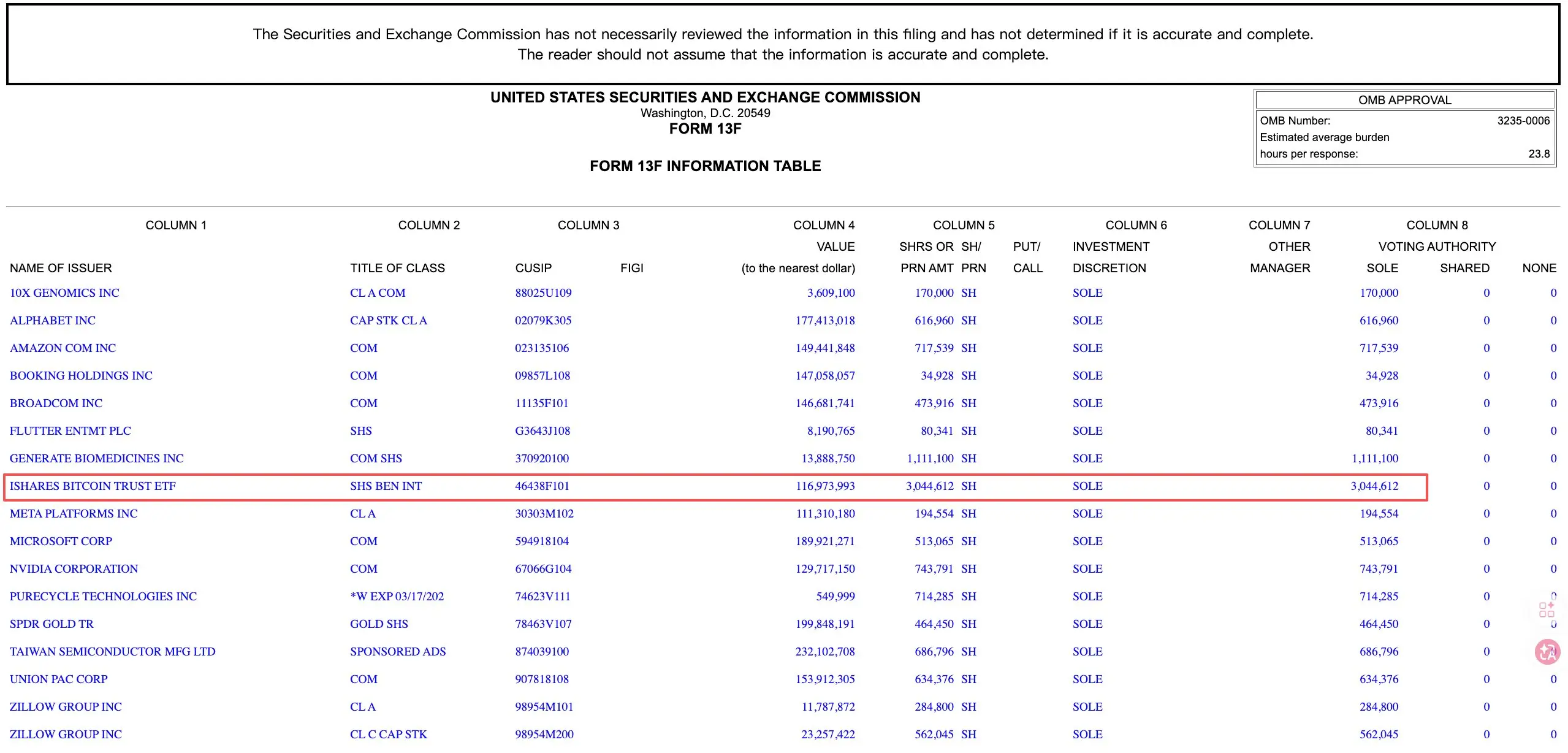
Is this chasing highs and selling lows, or a routine rebalancing by an institution?

One view holds that HMC completed its largest scale-up of buying when Bitcoin was near its historical high, then sold more as the price fell, tracing a classic high-buy-low-sell curve. The Ethereum position was even entirely liquidated less than a quarter after purchase, almost perfectly capturing the entire decline. This is typical chasing highs and selling lows behavior.

Another perspective points out that by the end of Q3, IBIT already accounted for 20% of HMC's public portfolio, indicating an obviously excessive concentration. Subsequent reductions were a necessary action from a risk control perspective. Moreover, HMC still maintains an IBIT base position of about $117 million to this day, not having completely exited.

However, this round of reduction must also consider the current real-world pressure Harvard is under.

In October of last year, Harvard's financial report for fiscal year 2025 showed that, due to the Trump administration halting nearly all federal research grants in the spring, Harvard incurred an annual operating loss of $113 million on total revenue of $6.7 billion, marking the first budget deficit since the pandemic.This deficit accounted for 1.7% of total revenue, with the operating gap contrasting sharply with the $45 million surplus in 2024.
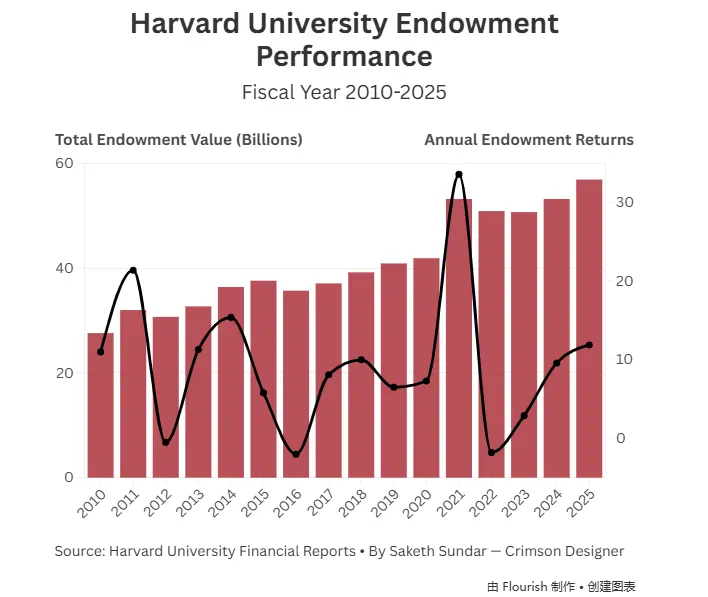
The endowment fund contributes about 37% of Harvard's operating income, providing approximately $2.5 billion in support during fiscal year 2025, but 80% of these funds are restricted by donor purpose and cannot be freely allocated.

Simultaneously, the Republican tax bill officially signed into law in July 2025 significantly increased the maximum tax rate on endowment funds from 1.4% to 8%, a change Harvard estimates will impose an additional annual tax burden of about $300 million.

Under this pressure, the asset structure itself determines where it's easiest to make cuts.

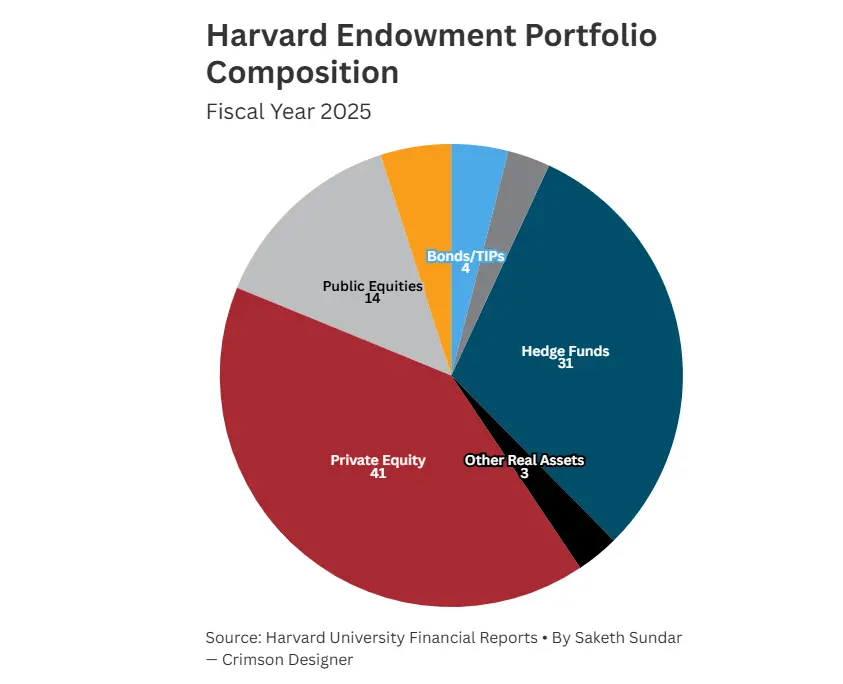
Harvard's endowment fund consists of approximately 41% private equity and 31% hedge funds. These assets have long lock-up periods and extremely high costs for discounted sales. IBIT and ETHA, as intraday tradable public market ETFs, have the strongest liquidity and the lowest liquidation costs, naturally making them the priority for adjustment.
Furthermore, HMC's current CEO N.P. Narvekar has indicated plans to retire around 2027 and is currently discussing succession arrangements with the board. In an environment of fiscal pressure, political uncertainty, and leadership transition occurring simultaneously, holding large, highly volatile crypto positions becomes an additional reputational risk.

In contrast to Harvard's retreat are the starkly different choices of other institutions. Among them, Abu Dhabi sovereign fund Mubadala continued to increase its IBIT holdings by about 16% in Q1 2026, raising its position to approximately $566 million, marking its fifth consecutive quarter of increasing its Bitcoin ETF stake.

Also as university endowment funds, Dartmouth maintained its IBIT holdings unchanged, swapped its Ethereum ETF for a staking version, and added about $3.67 million in the Bitwise Solana Staking ETF, becoming one of the first US university endowment funds to extend crypto allocations beyond Bitcoin and Ethereum.

Brown University maintained its 212,500 IBIT shares unchanged, while Emory University exited its small IBIT position, instead increasing its holdings in the Grayscale Bitcoin Mini Trust.

Overall, Harvard's operations in this round are the result of the combined effects of fiscal pressure, liquidity needs, and risk budget triggers, making it difficult to simply attribute them to chasing highs and selling lows.

When the world's top university endowment fund enters the crypto market, it does so not with a crypto-native belief approach, but with Wall Street risk-ledger logic. Crypto ETF products have indeed provided an institutional gateway, but when risk contracts, they also bring institution-style selling pressure.


Perguntas relacionadas

QWhat recent investment actions did Harvard University's endowment fund take regarding Bitcoin and Ethereum ETFs?

AIn its latest 13F filing, Harvard Management Company (HMC) reduced its holdings in BlackRock's Bitcoin spot ETF (IBIT) by 43% and completely sold off its entire position in the Ethereum ETF (ETHA).

QWhat is the estimated financial impact of Harvard's cryptocurrency ETF trading as mentioned in the article?

AAccording to the article, it is estimated that HMC's trading in Bitcoin and Ethereum ETFs resulted in combined losses exceeding $150 million, including over $100 million on Bitcoin and over $30 million on Ethereum.

QWhat are some of the external pressures cited as reasons for Harvard's divestment from crypto assets?

AHarvard faced multiple pressures including a $113 million operating deficit for the 2025 fiscal year, a significant increase in the endowment tax rate from 1.4% to 8% which adds an estimated $300 million in annual tax costs, and the upcoming retirement of the HMC CEO in 2027, creating a period of leadership transition and reputational risk management.

QHow did the trading behavior of other major institutions differ from Harvard's in Q1 2026?

AIn contrast to Harvard's sell-off, Abu Dhabi's sovereign fund Mubadala increased its IBIT holdings by approximately 16%, marking its fifth consecutive quarter of adding to its Bitcoin ETF position. Dartmouth College maintained its IBIT holdings and shifted its Ethereum ETF to a staking version.

QWhat was the strategic rationale suggested in the article for Harvard's initial large-scale investment in Bitcoin ETF (IBIT) in Q3 2025?

AThe article suggests the investment was part of a 'debasement hedge trade,' where HMC simultaneously bet on Bitcoin and gold (via GLD) to hedge against risks from global currency expansion. At its peak, the IBIT position constituted about 20% of HMC's disclosed portfolio, making it the largest single holding.

Leituras Relacionadas

IOSG | After the Halving of Developer Count: Crypto Isn't Dead, It's Just Handing Over Talent to AI

IOSG Report: Crypto's Developer Exodus Masks a "Talent Deleveraging" and Migration to AI The number of monthly active crypto developers on GitHub has roughly halved from its 2022 peak to around 23,000. This decline is not a sign of industry collapse but a "talent deleveraging." The exodus consists largely of newcomers who entered during the bull market, while the cohort of established developers (2+ years of experience) has grown to a record high, now contributing about 70% of the code. These core builders are consolidating in ecosystems with real users and activity, like Bitcoin and Solana. The crypto industry has forged a unique skill set: building operational, trusted systems from scratch in environments with no external authority, near-zero tolerance for error, and missing rules. This involves creating trust through pure code/mechanisms and making judgments under profound technical and economic uncertainty. This capability is finding new, high-value applications in the AI era, which faces structurally similar problems: trust in opaque autonomous systems, a lack of governance frameworks, and coordination among self-interested AI agents. Key migration patterns include: 1. **Direct Hardware/Infrastructure Translation:** Projects like CoreWeave pivoted from GPU mining to AI compute supply. 2. **Mechanism Design & Trust Engineering:** Crypto's experience in decentralized coordination and incentive design (e.g., via tokenomics, staking/slashing) is being applied to critical AI challenges: * **Compute Aggregation & Verification:** Solving trust and efficiency problems in decentralized GPU networks (e.g., Hyperbolic). * **AI Agent Governance:** Using cryptoeconomic mechanisms to align the behavior of multiple autonomous AI agents (e.g., EigenLayer's approach). * **Autonomous Agent Payments:** Leveraging stablecoins and programmable money for fast, permissionless micro-transactions between AI agents (e.g., x402 protocol). The builder's role is evolving from "writing smart contracts" to "designing trust mechanisms for autonomous AI systems." This convergence is reflected in hiring trends at major firms and significant capital allocation from top venture funds like Paradigm and a16z into the crypto-AI intersection. While regional approaches differ—with the US focusing more on foundational protocol innovation and Asia on application-layer integration—the core thesis remains: the systemic skills honed in crypto's trustless environments are becoming a scarce and critical asset for scaling AI.

marsbitMesmo agora

IOSG | After the Halving of Developer Count: Crypto Isn't Dead, It's Just Handing Over Talent to AI

marsbitMesmo agora

Five Core Forms of AI Agent in YC's Eyes

The article outlines five core architectural patterns for effective AI Agents, emerging from tools like Codex and Claude, that move beyond simple prompts towards reusable, process-based capabilities. 1. **Skills**: Reusable, parameterized workflows that function like method calls, allowing a single process (e.g., "/investigate") to handle various tasks based on input parameters. 2. **Thin Harness**: A lightweight execution framework (~200 lines) that manages the AI model's "hands and feet"—handling loops, file I/O, and context—without becoming bloated. 3. **Resolvers**: Routing tables that map tasks to specific Skills, preventing "context corruption" when managing dozens of Skills and ensuring outputs go to the correct locations. 4. **Latent vs. Deterministic Layer**: A critical separation where LLMs handle judgment, synthesis, and pattern recognition, while deterministic code handles tasks requiring precision, consistency, and low cost (like calculations). 5. **Memory**: A persistent, accumulating knowledge base (e.g., a markdown folder) with a "current trusted conclusion" section and an append-only timeline, enabling the system to learn and retain context over time. Together, these patterns create a "process power"—a durable competitive advantage. Unlike one-off prompt-based applications whose value quickly commoditizes, a well-designed AI Agent system encodes experience into reusable, parameterized workflows, offloads stable rules to code, and continuously learns through memory. This creates a structured, hard-to-replicate capability that can provide sustained value for individuals or businesses, such as an accountant automating client reviews while preserving privacy and accumulating expertise.

marsbitHá 1h

Five Core Forms of AI Agent in YC's Eyes

marsbitHá 1h

Trading

Spot
Futuros

Artigos em Destaque

O que é BITCOIN

Compreender o HarryPotterObamaSonic10Inu (ERC-20) e a Sua Posição no Espaço Cripto Nos últimos anos, o mercado de criptomoedas assistiu a um aumento na popularidade das moedas meme, cativando não apenas os traders, mas também aqueles que procuram envolvimento comunitário e valor de entretenimento. Entre estes tokens únicos está o HarryPotterObamaSonic10Inu (ERC-20), um projeto intrigante que mistura referências culturais no tecido das criptomoedas. Este artigo explora os principais aspetos do HarryPotterObamaSonic10Inu, examinando os seus mecanismos, a sua ética orientada pela comunidade e o seu envolvimento com o vasto panorama cripto. O que é o HarryPotterObamaSonic10Inu (ERC-20)? Como o nome sugere, o HarryPotterObamaSonic10Inu é uma moeda meme construída na blockchain Ethereum, classificada sob o padrão ERC-20. Ao contrário das criptomoedas tradicionais, que podem enfatizar a utilidade prática ou o potencial de investimento, este token prospera no valor de entretenimento e na força da sua comunidade. O projeto visa promover um ambiente onde utilizadores envolvidos possam reunir-se, partilhar ideias e participar em atividades inspiradas por diversos fenómenos culturais. Uma característica notável do HarryPotterObamaSonic10Inu é a zero taxa sobre transações. Este elemento atraente visa encorajar a negociação e o envolvimento da comunidade, isento de encargos adicionais que podem desencorajar os traders de pequena escala. A oferta total da moeda está fixada em mil milhões de tokens, uma cifra que marca a sua intenção de manter uma circulação substancial dentro da comunidade. Criador do HarryPotterObamaSonic10Inu (ERC-20) As origens do HarryPotterObamaSonic10Inu estão um pouco envoltas em mistério; os detalhes sobre o criador permanecem desconhecidos. O desenvolvimento deste token carece de uma equipa identificável ou de um plano explícito, o que não é raro no setor das moedas meme. Em vez disso, o projeto surgiu de forma orgânica, com o seu progresso a depender fortemente do entusiasmo e da participação da sua comunidade. Investidores do HarryPotterObamaSonic10Inu (ERC-20) No que diz respeito a investimentos externos e apoios, o HarryPotterObamaSonic10Inu também permanece ambíguo. O token não lista quaisquer fundações de investimento conhecidas ou apoio organizacional significativo. Em vez disso, o “sangue vital” do projeto é a sua comunidade de base, que informa o seu crescimento e sustentabilidade através da ação coletiva e do envolvimento no espaço cripto. Como Funciona o HarryPotterObamaSonic10Inu (ERC-20)? Como uma moeda meme, o HarryPotterObamaSonic10Inu opera principalmente fora dos quadros tradicionais que muitas vezes governam o valor dos ativos. Existem vários aspetos distintivos que definem como o projeto funciona: Transações Sem Taxas: Sem taxas sobre transações, os utilizadores podem comprar e vender o token livremente, sem a preocupação de custos ocultos. Envolvimento da Comunidade: O projeto prospera na interação da comunidade, aproveitando plataformas de redes sociais para criar entusiasmo e facilitar a participação. Discussões, partilha de conteúdo e envolvimento são elementos cruciais que ajudam a expandir o seu alcance e a fomentar a lealdade entre os apoiantes. Sem Utilidade Prática: Deve ser notado que o HarryPotterObamaSonic10Inu não oferece utilidade concreta dentro do ecossistema financeiro. Em vez disso, é classificado como um token principalmente para entretenimento e atividades comunitárias. Referência Cultural: O token incorpora de forma inteligente elementos da cultura popular para atrair interesse, conectando-se tanto com entusiastas de memes como com seguidores de criptomoedas. HarryPotterObamaSonic10Inu exemplifica como as moedas meme operam de forma diferente de projetos de criptomoedas mais tradicionais, entrando no mercado como construções sociais inovadoras em vez de ativos utilitários. Linha do Tempo do HarryPotterObamaSonic10Inu (ERC-20) A história do HarryPotterObamaSonic10Inu é marcada por vários marcos notáveis: Criação: O token surgiu de um meme viral, capturando a imaginação de muitos entusiastas de criptomoedas. Datas específicas de criação não estão disponíveis, sublinhando a sua ascensão orgânica. Listagem em Exchanges: O HarryPotterObamaSonic10Inu conseguiu entrar em várias exchanges, permitindo um acesso e negociação mais fáceis pela comunidade. Iniciativas de Envolvimento da Comunidade: Atividades contínuas direcionadas a melhorar a interação comunitária, incluindo concursos, campanhas em redes sociais e geração de conteúdo por fãs e defensores. Planos de Expansão Futura: O roteiro do projeto inclui o lançamento de uma coleção de NFTs, mercadorias e um site de eCommerce relacionado aos seus temas culturais, envolvendo ainda mais a comunidade e tentando adicionar mais dimensões ao seu ecossistema. Pontos-Chave sobre o HarryPotterObamaSonic10Inu (ERC-20) Natureza Orientada pela Comunidade: O projeto prioriza a contribuição coletiva e a criatividade, assegurando que o envolvimento dos utilizadores está na vanguarda do seu desenvolvimento. Classificação como Moeda Meme: Representa o epítome da criptomoeda baseada em entretenimento, destacando-se dos veículos de investimento tradicionais. Sem Afiliação Direta com o Bitcoin: Apesar da semelhança no nome do ticker, o HarryPotterObamaSonic10Inu é distinto e não tem qualquer relação com o Bitcoin ou outras criptomoedas estabelecidas. Foco na Colaboração: O HarryPotterObamaSonic10Inu é projetado para criar um espaço de colaboração e partilha de histórias entre os seus detentores, proporcionando uma via para a criatividade e o fortalecimento da comunidade. Perspectivas Futuras: A ambição de expandir além da sua premissa inicial para NFTs e mercadorias delineia um caminho para o projeto potencialmente entrar em avenidas mais mainstream dentro da cultura digital. À medida que as moedas meme continuam a capturar a imaginação da comunidade cripto, HarryPotterObamaSonic10Inu (ERC-20) destaca-se devido aos seus laços culturais e abordagem centrada na comunidade. Embora possa não se encaixar no molde típico de um token orientado para utilidade, a sua essência reside na alegria e camaradagem fomentadas entre os seus apoiantes, destacando a natureza em evolução das criptomoedas em uma era cada vez mais digital. À medida que o projeto continua a desenvolver-se, será importante observar como as dinâmicas comunitárias influenciam a sua trajetória no panorama em constante mudança da tecnologia blockchain.

1.5k Visualizações TotaisPublicado em {updateTime}Atualizado em 2024.12.03

O que é BITCOIN

Como comprar BTC

Bem-vindo à HTX.com!Tornámos a compra de Bitcoin (BTC) simples e conveniente.Segue o nosso guia passo a passo para iniciar a tua jornada no mundo das criptos.Passo 1: cria a tua conta HTXUtiliza o teu e-mail ou número de telefone para te inscreveres numa conta gratuita na HTX.Desfruta de um processo de inscrição sem complicações e desbloqueia todas as funcionalidades.Obter a minha contaPasso 2: vai para Comprar Cripto e escolhe o teu método de pagamentoCartão de crédito/débito: usa o teu visa ou mastercard para comprar Bitcoin (BTC) instantaneamente.Saldo: usa os fundos da tua conta HTX para transacionar sem problemas.Terceiros: adicionamos métodos de pagamento populares, como Google Pay e Apple Pay, para aumentar a conveniência.P2P: transaciona diretamente com outros utilizadores na HTX.Mercado de balcão (OTC): oferecemos serviços personalizados e taxas de câmbio competitivas para os traders.Passo 3: armazena teu Bitcoin (BTC)Depois de comprar o teu Bitcoin (BTC), armazena-o na tua conta HTX.Alternativamente, podes enviá-lo para outro lugar através de transferência blockchain ou usá-lo para transacionar outras criptomoedas.Passo 4: transaciona Bitcoin (BTC)Transaciona facilmente Bitcoin (BTC) no mercado à vista da HTX.Acede simplesmente à tua conta, seleciona o teu par de trading, executa as tuas transações e monitoriza em tempo real.Oferecemos uma experiência de fácil utilização tanto para principiantes como para traders experientes.

4.0k Visualizações TotaisPublicado em {updateTime}Atualizado em 2025.03.21

Como comprar BTC

O que é $BITCOIN

OURO DIGITAL ($BITCOIN): Uma Análise Abrangente Introdução ao OURO DIGITAL ($BITCOIN) OURO DIGITAL ($BITCOIN) é um projeto baseado em blockchain que opera na rede Solana, com o objetivo de combinar as características dos metais preciosos tradicionais com a inovação das tecnologias descentralizadas. Embora partilhe um nome com o Bitcoin, frequentemente referido como “ouro digital” devido à sua percepção como uma reserva de valor, o OURO DIGITAL é um token separado projetado para criar um ecossistema único dentro da paisagem Web3. O seu objetivo é posicionar-se como um ativo digital alternativo viável, embora os detalhes sobre as suas aplicações e funcionalidades ainda estejam em desenvolvimento. O que é o OURO DIGITAL ($BITCOIN)? OURO DIGITAL ($BITCOIN) é um token de criptomoeda explicitamente projetado para uso na blockchain Solana. Em contraste com o Bitcoin, que fornece um papel amplamente reconhecido como armazenamento de valor, este token parece focar em aplicações e características mais amplas. Aspectos notáveis incluem: Infraestrutura Blockchain: O token é construído na blockchain Solana, conhecida pela sua capacidade de lidar com transações de alta velocidade e baixo custo. Dinâmicas de Oferta: O OURO DIGITAL tem um fornecimento máximo limitado a 100 quatrilhões de tokens (100P $BITCOIN), embora os detalhes sobre o seu fornecimento circulante ainda não tenham sido divulgados. Utilidade: Embora as funcionalidades precisas não estejam explicitamente delineadas, existem indicações de que o token poderia ser utilizado para várias aplicações, potencialmente envolvendo aplicações descentralizadas (dApps) ou estratégias de tokenização de ativos. Quem é o Criador do OURO DIGITAL ($BITCOIN)? Neste momento, a identidade dos criadores e da equipa de desenvolvimento por trás do OURO DIGITAL ($BITCOIN) permanece desconhecida. Esta situação é típica entre muitos projetos inovadores no espaço da blockchain, particularmente aqueles alinhados com finanças descentralizadas e fenómenos de moedas meme. Embora tal anonimato possa fomentar uma cultura orientada pela comunidade, intensifica as preocupações sobre governança e responsabilidade. Quem são os Investidores do OURO DIGITAL ($BITCOIN)? As informações disponíveis indicam que o OURO DIGITAL ($BITCOIN) não tem apoiantes institucionais conhecidos ou investimentos proeminentes de capital de risco. O projeto parece operar num modelo peer-to-peer focado no apoio e adoção da comunidade, em vez de rotas de financiamento tradicionais. A sua atividade e liquidez estão principalmente situadas em exchanges descentralizadas (DEXs), como a PumpSwap, em vez de plataformas de negociação centralizadas estabelecidas, destacando ainda mais a sua abordagem de base. Como Funciona o OURO DIGITAL ($BITCOIN) A mecânica operacional do OURO DIGITAL ($BITCOIN) pode ser elaborada com base no seu design de blockchain e nas características da rede: Mecanismo de Consenso: Ao aproveitar o exclusivo proof-of-history (PoH) da Solana combinado com um modelo de proof-of-stake (PoS), o projeto assegura uma validação eficiente das transações, contribuindo para o alto desempenho da rede. Tokenomics: Embora mecanismos deflacionários específicos não tenham sido extensivamente detalhados, o vasto fornecimento máximo de tokens implica que pode atender a microtransações ou casos de uso de nicho que ainda estão por definir. Interoperabilidade: Existe o potencial para integração com o ecossistema mais amplo da Solana, incluindo várias plataformas de finanças descentralizadas (DeFi). No entanto, os detalhes sobre integrações específicas permanecem não especificados. Cronologia de Eventos Chave Aqui está uma cronologia que destaca marcos significativos relacionados ao OURO DIGITAL ($BITCOIN): 2023: O lançamento inicial do token ocorre na blockchain Solana, marcado pelo seu endereço de contrato. 2024: O OURO DIGITAL ganha visibilidade ao tornar-se disponível para negociação em exchanges descentralizadas como a PumpSwap, permitindo que os utilizadores o negociem contra SOL. 2025: O projeto testemunha atividade de negociação esporádica e potencial interesse em envolvimentos liderados pela comunidade, embora não tenham sido documentadas parcerias ou avanços técnicos notáveis até ao momento. Análise Crítica Forças Escalabilidade: A infraestrutura subjacente da Solana suporta altos volumes de transações, o que pode aumentar a utilidade do $BITCOIN em vários cenários de transação. Acessibilidade: O potencial preço de negociação baixo por token pode atrair investidores de retalho, facilitando uma participação mais ampla devido a oportunidades de propriedade fracionada. Riscos Falta de Transparência: A ausência de apoiantes, desenvolvedores ou um processo de auditoria publicamente conhecidos pode gerar ceticismo em relação à sustentabilidade e confiabilidade do projeto. Volatilidade do Mercado: A atividade de negociação depende fortemente do comportamento especulativo, o que pode resultar em volatilidade significativa dos preços e incerteza para os investidores. Conclusão O OURO DIGITAL ($BITCOIN) surge como um projeto intrigante, mas ambíguo, dentro do ecossistema em rápida evolução da Solana. Embora tente aproveitar a narrativa do “ouro digital”, a sua divergência do papel estabelecido do Bitcoin como reserva de valor sublinha a necessidade de uma diferenciação mais clara da sua utilidade pretendida e estrutura de governança. A aceitação e adoção futuras dependerão provavelmente da abordagem da atual opacidade e da definição mais explícita das suas estratégias operacionais e económicas. Nota: Este relatório abrange informações sintetizadas disponíveis até outubro de 2023, e desenvolvimentos podem ter ocorrido além do período de pesquisa.

92 Visualizações TotaisPublicado em {updateTime}Atualizado em 2025.05.13

O que é $BITCOIN

Discussões

Bem-vindo à Comunidade HTX. Aqui, pode manter-se informado sobre os mais recentes desenvolvimentos da plataforma e obter acesso a análises profissionais de mercado. As opiniões dos utilizadores sobre o preço de BTC (BTC) são apresentadas abaixo.

活动图片













