Germany's Decades-Long Lead Lost as China's Machine Tools Quietly Rise to Global No.1

marsbitPublicado em 2026-08-05Última atualização em 2026-08-05

Resumo

For decades, Germany held the top spot in global machine tool exports, but in 2025, China officially surpassed it for the first time, with its export value reaching 21% of the global market share. This article explores how China transformed from a heavily import-dependent nation to an export leader in this foundational industry for modern manufacturing. It begins by explaining the immense technical challenges in building high-end machine tools. Precision machining faces persistent physical obstacles like thermal expansion, vibration, and component wear, demanding top-tier core components like spindles, ball screws, and CNC systems. Historically, China relied on imports for over 90% of these critical components, and domestic machine tools suffered from short lifespans between failures (MTBF), making them unreliable for industrial use. The article credits the state-backed "04 Special Project" (2009-2020) for laying a crucial foundation. It boosted the market share of domestic high-end CNC systems from below 1% to nearly 32% and significantly improved overall machine reliability. However, the primary driver for China's rise was the massive and fast-evolving domestic market, particularly in the new-energy vehicle (NEV) sector. This created unique, high-demand applications like machining large integrated die-castings and complex battery housings. Domestic manufacturers, being close to the world's largest NEV market, rapidly iterated products to meet these new needs, gaining an e...

The story of China's manufacturing rise has become almost cliché in recent years: leading the world in EV production, solar panels blanketing half the planet, high-speed rail reaching Indonesia, with Chinese appliances and toys found across the globe.

But if you ask, what areas in manufacturing is China still catching up in?

Many people would immediately think of a few names: lithography machines, chips, and machine tools.

Machine tools are probably the least noticed among them. Lithography machines frequently top hot searches, chips regularly stir international geopolitics, but machine tools?

They mostly stay quietly in factories, not even deserving a hot search.

Yet, they are the most fundamental equipment underlying modern manufacturing. How precisely a country can machine parts is largely capped by the level of its machine tools.

In most people's impression, Chinese machine tools are the kind of equipment bought at great expense from Germany or Japan, with a heap of restrictive rules attached.
International machine tool giant DMG MORI equips its globally exported machines with unified GPS displacement detection. The installation location is registered upon leaving the factory; moving it without authorization locks and disables the machine.

Although this is a global export compliance mechanism (to prevent resale for weapon manufacturing), the frustration of needing to file a report just to relocate a machine worth tens of millions sitting in your own factory requires little explanation.

Expensive, import-dependent, few choices, and heavy restrictions—this is the memory many have of Chinese machine tools.

But a startling figure emerged in 2025:

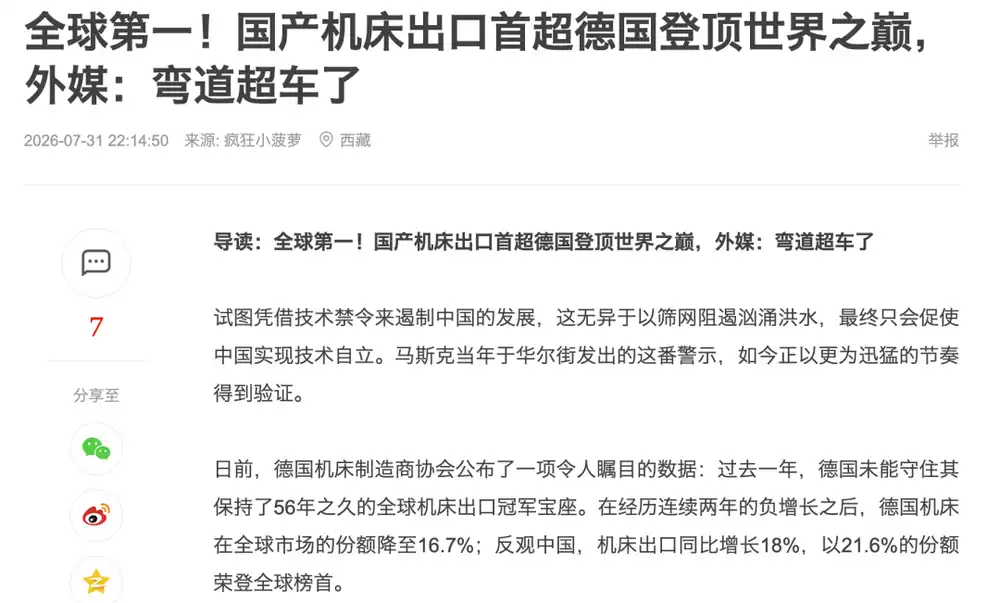
According to the German Machine Tool Builders' Association (VDW), China's machine tool export value reached €8.6 billion, capturing about 21% of the global share, surpassing Germany's €7.1 billion for the first time—a position Germany had long held.
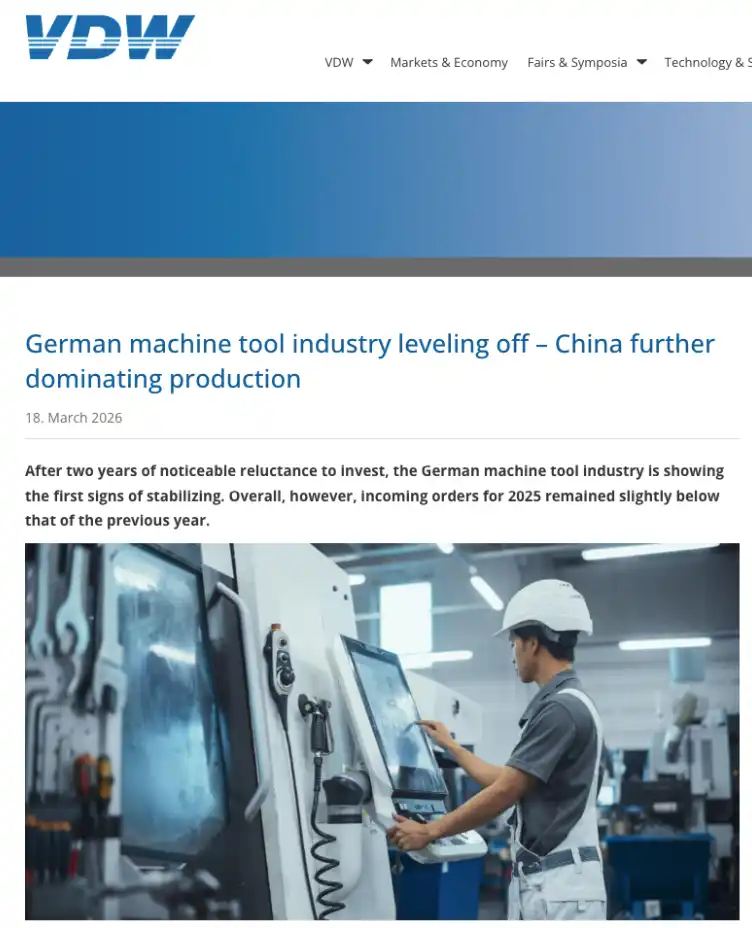
This marks the first time Chinese machine tools have topped the list, inevitably raising the question:

From spending tens of millions to buy a single machine from others, to exporting €8.6 billion a year and claiming the global top spot—what exactly happened in between?

01: Building a Good Machine Tool is Far Harder Than You Think

The job of a machine tool sounds simple: use a processing device (like a cutter) to cut, grind, or press metal into the desired shape.

A high-end machine tool needs to cut with micron-level precision—one micron is one-sixtieth the diameter of a human hair.

It might seem that with sufficiently hard material for the cutting tool and modern advanced sensors and control algorithms, this wouldn't be too difficult.

But in reality, building a usable machine tool and building a *good* one are completely different challenges.

The main issue lies in sustainability:

You need to maintain this precision while shaving metal under massive cutting forces, high-speed rotation, and impact, for tens of thousands of hours, without degradation.

This involves three fundamental physical challenges.

The first is heat: During operation, motors, bearings, and cutting areas all generate heat. Metal expands and contracts with temperature; even a few degrees' difference can cause parts to expand by several microns, ruining machining accuracy. Uneven heating across different areas also gradually shifts originally aligned axes.

High-end machine tools require complex thermal compensation systems for real-time correction. This isn't a simple sensor fix; it involves systematic optimization of the entire machine structure, material selection, and control algorithms. Imagine someone performing microsurgery while running a marathon, with their body heating up and shaking, yet needing to make that micron-precise cut.

The second is vibration: During high-speed cutting, the tool impacting metal creates significant reaction forces, inducing self-excited vibration between tool and workpiece, known as "chatter" in engineering. Once chatter occurs, the machined surface is covered in ripples and burrs; severe cases can scrap the part entirely. Vibration suppression involves structural rigidity, damping design to absorb vibrational energy, cutting parameters, and dynamic compensation by the CNC system. Weakness in any link causes problems.

The third is wear: After spinning at high speed for hundreds of millions of cycles, spindle bearings wear down, guides wear down, and ball screws wear down. Good precision at delivery is one thing; maintaining it after one or two years of operation is the real test.

Domestic machine tools often don't lack in initial accuracy, but start to drift after some use. The industry calls this "accuracy retention."

Simply put, a new car is fine when you get it. The real test is whether it still performs well after three years of driving.

And these three adversaries don't come alone; they occur simultaneously and compound each other.

These physical problems ultimately manifest in several core components: The spindle is the heart, determining cutting power and rotational accuracy; ball screws and guides are the skeleton, determining motion precision and smoothness; the CNC system is the brain, coordinating multiple axes and performing compensation and calculations.
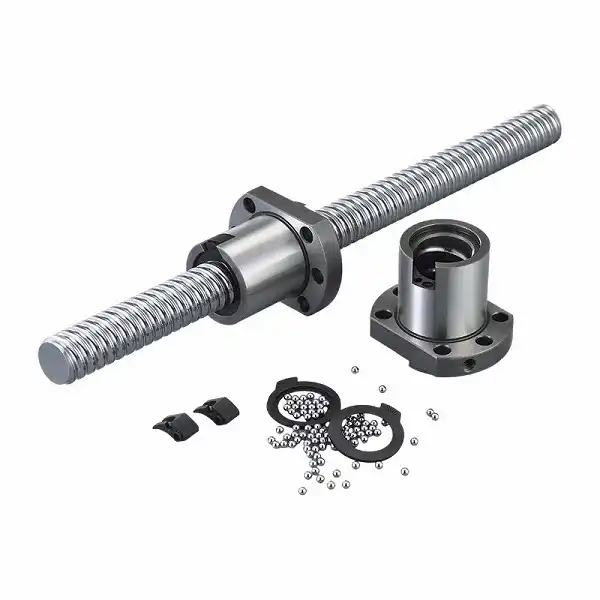
Each must be top-tier for the whole machine to be top-tier. More critically, to manufacture precise ball screws and spindles, you first need a precise grinding machine to process them. This is the classic chicken-and-egg problem in the machine tool industry: You need a good machine tool to build a good machine tool.

Where was China stuck? Precisely on these core components. As of a 2020 assessment, about 90% of high-end CNC systems and servo systems responsible for precise motion execution relied on imports; over 90% of high-end functional components like spindles, ball screws, and guides were also purchased from others. Heart, brain, skeleton—nine out of ten were not their own.

Another 2025 professional review indicated that the Mean Time Between Failures (MTBF) for foreign high-end CNC systems exceeded 50,000 hours, while domestic ones were around 30,000 hours. This metric measures the average runtime between system failures, indicating there's still room for improvement.

02: From No One Daring to Use, to Export Leader

So how was this situation gradually turned around?

First, look at how low the starting point was:

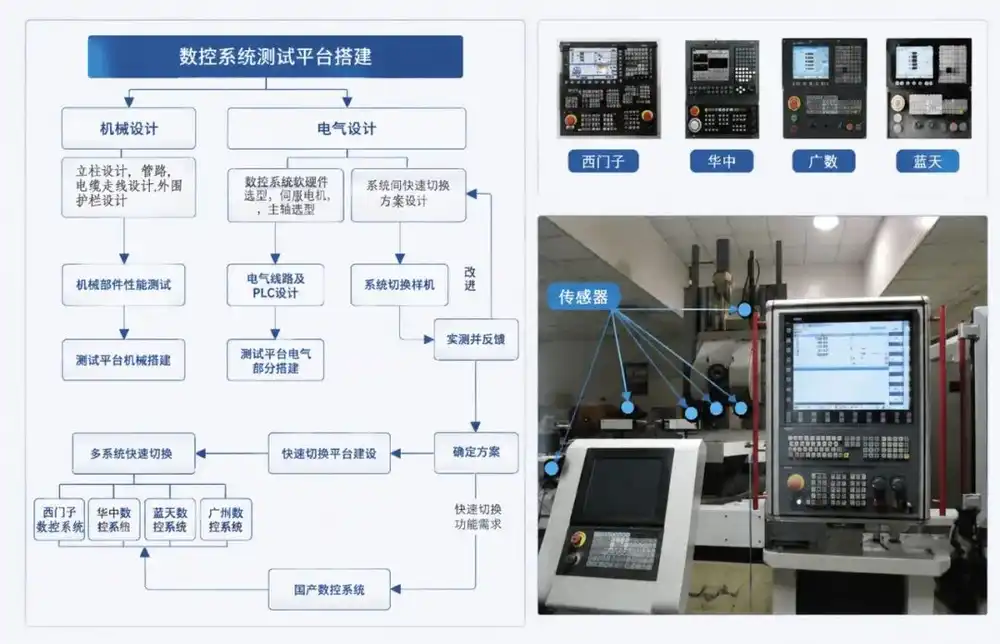
The Chinese government's largest concentrated effort in machine tools was a national major project called "High-End CNC Machine Tools and Basic Manufacturing Equipment," commonly known as the 04 Special Project.
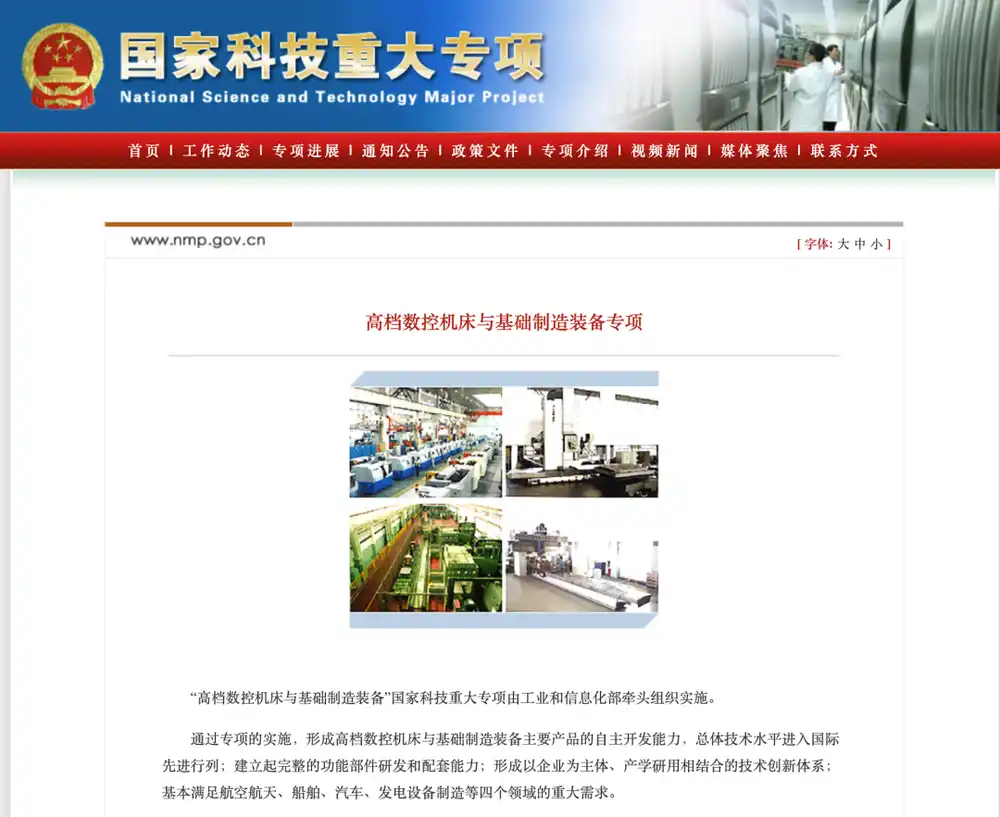
Before this project launched, domestic high-end CNC systems held less than 1% market share in domestic machine tools. The MTBF for high-end CNC machine tools as a whole was only about 600 hours. 600 hours sounds okay? Based on a 20-hour daily operation for an automotive production line, that's an average failure-free interval of about one month.

Who would dare use that?

The 04 Special Project started in 2009 and ran until 2020. Over eleven years, it achieved several concrete things:

The localization rate of high-end CNC systems increased from less than 1% to 31.9%;

The MTBF for high-end CNC machine tools as a whole improved from 600 hours to over 2,000 hours.
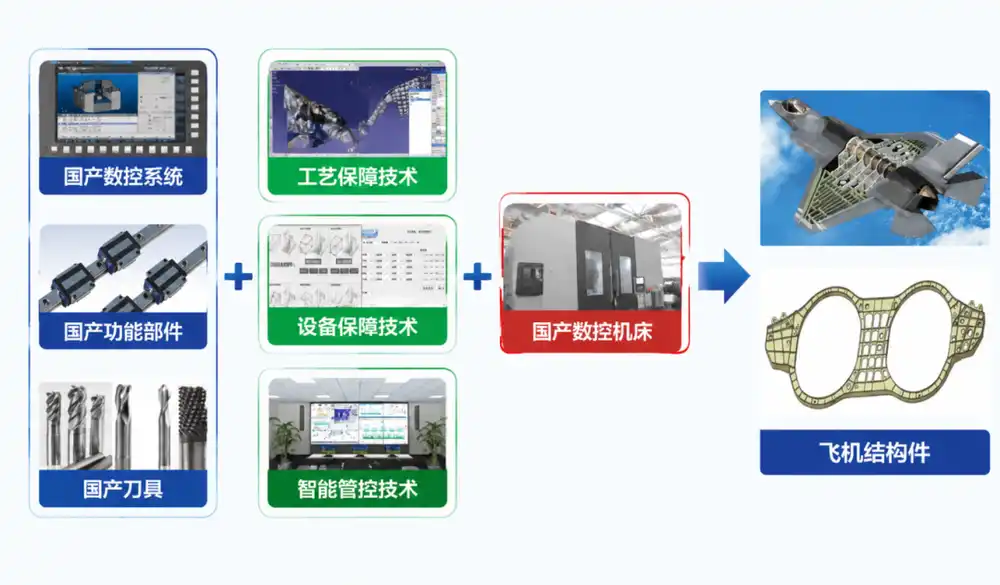
From 1% to 31.9%, from 600 to over 2,000 hours—not spectacular, but enough to get a seat at the table.

But getting a seat doesn't mean winning the game.

The overall MTBF improved significantly, but a gap remained with world leaders. Localization rates for core components like precision grinding machines and high-end ball screws were still very low.

The 04 Special Project addressed the "have or have not" question. The matter of "good or not good" needed another driving force.

That force is the market—the world's largest and fastest-iterating one. Enter the industrial Cthulhu.

Take new energy vehicles (NEVs) as an example. This industry's explosion impacted the machine tool sector not just by "increasing orders," but by changing the very nature of what needed machining: Traditional engine blocks and multi-gear transmission housings for internal combustion vehicles are no longer needed in pure EVs. They are replaced by integrated die-cast bodies (casting multiple parts into one), battery casings, and electric drive system housings. The work changed entirely, and old machining methods became obsolete.
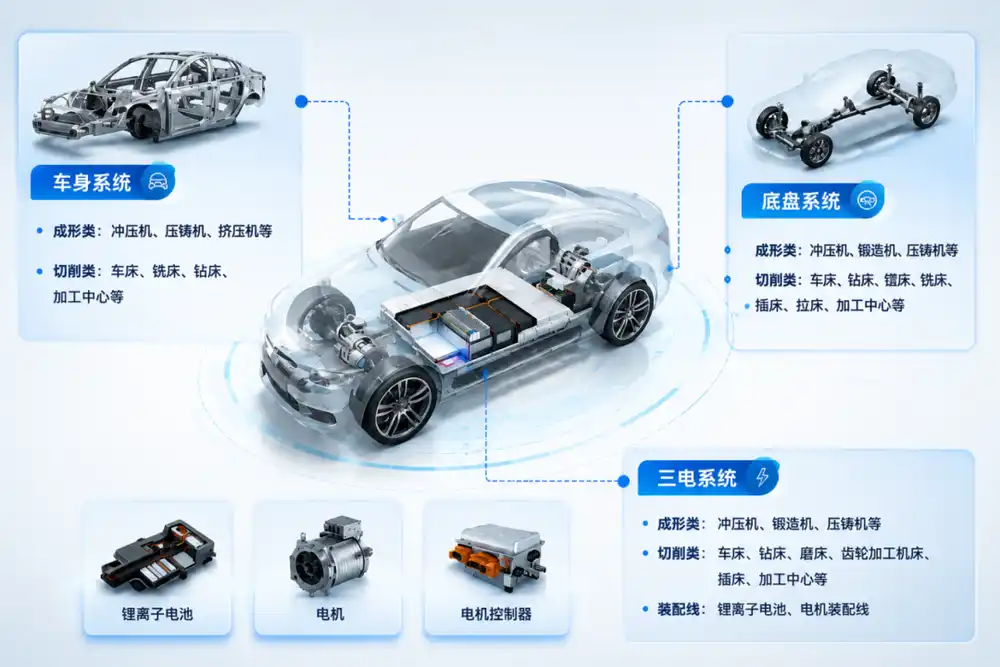
Figure | NEV body, chassis, and three-electric systems correspond to demands for large forming, cutting, die-casting, and assembly equipment.

These new demands spawned a batch of domestic equipment and turnkey solutions specifically for NEVs. Integrated die-cast parts are much larger, requiring gantry machining centers with超大行程. Battery casings have thin walls, are prone to vibration, and demand high sealing, making generic solutions difficult to apply directly, necessitating targeted fixture and machining plan development.
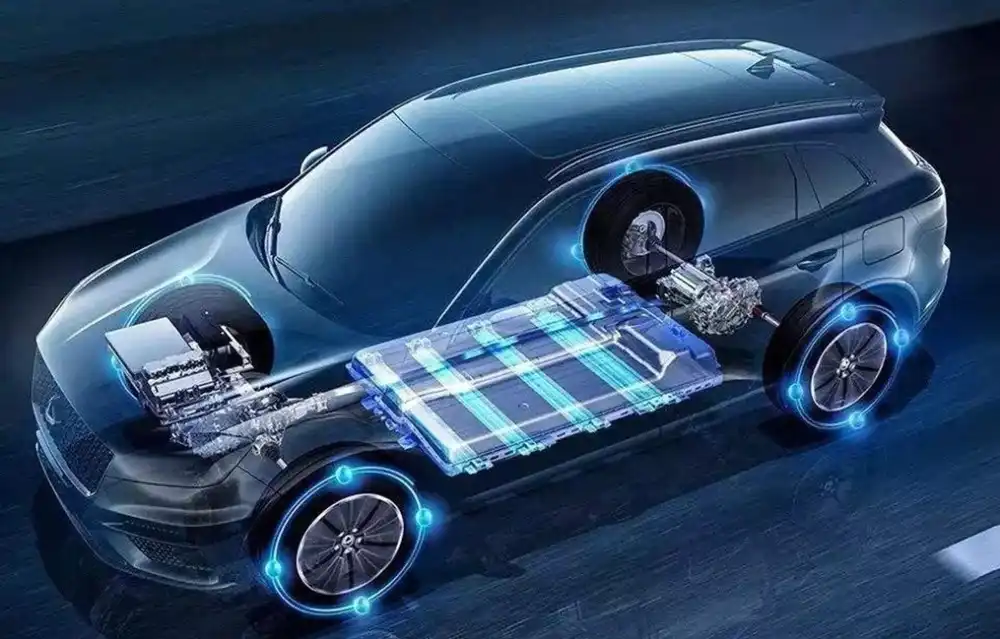
Figure | NEV battery, electric drive, and chassis systems have changed the parts and process combinations machine tool makers need to cover.

The story of integrated die-casting itself best illustrates the point.

When Tesla wanted to turn the Model Y's rear underbody from over 70 stamped and welded parts into a single cast piece, it needed an ultra-large die-casting machine in the 6,000-ton class. Few companies worldwide could build such equipment.

What does 16,000 tons of clamping force—the force holding the two mold halves together during casting—mean? It's equivalent to stacking over ten thousand compact cars and pressing down, all to form an entire body part in seconds. Integrated die-casting started with Tesla and rapidly spread to NIO, XPeng, and more Chinese automakers. A brand-new manufacturing process, from definition to mass production to diffusion, had its主场 in China.

This isn't an isolated case. In entirely new machining areas like integrated die-casting, battery casings, and electric drive housings, Chinese companies had a more level starting line with German and Japanese firms, as these were new challenges for everyone.

And domestic Chinese manufacturers had a natural locational advantage: the world's largest NEV market was right on their doorstep. With customers next door, local manufacturers, benefiting from proximity, faster response, and supply chain synergy, were better positioned to rapidly incorporate feedback into product iteration.

However, even with such a massive market pushing progress, the localization rate for high-end machine tools in the automotive sector remained below 10%. High-precision internal/external cylindrical grinders for shaft/gear parts, high-speed precision gear grinding machines, etc., had localization rates below 5%. The large market accelerated the catch-up but didn't eliminate the gap.

Technology and market are pushing forward, but manufacturing equipment follows an iron law: slow selection, even slower switching. An automotive production line runs for a decade or more after launch. Changing equipment suppliers midstream is extremely costly—not just the equipment cost, but also redoing process validation, re-verifying product yield, and retraining workers.

Therefore, automakers' logic for choosing equipment suppliers is completely different from consumer purchases: taking several years to evaluate is normal, but once chosen and validated, they rarely switch.

No matter how impressive your spec sheet looks, ultimately, you need customers willing to stake their real production line on you.

Here's a story spanning from 2004 to 2016—a twelve-year journey.

It shows that China's catch-up in machine tools wasn't a single flip of a switch. It was a process of climbing step by step, with technology, market, and user validation strands intertwined.

03: Export Value Exceeds Germany, But This Is Just the Beginning

China surpassing Germany in machine tool export value wasn't an overnight reversal: first trade surplus in the industry in 2019, surplus across all categories in 2023, export value officially surpassing in 2025—a step-by-step journey to today.

Overseas markets have transformed from supplementary channels to primary growth drivers, contributing 63.6% to the industry's revenue growth in 2025.

But this number one victory is in scale and coverage, not yet comprehensive technological leadership.

The largest export category is special processing machine tools, primarily using electrical discharge, laser, etc., rather than traditional direct-cutting tools.

The top five export destinations are Vietnam, Russia, India, Thailand, and the US. The current export focus clearly leans towards Asian manufacturing markets.

VDW also specifically noted: this total figure includes exports from the Chinese factories of international firms from Germany, Japan, Switzerland, etc., though the specific proportion wasn't disclosed. In essence, part of "Chinese exports" are actually made on their turf.

Nevertheless, the identity of Chinese machine tools has indeed changed: from being the restricted buyer, whose usable equipment precision was dictated by others' export control lists, to the reverse.

On June 30, 2026, Chinese Customs further required declaring technical parameters and indicating whether items belong to controlled categories upon export of relevant equipment.

From being restricted on purchase to beginning more精细 management of sales—the export ranking is just a number. The more significant change is that China's machine tool industry has entered a new stage where it must identify and manage exports of sensitive equipment.
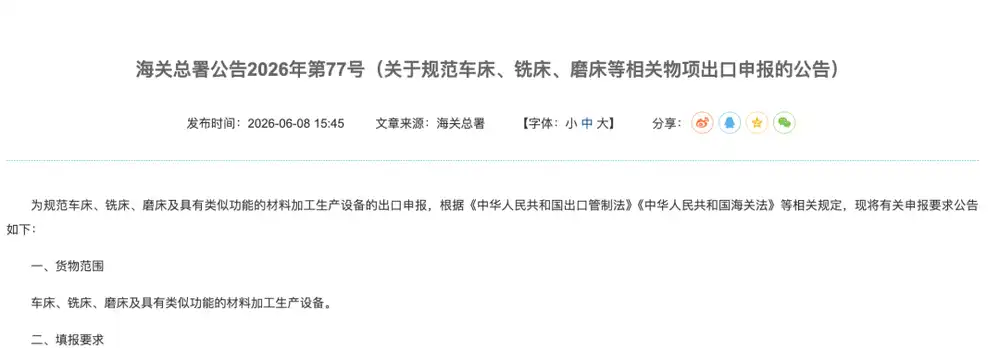
And to speak冷静ly, reaching global number one isn't the same as securing it.

For equipment like machine tools, selling is just the beginning. What follows are ten or twenty years of installation, debugging,故障响应, spare parts supply, and accuracy guarantees. Export value can flip in a year or two, but overseas service networks can't grow that fast.
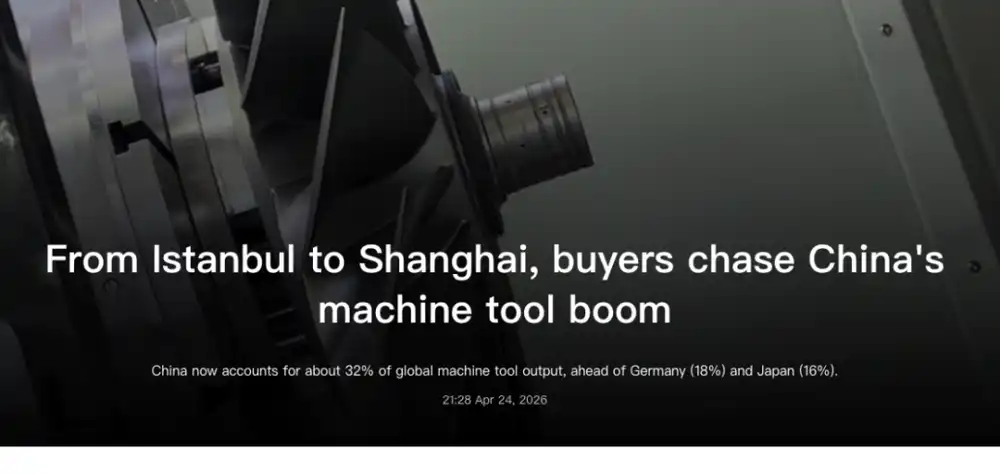
A scene at the 2026 China CNC Machine Tool Exhibition highlighted this: a Turkish buyer flew nearly 9,000 kilometers specifically to look for Chinese equipment, repeatedly asking just one thing: after purchase, will there be local support? How fast can you respond if it breaks?
Over a decade ago, Chinese companies buying German machine tools worried about long-term stable operation and GPS displacement detection restrictions.

Today, overseas buyers care more about after-sales response. The specific concerns may differ, but they point to the same thing: after purchasing such high-value equipment, can they use it with confidence over the long term?

Selling equipment abroad is just passing the first gate. Installing it well overseas, calibrating it accurately, being able to fix faults when they occur, and maintaining precision over a decade—that's when you truly secure the global number one position.

Whether this逆袭can complete its course doesn't depend on ranking tables. It depends on whether factory owners worldwide, walking into their workshops and standing before a new machine, are willing to stake their next decade's livelihood on a piece of equipment.

The kind that says "Made in China."

Compiled and edited by Cool Play Lab

First published on WeChat Official Account: Cool Play Lab (ID: coollabs)

This article is from the WeChat Official Account: Cool Play Lab , author: Cool Play Lab

Criptomoedas em alta

Perguntas relacionadas

QWhat key milestone did China achieve in the machine tool industry by 2025, according to the German VDMA?

AIn 2025, for the first time, China's machine tool export value reached 8.6 billion euros, with a global share of about 21%, surpassing Germany's 7.1 billion euros to become the world's largest machine tool exporter.

QWhat are the three main physical challenges in building a high-end, precision machine tool?

AThe three main physical challenges are: 1) Heat: Thermal expansion from motors, bearings, and cutting can cause micron-level distortions, requiring complex thermal compensation systems. 2) Vibration: 'Chatter' or self-excited vibration during high-speed cutting can ruin surface finish and accuracy, requiring rigid structures and dynamic compensation. 3) Wear: Critical components like spindles, guideways, and ball screws wear down over billions of cycles, challenging long-term 'accuracy retention'.

QWhat was the '04 Major Project', and what were its key outcomes for China's high-end machine tools?

AThe '04 Major Project', officially the 'High-end CNC Machine Tools and Basic Manufacturing Equipment' national special project launched in 2009, aimed to close technological gaps. Key outcomes by 2020 included increasing the domestic market share of high-end CNC systems from less than 1% to 31.9%, and improving the Mean Time Between Failures (MTBF) of high-end CNC machine tools from about 600 hours to over 2000 hours.

QHow did the rise of the new energy vehicle (NEV) industry in China impact the domestic machine tool sector?

AThe booming NEV industry created entirely new machining demands (e.g., large-scale integrated die-casting bodies, battery housings, e-drive casings) that leveled the playing field. Chinese machine tool builders had a proximity advantage to the world's largest NEV market, allowing for faster iteration and customized solutions. However, the localization rate for high-end machine tools in the automotive sector remains below 10%, showing gaps persist.

QWhat does the article suggest is the next major challenge for Chinese machine tool exports after achieving the #1 spot in export value?

AThe next major challenge is building a robust, global after-sales service network. Selling equipment is just the start; long-term success depends on the ability to provide reliable installation, calibration, rapid fault response, spare parts supply, and precision maintenance over a machine's 10-20 year lifespan, which builds the trust necessary for global customers to commit.

Leituras Relacionadas

Robinhood's Bigger Basket

"Robinhood's Bigger Basket" A few weeks ago, the author described Robinhood as a financial supermarket, bundling services from stocks to crypto. After watching the Q2 2026 earnings call, this view was seen as an understatement. The real power is not just attracting new customers, but making existing users engage more deeply. Key performance highlights: * Revenue surpassed $5B annualized, faster than legacy brokers like Charles Schwab. * Paying users grew 7% YoY to 28.4M, but Average Revenue Per User (ARPU) surged 24% to $187. * User activity intensified: per-user stock notional volume rose 56% and options contracts rose 43%, while the number of users trading these assets grew much slower (13% and 3% respectively). The Robinhood Gold subscription is a critical engine. Nearly half of new users sign up for Gold, which then acts as a gateway. Gold users hold 4.2x more assets and are 3.1x more likely to use retirement products than regular users. This creates a powerful cross-sell flywheel where using one product (e.g., prediction markets) increases adoption of others (e.g., IRAs). The future catalysts are Robinhood Chain and the upcoming Robinhood Social feed. * **Robinhood Chain** integrates services (tokenized stocks, lending, perpetuals) into a single, composable platform, reducing friction for cross-product usage. * **Robinhood Social** will internalize the trading idea generation process. Verified portfolios within the app could build trust and move the entire "idea-to-execution" loop inside Robinhood. Together, these act as neutral layers that drive engagement and value accumulation across Robinhood's ecosystem, similar to how Costco's store layout drives membership sales. Despite cyclical concerns in areas like crypto trading, Robinhood's diversified portfolio of 13 business lines each with over $100M in Annual Recurring Revenue (ARR) creates stability. Different product cycles offset each other within a single user's account. The company's unique advantage is transforming a single customer relationship into a compounding, self-diversifying revenue node spanning traditional and crypto finance, amplified by its native blockchain.

marsbitHá 28m

Robinhood's Bigger Basket

marsbitHá 28m

Trading

Spot

Artigos em Destaque

O que é $S$

Compreender o SPERO: Uma Visão Abrangente Introdução ao SPERO À medida que o panorama da inovação continua a evoluir, o surgimento de tecnologias web3 e projetos de criptomoeda desempenha um papel fundamental na formação do futuro digital. Um projeto que tem atraído atenção neste campo dinâmico é o SPERO, denotado como SPERO,$$s$. Este artigo tem como objetivo reunir e apresentar informações detalhadas sobre o SPERO, para ajudar entusiastas e investidores a compreender as suas bases, objetivos e inovações nos domínios web3 e cripto. O que é o SPERO,$$s$? O SPERO,$$s$ é um projeto único dentro do espaço cripto que procura aproveitar os princípios da descentralização e da tecnologia blockchain para criar um ecossistema que promove o envolvimento, a utilidade e a inclusão financeira. O projeto é concebido para facilitar interações peer-to-peer de novas maneiras, proporcionando aos utilizadores soluções e serviços financeiros inovadores. No seu núcleo, o SPERO,$$s$ visa capacitar indivíduos ao fornecer ferramentas e plataformas que melhoram a experiência do utilizador no espaço das criptomoedas. Isso inclui a possibilidade de métodos de transação mais flexíveis, a promoção de iniciativas impulsionadas pela comunidade e a criação de caminhos para oportunidades financeiras através de aplicações descentralizadas (dApps). A visão subjacente do SPERO,$$s$ gira em torno da inclusão, visando fechar lacunas dentro das finanças tradicionais enquanto aproveita os benefícios da tecnologia blockchain. Quem é o Criador do SPERO,$$s$? A identidade do criador do SPERO,$$s$ permanece algo obscura, uma vez que existem recursos publicamente disponíveis limitados que fornecem informações detalhadas sobre o(s) seu(s) fundador(es). Esta falta de transparência pode resultar do compromisso do projeto com a descentralização—uma ética que muitos projetos web3 partilham, priorizando contribuições coletivas em vez de reconhecimento individual. Ao centrar as discussões em torno da comunidade e dos seus objetivos coletivos, o SPERO,$$s$ incorpora a essência do empoderamento sem destacar indivíduos específicos. Assim, compreender a ética e a missão do SPERO é mais importante do que identificar um criador singular. Quem são os Investidores do SPERO,$$s$? O SPERO,$$s$ é apoiado por uma diversidade de investidores que vão desde capitalistas de risco a investidores-anjo dedicados a promover a inovação no setor cripto. O foco desses investidores geralmente alinha-se com a missão do SPERO—priorizando projetos que prometem avanço tecnológico social, inclusão financeira e governança descentralizada. Essas fundações de investidores estão tipicamente interessadas em projetos que não apenas oferecem produtos inovadores, mas que também contribuem positivamente para a comunidade blockchain e os seus ecossistemas. O apoio desses investidores reforça o SPERO,$$s$ como um concorrente notável no domínio em rápida evolução dos projetos cripto. Como Funciona o SPERO,$$s$? O SPERO,$$s$ emprega uma estrutura multifacetada que o distingue de projetos de criptomoeda convencionais. Aqui estão algumas das características-chave que sublinham a sua singularidade e inovação: Governança Descentralizada: O SPERO,$$s$ integra modelos de governança descentralizada, capacitando os utilizadores a participar ativamente nos processos de tomada de decisão sobre o futuro do projeto. Esta abordagem promove um sentido de propriedade e responsabilidade entre os membros da comunidade. Utilidade do Token: O SPERO,$$s$ utiliza o seu próprio token de criptomoeda, concebido para servir várias funções dentro do ecossistema. Esses tokens permitem transações, recompensas e a facilitação de serviços oferecidos na plataforma, melhorando o envolvimento e a utilidade gerais. Arquitetura em Camadas: A arquitetura técnica do SPERO,$$s$ suporta modularidade e escalabilidade, permitindo a integração contínua de funcionalidades e aplicações adicionais à medida que o projeto evolui. Esta adaptabilidade é fundamental para manter a relevância no panorama cripto em constante mudança. Envolvimento da Comunidade: O projeto enfatiza iniciativas impulsionadas pela comunidade, empregando mecanismos que incentivam a colaboração e o feedback. Ao nutrir uma comunidade forte, o SPERO,$$s$ pode melhor atender às necessidades dos utilizadores e adaptar-se às tendências do mercado. Foco na Inclusão: Ao oferecer taxas de transação baixas e interfaces amigáveis, o SPERO,$$s$ visa atrair uma base de utilizadores diversificada, incluindo indivíduos que anteriormente podem não ter participado no espaço cripto. Este compromisso com a inclusão alinha-se com a sua missão abrangente de empoderamento através da acessibilidade. Cronologia do SPERO,$$s$ Compreender a história de um projeto fornece insights cruciais sobre a sua trajetória de desenvolvimento e marcos. Abaixo está uma cronologia sugerida que mapeia eventos significativos na evolução do SPERO,$$s$: Fase de Conceituação e Ideação: As ideias iniciais que formam a base do SPERO,$$s$ foram concebidas, alinhando-se de perto com os princípios de descentralização e foco na comunidade dentro da indústria blockchain. Lançamento do Whitepaper do Projeto: Após a fase conceitual, um whitepaper abrangente detalhando a visão, os objetivos e a infraestrutura tecnológica do SPERO,$$s$ foi lançado para atrair o interesse e o feedback da comunidade. Construção da Comunidade e Primeiros Envolvimentos: Esforços ativos de divulgação foram feitos para construir uma comunidade de primeiros adotantes e investidores potenciais, facilitando discussões em torno dos objetivos do projeto e angariando apoio. Evento de Geração de Tokens: O SPERO,$$s$ realizou um evento de geração de tokens (TGE) para distribuir os seus tokens nativos a apoiantes iniciais e estabelecer liquidez inicial dentro do ecossistema. Lançamento da dApp Inicial: A primeira aplicação descentralizada (dApp) associada ao SPERO,$$s$ foi lançada, permitindo que os utilizadores interagissem com as funcionalidades principais da plataforma. Desenvolvimento Contínuo e Parcerias: Atualizações e melhorias contínuas nas ofertas do projeto, incluindo parcerias estratégicas com outros players no espaço blockchain, moldaram o SPERO,$$s$ em um jogador competitivo e em evolução no mercado cripto. Conclusão O SPERO,$$s$ é um testemunho do potencial do web3 e das criptomoedas para revolucionar os sistemas financeiros e capacitar indivíduos. Com um compromisso com a governança descentralizada, o envolvimento da comunidade e funcionalidades inovadoras, abre caminho para um panorama financeiro mais inclusivo. Como em qualquer investimento no espaço cripto em rápida evolução, potenciais investidores e utilizadores são incentivados a pesquisar minuciosamente e a envolver-se de forma ponderada com os desenvolvimentos em curso dentro do SPERO,$$s$. O projeto demonstra o espírito inovador da indústria cripto, convidando a uma exploração mais aprofundada das suas inúmeras possibilidades. Embora a jornada do SPERO,$$s$ ainda esteja a desenrolar-se, os seus princípios fundamentais podem, de facto, influenciar o futuro de como interagimos com a tecnologia, as finanças e uns com os outros em ecossistemas digitais interconectados.

286 Visualizações TotaisPublicado em {updateTime}Atualizado em 2024.12.17

O que é $S$

O que é AGENT S

Agent S: O Futuro da Interação Autónoma no Web3 Introdução No panorama em constante evolução do Web3 e das criptomoedas, as inovações estão constantemente a redefinir a forma como os indivíduos interagem com plataformas digitais. Um projeto pioneiro, o Agent S, promete revolucionar a interação humano-computador através do seu framework aberto e agente. Ao abrir caminho para interações autónomas, o Agent S visa simplificar tarefas complexas, oferecendo aplicações transformadoras em inteligência artificial (IA). Esta exploração detalhada irá aprofundar-se nas complexidades do projeto, nas suas características únicas e nas implicações para o domínio das criptomoedas. O que é o Agent S? O Agent S é um framework aberto e agente, especificamente concebido para abordar três desafios fundamentais na automação de tarefas computacionais: Aquisição de Conhecimento Específico de Domínio: O framework aprende inteligentemente a partir de várias fontes de conhecimento externas e experiências internas. Esta abordagem dupla capacita-o a construir um rico repositório de conhecimento específico de domínio, melhorando o seu desempenho na execução de tarefas. Planeamento ao Longo de Longos Horizontes de Tarefas: O Agent S emprega planeamento hierárquico aumentado por experiência, uma abordagem estratégica que facilita a decomposição e execução eficientes de tarefas intrincadas. Esta característica melhora significativamente a sua capacidade de gerir múltiplas subtarefas de forma eficiente e eficaz. Gestão de Interfaces Dinâmicas e Não Uniformes: O projeto introduz a Interface Agente-Computador (ACI), uma solução inovadora que melhora a interação entre agentes e utilizadores. Utilizando Modelos de Linguagem Multimodais de Grande Escala (MLLMs), o Agent S pode navegar e manipular diversas interfaces gráficas de utilizador de forma fluida. Através destas características pioneiras, o Agent S fornece um framework robusto que aborda as complexidades envolvidas na automação da interação humana com máquinas, preparando o terreno para uma infinidade de aplicações em IA e além. Quem é o Criador do Agent S? Embora o conceito de Agent S seja fundamentalmente inovador, informações específicas sobre o seu criador permanecem elusivas. O criador é atualmente desconhecido, o que destaca ou o estágio nascente do projeto ou a escolha estratégica de manter os membros fundadores em anonimato. Independentemente da anonimidade, o foco permanece nas capacidades e no potencial do framework. Quem são os Investidores do Agent S? Como o Agent S é relativamente novo no ecossistema criptográfico, informações detalhadas sobre os seus investidores e financiadores não estão explicitamente documentadas. A falta de informações disponíveis publicamente sobre as fundações de investimento ou organizações que apoiam o projeto levanta questões sobre a sua estrutura de financiamento e roteiro de desenvolvimento. Compreender o apoio é crucial para avaliar a sustentabilidade do projeto e o seu impacto potencial no mercado. Como Funciona o Agent S? No núcleo do Agent S reside uma tecnologia de ponta que lhe permite funcionar eficazmente em diversos ambientes. O seu modelo operacional é construído em torno de várias características-chave: Interação Humano-Computador Semelhante: O framework oferece planeamento avançado em IA, esforçando-se para tornar as interações com computadores mais intuitivas. Ao imitar o comportamento humano na execução de tarefas, promete elevar as experiências dos utilizadores. Memória Narrativa: Utilizada para aproveitar experiências de alto nível, o Agent S utiliza memória narrativa para acompanhar os históricos de tarefas, melhorando assim os seus processos de tomada de decisão. Memória Episódica: Esta característica fornece aos utilizadores orientações passo a passo, permitindo que o framework ofereça suporte contextual à medida que as tarefas se desenrolam. Suporte para OpenACI: Com a capacidade de funcionar localmente, o Agent S permite que os utilizadores mantenham o controlo sobre as suas interações e fluxos de trabalho, alinhando-se com a ética descentralizada do Web3. Fácil Integração com APIs Externas: A sua versatilidade e compatibilidade com várias plataformas de IA garantem que o Agent S possa integrar-se perfeitamente em ecossistemas tecnológicos existentes, tornando-o uma escolha apelativa para desenvolvedores e organizações. Estas funcionalidades contribuem coletivamente para a posição única do Agent S no espaço cripto, à medida que automatiza tarefas complexas e em múltiplos passos com mínima intervenção humana. À medida que o projeto evolui, as suas potenciais aplicações no Web3 podem redefinir a forma como as interações digitais se desenrolam. Cronologia do Agent S O desenvolvimento e os marcos do Agent S podem ser encapsulados numa cronologia que destaca os seus eventos significativos: 27 de Setembro de 2024: O conceito de Agent S foi lançado num artigo de pesquisa abrangente intitulado “Um Framework Agente Aberto que Usa Computadores como um Humano”, mostrando a base para o projeto. 10 de Outubro de 2024: O artigo de pesquisa foi disponibilizado publicamente no arXiv, oferecendo uma exploração aprofundada do framework e da sua avaliação de desempenho com base no benchmark OSWorld. 12 de Outubro de 2024: Uma apresentação em vídeo foi lançada, proporcionando uma visão visual das capacidades e características do Agent S, envolvendo ainda mais potenciais utilizadores e investidores. Estes marcos na cronologia não apenas ilustram o progresso do Agent S, mas também indicam o seu compromisso com a transparência e o envolvimento da comunidade. Pontos-Chave Sobre o Agent S À medida que o framework Agent S continua a evoluir, várias características-chave destacam-se, sublinhando a sua natureza inovadora e potencial: Framework Inovador: Concebido para proporcionar um uso intuitivo de computadores semelhante à interação humana, o Agent S traz uma abordagem nova à automação de tarefas. Interação Autónoma: A capacidade de interagir autonomamente com computadores através de GUI significa um avanço em direção a soluções computacionais mais inteligentes e eficientes. Automação de Tarefas Complexas: Com a sua metodologia robusta, pode automatizar tarefas complexas e em múltiplos passos, tornando os processos mais rápidos e menos propensos a erros. Melhoria Contínua: Os mecanismos de aprendizagem permitem que o Agent S melhore a partir de experiências passadas, aprimorando continuamente o seu desempenho e eficácia. Versatilidade: A sua adaptabilidade em diferentes ambientes operacionais, como OSWorld e WindowsAgentArena, garante que pode servir uma ampla gama de aplicações. À medida que o Agent S se posiciona no panorama do Web3 e das criptomoedas, o seu potencial para melhorar as capacidades de interação e automatizar processos significa um avanço significativo nas tecnologias de IA. Através do seu framework inovador, o Agent S exemplifica o futuro das interações digitais, prometendo uma experiência mais fluida e eficiente para os utilizadores em diversas indústrias. Conclusão O Agent S representa um ousado avanço na união da IA e do Web3, com a capacidade de redefinir a forma como interagimos com a tecnologia. Embora ainda esteja nas suas fases iniciais, as possibilidades para a sua aplicação são vastas e cativantes. Através do seu framework abrangente que aborda desafios críticos, o Agent S visa trazer interações autónomas para o primeiro plano da experiência digital. À medida que avançamos mais profundamente nos domínios das criptomoedas e da descentralização, projetos como o Agent S desempenharão, sem dúvida, um papel crucial na formação do futuro da tecnologia e da colaboração humano-computador.

894 Visualizações TotaisPublicado em {updateTime}Atualizado em 2025.01.14

O que é AGENT S

Como comprar S

Bem-vindo à HTX.com!Tornámos a compra de Sonic (S) simples e conveniente.Segue o nosso guia passo a passo para iniciar a tua jornada no mundo das criptos.Passo 1: cria a tua conta HTXUtiliza o teu e-mail ou número de telefone para te inscreveres numa conta gratuita na HTX.Desfruta de um processo de inscrição sem complicações e desbloqueia todas as funcionalidades.Obter a minha contaPasso 2: vai para Comprar Cripto e escolhe o teu método de pagamentoCartão de crédito/débito: usa o teu visa ou mastercard para comprar Sonic (S) instantaneamente.Saldo: usa os fundos da tua conta HTX para transacionar sem problemas.Terceiros: adicionamos métodos de pagamento populares, como Google Pay e Apple Pay, para aumentar a conveniência.P2P: transaciona diretamente com outros utilizadores na HTX.Mercado de balcão (OTC): oferecemos serviços personalizados e taxas de câmbio competitivas para os traders.Passo 3: armazena teu Sonic (S)Depois de comprar o teu Sonic (S), armazena-o na tua conta HTX.Alternativamente, podes enviá-lo para outro lugar através de transferência blockchain ou usá-lo para transacionar outras criptomoedas.Passo 4: transaciona Sonic (S)Transaciona facilmente Sonic (S) no mercado à vista da HTX.Acede simplesmente à tua conta, seleciona o teu par de trading, executa as tuas transações e monitoriza em tempo real.Oferecemos uma experiência de fácil utilização tanto para principiantes como para traders experientes.

1.5k Visualizações TotaisPublicado em {updateTime}Atualizado em 2026.06.02

Como comprar S

Discussões

Bem-vindo à Comunidade HTX. Aqui, pode manter-se informado sobre os mais recentes desenvolvimentos da plataforma e obter acesso a análises profissionais de mercado. As opiniões dos utilizadores sobre o preço de S (S) são apresentadas abaixo.

活动图片