Futu's Fine Turns into a Boon for Hyperliquid?

marsbitPublicado em 2026-05-25Última atualização em 2026-05-25

Resumo

The article explores the interconnected narratives of a regulatory crackdown on Chinese fintech brokers and the rise of the decentralized exchange Hyperliquid. It begins with China's May 2026 proposal for severe penalties against brokers like Futu and Tiger for illegal cross-border operations, suggesting this may redirect capital toward platforms like Hyperliquid. This is evidenced by HYPE token's price surge coinciding with the news. The core of the article analyzes Hyperliquid's disruptive potential and the regulatory pressure it faces. Traditional giants like CME and ICE are lobbying the CFTC to crack down on Hyperliquid, citing its lack of KYC, position limits, and market surveillance—particularly for its weekend crude oil contracts, which challenge traditional market hours. Despite this, Hyperliquid demonstrates remarkable efficiency, with a small team generating high revenue, largely funneled into HYPE buybacks. Its innovation lies in synthetic perpetual contracts for pre-IPO companies (e.g., Cerebras, SpaceX), enabling price discovery outside traditional channels. Unlike tokenized equity platforms (PreStocks, Ondo) tied to physical assets or entities, Hyperliquid's "asset-less" synthetic contracts are argued to be more resilient to legal targeting, as they are simply code on a decentralized network. However, the article notes this is not absolute, citing the network's limited validators and past interventions. The piece concludes that Hyperliquid's fundamental advan...

Author: Thejaswini M A

Compiled and Edited: BitpushNews

Bitpush Note:

On May 22, 2026, the China Securities Regulatory Commission (CSRC) dropped a bombshell: it plans to impose severe penalties on the illegal cross-border business activities of institutions such as Tiger Brokers, Futu Securities, and Longbridge Securities. Not only are they facing huge fines, but all illegal gains of related entities both inside and outside China will be confiscated according to law. Furthermore, during a two-year centralized rectification period, all related domestic business will be completely banned, with existing mainland clients only allowed to sell unidirectionally. Upon the news, related US-listed broker stocks plummeted over 40% in pre-market trading.

When compliant cross-border channels are being blocked one by one, where will the capital that still craves global asset allocation, participation in pre-IPO pricing for companies like SpaceX, and the ability to trade any asset anytime, anywhere, flow to?

The answer seems to be faintly emerging: flowing into RWA, flowing into Hyperliquid.

This is not a prophecy. This is happening right now.

On the very same day the news of the fines broke, HYPE hit a new high.
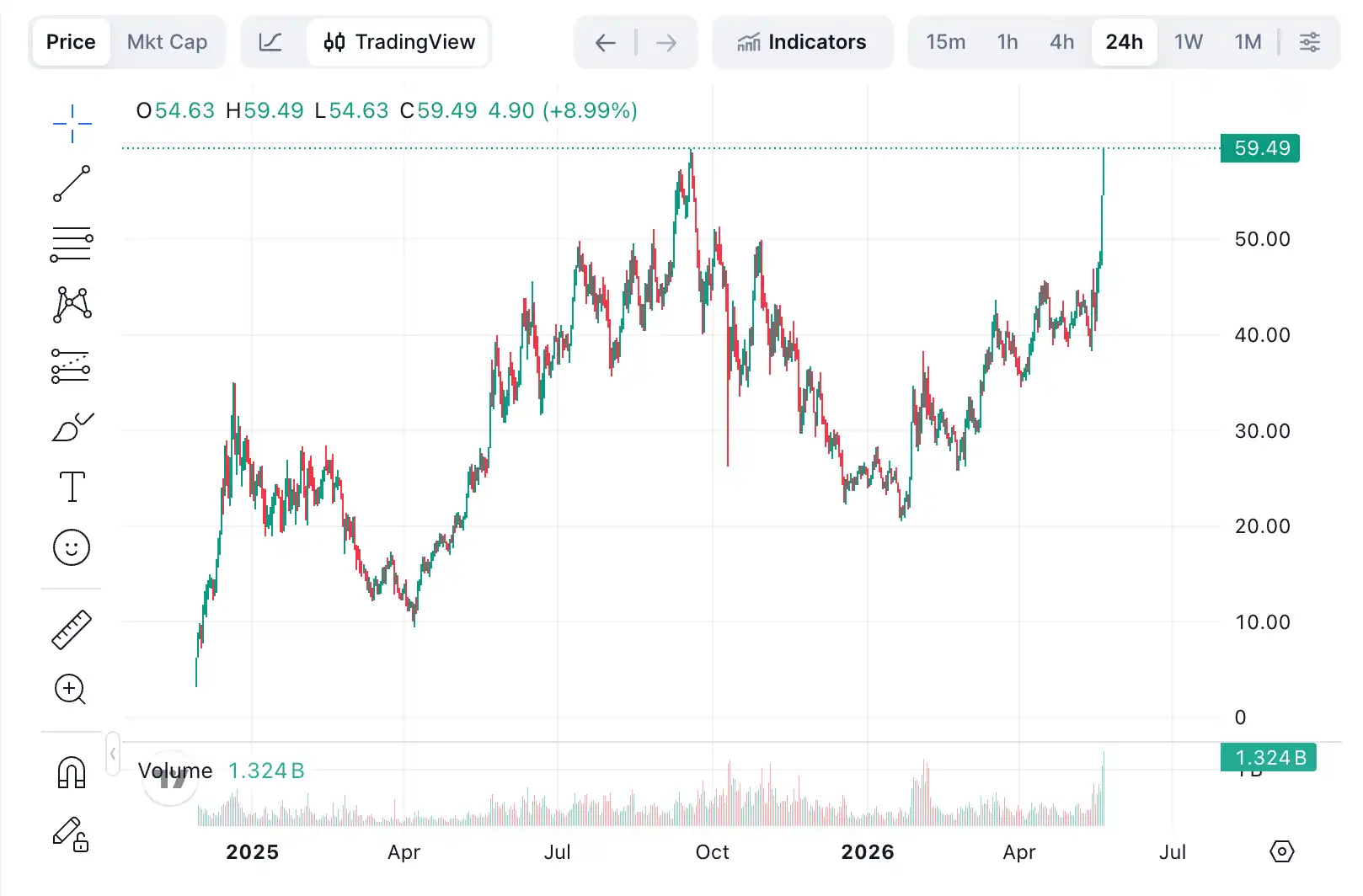
Coincidence? Perhaps. But capital doesn't believe in coincidences. It only believes in exits.

The following is the main text:

CME Group (Chicago Mercantile Exchange) is the world's largest derivatives exchange. It's where professional traders buy and sell futures on crude oil, gold, interest rates, stock indices, and Bitcoin. It handles trillions of dollars in daily trading volume and has existed since 1898.

Intercontinental Exchange (ICE) owns the New York Stock Exchange and operates multiple derivatives exchanges globally. It's another industry giant.

They are among the most powerful financial market infrastructure companies on Earth. When they point at something and call it "extremely dangerous," regulators find it hard not to listen.

Currently, CME and ICE are pressuring the U.S. Commodity Futures Trading Commission (CFTC) and Capitol Hill to crack down hard on Hyperliquid, warning that this "KYC-free" platform is a breeding ground for market manipulation and sanctions evasion.

  • There is indeed zero KYC. While Hyperliquid uses filters on its main site front-end to block addresses sanctioned by the U.S. Office of Foreign Assets Control (OFAC), its underlying protocol is completely permissionless. If someone bypasses the website and interacts directly with the smart contracts, there is no identity check waiting for them.
  • Additionally, there are no position limits on Hyperliquid. At CME, no single trader can hold a position larger than a specific size in any contract, to guard against manipulation and systemic risk. Hyperliquid has no such restrictions.
  • CME closely monitors manipulative trading behaviors like spoofing, wash trading, and coordinated attacks. Hyperliquid has no surveillance system watching for these.

These are indeed objective facts.

Influenced by this news, the HYPE token dropped 9% on May 15. Subsequently, two market makers withdrew $100 million in liquidity on May 18 in response.
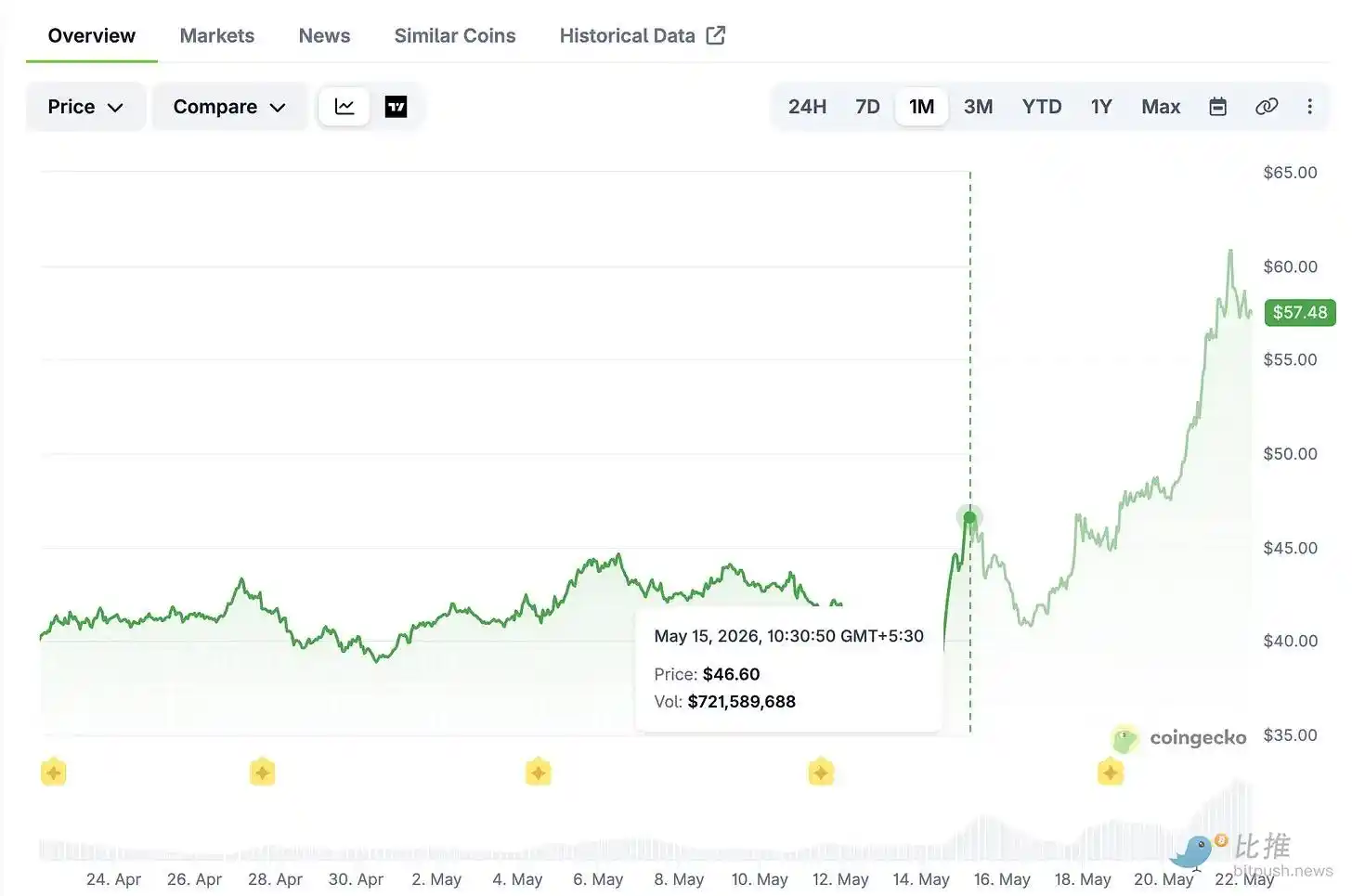
coingecko.com

But, note which specific product they are targeting. It's not the cryptocurrency perpetual contracts that Hyperliquid has been running for years, which regulators never batted an eye at. Their focus is entirely on the crude oil contracts. These are the contracts that generated $720 million in trading volume over weekends when CME's own crude market is closed.

Regarding this regulatory growing pain, CME and ICE's concerns are not entirely without merit, but we also know in our hearts they are anything but neutral observers. Their business models are entirely reliant on a legally protected "trading hours monopoly." They don't mind competing on technology, but when someone competes with them on time, they go absolutely crazy.

By bringing real volume into the crude oil market over weekends, Hyperliquid has essentially broken the space-time continuum of TradFi. And the incumbents are asking the government to force everyone else to also close their eyes while they sleep. If it were me, I'd prefer to apply for a permit to operate on weekends; but clearly, that's just my thinking.

Hyperliquid's office in Singapore has only 11 people. In the 30 days ending May 21, 2026, the protocol generated $51 million in revenue. In March, it processed a staggering $2.6 trillion in nominal derivatives trading volume.
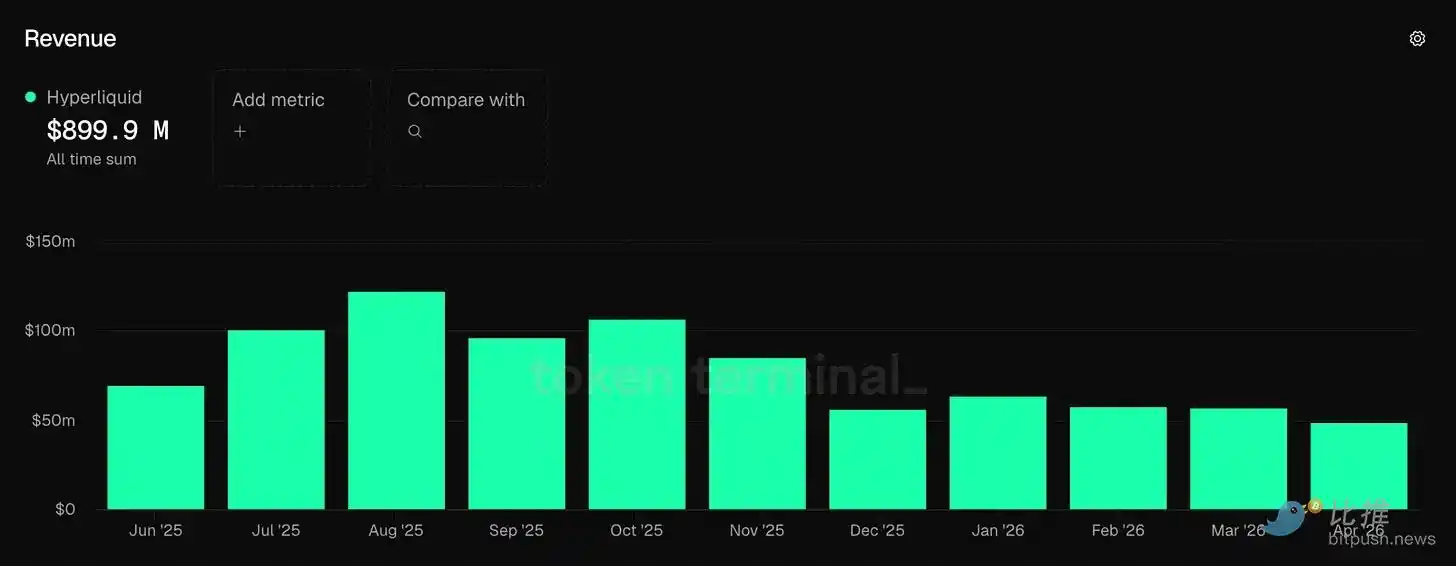
tokenterminal.com

Hyperliquid routes 97% of trading fees through an on-chain fund to buy back HYPE tokens. Generating $51 million in monthly revenue with just 11 people finds no real comparison, whether inside or outside the cryptocurrency industry, in terms of per capita economic efficiency. As of late May, HYPE is up 101% year-to-date.

All of this isn't necessarily because Hyperliquid built a technically superior derivative, strictly speaking. It's simply because it remains open when CME is closed, and therein lies immense value. Recently, some new developments have pushed this logic to an even deeper level.

On May 1, Trade.xyz, a platform built on Hyperliquid, launched a Pre-IPO perpetual futures contract for AI chipmaker Cerebras. The contract ran for two weeks before the IPO. Early in that window, traders had smoothed out a roughly 50% premium relative to the $185 IPO price, implying an opening price around $277. Then market information updated. One hour before Cerebras opened on NASDAQ, the perpetual contract on Trade.xyz was pricing the stock at $340, within less than 3% of the actual opening price. In the end, Cerebras opened at $350 on May 14, a stunning 89% surge from its $185 IPO price. Traditional pre-IPO market platforms like Forge and EquityZen had prediction errors of 35%, while Hyperliquid's error was just 3%.

When genuine uncertainty still existed, $277 was the price the market implied. As information kept flowing in and being priced in, the wisdom of the crowd smoothed out that gap. This is how price discovery is supposed to work.

Then on May 17, a Sunday morning, Trade.xyz launched a SpaceX perpetual futures contract. It opened at a reference price of $150, soared to $216 within hours, and eventually stabilized around $203, implying the crowd valued the company at $2.4 trillion.

Yet at that time, SpaceX had not publicly filed an S-1 registration statement, no Wall Street analyst had given a price target, and an official roadshow was nowhere in sight.

Traders had no idea that SpaceX had actually confidentially submitted a draft filing to the SEC as early as April 1, with a target valuation set between $1.75 trillion and $2 trillion.

Traders settled the contract at $203, implying a $2.4 trillion valuation. Before bankers held their first meeting, without access to the filing documents, the crowd landed smartly at the top end of the company's own target range. Just days later, on May 20, a Wednesday, SpaceX formally filed its actual 277-page S-1 prospectus with the public.

Currently, three products are trying to provide investors with exposure to SpaceX. Each legally bets on a different solution.

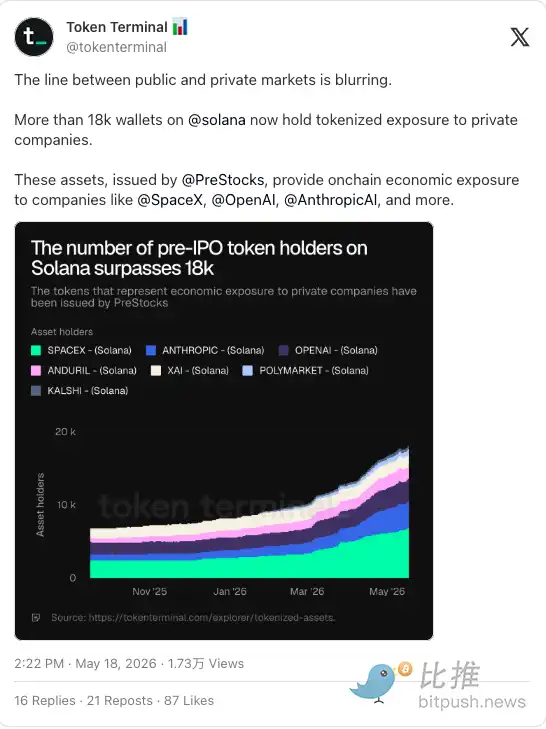
PreStocks tried to be clever. They set up special purpose vehicle (SPV) funds to buy real SpaceX shares, then split and mapped those fund shares into blockchain tokens so retail investors could get a slice. It looked like a clean backdoor into private tech companies.

However, shortly before Hyperliquid launched its SPCX contract, Anthropic and OpenAI publicly distanced themselves from third-party SPV products claiming to track their valuations. Platforms in Hong Kong and the UAE had been selling tokenized exposure to these two companies without board approval. Both companies issued warnings that the equity transfers behind these products were invalid. PreStocks' token promptly plunged 50%. When you try to operate by anchoring to real shares, the company you hold shares in always reserves the right to intervene.
Ondo Global Markets tokenizes shares through a U.S.-registered broker-dealer, with each token backed by underlying securities. Its compliance is very clean; even the Depository Trust & Clearing Corporation (DTCC) is building settlement infrastructure around it.

But Ondo's greatest strength is also its biggest vulnerability. It has a specific physical address. If the SEC decides to shut it down, they know exactly whose door to knock on. If Elon Musk objects, SpaceX's lawyers know exactly which custodian to sue. By choosing to play the game by the rules, Ondo has made itself a perfect target for pinpoint strikes.

Then look at Hyperliquid's SPCX contract — this thing is built entirely on air.

No shares, no registered broker-dealer, no claim on any physical asset. It's a synthetic perpetual contract, a ghost through and through. A pure bet on a price feed, settled entirely in USDC on a decentralized network.

Even if SpaceX wanted to stop people from trading derivatives based on its valuation, it couldn't. There's no corporate entity to serve legal papers to, no central issuer to pressure.

This is really clever. Hyperliquid basically figured out: if you have no face, no one can punch you in the face. By anchoring the product to nothing physical, they've become impossible to target.

I'm not sure this is purely a good thing.

A zero-KYC venue rerouting trillions of dollars around the global banking system — the national security nightmare this poses is hard to argue against. The fact that Hyperliquid co-founder Jeff Yan flew to Washington on May 17 to meet policymakers is proof enough of how real this pressure is.

Speaking of Jeff Yan. He is a real person, shows his face, and went to Harvard. If SpaceX wanted to sue him for trademark infringement or IP violation because his platform lists a contract called "SPCX," they could absolutely serve him the lawsuit.

But suing Jeff wouldn't make the contract disappear.

With PreStocks, if the company deletes the underlying shares, the product ceases to exist. With Ondo, if a judge freezes the bank or custodian, the product stalls. But Hyperliquid's SPCX is an autonomously deployed piece of code. Even if Jeff Yan gets sued into oblivion, those smart contracts are live, the code is immutable, and the global order book would keep running on-chain.

This is the "flawless theory" of decentralization. Reality is more fragile. Hyperliquid only runs on 20 validators, not 900,000. These validators can be identified. And the JELLY incident has already shown: they will intervene if they want to. Validators are not immutable.

Again, time is the only product they can't replicate.

Perguntas relacionadas

QWhat is Hyperliquid, and how does it differ from traditional derivatives exchanges like CME?

AHyperliquid is a decentralized derivatives exchange that operates 24/7 and without KYC on its underlying protocol, unlike traditional centralized exchanges like CME which have restricted trading hours and strict compliance requirements. It allows users to trade perpetual futures contracts on various assets, including cryptocurrencies and real-world assets (RWAs).

QWhy did the potential fines on Chinese brokerages like Futu and Tiger Securities appear to be a positive catalyst for Hyperliquid's HYPE token?

AThe announcement of severe penalties for illegal cross-border operations by Chinese brokerages signaled a potential crackdown on traditional, compliant channels for accessing global assets. This may have driven capital seeking global asset exposure and 24/7 trading into alternative platforms like Hyperliquid, which offers such access in a decentralized manner, likely contributing to a surge in its HYPE token.

QWhat are the main regulatory concerns raised by traditional exchanges (CME, ICE) against Hyperliquid?

AThe main regulatory concerns raised are: 1) Lack of KYC, which could facilitate market manipulation and sanctions evasion. 2) Absence of position limits to prevent market dominance and systemic risk. 3) No surveillance systems to monitor manipulative trading practices like spoofing or wash trading.

QHow did Hyperliquid's SpaceX (SPCX) perpetual futures contract demonstrate its price discovery capabilities?

AThe SPCX contract started trading before SpaceX's official S-1 filing and without access to confidential documents. It settled at a price implying a $2.4 trillion valuation. Days later, SpaceX's public filing revealed a target valuation range of $1.75-$2 trillion, showing that the Hyperliquid market's 'crowd wisdom' accurately discovered the price at the high end of the company's internal target range.

QWhat is the core strategic advantage of Hyperliquid's synthetic perpetual contracts (like for SpaceX) compared to other tokenized equity platforms?

AThe core advantage is that these contracts are synthetic, not backed by any real underlying asset or equity claim. This makes them legally difficult to target. Unlike platforms that tokenize actual shares (which the issuing company can challenge), Hyperliquid's contracts are pure price bets on decentralized code, offering a form of regulatory and legal resistance by having 'no face to punch.'

Leituras Relacionadas

ETH Bull and Bear Views Compilation: Can Ethereum's Value Flow Back to ETH?

Titled "ETH Bull and Bear Views: Can Ethereum's Value Flow Back to ETH?", this article synthesizes the current heated debate around Ethereum's native token, ETH, following Bankless co-founder David Hoffman's decision to sell his entire ETH holdings. The **bullish case**, represented by figures like Tom Lee (BitMine CEO) and Raoul Pal, argues that ETH's core thesis remains intact. They contend Ethereum is the essential, secure, and neutral foundational layer for future finance—encompassing stablecoins, RWA, DeFi, L2s, and Agentic AI. Bulls bet on ETH's long-term revaluation as institutional adoption of on-chain finance grows, with significant buying activity from entities like BitMine and Consensys cited as evidence. Conversely, the **bearish perspective**, led by Hoffman and analysts like Markus Thielen, questions ETH's value capture mechanism. They acknowledge Ethereum's network success but argue that the value created by L2s, DeFi, and applications does not sufficiently accrue to the ETH token itself. Bears point to ETH's prolonged underperformance versus the broader crypto market, lack of traditional cash flows, weakening "ultrasound money" narrative, and apparent institutional retreat (e.g., Harvard Management Company exiting its ETH ETF position) as key concerns. The debate highlights a pivotal shift: ETH is no longer just a community belief asset. The central question is whether ETH can transition from being a "**used infrastructure**" to a "**continuously bought and held core asset**" as more value enters the Ethereum ecosystem. The market is now critically examining the direct link between network growth and ETH's value.

marsbitHá 37m

ETH Bull and Bear Views Compilation: Can Ethereum's Value Flow Back to ETH?

marsbitHá 37m

Crypto is dead, Perps are forever

The crypto industry is shifting from a focus on creating native assets (like altcoins and protocol tokens) to becoming a "global asset pipeline." Native cryptocurrencies, except for Bitcoin, are seen as failing in their value storage and utility promises, with demand driven largely by speculation. Attention and liquidity are now moving toward real-world assets (RWAs) like U.S. stocks, bonds, gold, and oil traded on-chain via perpetual contracts (Perps). Stablecoins like USDT and USDC set the precedent, proving blockchain's core strength is efficient global settlement and transfer, not inventing new monetary systems. Meanwhile, assets like Ethereum and many DeFi tokens struggle as their narratives weaken against tangible traditional assets and the rapid real-world progress of AI. Perpetual contracts have emerged as a pivotal innovation. They simplify trading by offering pure price exposure to any asset, bypassing complexities of ownership, custody, and traditional market hours. Projects like Hyperliquid gained traction by combining CEX-like efficiency with on-chain transparency, capitalizing on post-FTX distrust, macroeconomic volatility, and the surge in demand for 24/7 stock trading. In conclusion, while the era of speculative native "crypto assets" may be over, perpetual contracts persist as the industry's most potent financial instrument—transforming all assets into globally accessible, constantly tradable instruments centered on price speculation.

marsbitHá 42m

Crypto is dead, Perps are forever

marsbitHá 42m

Tencent, Alibaba, ByteDance in a Battle for the Skill Store

Skill is becoming a key concept in the AI field, essentially serving as a structured "instruction manual" for AI Agents that specifies tool calls, decision logic, and output standards. This allows Agents to execute predefined tasks. As the number of Skills grows, distribution platforms have emerged. Major tech companies are swiftly entering this space. In March, Tencent, Alibaba, and ByteDance launched Skill stores within their respective Agent platforms. Subsequently, players like Zhipu AI, Meituan, and Xiaohongshu joined the fray. This competition for the "Skill store" is fundamentally a battle for the AI-era user entry point; whoever controls distribution controls the users. While ByteDance's Coze has experimented with paid Skills, most platforms offer them for free. The real value lies not in the stores themselves but in using them to attract and retain users within an ecosystem, driving revenue from services like cloud computing, model calls, or advertising. The landscape features three main player types: 1) **Internet giants** (e.g., Alibaba, ByteDance, Tencent, Meituan), leveraging Skills to drive traffic and monetize through their broader ecosystems (cloud services, transactions, ads). 2) **Large model companies** (e.g., Zhipu AI, Moonshot AI), using Skill stores to increase user engagement and monetize model API calls. 3) **Content platforms** (e.g., Xiaohongshu), treating Skills as a new content format to generate traffic and ad revenue. However, transforming Skill stores into a sustainable business faces significant hurdles. Key challenges include: the **difficulty in pricing Skills** due to inconsistent outputs across different models and contexts; **lack of cost transparency** (varying token consumption); **security risks** like Skill poisoning; and the **absence of standardized protocols** for development and evaluation. Unlike standardized mobile apps, Skills are often personalized workflows resistant to uniformity, which hinders the establishment of a reliable review and monetization system akin to the App Store. While there is genuine user demand for paid Skills—particularly in enterprise (e.g., contract review) and certain personal productivity scenarios—current platforms offer developers limited and unpredictable distribution. The future of Skill stores depends on overcoming these standardization, evaluation, and safety challenges to make acquiring a Skill as straightforward as downloading an app. For now, the stores function more as display shelves than robust marketplaces.

marsbitHá 42m

Tencent, Alibaba, ByteDance in a Battle for the Skill Store

marsbitHá 42m

The Crypto Scene Is Dead, Perpetual Swaps Are Eternal

The crypto industry is undergoing a fundamental shift. The era defined by minting novel, native digital assets (altcoins) is fading. These assets, lacking real-world cash flows or clear value, are losing relevance as attention and capital flow elsewhere. Two powerful external forces are reshaping the space. First, traditional assets like U.S. stocks, bonds, gold, and oil are being tokenized and traded on-chain. Second, the explosive growth of AI, with its tangible products, has overshadowed crypto's once-dominant "future narrative." This marks a critical pivot: crypto is transitioning from being a "factory for new assets" to becoming a "global conduit for existing assets." Its validated utility is not complex financial reinvention but efficient global settlement, transfer, and trading—the original promise of blockchain. Stablecoins like USDT and USDC exemplify this, offering faster dollar movement rather than replacing it. Consequently, native ecosystems like Ethereum face profound challenges. While still crucial infrastructure, ETH struggles to capture value as users interact with Layer 2s or trade traditional assets without needing to hold it. DeFi's grand narrative of rebuilding finance has narrowed to core needs like cheap transfers and deep liquidity. The true breakout innovation is the perpetual contract (Perp). It brilliantly bypasses the complexities of direct asset ownership (custody, compliance, dividends) by creating pure price exposure. Users can speculate on the price movement of *any* asset—NVIDIA, gold, oil—24/7, globally, and with leverage. This "price casino" model, while risky and ethically fraught, delivers unmatched liquidity and accessibility. Projects like Hyperliquid succeeded not by inventing new mechanics but by perfecting the timing and execution of this model. Key drivers included making on-chain Perps feel like centralized exchanges, post-FTX trust migration towards transparency, and rising demand to trade macro assets and equities round-the-clock. In conclusion, the crypto world's most enduring successes are the dollar (via stablecoins), Bitcoin, and trading. Its new frontier is not creating alternative assets but providing a seamless, perpetual trading layer—a new API—for the world's existing financial system. The age of native altcoins is over; the age of perpetual synthetic exposure has begun.

Odaily星球日报Há 51m

The Crypto Scene Is Dead, Perpetual Swaps Are Eternal

Odaily星球日报Há 51m

Trading

Spot
Futuros

Artigos em Destaque

O que é $S$

Compreender o SPERO: Uma Visão Abrangente Introdução ao SPERO À medida que o panorama da inovação continua a evoluir, o surgimento de tecnologias web3 e projetos de criptomoeda desempenha um papel fundamental na formação do futuro digital. Um projeto que tem atraído atenção neste campo dinâmico é o SPERO, denotado como SPERO,$$s$. Este artigo tem como objetivo reunir e apresentar informações detalhadas sobre o SPERO, para ajudar entusiastas e investidores a compreender as suas bases, objetivos e inovações nos domínios web3 e cripto. O que é o SPERO,$$s$? O SPERO,$$s$ é um projeto único dentro do espaço cripto que procura aproveitar os princípios da descentralização e da tecnologia blockchain para criar um ecossistema que promove o envolvimento, a utilidade e a inclusão financeira. O projeto é concebido para facilitar interações peer-to-peer de novas maneiras, proporcionando aos utilizadores soluções e serviços financeiros inovadores. No seu núcleo, o SPERO,$$s$ visa capacitar indivíduos ao fornecer ferramentas e plataformas que melhoram a experiência do utilizador no espaço das criptomoedas. Isso inclui a possibilidade de métodos de transação mais flexíveis, a promoção de iniciativas impulsionadas pela comunidade e a criação de caminhos para oportunidades financeiras através de aplicações descentralizadas (dApps). A visão subjacente do SPERO,$$s$ gira em torno da inclusão, visando fechar lacunas dentro das finanças tradicionais enquanto aproveita os benefícios da tecnologia blockchain. Quem é o Criador do SPERO,$$s$? A identidade do criador do SPERO,$$s$ permanece algo obscura, uma vez que existem recursos publicamente disponíveis limitados que fornecem informações detalhadas sobre o(s) seu(s) fundador(es). Esta falta de transparência pode resultar do compromisso do projeto com a descentralização—uma ética que muitos projetos web3 partilham, priorizando contribuições coletivas em vez de reconhecimento individual. Ao centrar as discussões em torno da comunidade e dos seus objetivos coletivos, o SPERO,$$s$ incorpora a essência do empoderamento sem destacar indivíduos específicos. Assim, compreender a ética e a missão do SPERO é mais importante do que identificar um criador singular. Quem são os Investidores do SPERO,$$s$? O SPERO,$$s$ é apoiado por uma diversidade de investidores que vão desde capitalistas de risco a investidores-anjo dedicados a promover a inovação no setor cripto. O foco desses investidores geralmente alinha-se com a missão do SPERO—priorizando projetos que prometem avanço tecnológico social, inclusão financeira e governança descentralizada. Essas fundações de investidores estão tipicamente interessadas em projetos que não apenas oferecem produtos inovadores, mas que também contribuem positivamente para a comunidade blockchain e os seus ecossistemas. O apoio desses investidores reforça o SPERO,$$s$ como um concorrente notável no domínio em rápida evolução dos projetos cripto. Como Funciona o SPERO,$$s$? O SPERO,$$s$ emprega uma estrutura multifacetada que o distingue de projetos de criptomoeda convencionais. Aqui estão algumas das características-chave que sublinham a sua singularidade e inovação: Governança Descentralizada: O SPERO,$$s$ integra modelos de governança descentralizada, capacitando os utilizadores a participar ativamente nos processos de tomada de decisão sobre o futuro do projeto. Esta abordagem promove um sentido de propriedade e responsabilidade entre os membros da comunidade. Utilidade do Token: O SPERO,$$s$ utiliza o seu próprio token de criptomoeda, concebido para servir várias funções dentro do ecossistema. Esses tokens permitem transações, recompensas e a facilitação de serviços oferecidos na plataforma, melhorando o envolvimento e a utilidade gerais. Arquitetura em Camadas: A arquitetura técnica do SPERO,$$s$ suporta modularidade e escalabilidade, permitindo a integração contínua de funcionalidades e aplicações adicionais à medida que o projeto evolui. Esta adaptabilidade é fundamental para manter a relevância no panorama cripto em constante mudança. Envolvimento da Comunidade: O projeto enfatiza iniciativas impulsionadas pela comunidade, empregando mecanismos que incentivam a colaboração e o feedback. Ao nutrir uma comunidade forte, o SPERO,$$s$ pode melhor atender às necessidades dos utilizadores e adaptar-se às tendências do mercado. Foco na Inclusão: Ao oferecer taxas de transação baixas e interfaces amigáveis, o SPERO,$$s$ visa atrair uma base de utilizadores diversificada, incluindo indivíduos que anteriormente podem não ter participado no espaço cripto. Este compromisso com a inclusão alinha-se com a sua missão abrangente de empoderamento através da acessibilidade. Cronologia do SPERO,$$s$ Compreender a história de um projeto fornece insights cruciais sobre a sua trajetória de desenvolvimento e marcos. Abaixo está uma cronologia sugerida que mapeia eventos significativos na evolução do SPERO,$$s$: Fase de Conceituação e Ideação: As ideias iniciais que formam a base do SPERO,$$s$ foram concebidas, alinhando-se de perto com os princípios de descentralização e foco na comunidade dentro da indústria blockchain. Lançamento do Whitepaper do Projeto: Após a fase conceitual, um whitepaper abrangente detalhando a visão, os objetivos e a infraestrutura tecnológica do SPERO,$$s$ foi lançado para atrair o interesse e o feedback da comunidade. Construção da Comunidade e Primeiros Envolvimentos: Esforços ativos de divulgação foram feitos para construir uma comunidade de primeiros adotantes e investidores potenciais, facilitando discussões em torno dos objetivos do projeto e angariando apoio. Evento de Geração de Tokens: O SPERO,$$s$ realizou um evento de geração de tokens (TGE) para distribuir os seus tokens nativos a apoiantes iniciais e estabelecer liquidez inicial dentro do ecossistema. Lançamento da dApp Inicial: A primeira aplicação descentralizada (dApp) associada ao SPERO,$$s$ foi lançada, permitindo que os utilizadores interagissem com as funcionalidades principais da plataforma. Desenvolvimento Contínuo e Parcerias: Atualizações e melhorias contínuas nas ofertas do projeto, incluindo parcerias estratégicas com outros players no espaço blockchain, moldaram o SPERO,$$s$ em um jogador competitivo e em evolução no mercado cripto. Conclusão O SPERO,$$s$ é um testemunho do potencial do web3 e das criptomoedas para revolucionar os sistemas financeiros e capacitar indivíduos. Com um compromisso com a governança descentralizada, o envolvimento da comunidade e funcionalidades inovadoras, abre caminho para um panorama financeiro mais inclusivo. Como em qualquer investimento no espaço cripto em rápida evolução, potenciais investidores e utilizadores são incentivados a pesquisar minuciosamente e a envolver-se de forma ponderada com os desenvolvimentos em curso dentro do SPERO,$$s$. O projeto demonstra o espírito inovador da indústria cripto, convidando a uma exploração mais aprofundada das suas inúmeras possibilidades. Embora a jornada do SPERO,$$s$ ainda esteja a desenrolar-se, os seus princípios fundamentais podem, de facto, influenciar o futuro de como interagimos com a tecnologia, as finanças e uns com os outros em ecossistemas digitais interconectados.

69 Visualizações TotaisPublicado em {updateTime}Atualizado em 2024.12.17

O que é $S$

O que é AGENT S

Agent S: O Futuro da Interação Autónoma no Web3 Introdução No panorama em constante evolução do Web3 e das criptomoedas, as inovações estão constantemente a redefinir a forma como os indivíduos interagem com plataformas digitais. Um projeto pioneiro, o Agent S, promete revolucionar a interação humano-computador através do seu framework aberto e agente. Ao abrir caminho para interações autónomas, o Agent S visa simplificar tarefas complexas, oferecendo aplicações transformadoras em inteligência artificial (IA). Esta exploração detalhada irá aprofundar-se nas complexidades do projeto, nas suas características únicas e nas implicações para o domínio das criptomoedas. O que é o Agent S? O Agent S é um framework aberto e agente, especificamente concebido para abordar três desafios fundamentais na automação de tarefas computacionais: Aquisição de Conhecimento Específico de Domínio: O framework aprende inteligentemente a partir de várias fontes de conhecimento externas e experiências internas. Esta abordagem dupla capacita-o a construir um rico repositório de conhecimento específico de domínio, melhorando o seu desempenho na execução de tarefas. Planeamento ao Longo de Longos Horizontes de Tarefas: O Agent S emprega planeamento hierárquico aumentado por experiência, uma abordagem estratégica que facilita a decomposição e execução eficientes de tarefas intrincadas. Esta característica melhora significativamente a sua capacidade de gerir múltiplas subtarefas de forma eficiente e eficaz. Gestão de Interfaces Dinâmicas e Não Uniformes: O projeto introduz a Interface Agente-Computador (ACI), uma solução inovadora que melhora a interação entre agentes e utilizadores. Utilizando Modelos de Linguagem Multimodais de Grande Escala (MLLMs), o Agent S pode navegar e manipular diversas interfaces gráficas de utilizador de forma fluida. Através destas características pioneiras, o Agent S fornece um framework robusto que aborda as complexidades envolvidas na automação da interação humana com máquinas, preparando o terreno para uma infinidade de aplicações em IA e além. Quem é o Criador do Agent S? Embora o conceito de Agent S seja fundamentalmente inovador, informações específicas sobre o seu criador permanecem elusivas. O criador é atualmente desconhecido, o que destaca ou o estágio nascente do projeto ou a escolha estratégica de manter os membros fundadores em anonimato. Independentemente da anonimidade, o foco permanece nas capacidades e no potencial do framework. Quem são os Investidores do Agent S? Como o Agent S é relativamente novo no ecossistema criptográfico, informações detalhadas sobre os seus investidores e financiadores não estão explicitamente documentadas. A falta de informações disponíveis publicamente sobre as fundações de investimento ou organizações que apoiam o projeto levanta questões sobre a sua estrutura de financiamento e roteiro de desenvolvimento. Compreender o apoio é crucial para avaliar a sustentabilidade do projeto e o seu impacto potencial no mercado. Como Funciona o Agent S? No núcleo do Agent S reside uma tecnologia de ponta que lhe permite funcionar eficazmente em diversos ambientes. O seu modelo operacional é construído em torno de várias características-chave: Interação Humano-Computador Semelhante: O framework oferece planeamento avançado em IA, esforçando-se para tornar as interações com computadores mais intuitivas. Ao imitar o comportamento humano na execução de tarefas, promete elevar as experiências dos utilizadores. Memória Narrativa: Utilizada para aproveitar experiências de alto nível, o Agent S utiliza memória narrativa para acompanhar os históricos de tarefas, melhorando assim os seus processos de tomada de decisão. Memória Episódica: Esta característica fornece aos utilizadores orientações passo a passo, permitindo que o framework ofereça suporte contextual à medida que as tarefas se desenrolam. Suporte para OpenACI: Com a capacidade de funcionar localmente, o Agent S permite que os utilizadores mantenham o controlo sobre as suas interações e fluxos de trabalho, alinhando-se com a ética descentralizada do Web3. Fácil Integração com APIs Externas: A sua versatilidade e compatibilidade com várias plataformas de IA garantem que o Agent S possa integrar-se perfeitamente em ecossistemas tecnológicos existentes, tornando-o uma escolha apelativa para desenvolvedores e organizações. Estas funcionalidades contribuem coletivamente para a posição única do Agent S no espaço cripto, à medida que automatiza tarefas complexas e em múltiplos passos com mínima intervenção humana. À medida que o projeto evolui, as suas potenciais aplicações no Web3 podem redefinir a forma como as interações digitais se desenrolam. Cronologia do Agent S O desenvolvimento e os marcos do Agent S podem ser encapsulados numa cronologia que destaca os seus eventos significativos: 27 de Setembro de 2024: O conceito de Agent S foi lançado num artigo de pesquisa abrangente intitulado “Um Framework Agente Aberto que Usa Computadores como um Humano”, mostrando a base para o projeto. 10 de Outubro de 2024: O artigo de pesquisa foi disponibilizado publicamente no arXiv, oferecendo uma exploração aprofundada do framework e da sua avaliação de desempenho com base no benchmark OSWorld. 12 de Outubro de 2024: Uma apresentação em vídeo foi lançada, proporcionando uma visão visual das capacidades e características do Agent S, envolvendo ainda mais potenciais utilizadores e investidores. Estes marcos na cronologia não apenas ilustram o progresso do Agent S, mas também indicam o seu compromisso com a transparência e o envolvimento da comunidade. Pontos-Chave Sobre o Agent S À medida que o framework Agent S continua a evoluir, várias características-chave destacam-se, sublinhando a sua natureza inovadora e potencial: Framework Inovador: Concebido para proporcionar um uso intuitivo de computadores semelhante à interação humana, o Agent S traz uma abordagem nova à automação de tarefas. Interação Autónoma: A capacidade de interagir autonomamente com computadores através de GUI significa um avanço em direção a soluções computacionais mais inteligentes e eficientes. Automação de Tarefas Complexas: Com a sua metodologia robusta, pode automatizar tarefas complexas e em múltiplos passos, tornando os processos mais rápidos e menos propensos a erros. Melhoria Contínua: Os mecanismos de aprendizagem permitem que o Agent S melhore a partir de experiências passadas, aprimorando continuamente o seu desempenho e eficácia. Versatilidade: A sua adaptabilidade em diferentes ambientes operacionais, como OSWorld e WindowsAgentArena, garante que pode servir uma ampla gama de aplicações. À medida que o Agent S se posiciona no panorama do Web3 e das criptomoedas, o seu potencial para melhorar as capacidades de interação e automatizar processos significa um avanço significativo nas tecnologias de IA. Através do seu framework inovador, o Agent S exemplifica o futuro das interações digitais, prometendo uma experiência mais fluida e eficiente para os utilizadores em diversas indústrias. Conclusão O Agent S representa um ousado avanço na união da IA e do Web3, com a capacidade de redefinir a forma como interagimos com a tecnologia. Embora ainda esteja nas suas fases iniciais, as possibilidades para a sua aplicação são vastas e cativantes. Através do seu framework abrangente que aborda desafios críticos, o Agent S visa trazer interações autónomas para o primeiro plano da experiência digital. À medida que avançamos mais profundamente nos domínios das criptomoedas e da descentralização, projetos como o Agent S desempenharão, sem dúvida, um papel crucial na formação do futuro da tecnologia e da colaboração humano-computador.

653 Visualizações TotaisPublicado em {updateTime}Atualizado em 2025.01.14

O que é AGENT S

Como comprar S

Bem-vindo à HTX.com!Tornámos a compra de Sonic (S) simples e conveniente.Segue o nosso guia passo a passo para iniciar a tua jornada no mundo das criptos.Passo 1: cria a tua conta HTXUtiliza o teu e-mail ou número de telefone para te inscreveres numa conta gratuita na HTX.Desfruta de um processo de inscrição sem complicações e desbloqueia todas as funcionalidades.Obter a minha contaPasso 2: vai para Comprar Cripto e escolhe o teu método de pagamentoCartão de crédito/débito: usa o teu visa ou mastercard para comprar Sonic (S) instantaneamente.Saldo: usa os fundos da tua conta HTX para transacionar sem problemas.Terceiros: adicionamos métodos de pagamento populares, como Google Pay e Apple Pay, para aumentar a conveniência.P2P: transaciona diretamente com outros utilizadores na HTX.Mercado de balcão (OTC): oferecemos serviços personalizados e taxas de câmbio competitivas para os traders.Passo 3: armazena teu Sonic (S)Depois de comprar o teu Sonic (S), armazena-o na tua conta HTX.Alternativamente, podes enviá-lo para outro lugar através de transferência blockchain ou usá-lo para transacionar outras criptomoedas.Passo 4: transaciona Sonic (S)Transaciona facilmente Sonic (S) no mercado à vista da HTX.Acede simplesmente à tua conta, seleciona o teu par de trading, executa as tuas transações e monitoriza em tempo real.Oferecemos uma experiência de fácil utilização tanto para principiantes como para traders experientes.

1.2k Visualizações TotaisPublicado em {updateTime}Atualizado em 2026.06.02

Como comprar S

Discussões

Bem-vindo à Comunidade HTX. Aqui, pode manter-se informado sobre os mais recentes desenvolvimentos da plataforma e obter acesso a análises profissionais de mercado. As opiniões dos utilizadores sobre o preço de S (S) são apresentadas abaixo.

活动图片