Funding Weekly Report | 13 Public Funding Events, Superstate Completes $82.5 Million Series B Funding Led by Bain Capital Crypto and Distributed Global

marsbitPublicado em 2026-01-26Última atualização em 2026-01-26

Resumo

Last week (Jan 19-25) saw 13 blockchain funding rounds totaling over $222 million. Key deals include: - **DeFi**: Superstate raised $82.5M in a Series B led by Bain Capital Crypto and Distributed Global to build an on-chain securities issuance layer. River secured $12M to expand cross-chain liquidity infrastructure. Cork raised $5.5M for tokenized risk markets. - **Web3 & AI**: Warden raised $4M for AI agent infrastructure. AKEDO secured $5M for AI-native content creation. Lazbubu received strategic funding for its AI companion agent on BNB Chain. - **Infrastructure**: ZBD raised $40M led by Blockstream Capital for Bitcoin-based gaming payments. Bitway raised $4.44M for Bitcoin L1 development. - **CeFi**: Argentine fintech Pomelo raised $55M to launch a stablecoin credit card and expand in Latin America. Additional notable AI deals outside the report included Humans& ($480M seed round) and Baseten ($300M round with $150M from NVIDIA).

Highlights of This Issue

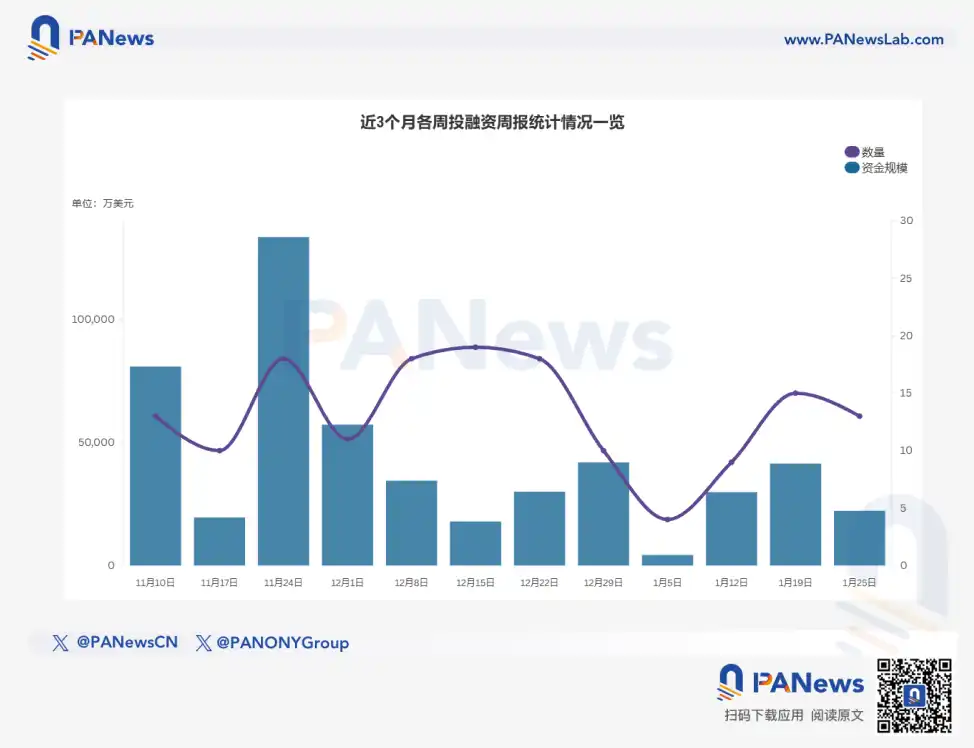
According to incomplete statistics from PANews, there were 13 investment and financing events in the global blockchain sector last week (1.19-1.25), with a total funding scale exceeding $222 million. The overview is as follows:

  • DeFi announced 5 investment and financing events, among which the fintech and asset tokenization company Superstate announced the completion of an $82.5 million Series B funding round;
  • The Web3+AI track announced 3 investment and financing events, among which the AI agent infrastructure and application layer Warden completed a $4 million strategic funding round;
  • The Infrastructure & Tools field announced 2 investment and financing events, among which the Bitcoin payment startup ZBD completed a $40 million Series C funding round, led by Blockstream Capital;
  • The Centralized Finance field announced 3 investment and financing events, among which the Argentina-based fintech company Pomelo completed a $55 million Series C funding round, led by Kaszek and Insight Partners.
DeFi

Fintech and Asset Tokenization Company Superstate Completes $82.5 Million Series B Funding

Fintech and asset tokenization company Superstate announced the completion of an $82.5 million Series B funding round, led by Bain Capital Crypto and Distributed Global, with participation from Haun Ventures, Brevan Howard Digital, Galaxy Digital, Bullish, ParaFi, and others. The company plans to use this funding round to build a full on-chain issuance layer on the Ethereum and Solana blockchains for issuing and trading SEC-registered shares. Its goal is to leverage blockchain technology to make the company fundraising and listing process more efficient.

Superstate currently manages over $1.23 billion in assets and operates two tokenized funds. As an SEC-registered transfer agent, the company, through its "Opening Bell" platform, has supported listed companies in directly issuing and selling digital shares to investors on public blockchains by the end of 2025, enabling real-time management of issuance, settlement, and ownership records.

River Completes $12 Million Strategic Funding Round with Participation from Maelstrom Fund, The Spartan Group, etc.

River announced the completion of a $12 million strategic funding round, with investors including Tron DAO, Justin Sun, the Maelstrom Fund founded by Arthur Hayes, The Spartan Group, and several US and European Nasdaq-listed companies. This funding will support River in expanding its presence in EVM and non-EVM ecosystems, including networks such as TRON and Sui, and continuing to build on-chain liquidity infrastructure.

Tokenized Risk Startup Cork Completes $5.5 Million Seed Round Led by a16z and CSX

Startup Cork announced the completion of a $5.5 million seed funding round, co-led by Andreessen Horowitz (a16z), CSX, and Road Capital, with participation from 432 Ventures, BitGo Ventures, Cooley, DEPO Ventures, Funfair Ventures, G20 Group, Gate Labs, Hyperithm Gate, IDEO Ventures, PEER VC, Stake Capital, and WAGMI Ventures, among others.

Cork is dedicated to building a "programmable risk layer," aiming to make the implicit risks in real-world assets transparent and tradable through tokenization. Its infrastructure allows asset managers, issuers, and others to create customized swap markets to enhance the liquidity of redemptions for on-chain assets, risk transparency, and market confidence. This tool can also be used to assess the risks of crypto-native products such as stablecoins and staking tokens. The team plans to launch the first production-level risk markets in the coming months and expand cooperation with treasuries and asset issuers.

HyperLend Announces Completion of $1.7 Million Funding to Date with Participation from RockawayX, etc.

Lending platform HyperLend disclosed the HPL token economic model allocation: 30.14% for ecosystem growth and incentives, 25% for genesis allocation, 22.5% for core contributors, 17.36% allocated to strategic investors, and 5% reserved for liquidity. The protocol has completed $1.7 million in funding to date, with investors including RockawayX, No Limit Holdings, Nucleus, Duplicate Capital, Dumpster, and others. Strategic investors receive 10% of their allocation at Token Generation Event (TGE), followed by a 4-month lock-up period, with the remaining portion vesting over 2 years.

Saturn Announces Completion of $800,000 Funding with Participation from YZi Labs, Sora Ventures, etc.

Saturn announced the completion of an $800,000 funding round, with participation from YZi Labs, Sora Ventures, and several well-known angel investors in the cryptocurrency field. The funds will be used to build USDat, a Bitcoin-backed stablecoin protocol offering an 11%+ yield. Saturn stated that the yield is provided through the Strategy perpetual preferred shares STRC, while unlocking global on-chain digital credit access.

AI

AI Agent Infrastructure and Application Layer Warden Completes $4 Million Strategic Funding

The infrastructure and application layer project for AI agents, Warden, announced the completion of a $4 million strategic funding round, valuing the company at $200 million. This round saw participation from strategic partners and ecosystem contributors including 0G, Messari, and Venice.AI. The funding aims to accelerate product development and expand its AI agent capabilities in areas such as trading, automation, and programmable wealth. According to reports, Warden is building the full stack for the agent internet, including next-generation agent crypto wallets.

AI-Native Content Creation Engine AKEDO Completes $5 Million Seed Round with Participation from Sfermion, etc.

The AI-native content creation engine and publishing platform AKEDO announced the completion of a $5 million seed funding round. This seed round was led by Karatage, with participation from investors in the gaming, artificial intelligence, and cryptocurrency fields, including Sfermion, Collab + Currency, MARBLEX, Seed Club, The Open Platform, TON Ventures, Gagra Ventures, Kenetic Capital, Metalabs Ventures, and others.

AKEDO is committed to building an "ambiance coding" platform driven by a multi-agent AI system, aiming to significantly improve the efficiency of game and content development through collaborative AI agents. The platform allows users to create game collections, generate AIGC content, and plans to support one-click collection token issuance in the future, unlocking diverse revenue streams for creators and protocols. The company's CEO stated that this funding will be used to expand its multi-agent infrastructure.

BNB Chain Ecosystem AI Companion Project Lazbubu Completes Strategic Round Led by Metis

The BNB Chain ecosystem AI companion project Lazbubu announced the completion of a strategic funding round led by Metis, with participation from Hotcoin Labs, Honey Capital, APUS Capital, and Becker Ventures. This round of funding will be used for core product development, global user growth, ecosystem partnership expansion, and further refinement of the DAT (Data Anchored Token) mechanism.

Lazbubu is an on-chain AI companion agent based on the DAT mechanism, achieving personalized growth by recording user interaction data (such as conversations, decisions, etc.). All data is anchored via BNB Chain, ensuring continuous verifiability and user autonomy. During its testnet phase, it attracted over 80,000 users and generated over 1 million interactions.

The DAT mechanism supports real-time conversion of AI interaction behaviors into on-chain assets, allowing users to view, transfer, or combine related data. Future plans for the project include expanding multimodal interaction capabilities, achieving cross-chain compatibility, and launching community governance mechanisms.

AI Startup Humans& Completes $480 Million Seed Round with Valuation Reaching $4.48 Billion

Human-oriented AI company Humans&, co-founded by former members of Anthropic, xAI, and Google, completed a $480 million seed funding round, valuing the company at $4.48 billion. Investors include Nvidia, Jeff Bezos, SV Angel, GV, and Emerson Collective, among others. The company is dedicated to developing AI tools that enhance human collaboration. Team members hail from OpenAI, Meta, AI2, MIT, etc., focusing on multi-agent reinforcement learning, AI memory, and user understanding, aiming to reshape AI model training and interaction methods.

(This financing is not included in this week's data statistics)

Nvidia Invests $150 Million in AI Inference Company Baseten

The AI inference-focused startup Baseten has completed a $300 million funding round, reaching a valuation of $5 billion, nearly double its previous valuation. This round was led by venture capital firm IVP and Alphabet's independent growth fund CapitalG. Chip giant Nvidia also participated in the investment, injecting $150 million into Baseten as part of the deal. This transaction highlights Nvidia's active deployment in the AI inference field regarding startups. As the industry's focus shifts from training models to large-scale operation and inference (where AI models generate outputs based on inputs), Nvidia is increasing its investment in related startups while continuing to invest in its own AI chip customers.

(This financing is not included in this week's data statistics)

Infrastructure & Tools

Bitcoin Payment Startup ZBD Completes $40 Million Series C Funding Led by Blockstream Capital

Bitcoin payment startup ZBD announced the completion of a $40 million Series C funding round. This round was led by Blockstream Capital (which invested $36 million); other investors and the company valuation were not disclosed. Headquartered in New Jersey, ZBD primarily provides payment software solutions for video games, supporting multiple transaction processings including Bitcoin. The company is not involved in NFT or crypto-based gameplay but focuses on leveraging blockchain as a payment channel to help game developers establish direct financial relationships with players, enabling transfers between users and in-game reward distribution. The company currently has 70 employees and partnered with 55 games in 2025. This funding will be used to expand its payment product suite over the next year.

Bitcoin-Native L1 Protocol Bitway Completes $4.444 Million Seed Round Led by TRON DAO

The Bitcoin-native Layer 1 protocol and infrastructure platform Bitway announced the completion of a $4.444 million seed funding round led by TRON DAO, with participation from HTX Ventures and others. To date, Bitway has raised over $5.8 million from institutional investors. After completing the first seed financing round, it completed a targeted strategic funding round, valuing Bitway at $100 million.

Bitway was founded by former Binance team members and was previously incubated through YZi Labs' EASY Residency program and launched via the Binance Booster program. Bitway has two core products: the on-chain wealth management platform Bitway Earn and the Layer 1 application chain Bitway Chain, specifically for payment and financing solutions.

Centralized Finance

Argentine Payment Startup Pomelo Completes $55 Million Series C Funding, to Launch Stablecoin Credit Card

Argentina-based fintech company Pomelo completed a $55 million Series C funding round led by Kaszek and Insight Partners, aiming to deepen its presence in the Latin American market and expand its global business. The funds will be used to expand its credit card payment processing business in Mexico and Brazil and launch a global credit card settled with the stablecoin USDC. Pomelo also plans to develop real-time and intelligent agent payment systems that can operate cross-border, serving traditional banks and large international clients. Current partners already include Visa, Mastercard, Binance, Western Union, and others.

Dutch Cryptocurrency Platform Finst Completes €8 Million Series A Funding

Dutch cryptocurrency platform Finst completed an €8 million Series A funding round, led by Endeit Capital, with follow-on investments from existing investors including Spinnin' Records founder Eelko van Kooten and DEGIRO co-founder Mark Franse. This financing brings Finst's total funding to €15 million.

The platform was founded in 2023 and has obtained crypto asset service provider authorization from the Dutch Authority for the Financial Markets (AFM), serving retail and institutional clients in 30 European countries. The company stated that this round of funding will be used to expand into the European market, develop new products and services, including expanding staking coverage and market-leading interest rates, increasing asset selection and platform features, and developing more product lines for institutional and professional users.

"Crypto-as-a-Service" Platform CheckSig Completes €3.5 Million Series A Funding

European "Crypto-as-a-Service" platform CheckSig announced the completion of a €3.5 million Series A funding round at a valuation of €33.5 million. To date, its total funding has reached €6.2 million. The company obtained a MiCAR license this year and provides crypto custody, crypto trading, cryptocurrency tax withholding, and other services, aiming to provide secure and transparent cryptocurrency services for individual and institutional investors.

Perguntas relacionadas

QWhich company raised the largest funding amount in this week's report and what was the round?

ASuperstate raised the largest funding amount of $82.5 million in a Series B round.

QWho were the lead investors in Superstate's $82.5 million Series B funding round?

AThe Series B round for Superstate was co-led by Bain Capital Crypto and Distributed Global.

QWhat is the primary business focus of the payment startup ZBD that raised $40 million?

AZBD is a Bitcoin payments startup that provides payment software solutions for video games, using blockchain as a payment rail for user-to-user transfers and in-game rewards.

QIn which sector did the company Warden, which raised $4 million, operate and what is it building?

AWarden operates in the Web3+AI sector and is building a full-stack for the 'internet of agents', including a next-generation agent crypto wallet for trading, automation, and programmable wealth.

QWhich centralized finance (CeFi) company raised $55 million to launch a stablecoin credit card and expand in Latin America?

AThe Argentine fintech company Pomelo raised $55 million in a Series C round to launch a stablecoin (USDC) credit card and expand its operations in Latin America, specifically in Mexico and Brazil.

Leituras Relacionadas

The AI Agent Era Accelerates Its Arrival: Questflow Defines a New Paradigm of Financial Intelligence with On-Chain AI Brokerage

The AI Agent era is accelerating, with the CB Insights AI 100 list highlighting global investment confidence. The focus has shifted from whether AI works to its speed of deployment and ability to manage complex workflows, with autonomous AI Agents driving this transformation. At the forefront is Questflow, a Singapore-based startup redefining financial intelligence through its on-chain AI brokerage. Unlike tools that merely provide data dashboards, Questflow deploys AI Agents that proactively scan markets, form judgments, and execute trades via a conversational interface—operating 24/7 without requiring manual confirmation for each decision. This embodies the new AI paradigm of agents capable of executing multi-step workflows autonomously. Questflow's mission is to democratize institutional-grade trading intelligence. Historically reserved for the ultra-wealthy, this capability is now accessible starting from just $1 through Questflow's "AI Clone + Copy Trade" model. The platform charges only a 1% execution fee, aligning its incentives directly with users and eliminating traditional management or performance fees. The timing is opportune, aligning with key trends identified by CB Insights: the scalable deployment of AI Agents, accelerated AI adoption in financial services, and the maturation of on-chain infrastructure. With robust liquidity on platforms like Hyperliquid and Polymarket, alongside advancements in AI reasoning and non-custodial wallet security, Questflow is positioned to merge the roles of broker, fund, and exchange into a single, accessible platform for millions.

链捕手Há 11m

The AI Agent Era Accelerates Its Arrival: Questflow Defines a New Paradigm of Financial Intelligence with On-Chain AI Brokerage

链捕手Há 11m

Why Pricing Social Interactions is Doomed to Fail?

Titled "Why Putting a Price on Social Interaction Is Doomed to Fail," this article critiques attempts to monetize social networks directly through SocialFi models, arguing their inevitable failure stems from a fundamental misunderstanding of media dynamics. Using Marshall McLuhan's theory of "hot" and "cold" media, the author posits that social networks are inherently "cold" media. Their value isn't contained in individual posts but is co-created through user participation, interpretation, and fragmented, ongoing interaction (e.g., replies, shares). This ambiguity and need for user involvement are core to their function. The article asserts that SocialFi projects like Friend.tech failed because introducing real-time, tradable financial pricing (a definitive "hot" signal) into this "cold" environment doesn't add a layer—it replaces the medium's essence. The unambiguous price signal overshadows and nullifies the nuanced, participatory social signal. Users become traders, not participants, and when speculative profits vanish, the underlying social ecosystem—never genuinely cultivated—collapses entirely. This principle extends beyond crypto. The author argues platforms like Twitter have gradually "heated up" through metrics (likes, retweets counts, algorithmically defined value), shifting users from participants to performers and eroding organic engagement. The solution isn't to abandon capital but to manage its entry point. Successful models like Substack, Patreon, or Bandcamp allow capital to "condense" at specific, isolated nodes (e.g., subscriptions, one-time payments) without permeating and "heating" every social interaction. They preserve the core "cold," participatory medium while enabling monetization at designated boundaries. The NFT boom and bust serves as a stark parallel: the ancient "cold" medium of collecting (valued for story, community, gradual accumulation) was rapidly destroyed by platforms that introduced real-time floor prices, rarity scores, and trading dashboards, transforming collectors into speculators and vaporizing cultural value when prices fell. The core lesson: "Liquidity equals heat." Injecting high liquidity and definitive pricing into a "cold" participatory medium doesn't optimize it; it fundamentally alters and destroys its value-creating mechanism. The future lies not in pricing every social gesture but in finding precise, non-invasive points for capital to condense without overheating the entire ecosystem.

marsbitHá 19m

Why Pricing Social Interactions is Doomed to Fail?

marsbitHá 19m

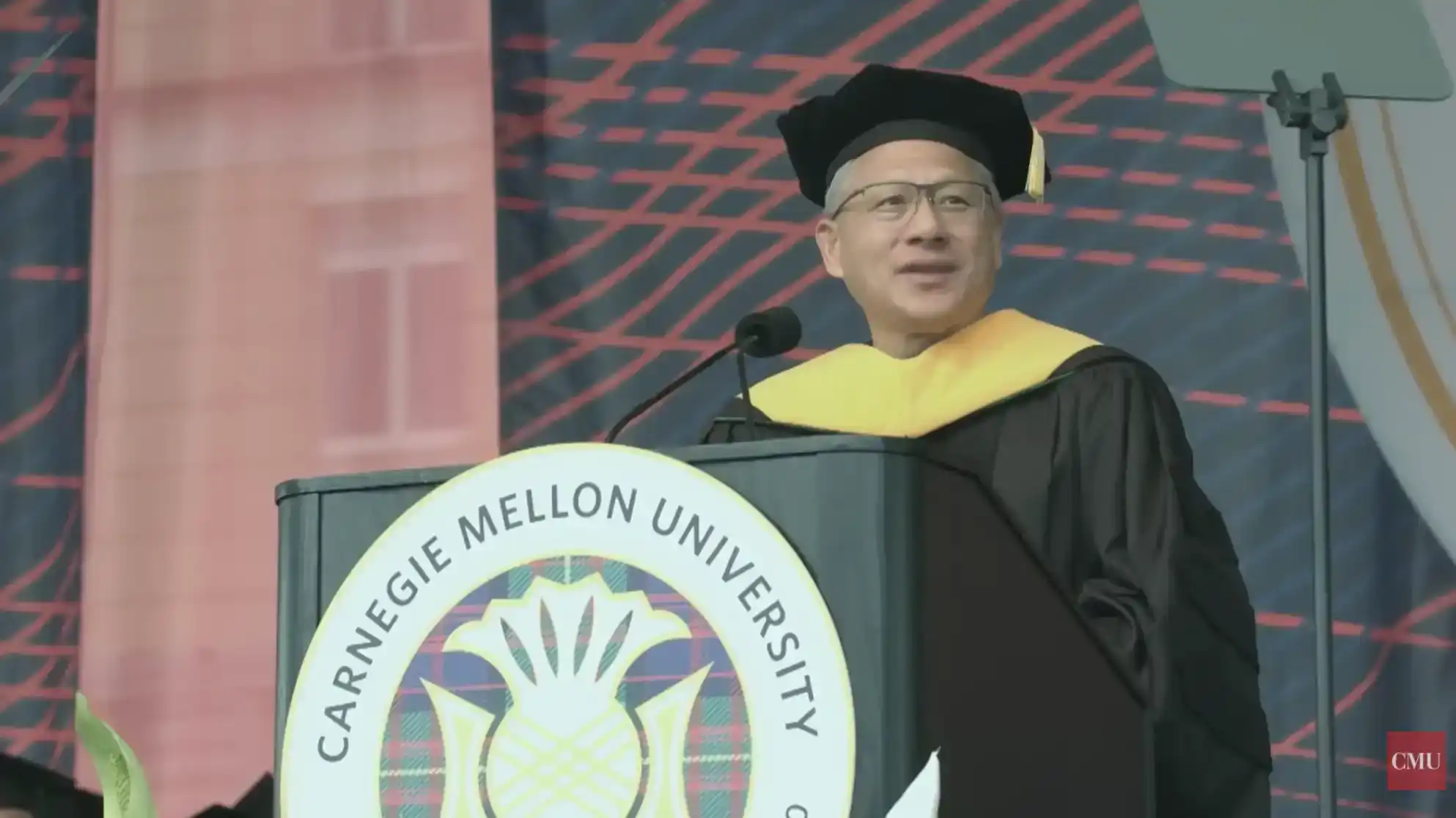
Jensen Huang's CMU Speech: In the AI Era, Don't Just Watch, Build

Jensen Huang, CEO of NVIDIA and a first-generation immigrant, delivered the commencement address to Carnegie Mellon University's class of 2026. He shared his personal journey from a humble background to founding NVIDIA, emphasizing resilience, learning from failure, and the responsibility that comes with leadership. Huang framed the present moment as the dawn of the AI revolution, a shift he believes is more profound than previous computing waves. He described AI as fundamentally resetting computing—moving from human-written software to machines that understand, reason, and use tools. This will create a new industry for generating intelligence and transform every sector. While acknowledging AI's potential to automate tasks and displace some jobs, Huang distinguished between the *tasks* of a job and its core *purpose*. He argued AI will augment human capability, not replace humans. The real risk, he stated, is not AI itself, but people being left behind by those who effectively use AI. He presented AI as a generational opportunity for massive infrastructure investment—in chip factories, data centers, energy grids, and advanced manufacturing—that could re-industrialize nations like the U.S. and bridge the digital divide by making computing and intelligent tools accessible to all. Huang called for a balanced approach: advancing AI safely and responsibly, establishing prudent policies, ensuring broad access, and encouraging universal participation. He urged the graduates not to fear the future but to engage with optimism and ambition, reminding them of CMU's motto, "My heart is in the work." His core message was clear: this is their moment to actively build and shape the AI-powered future, not merely observe it.

marsbitHá 1h

Jensen Huang's CMU Speech: In the AI Era, Don't Just Watch, Build

marsbitHá 1h

Trading

Spot
Futuros

Artigos em Destaque

O que é USDC(WORMHOLE)

USD Coin (Wormhole): Uma Visão Abrangente Introdução No mundo em rápida evolução das criptomoedas, o USD Coin (Wormhole), referido como $USDC(Wormhole), destaca-se como uma solução pioneira no panorama DeFi (Finanças Descentralizadas). Operando em várias plataformas de blockchain, incluindo Solana, o USD Coin (Wormhole) é mais do que apenas uma representação digital do dólar americano. Ele incorpora o espírito inovador das finanças modernas, permitindo transações intercadeias sem problemas e uma maior interoperabilidade entre diversos ecossistemas de blockchain através do avançado protocolo Wormhole. O que é o USD Coin (Wormhole)? O USD Coin (Wormhole) é uma versão tokenizada do dólar americano, projetada para facilitar transações sem atritos entre diferentes redes de blockchain. O seu objetivo principal é aumentar a liquidez e melhorar a funcionalidade do ecossistema DeFi. Ao aproveitar o protocolo Wormhole, que estabelece uma rede robusta de comunicação intercadeias, os utilizadores podem transferir tokens USDC sem esforço entre várias plataformas. Esta capacidade intercadeias marca um avanço significativo no uso de criptomoedas, promovendo um ecossistema mais interconectado e eficiente, onde os ativos podem fluir livremente entre diferentes blockchains. A proposta de valor do USD Coin (Wormhole) reside não apenas na sua estabilidade, estando atrelado ao dólar americano, mas também na sua capacidade de preencher lacunas entre ambientes de blockchain díspares. Esta abordagem inovadora promove um maior nível de participação entre utilizadores e desenvolvedores, pavimentando o caminho para novas e emocionantes aplicações nas finanças descentralizadas. Quem é o criador do USD Coin (Wormhole)? As origens do USD Coin (Wormhole) estão intrinsecamente ligadas à rede Wormhole, que foi desenvolvida pela Jump Crypto. Embora criadores individuais específicos não sejam documentados de forma proeminente, a Jump Crypto é notável pelo seu envolvimento no avanço da tecnologia blockchain e no suporte às suas aplicações nas finanças. Ao criar a rede Wormhole, a Jump Crypto desempenhou um papel vital na promoção de transferências de ativos intercadeias, aumentando a eficiência e diversidade do uso de criptomoedas. Quem são os investidores do USD Coin (Wormhole)? O sucesso do USD Coin (Wormhole) é apoiado por investimentos de vários fundos e organizações notáveis dentro do reino das criptomoedas. Os principais investidores incluem: Coinbase Ventures: Um relevante braço de capital de risco apoiado por uma das principais exchanges de criptomoedas da indústria, a Coinbase Ventures fornece capital essencial e suporte estratégico a projetos promissores de blockchain. Arrington XRP Capital: Especializando-se em ativos digitais, a Arrington XRP Capital reconhece o potencial de projetos inovadores como o USD Coin (Wormhole) e investiu de acordo para apoiar o seu desenvolvimento. Jump Trading: Como a organização-mãe da Jump Crypto, a Jump Trading traz não apenas investimento, mas uma vasta experiência em tecnologia de negociação e dinâmicas de mercado para fortalecer o projeto Wormhole. Como Funciona o USD Coin (Wormhole)? A estrutura operacional do USD Coin (Wormhole) é cuidadosamente projetada para facilitar transações intercadeias eficazes, maximizando a segurança e a eficiência. Aqui está uma visão simplificada de como funciona: Bloqueio de Ativos: Quando um utilizador deseja transferir USDC de uma blockchain para outra, ele primeiro bloqueia os seus tokens na blockchain de origem. Este processo assegura que os ativos estejam seguros e que sejam queimados ou movidos mais tarde. Mintagem de Tokens: Após os tokens serem bloqueados, uma quantidade equivalente de USDC é criada na blockchain de destino. Isso proporciona ao utilizador acesso aos seus fundos em uma nova plataforma, refletindo a flexibilidade que o protocolo Wormhole permite. Transferência Intercadeias: O protocolo Wormhole facilita de forma eficiente todo o processo de transferência. Ele assegura que, uma vez que o USDC é criado na cadeia de destino, os tokens equivalentes sejam queimados na cadeia de origem. O resultado é uma transferência de valor sem interrupções entre dois ambientes distintos de blockchain. Esta metodologia intercadeias assegura que as transações permaneçam seguras e transparentes, melhorando significativamente a liquidez dentro dos diferentes ecossistemas DeFi. Linha do Tempo do USD Coin (Wormhole) Compreender a evolução do USD Coin (Wormhole) fornece um contexto vital para a sua importância na arena das criptomoedas. Aqui está uma linha do tempo destacando marcos importantes na história do projeto: 2021: O projeto Wormhole é lançado, estabelecendo uma estrutura para transferências de ativos intercadeias e preparando o caminho para o desenvolvimento do USD Coin (Wormhole). 2022: A rede Wormhole enfrenta um desafio significativo com uma violação de segurança que resulta no roubo de 325 milhões de dólares. No entanto, o incidente é posteriormente tratado e reembolsado pela Jump Crypto, demonstrando o compromisso do projeto com a segurança e a transparência. 2023: O USD Coin (Wormhole) integra-se com o Protocolo de Transferência Intercadeias da Circle (CCTP), aprimorando suas capacidades para transferências intercadeias e solidificando ainda mais a sua posição dentro do ecossistema DeFi. 2024: O desenvolvimento contínuo e a expansão da rede Wormhole prosseguem, visando aumentar a utilidade e o alcance do USD Coin (Wormhole) e aprimorar sua estrutura operacional. Características Principais O sucesso do USD Coin (Wormhole) pode ser atribuído a várias características principais que o diferenciam de outras ofertas de criptomoedas: Interoperabilidade Intercadeias No cerne do USD Coin (Wormhole) está a sua capacidade de facilitar transferências sem problemas entre várias redes de blockchain. Esta interoperabilidade serve como um pilar para as finanças descentralizadas, permitindo que várias plataformas interajam entre si, acelerando assim a evolução dos serviços financeiros. Segurança Wormhole utiliza uma Rede de Guardiões bem projetada, composta por validadores de nós que garantem transações intercadeias seguras. Esta supervisão coletiva minimiza o risco de fraudes e proporciona aos utilizadores a confiança de que os seus ativos estão protegidos durante as transferências intercadeias. Aumento da Liquidez Ao permitir que o USDC circule livremente entre diferentes blockchains, o USD Coin (Wormhole) aumenta a liquidez no ecossistema DeFi. Esta liquidez aumentada pode promover uma negociação mais eficiente, contribuir para melhores estratégias de preços e melhorar a dinâmica geral do mercado que abrange vários ativos digitais. Conclusão O USD Coin (Wormhole) é uma inovação crucial no espaço blockchain, reforçando as capacidades das finanças descentralizadas (DeFi) e estabelecendo um ecossistema financeiro mais conectado. Com sua estrutura robusta para transações intercadeias, características de segurança e forte apoio de investidores respeitáveis, o USD Coin (Wormhole) está posicionado para desempenhar um papel fundamental no futuro das criptomoedas. À medida que o panorama das finanças digitais continua a evoluir, o USD Coin (Wormhole) não apenas abraça o futuro da interconectividade entre redes de blockchain, mas também reafirma o poder da tokenização e da tecnologia blockchain na transformação de como percebemos e utilizamos o valor em um mundo digital. Ao navegar pelas complexidades da funcionalidade intercadeias, demonstra uma abordagem sofisticada para capacitar a inclusão financeira e a inovação no mundo das criptomoedas.

85 Visualizações TotaisPublicado em {updateTime}Atualizado em 2024.12.03

O que é USDC(WORMHOLE)

O que é W$C

World$tateCoin ($W$C): Uma Exploração Abrangente do Emergente Projecto de Criptomoeda Introdução No panorama em constante evolução das criptomoedas, o World$tateCoin ($W$C) surgiu como um projecto que visa aproveitar o poder das tecnologias web3 para criar um ecossistema digital distinto. À medida que os modelos tradicionais de interação online sofrem uma transformação significativa, o World$tateCoin procura estabelecer-se nesta emergente terceira geração da internet. Este artigo irá explorar as minúcias do World$tateCoin, oferecendo uma visão geral do projecto, dos seus objetivos e do seu potencial impacto no espaço web3. O que é o World$tateCoin ($W$C)? O World$tateCoin ($W$C) é concebido como uma criptomoeda que facilita transações sem costura dentro de um ambiente web3. Destinado a criar uma plataforma descentralizada onde os utilizadores podem interagir com várias aplicações web3, o $W$C pretende simplificar a experiência do utilizador e melhorar a acessibilidade aos serviços digitais. Embora o projecto aspire a tornar-se uma parte integral do panorama web3, informações detalhadas sobre os seus objetivos específicos e casos de uso permanecem limitadas, levantando questões sobre o seu potencial papel e utilidade num contexto digital em rápida evolução. A essência do web3 gira à volta da descentralização e do empoderamento dos usuários com maior controle sobre as suas interações online. O World$tateCoin pretende alinhar-se com estes princípios, embora as aplicações e funcionalidades específicas da moeda ainda estejam em discussão dentro da comunidade. Quem é o Criador do World$tateCoin ($W$C)? Ao explorar as origens do World$tateCoin, a informação sobre o seu criador permanece elusiva. Até agora, não existem dados publicamente disponíveis que identifiquem os indivíduos ou organizações por trás do projecto. Esta obscuridade pode lançar uma sombra de incerteza sobre a credibilidade do projecto, mas o compromisso com a inovação dentro do quadro das criptomoedas poderia ser uma força propulsora para a sua adoção no futuro. A falta de liderança identificável pode resultar em obstáculos relacionados com a confiança e a transparência—elementos cruciais para estabelecer uma comunidade sólida no espaço cripto. Quem são os Investidores do World$tateCoin ($W$C)? A investigação atual não revela investidores específicos ou organizações de apoio envolvidas com o World$tateCoin. Não é incomum que projectos emergentes de criptomoedas atraiam investimentos discretos ou operem numa estrutura financeira minimalista durante a sua fase inicial. A ambiguidade em torno dos apoios financeiros e metodologias de financiamento pode afetar a sustentabilidade e as perspectivas de crescimento do projecto. Ao avaliar novos projectos no domínio das criptomoedas, os investidores geralmente procuram transparência em relação ao apoio financeiro e suporte de entidades estabelecidas. A ausência desta informação pode exigir uma abordagem cautelosa para potenciais utilizadores e partes interessadas interessadas no futuro do World$tateCoin. Como Funciona o World$tateCoin ($W$C)? A mecânica operacional do World$tateCoin é fundamentada nos princípios da descentralização, uma característica das tecnologias web3. Ao facilitar transações diretamente entre utilizadores sem a intervenção de intermediários, o $W$C é concebido para aumentar a confiança e a eficiência. No entanto, a documentação abrangente que detalha as características únicas e o quadro operacional que distinguem o World$tateCoin de outras criptomoedas é notavelmente escassa. Esta falta de informação complica a compreensão de como o $W$C funciona dentro do ecossistema web3 mais amplo e quais propostas únicas traz para utilizadores e desenvolvedores. Não obstante, o objetivo fundamental de permitir transações descentralizadas detém a promessa de um panorama financeiro mais libertado, caso o projecto cumpra as suas aspirações de implementar mecanismos robustos e interfaces amigáveis ao usuário. Cronologia do World$tateCoin ($W$C) Construir uma cronologia que encapsule a progressão histórica do World$tateCoin apresenta desafios devido à ausência de documentação significativa sobre eventos e marcos chave. Não obstante, uma sequência aproximada de fases hipotéticas pode ser imaginada, constituindo um caminho à frente para o projecto: Conceito Inicial (Data Desconhecida): Conceituação do quadro do World$tateCoin no contexto mais amplo das tecnologias web3. Fase de Desenvolvimento (Data Desconhecida): Início do desenvolvimento técnico e processos de codificação. Engajamento da Comunidade (Data Desconhecida): Contato com potenciais utilizadores e partes interessadas para promover o interesse da comunidade no projecto. Meta de Lançamento (Data Desconhecida): Anunciar uma data de lançamento esperada, dependente do progresso das fases de desenvolvimento e testes. Devido à falta de datas substanciadas e detalhes em torno destas fases, as partes interessadas precisarão permanecer vigilantes e envolvidas com as comunicações do projecto para atualizações sobre a sua trajetória. Tópicos Chave Sobre o World$tateCoin ($W$C) À medida que o projecto se desenrola, certos temas chave emergem que incorporam o potencial e as aspirações do World$tateCoin: Descentralização: A filosofia central que motiva o projecto, visando promover interações diretas entre utilizadores. Integração Web3: O objetivo de espelhar os princípios web3 e permitir acesso sem costura dos utilizadores a uma variedade de serviços digitais. Criptomoeda Digital: Posicionada como uma moeda para facilitar transações baseadas na internet, o World$tateCoin visa injetar liquidez adicional no mercado web3. Desafio da Escassez de Informação: A notável ausência de informações detalhadas sobre as fundações do projecto, criadores e métodos operacionais, necessitando de uma maior transparência por parte dos desenvolvedores para construir a confiança da comunidade. Conclusão O World$tateCoin ($W$C) está posicionado dentro de um terreno emocionante, mas incerto, de integração de criptomoedas e web3. Enquanto aspira a cultivar um ambiente descentralizado, a disponibilidade limitada de informações sobre os seus criadores, investidores e funcionalidades específicas apresenta desafios para potenciais partes interessadas e utilizadores. No dinâmico mundo das criptomoedas, a transparência, o engajamento e a comunicação bem estruturada são vitais para o sucesso de projectos como o World$tateCoin. À medida que o panorama continua a evoluir, as partes interessadas estarão ansiosas para ver como o projecto pode solidificar o seu lugar na narrativa web3 e contribuir para a transformação contínua do ecossistema digital.

38 Visualizações TotaisPublicado em {updateTime}Atualizado em 2024.12.03

O que é W$C

Como comprar W

Bem-vindo à HTX.com!Tornámos a compra de Wormhole (W) simples e conveniente.Segue o nosso guia passo a passo para iniciar a tua jornada no mundo das criptos.Passo 1: cria a tua conta HTXUtiliza o teu e-mail ou número de telefone para te inscreveres numa conta gratuita na HTX.Desfruta de um processo de inscrição sem complicações e desbloqueia todas as funcionalidades.Obter a minha contaPasso 2: vai para Comprar Cripto e escolhe o teu método de pagamentoCartão de crédito/débito: usa o teu visa ou mastercard para comprar Wormhole (W) instantaneamente.Saldo: usa os fundos da tua conta HTX para transacionar sem problemas.Terceiros: adicionamos métodos de pagamento populares, como Google Pay e Apple Pay, para aumentar a conveniência.P2P: transaciona diretamente com outros utilizadores na HTX.Mercado de balcão (OTC): oferecemos serviços personalizados e taxas de câmbio competitivas para os traders.Passo 3: armazena teu Wormhole (W)Depois de comprar o teu Wormhole (W), armazena-o na tua conta HTX.Alternativamente, podes enviá-lo para outro lugar através de transferência blockchain ou usá-lo para transacionar outras criptomoedas.Passo 4: transaciona Wormhole (W)Transaciona facilmente Wormhole (W) no mercado à vista da HTX.Acede simplesmente à tua conta, seleciona o teu par de trading, executa as tuas transações e monitoriza em tempo real.Oferecemos uma experiência de fácil utilização tanto para principiantes como para traders experientes.

199 Visualizações TotaisPublicado em {updateTime}Atualizado em 2025.03.21

Como comprar W

Discussões

Bem-vindo à Comunidade HTX. Aqui, pode manter-se informado sobre os mais recentes desenvolvimentos da plataforma e obter acesso a análises profissionais de mercado. As opiniões dos utilizadores sobre o preço de W (W) são apresentadas abaixo.

活动图片