From Technology to Institutions: Analyzing the Four Core Turning Points of Ethereum in 2026

marsbitPublicado em 2026-01-07Última atualização em 2026-01-07

Resumo

This analysis examines four pivotal turning points for Ethereum in 2026, highlighting its potential transition into a structural bull market driven by institutional adoption and technical upgrades. 1. **Staking Reversal**: A dramatic shift in staking dynamics has emerged, with the exit queue dropping to only 80,000 ETH while the entry queue surged to nearly 1 million ETH—a 15-fold difference. This indicates reduced selling pressure and increased investor confidence, with whales accumulating over $3.1 billion in ETH since July 2025. 2. **Institutional Participation**: Institutions are shifting from passive holding to active staking. BitMine Immersion Technologies, holding over 4.11 million ETH, staked 590,000 ETH in just eight days, worth $1.8 billion. ETH spot ETFs saw cumulative inflows exceeding $125 billion, with single-day net inflows reaching $1.74 billion in early 2026. Major firms like BlackRock and Grayscale predict an "institutional era" for Ethereum. 3. **Technical Upgrades**: The Pectra and Fusaka upgrades in 2025 laid the groundwork for Ethereum’s evolution into a global settlement layer. Key improvements include increased validator staking limits, enhanced blob capacity, and PeerDAS for scalable data availability. Future upgrades like Glamsterdam aim to boost Layer 1 TPS beyond 12,000 and improve MEV capture. 4. **RWA Dominance**: Ethereum leads in real-world asset (RWA) tokenization with a 65.5% market share and $12.5 billion TVL. Traditional finance giants ...

Author: Nikka / WolfDAO (X: @10xWolfdao)

Market Status and Core Turning Points
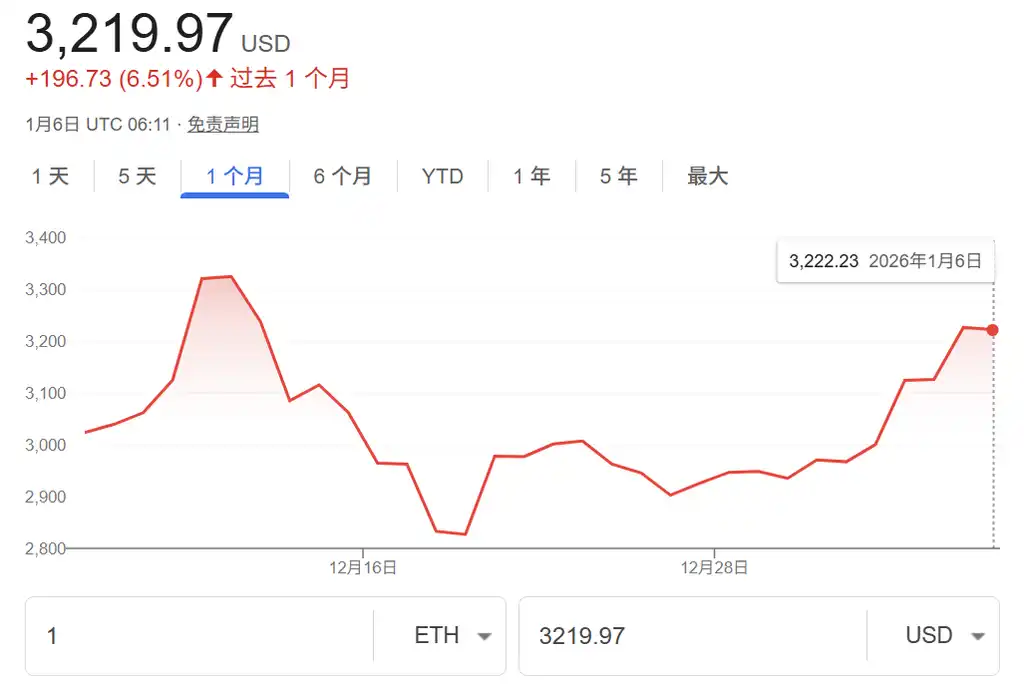
Entering 2026, the total market capitalization of the crypto market has returned to over $3 trillion, with Bitcoin's dominance briefly falling below 60%, sparking discussions about an "altcoin season." Ethereum stands at a critical turning point. In the short term, it has broken through $3,200, showing a significant rebound from the lows at the end of 2025. Although it is still 34% away from the high of $4,700 in September 2025, multiple early signals indicate that ETH may be brewing a structural rally.

1. Staking Queue Reversal: Selling Pressure Significantly Reduced
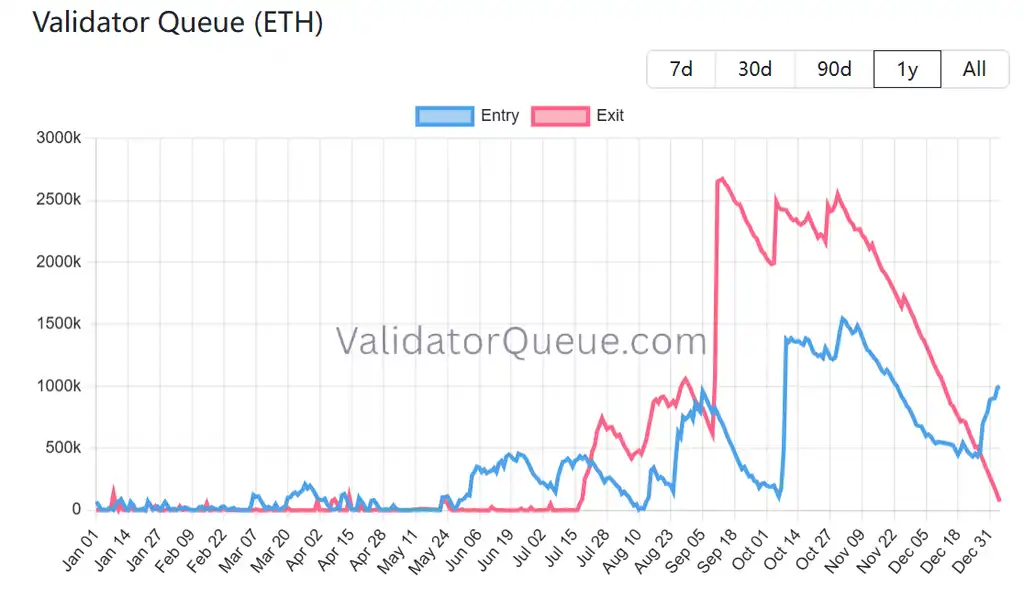
The most important catalyst in 2026 comes from the dramatic reversal of the staking queue. For the first time since July 2025, there has been a "shift in momentum," marking a change in investor confidence from retreating to locking in.

Specifically, when the ETH price surged to around $4,700 in mid-September 2025, a cumulative 2.66 million ETH chose to unstake, creating selling pressure that lasted for months. After three and a half months of digestion, only about 80,000 ETH remain waiting to be unstaked, meaning the source of selling pressure has largely been eliminated. Meanwhile, ETH waiting to enter staking has surged to 900,000–1 million, an increase of about 120% from 410,000 at the end of December. This number is 15 times that of the exit queue, causing the validator activation wait time to extend to 17 days.

Currently, the total staked amount of Ethereum has reached 35.5 million ETH, accounting for 28.91% of the circulating supply, with an annualized yield maintained at 3–3.5%. Historical data shows that when the entry queue significantly leads the exit queue, it often signals a price increase. This supply lock-up will significantly reduce the liquid ETH on the market. Combined with whales buying over $3.1 billion since July 2025, this forms a strong foundation for a rally.

2. Institutional Entry: From Passive Holding to Active Participation

If the staking reversal is a supply-side signal, then the frenzy of institutional entry is the core driver on the demand side. The world's largest Ethereum treasury company, BitMine Immersion Technologies, is rewriting the rules of the game. The company holds over 4.11 million ETH, accounting for 3.41% of the total supply, but more importantly, it is shifting from "passive holding" to "active yield generation."

In the last 8 days, BitMine staked over 590,000 ETH, worth over $1.8 billion. On January 3 alone, it staked 82,560 ETH in a single transaction, worth approximately $259 million. The company plans to stake 5% of Ethereum's total supply through its own validator network, MAVAN, in the first quarter, with an expected annualized revenue of $374 million. This aggressive action not only pushed up the staking queue but also caused BMNR's share price to surge by 14%.
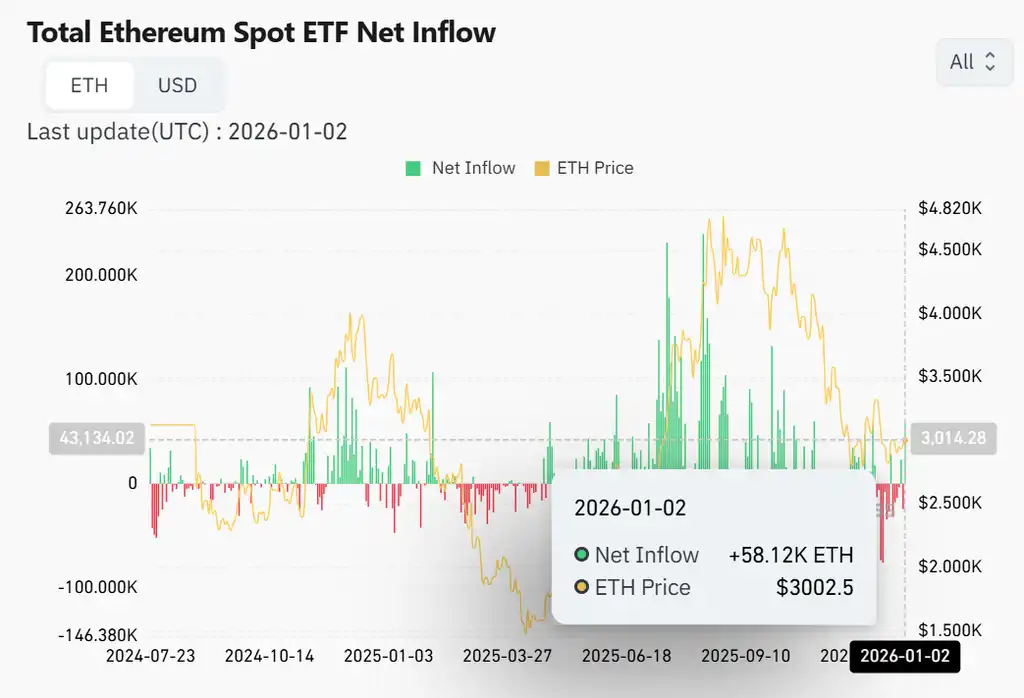
The broader institutional trend is equally remarkable. ETH spot ETFs accumulated inflows of over $9.6 billion in 2025, with historical total inflows exceeding $125 billion. At the beginning of 2026, single-day net inflows reached $1.74 billion. BlackRock's ETHA fund holds about 3 million ETH, worth nearly $9 billion. Institutions like Coinbase and Grayscale predict that 2026 will usher in an "era of institutions," with more ETP products and on-chain vaults expected to double the assets under management.

Meanwhile, on-chain accumulation addresses bought over 10 million ETH in 2025, setting a historical record. These data collectively point to one fact: institutions no longer view ETH as a purely speculative asset but as an infrastructure asset with yield potential.

3. Technical Updates: Evolving into a Global Settlement Layer

2025 was a big year for Ethereum's technology. The Pectra and Fusaka upgrades were successively implemented, laying a solid foundation for further growth in 2026. This is not just a simple performance optimization but a strategic transformation—turning Ethereum into a high-throughput, low-cost global settlement layer.

The Pectra upgrade was completed in the first half of 2025, with its core breakthrough being EIP-7251, which increased the validator staking limit from 32 ETH to 2,048 ETH, greatly facilitating large-scale institutional staking. It also increased blob capacity and optimized validator mechanisms, reducing network congestion. This cleared technical obstacles for aggressive staking actions by institutions like BitMine.

More critical is the Fusaka upgrade. Launched in December 2025, this upgrade introduced PeerDAS (Peer-to-Peer Data Availability Sampling), fundamentally changing the way Layer 2 data is stored. Full nodes no longer need to download all blob data, theoretically supporting an 8x or more increase in blob capacity. Layer 2 fees are expected to decrease by 40–90% in 2026. EIP-7892 allows for dynamic adjustment of blob parameters in the future, enabling continuous scaling without hard forks—this is an institutional guarantee for long-term scalability.

The roadmap for 2026 is even more aggressive. The planned Glamsterdam upgrade will introduce Verkle Trees, enshrined proposer-builder separation (ePBS), and block-level access lists, pushing Layer 1 TPS beyond 12,000+ and strengthening MEV extraction mechanisms, significantly improving network efficiency and revenue capture capabilities. These technical advancements are not just theoretical—smart contract deployments and call counts have hit historical highs, with on-chain activity reaching unprecedented levels.

4. RWA Monopoly: Dominating Trillion-Dollar Opportunities

Ethereum's dominant position in the tokenization of real-world assets is becoming the strongest narrative engine for 2026. This is not just hype within the crypto circle but a vote of confidence from traditional financial institutions with real money.
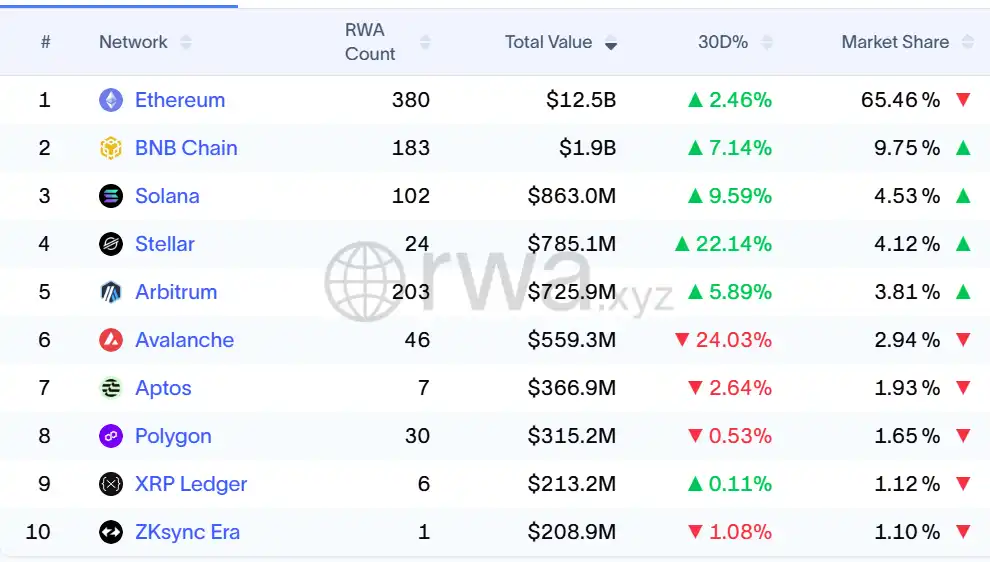
According to the latest statistics from RWA.xyz, the TVL of tokenized assets on Ethereum has reached $12.5 billion, with a market share of 65.5%, far surpassing BNB Chain's $2 billion, and Solana and Arbitrum's less than $1 billion each. Wall Street giants like BlackRock and JPMorgan have already tokenized treasury bonds, private credit, and fund products on a large scale. The RWA market grew by over 212% in 2025, with a total scale exceeding $12.5 billion, and institutional surveys show that 76% of asset management companies plan to invest in tokenized assets by 2026.

Institutions predict that the RWA market will expand by more than 10x in 2026. As the most mature and secure settlement layer, Ethereum will capture the vast majority of value from this trillion-dollar opportunity. The clarification of regulatory frameworks—especially the expected passage of the CLARITY Act and stablecoin legislation in the first half of the year—will further accelerate this process.

The stablecoin sector is similarly one-sided. Ethereum hosts over $62 billion in circulation, accounting for more than 62% of the market, and 68% of DeFi TVL. B2B payments, cross-border settlements, and other institutional-level scenarios are rapidly migrating on-chain. Artemis reports show that Ethereum's stablecoin B2B payment volume grew steadily between 2024 and 2025. This is not speculative capital but real demand from the实体经济.

Conclusion

Combining the three forces of supply, demand, and technology, Ethereum is highly likely to achieve a narrative shift from "follower" to "leader" in 2026. This will be an institution-driven structural bull market, not a speculative frenzy driven by retail sentiment.

For the ETH loyalists who have endured tough times over the past few years, 2026 may be the year of兑现. However, this is a possibility, not a certainty. Patience and rationality remain essential in this残酷 market.


Perguntas relacionadas

QWhat are the four core turning points for Ethereum in 2026 as analyzed in the article?

AThe four core turning points are: 1. The dramatic reversal of the staking queue, which significantly reduces selling pressure. 2. Institutional entry, shifting from passive holding to active participation and staking. 3. Technical upgrades (Pectra and Fusaka), evolving Ethereum into a high-throughput, low-cost global settlement layer. 4. Dominance in the Real World Asset (RWA) tokenization market, capturing a trillion-dollar opportunity.

QWhat does the reversal of the staking queue indicate for Ethereum's market dynamics?

AThe reversal indicates a major shift in investor sentiment from withdrawing and selling to locking up their ETH. With the exit queue nearly empty (only ~80k ETH) and the entry queue surging to 90-100k ETH, it creates significant supply lock-up, reducing liquid ETH on the market and forming a strong foundation for price appreciation.

QHow is BitMine Immersion Technologies changing its strategy regarding its Ethereum holdings?

ABitMine is shifting from passive holding to active yield generation. The company, which holds over 4.11 million ETH, has staked over 590,000 ETH (worth over $1.8 billion) in just 8 days. It plans to stake 5% of Ethereum's total supply through its own validator network, MAVAN, in Q1, targeting an estimated annualized yield of $374 million.

QWhat were the key technical improvements introduced by the Pectra and Fusaka upgrades?

AThe Pectra upgrade introduced EIP-7251, which increased the validator staking limit from 32 ETH to 2048 ETH, facilitating large-scale institutional staking. The Fusaka upgrade introduced PeerDAS (Peer-to-Peer Data Availability Sampling), which allows for an 8x+ increase in blob capacity and is expected to reduce Layer 2 fees by 40-90% in 2026. It also included EIP-7892 for dynamic blob parameter adjustments.

QWhy is Ethereum considered the dominant platform for Real World Asset (RWA) tokenization?

AEthereum dominates with $12.5 billion in tokenized asset TVL, capturing a 65.5% market share. Major traditional financial giants like BlackRock and JPMorgan are using it to tokenize assets such as treasury bonds and private credit. Its mature, secure infrastructure and upcoming clear regulatory frameworks are expected to allow it to capture the majority of value from this rapidly expanding trillion-dollar market.

Leituras Relacionadas

First Batch of Keynote Speakers and Partners Announced! Web2+3 Summit: Defining the Next Generation of Digital Economy

Web2+3 Summit: Defining the Next Generation of Digital Economy The 6th BEYOND International Technology Innovation Expo (BEYOND Expo 2026), Asia's largest tech and ecosystem exhibition, is launching a dedicated Web2+3 stage for the first time. Co-hosted by BEYOND Expo and ChainNeXT Group, the Web3 Summit will take place from May 28–30, 2026. Against the backdrop of accelerating global tech integration, the boundaries between Web2 and Web3 are rapidly blurring. With clearer global regulations for blockchain-driven internet (Web3) and the special issuance of a Hong Kong dollar stable币 license by the Hong Kong SAR government on April 10, 2026, Web3's decentralized principles are quickly merging with traditional industries (Web2) such as e-commerce, finance, and artificial intelligence. Focused on blockchain-driven digital economy elements, the summit will center on three core principles—implementability, commercial viability, and compliance. It will bring together top Web3 experts to discuss key integration areas like stablecoin payment finance (PayFi), real-world asset tokenization (RWA), and decentralized AI (DeAI), unveiling new opportunities for industrial innovation. The first wave of confirmed speakers includes Jack Kong (Director of Hong Kong Cyberport, Chairman of Nano Labs), Yat Siu (Chairman of Animoca Brands), Michael Wu (Co-founder & CEO of Amber Group), Michael Heinrich (Co-founder & CEO of 0G), and Art Abal (Co-founder of Vana). More Web3 ecosystem pioneers, AI, and fintech experts will be announced soon. Core forum topics include: - Web2+DeAI: New AI Paradigms Driven by Decentralized Infrastructure - Web2+RWA: Real-World Asset Tokenization and Global Liquidity - Web2+PayFi: Cross-Border Payments and Financial Innovation Powered by Crypto Infrastructure - Web2+3 AI: Autonomous Agents and the Crypto Economy - Web2+3 Wealth: On-Chain and Off-Chain Integrated Investment Ecosystems - Web2+3 Commerce: A New Landscape for Global Trade Driven by Stablecoins Additional agenda details will be released in the near future.

marsbitHá 1h

First Batch of Keynote Speakers and Partners Announced! Web2+3 Summit: Defining the Next Generation of Digital Economy

marsbitHá 1h

Trading

Spot
Futuros

Artigos em Destaque

O que é ETH 2.0

ETH 2.0: Uma Nova Era para o Ethereum Introdução ETH 2.0, amplamente conhecido como Ethereum 2.0, marca uma atualização monumental à blockchain do Ethereum. Esta transição não é meramente uma mudança estética; visa melhorar fundamentalmente a escalabilidade, segurança e sustentabilidade da rede. Com uma mudança do mecanismo de consenso em Proof of Work (PoW), intensivo em energia, para um Proof of Stake (PoS) mais eficiente, o ETH 2.0 promete uma abordagem transformadora ao ecossistema blockchain. O que é ETH 2.0? ETH 2.0 é um conjunto de atualizações distintas e interconectadas focadas na otimização das capacidades e desempenho do Ethereum. Esta reformulação foi projetada para abordar desafios críticos que o mecanismo atual do Ethereum enfrentou, particularmente em relação à velocidade das transações e à congestão da rede. Objetivos do ETH 2.0 Os principais objetivos do ETH 2.0 giram em torno da melhoria de três aspectos centrais: Escalabilidade: Com o objetivo de melhorar significativamente o número de transações que a rede pode manejar por segundo, o ETH 2.0 procura ultrapassar a limitação atual de aproximadamente 15 transações por segundo, alcançando potencialmente milhares. Segurança: Medidas de segurança melhoradas são integrais ao ETH 2.0, especialmente através da resistência aprimorada contra ciberataques e da preservação do ethos descentralizado do Ethereum. Sustentabilidade: O novo mecanismo PoS foi projetado não apenas para melhorar a eficiência, mas também para reduzir drasticamente o consumo de energia, alinhando a estrutura operacional do Ethereum com considerações ambientais. Quem é o Criador do ETH 2.0? A criação do ETH 2.0 pode ser atribuída à Ethereum Foundation. Esta organização sem fins lucrativos, que desempenha um papel crucial no apoio ao desenvolvimento do Ethereum, é liderada pelo co-fundador notável Vitalik Buterin. A sua visão de um Ethereum mais escalável e sustentável tem sido a força motriz por trás desta atualização, envolvendo contribuições de uma comunidade global de desenvolvedores e entusiastas dedicados a melhorar o protocolo. Quem são os Investidores do ETH 2.0? Embora os detalhes sobre os investidores do ETH 2.0 não tenham sido tornados públicos, é sabido que a Ethereum Foundation recebe apoio de várias organizações e indivíduos no espaço da blockchain e tecnologia. Esses parceiros incluem firmas de capital de risco, empresas de tecnologia e organizações filantrópicas que compartilham um interesse mútuo em apoiar o desenvolvimento de tecnologias descentralizadas e infraestrutura de blockchain. Como Funciona o ETH 2.0? ETH 2.0 é notável por introduzir uma série de características chave que o diferenciam do seu predecessor. Proof of Stake (PoS) A transição para um mecanismo de consenso PoS é uma das mudanças de destaque do ETH 2.0. Ao contrário do PoW, que depende da mineração intensiva em energia para a verificação de transações, o PoS permite que os utilizadores validem transações e criem novos blocos de acordo com a quantidade de ETH que apostam na rede. Isso leva a uma maior eficiência energética, reduzindo o consumo em aproximadamente 99,95%, tornando o Ethereum 2.0 uma alternativa consideravelmente mais ecológica. Shard Chains As shard chains são outra inovação crítica do ETH 2.0. Estas cadeias menores operam em paralelo com a cadeia principal do Ethereum, permitindo que várias transações sejam processadas simultaneamente. Esta abordagem melhora a capacidade geral da rede, abordando preocupações de escalabilidade que têm atormentado o Ethereum. Beacon Chain No coração do ETH 2.0 está a Beacon Chain, que coordena a rede e gere o protocolo PoS. Ela atua como uma espécie de organizador: supervisiona os validadores, garante que as shards permaneçam conectadas à rede e monitora a saúde geral do ecossistema blockchain. Linha do Tempo do ETH 2.0 A jornada do ETH 2.0 tem sido marcada por vários marcos chave que traçam a evolução desta atualização significativa: Dezembro de 2020: O lançamento da Beacon Chain marcou a introdução do PoS, preparando o caminho para a migração para o ETH 2.0. Setembro de 2022: A conclusão de “The Merge” representa um momento crucial em que a rede Ethereum fez a transição com sucesso de um quadro PoW para um PoS, anunciando uma nova era para o Ethereum. 2023: O lançamento esperado das shard chains visa melhorar ainda mais a escalabilidade da rede Ethereum, solidificando o ETH 2.0 como uma plataforma robusta para aplicações e serviços descentralizados. Características Chave e Benefícios Escalabilidade Melhorada Uma das vantagens mais significativas do ETH 2.0 é a sua escalabilidade melhorada. A combinação de PoS e shard chains permite que a rede expanda a sua capacidade, permitindo que acomode um volume de transações muito maior em comparação com o sistema legado. Eficiência Energética A implementação do PoS representa um enorme passo em direção à eficiência energética na tecnologia blockchain. Ao reduzir drasticamente o consumo de energia, o ETH 2.0 não só reduz os custos operacionais, mas também se alinha mais estreitamente com os objetivos globais de sustentabilidade. Segurança Aprimorada Os mecanismos atualizados do ETH 2.0 contribuem para uma segurança melhorada em toda a rede. O uso do PoS, juntamente com medidas de controle inovadoras estabelecidas através das shard chains e da Beacon Chain, assegura um maior grau de proteção contra potenciais ameaças. Custos Mais Baixos para os Utilizadores À medida que a escalabilidade melhora, os efeitos sobre os custos de transação também serão evidentes. Aumentada a capacidade e reduzida a congestão, espera-se que isso se traduza em taxas mais baixas para os utilizadores, tornando o Ethereum mais acessível para transações do dia a dia. Conclusão ETH 2.0 marca uma evolução significativa no ecossistema da blockchain do Ethereum. Ao abordar questões fundamentais como a escalabilidade, o consumo de energia, a eficiência das transações e a segurança geral, a importância desta atualização não pode ser subestimada. A transição para o Proof of Stake, a introdução das shard chains e o trabalho fundamental da Beacon Chain são indicativos de um futuro em que o Ethereum pode atender à crescente demanda do mercado descentralizado. Em uma indústria movida pela inovação e progresso, o ETH 2.0 representa um testemunho das capacidades da tecnologia blockchain em pavimentar o caminho para uma economia digital mais sustentável e eficiente.

100 Visualizações TotaisPublicado em {updateTime}Atualizado em 2024.12.03

O que é ETH 2.0

O que é ETH 3.0

ETH3.0 e $eth 3.0: Uma Análise Profunda do Futuro do Ethereum Introdução No ambiente em rápida evolução da criptomoeda e da tecnologia blockchain, o ETH3.0, frequentemente denotado como $eth 3.0, emergiu como um tema de considerável interesse e especulação. O termo abrange dois conceitos principais que merecem esclarecimento: Ethereum 3.0: Esta representa uma potencial atualização futura destinada a aumentar as capacidades da atual blockchain do Ethereum, focando especialmente na melhoria da escalabilidade e desempenho. ETH3.0 Meme Token: Este distinto projeto de criptomoeda procura aproveitar a blockchain do Ethereum na criação de um ecossistema centrado em memes, promovendo o envolvimento na comunidade de criptomoedas. Compreender esses aspectos do ETH3.0 é essencial não apenas para entusiastas de criptomoedas, mas também para aqueles que observam as tendências tecnológicas mais amplas no espaço digital. O que é ETH3.0? Ethereum 3.0 Ethereum 3.0 é promovido como uma atualização proposta para a rede Ethereum já estabelecida, que tem sido a espinha dorsal de muitas aplicações descentralizadas (dApps) e contratos inteligentes desde a sua criação. As melhorias vislumbradas concentram-se principalmente na escalabilidade—integrando tecnologias avançadas como sharding e provas de conhecimento zero (zk-proofs). Essas inovações tecnológicas visam facilitar um número sem precedentes de transações por segundo (TPS), potencialmente alcançando milhões, abordando assim uma das limitações mais significativas enfrentadas pela tecnologia blockchain atual. A melhoria não é meramente técnica, mas também estratégica; visa preparar a rede Ethereum para uma adoção generalizada e utilidade em um futuro marcado por uma maior demanda por soluções descentralizadas. ETH3.0 Meme Token Em contraste com o Ethereum 3.0, o ETH3.0 Meme Token aventura-se por um domínio mais leve e divertido, combinando a cultura dos memes da internet com a dinâmica das criptomoedas. Este projeto permite que os usuários comprem, vendam e negociem memes na blockchain do Ethereum, proporcionando uma plataforma que fomenta o envolvimento da comunidade através da criatividade e interesses compartilhados. O ETH3.0 Meme Token visa demonstrar como a tecnologia blockchain pode interseccionar com a cultura digital, criando casos de uso que são tanto divertidos quanto financeiramente viáveis. Quem é o Criador do ETH3.0? Ethereum 3.0 A iniciativa em direção ao Ethereum 3.0 é impulsionada principalmente por um consórcio de desenvolvedores e pesquisadores dentro da comunidade Ethereum, notavelmente incluindo Justin Drake. Conhecido por suas percepções e contribuições para a evolução do Ethereum, Drake tem sido uma figura proeminente nas discussões sobre a transição do Ethereum para uma nova camada de consenso, referida como “Beam Chain”. Esta abordagem colaborativa ao desenvolvimento significa que o Ethereum 3.0 não é fruto de um único criador, mas sim uma manifestação da engenhosidade coletiva focada no avanço da tecnologia blockchain. ETH3.0 Meme Token Os detalhes sobre o criador do ETH3.0 Meme Token são atualmente indetectáveis. A natureza dos tokens de meme frequentemente leva a uma estrutura mais descentralizada e impulsionada pela comunidade, o que poderia explicar a falta de atribuição específica. Isso alinha-se com a ethos da comunidade de criptomoedas mais ampla, onde a inovação geralmente surge de esforços colaborativos em vez de esforços individuais. Quem são os Investidores do ETH3.0? Ethereum 3.0 O apoio ao Ethereum 3.0 provém principalmente da Fundação Ethereum, juntamente com uma comunidade entusiástica de desenvolvedores e investidores. Esta associação fundacional proporciona um grau significativo de legitimidade e melhora as perspectivas de uma implementação bem-sucedida, uma vez que aproveita a confiança e credibilidade construída ao longo de anos de operações de rede. Em um clima em rápida mudança no mundo das criptomoedas, o apoio da comunidade desempenha um papel crucial no impulso ao desenvolvimento e adoção, posicionando o Ethereum 3.0 como um sério candidato a futuros avanços na blockchain. ETH3.0 Meme Token Embora as fontes atualmente disponíveis não forneçam informações explícitas sobre as fundações ou organizações de investimento que apoiam o ETH3.0 Meme Token, é indicativo do modelo típico de financiamento para tokens de meme, que frequentemente depende de apoio base e engajamento da comunidade. Os investidores em tais projetos costumam consistir em indivíduos motivados pelo potencial de inovação impulsionada pela comunidade e pelo espírito de cooperação encontrado dentro da comunidade cripto. Como Funciona o ETH3.0? Ethereum 3.0 As características distintivas do Ethereum 3.0 residem em sua proposta de implementação de sharding e tecnologia zk-proof. Sharding é um método de partição da blockchain em partes menores e gerenciáveis ou “shards”, que podem processar transações simultaneamente em vez de sequencialmente. Esta descentralização do processamento ajuda a prevenir congestionamentos e garante que a rede permaneça responsiva mesmo sob carga pesada. A tecnologia de prova de conhecimento zero (zk-proof) contribui com outra camada de sofisticação ao permitir a validação de transações sem revelar os dados subjacentes envolvidos. Este aspecto não apenas melhora a privacidade, mas também aumenta a eficiência geral da rede. Há também conversas sobre a incorporação de uma Máquina Virtual Ethereum de conhecimento zero (zkEVM) nesta atualização, amplificando ainda mais as capacidades e utilidade da rede. ETH3.0 Meme Token O ETH3.0 Meme Token distingue-se ao capitalizar sobre a popularidade da cultura dos memes. Estabelece um mercado para que os usuários participem da negociação de memes, não apenas para entretenimento, mas também para potencial ganho econômico. Ao integrar recursos como staking, provisão de liquidez e mecanismos de governança, o projeto fomenta um ambiente que incentiva a interação e participação da comunidade. Ao oferecer uma mistura única de entretenimento e oportunidade econômica, o ETH3.0 Meme Token visa atrair um público diversificado, variando de entusiastas de criptomoedas a conhecedores casuais de memes. Cronologia do ETH3.0 Ethereum 3.0 11 de novembro de 2024: Justin Drake sugere a próxima atualização do ETH 3.0, centrada nas melhorias de escalabilidade. Este anúncio sinaliza o início de discussões formais sobre a futura arquitetura do Ethereum. 12 de novembro de 2024: A proposta antecipada para Ethereum 3.0 deve ser revelada no Devcon em Bangkok, preparando o cenário para um feedback mais amplo da comunidade e potenciais próximos passos no desenvolvimento. ETH3.0 Meme Token 21 de março de 2024: O ETH3.0 Meme Token é oficialmente listado no CoinMarketCap, marcando sua entrada no domínio público das criptomoedas e aumentando a visibilidade de seu ecossistema baseado em memes. Pontos Chave Em conclusão, Ethereum 3.0 representa uma evolução significativa dentro da rede Ethereum, focando em superar limitações quanto à escalabilidade e desempenho através de tecnologias avançadas. As atualizações propostas refletem uma abordagem proativa às futuras demandas e usabilidade. Por outro lado, o ETH3.0 Meme Token encapsula a essência da cultura impulsionada pela comunidade no espaço das criptomoedas, aproveitando a cultura dos memes para criar plataformas envolventes que incentivam a criatividade e participação dos usuários. Compreender os distintos propósitos e funcionalidades do ETH3.0 e $eth 3.0 é fundamental para qualquer pessoa interessada nos desenvolvimentos contínuos dentro do espaço cripto. Com ambas as iniciativas a pavimentar caminhos únicos, elas sublinham coletivamente a natureza dinâmica e multifacetada da inovação em blockchain.

98 Visualizações TotaisPublicado em {updateTime}Atualizado em 2024.12.03

O que é ETH 3.0

Como comprar ETH

Bem-vindo à HTX.com!Tornámos a compra de Ethereum (ETH) simples e conveniente.Segue o nosso guia passo a passo para iniciar a tua jornada no mundo das criptos.Passo 1: cria a tua conta HTXUtiliza o teu e-mail ou número de telefone para te inscreveres numa conta gratuita na HTX.Desfruta de um processo de inscrição sem complicações e desbloqueia todas as funcionalidades.Obter a minha contaPasso 2: vai para Comprar Cripto e escolhe o teu método de pagamentoCartão de crédito/débito: usa o teu visa ou mastercard para comprar Ethereum (ETH) instantaneamente.Saldo: usa os fundos da tua conta HTX para transacionar sem problemas.Terceiros: adicionamos métodos de pagamento populares, como Google Pay e Apple Pay, para aumentar a conveniência.P2P: transaciona diretamente com outros utilizadores na HTX.Mercado de balcão (OTC): oferecemos serviços personalizados e taxas de câmbio competitivas para os traders.Passo 3: armazena teu Ethereum (ETH)Depois de comprar o teu Ethereum (ETH), armazena-o na tua conta HTX.Alternativamente, podes enviá-lo para outro lugar através de transferência blockchain ou usá-lo para transacionar outras criptomoedas.Passo 4: transaciona Ethereum (ETH)Transaciona facilmente Ethereum (ETH) no mercado à vista da HTX.Acede simplesmente à tua conta, seleciona o teu par de trading, executa as tuas transações e monitoriza em tempo real.Oferecemos uma experiência de fácil utilização tanto para principiantes como para traders experientes.

2.9k Visualizações TotaisPublicado em {updateTime}Atualizado em 2025.03.21

Como comprar ETH

Discussões

Bem-vindo à Comunidade HTX. Aqui, pode manter-se informado sobre os mais recentes desenvolvimentos da plataforma e obter acesso a análises profissionais de mercado. As opiniões dos utilizadores sobre o preço de ETH (ETH) são apresentadas abaixo.

活动图片