From Outflow to Taking Over: The Shift of South Korean Enterprises Behind 160 Trillion Won

比推Publicado em 2026-01-13Última atualização em 2026-01-13

Resumo

South Korea's Financial Services Commission (FSC) has ended a long-standing ban on institutional cryptocurrency investment, permitting listed companies and professional investors to allocate up to 5% of their equity into top-20 cryptocurrencies by market cap. This marks a significant shift from the country’s previous stance, which restricted institutional participation since 2017 despite a highly active retail crypto market. The policy change is seen as a pragmatic response to substantial capital outflows, with over ₩160 trillion (approx. $1100 billion) moved to overseas crypto exchanges by Korean investors. By creating a regulated pathway for domestic institutional involvement, authorities aim to reduce off-shore risks and encourage the return of capital to local platforms. This move is part of a broader regulatory trend, including plans to introduce spot crypto ETFs, signaling a transition from restrictive measures toward a structured, supervised framework for digital assets. The adjustment reflects Korea’s acknowledgment of crypto as a legitimate, manageable asset class within its financial system.

Over the past eight years, South Korea's attitude towards crypto assets has been in a subtle state of division.

On one hand, it possesses one of the world's most active and emotionally charged crypto trading markets. With a high density of retail investors and fast trading frequency, new narratives are almost always amplified in the South Korean market as soon as they emerge. On the other hand, at the institutional level, listed companies and professional institutions have long been explicitly barred—they are not allowed to hold, allocate, or even include crypto assets in their balance sheets.

Thus, a long-standing but rarely acknowledged structural contradiction has gradually taken shape: the market has long matured, but the institutional framework has remained absent.

On January 12, this contradiction was officially broken. The Financial Services Commission (FSC) of South Korea formally approved: listed companies and professional investors can now allocate up to 5% of their equity annually to crypto assets ranked in the top 20 by market capitalization.

This marks the official end of the de facto ban on institutional participation in the crypto market since 2017.

Institutional Relaxation

If we look only at the proportion, this policy is not radical; the real significant change lies in "who is allowed to enter."

Over the past few years, the keywords repeatedly emphasized by South Korean regulators have always been only two—investor protection and systemic risk. This time, however, the regulators did not choose a full liberalization but instead provided very clear boundaries:

  • Limited to listed companies and professional investors (approximately 3,500 entities gain market access, including listed companies and registered professional investment institutions)

  • Limited to mainstream crypto assets ranked in the top 20 by market capitalization

  • Allocation cap set at 5% of equity

This is not about encouraging risk appetite but about doing something more pragmatic: when crypto assets have already become an important asset class at the societal level, continuing to keep all institutions out of the door altogether is itself beginning to create new risks.

The "relaxation" of the institutional stance is not a turn towards radicalism but a belated rational correction.

The Cost of Outflow

This change did not happen suddenly, nor did it stem from a shift in ideology; rather, it was pushed forward repeatedly by reality.

By 2025, the scale of funds transferred by South Korean investors to overseas cryptocurrency trading platforms had exceeded 160 trillion won (approximately $1.1 trillion USD).

Against the backdrop of regulatory delays, crypto assets have de facto become one of the primary investment assets in South Korea, with the investor base nearing 10 million people, yet trading activities are increasingly occurring outside the purview of the institutional framework.

The consequences that follow are not complex but are extremely real:

  • Stagnant growth of local trading platforms

  • Investors forced to turn to overseas platforms like Binance and Bybit

  • Both risk and capital outflow, yet regulation struggles to cover

Under such a structure, continuing to maintain the "institutional ban" is no longer prudence but is instead enlarging systemic vulnerabilities. Now, as local compliant channels are reopened, this portion of forcibly outflowed capital is seeing the possibility of returning for the first time.

From "Blocking" to "Channeling"

More notably, this is not an isolated policy adjustment.

Recently, the South Korean Ministry of Finance has explicitly stated that it will promote the launch of digital asset spot ETFs. From discussions on stablecoins, to allowing institutional holding of crypto assets, to the deployment of standardized investment tools, the regulatory logic is undergoing a clear transformation.

When listed companies are allowed to directly allocate crypto assets, and the market is simultaneously preparing compliant, regulatable, and clearable financial products, the signal is already very clear: what regulators truly care about is no longer "whether to let institutions in," but "how to keep institutions within the system."

This means that South Korea is constructing a complete path for institutional participation: from direct holding, to standardized products, to compliant trading and clearing systems, moving away from scattered, passive case-by-case handling.

What has truly changed is not South Korea's attitude towards crypto assets, but the regulators finally acknowledging that this market can no longer be excluded from the institutional framework.

As listed companies, professional institutions, and compliant investment channels begin to align simultaneously, the role of crypto assets in South Korea is also changing—it is no longer just a passively tolerated gray market but is formally being incorporated into the financial system's coordinates as an asset class that can be managed, constrained, and must be正视 (facing squarely/acknowledged).

This step did not come early, but at least, it has finally begun.

*This content is for reference only and does not constitute investment advice. The market carries risks, and investment requires caution.


Twitter:https://twitter.com/BitpushNewsCN

Bitpush TG Discussion Group:https://t.me/BitPushCommunity

Bitpush TG Subscription: https://t.me/bitpush

Original link:https://www.bitpush.news/articles/7602146

Perguntas relacionadas

QWhat significant policy change did South Korea's Financial Services Commission (FSC) announce on January 12th regarding institutional investment in crypto assets?

AThe FSC officially approved that listed companies and professional investors can allocate up to 5% of their equity capital annually to crypto assets ranked in the top 20 by market capitalization, effectively ending the de facto ban on institutional participation in the crypto market that had been in place since 2017.

QWhat was the estimated amount of capital that South Korean investors transferred to overseas cryptocurrency exchanges by 2025, as mentioned in the article?

ASouth Korean investors transferred over 160 trillion won (approximately 1.1 trillion USD) to overseas cryptocurrency exchanges by 2025.

QWhat were the three main boundaries or restrictions set by the new South Korean regulatory policy for institutional crypto investment?

AThe policy set three clear boundaries: 1) Only listed companies and professional investors (around 3,500 entities) are allowed access. 2) Only crypto assets ranked in the top 20 by market capitalization are permitted. 3) The allocation is capped at 5% of the entity's equity capital.

QAccording to the article, what fundamental shift in regulatory logic is South Korea undergoing regarding crypto assets?

ASouth Korea's regulatory logic is shifting from trying to exclude institutions from the crypto market to focusing on 'how to keep institutions within the system.' This involves building a complete path for institutional participation, including direct holdings, standardized products, and a compliant trading and clearing system, rather than dealing with the market as a passive, tolerated gray area.

QWhat negative consequences did the article state were caused by the previous regulatory stance that kept institutions out of the crypto market?

AThe previous ban led to several negative consequences: stagnation in the growth of local exchanges, investors being forced to turn to overseas platforms like Binance and Bybit, and a simultaneous outflow of both risk and capital that was difficult for regulators to oversee, thereby amplifying systemic vulnerabilities.

Leituras Relacionadas

Breaking: OpenAI Undergoes Major Reorganization, President Brockman Assumes Command

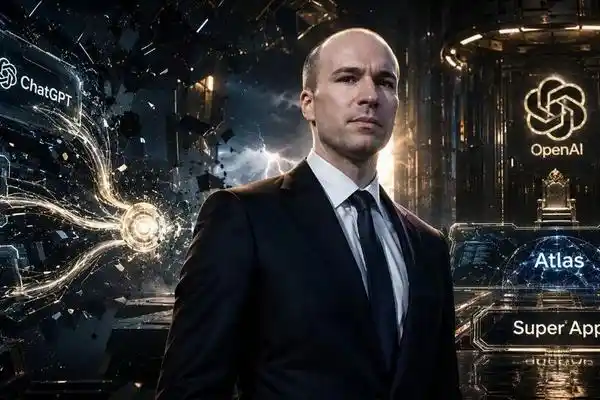
OpenAI has announced a major internal reorganization just months before its anticipated IPO. The company is merging its three flagship product lines—ChatGPT, Codex, and the API platform—into a single, unified product organization. The most significant leadership change involves co-founder and President Greg Brockman moving from a background technical role to take full, permanent control over all product strategy. This follows the indefinite medical leave of AGI Deployment CEO Fidji Simo. Additionally, ChatGPT's longtime lead, Nick Turley, has been reassigned to enterprise products, with former Instagram executive Ashley Alexander taking over consumer offerings. The consolidation, internally framed as a strategic move towards an "Agentic Future," aims to break down internal silos and create a cohesive "Super App." This planned desktop application would integrate ChatGPT's conversational abilities, Codex's coding power, and a rumored internal web browser named "Atlas" to autonomously perform complex user tasks. The reorganization occurs amid significant internal and external pressures. OpenAI has recently seen a wave of high-profile departures, including Sora co-lead Bill Peebles and other senior technical leaders, leading to concerns about a thinning executive bench. Externally, rival Anthropic recently secured funding at a staggering $900 billion valuation, surpassing OpenAI's own. Google's upcoming I/O developer conference also poses a competitive threat. Analysts suggest the dramatic restructure is a pre-IPO move to present a clearer, more focused narrative to Wall Street—streamlining operations and demonstrating decisive leadership under Brockman to counter internal turbulence and intense market competition.

marsbitHá 3h

Breaking: OpenAI Undergoes Major Reorganization, President Brockman Assumes Command

marsbitHá 3h

Two Survival Structures of Market Makers and Arbitrageurs

Market makers and arbitrageurs represent two distinct survival structures in high-frequency trading. Market makers primarily use limit orders (makers) to profit from the bid-ask spread, enjoying high capital efficiency (nominally 100%) but bearing inventory risk. This "inventory risk" arises from passive, fragmented, and discontinuous order fills in the limit order book (LOB). This risk, while a potential cost, can also contribute to excess profit if managed within control boundaries, allowing for mean reversion. Market makers essentially sell "time" (uncertainty over execution timing) to the market for price control and low fees. In contrast, cross-exchange arbitrageurs typically use market orders (takers) to exploit price differences or funding rates, resulting in lower nominal capital efficiency (requiring capital on both exchanges) and higher transaction costs. Their risk exposure stems from asymmetries in exchange rules (e.g., minimum order sizes), execution latency, and infrastructure risks (e.g., ADL, oracle drift). These exposures are active, exogenous gaps that primarily erode profits rather than contribute to them. Arbitrageurs essentially sell "space" (capital sunk across venues) for localized, immediate certainty. Both strategies engage in a trade-off between execution friction and residual risk. Optimal systems allow for temporary, controlled risk exposure rather than enforcing zero exposure at all costs. Their evolution converges towards hybrid models: arbitrageurs may use maker orders to reduce costs, while market makers may use taker orders or hedges for risk management. Ultimately, both use different forms of risk exposure—market makers exposing inventory, arbitrageurs immobilizing capital—to extract marginal, hard-won certainty from the market.

链捕手Há 3h

Two Survival Structures of Market Makers and Arbitrageurs

链捕手Há 3h

Who Will Define the Rules of the AI Era? Anthropic Discusses the 2028 US-China AI Landscape

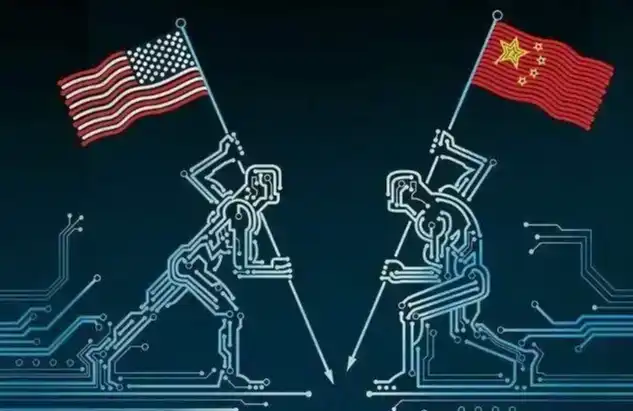
This article, based on Anthropic's analysis, outlines the intensifying systemic competition between the U.S./allies and China for AI leadership by 2028. It argues that access to advanced computing power ("compute") is the critical bottleneck, where the U.S. currently holds a significant advantage through chip export controls and allied innovation. However, China's AI labs remain competitive by exploiting policy loopholes—via chip smuggling, overseas data center access, and "model distillation" attacks to copy U.S. model capabilities—keeping them close to the frontier. The piece presents two contrasting scenarios for 2028. In the first, decisive U.S. action to tighten compute controls and curb distillation locks in a 12-24 month AI capability lead, cementing democratic influence over global AI norms, security, and economic infrastructure. In the second, policy inaction allows China to achieve near-parity through continued access to U.S. technology, enabling Beijing to promote its AI stack globally and integrate advanced AI into its military and governance systems, altering the strategic balance. Anthropic contends that maintaining a decisive U.S. lead is essential for shaping safe AI development and governance. The core recommendation is for U.S. policymakers to urgently close compute and model access loopholes while promoting global adoption of the U.S. AI technology stack to secure a lasting strategic advantage.

marsbitHá 5h

Who Will Define the Rules of the AI Era? Anthropic Discusses the 2028 US-China AI Landscape

marsbitHá 5h

Trading

Spot
Futuros
活动图片