Former FTX Employee Secures $35 Million in Funding, This Time They Built a Special Exchange

marsbitPublicado em 2025-12-25Última atualização em 2025-12-25

Resumo

Former FTX US President Brett Harrison's fintech firm, Architect Financial Technologies, has raised $35 million in Series A funding at a $187 million valuation. The round was led by MIAX and Tioga Capital, with participation from ARK Invest, Galaxy Ventures, VanEck, and Coinbase Ventures, among others. Founded in January 2023, Architect aims to bridge traditional and digital asset markets by offering brokerage services, trading technology, and post-trade solutions for institutional clients. A key product is AX, a perpetual futures exchange for traditional assets like forex, interest rates, and metals—bypassing strict U.S. crypto regulations. The platform provides API-driven tools, multi-asset brokerage, and compliance with U.S. financial standards. Architect, which operates as a B2B infrastructure provider rather than a crypto exchange, targets hedge funds and asset managers seeking to integrate TradFi and DeFi. Harrison, a Harvard graduate and ex-Jane Street executive, left FTX US in early 2022 before its collapse. Architect’s focus on regulated, institutional-grade technology positions it to capitalize on the convergence of traditional and blockchain-based finance.

Original Author: 1912212.eth, Foresight News

On December 23, Architect Financial Technologies (hereinafter referred to as Architect), a fintech company founded by former FTX US president Brett Harrison, completed a $35 million Series A funding round, reaching a valuation of $187 million. This round was led by MIAX and Tioga Capital, with participation from ARK Invest, Galaxy Ventures, VanEck, Coinbase Ventures, CMT Digital, and others. As early as February 2024, Architect completed a $12 million funding round led by BlockTower and Tioga Capital.

In the current bear market for cryptocurrencies, gaining the favor of venture capitalists and securing tens of millions of dollars in funding is quite rare across the entire industry. What makes Architect stand out?

Centralized Traditional Asset Perpetual Contract Exchange AX

Architect was established in January 2023, right as the aftershocks of the FTX collapse were still being felt. The company aims to bridge centralized and decentralized digital asset markets, helping financial institutions efficiently handle trading and post-trade processing for asset classes such as stocks, ETFs, futures, and options.
Specifically, Architect's platform covers three main modules: brokerage services, trading technology, and post-trade solutions. First, its brokerage business provides multi-asset brokerage services under US regulation, supporting stocks, stock options, futures, and futures options. The platform is equipped with a full-featured API, SDKs in various programming languages (such as Rust, Python, JavaScript), paper trading simulations, execution algorithms, and customizable trading dashboards. Users can access major global markets, including CME Group, Cboe, Nasdaq, Coinbase Derivatives, and the NYSE. This makes Architect a one-stop portal for institutional investors to access both traditional and digital assets.

In September 2023, Architect was approved by the National Futures Association (NFA) to register as an independent introducing broker, allowing it to provide derivatives brokerage services.

Secondly, one of Architect's core products is AX—a perpetual futures exchange specifically designed for traditional assets. Perpetual futures are widely popular in the crypto market, but in the US regulatory environment overseen by the SEC and CFTC, perpetual contracts for crypto assets face strict restrictions. AX cleverly sidesteps this pain point by focusing on perpetual contracts for traditional financial asset classes such as foreign exchange, interest rates, and metals.

Finally, the Post-Trade module, targeting digital assets and derivatives, provides advanced post-trade reconciliation, real-time profit and loss tracking, and detailed transaction cost analysis (TCA). This service is particularly suitable for hedge funds, family offices, asset managers, and trading firms, helping them optimize operational efficiency.

Overall, Architect's platform emphasizes flexibility in self-custody and custody options, supports multi-language APIs, and facilitates developers in building custom execution algorithms, streaming market data, and position management tools. The company also has its own regulatory entities: Architect Financial Derivatives LLC (NFA ID 0556853) and Architect Securities LLC (an SEC-registered broker-dealer and FINRA/SIPC member), ensuring all operations comply with US financial regulatory standards.

From a business model perspective, Architect is not a crypto exchange but rather more like a FinTech infrastructure provider. It does not issue tokens, does not rely on community governance, and instead profits through trading fees and similar means. This B2B-oriented strategy makes it more resilient in a bear market, avoiding the severe volatility of cryptocurrency prices.

According to the company's website, Architect's target customer base is institutional players, such as hedge funds and asset management groups, who need reliable technology stacks to bridge TradFi and DeFi. The integration of traditional assets and Crypto is already a trend, and SEC Chairman Paul Atkins predicts that within the next two years, the entire US financial market might migrate to blockchain-based technology.

Impressive Resume, Left Before the FTX Collapse

Architect founder Brett Harrison has extensive fintech experience. His career trajectory is exemplary: from traditional high-frequency trading to a crypto leadership role, and then to independent entrepreneurship.
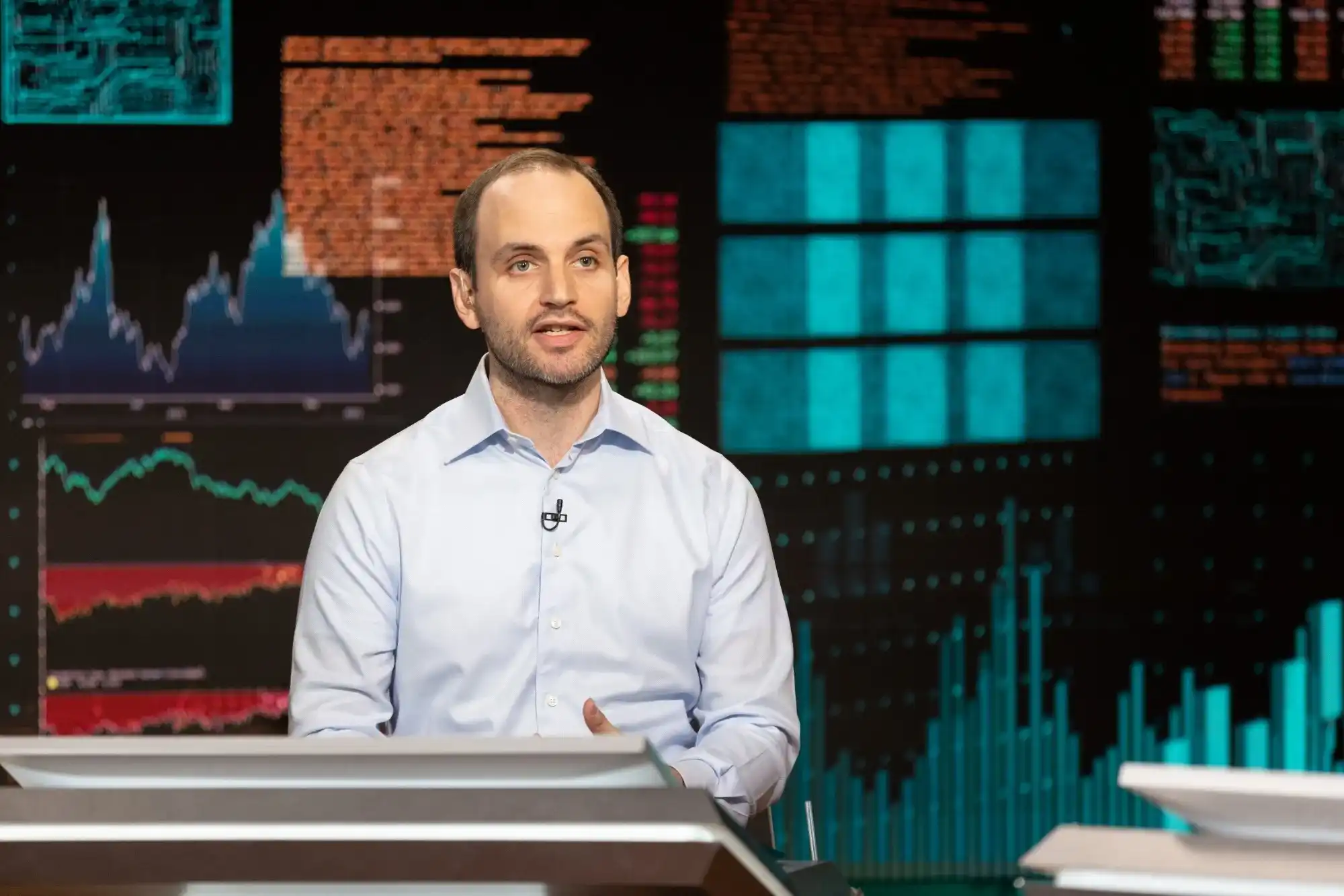
Harrison graduated from Harvard University with a Bachelor's and Master's degree in Computer Science. His career began at the top quantitative trading firm Jane Street, where from August 2010 to April 2021, he served as Head of Trading Systems Technology, responsible for building high-performance trading infrastructure. This experience gave him core skills in low-latency systems, algorithmic execution, and risk management.

In May 2021, Harrison joined FTX US as President, responsible for the expansion of the US business. At the time, FTX was at its peak, and he led the platform's technological upgrades and product innovations, including the development of derivatives tools. However, in January 2022, months before the FTX collapse, Harrison announced his resignation. In a public letter, he stated that the departure stemmed from management disagreements with founder SBF, not financial issues. According to the FTX report, it was due to a "lack of proper authorization, formal management structure, and key personnel."

This departure was seen as foresight, avoiding subsequent legal entanglements. During his time at FTX US, Harrison drove the platform's institutional transformation, attracting many traditional investors. Just months after leaving, Harrison founded Architect in January 2023 and completed a $5 million seed funding round the following month, with participation from Coinbase Ventures and others.

Currently, its AX exchange has opened its whitelist registration to both individual and institutional users.

In the macro environment of late 2025, Architect's rise is timely, coinciding with a collective surge in gold, silver, and stock assets. While the entire crypto asset market is languishing, tapping into the most profitable and fastest-growing markets, with compliance and technology as support, might be doing the right thing in the right direction.


Criptomoedas em alta

Perguntas relacionadas

QWhat is Architect Financial Technologies and what recent funding milestone did it achieve?

AArchitect Financial Technologies is a fintech company founded by former FTX US president Brett Harrison, focusing on bridging centralized and decentralized digital asset markets. It recently completed a $35 million Series A funding round at a valuation of $187 million.

QWhat is the core product offered by Architect, and how does it differ from typical crypto exchanges?

AArchitect's core product is AX, a perpetual futures exchange designed for traditional assets like forex, interest rates, and metals, rather than cryptocurrencies. Unlike typical crypto exchanges, it operates as a B2B fintech infrastructure provider, emphasizing compliance, institutional services, and avoiding token issuance or community governance.

QWho led the Series A funding round for Architect, and which notable firms participated?

AThe Series A funding round was co-led by MIAX and Tioga Capital, with participation from ARK Invest, Galaxy Ventures, VanEck, Coinbase Ventures, CMT Digital, and others.

QWhat regulatory approvals has Architect obtained to operate its services?

AArchitect has registered as an independent introducing broker with the National Futures Association (NFA) and operates through its regulated entities: Architect Financial Derivatives LLC (NFA ID: 0556853) and Architect Securities LLC (an SEC-registered broker-dealer and FINRA/SIPC member).

QWhat is Brett Harrison's professional background prior to founding Architect?

ABrett Harrison has a computer science degree from Harvard and previously worked as the head of trading systems technology at Jane Street. He later served as president of FTX US before resigning in January 2022, months before FTX's collapse, due to management disagreements with founder SBF.

Leituras Relacionadas

9.42 Million Retail Investors Compete for Changxin Technology, Who Got Allotted?

Evergreen Technology's IPO subscription results are now available. On July 20, the domestic memory chip giant announced the offline preliminary allotment results and online lottery results for its IPO. A total of approximately 9.43 million retail investors participated in the online subscription, generating 770,000 winning lots with a final winning rate of about 0.4714%, setting a record for new shares on the STAR Market. After triggering a clawback mechanism from institutional to retail investors, the online retail allocation was significantly increased to 3.851 billion shares. Simultaneously, 285 institutional investors participated in the offline subscription, ultimately receiving 2.173 billion shares at an allotment rate of approximately 0.1756%. Leading insurers and public funds were among the major recipients. Notably, Liang Wenfeng, founder of the major AI model company DeepSeek, through his quantitative investment firms Ningbo Huanfang Quantitative and Zhejiang Jiuzhang Asset, secured the largest share among private funds, with a total allotment worth approximately 175 million yuan. Estimates suggest potential profits could reach 730 million yuan if Evergreen Technology's market capitalization reaches 3 trillion yuan post-listing. The company is expected to list on July 27 and could become the highest-valued tech stock on the A-share market, with various brokerages providing valuations ranging from 1 trillion to over 4 trillion yuan. However, recent significant corrections in global tech stocks may impact its post-listing performance. (Character count: 1,196)

marsbitHá 46m

9.42 Million Retail Investors Compete for Changxin Technology, Who Got Allotted?

marsbitHá 46m

L2 'Recalibration': When L1 Becomes Its Own Rollup, What Is Ethereum's Endgame?

The article discusses the evolving relationship between Ethereum's Layer 1 (L1) and Layer 2 (L2) solutions, moving beyond the initial "L2 for scaling" model. As Ethereum L1 itself scales (increasing Gas Limit, statelessness, zkEVM), the unique value proposition of L2s shifts from merely providing cheap execution to offering differentiated features like application-specific optimization, privacy, and flexible governance. The piece explores three key themes: 1. **L2's New Role:** L2s are transitioning from a pure scaling technology to a spectrum of execution environments with varying degrees of security inheritance from Ethereum L1. 2. **Interoperability as State Trust:** Solving L2 fragmentation is less about cross-chain bridges and more about enabling faster, trust-minimized state verification between environments. This involves initiatives like faster L1 finality, intent-based architectures (Open Intents Framework), and native account abstraction. 3. **Blurring Layers:** With the potential integration of zk-proofs into L1 validation (making L1 akin to its own "Rollup") and the concept of "Native Rollups," the rigid boundary between L1 and L2 may fade. The future could be a unified system with multiple execution domains (for DeFi, gaming, privacy, etc.) sharing a common security, settlement, and state framework. In conclusion, Ethereum's goal is not to abandon L2s or re-centralize everything on L1, but to re-integrate the fragmented user experience—liquidity, accounts, applications—while preserving the scaling benefits of a multi-environment ecosystem. The endgame is a cohesive "one chain" feeling for users, powered by diverse but securely interconnected execution layers.

marsbitHá 1h

L2 'Recalibration': When L1 Becomes Its Own Rollup, What Is Ethereum's Endgame?

marsbitHá 1h

Trading

Spot

Artigos em Destaque

Como comprar O

Bem-vindo à HTX.com!Tornámos a compra de O1 exchange (O) simples e conveniente.Segue o nosso guia passo a passo para iniciar a tua jornada no mundo das criptos.Passo 1: cria a tua conta HTXUtiliza o teu e-mail ou número de telefone para te inscreveres numa conta gratuita na HTX.Desfruta de um processo de inscrição sem complicações e desbloqueia todas as funcionalidades.Obter a minha contaPasso 2: vai para Comprar Cripto e escolhe o teu método de pagamentoCartão de crédito/débito: usa o teu visa ou mastercard para comprar O1 exchange (O) instantaneamente.Saldo: usa os fundos da tua conta HTX para transacionar sem problemas.Terceiros: adicionamos métodos de pagamento populares, como Google Pay e Apple Pay, para aumentar a conveniência.P2P: transaciona diretamente com outros utilizadores na HTX.Mercado de balcão (OTC): oferecemos serviços personalizados e taxas de câmbio competitivas para os traders.Passo 3: armazena teu O1 exchange (O)Depois de comprar o teu O1 exchange (O), armazena-o na tua conta HTX.Alternativamente, podes enviá-lo para outro lugar através de transferência blockchain ou usá-lo para transacionar outras criptomoedas.Passo 4: transaciona O1 exchange (O)Transaciona facilmente O1 exchange (O) no mercado à vista da HTX.Acede simplesmente à tua conta, seleciona o teu par de trading, executa as tuas transações e monitoriza em tempo real.Oferecemos uma experiência de fácil utilização tanto para principiantes como para traders experientes.

167 Visualizações TotaisPublicado em {updateTime}Atualizado em 2026.06.29

Como comprar O

Como comprar PROS

Bem-vindo à HTX.com!Tornámos a compra de Pharos (PROS) simples e conveniente.Segue o nosso guia passo a passo para iniciar a tua jornada no mundo das criptos.Passo 1: cria a tua conta HTXUtiliza o teu e-mail ou número de telefone para te inscreveres numa conta gratuita na HTX.Desfruta de um processo de inscrição sem complicações e desbloqueia todas as funcionalidades.Obter a minha contaPasso 2: vai para Comprar Cripto e escolhe o teu método de pagamentoCartão de crédito/débito: usa o teu visa ou mastercard para comprar Pharos (PROS) instantaneamente.Saldo: usa os fundos da tua conta HTX para transacionar sem problemas.Terceiros: adicionamos métodos de pagamento populares, como Google Pay e Apple Pay, para aumentar a conveniência.P2P: transaciona diretamente com outros utilizadores na HTX.Mercado de balcão (OTC): oferecemos serviços personalizados e taxas de câmbio competitivas para os traders.Passo 3: armazena teu Pharos (PROS)Depois de comprar o teu Pharos (PROS), armazena-o na tua conta HTX.Alternativamente, podes enviá-lo para outro lugar através de transferência blockchain ou usá-lo para transacionar outras criptomoedas.Passo 4: transaciona Pharos (PROS)Transaciona facilmente Pharos (PROS) no mercado à vista da HTX.Acede simplesmente à tua conta, seleciona o teu par de trading, executa as tuas transações e monitoriza em tempo real.Oferecemos uma experiência de fácil utilização tanto para principiantes como para traders experientes.

160 Visualizações TotaisPublicado em {updateTime}Atualizado em 2026.06.29

Como comprar PROS

O que é VERONA

I. Introdução ao Projeto VERONA é uma blockchain construída para todos, em todo o lado, através da abstração da cadeia. Utilizando a sua camada de Abstração Generalizada, a VERONA distingue-se por integrar funcionalidades complexas de blockchain, como contas, assinaturas e interoperabilidade, diretamente ao nível do protocolo. Esta abordagem permite a interação com aplicações de blockchain sem a necessidade de compreender as tecnologias subjacentes.1) Informação Básica Nome: VERONA (VERONA)III. Links Relacionados Link do site oficial: https://xion.burnt.com/ Whitepaper: https://xion.burnt.com/whitepaper.pdf Exploradores: https://explorer.burnt.com/ Mídias Sociais: https://x.com/burnt_xion Nota: A introdução ao projeto provém dos materiais publicados ou fornecidos pela equipa oficial do projeto, que é apenas para referência e não constitui aconselhamento de investimento. A HTX não se responsabiliza por quaisquer perdas diretas ou indiretas resultantes.

778 Visualizações TotaisPublicado em {updateTime}Atualizado em 2026.06.22

O que é VERONA

Discussões

Bem-vindo à Comunidade HTX. Aqui, pode manter-se informado sobre os mais recentes desenvolvimentos da plataforma e obter acesso a análises profissionais de mercado. As opiniões dos utilizadores sobre o preço de A (A) são apresentadas abaixo.

活动图片













