Fed doubts trigger $1.3B crypto outflows in days – Is risk appetite gone?

ambcryptoPublicado em 2026-01-13Última atualização em 2026-01-13

Resumo

Despite a strong start to 2026 with $1.5 billion in inflows within the first two days, the crypto market saw a sharp reversal as $1.3 billion flowed out over just four days, nearly erasing early gains. This shift was primarily driven by fading expectations of a Federal Reserve rate cut in March, as strong U.S. economic data made safer assets more attractive. Outflows were concentrated in the U.S., with $569 million exiting, while Germany, Switzerland, and Canada saw inflows. Bitcoin and Ethereum experienced significant outflows, while XRP, Solana, and Sui attracted new investments. Despite the volatility, Bitcoin ETFs and several altcoin ETFs recorded inflows, suggesting selective confidence remains.

The honeymoon phase for digital assets in 2026 was remarkably short-lived.

After attracting $1.5 billion in inflows within the first two days of the year, the market reversed sharply.

Over just four days last week, investment products saw $1.3 billion in outflows, erasing nearly all early gains and signaling a sudden shift in sentiment.

By week’s end, digital asset funds posted $454 million in net outflows, reflecting a rapid reassessment of risk.

According to CoinShares, the shift was driven mainly by fading expectations of a Federal Reserve rate cut in March.

Fed expectations cool risk appetite

The biggest challenge for digital assets right now is coming from the US.

At the start of 2026, markets expected the Federal Reserve to cut interest rates as early as March.

That optimism has faded after stronger-than-expected economic data showed the services sector holding up and the job market remaining tight.

For institutional investors, high interest rates matter most.

Elevated rates keep the US dollar strong and bond yields attractive, making safer assets more appealing than riskier ones like crypto.

This explains why just four days of outflows nearly erased all of January’s early inflows; capital is reacting quickly to shifts in Fed expectations.

Additionally, geopolitical tensions may also be contributing to the shift, particularly rising uncertainty surrounding Venezuela and the United States.

Escalating political and economic stress in Venezuela, combined with broader concerns about US foreign policy and regional stability, has added another layer of risk for global investors.

In such environments, institutions often reduce exposure to volatile assets like crypto, favoring liquidity and capital preservation until geopolitical clarity improves.

Region-wise flow analysis

That being said, the selling pressure was largely centered in the US, not global.

According to CoinShares data, the United States saw $569 million in outflows last week, making it the only region with negative flows.

Germany recorded $58.9 million in inflows, Switzerland $21 million, and Canada $24.5 million.

This split suggests investors are responding specifically to US monetary policy rather than broader geopolitical concerns.

Bitcoin weakens, and atcoins attracts

Although total outflows reached $454 million, the details show selective movement rather than a full exit from crypto.

BTC lost $405 million as investors reduced exposure rather than betting on a major price crash. ETH followed with $116 million in outflows.

Meanwhile, XRP led inflows with $45.8 million, supported by improving regulatory clarity.

SOL attracted $32.8 million, continuing its strong institutional appeal. SUI gained $7.6 million, emerging as a new area of interest.

This coincided with Bitcoin [BTC] trading at $92,330, and Ethereum [ETH] was changing hands at $3,137.

Meanwhile, Solana [SOL] stood at $141, Ripple [XRP] was priced at $2.06, and Sui [SUI] locked in at $1.80, all flagging green candlesticks as per CoinMarketCap.

What’s more?

Finally, ETF data also points to renewed confidence.

Bitcoin ETFs recorded $116.7 million in inflows.

Altcoin ETFs followed, including Ethereum ETFs, XRP ETFs, and Solana ETFs, recording $5.1 million inflows, $15.04 million inflows, and $10.8 million inflows, respectively.

This followed a $120 billion drop in total crypto market value last week.

Therefore, if Bitcoin holds above $92,000 and breaks through $94,000, the market could regain momentum heading into February.


Final Thoughts

  • The speed of the reversal highlights how fragile early-year optimism was, especially in a rate-sensitive market.
  • Bitcoin absorbed most of the pressure, yet investors reduced exposure rather than betting on a deep downside.


Perguntas relacionadas

QWhat triggered the $1.3 billion in crypto outflows over four days last week?

AThe outflows were mainly driven by fading expectations of a Federal Reserve rate cut in March, following stronger-than-expected US economic data.

QWhich region was primarily responsible for the crypto outflows, according to CoinShares data?

AThe United States was the primary region with outflows, recording $569 million in outflows, while other regions like Germany, Switzerland, and Canada saw inflows.

QWhich cryptocurrencies saw inflows despite the overall market outflows?

AXRP led with $45.8 million in inflows, followed by SOL with $32.8 million and SUI with $7.6 million.

QWhat role did geopolitical tensions play in the shift in crypto investment sentiment?

AGeopolitical tensions, particularly rising uncertainty surrounding Venezuela and US foreign policy, added another layer of risk, prompting institutions to reduce exposure to volatile assets like crypto.

QWhat key price level does the article suggest Bitcoin needs to hold and break to regain market momentum?

AThe article suggests that if Bitcoin holds above $92,000 and breaks through $94,000, the market could regain momentum heading into February.

Leituras Relacionadas

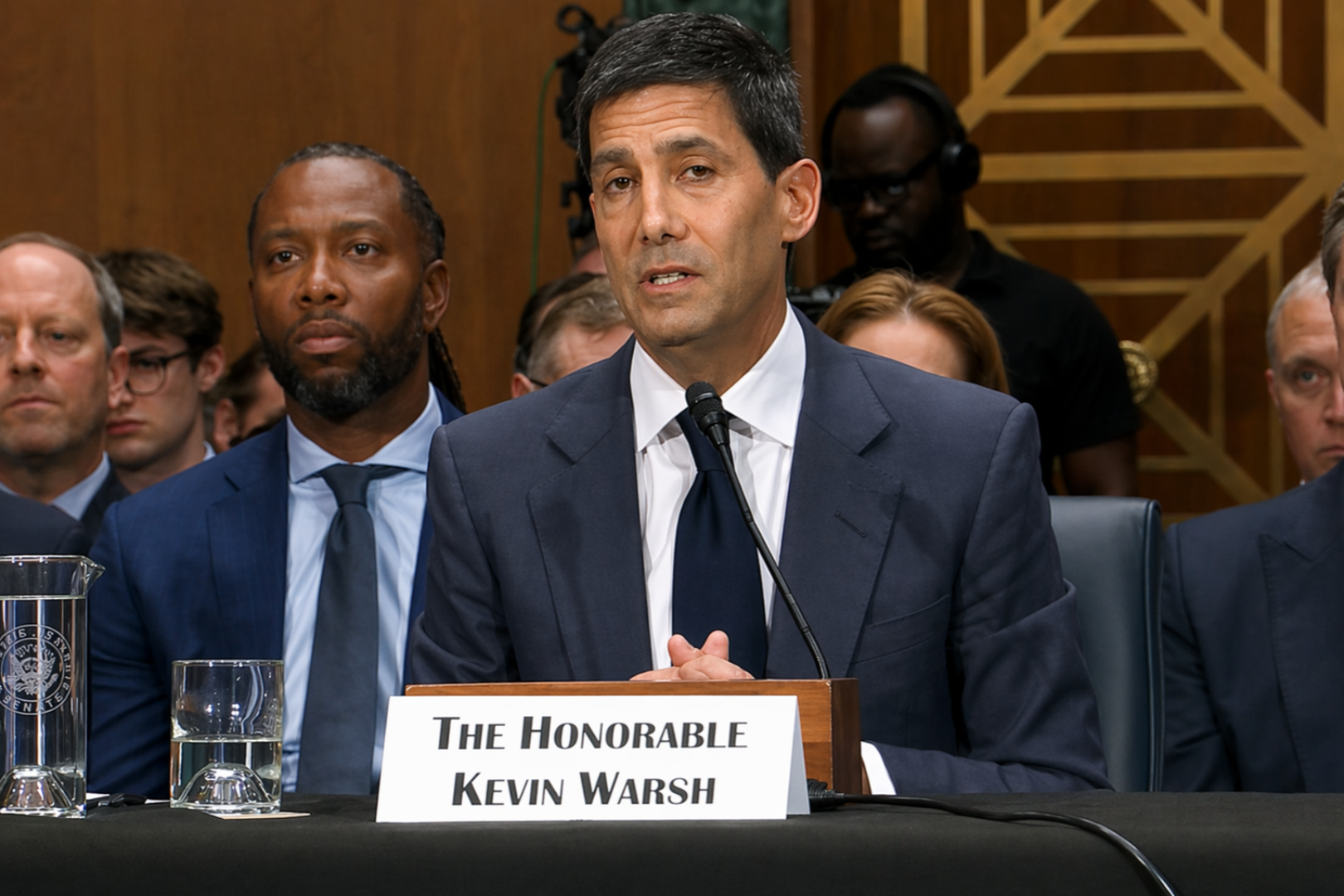
Warsh Hearing Concludes: What Are the Notable Signals for the Crypto Industry?

The Senate Banking Committee held a confirmation hearing for Judy Shelton, a Federal Reserve nominee, who faced intense questioning regarding her ability to maintain the central bank's independence amid pressure from President Trump to lower interest rates. Shelton denied any pre-arranged commitments on rate cuts and emphasized her independence, though Democrats remained skeptical, citing contradictions with Trump's public statements. Shelton characterized post-pandemic inflation as a major policy failure and called for a "regime change" in the Fed’s approach, including reforms to inflation measurement and communication strategies. She criticized the current practice of Fed officials frequently signaling future rate moves and did not commit to maintaining post-meeting press conferences, suggesting potential reductions in transparency. Regarding crypto markets, Shelton’s extensive investments in digital asset companies—including Solana, DeFi, and blockchain infrastructure—were noted, though she has pledged to divest these holdings due to ethics rules. Her familiarity with the crypto industry and deregulatory leanings may signal a more open, though cautious, stance toward digital assets. However, concerns were raised about potential conflicts of interest, especially given Trump family involvement in crypto-financial ventures. The timing of her confirmation remains uncertain, pending a Justice Department investigation into current Chair Powell. Shelton’s potential leadership could lead to a more hawkish, productivity-focused Fed with tighter policy communication—factors that may significantly influence liquidity conditions and macro narratives for crypto markets.

marsbitHá 1h

Warsh Hearing Concludes: What Are the Notable Signals for the Crypto Industry?

marsbitHá 1h

Trading

Spot
Futuros
活动图片