Farewell to the 'Performance Black Box': Windows 11 Task Manager Officially Supports NPU Monitoring

marsbitPublicado em 2026-03-31Última atualização em 2026-03-31

Resumo

Microsoft has introduced a significant update to the Task Manager in a recent Windows 11 development build, adding real-time monitoring for Neural Processing Units (NPU). This enhancement addresses a key gap in hardware performance visibility, particularly as NPUs become central to AI PCs. Users can now track NPU utilization across processes, users, and details tabs in the latest preview version (26300.8142). The update also provides insights into dedicated and shared memory usage by applications. Additionally, the performance page displays detailed activity for neural engines integrated within GPUs, offering comprehensive oversight of all AI-related operations. This upgrade integrates NPUs into the mainstream hardware performance evaluation system, providing developers and power users with essential data for optimizing AI application efficiency and power consumption. The feature is currently available to Windows Insiders, with a broader rollout expected in the future, signaling deeper integration of AI hardware into the Windows ecosystem.

Microsoft recently introduced a major upgrade to the Task Manager in a Windows 11 development build update. This update finally completes the last piece of the hardware monitoring puzzle by officially adding real-time monitoring capabilities for the Neural Processing Unit (NPU).

With the popularization of the AI PC concept, the NPU has become the core hardware for handling artificial intelligence tasks. Previously, users were unable to visually check the operating status of the NPU, but this upgrade makes the load conditions of this dedicated chip transparent and visible.

In the latest preview build 26300.8142, the Task Manager's Processes, Users, and Details pages have all added an NPU column. Users can not only view the real-time NPU utilization but also gain in-depth insights into the specific consumption of dedicated memory and shared memory by various applications.

Furthermore, Microsoft has refined the monitoring dimensions; the Performance page can now fully showcase the neural network engine activity built into the graphics card. This means that all AI-related operational traces within the system will be comprehensively captured by the Task Manager.

This evolution of the Task Manager marks the NPU's official entry into the mainstream hardware performance evaluation system. For developers and tech-savvy users, this is not just an increase in data but also a foundation for precisely tuning the energy consumption and efficiency of AI applications.

Currently, this feature is primarily available to Windows Insiders in preview builds, and a wider rollout will take some time. It is foreseeable that with the普及 of NPU monitoring, future Windows systems will undergo a deeper experience reconstruction centered around the AI hardware ecosystem.


Perguntas relacionadas

QWhat major update did Microsoft recently introduce to the Task Manager in Windows 11?

AMicrosoft introduced real-time monitoring for the Neural Processing Unit (NPU) in the Task Manager.

QWhy is the NPU monitoring feature significant for AI PC users?

AIt allows users to visually check the workload and status of the NPU, which is crucial for handling AI tasks, making the specialized chip's operations transparent.

QWhich Windows 11 preview build version includes the NPU monitoring capability?

AThe feature is available in the preview build version 26300.8142.

QWhat specific details can users monitor regarding NPU usage in the Task Manager?

AUsers can view real-time NPU utilization and see how programs consume dedicated and shared memory.

QWho currently has access to the NPU monitoring feature in Windows 11?

AThe feature is currently available to Windows Insiders in the preview version, with a wider rollout expected later.

Leituras Relacionadas

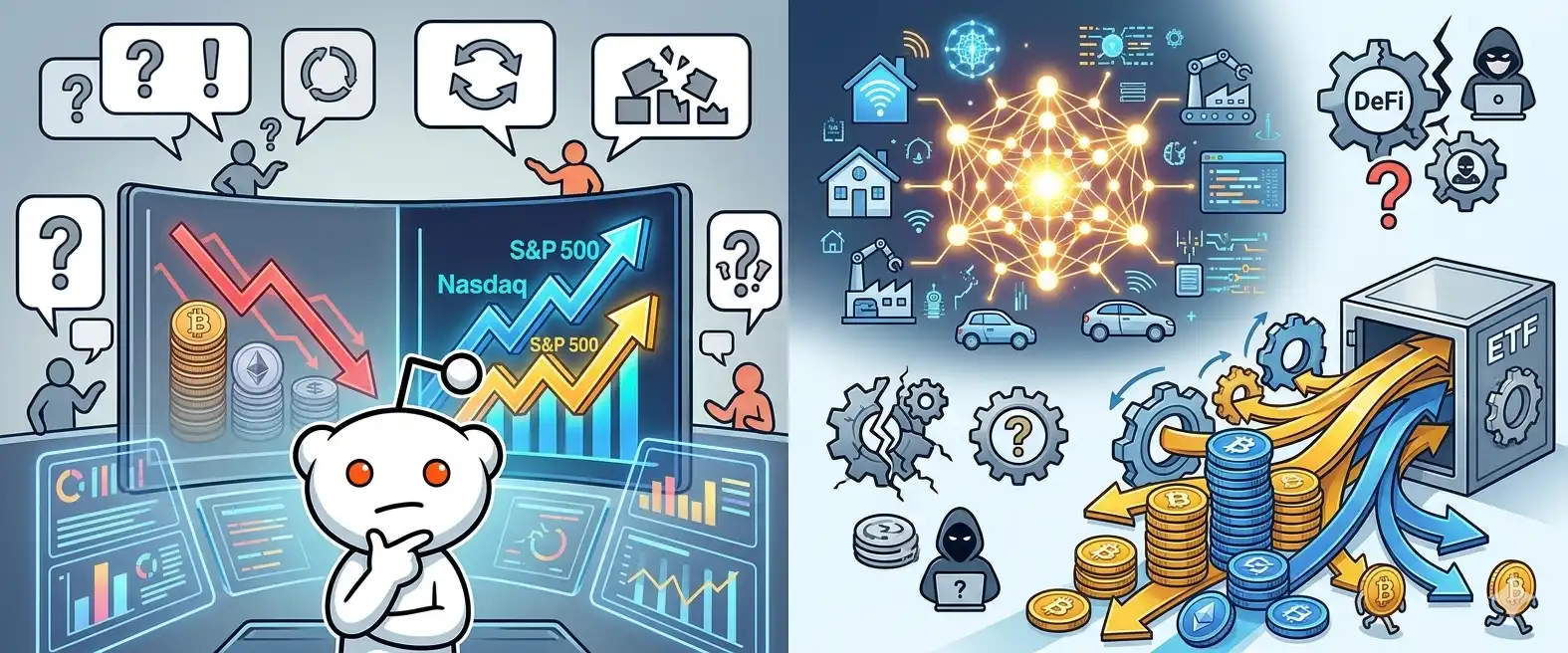
Reddit Crypto Discussion: Tech Stocks Surge for 8 Months, Is the Crypto Community Starting to 'Accept Fate'?

Reddit Crypto Discussion: Has the Community 'Given Up' as Tech Stocks Soar? A recent post on Reddit's r/CryptoMarkets asking if the crypto market feels "dead" compared to surging tech stocks has sparked intense debate. The discussion highlights a community grappling with underperformance: Bitcoin is down ~44% from its October 2025 high and ~20% YTD in 2026, while the S&P 500 and Nasdaq 100 have gained significantly. The debate features classic opposing views. Some users, citing Bitcoin's history, are "cycle believers" who anticipate a return to form, arguing it has "died" many times before. Others counter that crypto's narratives keep shifting without delivering a stable, compelling real-world use case beyond speculation. A prevalent third view pinpoints AI as the core issue: the tech sector's transformative boom is absorbing all attention and capital, while crypto lacks a comparable, impactful utility. Data supports the pessimistic mood. Bitcoin spot ETFs saw their largest monthly net outflow in May 2026 (~$2.3B), indicating institutional de-risking. The Crypto Fear & Greed Index has fallen to "Fear" levels. When asked about the timing of a potential market rotation back to crypto, answers are uncertain. A key practical point raised is the current high-interest-rate environment, which makes stable yields from cash and bonds attractive, reducing incentive to move into volatile assets like crypto. The underlying anxiety, as one user summarized, is "opportunity cost"—the worry about missing gains elsewhere while waiting for a crypto revival.

marsbitHá 40m

Reddit Crypto Discussion: Tech Stocks Surge for 8 Months, Is the Crypto Community Starting to 'Accept Fate'?

marsbitHá 40m

Chatbot has been burning money for three years, is it still the 'New Continent' of the AI era?

For years, the AI industry has been guided by a singular "map" — the belief that the AI era's "new continent" would be found in the Chatbot, a super-app akin to the mobile internet's super-apps. This belief was fueled by ChatGPT's explosive 2022 debut. However, three years of heavy investment reveal a different reality: the Chatbot-as-ultimate-entry-point model is struggling. The core issue is economic. Chatbots defy traditional internet economics. Unlike apps with near-zero marginal cost, each AI query consumes significant, expensive compute. More users mean higher costs, not profits. OpenAI, despite ~900M weekly active users, reportedly loses money. The expected network effects and data flywheels that power internet giants are weak in Chatbots, as one user's interactions don't improve another's experience. Monetization is a major hurdle. The subscription model faces low conversion rates, especially in China where users expect AI to be free. The "free + ads" model also struggles. Chatbot interactions often lack commercial intent, and inserting ads compromises the trust essential for an answer engine. Perplexity's minimal ad revenue and subsequent pivot away from ads highlight this difficulty. Switching between Chatbots is easy, making user loyalty low and competition a potential race to the bottom on price. Data suggests the standalone Chatbot's growth is slowing, and user engagement (avg. ~6 mins/day) pales compared to apps like TikTok. The product form itself is limiting; studies show nearly half of interactions are simple Q&A, trapping AI's potential in a passive, single-turn "cage." A contrasting, more successful path is emerging, exemplified by Anthropic. With over 85% of its ~$30B annualized revenue from enterprises, it focuses on AI as a productivity tool, not a companion. The rise of AI Agents (like OpenClaw) and the integration of AI into existing workflows (e.g., Google's AI Overviews, Apple Intelligence in OS) signal a shift. The future may not be a dominant Chatbot app, but AI embedded seamlessly into social apps, operating systems, and hardware — a capability-layer revolution, not a new distribution container. The conclusion is clear: the old "map" centered on a standalone Chatbot super-app is leading to a dead end. To find the true valuable "continent" of the AI era, the industry must update its navigation to prioritize deep integration, practical utility, and sustainable economics over a generic conversation window.

marsbitHá 54m

Chatbot has been burning money for three years, is it still the 'New Continent' of the AI era?

marsbitHá 54m

Trading

Spot
Futuros
活动图片