Ethereum is Building an 'Economic Special Zone', the Archipelago Era is Over

marsbitPublicado em 2026-03-31Última atualização em 2026-03-31

Resumo

Ethereum is shifting from its fragmented "archipelago" model of Layer-2 solutions to a unified "Ethereum Economic Zone" (EEZ), a new initiative backed by the Ethereum Foundation and key protocols like Aave. This move aims to enable seamless, synchronous transactions across L2s, eliminating the delays and risks of bridges by allowing atomic cross-chain executions settled on Ethereum with ETH gas. However, this comes amid a significant decline in Ethereum’s activity and ETH price, which has dropped over 60% from its 2025 peak. While on-chain data shows Ethereum still holds the largest share of institutional capital—including $163.3B in stablecoins, 58% of real-world assets, and a $53B DeFi TVL—the economic model is struggling. With most activity moving to L2s, mainnet gas fees have collapsed, turning ETH inflationary and undermining its "ultrasound money" narrative. The article suggests Ethereum is becoming a "vault" or utility pipeline—secure and fundamental to global crypto finance, but increasingly boring and unable to capture value through fees. If Ethereum evolves into pure infrastructure like SWIFT, ETH may be revalued based on its utility as a settlement layer rather than speculative growth, challenging current investor expectations.

Author: David, Deep Tide TechFlow

Do you still care about Ethereum?

On February 3rd this year, Vitalik posted on X.

No long essay, just one sentence: The original vision of L2 and its role in Ethereum is no longer reasonable. We need a new path.

For the past five years, Ethereum's entire scaling roadmap has been built on L2. The mainnet is responsible for security and settlement, leaving all execution layer work to L2. Rollups, bridges, cross-chain messaging... The entire architecture was designed under the leadership of Vitalik himself.
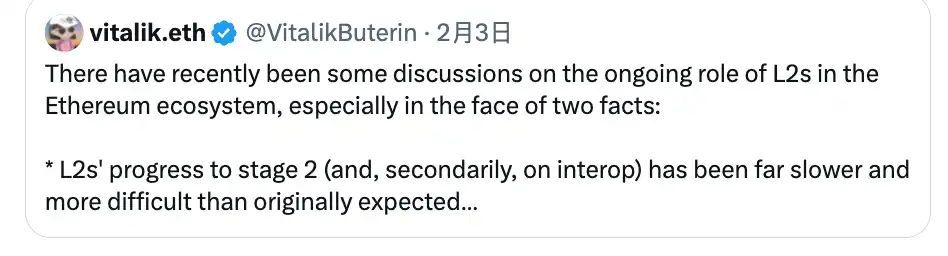
Now the designer himself says this path is wrong.

Less than two months later, at the EthCC Cannes conference on March 29th, Gnosis co-founder Friederike Ernst and zero-knowledge proof developer Jordi Baylina took the stage to announce something called EEZ:

Full name Ethereum Economic Zone.

Co-funded by the Ethereum Foundation, with protocols like Aave joining as founding members. What EEZ aims to do can be summed up in one sentence: make all L2s no longer isolated islands, but one connected continent.

The direction is certainly correct.

But the problem is, this archipelago has been built for five years... The islands were once prosperous, but surely no one is there now. Is it too late to start building tunnels now?

Closing the Stable Door After the Horse Has Bolted?

From the name EEZ, you can actually see what Ethereum wants to do.

The logic of an economic zone is well understood: unified rules within the zone, free flow of capital, no checkpoints. In the past, Ethereum's twenty-plus L2s were like twenty small economies, each with its own customs, currency, and clearance procedures. Moving money from Arbitrum to Base required finding a middleman to exchange currency and bridge.
What EEZ aims to do is remove tariffs, unify the currency, and dismantle customs. Your operations on any chain can directly interact with contracts on another chain, settling back to the Ethereum mainnet, with Gas uniformly paid in ETH.

Does that sound familiar?

LayerZero and Wormhole told similar stories back in the day. Connect all chains, free flow of assets... all old tricks.

The difference here is that those cross-chain protocols are asynchronous. For example, you initiate an operation on chain A, and chain B executes it after a while; there's a delay in the middle, a risk of failure, and the bridge itself is a favorite target for hackers.

This EEZ is synchronous. Contracts on two chains execute simultaneously within one transaction, either both succeed or both roll back. The technical prerequisite for this is the real-time proving of Ethereum blocks.

This wasn't possible before. For two chains to operate synchronously, they need to be able to verify each other's ledgers in real-time. But Ethereum produces a new block every 12 seconds, and the speed of verifying the previous block couldn't keep up. The accounting wasn't finished before the next block arrived.

This year, this speed was technically achieved. Synchronous operation became an engineering reality for the first time, leading to the EZZ proposal.

The direction is fine. But if you check Twitter, who is still talking about Ethereum?

It's not just Ethereum that's cold; the whole industry is quiet. Last year there was meme coin frenzy, Solana's comeback, the AI Agent hype. From the start of this year until now, no narrative has taken off.

Ethereum is just colder—ETH dropped from $4800 at the end of 2025 to just over $2000 now, evaporating over 60%. There isn't even much anger in the community, more a kind of weary silence.

From Archipelago to Treasury Era

But if you look at on-chain data, you see a completely different picture.

According to AMBCrypto, the supply of stablecoins on the Ethereum mainnet is still about $163.3 billion. In the $16.5 billion on-chain real-world asset market, Ethereum accounts for 58%. Last year, Ethereum spot ETFs saw a net inflow of $9.9 billion. DeFi TVL is still the highest in the industry, about $53 billion.

The people left, but the money remains. And it's not retail money, it's institutional money.
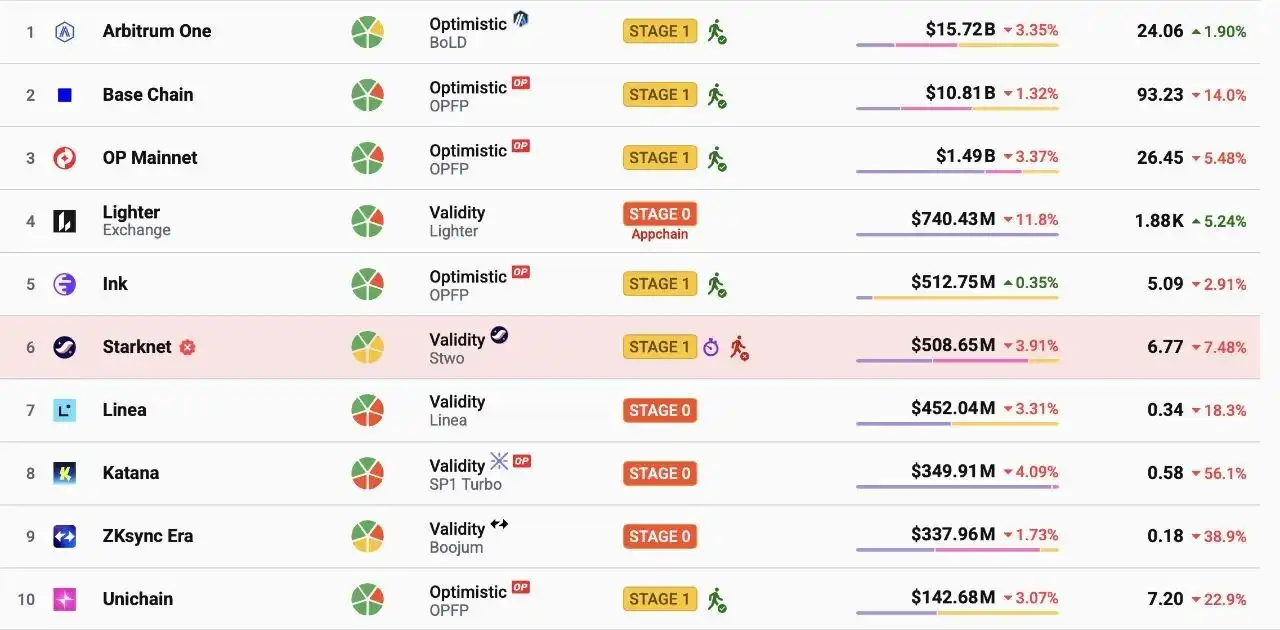
The Ethereum Foundation's own actions point in the same direction. It paused its public grants program in the middle of last year, reducing its burn rate to below 5% per year. But last week it completed its largest single staking event ever—22,517 ETH, worth about $46.2 million, locked into the Beacon Chain.

Cutting the budget while locking money into the treasury, and simultaneously funding an interoperability solution that's arriving last.

All these actions pieced together point to one judgment: Ethereum's archipelago era is indeed over. But what replaces it is not a bustling continent.

It's a treasury.

Quiet, sturdy, filled with institutional assets. Not many people live there, but it holds the most money in the industry.

Even Treasuries Don't Generate Tax Revenue, Ethereum Doesn't Make Money

Ethereum's economic model has a very simple cycle:

Users transact on the mainnet, transactions generate Gas fees, and a portion of the Gas fees (ETH) is permanently burned. The more users, the more burning, the more the ETH supply decreases.

When this mechanism first started running in 2022, the community gave it a name: ultrasound money. Meaning ETH is not only anti-inflation, but deflationary—harder than Bitcoin.

This narrative held for two years. Then L2 dismantled it.

When a large number of transactions moved from the mainnet to L2, the mainnet's Gas fee income collapsed. According to BitKE, Ethereum mainnet revenue has fallen by about 75% over the past two years. One week, the combined blob fees generated by L2s submitting data to the mainnet were only 3.18 ETH.

3.18 ETH, at the price then, was only about $5000.

A network locking $53 billion in TVL, with weekly blob revenue enough for a decent New Year's Eve dinner table in Shanghai.
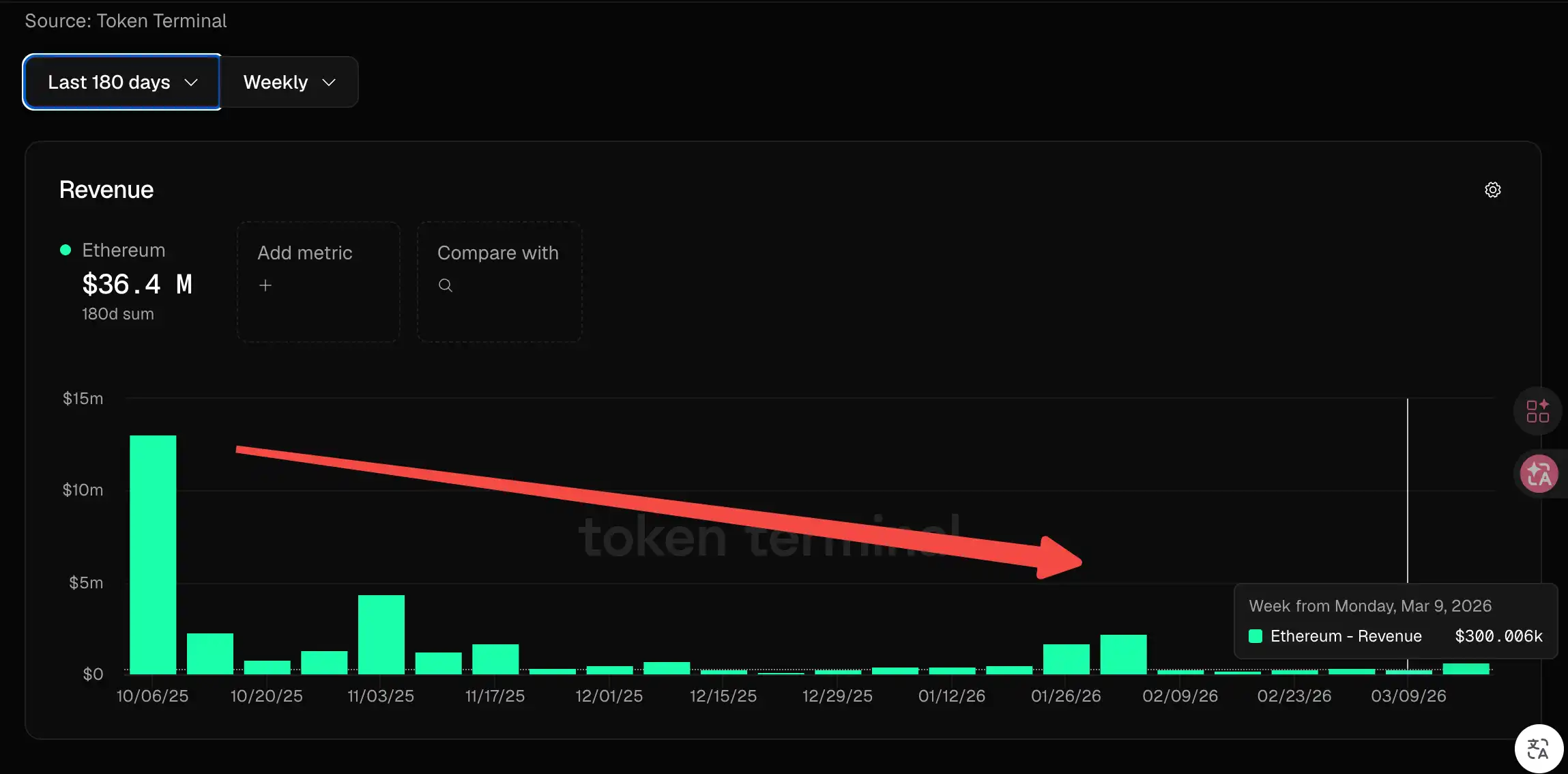
If it can't burn, the supply can't be suppressed. In February this year, ETH's supply officially turned to net growth, with an annualized inflation rate of about 0.74%. "Ultrasound money" became an expired marketing slogan.

This is the cost of the L2 roadmap. Users and transactions move to L2, L2s take the fee income, and the mainnet is left with only settlement work. Settlement is important, but settlement doesn't make money.

To use an analogy, Ethereum built an economic special zone, moved the factories and shops inside, and the zone is bustling. But the tax revenue goes to the zone itself, and the central government's fiscal revenue反而 decreases. The EEZ scheme mentioned in the previous chapter wants to reconnect the special zone to the center, but what it connects back is liquidity, not tax revenue.

The institutional money is locked in the treasury, very safe. But the treasury itself, the ETH asset, is becoming increasingly difficult to narrate because it has no income.

The price drop from $4800 to $2000 is not just an emotional issue. When an asset's core narrative shifts from "deflationary" to "actually still inflationary," the market reprices it.

The situation Ethereum faces now is:

The strongest in the industry in terms of infrastructure, the most institutional capital in the industry, but the economic model is leaking. EEZ fixes fragmentation, but it doesn't fix this.

Is an Uninhabited House Valuable?

Back to the opening question: Do you still care about Ethereum?

The honest answer for most people is probably not really. ETH isn't rising, the narrative is outdated, it's troublesome to use,还不如Solana next door.

But ask it another way: Do you care about the water pipes under your building?

No, you just turn on the tap and there's water. You don't research what purification technology the water plant uses, you don't care what material the pipes are made of, and you certainly don't post on social media because of the pipe brand.

Ethereum is becoming that water pipe.

$53 billion TVL, $163.3 billion in stablecoins, 58% of the industry's real-world assets, nearly $10 billion in annual ETF inflows... These numbers indicate one thing: most of the global crypto-financial on-chain clearing is still done on Ethereum.

Not because users like Ethereum, but because institutions can't find a second pipe as thick.

What the economic zone EEZ is doing now is essentially increasing the diameter of this pipe—allowing institutional funds to flow faster between L2s, reducing settlement friction. This is useful, even necessary.

But pipes have one characteristic: no one wants to pay a premium for a pipe.

Water companies are one of the most important infrastructures in a city, but have you ever seen a water company's P/E ratio higher than an internet company's? The global clearing giant DTCC processes over $2000 trillion in transactions annually, but almost no one discusses its stock price.

If Ethereum truly moves towards becoming a treasury, a pipe, it will become extremely important, and simultaneously extremely boring. Important enough that all institutional money passes through it, boring enough that no retail investor wants to hold ETH waiting for it to rise.

But most people holding ETH today are still pricing it according to the logic of a "city." Users will grow, the ecosystem will prosper, L2 will feed back to the mainnet, the coin price will hit new highs? This is the story the Ethereum community has been telling itself for the past five years.

The reality is, Ethereum is becoming SWIFT, not New York.

SWIFT handles over $150 trillion in cross-border payments annually, and the global financial system cannot do without it. But no one speculates on SWIFT's stock because the valuation logic of infrastructure is stability.

ETH's drop from $4800 to $2000 is not just emotion; the market is re-understanding what this asset actually is.

If Ethereum's future is a treasury, then ETH's reasonable pricing shouldn't be based on user numbers and ecosystem heat, but on how much value it can capture annually as a settlement layer. At the current level of $5000 weekly mainnet blob revenue, that answer isn't very pretty.

The archipelago era is over. EEZ is here, the institutional money remains. But for those holding ETH, there's really only one thing to figure out clearly:

Did you buy a house in a city, or the right to use a pipe.

Perguntas relacionadas

QWhat is the Ethereum Economic Zone (EEZ) and what problem does it aim to solve?

AThe Ethereum Economic Zone (EEZ) is a new initiative announced at EthCC Cannes, backed by the Ethereum Foundation and protocols like Aave. Its goal is to connect all Ethereum Layer 2s (L2s) into a unified economic zone, eliminating the current fragmentation where each L2 operates as an isolated 'island' with its own rules, currencies, and bridging processes. EEZ aims to enable synchronous operations across L2s, allowing transactions to interact with contracts on different chains simultaneously and settle on the Ethereum mainnet using ETH for gas, thereby improving capital efficiency and user experience.

QAccording to the article, why did Vitalik Buterin state that the original vision for L2s is 'no longer reasonable'?

AVitalik Buterin stated that the original vision for Layer 2s (L2s) and their role in Ethereum is 'no longer reasonable' because the five-year scaling roadmap, which relied on L2s for execution while the mainnet handled security and settlement, has led to significant unintended consequences. The main issue is that the economic model is 'leaking': transaction activity and fee revenue have largely moved to L2s, drastically reducing the mainnet's gas fee income and causing ETH's supply to become inflationary again, undermining its 'ultrasound money' narrative.

QWhat does the article mean by Ethereum entering a 'treasury era' or becoming a 'vault'?

AThe article uses the terms 'treasury era' and 'vault' to describe Ethereum's current state where a massive amount of institutional capital (e.g., $1633B in stablecoins, 58% of the on-chain real-world asset market, $99B ETF inflows) remains locked on the chain, but active user engagement and retail interest have significantly declined. It has become a secure, foundational settlement layer for global crypto finance—like a fortified vault storing immense value—but it is no longer a vibrant city with a growing ecosystem and users, making it 'important yet boring'.

QHow has the shift of activity to L2s impacted Ethereum's economic model and the ETH token?

AThe shift of user activity and transactions to L2s has severely damaged Ethereum's economic model. The mainnet's gas fee revenue, which was used to burn ETH and create deflationary pressure, has collapsed (e.g., reported blob fees as low as 3.18 ETH in a week). This has caused ETH's inflation rate to turn positive (approx. 0.74% annualized), ending the 'ultrasound money' narrative. Consequently, ETH's price has fallen over 60% from its peak, as the market reprices the asset based on its reduced capacity to capture value and generate fees.

QWhat is the fundamental valuation question the article poses for ETH holders?

AThe article poses a critical valuation question for ETH holders: are they investing in the potential of a growing, vibrant 'city' (with user growth, ecosystem expansion, and price appreciation) or are they merely buying a 'utility token' for a foundational financial 'pipe'? If Ethereum's future is that of a decentralized settlement infrastructure-like SWIFT or DTCC—essential but boring—then ETH should be valued based on the fees it captures as a结算层 (settlement layer), not on speculative ecosystem growth, which would imply a lower valuation multiple.

Leituras Relacionadas

Trading

Spot
Futuros

Artigos em Destaque

O que é ETH 2.0

ETH 2.0: Uma Nova Era para o Ethereum Introdução ETH 2.0, amplamente conhecido como Ethereum 2.0, marca uma atualização monumental à blockchain do Ethereum. Esta transição não é meramente uma mudança estética; visa melhorar fundamentalmente a escalabilidade, segurança e sustentabilidade da rede. Com uma mudança do mecanismo de consenso em Proof of Work (PoW), intensivo em energia, para um Proof of Stake (PoS) mais eficiente, o ETH 2.0 promete uma abordagem transformadora ao ecossistema blockchain. O que é ETH 2.0? ETH 2.0 é um conjunto de atualizações distintas e interconectadas focadas na otimização das capacidades e desempenho do Ethereum. Esta reformulação foi projetada para abordar desafios críticos que o mecanismo atual do Ethereum enfrentou, particularmente em relação à velocidade das transações e à congestão da rede. Objetivos do ETH 2.0 Os principais objetivos do ETH 2.0 giram em torno da melhoria de três aspectos centrais: Escalabilidade: Com o objetivo de melhorar significativamente o número de transações que a rede pode manejar por segundo, o ETH 2.0 procura ultrapassar a limitação atual de aproximadamente 15 transações por segundo, alcançando potencialmente milhares. Segurança: Medidas de segurança melhoradas são integrais ao ETH 2.0, especialmente através da resistência aprimorada contra ciberataques e da preservação do ethos descentralizado do Ethereum. Sustentabilidade: O novo mecanismo PoS foi projetado não apenas para melhorar a eficiência, mas também para reduzir drasticamente o consumo de energia, alinhando a estrutura operacional do Ethereum com considerações ambientais. Quem é o Criador do ETH 2.0? A criação do ETH 2.0 pode ser atribuída à Ethereum Foundation. Esta organização sem fins lucrativos, que desempenha um papel crucial no apoio ao desenvolvimento do Ethereum, é liderada pelo co-fundador notável Vitalik Buterin. A sua visão de um Ethereum mais escalável e sustentável tem sido a força motriz por trás desta atualização, envolvendo contribuições de uma comunidade global de desenvolvedores e entusiastas dedicados a melhorar o protocolo. Quem são os Investidores do ETH 2.0? Embora os detalhes sobre os investidores do ETH 2.0 não tenham sido tornados públicos, é sabido que a Ethereum Foundation recebe apoio de várias organizações e indivíduos no espaço da blockchain e tecnologia. Esses parceiros incluem firmas de capital de risco, empresas de tecnologia e organizações filantrópicas que compartilham um interesse mútuo em apoiar o desenvolvimento de tecnologias descentralizadas e infraestrutura de blockchain. Como Funciona o ETH 2.0? ETH 2.0 é notável por introduzir uma série de características chave que o diferenciam do seu predecessor. Proof of Stake (PoS) A transição para um mecanismo de consenso PoS é uma das mudanças de destaque do ETH 2.0. Ao contrário do PoW, que depende da mineração intensiva em energia para a verificação de transações, o PoS permite que os utilizadores validem transações e criem novos blocos de acordo com a quantidade de ETH que apostam na rede. Isso leva a uma maior eficiência energética, reduzindo o consumo em aproximadamente 99,95%, tornando o Ethereum 2.0 uma alternativa consideravelmente mais ecológica. Shard Chains As shard chains são outra inovação crítica do ETH 2.0. Estas cadeias menores operam em paralelo com a cadeia principal do Ethereum, permitindo que várias transações sejam processadas simultaneamente. Esta abordagem melhora a capacidade geral da rede, abordando preocupações de escalabilidade que têm atormentado o Ethereum. Beacon Chain No coração do ETH 2.0 está a Beacon Chain, que coordena a rede e gere o protocolo PoS. Ela atua como uma espécie de organizador: supervisiona os validadores, garante que as shards permaneçam conectadas à rede e monitora a saúde geral do ecossistema blockchain. Linha do Tempo do ETH 2.0 A jornada do ETH 2.0 tem sido marcada por vários marcos chave que traçam a evolução desta atualização significativa: Dezembro de 2020: O lançamento da Beacon Chain marcou a introdução do PoS, preparando o caminho para a migração para o ETH 2.0. Setembro de 2022: A conclusão de “The Merge” representa um momento crucial em que a rede Ethereum fez a transição com sucesso de um quadro PoW para um PoS, anunciando uma nova era para o Ethereum. 2023: O lançamento esperado das shard chains visa melhorar ainda mais a escalabilidade da rede Ethereum, solidificando o ETH 2.0 como uma plataforma robusta para aplicações e serviços descentralizados. Características Chave e Benefícios Escalabilidade Melhorada Uma das vantagens mais significativas do ETH 2.0 é a sua escalabilidade melhorada. A combinação de PoS e shard chains permite que a rede expanda a sua capacidade, permitindo que acomode um volume de transações muito maior em comparação com o sistema legado. Eficiência Energética A implementação do PoS representa um enorme passo em direção à eficiência energética na tecnologia blockchain. Ao reduzir drasticamente o consumo de energia, o ETH 2.0 não só reduz os custos operacionais, mas também se alinha mais estreitamente com os objetivos globais de sustentabilidade. Segurança Aprimorada Os mecanismos atualizados do ETH 2.0 contribuem para uma segurança melhorada em toda a rede. O uso do PoS, juntamente com medidas de controle inovadoras estabelecidas através das shard chains e da Beacon Chain, assegura um maior grau de proteção contra potenciais ameaças. Custos Mais Baixos para os Utilizadores À medida que a escalabilidade melhora, os efeitos sobre os custos de transação também serão evidentes. Aumentada a capacidade e reduzida a congestão, espera-se que isso se traduza em taxas mais baixas para os utilizadores, tornando o Ethereum mais acessível para transações do dia a dia. Conclusão ETH 2.0 marca uma evolução significativa no ecossistema da blockchain do Ethereum. Ao abordar questões fundamentais como a escalabilidade, o consumo de energia, a eficiência das transações e a segurança geral, a importância desta atualização não pode ser subestimada. A transição para o Proof of Stake, a introdução das shard chains e o trabalho fundamental da Beacon Chain são indicativos de um futuro em que o Ethereum pode atender à crescente demanda do mercado descentralizado. Em uma indústria movida pela inovação e progresso, o ETH 2.0 representa um testemunho das capacidades da tecnologia blockchain em pavimentar o caminho para uma economia digital mais sustentável e eficiente.

100 Visualizações TotaisPublicado em {updateTime}Atualizado em 2024.12.03

O que é ETH 2.0

O que é ETH 3.0

ETH3.0 e $eth 3.0: Uma Análise Profunda do Futuro do Ethereum Introdução No ambiente em rápida evolução da criptomoeda e da tecnologia blockchain, o ETH3.0, frequentemente denotado como $eth 3.0, emergiu como um tema de considerável interesse e especulação. O termo abrange dois conceitos principais que merecem esclarecimento: Ethereum 3.0: Esta representa uma potencial atualização futura destinada a aumentar as capacidades da atual blockchain do Ethereum, focando especialmente na melhoria da escalabilidade e desempenho. ETH3.0 Meme Token: Este distinto projeto de criptomoeda procura aproveitar a blockchain do Ethereum na criação de um ecossistema centrado em memes, promovendo o envolvimento na comunidade de criptomoedas. Compreender esses aspectos do ETH3.0 é essencial não apenas para entusiastas de criptomoedas, mas também para aqueles que observam as tendências tecnológicas mais amplas no espaço digital. O que é ETH3.0? Ethereum 3.0 Ethereum 3.0 é promovido como uma atualização proposta para a rede Ethereum já estabelecida, que tem sido a espinha dorsal de muitas aplicações descentralizadas (dApps) e contratos inteligentes desde a sua criação. As melhorias vislumbradas concentram-se principalmente na escalabilidade—integrando tecnologias avançadas como sharding e provas de conhecimento zero (zk-proofs). Essas inovações tecnológicas visam facilitar um número sem precedentes de transações por segundo (TPS), potencialmente alcançando milhões, abordando assim uma das limitações mais significativas enfrentadas pela tecnologia blockchain atual. A melhoria não é meramente técnica, mas também estratégica; visa preparar a rede Ethereum para uma adoção generalizada e utilidade em um futuro marcado por uma maior demanda por soluções descentralizadas. ETH3.0 Meme Token Em contraste com o Ethereum 3.0, o ETH3.0 Meme Token aventura-se por um domínio mais leve e divertido, combinando a cultura dos memes da internet com a dinâmica das criptomoedas. Este projeto permite que os usuários comprem, vendam e negociem memes na blockchain do Ethereum, proporcionando uma plataforma que fomenta o envolvimento da comunidade através da criatividade e interesses compartilhados. O ETH3.0 Meme Token visa demonstrar como a tecnologia blockchain pode interseccionar com a cultura digital, criando casos de uso que são tanto divertidos quanto financeiramente viáveis. Quem é o Criador do ETH3.0? Ethereum 3.0 A iniciativa em direção ao Ethereum 3.0 é impulsionada principalmente por um consórcio de desenvolvedores e pesquisadores dentro da comunidade Ethereum, notavelmente incluindo Justin Drake. Conhecido por suas percepções e contribuições para a evolução do Ethereum, Drake tem sido uma figura proeminente nas discussões sobre a transição do Ethereum para uma nova camada de consenso, referida como “Beam Chain”. Esta abordagem colaborativa ao desenvolvimento significa que o Ethereum 3.0 não é fruto de um único criador, mas sim uma manifestação da engenhosidade coletiva focada no avanço da tecnologia blockchain. ETH3.0 Meme Token Os detalhes sobre o criador do ETH3.0 Meme Token são atualmente indetectáveis. A natureza dos tokens de meme frequentemente leva a uma estrutura mais descentralizada e impulsionada pela comunidade, o que poderia explicar a falta de atribuição específica. Isso alinha-se com a ethos da comunidade de criptomoedas mais ampla, onde a inovação geralmente surge de esforços colaborativos em vez de esforços individuais. Quem são os Investidores do ETH3.0? Ethereum 3.0 O apoio ao Ethereum 3.0 provém principalmente da Fundação Ethereum, juntamente com uma comunidade entusiástica de desenvolvedores e investidores. Esta associação fundacional proporciona um grau significativo de legitimidade e melhora as perspectivas de uma implementação bem-sucedida, uma vez que aproveita a confiança e credibilidade construída ao longo de anos de operações de rede. Em um clima em rápida mudança no mundo das criptomoedas, o apoio da comunidade desempenha um papel crucial no impulso ao desenvolvimento e adoção, posicionando o Ethereum 3.0 como um sério candidato a futuros avanços na blockchain. ETH3.0 Meme Token Embora as fontes atualmente disponíveis não forneçam informações explícitas sobre as fundações ou organizações de investimento que apoiam o ETH3.0 Meme Token, é indicativo do modelo típico de financiamento para tokens de meme, que frequentemente depende de apoio base e engajamento da comunidade. Os investidores em tais projetos costumam consistir em indivíduos motivados pelo potencial de inovação impulsionada pela comunidade e pelo espírito de cooperação encontrado dentro da comunidade cripto. Como Funciona o ETH3.0? Ethereum 3.0 As características distintivas do Ethereum 3.0 residem em sua proposta de implementação de sharding e tecnologia zk-proof. Sharding é um método de partição da blockchain em partes menores e gerenciáveis ou “shards”, que podem processar transações simultaneamente em vez de sequencialmente. Esta descentralização do processamento ajuda a prevenir congestionamentos e garante que a rede permaneça responsiva mesmo sob carga pesada. A tecnologia de prova de conhecimento zero (zk-proof) contribui com outra camada de sofisticação ao permitir a validação de transações sem revelar os dados subjacentes envolvidos. Este aspecto não apenas melhora a privacidade, mas também aumenta a eficiência geral da rede. Há também conversas sobre a incorporação de uma Máquina Virtual Ethereum de conhecimento zero (zkEVM) nesta atualização, amplificando ainda mais as capacidades e utilidade da rede. ETH3.0 Meme Token O ETH3.0 Meme Token distingue-se ao capitalizar sobre a popularidade da cultura dos memes. Estabelece um mercado para que os usuários participem da negociação de memes, não apenas para entretenimento, mas também para potencial ganho econômico. Ao integrar recursos como staking, provisão de liquidez e mecanismos de governança, o projeto fomenta um ambiente que incentiva a interação e participação da comunidade. Ao oferecer uma mistura única de entretenimento e oportunidade econômica, o ETH3.0 Meme Token visa atrair um público diversificado, variando de entusiastas de criptomoedas a conhecedores casuais de memes. Cronologia do ETH3.0 Ethereum 3.0 11 de novembro de 2024: Justin Drake sugere a próxima atualização do ETH 3.0, centrada nas melhorias de escalabilidade. Este anúncio sinaliza o início de discussões formais sobre a futura arquitetura do Ethereum. 12 de novembro de 2024: A proposta antecipada para Ethereum 3.0 deve ser revelada no Devcon em Bangkok, preparando o cenário para um feedback mais amplo da comunidade e potenciais próximos passos no desenvolvimento. ETH3.0 Meme Token 21 de março de 2024: O ETH3.0 Meme Token é oficialmente listado no CoinMarketCap, marcando sua entrada no domínio público das criptomoedas e aumentando a visibilidade de seu ecossistema baseado em memes. Pontos Chave Em conclusão, Ethereum 3.0 representa uma evolução significativa dentro da rede Ethereum, focando em superar limitações quanto à escalabilidade e desempenho através de tecnologias avançadas. As atualizações propostas refletem uma abordagem proativa às futuras demandas e usabilidade. Por outro lado, o ETH3.0 Meme Token encapsula a essência da cultura impulsionada pela comunidade no espaço das criptomoedas, aproveitando a cultura dos memes para criar plataformas envolventes que incentivam a criatividade e participação dos usuários. Compreender os distintos propósitos e funcionalidades do ETH3.0 e $eth 3.0 é fundamental para qualquer pessoa interessada nos desenvolvimentos contínuos dentro do espaço cripto. Com ambas as iniciativas a pavimentar caminhos únicos, elas sublinham coletivamente a natureza dinâmica e multifacetada da inovação em blockchain.

98 Visualizações TotaisPublicado em {updateTime}Atualizado em 2024.12.03

O que é ETH 3.0

Como comprar ETH

Bem-vindo à HTX.com!Tornámos a compra de Ethereum (ETH) simples e conveniente.Segue o nosso guia passo a passo para iniciar a tua jornada no mundo das criptos.Passo 1: cria a tua conta HTXUtiliza o teu e-mail ou número de telefone para te inscreveres numa conta gratuita na HTX.Desfruta de um processo de inscrição sem complicações e desbloqueia todas as funcionalidades.Obter a minha contaPasso 2: vai para Comprar Cripto e escolhe o teu método de pagamentoCartão de crédito/débito: usa o teu visa ou mastercard para comprar Ethereum (ETH) instantaneamente.Saldo: usa os fundos da tua conta HTX para transacionar sem problemas.Terceiros: adicionamos métodos de pagamento populares, como Google Pay e Apple Pay, para aumentar a conveniência.P2P: transaciona diretamente com outros utilizadores na HTX.Mercado de balcão (OTC): oferecemos serviços personalizados e taxas de câmbio competitivas para os traders.Passo 3: armazena teu Ethereum (ETH)Depois de comprar o teu Ethereum (ETH), armazena-o na tua conta HTX.Alternativamente, podes enviá-lo para outro lugar através de transferência blockchain ou usá-lo para transacionar outras criptomoedas.Passo 4: transaciona Ethereum (ETH)Transaciona facilmente Ethereum (ETH) no mercado à vista da HTX.Acede simplesmente à tua conta, seleciona o teu par de trading, executa as tuas transações e monitoriza em tempo real.Oferecemos uma experiência de fácil utilização tanto para principiantes como para traders experientes.

3.0k Visualizações TotaisPublicado em {updateTime}Atualizado em 2025.03.21

Como comprar ETH

Discussões

Bem-vindo à Comunidade HTX. Aqui, pode manter-se informado sobre os mais recentes desenvolvimentos da plataforma e obter acesso a análises profissionais de mercado. As opiniões dos utilizadores sobre o preço de ETH (ETH) são apresentadas abaixo.

活动图片














