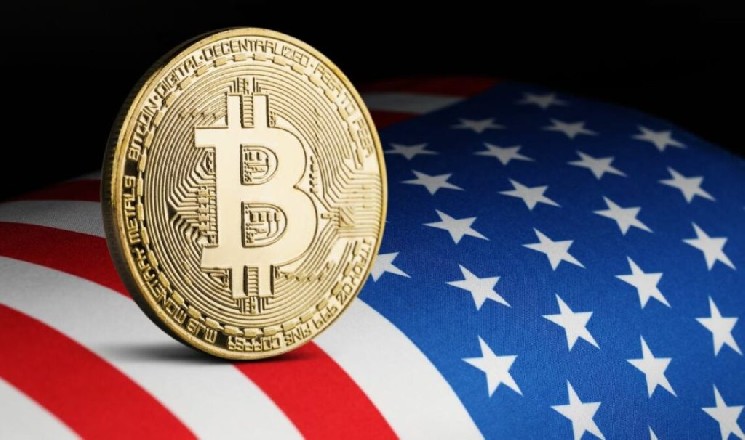
DXY posts worst run in 8 years – So why isn’t Bitcoin rocketing?

ambcryptoPublicado em 2026-01-29Última atualização em 2026-01-29

Resumo

The U.S. Dollar Index (DXY) posted its worst performance in eight years, declining 9.4% in 2025 and continuing to weaken in 2026. Historically, such dollar weakness has been a strong catalyst for Bitcoin rallies, as seen in 2017 and 2020. However, despite this favorable backdrop, Bitcoin has not surged as expected. While former President Trump supports a weaker dollar to boost exports and economic growth, and continues pushing for rate cuts, the Fed has maintained rates, emphasizing data-driven policy. Additionally, Bitcoin's Long-Term Holders (LTHs) have been offloading BTC at the fastest pace in four months, indicating skepticism toward the DXY-Bitcoin correlation. Rising inflation risks may further undermine the rate-cut narrative, leading investors to seek safer assets instead of Bitcoin.

The market is at a crossroads. Zooming out, the weakness in the U.S. dollar reflects fading investor confidence, driven by rising debt and ongoing tariff uncertainty, both of which are eroding the dollar’s yield advantage.

This is already showing up in the data. DXY fell 9.4% in 2025, its worst performance in eight years. Now, the pressure has carried into 2026, with the index still down 2.23% so far, signaling further erosion in yield support.

Historically, setups like this have favored Bitcoin [BTC]. In 2017, DXY fell below 96, and BTC rallied nearly 8×. A similar move in 2020, driven by liquidity injections, saw BTC climb roughly 7× in the months that followed.

Naturally, the question now is whether the playbook will repeat.

From U.S. President Donald Trump’s perspective, a weaker dollar is considered constructive. He has argued that a softer dollar boosts exports, keeps rates low, and supports GDP, making it a potential tailwind for the economy.

Meanwhile, his ongoing pressure on Fed Chair Powell for rate cuts only reinforces dollar weakness, suggesting the 2.23% dip could be just the start of a deeper move, forcing investors to continue rotating capital elsewhere.

Against this backdrop, Bitcoin’s historical rallies against a falling DXY look solid, and BTC’s chop below $90k reinforces its pre-breakout pattern. Yet, the key question is whether investors will follow through on this setup.

Key Bitcoin divergences

The Fed clearly signaled its “independence” with the recent rate decision.

At the FOMC meeting, Chair Jerome Powell resisted pressure and kept rates steady, reinforcing that policy will remain data-driven. Bitcoin reacted with a modest 1.3% intraday dip but remains well supported around $85k.

However, this isn’t the only divergence putting the market at a crossroads. Bitcoin’s LTHs have offloaded 143,000 BTC over the past month, the fastest pace in four months, pushing their net position deeper into the red.

According to AMBCrypto, it suggests LTHs aren’t buying the DXY thesis.

Even with President Trump backing a softer dollar, analysts remain wary on the long-term outlook. The U.S., world’s top importer, faces inflation risk, a headwind that could undermine Trump’s rate-cut narrative.

In this environment, Bitcoin failing to follow its historical rallies against the dollar isn’t surprising. In fact, with bids weakening, investor confidence could slip further, pushing capital into safer assets even more aggressively.


Final Thoughts

  • DXY’s decline, combined with Trump’s support for a softer dollar, sets the stage for Bitcoin.
  • LTHs are offloading, and rising inflation risk may undermine the rate-cut narrative, putting investor confidence under pressure and driving capital toward safer assets.


Criptomoedas em alta

Perguntas relacionadas

QWhat is the main reason for the recent weakness in the U.S. dollar (DXY) according to the article?

AThe weakness is driven by fading investor confidence due to rising U.S. debt and ongoing tariff uncertainty, which are eroding the dollar's yield advantage.

QHow did Bitcoin historically perform during periods when the DXY fell significantly, as mentioned in the article?

AHistorically, Bitcoin performed very well. In 2017, when DXY fell below 96, BTC rallied nearly 8 times. A similar move in 2020 saw BTC climb roughly 7 times in the following months.

QWhy are Long-Term Holders (LTHs) selling their Bitcoin, and what does this indicate?

ALTHs have offloaded 143,000 BTC at the fastest pace in four months, which suggests they are not convinced by or 'buying' the historical thesis that a falling DXY will lead to a Bitcoin rally.

QWhat conflicting factor could undermine the narrative that a weaker dollar and potential rate cuts will benefit Bitcoin?

ARising inflation risk in the U.S., the world's top importer, is a headwind that could undermine the rate-cut narrative and push investor capital toward safer assets instead of Bitcoin.

QHow did the Federal Reserve's recent decision on interest rates affect Bitcoin's price, and what did it signal?

AThe Fed kept rates steady, reinforcing its data-driven and independent policy stance. Bitcoin reacted with a modest 1.3% intraday dip but remained well supported around $85,000.

Leituras Relacionadas

Bank of Japan Signals Interest Rate Hike Despite Keeping Them at 1%

The Bank of Japan (BOJ) kept its benchmark interest rate at 1% on July 31, as widely expected, following a June hike to a 31-year high. The decision passed with an 8-1 vote, with board member Hajime Takata again dissenting in favor of a hike to 1.25%. Despite holding rates steady, the BOJ signaled a hawkish tilt, warning that underlying inflation is likely to accelerate and exceed 2% from the latter half of the fiscal year. While it slightly lowered its core inflation forecast for FY2026, officials expressed stronger confidence that an overshoot will occur later, driven by yen weakness, corporate pricing behavior, and lingering energy shock effects. Markets were focused on the BOJ's forward guidance. Analysts noted the central bank appeared to balance short-term caution with a long-term warning of tighter policy. Governor Kazuo Ueda faces the challenge of reconciling a government reluctant to tighten further with bond markets already pricing in additional hikes, with the timing of the next move debated. Adding complexity, the BOJ reportedly intervened in currency markets hours before the rate decision, buying yen to support the currency which had fallen to 40-year lows against the dollar. Yen weakness stems from the wide U.S.-Japan interest rate gap, high fuel prices, and market skepticism about the pace of BOJ policy normalization. The yield on Japan's 10-year government bonds fell to 2.8%, indicating investor expectations for future monetary tightening.

cryptonews.ruHá 7m

Bank of Japan Signals Interest Rate Hike Despite Keeping Them at 1%

cryptonews.ruHá 7m

Why Are Leveraged ETFs like 7709 Inherently Negative EV Products?

This article argues that the SK H力士 2x Leveraged ETF (7709) is fundamentally a negative expected value (EV) product, rather than simply a "double SK H力士" investment. Its core issue stems from its daily rebalancing mechanism to maintain a 2x leverage target. After a price move, the fund must buy more after a rise or sell after a fall to readjust its leverage, creating a systematic pattern of buying high and selling low. This introduces a "delay loss": it always reacts to past price changes, missing potential gains from adjusting earlier during an uptrend and suffering greater losses from adjusting later during a downtrend. While more frequent intraday rebalancing would improve returns in strong, smooth trending markets by reinvesting profits or cutting losses sooner, it also dramatically increases volatility drag (frictional losses) during choppy, oscillating markets due to more frequent high-buy/low-sell trades. The author draws a parallel to an option seller who delta hedges (short gamma), which involves similar "buy high, sell low" dynamic hedging. However, unlike an option seller who receives upfront premium (IV and theta) as compensation for this risk, the leveraged ETF investor receives no such compensation. Instead, they bear all the path-dependent volatility decay, plus additional costs like swap/derivatives financing, management fees, and trading slippage. Thus, the product's return profile can be framed as: 2x directional return minus realized variance drag minus financing costs minus derivatives costs minus management fees minus transaction costs. For the investor to profit, SK H力士's price must not only rise significantly but do so in a strong, sustained, and smooth trend to overcome these inherent structural costs. High volatility and frequent price reversals are particularly damaging. The article also notes that while the ETF has no explicit liquidation line like perpetual futures, avoiding a sudden "blow-up," its net asset value can still decay towards zero over time through this combination of volatility drag and fees. For experienced traders, directly managing leverage via perpetual contracts may offer more control and potentially lower costs than this packaged, mechanistic product.

marsbitHá 14m

Why Are Leveraged ETFs like 7709 Inherently Negative EV Products?

marsbitHá 14m

'Backstabbing' or 'Win-Win'? How Likely Is TradeXYZ to Break Away from Hyperliquid and Go Solo?

The article discusses the growing debate over whether TradeXYZ, which dominates Hyperliquid's HIP-3 market with over 90% of its volume, might break away to build its own independent trading platform. This possibility is fueled by TradeXYZ's immense market influence and the common industry trend of successful projects seeking more control and profit capture. Key arguments for a potential split include TradeXYZ's overwhelming contribution to Hyperliquid's metrics and the financial incentive to retain all transaction fees, as it currently splits them 50/50 with Hyperliquid. The piece draws parallels to other cases, like Anthropic's "Claude Code" competing with its former partner Cursor, suggesting "betrayal" can occur when business leverage shifts. However, strong counterarguments suggest a split is unlikely or would be detrimental. TradeXYZ relies on Hyperliquid's high-performance infrastructure and its platform as a primary user acquisition channel. Building a comparable system would be challenging. Furthermore, the founders of both projects share a history of trust and mutual admiration. The analysis concludes that a separation would likely be a lose-lose scenario: Hyperliquid would lose a major growth narrative and trading volume, while TradeXYZ would face technical hurdles, user migration issues, and reputational damage, potentially allowing competitors to seize market share. The most rational path is seen as continued collaboration, with TradeXYZ potentially negotiating better terms while leveraging Hyperliquid's established strengths.

marsbitHá 23m

'Backstabbing' or 'Win-Win'? How Likely Is TradeXYZ to Break Away from Hyperliquid and Go Solo?

marsbitHá 23m

Trading

Spot

Artigos em Destaque

Como comprar T

Bem-vindo à HTX.com!Tornámos a compra de Threshold Network Token (T) simples e conveniente.Segue o nosso guia passo a passo para iniciar a tua jornada no mundo das criptos.Passo 1: cria a tua conta HTXUtiliza o teu e-mail ou número de telefone para te inscreveres numa conta gratuita na HTX.Desfruta de um processo de inscrição sem complicações e desbloqueia todas as funcionalidades.Obter a minha contaPasso 2: vai para Comprar Cripto e escolhe o teu método de pagamentoCartão de crédito/débito: usa o teu visa ou mastercard para comprar Threshold Network Token (T) instantaneamente.Saldo: usa os fundos da tua conta HTX para transacionar sem problemas.Terceiros: adicionamos métodos de pagamento populares, como Google Pay e Apple Pay, para aumentar a conveniência.P2P: transaciona diretamente com outros utilizadores na HTX.Mercado de balcão (OTC): oferecemos serviços personalizados e taxas de câmbio competitivas para os traders.Passo 3: armazena teu Threshold Network Token (T)Depois de comprar o teu Threshold Network Token (T), armazena-o na tua conta HTX.Alternativamente, podes enviá-lo para outro lugar através de transferência blockchain ou usá-lo para transacionar outras criptomoedas.Passo 4: transaciona Threshold Network Token (T)Transaciona facilmente Threshold Network Token (T) no mercado à vista da HTX.Acede simplesmente à tua conta, seleciona o teu par de trading, executa as tuas transações e monitoriza em tempo real.Oferecemos uma experiência de fácil utilização tanto para principiantes como para traders experientes.

509 Visualizações TotaisPublicado em {updateTime}Atualizado em 2026.06.02

Como comprar T

Discussões

Bem-vindo à Comunidade HTX. Aqui, pode manter-se informado sobre os mais recentes desenvolvimentos da plataforma e obter acesso a análises profissionais de mercado. As opiniões dos utilizadores sobre o preço de T (T) são apresentadas abaixo.

活动图片