Different Choices After the Plunge: Institutions Buy the Dip, Traders Shift to US Stocks

marsbitPublicado em 2026-06-08Última atualização em 2026-06-08

Resumo

Title: Diverging Strategies After the Crash: Institutions Buying the Dip, Traders Shifting to US Stocks Following a sharp decline where Bitcoin briefly fell below $60,000 on June 6th, market sentiment remains "extreme fear" despite a partial recovery. This has led to varied responses from major market participants. Several institutional figures and analysts present a cautiously optimistic long-term view for Bitcoin. Glassnode's co-founder identifies $46k-$54k as a probable key bottom range based on historical on-chain models, while a Standard Chartered executive suggests the bottom is nearly formed. Strive's CEO points to Bitcoin touching its 200-week moving average as a historically reliable buy signal. Analysts highlight metrics like MVRV ratio and the "Power Law" model indicating Bitcoin is in an extremely undervalued zone. Conversely, some traders are exiting the crypto space. One trader cited a more attractive risk/reward profile and deeper research opportunities in US stocks, particularly with AI-related equities outperforming and capital rotating away from crypto. This shift is partly attributed to perceived ongoing risks, including those related to Strategy's Bitcoin sales. Market prediction data suggests a high probability (72%) of Bitcoin falling below $55,000, but lower odds for a deeper crash below $35k-$40k. The overall picture is one of division: institutions and long-term analysts see a accumulating opportunity, while some active traders are seeking alpha e...

On June 6th, BTC once fell below the $60,000 mark, dipping as low as $59,130. By June 8th, the Bitcoin price had recovered to around $63,000. Although the price has rebounded several thousand dollars, the earlier breach of the key psychological integer level continues to weigh heavily on market confidence and sentiment in the cryptocurrency space.

The current Fear & Greed Index stands at 15, indicating that market sentiment remains in "Extreme Fear." Most altcoins have also followed suit, plunging into a deep correction alongside the broader market.

Is it now a dip-buying zone? Institutions, traders, and others have shared their perspectives.

Glassnode Co-founder: $46k to $54k is the Key Bottom Range

Rafael, the co-founder of Glassnode, posted stating that Bitcoin has retraced approximately 50% from its all-time high. On-chain data shows that BTC is currently trading near a crucial support zone formed by the Median Realized Price ($64.1k) and the 200-week moving average ($61.7k).

Historically, Bitcoin has traded below this level for only about 7% of the time.
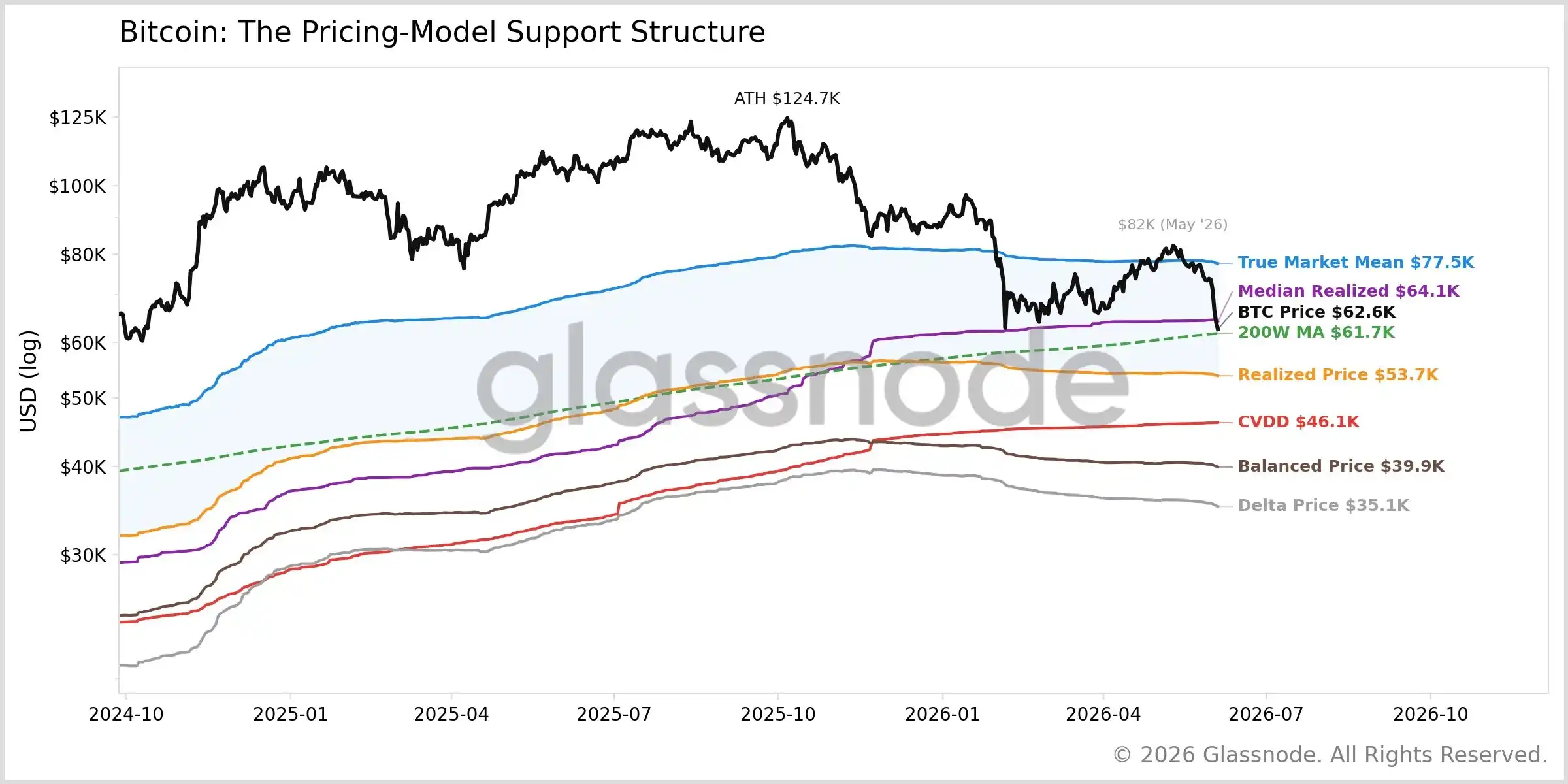
Looking at long-term valuation models, below the 200-week moving average lie the Realized Price (~$54k), the CVDD (~$46.2k), the Balanced Price (~$40k), and the Delta Price (~$35k) in descending order. Historically, bear market bottoms have touched this cost basis range before reversing. Among these, the CVDD is considered the most historically accurate bottom anchor. According to current model projections, the $46k to $54k range constitutes a higher-probability bottom zone, while $35k to $40k belongs to a deep capitulation area under extreme panic scenarios, accounting for less than 3% of trading days in history.

However, as the Bitcoin market matures, the magnitude of cyclical drawdowns shows a narrowing trend. The maximum declines in previous bear markets were 85%, 84%, and 77% respectively, whereas the current cycle has only retraced about 50% from its all-time high so far. This suggests the possibility of further declines, but a higher-probability bottom may lie in the $46k to $54k range. If a subsequent rebound occurs, $75k to $79k will become the first significant recovery zone, with greater resistance likely around the 50-week moving average near ~$93k and the previous all-time highs.

NYDIG Global Head of Research: AI is Siphoning Significant Crypto Capital

Greg Cipolaro, Global Head of Research at NYDIG, stated in a research report that he believes the overlap between AI and crypto investors is far greater than many realize. Both attract investors seeking exposure to emerging technologies and alpha returns. As AI-related stocks continue to outperform the broader market, capital flows and rotates out of the crypto market. Investors are also preparing for what could be the largest tech IPO cycle in years. Sales by Mt. Gox creditors and increased market concerns have exacerbated the downturn.

Greg Cipolaro noted in his report that multiple metrics are approaching levels historically coincident with major bottoms. Bitcoin's MVRV Ratio has fallen to 1.2, and the percentage of supply in profit recently slipped below 50%, another indicator often associated with capitulation. However, the magnitude of this drawdown remains relatively mild by historical standards. He pointed out that Bitcoin's decline of about 53% from its peak ($126k in October) is much shallower than the 75%-90% retracements seen in previous cycles. Whether the low has already been formed likely depends on whether institutional demand has structurally altered the cycle or merely delayed a deeper realignment.

Standard Chartered Head of Digital Asset Research: Bitcoin Bottom is Almost Formed

Geoffrey Kendrick, Head of Digital Asset Research at Standard Chartered, stated that the Bitcoin bottom is "almost certainly formed," and the current price range may be the long-awaited buying opportunity for investors.

An important trigger for this decline was the sale of 32k BTC by Mt. Gox creditors. However, referencing the historical experience from late 2022, it's likely that Mt. Gox creditors will soon engage in much larger-scale repurchases, potentially reaching 10 or even 100 times the amount previously sold.

If such buying is confirmed, it would serve as a significant signal for a market bottom.

Strive CEO: Bitcoin Touched 200-Week Moving Average (Fifth Time in History), First Four Times Were Perfect Buying Opportunities
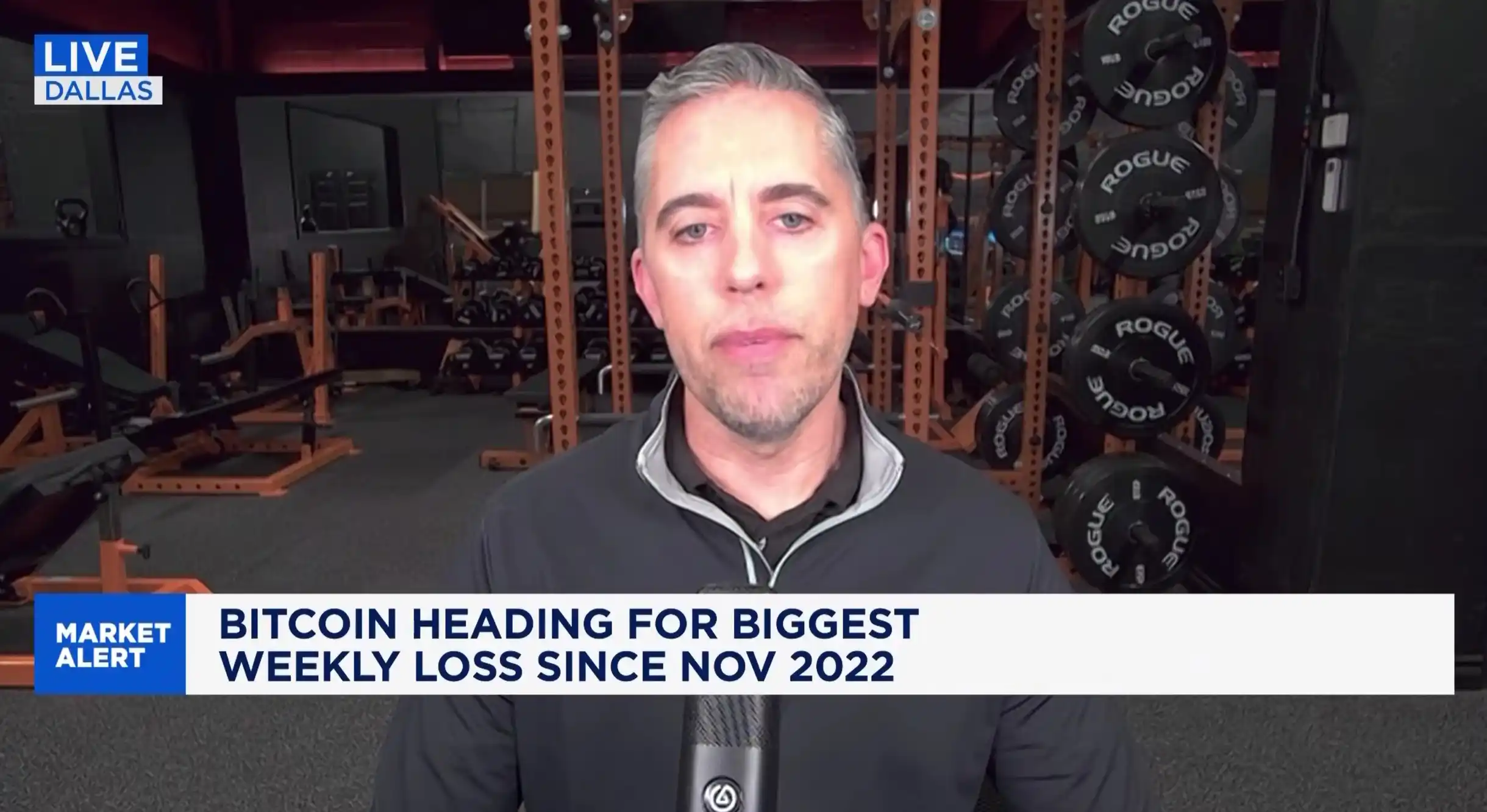
Matt Cole, CEO of asset management firm Strive, stated in an interview with CNBC's Squawk Box Europe that Bitcoin touching the 200-week moving average (the fifth time in history) with the first four times being "perfect buying opportunities." He also emphasized that Bitcoin's fundamentals have "never been better" and views this touch of the 200-week MA as a historic buying opportunity.

Trader Eugene: Has Temporarily Exited Crypto for US Stocks, Won't Try to Catch the Bitcoin Falling Knife

Trader Eugene Ng Ah Sio posted on his personal channel that he has largely exited the cryptocurrency market since May 13th of this year and shifted his primary focus to researching the stock market. He believes that, compared to the current crypto market, the stock market offers greater appeal in terms of research depth, cognitive challenge, and trading/investment opportunities. Based on his assessment of the industry's current state, he expects to maintain this strategy for the foreseeable future, only continuing to follow crypto industry developments without active participation in trading.

Eugene further stated that unless the market presents an extremely attractive risk-reward opportunity, he has no plans to return to the crypto market in the near term, and he does not currently see such conditions materializing. He believes the trajectory of the crypto market is diminishing its appeal as a trading and investment arena, hence he will continue focusing on traditional stock markets for now.

Regarding Mt. Gox, Eugene believes the associated risks are just beginning to surface. He stated that even if Mt. Gox creditors have sold more Bitcoin recently, it merely delays the problem rather than solving it.

Until the high correlation between Mt. Gox and Bitcoin is broken, he is not optimistic about long opportunities for Bitcoin. As for the market bottom location, he admitted he cannot predict it, but he has stopped attempting "catching the falling knife" style dip-buying trades.

Trader Killa: Now is a Generational Buying Opportunity

Trader Killa tweeted during Bitcoin's decline on June 6th, stating that now is a generational buying opportunity. On June 8th, he indicated that BTC has entered the "final phase" and "final extension," and he has deployed 90% of his capital.

Additionally, Killa mentioned that the "protective buy walls" that emerged during last weekend's crash have not been withdrawn, and he believes the likelihood of quickly revisiting these support levels in the short term is low. Killa is a quantitative trader focused on BTC, who previously predicted the peak of this bull cycle in May 2025.

Analyst Darkfost: Bitcoin Has Entered Extreme Undervaluation Zone

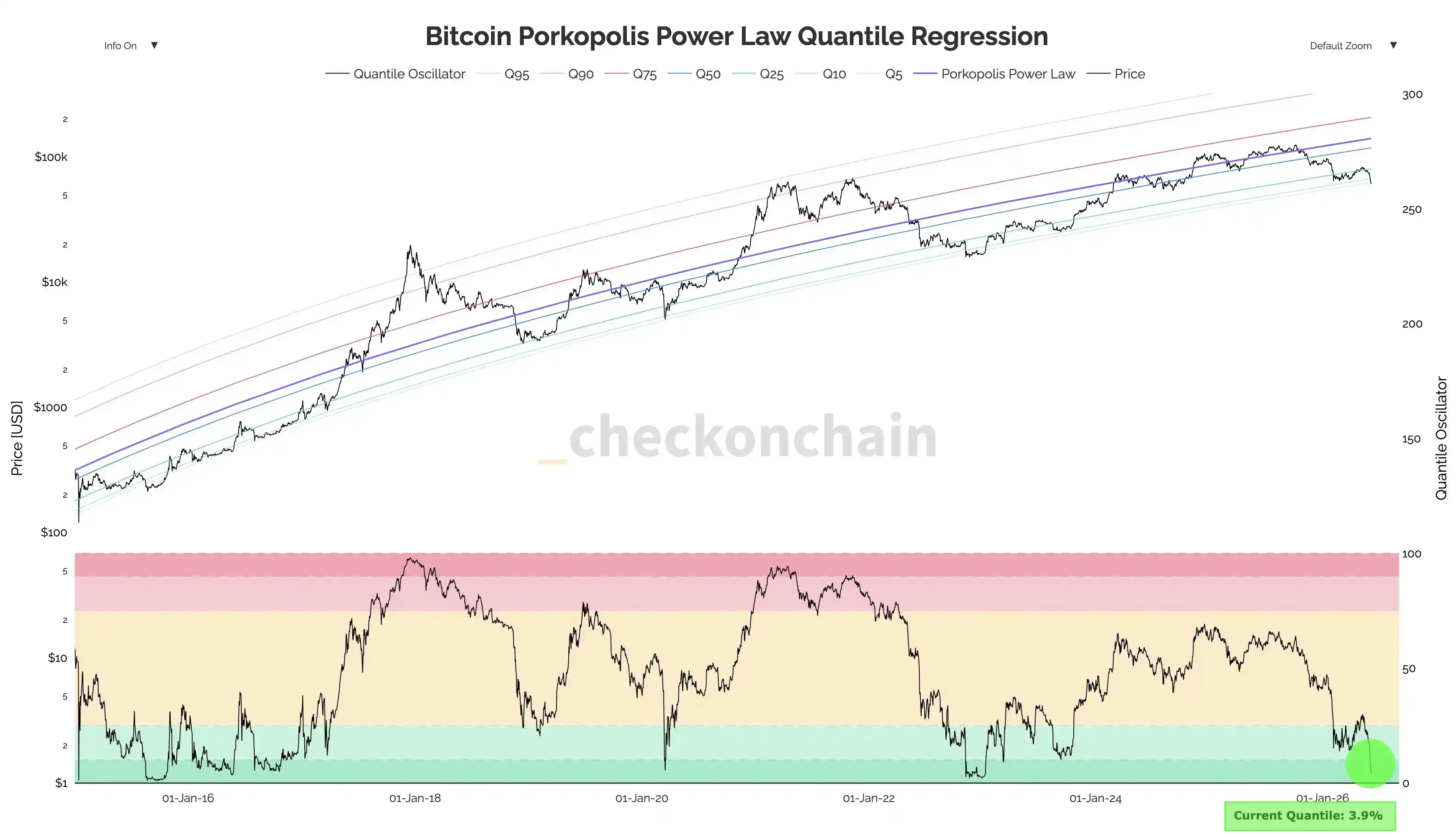
According to data from analyst Darkfost, Bitcoin has retraced to fall below the 4th percentile line of the Power Law model, entering an extreme undervaluation zone. Historically, Bitcoin has only traded at such valuation levels 4% of the time. Darkfost emphasized that this is a suitable period for long-term position building, not a short-term price prediction.
Polymarket Data: 72% Probability BTC Falls Below $55k

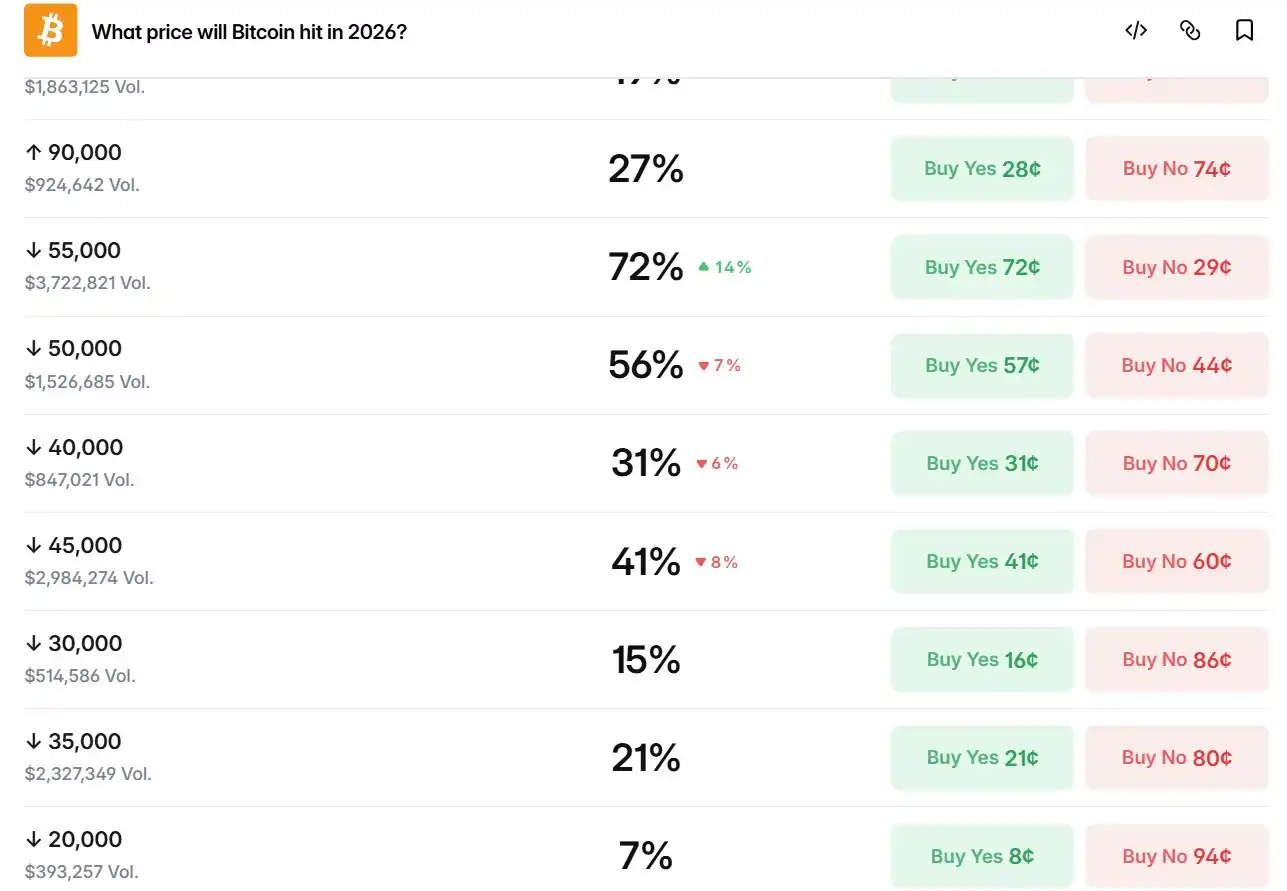
Latest data on Polymarket shows the probability of BTC falling below $45k is 41%, below $50k is 56%, and below $55k is 72%. The probability of falling below $40k is 31%, and below $35k is only 21%.

Most market participants currently believe the probability of BTC falling to the $35k–$40k range is not high.
Criptomoedas em alta

Perguntas relacionadas

QAccording to the article, what price range does Glassnode's co-founder identify as the key bottom zone for Bitcoin, and what model does he cite as historically the most accurate bottom anchor?

AGlassnode's co-founder, Rafael, identifies the key bottom zone for Bitcoin as between $46,000 and $54,000. He cites the CVDD model as historically the most accurate bottom anchor point.

QWhat is the main reason provided by NYDIG's Global Head of Research, Greg Cipolaro, for capital flowing out of the crypto market?

AGreg Cipolaro states that capital is flowing out of the crypto market because AI-related stocks are outperforming, attracting investors who seek exposure to emerging technologies and excess returns. This has led to a rotation of capital from crypto into AI and also in anticipation of a large tech IPO cycle.

QWhy does Standard Chartered's Head of Digital Assets Research, Geoffrey Kendrick, believe the Bitcoin bottom is 'almost formed'?

AGeoffrey Kendrick believes the Bitcoin bottom is 'almost formed' because he sees the current price range as a long-awaited buying opportunity. He points to Mt. Gox's potential large-scale buyback as a key signal, expecting it to be 10 to 100 times the size of their recent sales, similar to the pattern observed in late 2022.

QWhat is the primary reason trader Eugene Ng Ah Sio has shifted his focus from crypto to the stock market?

ATrader Eugene Ng Ah Sio has shifted his focus to the stock market because he finds it more attractive in terms of research depth, intellectual challenge, and the availability of trading and investment opportunities compared to the current crypto market. He believes the crypto market's development trajectory is diminishing its appeal as a trading/investment field for now.

QWhat does the data from the prediction market Polymarket indicate about the probability of Bitcoin's price falling to different levels?

AAccording to Polymarket data, the probability of Bitcoin falling below $55,000 is 72%, below $50,000 is 56%, and below $45,000 is 41%. The probabilities for dropping to $40,000 and $35,000 are 31% and 21% respectively, indicating that most market participants believe a drop to the $35,000-$40,000 range is less likely.

Leituras Relacionadas

MSTR Discloses Sale of 3,588 Bitcoins, Stock Price Drops Over 5% at One Point During Trading

MicroStrategy, the world's largest corporate holder of Bitcoin, has significantly shifted its business model. Between June 29 and July 5, the company sold 3,588 bitcoins for approximately $216 million to fund quarterly dividends for its preferred stock. This marks its largest-ever Bitcoin sale and signals a strategic pivot: Bitcoin is transitioning from a "buy-and-hold" reserve asset to a liquidity management tool for the company. This move follows a recent authorization allowing Bitcoin sales when equity fundraising is less attractive. The announcement contributed to a more than 5% intraday drop in MicroStrategy's stock price, while Bitcoin fell to around $61,800—below the company's average holding cost of roughly $75,700. The sale represents a major departure from MicroStrategy's long-standing "never sell" commitment, which saw its first minor breach in May with a $2.5 million sale. The latest, hundred-times-larger transaction underscores growing financial pressures. Analysts note the company faces about $1.5 billion in annual preferred dividend obligations, far exceeding cash flow from its software business. As of July 5, MicroStrategy holds 843,775 bitcoins. Its current operational logic involves buying Bitcoin during favorable financing conditions and selling portions to cover dividends when needed, creating a flexible capital management cycle amidst a challenging market environment.

华尔街日报Há 7h

MSTR Discloses Sale of 3,588 Bitcoins, Stock Price Drops Over 5% at One Point During Trading

华尔街日报Há 7h

Q-Day Countdown: Will Quantum Computing End Cryptocurrencies?

Quantum Computing's Threat to Cryptocurrency: A Countdown to Q-Day Quantum computing, specifically Shor's algorithm, poses a fundamental threat to the public-key cryptography (e.g., ECDSA, RSA) that secures blockchain networks like Bitcoin and Ethereum. This critical juncture, known as Q-Day, is estimated to occur potentially within the next 5-15 years. The core vulnerability stems from the public and immutable nature of blockchains. Assets in addresses where the public key is already exposed on-chain (e.g., spent outputs) are at direct risk, as a sufficiently powerful quantum computer could derive the private key. This threatens the very trust model of cryptocurrencies. The response lies in Post-Quantum Cryptography (PQC)—algorithms like lattice-based ML-DSA and hash-based SLH-DSA, which are resistant to quantum attacks. NIST has standardized key PQC algorithms (FIPS 203, 204, 205), providing a migration path. However, the primary challenge is not technical but socio-economic and involves complex governance: * **Bitcoin's** path is constrained by its conservative ethos. Migrating requires a soft-fork to new address types, facing hurdles like significantly larger signature sizes and, most critically, the divisive governance question of how to handle at-risk legacy UTXOs without violating core principles. * **Ethereum** is pursuing a "cryptographic agility" strategy, with a multi-layered roadmap. It leverages account abstraction for user accounts and is developing compressed hash-based signatures (e.g., leanXMSS) for its consensus layer, aiming for a full-stack upgrade over time. In conclusion, quantum computing does not spell an instant end for cryptocurrency but initiates a critical countdown. The industry has a limited "engineering comfort window" to orchestrate a coordinated, ecosystem-wide migration to PQC. The ultimate bottlenecks are the immense coordination efforts and governance decisions required for this foundational transition.

marsbitHá 8h

Q-Day Countdown: Will Quantum Computing End Cryptocurrencies?

marsbitHá 8h

Trading

Spot

Artigos em Destaque

O que é BITCOIN

Compreender o HarryPotterObamaSonic10Inu (ERC-20) e a Sua Posição no Espaço Cripto Nos últimos anos, o mercado de criptomoedas assistiu a um aumento na popularidade das moedas meme, cativando não apenas os traders, mas também aqueles que procuram envolvimento comunitário e valor de entretenimento. Entre estes tokens únicos está o HarryPotterObamaSonic10Inu (ERC-20), um projeto intrigante que mistura referências culturais no tecido das criptomoedas. Este artigo explora os principais aspetos do HarryPotterObamaSonic10Inu, examinando os seus mecanismos, a sua ética orientada pela comunidade e o seu envolvimento com o vasto panorama cripto. O que é o HarryPotterObamaSonic10Inu (ERC-20)? Como o nome sugere, o HarryPotterObamaSonic10Inu é uma moeda meme construída na blockchain Ethereum, classificada sob o padrão ERC-20. Ao contrário das criptomoedas tradicionais, que podem enfatizar a utilidade prática ou o potencial de investimento, este token prospera no valor de entretenimento e na força da sua comunidade. O projeto visa promover um ambiente onde utilizadores envolvidos possam reunir-se, partilhar ideias e participar em atividades inspiradas por diversos fenómenos culturais. Uma característica notável do HarryPotterObamaSonic10Inu é a zero taxa sobre transações. Este elemento atraente visa encorajar a negociação e o envolvimento da comunidade, isento de encargos adicionais que podem desencorajar os traders de pequena escala. A oferta total da moeda está fixada em mil milhões de tokens, uma cifra que marca a sua intenção de manter uma circulação substancial dentro da comunidade. Criador do HarryPotterObamaSonic10Inu (ERC-20) As origens do HarryPotterObamaSonic10Inu estão um pouco envoltas em mistério; os detalhes sobre o criador permanecem desconhecidos. O desenvolvimento deste token carece de uma equipa identificável ou de um plano explícito, o que não é raro no setor das moedas meme. Em vez disso, o projeto surgiu de forma orgânica, com o seu progresso a depender fortemente do entusiasmo e da participação da sua comunidade. Investidores do HarryPotterObamaSonic10Inu (ERC-20) No que diz respeito a investimentos externos e apoios, o HarryPotterObamaSonic10Inu também permanece ambíguo. O token não lista quaisquer fundações de investimento conhecidas ou apoio organizacional significativo. Em vez disso, o “sangue vital” do projeto é a sua comunidade de base, que informa o seu crescimento e sustentabilidade através da ação coletiva e do envolvimento no espaço cripto. Como Funciona o HarryPotterObamaSonic10Inu (ERC-20)? Como uma moeda meme, o HarryPotterObamaSonic10Inu opera principalmente fora dos quadros tradicionais que muitas vezes governam o valor dos ativos. Existem vários aspetos distintivos que definem como o projeto funciona: Transações Sem Taxas: Sem taxas sobre transações, os utilizadores podem comprar e vender o token livremente, sem a preocupação de custos ocultos. Envolvimento da Comunidade: O projeto prospera na interação da comunidade, aproveitando plataformas de redes sociais para criar entusiasmo e facilitar a participação. Discussões, partilha de conteúdo e envolvimento são elementos cruciais que ajudam a expandir o seu alcance e a fomentar a lealdade entre os apoiantes. Sem Utilidade Prática: Deve ser notado que o HarryPotterObamaSonic10Inu não oferece utilidade concreta dentro do ecossistema financeiro. Em vez disso, é classificado como um token principalmente para entretenimento e atividades comunitárias. Referência Cultural: O token incorpora de forma inteligente elementos da cultura popular para atrair interesse, conectando-se tanto com entusiastas de memes como com seguidores de criptomoedas. HarryPotterObamaSonic10Inu exemplifica como as moedas meme operam de forma diferente de projetos de criptomoedas mais tradicionais, entrando no mercado como construções sociais inovadoras em vez de ativos utilitários. Linha do Tempo do HarryPotterObamaSonic10Inu (ERC-20) A história do HarryPotterObamaSonic10Inu é marcada por vários marcos notáveis: Criação: O token surgiu de um meme viral, capturando a imaginação de muitos entusiastas de criptomoedas. Datas específicas de criação não estão disponíveis, sublinhando a sua ascensão orgânica. Listagem em Exchanges: O HarryPotterObamaSonic10Inu conseguiu entrar em várias exchanges, permitindo um acesso e negociação mais fáceis pela comunidade. Iniciativas de Envolvimento da Comunidade: Atividades contínuas direcionadas a melhorar a interação comunitária, incluindo concursos, campanhas em redes sociais e geração de conteúdo por fãs e defensores. Planos de Expansão Futura: O roteiro do projeto inclui o lançamento de uma coleção de NFTs, mercadorias e um site de eCommerce relacionado aos seus temas culturais, envolvendo ainda mais a comunidade e tentando adicionar mais dimensões ao seu ecossistema. Pontos-Chave sobre o HarryPotterObamaSonic10Inu (ERC-20) Natureza Orientada pela Comunidade: O projeto prioriza a contribuição coletiva e a criatividade, assegurando que o envolvimento dos utilizadores está na vanguarda do seu desenvolvimento. Classificação como Moeda Meme: Representa o epítome da criptomoeda baseada em entretenimento, destacando-se dos veículos de investimento tradicionais. Sem Afiliação Direta com o Bitcoin: Apesar da semelhança no nome do ticker, o HarryPotterObamaSonic10Inu é distinto e não tem qualquer relação com o Bitcoin ou outras criptomoedas estabelecidas. Foco na Colaboração: O HarryPotterObamaSonic10Inu é projetado para criar um espaço de colaboração e partilha de histórias entre os seus detentores, proporcionando uma via para a criatividade e o fortalecimento da comunidade. Perspectivas Futuras: A ambição de expandir além da sua premissa inicial para NFTs e mercadorias delineia um caminho para o projeto potencialmente entrar em avenidas mais mainstream dentro da cultura digital. À medida que as moedas meme continuam a capturar a imaginação da comunidade cripto, HarryPotterObamaSonic10Inu (ERC-20) destaca-se devido aos seus laços culturais e abordagem centrada na comunidade. Embora possa não se encaixar no molde típico de um token orientado para utilidade, a sua essência reside na alegria e camaradagem fomentadas entre os seus apoiantes, destacando a natureza em evolução das criptomoedas em uma era cada vez mais digital. À medida que o projeto continua a desenvolver-se, será importante observar como as dinâmicas comunitárias influenciam a sua trajetória no panorama em constante mudança da tecnologia blockchain.

1.7k Visualizações TotaisPublicado em {updateTime}Atualizado em 2024.12.03

O que é BITCOIN

Como comprar BTC

Bem-vindo à HTX.com!Tornámos a compra de Bitcoin (BTC) simples e conveniente.Segue o nosso guia passo a passo para iniciar a tua jornada no mundo das criptos.Passo 1: cria a tua conta HTXUtiliza o teu e-mail ou número de telefone para te inscreveres numa conta gratuita na HTX.Desfruta de um processo de inscrição sem complicações e desbloqueia todas as funcionalidades.Obter a minha contaPasso 2: vai para Comprar Cripto e escolhe o teu método de pagamentoCartão de crédito/débito: usa o teu visa ou mastercard para comprar Bitcoin (BTC) instantaneamente.Saldo: usa os fundos da tua conta HTX para transacionar sem problemas.Terceiros: adicionamos métodos de pagamento populares, como Google Pay e Apple Pay, para aumentar a conveniência.P2P: transaciona diretamente com outros utilizadores na HTX.Mercado de balcão (OTC): oferecemos serviços personalizados e taxas de câmbio competitivas para os traders.Passo 3: armazena teu Bitcoin (BTC)Depois de comprar o teu Bitcoin (BTC), armazena-o na tua conta HTX.Alternativamente, podes enviá-lo para outro lugar através de transferência blockchain ou usá-lo para transacionar outras criptomoedas.Passo 4: transaciona Bitcoin (BTC)Transaciona facilmente Bitcoin (BTC) no mercado à vista da HTX.Acede simplesmente à tua conta, seleciona o teu par de trading, executa as tuas transações e monitoriza em tempo real.Oferecemos uma experiência de fácil utilização tanto para principiantes como para traders experientes.

4.2k Visualizações TotaisPublicado em {updateTime}Atualizado em 2026.06.02

Como comprar BTC

O que é $BITCOIN

OURO DIGITAL ($BITCOIN): Uma Análise Abrangente Introdução ao OURO DIGITAL ($BITCOIN) OURO DIGITAL ($BITCOIN) é um projeto baseado em blockchain que opera na rede Solana, com o objetivo de combinar as características dos metais preciosos tradicionais com a inovação das tecnologias descentralizadas. Embora partilhe um nome com o Bitcoin, frequentemente referido como “ouro digital” devido à sua percepção como uma reserva de valor, o OURO DIGITAL é um token separado projetado para criar um ecossistema único dentro da paisagem Web3. O seu objetivo é posicionar-se como um ativo digital alternativo viável, embora os detalhes sobre as suas aplicações e funcionalidades ainda estejam em desenvolvimento. O que é o OURO DIGITAL ($BITCOIN)? OURO DIGITAL ($BITCOIN) é um token de criptomoeda explicitamente projetado para uso na blockchain Solana. Em contraste com o Bitcoin, que fornece um papel amplamente reconhecido como armazenamento de valor, este token parece focar em aplicações e características mais amplas. Aspectos notáveis incluem: Infraestrutura Blockchain: O token é construído na blockchain Solana, conhecida pela sua capacidade de lidar com transações de alta velocidade e baixo custo. Dinâmicas de Oferta: O OURO DIGITAL tem um fornecimento máximo limitado a 100 quatrilhões de tokens (100P $BITCOIN), embora os detalhes sobre o seu fornecimento circulante ainda não tenham sido divulgados. Utilidade: Embora as funcionalidades precisas não estejam explicitamente delineadas, existem indicações de que o token poderia ser utilizado para várias aplicações, potencialmente envolvendo aplicações descentralizadas (dApps) ou estratégias de tokenização de ativos. Quem é o Criador do OURO DIGITAL ($BITCOIN)? Neste momento, a identidade dos criadores e da equipa de desenvolvimento por trás do OURO DIGITAL ($BITCOIN) permanece desconhecida. Esta situação é típica entre muitos projetos inovadores no espaço da blockchain, particularmente aqueles alinhados com finanças descentralizadas e fenómenos de moedas meme. Embora tal anonimato possa fomentar uma cultura orientada pela comunidade, intensifica as preocupações sobre governança e responsabilidade. Quem são os Investidores do OURO DIGITAL ($BITCOIN)? As informações disponíveis indicam que o OURO DIGITAL ($BITCOIN) não tem apoiantes institucionais conhecidos ou investimentos proeminentes de capital de risco. O projeto parece operar num modelo peer-to-peer focado no apoio e adoção da comunidade, em vez de rotas de financiamento tradicionais. A sua atividade e liquidez estão principalmente situadas em exchanges descentralizadas (DEXs), como a PumpSwap, em vez de plataformas de negociação centralizadas estabelecidas, destacando ainda mais a sua abordagem de base. Como Funciona o OURO DIGITAL ($BITCOIN) A mecânica operacional do OURO DIGITAL ($BITCOIN) pode ser elaborada com base no seu design de blockchain e nas características da rede: Mecanismo de Consenso: Ao aproveitar o exclusivo proof-of-history (PoH) da Solana combinado com um modelo de proof-of-stake (PoS), o projeto assegura uma validação eficiente das transações, contribuindo para o alto desempenho da rede. Tokenomics: Embora mecanismos deflacionários específicos não tenham sido extensivamente detalhados, o vasto fornecimento máximo de tokens implica que pode atender a microtransações ou casos de uso de nicho que ainda estão por definir. Interoperabilidade: Existe o potencial para integração com o ecossistema mais amplo da Solana, incluindo várias plataformas de finanças descentralizadas (DeFi). No entanto, os detalhes sobre integrações específicas permanecem não especificados. Cronologia de Eventos Chave Aqui está uma cronologia que destaca marcos significativos relacionados ao OURO DIGITAL ($BITCOIN): 2023: O lançamento inicial do token ocorre na blockchain Solana, marcado pelo seu endereço de contrato. 2024: O OURO DIGITAL ganha visibilidade ao tornar-se disponível para negociação em exchanges descentralizadas como a PumpSwap, permitindo que os utilizadores o negociem contra SOL. 2025: O projeto testemunha atividade de negociação esporádica e potencial interesse em envolvimentos liderados pela comunidade, embora não tenham sido documentadas parcerias ou avanços técnicos notáveis até ao momento. Análise Crítica Forças Escalabilidade: A infraestrutura subjacente da Solana suporta altos volumes de transações, o que pode aumentar a utilidade do $BITCOIN em vários cenários de transação. Acessibilidade: O potencial preço de negociação baixo por token pode atrair investidores de retalho, facilitando uma participação mais ampla devido a oportunidades de propriedade fracionada. Riscos Falta de Transparência: A ausência de apoiantes, desenvolvedores ou um processo de auditoria publicamente conhecidos pode gerar ceticismo em relação à sustentabilidade e confiabilidade do projeto. Volatilidade do Mercado: A atividade de negociação depende fortemente do comportamento especulativo, o que pode resultar em volatilidade significativa dos preços e incerteza para os investidores. Conclusão O OURO DIGITAL ($BITCOIN) surge como um projeto intrigante, mas ambíguo, dentro do ecossistema em rápida evolução da Solana. Embora tente aproveitar a narrativa do “ouro digital”, a sua divergência do papel estabelecido do Bitcoin como reserva de valor sublinha a necessidade de uma diferenciação mais clara da sua utilidade pretendida e estrutura de governança. A aceitação e adoção futuras dependerão provavelmente da abordagem da atual opacidade e da definição mais explícita das suas estratégias operacionais e económicas. Nota: Este relatório abrange informações sintetizadas disponíveis até outubro de 2023, e desenvolvimentos podem ter ocorrido além do período de pesquisa.

121 Visualizações TotaisPublicado em {updateTime}Atualizado em 2025.05.13

O que é $BITCOIN

Discussões

Bem-vindo à Comunidade HTX. Aqui, pode manter-se informado sobre os mais recentes desenvolvimentos da plataforma e obter acesso a análises profissionais de mercado. As opiniões dos utilizadores sobre o preço de BTC (BTC) são apresentadas abaixo.

活动图片