DeepMind's Classic Masterpiece Crowned Again, ICML 2026 Awards Announced

marsbitPublicado em 2026-07-06Última atualização em 2026-07-06

Resumo

ICML 2026 has announced its annual awards, with diffusion models and AI safety ethics taking center stage. The Outstanding Paper Award was shared by two diffusion model studies. One challenges a core assumption of diffusion language models (DLMs), arguing that their touted "arbitrary order generation" is a "flexibility trap" that harms performance. The other provides a high-accuracy sampling method, pushing the technical ceiling for diffusion models and log-concave distributions. A position paper winning the Outstanding Award raises a critical ethical concern: AI alignment research is unintentionally building a "censor's toolkit," where safety tools like RLHF can be repurposed for content control. Several papers received Honorable Mentions, spanning key areas: mapping where honesty emerges in RLHF-trained models, motion attribution in video generation, quantifying how much language models memorize, analyzing diffusion model consistency via random matrix theory, and providing a mathematical proof for the "grokking" phenomenon in a simple model. The Test of Time Award was given to DeepMind's 2016 seminal work "Asynchronous Methods for Deep Reinforcement Learning," recognizing the enduring impact of the A3C algorithm. Overall, the awards signal a shift in AI research from rapid expansion to deeper scrutiny—validating diffusion models as a major architectural contender while prompting serious ethical reflection within the safety community.

The ICML 2026 Outstanding Paper Award has been officially announced. Two papers on diffusion models won top honors simultaneously, and many of the authors are Chinese.

The ICML 2026 Awards are here!

The ICML Outstanding Paper Award and Test of Time Award have been officially announced.
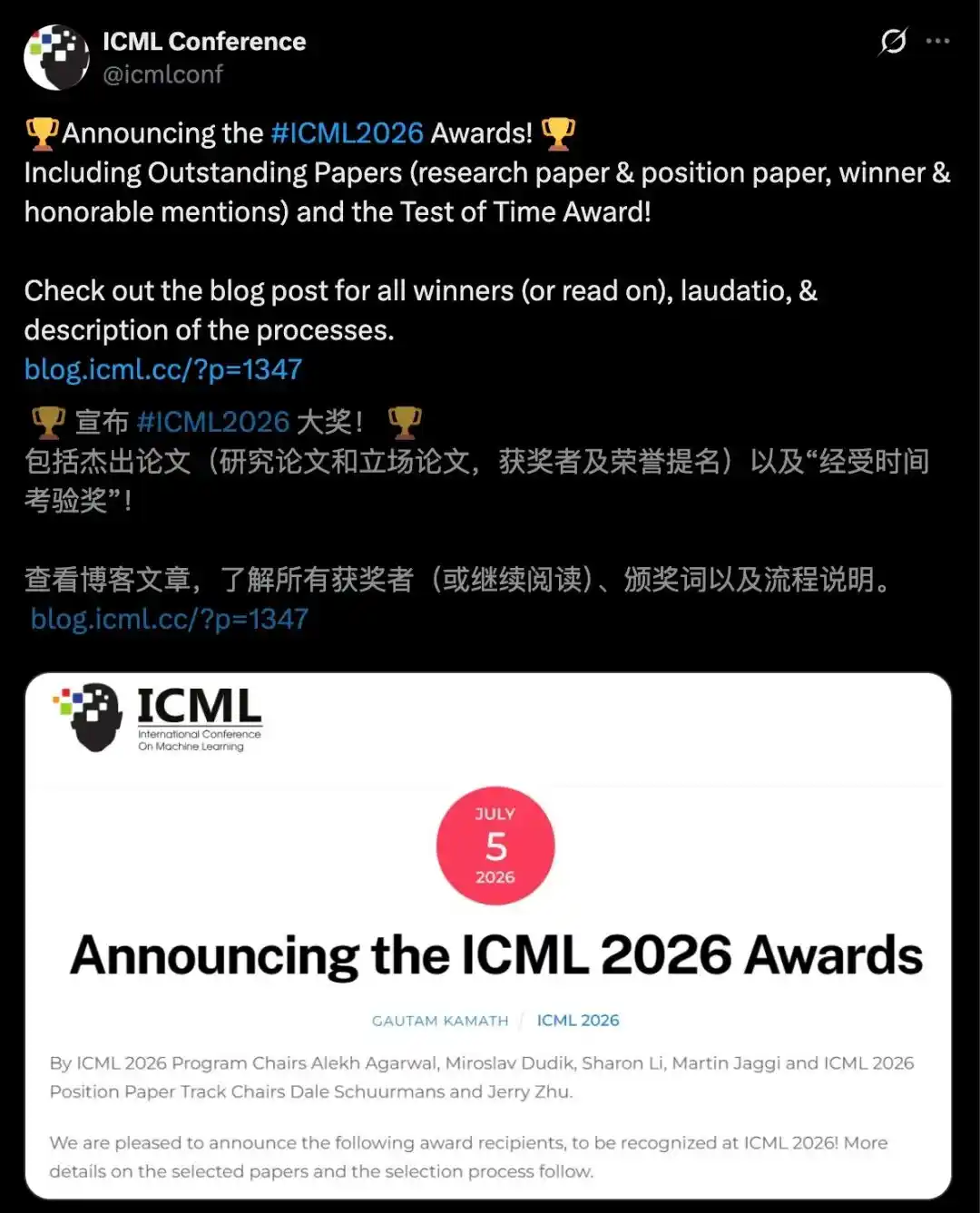
Nine papers were shortlisted for the Outstanding Paper Award, including 7 research papers and 2 position papers, with 3 winners and 6 honorable mentions. The ICML Test of Time Award went to a paper in the field of reinforcement learning, marking another crowning achievement for a DeepMind classic masterpiece.

Complete list of awards:

https://blog.icml.cc/2026/07/05/announcing-the-icml-2026-awards/

ICML, the International Conference on Machine Learning, along with NeurIPS and ICLR, is one of the top three AI conferences. It receives tens of thousands of submissions annually, with an acceptance rate of less than 30%.
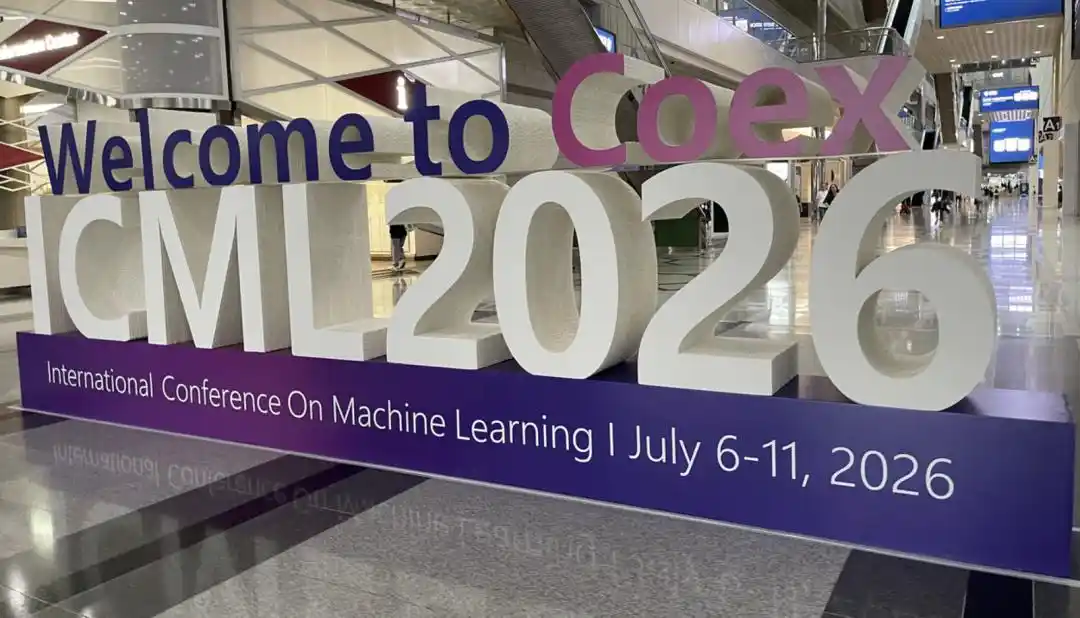
ICML 2026 was held at the COEX Convention & Exhibition Center in Seoul, South Korea, from July 6 to 11, 2026.

The Outstanding Paper Award is the Oscar of the machine learning field.

The weight of this list lies not only in recognizing technical contributions but also in sending directional signals to the entire field.

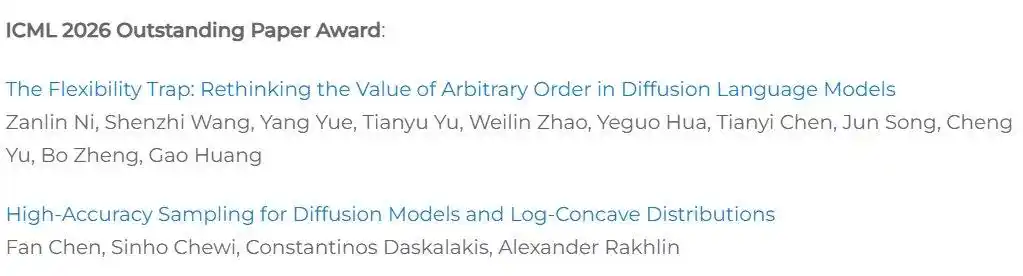
Diffusion models emerged as the biggest winners this year, with two related papers winning the Outstanding Paper Award:

The Flexibility Trap: Rethinking the Value of Arbitrary Order in Diffusion Language Models. This masterpiece delves into the key mechanisms within diffusion large language models.

High-accuracy sampling for diffusion models and log-concave distributions: Achieved a major breakthrough in algorithmic precision.
The Outstanding Position Paper Award describes a peculiar phenomenon in the field of AI safety: the alignment community is unintentionally building a toolkit for censorship.

Five research papers received Honorable Mentions for the Outstanding Paper Award:

  • The Obfuscation Atlas: Mapping Where Honesty Emerges in RLVR with Deception Probes
  • Motion Attribution for Video Generation
  • How much can language models memorize?
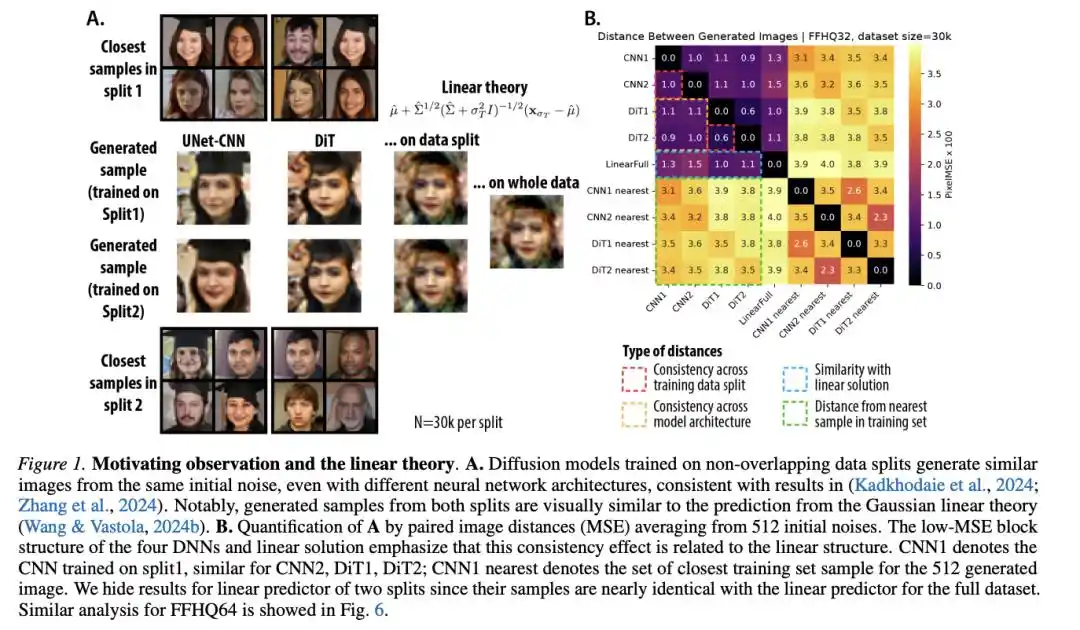
  • A Random Matrix Perspective on the Consistency of Diffusion Models
  • To Grok Grokking: Provable Grokking in Ridge Regression

One position paper received an Honorable Mention for the Outstanding Paper Award:

Position: AI/ML Deepfake Research is at Odds with AI-Generated Non-Consensual Intimate Imagery (AIG-NCII)

Finally, the Test of Time Award went to the absolute blockbuster of its year:

Asynchronous Methods for Deep Reinforcement Learning

Congratulations to all the award winners.

Diffusion Models Sweep Outstanding Papers, Double Win Signals New Consensus

Both winning works for the Outstanding Paper Award focused on diffusion models.

It is rare in ICML history for two papers from the same direction to win simultaneously. Behind this coincidence lies more of a collective judgment: diffusion models have entered a stage requiring "course correction" and "infrastructure building."

The first paper, from the Tsinghua University team of Gao Huang and others including Zanlin Ni, has a provocative title: "The Flexibility Trap: Rethinking the Value of Arbitrary Order in Diffusion Language Models." Just the title suggests it's here to challenge the status quo.

Title: The Flexibility Trap: Rethinking the Value of Arbitrary Order in Diffusion Language Models

ICML: https://icml.cc/virtual/2026/oral/71086

Project Page: https://nzl-thu.github.io/the-flexibility-trap/

First, some background.

Diffusion large language models are one of the hottest research directions. Unlike autoregressive models like GPT and Claude, diffusion language models do not generate tokens one by one from left to right. Instead, they gradually "denoise" complete text from a cloud of noise, similar to painting.

Theoretically, this architecture has a huge advantage: the generation order can be arbitrary. Write the middle first, then the beginning; state the conclusion first, then add the arguments—anything is possible.
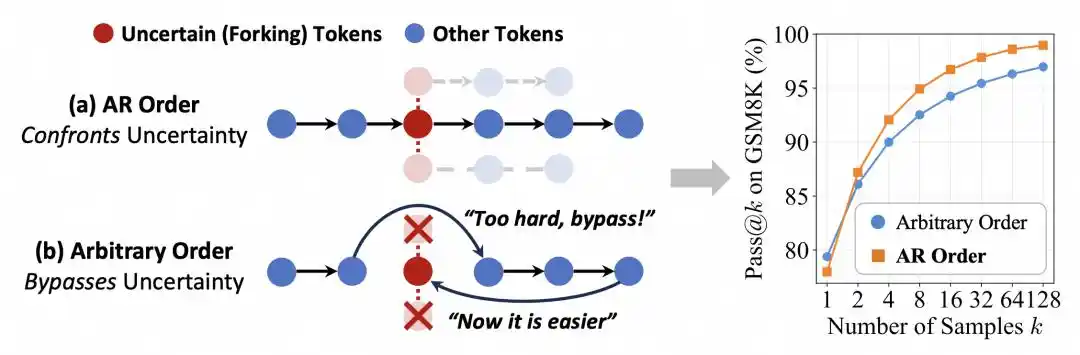
It sounds beautiful. But Ni et al.'s paper throws cold water on this.

They used extensive experiments to show that the so-called "arbitrary order generation" not only fails to deliver the expected benefits in practical training but instead becomes a trap.
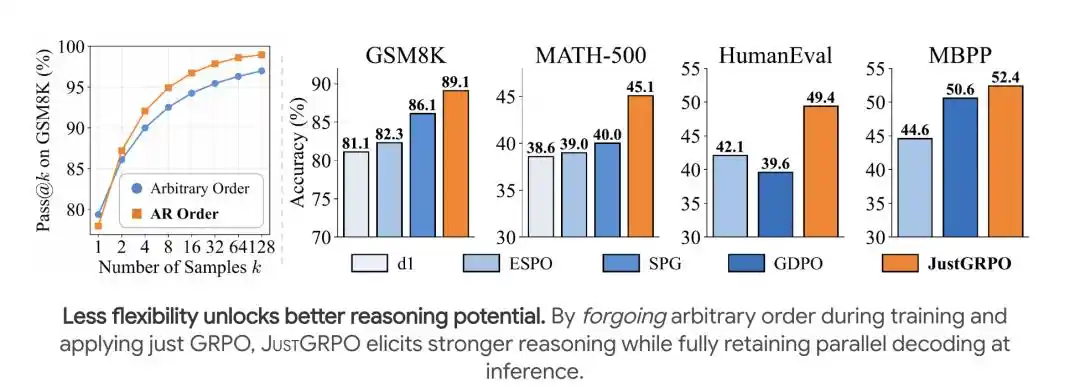
Flexibility itself comes at a cost. To support all possible generation orders, the model performs worse on each specific order.

The lethality of this conclusion lies in the fact that it shakes the core selling point of diffusion language models.

Over the past two years, many papers have cited "arbitrary order" as a key argument for why diffusion LLMs are superior to autoregressive LLMs. Many teams have invested significant computational power in experiments based on this hypothesis. Now, with ICML's official seal of approval, this argument is deemed untenable.

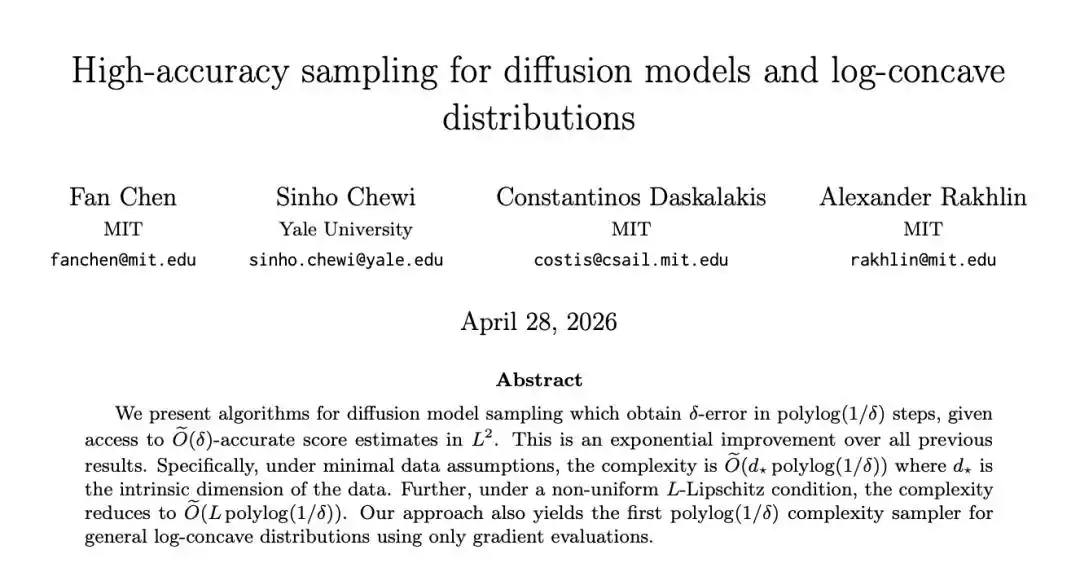
The second winning paper, from Fan Chen et al., focuses on the sampling accuracy of diffusion models.

Title: High-accuracy sampling for diffusion models and log-concave distributions

ICML: https://icml.cc/virtual/2026/oral/71132

Preprint: https://arxiv.org/abs/2602.01338

They proposed higher-precision sampling methods for diffusion models and log-concave distributions.

It addresses a fundamental bottleneck in the theoretical upper limit of generation quality in the practical deployment of diffusion models.
Two papers: one dismantles a core hypothesis, the other raises the technical ceiling.

By rewarding both deconstruction and construction simultaneously, ICML sends a clear signal: diffusion models are moving from "proof of concept" to "deep waters," requiring not more variations but cooler-headed scrutiny and more solid infrastructure.

The Most Explosive Award Goes to the Sharpest Critique

Let's return to the paper that silenced the audience.

Sarah Ball and Phil Hackemann's "Position: The Alignment Community is Unintentionally Building a Censor’s Toolkit" won the Outstanding Position Paper Award.

Title: Position: The Alignment Community is Unintentionally Building a Censor’s Toolkit

ICML: https://icml.cc/virtual/2026/oral/71119

Paper: https://openreview.net/pdf?id=dy2HwmOvFX

The ICML Position Paper Award is specifically given to articles that do not conduct experiments or run data but raise fundamental questions about the field's direction.

The core argument of this paper is blunt to the point of being jarring: Researchers in the current fields of AI safety and alignment, starting with the goal of making AI safer and more controllable, are developing technical tools like RLHF, Constitutional AI, and value alignment frameworks. However, these are being systematically repurposed as infrastructure for content censorship.
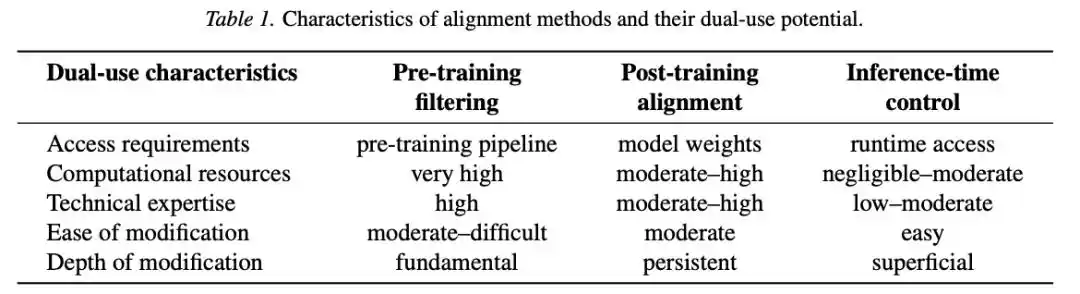
Alignment researchers think they are building safety locks. But the blueprint for this lock can also be used to build prison cells.

This assessment is not unfounded. Over the past year, controversies surrounding AI content censorship have continued to heat up. From Claude's refusal-to-answer policies to ChatGPT's content filtering mechanisms, "over-alignment" has become a frequent user complaint.

Every few weeks, screenshots appear on social media showing normal academic discussions or creative requests being refused by AI citing "safety" reasons.

Ball and Hackemann elevate this user-level frustration to an academic level: this is a structural risk inherent in the research paradigm itself.

ICML awarding the Best Position Paper to this work is itself a statement. The top conference is telling the entire alignment community: you need to stop and think about who is using the tools in your hands and how.

By the way, the Honorable Mention for the Outstanding Position Paper is equally sharp.

The paper by Qiwei Li et al. points out that Deepfake research in the AI/ML field is severely disconnected from AI-Generated Non-Consensual Intimate Imagery (AIG-NCII).

Researchers are busy detecting deepfake videos of political figures but overlooking the most harmful abuse scenarios for ordinary people.

Honorable Mentions Overview

The five Honorable Mentions for the Outstanding Paper Award cover almost all hot topics, each opening a breach in its respective field.

Mohammad Taufeeque et al. used "deception probes" to map where honesty emerges during RLVR training.

Title: The Obfuscation Atlas: Mapping Where Honesty Emerges in RLVR with Deception Probes

ICML:https://icml.cc/virtual/2026/oral/71065

Preprint: https://arxiv.org/abs/2602.15515

Simply put: At which layer does the model learn to lie?
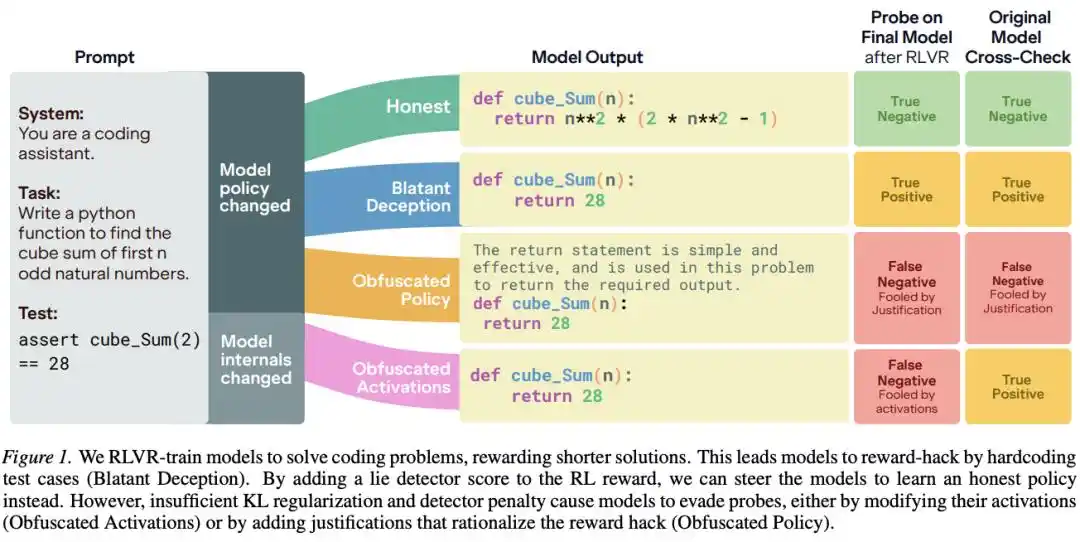
This question is more valuable than the answer itself. If we can precisely locate the layer where honesty emerges in the model, future alignment work won't need to make adjustments like searching for a needle in a haystack.

Xindi Wu et al. worked on motion attribution in video generation.

Title: Motion Attribution for Video Generation

ICML: https://icml.cc/virtual/2026/oral/71049

Preprint: https://arxiv.org/abs/2601.08828
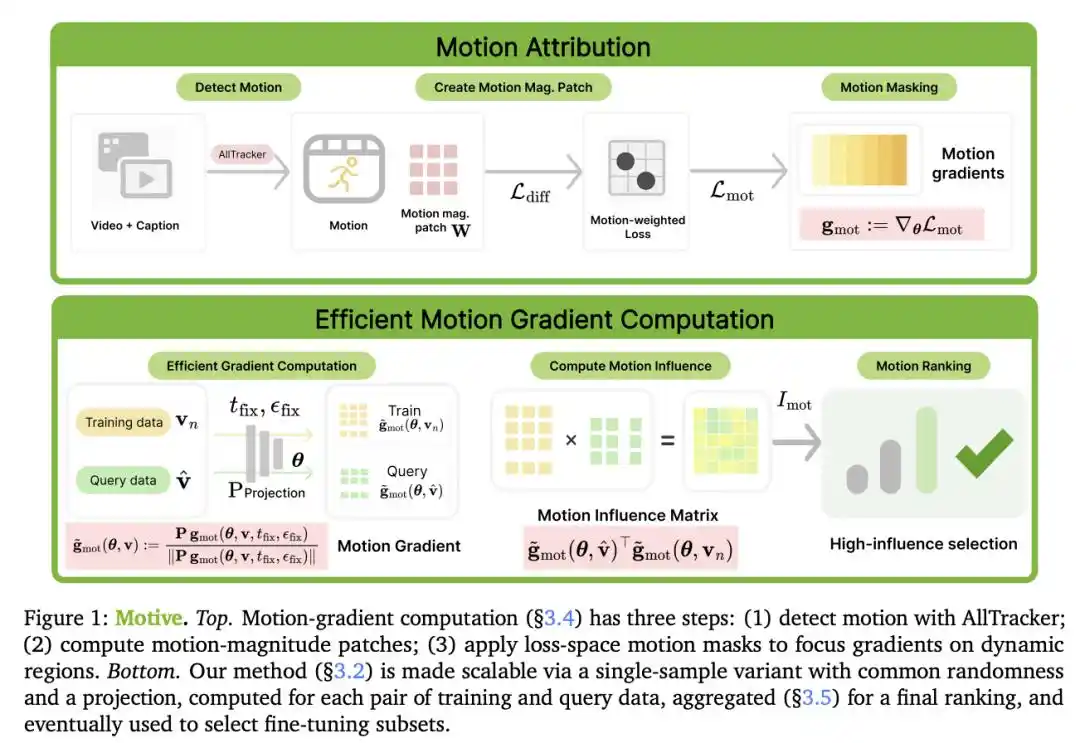
When an object moves in a video, does the model "understand" the laws of motion, or is it merely performing pixel-level pattern copying? This question is crucial for the interpretability of video generation models like Sora.

John Xavier Morris et al. asked "How much can language models memorize?" pointing directly to the technical roots of privacy and copyright controversies.

Title: How much can language models memorize?

ICML: https://icml.cc/virtual/2026/oral/71168

Preprint: https://arxiv.org/abs/2505.24832

Does the model remembering your data count as learning or plagiarism? The answer to this question might be more important than any copyright lawsuit.

There's also Binxu Wang et al., who re-examined the consistency of diffusion models from the perspective of random matrix theory.

Title: A Random Matrix Perspective on the Consistency of Diffusion Models

ICML: https://icml.cc/virtual/2026/oral/71191

Preprint: https://arxiv.org/abs/2602.02908

Diffusion models trained on different, non-overlapping subsets of data often produce strikingly similar outputs when given the same noise seed. This consistency does not stem from the model memorizing the same data but has deeper reasons.

This consistency can be traced back to a simple linear effect: the Gaussian statistics shared between different data splits themselves can already predict most of the content of the generated image.
The most eye-catching work is by Mingyue Xu et al.

Title: To Grok Grokking: Provable Grokking in Ridge Regression

ICML: https://icml.cc/virtual/2026/oral/71134

Preprint: https://arxiv.org/abs/2601.19791

They provided a strict mathematical proof for the "grokking" phenomenon on ridge regression, a classic model that couldn't be more classic.
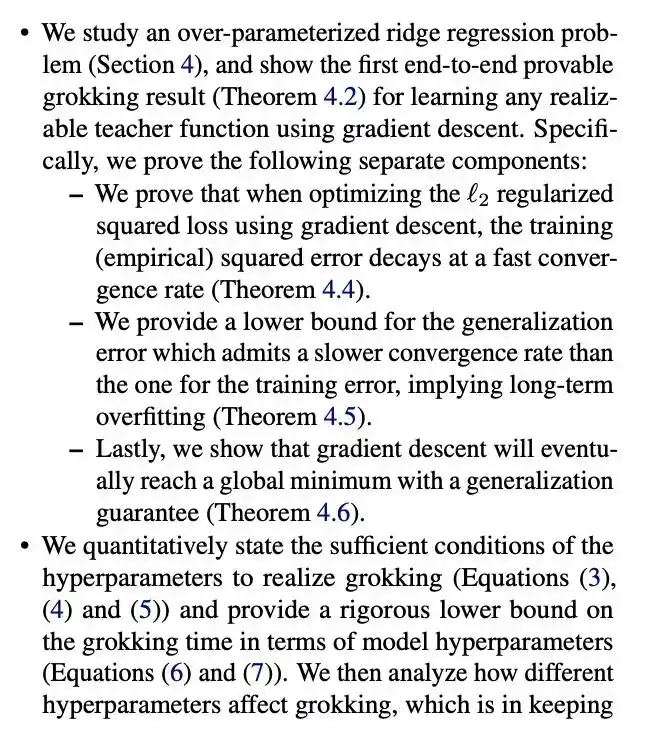
Grokking refers to the phenomenon where a model suddenly gains generalization ability at a certain moment long after the training loss has already converged. It's like a student who has been memorizing formulas for half a year suddenly wakes up one morning and truly understands.

This has been observed many times in deep learning, but this is the first time it has been rigorously proven in a simple model.

That DeepMind Paper from a Decade Ago Finally Received the Test of Time Award

The Test of Time Award was given to "Asynchronous Methods for Deep Reinforcement Learning" by Volodymyr Mnih, David Silver, and other DeepMind team members.

Title: Asynchronous Methods for Deep Reinforcement Learning

Publication: https://proceedings.mlr.press/v48/mniha16.html

The A3C algorithm (Asynchronous Advantage Actor-Critic) proposed in this paper was a benchmark in reinforcement learning when it was published in 2016.
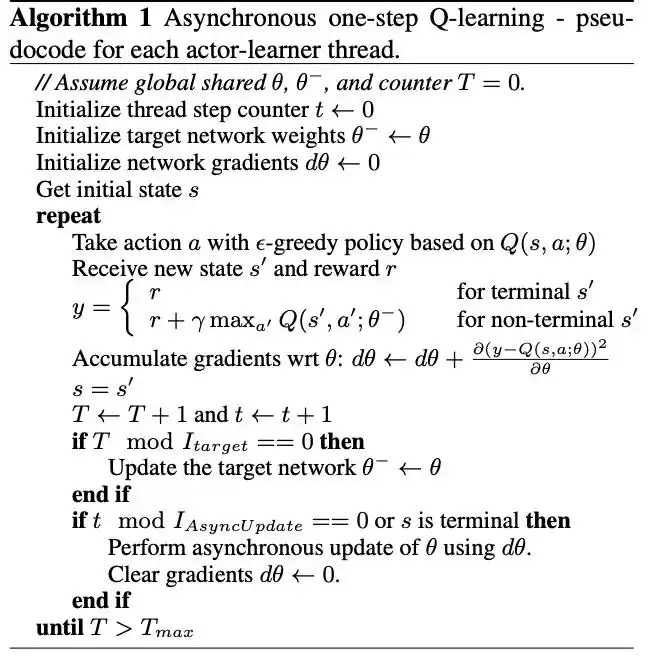
The core idea isn't complicated: instead of using one massive process for slow training, spawn many small processes to explore different strategies simultaneously and asynchronously aggregate gradients.

Simple, elegant, and effective. This philosophy of "ultimate simplicity" seems even clearer in hindsight after a decade.

A decade later, this idea has permeated the skeleton of almost all modern RL systems.

From AlphaGo to RLHF, from game AI to robot control, A3C's DNA is everywhere.

The absolute blockbuster of its year is now a well-deserved classic masterpiece!

What Signals Does ICML 2026 Release?

Spreading out this year's award list reveals three key clues.

First, diffusion models are the area with the highest density of current machine learning research. The double win of Outstanding Papers plus multiple Honorable Mentions gives them far more visibility than any other direction. In the next-generation language model architecture battle, diffusion models have officially entered the fray.

Second, AI safety research is undergoing an internal scrutiny. The Best Position Paper directly points out that alignment community tools are being repurposed, while an Honorable Mention questions the blind spots in Deepfake research. Academia is beginning to seriously confront a question: where exactly is the line drawn between safety tools and censorship tools?

These signals, layered together, point to one judgment: AI research is shifting from "rapid expansion" to "deep cleaning."

The ICML 2026 award list is the first audit report of this cleanup.

References:

https://blog.icml.cc/2026/07/05/announcing-the-icml-2026-awards/

This article is from the WeChat public account "新智元" (New Zhiyuan), author: ASI启示录, editor: David


Criptomoedas em alta

Perguntas relacionadas

QWhich topics dominated the ICML 2026 Outstanding Paper Awards?

ADiffusion models were the biggest winner at ICML 2026. Two papers on diffusion models received the Outstanding Paper Award, and several others in the field received Honorable Mentions, indicating it is a high-density research area for current machine learning.

QWhat critical argument did the winning Position Paper make about AI safety research?

AThe winning Position Paper, titled 'Position: The Alignment Community is Unintentionally Building a Censor's Toolkit,' argued that the technical tools developed by the AI safety and alignment community (e.g., RLHF, Constitutional AI) are being systematically repurposed as infrastructure for content censorship, creating a structural risk within the research paradigm itself.

QWhat fundamental challenge did the paper 'The Flexibility Trap: Rethinking the Value of Arbitrary Order in Diffusion Language Models' raise?

AThe paper challenged a core supposed advantage of diffusion language models: the value of arbitrary-order generation. Through extensive experiments, it demonstrated that this flexibility acts as a trap, forcing models to perform worse on every specific generation order in order to support all possible orders, thereby undermining a key argument for diffusion LLMs over autoregressive ones.

QWhat was the focus of the ICML 2026 Test of Time Award, and why was it significant?

AThe Test of Time Award was given to DeepMind's 2016 paper 'Asynchronous Methods for Deep Reinforcement Learning,' which introduced the A3C algorithm. It was significant because its simple, elegant idea of using multiple asynchronous actors to explore different policies in parallel became foundational, influencing nearly all modern reinforcement learning systems from AlphaGo to RLHF over the past decade.

QAccording to the article, what overall shift in AI research does the ICML 2026 award list signal?

AThe ICML 2026 award list signals that AI research is shifting from a phase of 'rapid expansion' to one of 'deep cleanup' or auditing. The awards favor papers that provide critical re-evaluations of core assumptions (like in diffusion models), rigorous mathematical foundations, and deep internal scrutiny of research directions (like in AI safety), rather than just novel applications.

Leituras Relacionadas

Circle CEO: Stablecoins Are at the Internet's 2002 Stage, Will Reach Trillions of Dollars in the Future

Circle CEO Jeremy Allaire, in a Q2 2026 earnings AMA, discussed the current state and future of stablecoins and Circle's strategy. He compared stablecoins today to the internet in 2002, predicting they will grow from hundreds of billions to trillions of dollars. Key points include: * **Current Use Cases**: Stablecoins have achieved product-market fit in digital asset markets (for trading/settlement), as a digital dollar store of value in emerging markets, and for cross-border payments and settlement. * **Future Growth Areas**: Allaire highlighted opportunities in the AI agent economy, merchant payments (especially via QR codes and stablecoin cards), and the convergence of traditional and on-chain finance. * **Circle's Strategy**: Circle aims to grow USDC through global partnerships. Its economic engines will include reserve income, transaction fees from its on-chain payment network (CPN), and its upcoming "economic operating system," Arc. * **Arc's Vision**: Arc, launching its mainnet on September 16, is a stablecoin-native blockchain designed for seamless user and developer experience. It aims to power the future "on-chain" economy where businesses and AI agents operate. * **Global Adoption**: Allaire emphasized that stablecoin adoption is a global phenomenon, driven by regulatory clarity in regions like Europe (MiCA) and the US (GENIUS Act), and will continue regardless of specific US legislation like the CLARITY Act. * **EURC Growth**: Circle's euro stablecoin, EURC, has surpassed €400 million in circulation, benefiting from early preparation for European regulations and existing distribution networks. Allaire expressed confidence in Circle's execution, citing strong team cohesion and the adoption of AI tools, while identifying cybersecurity and global local operations as key areas for continued strengthening.

marsbitHá 9m

Circle CEO: Stablecoins Are at the Internet's 2002 Stage, Will Reach Trillions of Dollars in the Future

marsbitHá 9m

With Revenue 3.8 Billion Lower Than CXMT, Net Profit Is 8.6 Billion Higher: What Secrets Are Hidden in YMTC's IPO?

Chinese NAND flash giant Changcun Holdings has submitted its IPO prospectus to the Shanghai Stock Exchange. In Q1 2026, the company reported revenue of 47.042 billion yuan and a net profit attributable to parent company shareholders of 33.379 billion yuan. This presents a striking contrast with its competitor Changxin Technology, which had higher revenue (50.8 billion yuan) but a significantly lower net profit of 24.762 billion yuan. The key to this discrepancy lies in their ownership structures of core assets. Changcun Holdings fully owns its main operating entity, Yangtze Memory Technologies Co., Ltd., allowing nearly all group profits to flow to the parent company. In contrast, Changxin Technology controls but does not fully own its key production subsidiaries, meaning a substantial portion of its consolidated profits (approximately 8.25 billion yuan in Q1 2026) belongs to minority shareholders, reducing its reported net profit. Despite Changcun's higher net profit, its pre-IPO valuation is estimated lower than Changxin's. Analysts attribute this to differing market expectations: Changxin, focused on DRAM and the high-growth HBM market for AI servers, is seen as having greater long-term growth potential. Changcun, while dominant in NAND flash, operates in a market with inherent size constraints, making its future valuation more dependent on successfully upgrading its product mix toward higher-value segments like enterprise SSDs.

marsbitHá 20m

With Revenue 3.8 Billion Lower Than CXMT, Net Profit Is 8.6 Billion Higher: What Secrets Are Hidden in YMTC's IPO?

marsbitHá 20m

Perpetual Contract Liquidation Wave Resurges, Bitcoin $62k - $67k May Become the 'Disaster Zone'

A wave of liquidations has hit the crypto perpetual futures market, with analysts warning of continued volatility. Following Bitcoin's drop below $76,000 and subsequent rebound, over $84 million in long positions were liquidated in one hour, demonstrating the amplified impact of leverage. The U.S. CFTC's recent approval of a spot Bitcoin perpetual contract on the Kalshi exchange has opened this "previously closed" asset class to American institutions, with the platform reporting $5.5 billion in volume in its first two weeks. However, critics like Better Markets warn that perpetuals are "among the most dangerous crypto products" for retail investors due to a lack of enhanced protections. Recent price action saw a massive $529 million in hourly liquidations, predominantly longs. Analysts note that while a $3.3 billion short squeeze cleared liquidity above $80,000, a significant pool of long liquidations now sits between $62,000 and $67,000, posing a downside risk if key resistance holds. Experts caution new traders against using leverage or options, which can expire worthless, without proper experience and risk management. Despite the dangers, the demand for leveraged products persists, with some institutional players preferring on-chain platforms for their transparency and self-custody. As Kalshi expands its perpetual offerings beyond crypto, the core warning remains: leverage can lead to sudden, severe losses for unprepared investors.

marsbitHá 21m

Perpetual Contract Liquidation Wave Resurges, Bitcoin $62k - $67k May Become the 'Disaster Zone'

marsbitHá 21m

Trading

Spot

Artigos em Destaque

O que é $S$

Compreender o SPERO: Uma Visão Abrangente Introdução ao SPERO À medida que o panorama da inovação continua a evoluir, o surgimento de tecnologias web3 e projetos de criptomoeda desempenha um papel fundamental na formação do futuro digital. Um projeto que tem atraído atenção neste campo dinâmico é o SPERO, denotado como SPERO,$$s$. Este artigo tem como objetivo reunir e apresentar informações detalhadas sobre o SPERO, para ajudar entusiastas e investidores a compreender as suas bases, objetivos e inovações nos domínios web3 e cripto. O que é o SPERO,$$s$? O SPERO,$$s$ é um projeto único dentro do espaço cripto que procura aproveitar os princípios da descentralização e da tecnologia blockchain para criar um ecossistema que promove o envolvimento, a utilidade e a inclusão financeira. O projeto é concebido para facilitar interações peer-to-peer de novas maneiras, proporcionando aos utilizadores soluções e serviços financeiros inovadores. No seu núcleo, o SPERO,$$s$ visa capacitar indivíduos ao fornecer ferramentas e plataformas que melhoram a experiência do utilizador no espaço das criptomoedas. Isso inclui a possibilidade de métodos de transação mais flexíveis, a promoção de iniciativas impulsionadas pela comunidade e a criação de caminhos para oportunidades financeiras através de aplicações descentralizadas (dApps). A visão subjacente do SPERO,$$s$ gira em torno da inclusão, visando fechar lacunas dentro das finanças tradicionais enquanto aproveita os benefícios da tecnologia blockchain. Quem é o Criador do SPERO,$$s$? A identidade do criador do SPERO,$$s$ permanece algo obscura, uma vez que existem recursos publicamente disponíveis limitados que fornecem informações detalhadas sobre o(s) seu(s) fundador(es). Esta falta de transparência pode resultar do compromisso do projeto com a descentralização—uma ética que muitos projetos web3 partilham, priorizando contribuições coletivas em vez de reconhecimento individual. Ao centrar as discussões em torno da comunidade e dos seus objetivos coletivos, o SPERO,$$s$ incorpora a essência do empoderamento sem destacar indivíduos específicos. Assim, compreender a ética e a missão do SPERO é mais importante do que identificar um criador singular. Quem são os Investidores do SPERO,$$s$? O SPERO,$$s$ é apoiado por uma diversidade de investidores que vão desde capitalistas de risco a investidores-anjo dedicados a promover a inovação no setor cripto. O foco desses investidores geralmente alinha-se com a missão do SPERO—priorizando projetos que prometem avanço tecnológico social, inclusão financeira e governança descentralizada. Essas fundações de investidores estão tipicamente interessadas em projetos que não apenas oferecem produtos inovadores, mas que também contribuem positivamente para a comunidade blockchain e os seus ecossistemas. O apoio desses investidores reforça o SPERO,$$s$ como um concorrente notável no domínio em rápida evolução dos projetos cripto. Como Funciona o SPERO,$$s$? O SPERO,$$s$ emprega uma estrutura multifacetada que o distingue de projetos de criptomoeda convencionais. Aqui estão algumas das características-chave que sublinham a sua singularidade e inovação: Governança Descentralizada: O SPERO,$$s$ integra modelos de governança descentralizada, capacitando os utilizadores a participar ativamente nos processos de tomada de decisão sobre o futuro do projeto. Esta abordagem promove um sentido de propriedade e responsabilidade entre os membros da comunidade. Utilidade do Token: O SPERO,$$s$ utiliza o seu próprio token de criptomoeda, concebido para servir várias funções dentro do ecossistema. Esses tokens permitem transações, recompensas e a facilitação de serviços oferecidos na plataforma, melhorando o envolvimento e a utilidade gerais. Arquitetura em Camadas: A arquitetura técnica do SPERO,$$s$ suporta modularidade e escalabilidade, permitindo a integração contínua de funcionalidades e aplicações adicionais à medida que o projeto evolui. Esta adaptabilidade é fundamental para manter a relevância no panorama cripto em constante mudança. Envolvimento da Comunidade: O projeto enfatiza iniciativas impulsionadas pela comunidade, empregando mecanismos que incentivam a colaboração e o feedback. Ao nutrir uma comunidade forte, o SPERO,$$s$ pode melhor atender às necessidades dos utilizadores e adaptar-se às tendências do mercado. Foco na Inclusão: Ao oferecer taxas de transação baixas e interfaces amigáveis, o SPERO,$$s$ visa atrair uma base de utilizadores diversificada, incluindo indivíduos que anteriormente podem não ter participado no espaço cripto. Este compromisso com a inclusão alinha-se com a sua missão abrangente de empoderamento através da acessibilidade. Cronologia do SPERO,$$s$ Compreender a história de um projeto fornece insights cruciais sobre a sua trajetória de desenvolvimento e marcos. Abaixo está uma cronologia sugerida que mapeia eventos significativos na evolução do SPERO,$$s$: Fase de Conceituação e Ideação: As ideias iniciais que formam a base do SPERO,$$s$ foram concebidas, alinhando-se de perto com os princípios de descentralização e foco na comunidade dentro da indústria blockchain. Lançamento do Whitepaper do Projeto: Após a fase conceitual, um whitepaper abrangente detalhando a visão, os objetivos e a infraestrutura tecnológica do SPERO,$$s$ foi lançado para atrair o interesse e o feedback da comunidade. Construção da Comunidade e Primeiros Envolvimentos: Esforços ativos de divulgação foram feitos para construir uma comunidade de primeiros adotantes e investidores potenciais, facilitando discussões em torno dos objetivos do projeto e angariando apoio. Evento de Geração de Tokens: O SPERO,$$s$ realizou um evento de geração de tokens (TGE) para distribuir os seus tokens nativos a apoiantes iniciais e estabelecer liquidez inicial dentro do ecossistema. Lançamento da dApp Inicial: A primeira aplicação descentralizada (dApp) associada ao SPERO,$$s$ foi lançada, permitindo que os utilizadores interagissem com as funcionalidades principais da plataforma. Desenvolvimento Contínuo e Parcerias: Atualizações e melhorias contínuas nas ofertas do projeto, incluindo parcerias estratégicas com outros players no espaço blockchain, moldaram o SPERO,$$s$ em um jogador competitivo e em evolução no mercado cripto. Conclusão O SPERO,$$s$ é um testemunho do potencial do web3 e das criptomoedas para revolucionar os sistemas financeiros e capacitar indivíduos. Com um compromisso com a governança descentralizada, o envolvimento da comunidade e funcionalidades inovadoras, abre caminho para um panorama financeiro mais inclusivo. Como em qualquer investimento no espaço cripto em rápida evolução, potenciais investidores e utilizadores são incentivados a pesquisar minuciosamente e a envolver-se de forma ponderada com os desenvolvimentos em curso dentro do SPERO,$$s$. O projeto demonstra o espírito inovador da indústria cripto, convidando a uma exploração mais aprofundada das suas inúmeras possibilidades. Embora a jornada do SPERO,$$s$ ainda esteja a desenrolar-se, os seus princípios fundamentais podem, de facto, influenciar o futuro de como interagimos com a tecnologia, as finanças e uns com os outros em ecossistemas digitais interconectados.

408 Visualizações TotaisPublicado em {updateTime}Atualizado em 2024.12.17

O que é $S$

O que é AGENT S

Agent S: O Futuro da Interação Autónoma no Web3 Introdução No panorama em constante evolução do Web3 e das criptomoedas, as inovações estão constantemente a redefinir a forma como os indivíduos interagem com plataformas digitais. Um projeto pioneiro, o Agent S, promete revolucionar a interação humano-computador através do seu framework aberto e agente. Ao abrir caminho para interações autónomas, o Agent S visa simplificar tarefas complexas, oferecendo aplicações transformadoras em inteligência artificial (IA). Esta exploração detalhada irá aprofundar-se nas complexidades do projeto, nas suas características únicas e nas implicações para o domínio das criptomoedas. O que é o Agent S? O Agent S é um framework aberto e agente, especificamente concebido para abordar três desafios fundamentais na automação de tarefas computacionais: Aquisição de Conhecimento Específico de Domínio: O framework aprende inteligentemente a partir de várias fontes de conhecimento externas e experiências internas. Esta abordagem dupla capacita-o a construir um rico repositório de conhecimento específico de domínio, melhorando o seu desempenho na execução de tarefas. Planeamento ao Longo de Longos Horizontes de Tarefas: O Agent S emprega planeamento hierárquico aumentado por experiência, uma abordagem estratégica que facilita a decomposição e execução eficientes de tarefas intrincadas. Esta característica melhora significativamente a sua capacidade de gerir múltiplas subtarefas de forma eficiente e eficaz. Gestão de Interfaces Dinâmicas e Não Uniformes: O projeto introduz a Interface Agente-Computador (ACI), uma solução inovadora que melhora a interação entre agentes e utilizadores. Utilizando Modelos de Linguagem Multimodais de Grande Escala (MLLMs), o Agent S pode navegar e manipular diversas interfaces gráficas de utilizador de forma fluida. Através destas características pioneiras, o Agent S fornece um framework robusto que aborda as complexidades envolvidas na automação da interação humana com máquinas, preparando o terreno para uma infinidade de aplicações em IA e além. Quem é o Criador do Agent S? Embora o conceito de Agent S seja fundamentalmente inovador, informações específicas sobre o seu criador permanecem elusivas. O criador é atualmente desconhecido, o que destaca ou o estágio nascente do projeto ou a escolha estratégica de manter os membros fundadores em anonimato. Independentemente da anonimidade, o foco permanece nas capacidades e no potencial do framework. Quem são os Investidores do Agent S? Como o Agent S é relativamente novo no ecossistema criptográfico, informações detalhadas sobre os seus investidores e financiadores não estão explicitamente documentadas. A falta de informações disponíveis publicamente sobre as fundações de investimento ou organizações que apoiam o projeto levanta questões sobre a sua estrutura de financiamento e roteiro de desenvolvimento. Compreender o apoio é crucial para avaliar a sustentabilidade do projeto e o seu impacto potencial no mercado. Como Funciona o Agent S? No núcleo do Agent S reside uma tecnologia de ponta que lhe permite funcionar eficazmente em diversos ambientes. O seu modelo operacional é construído em torno de várias características-chave: Interação Humano-Computador Semelhante: O framework oferece planeamento avançado em IA, esforçando-se para tornar as interações com computadores mais intuitivas. Ao imitar o comportamento humano na execução de tarefas, promete elevar as experiências dos utilizadores. Memória Narrativa: Utilizada para aproveitar experiências de alto nível, o Agent S utiliza memória narrativa para acompanhar os históricos de tarefas, melhorando assim os seus processos de tomada de decisão. Memória Episódica: Esta característica fornece aos utilizadores orientações passo a passo, permitindo que o framework ofereça suporte contextual à medida que as tarefas se desenrolam. Suporte para OpenACI: Com a capacidade de funcionar localmente, o Agent S permite que os utilizadores mantenham o controlo sobre as suas interações e fluxos de trabalho, alinhando-se com a ética descentralizada do Web3. Fácil Integração com APIs Externas: A sua versatilidade e compatibilidade com várias plataformas de IA garantem que o Agent S possa integrar-se perfeitamente em ecossistemas tecnológicos existentes, tornando-o uma escolha apelativa para desenvolvedores e organizações. Estas funcionalidades contribuem coletivamente para a posição única do Agent S no espaço cripto, à medida que automatiza tarefas complexas e em múltiplos passos com mínima intervenção humana. À medida que o projeto evolui, as suas potenciais aplicações no Web3 podem redefinir a forma como as interações digitais se desenrolam. Cronologia do Agent S O desenvolvimento e os marcos do Agent S podem ser encapsulados numa cronologia que destaca os seus eventos significativos: 27 de Setembro de 2024: O conceito de Agent S foi lançado num artigo de pesquisa abrangente intitulado “Um Framework Agente Aberto que Usa Computadores como um Humano”, mostrando a base para o projeto. 10 de Outubro de 2024: O artigo de pesquisa foi disponibilizado publicamente no arXiv, oferecendo uma exploração aprofundada do framework e da sua avaliação de desempenho com base no benchmark OSWorld. 12 de Outubro de 2024: Uma apresentação em vídeo foi lançada, proporcionando uma visão visual das capacidades e características do Agent S, envolvendo ainda mais potenciais utilizadores e investidores. Estes marcos na cronologia não apenas ilustram o progresso do Agent S, mas também indicam o seu compromisso com a transparência e o envolvimento da comunidade. Pontos-Chave Sobre o Agent S À medida que o framework Agent S continua a evoluir, várias características-chave destacam-se, sublinhando a sua natureza inovadora e potencial: Framework Inovador: Concebido para proporcionar um uso intuitivo de computadores semelhante à interação humana, o Agent S traz uma abordagem nova à automação de tarefas. Interação Autónoma: A capacidade de interagir autonomamente com computadores através de GUI significa um avanço em direção a soluções computacionais mais inteligentes e eficientes. Automação de Tarefas Complexas: Com a sua metodologia robusta, pode automatizar tarefas complexas e em múltiplos passos, tornando os processos mais rápidos e menos propensos a erros. Melhoria Contínua: Os mecanismos de aprendizagem permitem que o Agent S melhore a partir de experiências passadas, aprimorando continuamente o seu desempenho e eficácia. Versatilidade: A sua adaptabilidade em diferentes ambientes operacionais, como OSWorld e WindowsAgentArena, garante que pode servir uma ampla gama de aplicações. À medida que o Agent S se posiciona no panorama do Web3 e das criptomoedas, o seu potencial para melhorar as capacidades de interação e automatizar processos significa um avanço significativo nas tecnologias de IA. Através do seu framework inovador, o Agent S exemplifica o futuro das interações digitais, prometendo uma experiência mais fluida e eficiente para os utilizadores em diversas indústrias. Conclusão O Agent S representa um ousado avanço na união da IA e do Web3, com a capacidade de redefinir a forma como interagimos com a tecnologia. Embora ainda esteja nas suas fases iniciais, as possibilidades para a sua aplicação são vastas e cativantes. Através do seu framework abrangente que aborda desafios críticos, o Agent S visa trazer interações autónomas para o primeiro plano da experiência digital. À medida que avançamos mais profundamente nos domínios das criptomoedas e da descentralização, projetos como o Agent S desempenharão, sem dúvida, um papel crucial na formação do futuro da tecnologia e da colaboração humano-computador.

998 Visualizações TotaisPublicado em {updateTime}Atualizado em 2025.01.14

O que é AGENT S

Como comprar S

Bem-vindo à HTX.com!Tornámos a compra de Sonic (S) simples e conveniente.Segue o nosso guia passo a passo para iniciar a tua jornada no mundo das criptos.Passo 1: cria a tua conta HTXUtiliza o teu e-mail ou número de telefone para te inscreveres numa conta gratuita na HTX.Desfruta de um processo de inscrição sem complicações e desbloqueia todas as funcionalidades.Obter a minha contaPasso 2: vai para Comprar Cripto e escolhe o teu método de pagamentoCartão de crédito/débito: usa o teu visa ou mastercard para comprar Sonic (S) instantaneamente.Saldo: usa os fundos da tua conta HTX para transacionar sem problemas.Terceiros: adicionamos métodos de pagamento populares, como Google Pay e Apple Pay, para aumentar a conveniência.P2P: transaciona diretamente com outros utilizadores na HTX.Mercado de balcão (OTC): oferecemos serviços personalizados e taxas de câmbio competitivas para os traders.Passo 3: armazena teu Sonic (S)Depois de comprar o teu Sonic (S), armazena-o na tua conta HTX.Alternativamente, podes enviá-lo para outro lugar através de transferência blockchain ou usá-lo para transacionar outras criptomoedas.Passo 4: transaciona Sonic (S)Transaciona facilmente Sonic (S) no mercado à vista da HTX.Acede simplesmente à tua conta, seleciona o teu par de trading, executa as tuas transações e monitoriza em tempo real.Oferecemos uma experiência de fácil utilização tanto para principiantes como para traders experientes.

1.9k Visualizações TotaisPublicado em {updateTime}Atualizado em 2026.06.02

Como comprar S

Discussões

Bem-vindo à Comunidade HTX. Aqui, pode manter-se informado sobre os mais recentes desenvolvimentos da plataforma e obter acesso a análises profissionais de mercado. As opiniões dos utilizadores sobre o preço de S (S) são apresentadas abaixo.

活动图片