Dalio's Latest Interview: 3 Major Signs of an AI Bubble Bursting, and How to Respond?

marsbitPublicado em 2026-08-03Última atualização em 2026-08-03

Resumo

In a recent interview, Ray Dalio discusses the current AI investment bubble, drawing parallels to past speculative frenzies like the dot-com bubble. He explains that such bubbles form when revolutionary technology, like AI, sparks massive investor excitement and debt-fueled investment, driving prices beyond fundamentals. Dalio outlines three key signs of an impending bubble burst: 1) Rising interest rates forcing asset sales, 2) A significant increase in stock supply from companies issuing shares, and 3) Ownership shifting from strong hands to inexperienced, often leveraged, retail investors. To navigate this uncertainty, he advocates for a diversified portfolio across assets like stocks, bonds, real estate, and notably gold (5-15% allocation), which he views as a true "hard asset." He expresses skepticism towards Bitcoin as "digital gold," citing potential technological and governmental risks. Regarding AI's impact, Dalio believes the primary beneficiaries will be the capitalists who own the automating technology, potentially widening wealth inequality as AI replaces both physical and cognitive labor. However, he contends that humans with exceptional interpersonal skills, emotional intelligence, and collaboration abilities will remain highly valuable. Finally, on his theory of ~80-year major cycles in world order, Dalio notes that while timing isn't precise, current indicators suggest we are in the vicinity of a significant transitional period. His core investment advice...

Original from the podcast The Diary Of A CEO

Compiled / Odaily Planet Daily Golem (@web 3_golem)
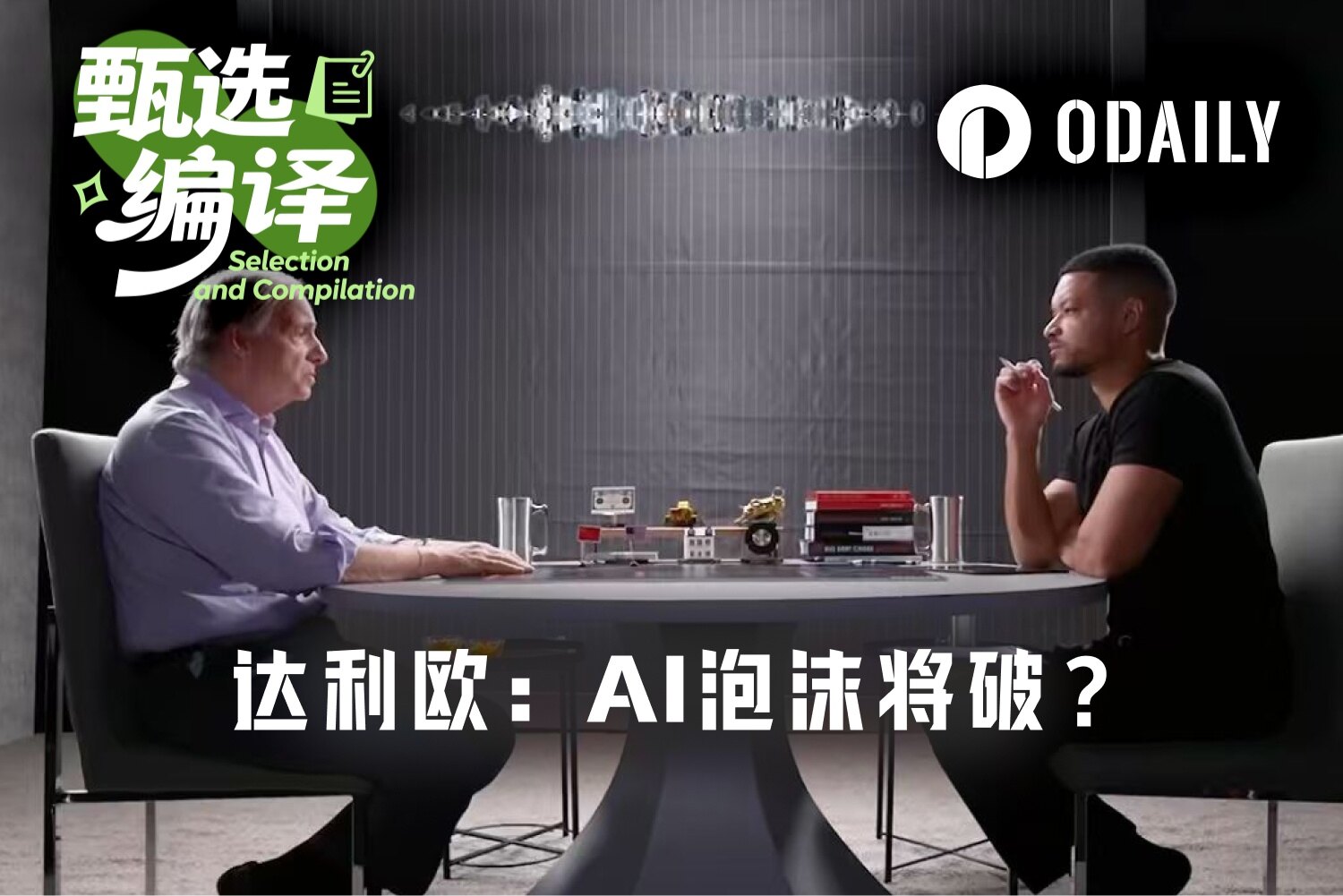
Editor's Note: Ray Dalio, founder of Bridgewater Associates, recently gave an in-depth interview to the renowned business podcast The Diary Of A CEO, sharing his views on the AI bubble, the 80-year major cycle shift, and Bitcoin. In the interview, Dalio explained why we are in an AI bubble, outlined the three major signs that the bubble is about to burst, and expressed his belief that while capitalists will be the biggest beneficiaries of the AI transformation, people with exceptional human intelligence and the ability to collaborate with others will still excel in the future. Odaily Planet Daily has compiled the core content of Dalio's interview below. Enjoy~

Learning from History: How Did the AI Bubble Form?

The commonly referred to bubble is when prices rise sharply, company performances are excellent, then the bubble bursts, which impacts the economy and markets, followed by a great depression, such as the 1929 bubble or the 2000 dot-com bubble.

This happens because when a revolutionary new technology emerges, everyone bets it will surely succeed, rushes to invest, even borrows money to invest, but they overlook the importance of price. Ultimately, prices soar, creating a bubble.

Now we are equally excited about AI, and we should be, as it will bring revolutionary changes, which it indeed has. So, again, everyone wants to invest, but they still ignore the price. This is a certain mechanism hidden within different cycles.

In an economic bubble, people borrow heavily to invest. You see many people becoming wealthy, but wealth is not equivalent to real money because they cannot spend this wealth. When they must sell their wealth to get money, it depreciates. So, when they need cash for reasons like tax changes, rising interest rates, or debt repayment, the bubble starts to burst, and the market declines.

When the bubble bursts, the wealth accumulation process reverses. When they made a lot of money, they had highly valued collateral for loans; this compounding effect continues. But when the bubble bursts, this process also reverses.

Economic recessions typically also follow a bubble burst because when people start repaying debts and selling assets, consumption demand decreases, and spending naturally drops.

For example, during the Great Depression in the US, the late 1920s were a time of great prosperity. Households were electrified for the first time, refrigerators and lighting entered homes, cars, airplanes, and radios became popular. Everyone believed these technologies had a great future. But simultaneously, as people kept buying assets, stock prices kept rising, and people leveraged themselves to buy stocks, corporate profits ultimately couldn't support the corresponding stock prices, triggering a chain reaction that eventually led to the Great Depression.

My point is, in these massive trend shifts, people know very little. Anyone in the AI field cannot plan accurately. They simply don't know what future revenues will be. Ultimately, only two outcomes occur: either underinvestment, falling far behind competitors; or heavy investment, still lacking precise control. When this happens, problems arise.

The 3 Major Signs of a Bubble Bursting

In the initial stage, what punctures the bubble is often situations that force people to sell assets to raise cash, and this is generally rising interest rates. It could also be policies like wealth taxes, but broadly speaking, it's a tightening of monetary conditions. Because at this stage, there is often inflationary pressure, and central banks decide to tighten monetary policy. Thus, when interest rates rise, the returns investors can get from holding bonds can exceed the returns from equity investments.

Additionally, there is a significant increase in stock issuance. We have been discussing how demand pushes up stock prices and how wealth is created, but the market also has a supply side. Companies can issue stock; there is almost nothing easier for creating wealth than issuing stock. Nowadays, people can even announce they are starting a company and taking it public, then say to their audience they will issue shares. It is precisely this large supply of stock, along with increased fundraising needs from other companies, that will ultimately cause the bubble to burst.

Another classic way to gauge the extent of a bubble is to examine the ownership of these companies' shares, to see if the shares are held by steadfast investors or by fickle retail investors. But I must also emphasize that a bubble is not a black-and-white existence; it's a matter of degree.

Classic characteristics of fickle holdings are a massive influx of retail investors lacking expertise, especially through leverage. They either borrow money to buy stocks or purchase leveraged financial products. For example, there are now leveraged ETFs tracking the stock market. Investors participating in such products are essentially no different from rolling dice in gambling.

All of the above are major signs that a bubble will burst. When it bursts, panic sets in, leading to massive asset liquidation. Conversely, at that point, all assets become cheap, and everyone can afford them.

But in investing, people always like to get ahead, buying the bottom too early, and this behavior often further fuels bubbles. So I would like to add that the future is uncertain. Investors should not try to 'time the market.' Even experienced investors find it extremely difficult to precisely time a bubble burst. Therefore, the best investment approach in the face of a bubble is diversification.

Responding to a Bubble Burst Through Diversification

Ordinary people often think cash deposits are the safest asset, but in the long run, it's the worst investment because inflation erodes its value.

Besides the stock market, investors have many assets to choose from, such as gold, bonds, real estate, and Bitcoin. Their respective values fluctuate for various reasons. Typically, when gold rises, bonds often fall, and real estate depreciates; these changes follow certain patterns.

Therefore, the best practice is to build a diversified investment portfolio. This not only doesn't reduce returns but actually lowers risk. Diversification means holding a certain proportion of each asset type. Due to different volatilities, investors must know how to balance them. My suggestion is to start by investing in a real asset: gold.

Gold is very interesting because when all assets perform poorly, gold often performs well. It is a very effective diversification tool. Gold cannot be hacked by technology; you can hold it, own it. It is the only financial asset that is not someone else's liability.

So for most people, if they want to ensure they have some 'hard currency,' gold should make up 5% to 15% of their investment portfolio.

Views on Bitcoin

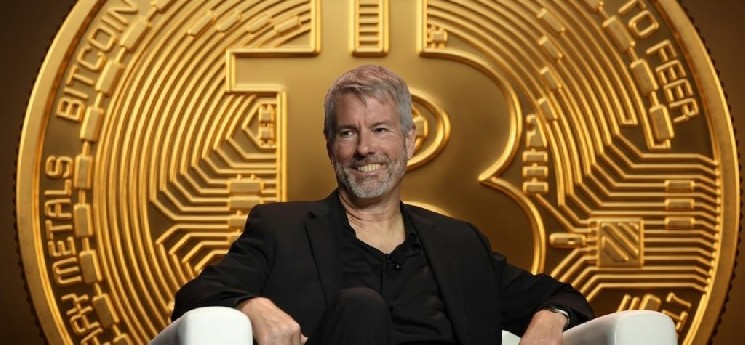
Some investors view Bitcoin as 'digital gold,' but I prefer investing in real gold bars, not Bitcoin.

Bitcoin is just a gold-like asset; it's also a form of currency that cannot be printed. But some technologies could harm it. For example, if quantum computing emerges and governments can monitor it, it could be taxed. Any digital currency is somewhat similar.

Moreover, when a government says 'I don't need Bitcoin,' they have the authority to deal with it as they wish. Also, central banks won't hold large amounts of such assets because central banks need to ensure the privacy of their transactions and keep them firmly under their control. Look at Russia's situation; their other assets were seized/frozen, but their gold, no one could touch.

Who Benefits Most from the AI Transformation?

In this AI transformation, only a very small number of people (less than one percent of the population) master cutting-edge technologies and can apply and accelerate their development. As for others, if your job involves thinking, you are at risk of being replaced.

We are entering a world where everything can be automated. Human evolution began in the agricultural age, where there was almost no real innovation. Later, humans invented machines that replaced human physical labor. People used to work in fields like cattle; later, they were replaced by tractors. Then we entered the industrial age. First, the invention of printing allowed people to learn knowledge, then various inventions emerged, the first industrial revolution arrived, where machines began replacing human physical labor in factories, etc.

So in my view, it's as if machines first replaced human physical functions, then replaced higher and higher levels, and then began replacing parts of human thinking that can be computerized. And this trend continues to develop, gradually replacing higher-order thinking and reasoning abilities. This development trajectory is part of the ongoing evolutionary process.

The ultimate beneficiaries are capitalists who own the ideas that replace workers. For example, when people shop in stores, merchants earn revenue. But if you look at the share allocated to workers, you'll find this share is declining, while the share allocated to merchants is rising. So we are going through a stage where, on one hand, the top tier creates astonishing wealth; on the other hand, the bottom tier faces enormous pressure.

This is the challenge we face. Although the economic situation is relatively good, the difficulty for college graduates finding jobs has increased significantly. For instance, new graduates need training when starting jobs, and now many jobs can be quickly performed by AI and computerization. As robotics advances, this will intensify. The disruptive change we see now is happening so fast precisely because massive funds are pouring into frontier AI models like Anthropic and OpenAI.

Simultaneously, the wealth gap is widening because capitalism, although I love capitalism, the reality is, it creates huge disparities in income and wealth. When a worker's mind and body are both replaced, as a human, what can they sell?

But don't be too pessimistic. What humans still possess are emotions and intuition. Some services AI cannot provide. So, if we explore what these 'services' are, for example, can robots provide a good massage SPA? What remains, people can explore further. In summary, I believe that in the foreseeable future, those with exceptional human intelligence and the ability to collaborate with others will still perform excellently.

Regarding the 80-Year Major Cycle

I previously said that world order shifts occur about every 80 years, but this number is not absolute. The cycle length has an average floating range. It's like human lifespan; each person's life expectancy or lifespan varies individually.

I wouldn't overemphasize the length of time; I would focus more on the current situation. In terms of symptoms or relevant indicators, where are we currently in this process? Where will the next important node appear?

The answer is somewhere near the current time zone we are in.

Criptomoedas em alta

Perguntas relacionadas

QWhat are the three major signs that indicate an AI bubble is about to burst, according to Ray Dalio?

AAccording to Ray Dalio, the three major signs are: 1) Rising interest rates, which force people to sell assets to raise cash. 2) A significant increase in stock issuance, where companies create wealth by issuing shares, increasing supply. 3) A high concentration of holdings in the hands of unsteady, non-professional retail investors, especially those using leverage.

QHow does Ray Dalio suggest ordinary investors should respond to the potential bursting of an AI bubble?

ARay Dalio suggests that the best investment strategy for ordinary investors is diversification. He advises against trying to time the market and recommends building a diversified portfolio including assets like stocks, gold, bonds, real estate, and Bitcoin. He specifically highlights gold as a crucial 'hard asset' that performs well when other assets falter, suggesting it should make up 5% to 15% of a portfolio.

QWhy does Ray Dalio prefer investing in physical gold over Bitcoin?

ARay Dalio prefers physical gold over Bitcoin because gold is a tangible asset that cannot be hacked or compromised by technology like quantum computing. It is also not a liability of anyone else. He notes that governments can choose to reject or regulate digital currencies like Bitcoin and that central banks value the privacy and control they have over their own transactions, which Bitcoin does not provide. He uses the example of Russia, whose gold reserves remained untouched while other assets were frozen.

QWho does Ray Dalio believe will be the biggest beneficiaries of the AI revolution?

ARay Dalio believes that the biggest beneficiaries of the AI revolution will be the capitalists—the less than 1% of the population who own and control the capital and the cutting-edge AI technology. He explains that as machines and AI replace both physical and cognitive human labor, the share of wealth going to capital owners increases, while the share for workers declines, thereby widening the wealth gap.

QWhat unique human qualities does Ray Dalio think will allow people to remain valuable in an AI-dominated future?

ARay Dalio believes that human emotional intelligence, intuition, and the ability to collaborate effectively with others are qualities that AI cannot replicate. He suggests that services requiring these distinctly human traits, such as certain personal care or relational services, will remain valuable. Therefore, individuals with exceptional human intelligence and strong collaborative skills will continue to excel in the foreseeable future.

Leituras Relacionadas

Trading

Spot

Artigos em Destaque

O que é $S$

Compreender o SPERO: Uma Visão Abrangente Introdução ao SPERO À medida que o panorama da inovação continua a evoluir, o surgimento de tecnologias web3 e projetos de criptomoeda desempenha um papel fundamental na formação do futuro digital. Um projeto que tem atraído atenção neste campo dinâmico é o SPERO, denotado como SPERO,$$s$. Este artigo tem como objetivo reunir e apresentar informações detalhadas sobre o SPERO, para ajudar entusiastas e investidores a compreender as suas bases, objetivos e inovações nos domínios web3 e cripto. O que é o SPERO,$$s$? O SPERO,$$s$ é um projeto único dentro do espaço cripto que procura aproveitar os princípios da descentralização e da tecnologia blockchain para criar um ecossistema que promove o envolvimento, a utilidade e a inclusão financeira. O projeto é concebido para facilitar interações peer-to-peer de novas maneiras, proporcionando aos utilizadores soluções e serviços financeiros inovadores. No seu núcleo, o SPERO,$$s$ visa capacitar indivíduos ao fornecer ferramentas e plataformas que melhoram a experiência do utilizador no espaço das criptomoedas. Isso inclui a possibilidade de métodos de transação mais flexíveis, a promoção de iniciativas impulsionadas pela comunidade e a criação de caminhos para oportunidades financeiras através de aplicações descentralizadas (dApps). A visão subjacente do SPERO,$$s$ gira em torno da inclusão, visando fechar lacunas dentro das finanças tradicionais enquanto aproveita os benefícios da tecnologia blockchain. Quem é o Criador do SPERO,$$s$? A identidade do criador do SPERO,$$s$ permanece algo obscura, uma vez que existem recursos publicamente disponíveis limitados que fornecem informações detalhadas sobre o(s) seu(s) fundador(es). Esta falta de transparência pode resultar do compromisso do projeto com a descentralização—uma ética que muitos projetos web3 partilham, priorizando contribuições coletivas em vez de reconhecimento individual. Ao centrar as discussões em torno da comunidade e dos seus objetivos coletivos, o SPERO,$$s$ incorpora a essência do empoderamento sem destacar indivíduos específicos. Assim, compreender a ética e a missão do SPERO é mais importante do que identificar um criador singular. Quem são os Investidores do SPERO,$$s$? O SPERO,$$s$ é apoiado por uma diversidade de investidores que vão desde capitalistas de risco a investidores-anjo dedicados a promover a inovação no setor cripto. O foco desses investidores geralmente alinha-se com a missão do SPERO—priorizando projetos que prometem avanço tecnológico social, inclusão financeira e governança descentralizada. Essas fundações de investidores estão tipicamente interessadas em projetos que não apenas oferecem produtos inovadores, mas que também contribuem positivamente para a comunidade blockchain e os seus ecossistemas. O apoio desses investidores reforça o SPERO,$$s$ como um concorrente notável no domínio em rápida evolução dos projetos cripto. Como Funciona o SPERO,$$s$? O SPERO,$$s$ emprega uma estrutura multifacetada que o distingue de projetos de criptomoeda convencionais. Aqui estão algumas das características-chave que sublinham a sua singularidade e inovação: Governança Descentralizada: O SPERO,$$s$ integra modelos de governança descentralizada, capacitando os utilizadores a participar ativamente nos processos de tomada de decisão sobre o futuro do projeto. Esta abordagem promove um sentido de propriedade e responsabilidade entre os membros da comunidade. Utilidade do Token: O SPERO,$$s$ utiliza o seu próprio token de criptomoeda, concebido para servir várias funções dentro do ecossistema. Esses tokens permitem transações, recompensas e a facilitação de serviços oferecidos na plataforma, melhorando o envolvimento e a utilidade gerais. Arquitetura em Camadas: A arquitetura técnica do SPERO,$$s$ suporta modularidade e escalabilidade, permitindo a integração contínua de funcionalidades e aplicações adicionais à medida que o projeto evolui. Esta adaptabilidade é fundamental para manter a relevância no panorama cripto em constante mudança. Envolvimento da Comunidade: O projeto enfatiza iniciativas impulsionadas pela comunidade, empregando mecanismos que incentivam a colaboração e o feedback. Ao nutrir uma comunidade forte, o SPERO,$$s$ pode melhor atender às necessidades dos utilizadores e adaptar-se às tendências do mercado. Foco na Inclusão: Ao oferecer taxas de transação baixas e interfaces amigáveis, o SPERO,$$s$ visa atrair uma base de utilizadores diversificada, incluindo indivíduos que anteriormente podem não ter participado no espaço cripto. Este compromisso com a inclusão alinha-se com a sua missão abrangente de empoderamento através da acessibilidade. Cronologia do SPERO,$$s$ Compreender a história de um projeto fornece insights cruciais sobre a sua trajetória de desenvolvimento e marcos. Abaixo está uma cronologia sugerida que mapeia eventos significativos na evolução do SPERO,$$s$: Fase de Conceituação e Ideação: As ideias iniciais que formam a base do SPERO,$$s$ foram concebidas, alinhando-se de perto com os princípios de descentralização e foco na comunidade dentro da indústria blockchain. Lançamento do Whitepaper do Projeto: Após a fase conceitual, um whitepaper abrangente detalhando a visão, os objetivos e a infraestrutura tecnológica do SPERO,$$s$ foi lançado para atrair o interesse e o feedback da comunidade. Construção da Comunidade e Primeiros Envolvimentos: Esforços ativos de divulgação foram feitos para construir uma comunidade de primeiros adotantes e investidores potenciais, facilitando discussões em torno dos objetivos do projeto e angariando apoio. Evento de Geração de Tokens: O SPERO,$$s$ realizou um evento de geração de tokens (TGE) para distribuir os seus tokens nativos a apoiantes iniciais e estabelecer liquidez inicial dentro do ecossistema. Lançamento da dApp Inicial: A primeira aplicação descentralizada (dApp) associada ao SPERO,$$s$ foi lançada, permitindo que os utilizadores interagissem com as funcionalidades principais da plataforma. Desenvolvimento Contínuo e Parcerias: Atualizações e melhorias contínuas nas ofertas do projeto, incluindo parcerias estratégicas com outros players no espaço blockchain, moldaram o SPERO,$$s$ em um jogador competitivo e em evolução no mercado cripto. Conclusão O SPERO,$$s$ é um testemunho do potencial do web3 e das criptomoedas para revolucionar os sistemas financeiros e capacitar indivíduos. Com um compromisso com a governança descentralizada, o envolvimento da comunidade e funcionalidades inovadoras, abre caminho para um panorama financeiro mais inclusivo. Como em qualquer investimento no espaço cripto em rápida evolução, potenciais investidores e utilizadores são incentivados a pesquisar minuciosamente e a envolver-se de forma ponderada com os desenvolvimentos em curso dentro do SPERO,$$s$. O projeto demonstra o espírito inovador da indústria cripto, convidando a uma exploração mais aprofundada das suas inúmeras possibilidades. Embora a jornada do SPERO,$$s$ ainda esteja a desenrolar-se, os seus princípios fundamentais podem, de facto, influenciar o futuro de como interagimos com a tecnologia, as finanças e uns com os outros em ecossistemas digitais interconectados.

262 Visualizações TotaisPublicado em {updateTime}Atualizado em 2024.12.17

O que é $S$

O que é AGENT S

Agent S: O Futuro da Interação Autónoma no Web3 Introdução No panorama em constante evolução do Web3 e das criptomoedas, as inovações estão constantemente a redefinir a forma como os indivíduos interagem com plataformas digitais. Um projeto pioneiro, o Agent S, promete revolucionar a interação humano-computador através do seu framework aberto e agente. Ao abrir caminho para interações autónomas, o Agent S visa simplificar tarefas complexas, oferecendo aplicações transformadoras em inteligência artificial (IA). Esta exploração detalhada irá aprofundar-se nas complexidades do projeto, nas suas características únicas e nas implicações para o domínio das criptomoedas. O que é o Agent S? O Agent S é um framework aberto e agente, especificamente concebido para abordar três desafios fundamentais na automação de tarefas computacionais: Aquisição de Conhecimento Específico de Domínio: O framework aprende inteligentemente a partir de várias fontes de conhecimento externas e experiências internas. Esta abordagem dupla capacita-o a construir um rico repositório de conhecimento específico de domínio, melhorando o seu desempenho na execução de tarefas. Planeamento ao Longo de Longos Horizontes de Tarefas: O Agent S emprega planeamento hierárquico aumentado por experiência, uma abordagem estratégica que facilita a decomposição e execução eficientes de tarefas intrincadas. Esta característica melhora significativamente a sua capacidade de gerir múltiplas subtarefas de forma eficiente e eficaz. Gestão de Interfaces Dinâmicas e Não Uniformes: O projeto introduz a Interface Agente-Computador (ACI), uma solução inovadora que melhora a interação entre agentes e utilizadores. Utilizando Modelos de Linguagem Multimodais de Grande Escala (MLLMs), o Agent S pode navegar e manipular diversas interfaces gráficas de utilizador de forma fluida. Através destas características pioneiras, o Agent S fornece um framework robusto que aborda as complexidades envolvidas na automação da interação humana com máquinas, preparando o terreno para uma infinidade de aplicações em IA e além. Quem é o Criador do Agent S? Embora o conceito de Agent S seja fundamentalmente inovador, informações específicas sobre o seu criador permanecem elusivas. O criador é atualmente desconhecido, o que destaca ou o estágio nascente do projeto ou a escolha estratégica de manter os membros fundadores em anonimato. Independentemente da anonimidade, o foco permanece nas capacidades e no potencial do framework. Quem são os Investidores do Agent S? Como o Agent S é relativamente novo no ecossistema criptográfico, informações detalhadas sobre os seus investidores e financiadores não estão explicitamente documentadas. A falta de informações disponíveis publicamente sobre as fundações de investimento ou organizações que apoiam o projeto levanta questões sobre a sua estrutura de financiamento e roteiro de desenvolvimento. Compreender o apoio é crucial para avaliar a sustentabilidade do projeto e o seu impacto potencial no mercado. Como Funciona o Agent S? No núcleo do Agent S reside uma tecnologia de ponta que lhe permite funcionar eficazmente em diversos ambientes. O seu modelo operacional é construído em torno de várias características-chave: Interação Humano-Computador Semelhante: O framework oferece planeamento avançado em IA, esforçando-se para tornar as interações com computadores mais intuitivas. Ao imitar o comportamento humano na execução de tarefas, promete elevar as experiências dos utilizadores. Memória Narrativa: Utilizada para aproveitar experiências de alto nível, o Agent S utiliza memória narrativa para acompanhar os históricos de tarefas, melhorando assim os seus processos de tomada de decisão. Memória Episódica: Esta característica fornece aos utilizadores orientações passo a passo, permitindo que o framework ofereça suporte contextual à medida que as tarefas se desenrolam. Suporte para OpenACI: Com a capacidade de funcionar localmente, o Agent S permite que os utilizadores mantenham o controlo sobre as suas interações e fluxos de trabalho, alinhando-se com a ética descentralizada do Web3. Fácil Integração com APIs Externas: A sua versatilidade e compatibilidade com várias plataformas de IA garantem que o Agent S possa integrar-se perfeitamente em ecossistemas tecnológicos existentes, tornando-o uma escolha apelativa para desenvolvedores e organizações. Estas funcionalidades contribuem coletivamente para a posição única do Agent S no espaço cripto, à medida que automatiza tarefas complexas e em múltiplos passos com mínima intervenção humana. À medida que o projeto evolui, as suas potenciais aplicações no Web3 podem redefinir a forma como as interações digitais se desenrolam. Cronologia do Agent S O desenvolvimento e os marcos do Agent S podem ser encapsulados numa cronologia que destaca os seus eventos significativos: 27 de Setembro de 2024: O conceito de Agent S foi lançado num artigo de pesquisa abrangente intitulado “Um Framework Agente Aberto que Usa Computadores como um Humano”, mostrando a base para o projeto. 10 de Outubro de 2024: O artigo de pesquisa foi disponibilizado publicamente no arXiv, oferecendo uma exploração aprofundada do framework e da sua avaliação de desempenho com base no benchmark OSWorld. 12 de Outubro de 2024: Uma apresentação em vídeo foi lançada, proporcionando uma visão visual das capacidades e características do Agent S, envolvendo ainda mais potenciais utilizadores e investidores. Estes marcos na cronologia não apenas ilustram o progresso do Agent S, mas também indicam o seu compromisso com a transparência e o envolvimento da comunidade. Pontos-Chave Sobre o Agent S À medida que o framework Agent S continua a evoluir, várias características-chave destacam-se, sublinhando a sua natureza inovadora e potencial: Framework Inovador: Concebido para proporcionar um uso intuitivo de computadores semelhante à interação humana, o Agent S traz uma abordagem nova à automação de tarefas. Interação Autónoma: A capacidade de interagir autonomamente com computadores através de GUI significa um avanço em direção a soluções computacionais mais inteligentes e eficientes. Automação de Tarefas Complexas: Com a sua metodologia robusta, pode automatizar tarefas complexas e em múltiplos passos, tornando os processos mais rápidos e menos propensos a erros. Melhoria Contínua: Os mecanismos de aprendizagem permitem que o Agent S melhore a partir de experiências passadas, aprimorando continuamente o seu desempenho e eficácia. Versatilidade: A sua adaptabilidade em diferentes ambientes operacionais, como OSWorld e WindowsAgentArena, garante que pode servir uma ampla gama de aplicações. À medida que o Agent S se posiciona no panorama do Web3 e das criptomoedas, o seu potencial para melhorar as capacidades de interação e automatizar processos significa um avanço significativo nas tecnologias de IA. Através do seu framework inovador, o Agent S exemplifica o futuro das interações digitais, prometendo uma experiência mais fluida e eficiente para os utilizadores em diversas indústrias. Conclusão O Agent S representa um ousado avanço na união da IA e do Web3, com a capacidade de redefinir a forma como interagimos com a tecnologia. Embora ainda esteja nas suas fases iniciais, as possibilidades para a sua aplicação são vastas e cativantes. Através do seu framework abrangente que aborda desafios críticos, o Agent S visa trazer interações autónomas para o primeiro plano da experiência digital. À medida que avançamos mais profundamente nos domínios das criptomoedas e da descentralização, projetos como o Agent S desempenharão, sem dúvida, um papel crucial na formação do futuro da tecnologia e da colaboração humano-computador.

878 Visualizações TotaisPublicado em {updateTime}Atualizado em 2025.01.14

O que é AGENT S

Como comprar S

Bem-vindo à HTX.com!Tornámos a compra de Sonic (S) simples e conveniente.Segue o nosso guia passo a passo para iniciar a tua jornada no mundo das criptos.Passo 1: cria a tua conta HTXUtiliza o teu e-mail ou número de telefone para te inscreveres numa conta gratuita na HTX.Desfruta de um processo de inscrição sem complicações e desbloqueia todas as funcionalidades.Obter a minha contaPasso 2: vai para Comprar Cripto e escolhe o teu método de pagamentoCartão de crédito/débito: usa o teu visa ou mastercard para comprar Sonic (S) instantaneamente.Saldo: usa os fundos da tua conta HTX para transacionar sem problemas.Terceiros: adicionamos métodos de pagamento populares, como Google Pay e Apple Pay, para aumentar a conveniência.P2P: transaciona diretamente com outros utilizadores na HTX.Mercado de balcão (OTC): oferecemos serviços personalizados e taxas de câmbio competitivas para os traders.Passo 3: armazena teu Sonic (S)Depois de comprar o teu Sonic (S), armazena-o na tua conta HTX.Alternativamente, podes enviá-lo para outro lugar através de transferência blockchain ou usá-lo para transacionar outras criptomoedas.Passo 4: transaciona Sonic (S)Transaciona facilmente Sonic (S) no mercado à vista da HTX.Acede simplesmente à tua conta, seleciona o teu par de trading, executa as tuas transações e monitoriza em tempo real.Oferecemos uma experiência de fácil utilização tanto para principiantes como para traders experientes.

1.5k Visualizações TotaisPublicado em {updateTime}Atualizado em 2026.06.02

Como comprar S

Discussões

Bem-vindo à Comunidade HTX. Aqui, pode manter-se informado sobre os mais recentes desenvolvimentos da plataforma e obter acesso a análises profissionais de mercado. As opiniões dos utilizadores sobre o preço de S (S) são apresentadas abaixo.

活动图片