Crypto ATM Giant Bitcoin Depot Warns Of Possible Collapse

bitcoinistPublicado em 2026-05-16Última atualização em 2026-05-16

Resumo

Crypto ATM operator Bitcoin Depot has warned of potential collapse in an SEC filing, citing "substantial doubt" about its ability to continue. The company faces a severe crisis driven by a sharp $80 million revenue drop in Q1 2026, a $9.5 million net loss, and over $20 million in legal judgments. Intensifying regulatory pressure is a key factor, including a proposed nationwide ban on crypto ATMs in Canada and multiple lawsuits from U.S. states like Massachusetts and Iowa. These actions, alongside enhanced compliance controls, have drastically reduced customer transaction volume. The company's stock (BTM) plummeted over 40% in five days. In a leadership change, former MoneyGram CEO Alex Holmes replaced Scott Buchanan in March, bringing compliance expertise to navigate the challenging legal and regulatory landscape. The future of the business remains highly uncertain.

Bitcoin Depot had roughly 220 machines running in Canada when the Canadian government released its Spring Economic Update in April, proposing a nationwide ban on crypto ATMs to combat scammers and money launderers. The timing could not have been worse for the company.

A Company Running Out Of Room

The Atlanta-based crypto kiosk operator disclosed in a Form 10-Q filing with the US Securities and Exchange Commission on Tuesday that management has “substantial doubt” about whether the business can keep running.

Chief financial officer David Gray cited more than $20 million in legal judgments accrued in the fourth quarter of 2025, alongside a wave of lawsuits from state regulators and a sharp drop in transaction volume.

Revenue fell by $80 million in the first quarter of 2026 compared to the same period a year earlier. The company also posted a net loss of $9.5 million over those three months.

Officials pointed to tightening regulations and enhanced compliance controls as the main reasons customers are using the machines less.
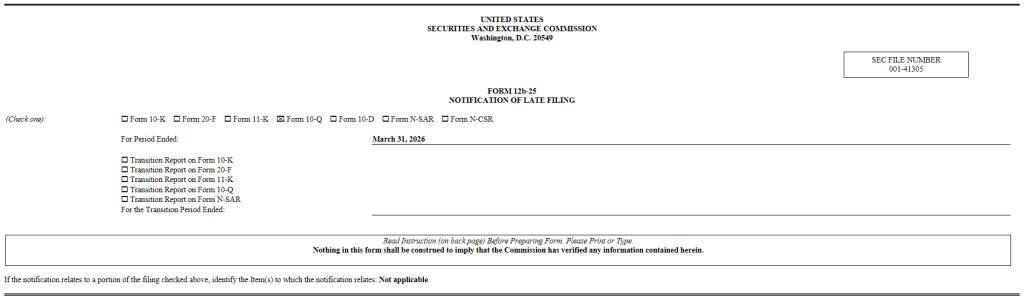
Source: SEC

States Are Closing The Door

The legal pressure started before the Canadian proposal. In January, Bitcoin Depot paid close to $2 million to Maine’s Consumer Credit Protection Bureau to settle a complaint.

Massachusetts, Iowa, and other states have since filed their own actions against the company. Individual cities and towns have also moved to restrict or ban crypto kiosks, with local officials citing concerns about residents falling victim to scams.

BTCUSD currently trading at $78,103. Chart: TradingView

Shares of Bitcoin Depot, which trade on the Nasdaq under the ticker BTM, dropped more than 40% over five trading days, sliding from $5 to $2.90.

In March, the company replaced CEO Scott Buchanan, who had held the position for just three months, with Alex Holmes.

Holmes ran MoneyGram from 2016 to 2024 and is known for his background in regulatory compliance — a skill set Bitcoin Depot clearly needs right now.

Leadership Shift, Uncertain Road

The company’s SEC filing described the revenue decline as being driven by a combination of regulatory impacts and enhanced compliance controls.

Reports indicate Bitcoin Depot is trying to manage existing legal exposure while adapting to a market that looks very different than it did a year ago.

Whether the new leadership can stabilize the business remains to be seen. The machines are still running. The lawsuits are not stopping. And the regulatory walls are getting closer on both sides of the border.

Featured image from ICIJ, chart from TradingView

Criptomoedas em alta

Perguntas relacionadas

QWhat major event did the Canadian government announce in April that negatively impacted Bitcoin Depot?

AIn April, the Canadian government released its Spring Economic Update, proposing a nationwide ban on crypto ATMs to combat scammers and money launderers.

QAccording to its SEC filing, what are the main reasons cited for the decline in Bitcoin Depot's revenue?

AThe main reasons cited for the revenue decline are tightening regulations and enhanced compliance controls, which have led to customers using the machines less.

QWho is the new CEO of Bitcoin Depot as of March, and what is his relevant background?

AThe new CEO as of March is Alex Holmes, who previously ran MoneyGram from 2016 to 2024 and is known for his background in regulatory compliance.

QWhat significant financial challenges did Bitcoin Depot's CFO cite for the fourth quarter of 2025?

ACFO David Gray cited more than $20 million in legal judgments accrued in the fourth quarter of 2025, alongside a wave of lawsuits from state regulators and a sharp drop in transaction volume.

QHow did Bitcoin Depot's stock price (BTM) perform over five trading days following the news?

AShares of Bitcoin Depot (ticker BTM) dropped more than 40% over five trading days, sliding from $5 to $2.90.

Leituras Relacionadas

Will the Fed Definitely Raise Interest Rates in September? How Will Crypto and U.S. Stocks Withstand the Pressure?

The market's expectation for a September Fed rate hike surged dramatically in early August, jumping from under 50% to over 80% within a week. This shift followed a contentious July FOMC meeting, where a 9-3 vote to hold rates revealed growing dissent from hawkish members advocating for an immediate hike to combat persistent inflation. The primary catalyst for this repricing is rising oil prices, driven by renewed geopolitical tensions around the Strait of Hormuz, which threaten global supply. Energy costs directly influence inflation metrics, making the upcoming July CPI report (due August 12th) a critical data point. If it shows inflation reaccelerating, the probability of a September hike will solidify. For Bitcoin and crypto assets, this is typically bearish news. Bitcoin continues to behave as a high-beta, liquidity-sensitive risk asset. A rate hike raises the opportunity cost of holding non-yielding assets and could drive capital toward money markets, pressuring crypto prices in the short term. However, historical patterns suggest that if a hike is perceived as the end of a tightening cycle rather than the start, any negative price impact may be brief. U.S. stocks, particularly crypto-linked equities like Coinbase and growth-oriented tech stocks, are also vulnerable. Higher rates increase discount rates in valuation models, putting pressure on high-multiple companies. This coincides with a pivotal tech earnings season where investor focus has shifted from massive AI capital expenditure to tangible revenue and cash flow generation. Companies with negative cash flow and weak growth narratives could face heightened volatility if borrowing costs rise in September. In summary, a September Fed hike has evolved into a mainstream market scenario. Key factors to watch are oil prices, the July CPI report, and Fed communications, which will determine the final decision and its impact on volatile crypto and equity markets.

marsbitHá 3m

Will the Fed Definitely Raise Interest Rates in September? How Will Crypto and U.S. Stocks Withstand the Pressure?

marsbitHá 3m

A 'Overlooked' Market Event: Joint US-Japan-South Korea Intervention, Rare US Treasury Involvement, and Bessent's Quiet 'Market Rescue'?

Summary: The United States, Japan, and South Korea executed their largest coordinated foreign exchange intervention in nearly 30 years. The action targeted depreciation pressure on the Japanese yen and South Korean won. This move is seen as a significant effort by the US to stabilize the financial markets of its key allies and prevent the spillover of risks. Key details: * Japan reportedly intervened on July 30 using approximately 8.45 trillion yen (about $52.8 billion). South Korean authorities also intervened that day, selling dollars to support the won. * Notably, the US Treasury Department intervened directly in yen markets for the first time in roughly 30 years. The New York Fed, reportedly acting on behalf of the Treasury, sold euros to buy yen via Goldman Sachs and Morgan Stanley on July 31. Analysts view the use of the euro-yen pair as a way to alleviate yen pressure without adding selling pressure to the US dollar. * Prior to the action, the New York Fed conducted "rate checks" on both USD/JPY and EUR/JPY, a newer signaling tool that falls between verbal and physical intervention. The intervention is interpreted as going beyond traditional currency stabilization. Analysts, such as Michael Hartnett of Bank of America, suggest it resembles a "Price Keeping Operation" for the AI era. The core US objectives are perceived to be: 1. Preventing rapid yen depreciation from triggering a sharp rise in Japanese government bond yields. 2. Containing financial stress from spreading across Asian markets like South Korea and Japan. 3. Reducing the risk of disorderly capital flows impacting the US bond market. This coordinated action underscores the importance of Japan and South Korea as critical partners in the US semiconductor and AI supply chain. Stabilizing their financial markets is seen as vital to mitigating risks to the broader tech industry and the US market itself. The intervention coincides with market pressures, including the KOSDAQ index hitting a low since October 2022. While seen as a move to control volatility, some analysts caution it may not fundamentally reverse existing market trends.

marsbitHá 7m

A 'Overlooked' Market Event: Joint US-Japan-South Korea Intervention, Rare US Treasury Involvement, and Bessent's Quiet 'Market Rescue'?

marsbitHá 7m

Will the Federal Reserve Definitely Raise Interest Rates in September? How Will Cryptocurrencies and US Stocks Bear the Pressure?

In early August 2024, market expectations for a September Federal Reserve rate hike surged dramatically, from below 50% to over 80%, driven by renewed inflation concerns. This shift followed a contentious July FOMC meeting where a 9-3 vote to hold rates revealed a growing hawkish faction advocating for an immediate hike, citing prolonged above-target inflation. The key catalyst is escalating conflict near the Strait of Hormuz, which has pushed oil prices up approximately 20% in July, threatening to reignite inflation. The next critical data point is the July CPI report on August 12th; a hot reading could solidify hike expectations. For crypto assets, particularly Bitcoin, this represents near-term pressure. Bitcoin continues to exhibit high-beta, risk-on characteristics, making it sensitive to tightening liquidity and higher opportunity costs. However, historical precedent suggests that if a hike is perceived as the cycle's end rather than its start, the negative impact may be brief, with markets quickly pivoting to anticipate future rate cuts. U.S. stocks, especially crypto-linked equities like Coinbase and high-valuation tech stocks, face amplified volatility. Higher rates increase discount rates in valuation models, pressuring growth stocks. This coincides with a pivotal tech earnings season where investor focus has shifted from massive AI capital expenditures to demonstrable revenue and cash flow generation. Companies with negative cash flows and weak growth narratives could see severe pressure if a September hike materializes, as financing costs would rise. Key indicators to watch include oil prices, upcoming inflation data, and Fed commentary at events like the Jackson Hole symposium.

Odaily星球日报Há 7m

Will the Federal Reserve Definitely Raise Interest Rates in September? How Will Cryptocurrencies and US Stocks Bear the Pressure?

Odaily星球日报Há 7m

Trading

Spot

Artigos em Destaque

Como comprar ATM

Bem-vindo à HTX.com!Tornámos a compra de Atletico De Madrid Fan Token (ATM) simples e conveniente.Segue o nosso guia passo a passo para iniciar a tua jornada no mundo das criptos.Passo 1: cria a tua conta HTXUtiliza o teu e-mail ou número de telefone para te inscreveres numa conta gratuita na HTX.Desfruta de um processo de inscrição sem complicações e desbloqueia todas as funcionalidades.Obter a minha contaPasso 2: vai para Comprar Cripto e escolhe o teu método de pagamentoCartão de crédito/débito: usa o teu visa ou mastercard para comprar Atletico De Madrid Fan Token (ATM) instantaneamente.Saldo: usa os fundos da tua conta HTX para transacionar sem problemas.Terceiros: adicionamos métodos de pagamento populares, como Google Pay e Apple Pay, para aumentar a conveniência.P2P: transaciona diretamente com outros utilizadores na HTX.Mercado de balcão (OTC): oferecemos serviços personalizados e taxas de câmbio competitivas para os traders.Passo 3: armazena teu Atletico De Madrid Fan Token (ATM)Depois de comprar o teu Atletico De Madrid Fan Token (ATM), armazena-o na tua conta HTX.Alternativamente, podes enviá-lo para outro lugar através de transferência blockchain ou usá-lo para transacionar outras criptomoedas.Passo 4: transaciona Atletico De Madrid Fan Token (ATM)Transaciona facilmente Atletico De Madrid Fan Token (ATM) no mercado à vista da HTX.Acede simplesmente à tua conta, seleciona o teu par de trading, executa as tuas transações e monitoriza em tempo real.Oferecemos uma experiência de fácil utilização tanto para principiantes como para traders experientes.

179 Visualizações TotaisPublicado em {updateTime}Atualizado em 2025.03.21

Como comprar ATM

Discussões

Bem-vindo à Comunidade HTX. Aqui, pode manter-se informado sobre os mais recentes desenvolvimentos da plataforma e obter acesso a análises profissionais de mercado. As opiniões dos utilizadores sobre o preço de ATM (ATM) são apresentadas abaixo.

活动图片













