Compliance Guide for Utility Token Issuance

marsbitPublicado em 2025-12-17Última atualização em 2025-12-17

Resumo

"Functional Token Issuance Compliance Guide" This guide outlines the legal framework for issuing utility tokens, emphasizing that regulatory risk depends not on the token's description, but on its economic reality. A token's classification as a security is determined by market behavior and investor expectations, not technical promises, as seen in cases like Telegram's TON. Projects fall into two main categories with different compliance paths: Infrastructure projects (e.g., Bitcoin, Celestia) often use fair launches for lower risk, while Application-layer projects (e.g., DeFi, GameFi) require careful legal structuring due to higher regulatory scrutiny. Key stages and actions are detailed: * **Testnet Phase:** Separate development (DevCo) and token/ecosystem (Foundation) entities. Use equity + token warrants for fundraising, not direct token sales, to avoid triggering securities laws prematurely. * **Mainnet Launch (TGE):** This is a high-risk phase. Ensure clear disclosure of token utility, allocation, lock-ups, and conduct KYC/AML. Avoid marketing that promises profit. Public airdrops and sales are closely watched. * **DAO Stage:** Achieve true decentralization by relinquishing team control to community governance (e.g., Uniswap DAO). This "verifiable exit" is crucial for reducing securities risk. The core compliance challenge is proactively demonstrating the token is *not* a security by emphasizing its functional use, avoiding profit promises, and progressively de...

Original Author: Shao Jiadian

Introduction

In recent years, "issuing tokens" has become the most sensitive term in the Web3 world. Some have become famous overnight because of it, while others have faced investigations, refunds, or account bans. The issue isn't with "issuing" itself, but with "how to issue." While some projects list on major exchanges, build communities, and establish DAOs, others are deemed illegal securities offerings. The difference lies in whether it's done within a legal framework.

In 2025, utility tokens are no longer a gray area. Regulators are scrutinizing every TGE, every SAFT, and every "airdrop" with a magnifying glass.

This article is for every Web3 project founder: On the journey from Testnet to DAO, the legal structure is the skeleton of your project. Before issuing tokens, learn to build that skeleton.

Note: This article is based on an international legal perspective and does not target or apply to the legal environment of mainland China.

Token "Identity" Isn't Determined by Your Whitepaper

Many teams claim, "Our token is just a utility token with no profit distribution, so it should be fine, right?"

But reality is different. In the eyes of regulators, a token's "identity" depends on market behavior, not how you describe it.

A classic case is Telegram's TON project.
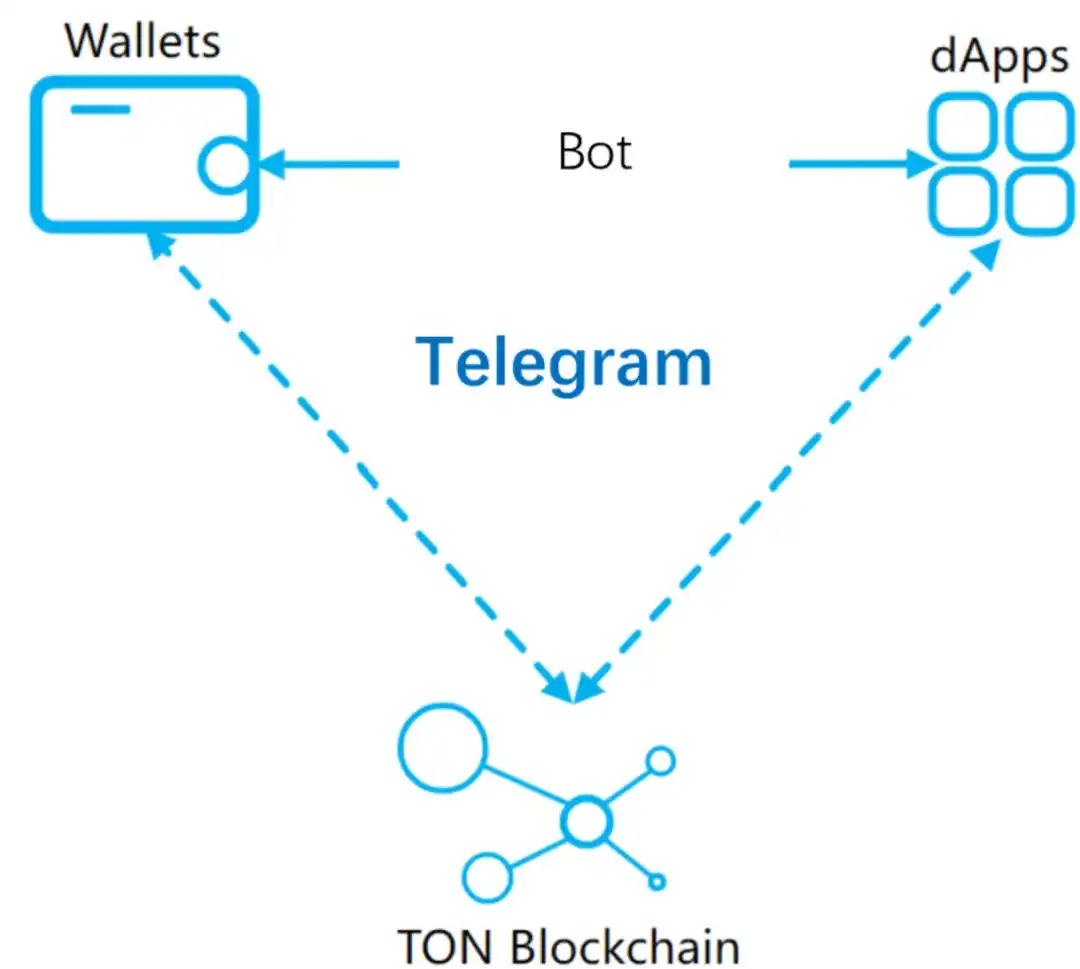
Telegram raised $1.7 billion from private investors, claiming the tokens were merely "fuel" for a future communication network;

However, the U.S. SEC deemed this financing an unregistered securities offering—because investors' intent was clearly "future appreciation," not "immediate use."

The result: Telegram refunded investors and paid fines, and the TON network was forced to operate independently from Telegram.

Lesson: Regulators focus on "investment expectations," not "technical vision." As long as you use investors' money to build an ecosystem, it carries securities attributes.

So, don't幻想 use the "utility" label to eliminate risks. Token nature evolves dynamically—early stages may constitute investment contracts, and only after mainnet launch can they become genuine usage credentials.

First, Identify Your Project Type

What determines your compliance path is not the token's name or total supply, but the project type.

  • Infrastructure (Infra):

Such as Layer1, Layer2, public chains, ZK, storage protocols.

Typically adopt "Fair Launch," with no pre-mining or SAFTs; tokens are generated by node consensus.

Examples include Bitcoin, Celestia, EigenLayer.

Advantages: Naturally decentralized, low regulatory risk; Disadvantages: Difficult to fundraise, long development cycles.

  • Application Layer Projects (App Layer):

Such as DeFi, GameFi, SocialFi.

The team pre-mints tokens (TGE) and manages the ecosystem treasury. Typical examples include Uniswap, Axie Infinity, Friend.tech.

Clear business models but high compliance risks: Sales, airdrops, and circulation all require regulatory disclosure and KYC handling.

Conclusion: Infrastructure survives on consensus; application projects rely on structure for survival. Without proper structure, all "Tokenomics" are empty talk.

Testnet Phase: Don't Rush to Issue Tokens; Build the "Legal Skeleton" First

Many teams start seeking investors, signing SAFTs, and pre-mining tokens during the Testnet phase.

But the most common mistake at this stage is:

Taking investors' money while still claiming "this is just a utility token."

The U.S. Filecoin is a cautionary tale. It raised about $200 million via SAFT before mainnet launch. Although it received an SEC exemption, delays in launch and temporary unusability led investors to question its "securities attributes," resulting in massive compliance costs to rectify.

The correct approach:

  • Separate two entities:
  • DevCo (Development Company) handles technical development and intellectual property;
  • Foundation / TokenCo manages ecosystem building and future governance.
  • Fundraising method: Use equity + Token Warrant structures instead of direct token sales.

Investors obtain rights to future tokens, not immediate token assets.

This method was first adopted by projects like Solana and Avalanche, allowing early investors to participate in ecosystem building without directly triggering securities sales.

Principle: The legal structure in the early stages is like the genesis block. One logical error, and compliance costs may multiply tenfold.

Mainnet Issuance (TGE): The Moment Most Likely to Attract Regulatory Attention

Once tokens can be traded and have a price, they enter regulatory radar—especially during public distributions like airdrops, LBPs (Liquidity Bootstrapping Pools), or Launchpad events.

  • Public Chain Projects:

Such as Celestia, Aptos, Sui, etc., typically generate tokens automatically via validator networks at TGE.

The team doesn't directly participate in sales; the distribution is decentralized, posing the lowest regulatory risk.

  • Application Layer Projects:

Such as Arbitrum and Optimism airdrops, or Blur and Friend.tech community distributions,

have drawn attention from regulators in some jurisdictions regarding whether "distribution and voting incentives constitute securities sales."

The safety line at TGE lies in disclosure and usability:

1. Clearly define token use cases and functionality;

2. Disclose token allocation ratios, lock-up periods, and vesting mechanisms;

3. Implement KYC/AML for investors and users;

4. Avoid "expected returns" promotions.

For example, during TGE, Arbitrum Foundation explicitly stated: its airdrop was solely for governance purposes, not representing investment or profit rights; and it gradually reduced foundation control in community governance—key to "de-securitizing" the token.
DAO Phase: Learn to "Let Go" and Truly Decentralize the Project

Many projects end after "issuing tokens," but the real challenge is—how to relinquish control and let tokens become public goods.

Take Uniswap DAO as an example:

  • Early development and governance were led by Uniswap Labs;
  • Later, Uniswap Foundation managed the treasury and funded ecosystem projects;
  • The community votes with UNI to decide protocol upgrades and parameter adjustments.

This structure makes it harder for regulators to identify a "centralized issuer" and boosts community trust.

In contrast, projects that fail to handle the DAO transition well, such as some GameFi or NFT ecosystems, where teams still control most tokens and voting rights, are seen as "pseudo-decentralized" and retain securities risks.

Decentralization isn't about "neglect," but "verifiable exit." A safe DAO architecture balances code, foundation, and community.

What Regulators Look For: Can You Prove "This Is Not a Security"?

Regulators aren't afraid of token issuance; they're concerned when you say "it's not a security" but act like it is.

In 2023, the SEC's lawsuits against Coinbase, Kraken, and Binance.US listed dozens of "utility tokens," asserting that during sales and marketing, they exhibited "investment contract" characteristics. This means that if a project promotes "expected returns" during token sales, even if the token has utility, it may be deemed a security.

Thus, compliance key is dynamic response:

  • Testnet → Focus on technology and development compliance;
  • TGE → Emphasize use cases and functional attributes;
  • DAO → Reduce team control, strengthen governance mechanisms.

Risks vary at each stage; every upgrade requires re-evaluating token positioning. Compliance isn't a stamp but continuous iteration.

Conclusion: Projects That Endure Cycles Rely on "Stability," Not "Speed"

Many projects fail not due to poor technology but flawed structure. While others talk about "gains," "airdrops," and "exchange listings," truly smart founders are already building legal frameworks, writing compliance logic, and planning DAO transitions.

Utility token issuance isn't about bypassing regulation but using law to prove you don't need it. When code takes over rules, law becomes your firewall.

Perguntas relacionadas

QWhat is the legal identity of a utility token determined by, according to the article?

AThe legal identity of a utility token is determined by market behavior and investment expectations, not by how the project describes it in its whitepaper. Regulators focus on whether the token sale constitutes an investment contract, based on the expectation of profit, rather than its technical vision or intended use.

QWhat are the two main types of projects mentioned, and how do their compliance paths differ?

AThe two main types are Infrastructure projects (e.g., Layer1, Layer2, public chains) and Application Layer projects (e.g., DeFi, GameFi). Infrastructure projects often use a 'Fair Launch' with no pre-mining or SAFTs, leading to lower regulatory risk but greater difficulty in fundraising. Application Layer projects typically pre-mint tokens, have clearer business models, but face higher compliance risks requiring careful handling of sales, airdrops, and regulatory disclosures.

QWhat is the recommended legal structure during the Testnet phase to avoid regulatory issues?

AThe recommended structure is to separate the project into two entities: a DevCo for technical development and IP, and a Foundation/TokenCo for ecosystem building and future governance. Funding should be raised using 'equity + Token Warrant' structures instead of direct token sales, granting investors rights to future tokens rather than immediate assets to avoid triggering securities regulations prematurely.

QWhat are key steps to enhance compliance during a Token Generation Event (TGE)?

AKey steps during TGE include: 1) Clearly defining the token's use cases and functionality, 2) Disclosing token allocation, lock-up periods, and release mechanisms, 3) Implementing KYC/AML procedures for investors and users, and 4) Avoiding promotional language that suggests an expectation of profit or investment return.

QHow does the article define the transition to a DAO for achieving true decentralization and reducing regulatory risk?

AThe transition to a DAO involves the project team gradually relinquishing control to the community. This is achieved by establishing a verifiable exit strategy where code, a foundation, and the community form a balanced governance structure. This reduces the perception of a centralised issuer and demonstrates that the token is a public good rather than a security, as seen in successful models like Uniswap DAO.

Leituras Relacionadas

Single-Day Plunge of 30%, Arthur Hayes Suddenly Liquidates: Why Did ZEC Get Exploded by Security Issues?

On June 5th, Zcash founder Zooko Wilcox disclosed a critical soundness vulnerability in the project's latest Orchard privacy pool. This flaw, found in the elliptic curve multiplication constraints, could allow an attacker to create unlimited counterfeit ZEC within the shielded pool, with transactions appearing valid. The vulnerability was discovered in late May by security researcher Taylor Hornby, who utilized Anthropic's new Opus 4.8 AI model for a targeted audit. The Zcash ecosystem had already performed an emergency network upgrade to patch the issue. However, the detailed disclosure triggered severe market panic, causing ZEC's price to plummet over 30% in a single day. Notably, prominent investor Arthur Hayes announced he had sold his entire ZEC position following the news. The incident starkly challenges the "technological trust" narrative central to privacy coins. Despite years of top-tier cryptographic audits, the bug persisted until uncovered with advanced AI-assisted research. This highlights the growing gap between theoretical perfection and practical implementation in privacy technology. The event serves as a industry-wide warning: in an AI-driven security landscape, the assumption that "undiscovered equals safe" is obsolete. It underscores the urgent need for continuous, proactive security practices combining AI audits, formal verification, and rapid response mechanisms.

foresightnews_apiHá 46m

Single-Day Plunge of 30%, Arthur Hayes Suddenly Liquidates: Why Did ZEC Get Exploded by Security Issues?

foresightnews_apiHá 46m

Breaking the Curse of DeFi Cascading Liquidations, Vitalik Proposes a New Solution

**Vitalik Buterin Proposes New DeFi Design to Eliminate Forced Liquidations** Ethereum co-founder Vitalik Buterin has published a proposal for a new decentralized finance (DeFi) architecture aimed at removing the automatic liquidation mechanisms prevalent in current lending protocols. The core idea involves creating synthetic assets using options as building blocks, fundamentally avoiding the抵押借贷结构 that triggers forced sell-offs. The proposal responds to a recurring flaw in DeFi: during sharp market downturns, mass自动清算 of under-collateralized positions can exacerbate price declines, creating systemic selling pressure and market instability, as evidenced by recent crypto market volatility. Buterin's model would split an asset like 1 ETH into two option-like derivatives, P and N, pegged to a price index with a set strike price and expiration. At expiry, an oracle determines the settlement price to allocate the underlying ETH between P and N holders. This design eliminates the "cliff" of instant liquidation. Instead, a position's value would gradually drift from its target peg if not actively rebalanced by the user, transferring the rebalancing decision from the protocol to the user or automated tools. A key advantage is the reduced reliance on high-frequency, real-time oracle price feeds, which are vulnerable to manipulation and errors in current systems. The delayed settlement in the options model allows for more robust, fault-tolerant oracle designs. However, significant challenges remain for practical adoption. High transaction costs (slippage) from frequent rebalancing on automated market makers (AMMs) could erode user funds. The model may not be suitable for stablecoins requiring a strict 1:1 dollar peg, as it inherently allows for value drift. Success would depend on developing new liquidity provisioning models and deep markets for these synthetic assets. The proposal represents a fundamental rethinking of DeFi risk management, challenging the industry to explore alternatives to被动集中平仓 rather than merely optimizing existing liquidation processes. It remains a theoretical framework awaiting implementation and testing by development teams.

foresightnews_apiHá 49m

Breaking the Curse of DeFi Cascading Liquidations, Vitalik Proposes a New Solution

foresightnews_apiHá 49m

Bitcoin's Decline Marks the Transformation of Crypto

Title: The Decline of Bitcoin Marks the Transformation of Crypto While Bitcoin's price recently fell below $70,000, down approximately 45% from its peak, the broader crypto industry is not following it into decline. Instead, crypto is maturing and evolving beyond its dependence on Bitcoin's price movements. Two of Bitcoin's core functions are being usurped. First, AI has captured its role as the primary speculative asset. AI, with its tangible revenue, explosive demand, and massive capital inflows ($700-830 billion in 2024), is siphoning off the speculative "hot money" that once drove Bitcoin. It also contributes to a sustained high-interest-rate environment, further tightening liquidity for assets like Bitcoin. Second, dollar-pegged stablecoins like USDC and USDT have replaced Bitcoin as the crypto market's foundational currency and primary on/off-ramp. Most trading pairs and on-chain transactions are now settled in stablecoins, severing the historical link where all capital inflows had to pass through Bitcoin first. This decoupling allows projects to thrive based on their own fundamentals rather than Bitcoin's price. Examples include Hyperliquid, an on-chain derivatives exchange with annual revenues of $8-13 billion, and prediction market platform Polymarket, valued at $200 billion with $3.65 billion in annual fees. These projects are evaluated on traditional metrics like revenue and user growth. New opportunities are emerging, particularly around privacy. Privacy coins like Zcash (ZEC) are seeing surging demand, while infrastructure like NEAR enables private, cross-chain asset transfers without requiring users to hold a specific token—privacy becomes a universal service layer. In this new paradigm, stablecoins are the universal cash, various project tokens represent equity, and privacy-enabled cross-chain coordination layers (like NEAR) act as the critical infrastructure connecting a fragmented, multi-chain ecosystem. Bitcoin is now just one asset among many. The era where the entire crypto market moved in lockstep with Bitcoin is over. The industry's health should now be judged by project fundamentals—real revenue, active users, and tokenomics that capture value—and the development of the underlying infrastructure enabling a mature, dollar-denominated crypto economy.

foresightnews_apiHá 52m

Bitcoin's Decline Marks the Transformation of Crypto

foresightnews_apiHá 52m

Lightspark CEO: In Ten Years, Bitcoin Will Be as Invisible as TCP/IP, Yet Power Trillions in Daily Transactions

A decade from now, Bitcoin will function like TCP/IP — invisible yet foundational, supporting trillions in daily transactions globally, according to Lightspark CEO David Marcus. In this future, a coffee shop in Lagos receives instant payment, a manufacturer in São Paulo settles an invoice with a supplier in Ho Chi Minh City, and a freelancer in Bangalore gets paid weekly from an Austin startup — all via Bitcoin's settlement layer, with none of the parties consciously interacting with it. This vision parallels the adoption of open protocols: first driven by necessity where existing systems fail, then scaling rapidly as tools mature and economic benefits become clear. The structural shift begins with wallets. Modern non-custodial wallets, like Spark, allow users to hold dollars, local currency, and Bitcoin in a single address, seamlessly switching between them. This eliminates friction and revolutionizes global custody, moving significant deposits to user-controlled keys not by ideology, but by superior utility. As a result, Bitcoin becomes the default savings layer for billions, as its fixed supply and appreciating value make it a rational choice for savers holding it alongside stablecoins in their everyday wallets. Businesses follow a similar path, from small companies in emerging markets to multinational corporations, holding Bitcoin alongside operational stablecoins. The latest trend is direct Bitcoin transactions for commerce. When both parties hold Bitcoin, transacting in it becomes the simplest option — no conversions, no intermediary currency. This starts in niche areas like high-value B2B settlements but grows as infrastructure makes sending Bitcoin as easy as stablecoins. An accelerating force is AI agents. By 2036, AI agents conducting commerce on behalf of individuals and firms will increasingly choose Bitcoin for settlement. Optimizing for speed, finality, and minimal counterparty risk across jurisdictions, they find Bitcoin's global, neutral, and programmable network ideal for netting and settling obligations. Thus, Bitcoin is becoming the native currency for machine commerce, just as it has become a native savings asset for humans. The global monetary system is being rebuilt from the protocol layer: open infrastructure, default self-custody, Bitcoin settling everything underneath, with stablecoins as the interface. Most users won't think about Bitcoin when they transact — and they won't need to.

foresightnews_apiHá 56m

Lightspark CEO: In Ten Years, Bitcoin Will Be as Invisible as TCP/IP, Yet Power Trillions in Daily Transactions

foresightnews_apiHá 56m

Trading

Spot
Futuros
活动图片