Community is Dead, Long Live Community

marsbitPublicado em 2026-05-15Última atualização em 2026-05-15

Resumo

The author, James Richard Fry, laments the degradation of the Web3/crypto community, contrasting its past vitality with its current state. He fondly recalls early days of genuine connection and shared belief on platforms like Clubhouse and Discord, where communities formed around common interests like DeFi and NFTs, fueled by deep conviction and a spirit of building together. He argues that today, the term "community" has been co-opted by "extractors." Most modern Discord communities, he asserts, are filled with members driven solely by the prospect of financial gain from airdrops, leading to artificial engagement that vanishes post-Token Generation Event (TGE), often replaced by hostility. This extractive behavior, he states, has poisoned the ecosystem, creating cheap imitations of the early, belief-driven communities. Using his project, Across Protocol, as an example, he notes its own Discord has succumbed to this dynamic, pushing away genuine supporters. Consequently, he announces the decision to transition the Across Discord to read-only mode as a first step toward shutting it down completely. He concludes with a bittersweet farewell to the platform that once hosted beautiful moments, declaring "The community is dead. Long live the community."

Author:jamesrichardfry, Head of Marketing at Across Protocol

Compiled by: Jiahuan, ChainCatcher

I've been struggling with how to start writing this. Part of me wants to paint everything in a sunny light. Dress it up with marketing talk, make it sound grand, and move on.

But that wouldn't be entirely honest. If you know me, you know I wear my heart on my sleeve and can't hold things in. So, I'll just say it straight.

Community is dead. Of course, it wasn't always like this. That goes without saying, but I'm going to say it out loud anyway.

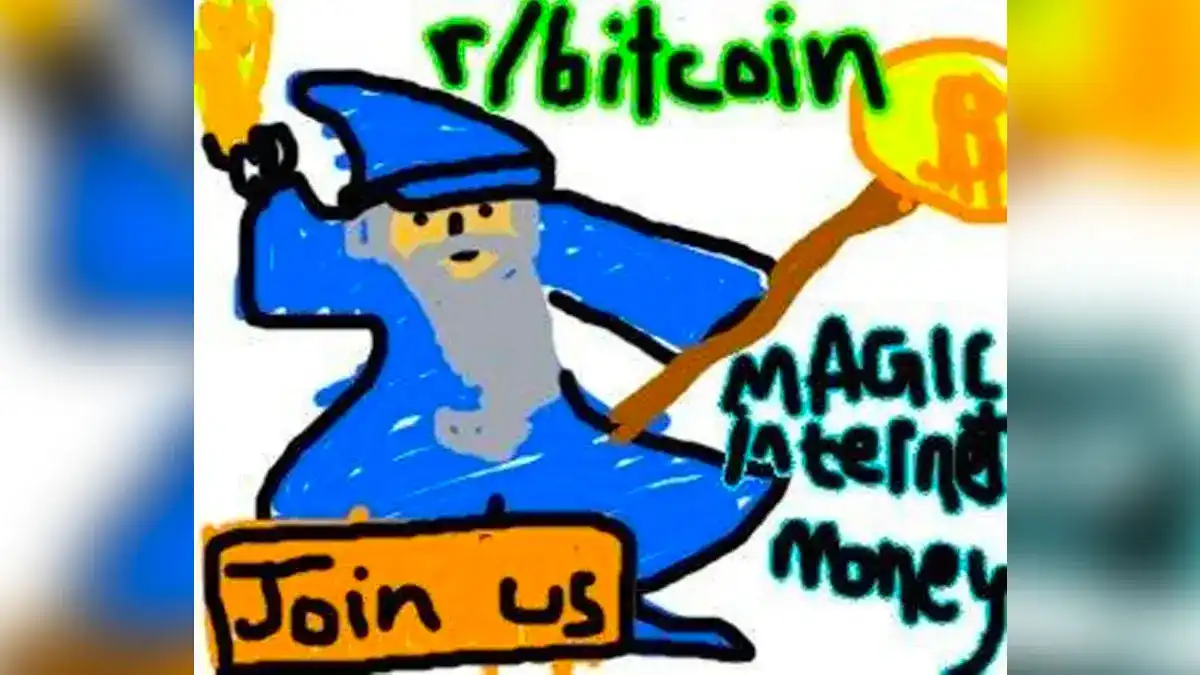
I still miss the good old days on Clubhouse and Discord channels. When we spent hours 'vibing' with strangers online, talking about magic internet money, the latest NFT drop, the best staking opportunities, commiserating over our fails and losses, dreaming together about the next great project, and actually 'building'.
To this day, many of those online strangers are still great friends. Some even became close friends in real life. When community is good, it's truly good. I miss those days.

Zooming out a bit, what exactly is community? In our last all-hands meeting, I rambled on about this for so long I could almost hear my colleagues' eyes rolling.

To share a bit of that with you, here's what I think community is:

Community is a group of people gathered around a common interest. We all have communities in many aspects of our daily lives.

From the school you attended, the sport you played, the religion you follow, the gym you go to, even the grocery store you shop at, communities exist.

Some communities are more shallow. The group of old men I see at the gym Monday to Friday is a community, but it's obviously very different from the friend circle we deliberately spend time with.

Web3 or crypto communities are no different.

We all gather around shared interests. DeFi Summer. NFT Mania. NFT Winter. Every kind of cross-chain interoperability, every ZK proof.

Whatever flavor you're into, there's a group of people going down that rabbit hole with you.

Some are here for financial speculation. Some are here from a deep conviction and commitment to the early cypherpunk movement. Some crypto communities are more superficial or performative.

Others are deep. I mean, really deep. Like religious groups, cultish followings, conviction that sits deep in your gut, put-your-money-where-your-mouth-is deep.

We wear the same 'uniform' (PFP), speak our own language (WAGMI), look absolutely insane to outsiders, and we don't care at all because we believe in what we've gathered around.

Early crypto community was inseparable from conviction.

Not just belief, but deep conviction burning in your gut that gives you the courage to get on stage and talk for hours in front of hundreds of listeners about why you believe in the founder, the project, the roadmap, and why you are the diamond-handed hodler of that project.

Conviction. That's what drove parabolic growth in the early days. Without community, crypto wouldn't be what it is today.

By the way, Across is no exception. Across' early community was a golden era. Vibes were high. Deep conviction existed (yes, I used that word a lot). Excitement and energy, people caring about the project for its innovation, not token price.

We hired many people from the community who still work with us today. There are also those from the early days who are still die-hard community members, sticking with us through thick and thin.

When community is good, it's truly good.

But then, it changed.

Fast forward to today. I'm going to make some broad generalizations now. Please know, I don't mean 'all' community members, 'every' community group, and I'm not painting with a broad brush. But if I'm continuing my blunt style, I do mean most. The overwhelming majority.

The word 'community' has been ruined by the extractors of crypto. In many ways, if you want to know why 'the love of money is the root of all evil', look no further than the endless Discord 'communities'.

Thousands of unread messages per day, staggering daily active users, endless social support, until the Token Generation Event (TGE) arrives. We all know how the script goes.

The pre-TGE vibes mimic the sentiment of early crypto communities. Deep conviction. Fire in the gut. Courage to get on stage. Project profile pictures and tags in bios. Ride or die, diamond-handed, conviction-filled hodlers.

Then, everyone changes.

One night you go to bed, barely able to keep up with Discord notifications.

You wake up the next morning, and it's a ghost town.

Or worse.

You find your loyal 'community' coming at you with pitchforks and torches.

Because of the airdrop.

You see, 'community' is no longer community.

It has devolved into endless AI-generated spam for points, for hope of an airdrop, to immediately dump, then complain about token price, and call the project a scam or rug (to be fair, often also true).

I don't need to finish that long-winded sentence, you know what I mean, right?

'Community' is not community. You all know it, you feel it. The timeline feels off. Discord servers feel off. Podcasts feel off. Twitter Spaces feel off.

It's all wrong, like 'Kangshuaifu' will never be Master Kang. Everyone reading this today knows it in their heart, even if you've never articulated it this clearly before.

Today's 'communities' are just cheap imitations of the early communities that built crypto into what it is today. The common interest of these 'community' members boils down to one thing. Extraction. Quick. Decisive. Extraction. That's the poison that killed what crypto could have and should have been.

Most (again, not all) Discord 'communities' today are made up of a mixed bag of remnants.

Some are truly loyal followers and believers. (To those who still support Across, we wouldn't be here without you. Thank you. You know where to find us, and there will always be a place for you.)

Some, often the majority, are here to extract from the project. I won't belabor the point.

And finally, some only appear to complain. Because in every bear market, these specific types of 'community' members come out to kick you while you're down, as if the bear market has zero impact on each team member, as if we caused it.

Unfortunately, the Across Discord has recently fallen into that 'majority' category. Our 'community' has become unrecognizable.

Those who recognize our incredible achievements, the progress Across has pioneered for the entire industry, and still support us, are also tired of being part of this extractive 'community' and have left Discord.

The few who remain would happily follow us to Twitter and other channels. What's left are the so-called 'communities' I defined above. Yes, I say this with fire in my gut and deep conviction.

Therefore, today, the Across Discord will go read-only.

This is the first step in our plan to shut down the server entirely.

To the community of believers who remain, let's keep building. We have so much more work to do.

To Discord, thank you for hosting some of the good old days of crypto. I'll always cherish it.

Community is dead.

Long live community.

Perguntas relacionadas

QWhat is the main argument or thesis of the article titled 'The Community is Dead, Long Live the Community'?

AThe article argues that the true spirit of early crypto communities—built on deep belief, shared passion, and genuine collaboration—has been largely destroyed and replaced by a culture of extraction, where most participants are only interested in quick profits from airdrops and token launches, leading to empty, toxic, and transactional online spaces.

QAccording to the author, what characterized the early, authentic crypto communities?

AAccording to the author, early authentic crypto communities were characterized by deep belief (conviction), genuine passion for the technology (like DeFi, NFTs), meaningful connections that turned into real friendships, a sense of shared purpose in 'building' the next big thing, and a culture that wasn't primarily focused on token price.

QWhat specific action is the author announcing regarding the Across Protocol Discord server, and why?

AThe author announces that the Across Protocol Discord server will be set to 'read-only' mode as the first step towards its planned full shutdown. The reason is that the server has degraded into a space dominated by extractive individuals seeking airdrops and complaining, which has driven away the genuine believers and no longer represents a true community.

QWhat does the author mean by stating that today's 'communities' are often just 'extractors'?

AThe author means that the majority of participants in current crypto project 'communities' are not there out of belief or to contribute. Their sole common interest is to 'extract' value—primarily by farming points for a potential airdrop, selling the token immediately upon launch, and then often turning hostile by labeling the project a scam if the price falls.

QHow does the title 'The Community is Dead, Long Live the Community' reflect the article's dual perspective?

AThe title reflects the dual perspective by mourning the death of the original, idealistic form of crypto community ('The Community is Dead') while simultaneously expressing hope and a call to continue for the small remnant of genuine believers who still embody that original spirit ('Long Live the Community').

Leituras Relacionadas

Breaking: OpenAI Undergoes Major Reorganization, President Brockman Assumes Command

OpenAI has announced a major internal reorganization just months before its anticipated IPO. The company is merging its three flagship product lines—ChatGPT, Codex, and the API platform—into a single, unified product organization. The most significant leadership change involves co-founder and President Greg Brockman moving from a background technical role to take full, permanent control over all product strategy. This follows the indefinite medical leave of AGI Deployment CEO Fidji Simo. Additionally, ChatGPT's longtime lead, Nick Turley, has been reassigned to enterprise products, with former Instagram executive Ashley Alexander taking over consumer offerings. The consolidation, internally framed as a strategic move towards an "Agentic Future," aims to break down internal silos and create a cohesive "Super App." This planned desktop application would integrate ChatGPT's conversational abilities, Codex's coding power, and a rumored internal web browser named "Atlas" to autonomously perform complex user tasks. The reorganization occurs amid significant internal and external pressures. OpenAI has recently seen a wave of high-profile departures, including Sora co-lead Bill Peebles and other senior technical leaders, leading to concerns about a thinning executive bench. Externally, rival Anthropic recently secured funding at a staggering $900 billion valuation, surpassing OpenAI's own. Google's upcoming I/O developer conference also poses a competitive threat. Analysts suggest the dramatic restructure is a pre-IPO move to present a clearer, more focused narrative to Wall Street—streamlining operations and demonstrating decisive leadership under Brockman to counter internal turbulence and intense market competition.

marsbitHá 52m

Breaking: OpenAI Undergoes Major Reorganization, President Brockman Assumes Command

marsbitHá 52m

Two Survival Structures of Market Makers and Arbitrageurs

Market makers and arbitrageurs represent two distinct survival structures in high-frequency trading. Market makers primarily use limit orders (makers) to profit from the bid-ask spread, enjoying high capital efficiency (nominally 100%) but bearing inventory risk. This "inventory risk" arises from passive, fragmented, and discontinuous order fills in the limit order book (LOB). This risk, while a potential cost, can also contribute to excess profit if managed within control boundaries, allowing for mean reversion. Market makers essentially sell "time" (uncertainty over execution timing) to the market for price control and low fees. In contrast, cross-exchange arbitrageurs typically use market orders (takers) to exploit price differences or funding rates, resulting in lower nominal capital efficiency (requiring capital on both exchanges) and higher transaction costs. Their risk exposure stems from asymmetries in exchange rules (e.g., minimum order sizes), execution latency, and infrastructure risks (e.g., ADL, oracle drift). These exposures are active, exogenous gaps that primarily erode profits rather than contribute to them. Arbitrageurs essentially sell "space" (capital sunk across venues) for localized, immediate certainty. Both strategies engage in a trade-off between execution friction and residual risk. Optimal systems allow for temporary, controlled risk exposure rather than enforcing zero exposure at all costs. Their evolution converges towards hybrid models: arbitrageurs may use maker orders to reduce costs, while market makers may use taker orders or hedges for risk management. Ultimately, both use different forms of risk exposure—market makers exposing inventory, arbitrageurs immobilizing capital—to extract marginal, hard-won certainty from the market.

链捕手Há 52m

Two Survival Structures of Market Makers and Arbitrageurs

链捕手Há 52m

Who Will Define the Rules of the AI Era? Anthropic Discusses the 2028 US-China AI Landscape

This article, based on Anthropic's analysis, outlines the intensifying systemic competition between the U.S./allies and China for AI leadership by 2028. It argues that access to advanced computing power ("compute") is the critical bottleneck, where the U.S. currently holds a significant advantage through chip export controls and allied innovation. However, China's AI labs remain competitive by exploiting policy loopholes—via chip smuggling, overseas data center access, and "model distillation" attacks to copy U.S. model capabilities—keeping them close to the frontier. The piece presents two contrasting scenarios for 2028. In the first, decisive U.S. action to tighten compute controls and curb distillation locks in a 12-24 month AI capability lead, cementing democratic influence over global AI norms, security, and economic infrastructure. In the second, policy inaction allows China to achieve near-parity through continued access to U.S. technology, enabling Beijing to promote its AI stack globally and integrate advanced AI into its military and governance systems, altering the strategic balance. Anthropic contends that maintaining a decisive U.S. lead is essential for shaping safe AI development and governance. The core recommendation is for U.S. policymakers to urgently close compute and model access loopholes while promoting global adoption of the U.S. AI technology stack to secure a lasting strategic advantage.

marsbitHá 2h

Who Will Define the Rules of the AI Era? Anthropic Discusses the 2028 US-China AI Landscape

marsbitHá 2h

Trading

Spot
Futuros
活动图片