Chain Abstraction Drives Stablecoin Efficiency Upgrade: River Secures $8 Million Strategic Investment from TRON

marsbitPublicado em 2026-01-22Última atualização em 2026-01-22

Resumo

TRON, one of the most active networks for stablecoin usage, has made a strategic $8 million investment in River, a chain abstraction stablecoin protocol. This funding will support River’s deployment of cross-chain stablecoin infrastructure, focusing on multi-chain asset minting, yield products, and deeper integration with TRON's DeFi ecosystem. TRON currently hosts over $83.4 billion in USDT liquidity, with TRC20-USDT issuance exceeding 83.4 billion tokens and over 3.09 billion cumulative transfers. River’s satUSD will serve as a cross-ecosystem liquidity gateway, allowing users to deposit assets like wBTC and ETH from Ethereum, BNB Chain, and Arbitrum to mint satUSD on TRON. Users can also mint satUSD 1:1 using USDT, USDD, or USD1. The integration includes liquidity provisioning on SUN.io, future lending markets on JustLend DAO, and the launch of Smart Vaults and Prime Vaults for user and institutional yield strategies. TRX will also be supported as collateral for minting satUSD, enhancing its utility. The rollout will occur in phases: initial deployment for cross-chain minting and staking, followed by vault products and deeper DeFi integrations, aiming to strengthen TRON’s position as a global stablecoin hub and improve cross-chain capital efficiency.

As stablecoins become the core vehicle for global on-chain settlement and value circulation today, public chain competition is shifting from "single-chain scale" to "cross-ecosystem capital efficiency." As one of the networks with the most active usage of mainstream stablecoins globally, TRON is continuously expanding the connectivity of its stablecoin financial network through more open and efficient infrastructure collaboration.

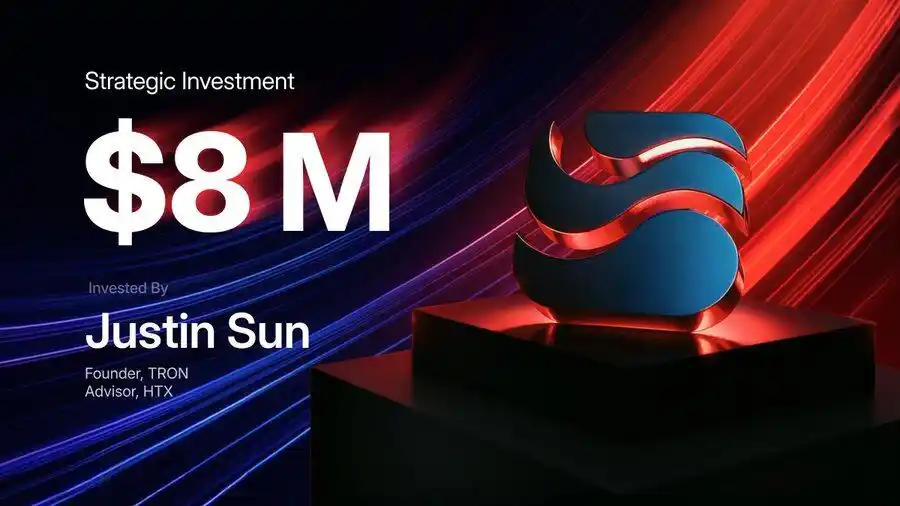
Recently, the chain abstraction stablecoin protocol River announced that it has secured an $8 million strategic investment from TRON. This round of funding will be used to support River's deployment of chain abstraction stablecoin infrastructure, focusing on cross-ecosystem asset minting, stablecoin yield product development, and accelerating deep integration with DeFi protocols on TRON. This will further enhance TRON's stablecoin liquidity capacity and cross-chain capital introduction efficiency. This strategic financing is also seen as a significant milestone in advancing ecosystem synergy between River and TRON.

TRON Hosts Over $83.4 Billion in USDT Liquidity, Stablecoin Network Effects Continue to Strengthen

As a core component of the stablecoin ecosystem, USDT has long dominated on-chain payment, trading, and capital turnover scenarios. According to the latest Tether transparency report, the TRON ecosystem currently hosts over $83.4 billion in USDT liquidity, making it one of the largest and most active stablecoin networks globally.

This scale advantage is further validated by on-chain data. TRONSCAN data shows that the issuance of TRC20-USDT has exceeded 83.4 billion tokens, reaching a historical high. Since the beginning of this year alone, the TRON network has cumulatively issued an additional 2 billion USDT tokens, indicating that stablecoin demand continues to grow driven by multi-scenario applications. Meanwhile, the number of TRC20-USDT holding accounts has reached 70.69 million, with cumulative transfer transactions exceeding 3.09 billion. From these on-chain metrics, it is evident that TRC20-USDT is evolving from a cryptocurrency trading medium into a value circulation tool for a broader user base, increasingly integrating into cross-border payments, daily transfers, and on-chain financial application scenarios.

On this liquidity foundation, TRON has formed a stablecoin market with scale effects, providing a gateway for more external ecosystem assets and users to enter the mainstream on-chain financial network. River's decision to accelerate integration with TRON at this time is precisely to seize the infrastructure window during a period of significant growth in stablecoin and cross-chain financial demand.

satUSD Connects Cross-Ecosystem Assets and Yield Scenarios, Building TRON's Cross-Chain Yield Network

Addressing the issues of capital fragmentation and yield isolation in the multi-chain era, TRON's strategy is to use its super liquidity in stablecoins as a foundation, continuously lowering the barriers to cross-ecosystem participation through infrastructure and protocol layer integration.

River uses satUSD as a cross-ecosystem liquidity entry point, providing a smoother channel for multi-chain assets to access TRON: users can deposit assets like wBTC, ETH, and BNB in EVM ecosystems such as Ethereum, BNB Chain, and Arbitrum, and receive satUSD on the TRON network, thereby directly participating in TRON's native lending, trading, and yield opportunities.

Additionally, users can use USDD, USDJ, or USDT to mint satUSD at a 1:1 equivalent value, converging cross-ecosystem stablecoin liquidity into a unified entry point, reducing friction and losses caused by repeated token swaps and migrations during cross-chain processes. For the TRON ecosystem, this design of "cross-ecosystem minting + unified entry" will more efficiently attract external assets into the ecosystem, generating on-chain usage demand and further enhancing the accessibility and turnover efficiency of stablecoin capital.

At the ecosystem cooperation level, the SUN.io platform also supports forming liquidity pools (LPs) with satUSD and various stablecoins like USDD and USDT, providing more liquidity for the TRON ecosystem. To allow users to participate in stablecoin swaps, TRON's leading lending platform, JustLend DAO, may support the satUSD market in the future, improving the utilization rate and yield承接 capacity of stablecoin capital within the ecosystem. Ultimately, this will create a "lending—swapping"联动 efficiency, enabling capital to circulate between different modules and continuously release liquidity depth.

Addressing broader yield and liquidity allocation needs, River also plans to launch Smart Vault for individual users and Prime Vault for institutions on TRON: Smart Vault will accept deposits of stablecoins like USDD, USDJ, and USDT, providing a more standardized and sustainable yield configuration method; Prime Vault aims to introduce native crypto assets like BTC and ETH into the TRON ecosystem, expanding the combination strategies for stablecoins and mainstream assets, and providing larger-scale capital with accessible, retainable, and scalable yield and liquidity solutions.

Furthermore, River will support TRX as collateral for minting satUSD, further enhancing TRX's financial utility and forming a tighter capital supply and demand闭环 for the TRON ecosystem.

In terms of implementation节奏, both parties will accelerate progress following a "deploy first, then expand" path.

The first phase will focus on正式 deployment on TRON, completing the basic capabilities for cross-ecosystem asset minting of satUSD and 1:1 stablecoin minting, and providing staking yield scenarios for satUSD holders. This will ensure that cross-ecosystem capital can form stable yield承接 and user retention after entry. The second phase will expand the yield product system, including Smart Vault and Prime Vault, prioritizing the establishment of liquidity and trading foundations for satUSD on SUN.io. With the support of WinkLink oracles to ensure price accuracy and risk control, cooperation with JustLend DAO will be deepened to expand lending and yield scenarios. This will make satUSD a key asset component贯穿 trading, lending, and yield products, forming a stronger stablecoin capital flywheel within TRON, and providing TRX holders with more yield options and configuration space.

By continuously enhancing cross-ecosystem connectivity, TRON will further solidify its position as a key infrastructure for the global stablecoin financial network, driving the cross-chain financial network towards higher efficiency, stronger composability, and broader application落地.


Perguntas relacionadas

QWhat is the strategic investment amount that River received from TRON, and what is its primary purpose?

ARiver received an $8 million strategic investment from TRON. The funds will be used to support the deployment of River's chain-abstracted stablecoin infrastructure, focusing on cross-ecosystem asset minting, building stablecoin yield products, and accelerating deep integration with DeFi protocols on the TRON network.

QHow much USDT liquidity does the TRON network currently carry, and what on-chain metrics demonstrate its scale?

AThe TRON network carries over $83.4 billion in USDT liquidity. Key on-chain metrics from TRONSCAN show that TRC20-USDT issuance has exceeded 83.4 billion tokens, with 70.69 million holding accounts and over 3.09 billion cumulative transfer transactions.

QWhat is satUSD and how does it function as a cross-ecosystem liquidity entry point for the TRON network?

AsatUSD is a stablecoin protocol by River. It acts as a cross-ecosystem liquidity entry point by allowing users to deposit assets like wBTC, ETH, and BNB from other EVM ecosystems (e.g., Ethereum, BNB Chain, Arbitrum) and mint satUSD on the TRON network. This enables them to directly access TRON's native lending, trading, and yield opportunities.

QWhich TRON-based DeFi protocols are mentioned as partners for integrating with River's satUSD?

AThe article mentions SUN.io and JustLend DAO as key TRON-based DeFi protocols for integration. SUN.io will support satUSD in liquidity pools with other stablecoins, and JustLend DAO is expected to support a satUSD market to enhance stablecoin utilization and yield capacity within the ecosystem.

QWhat are the two types of Vaults that River plans to launch on the TRON network, and what assets do they target?

ARiver plans to launch Smart Vault and Prime Vault on TRON. The Smart Vault will accept deposits of stablecoins like USDD, USDJ, and USDT to provide standardized yield. The Prime Vault aims to introduce native crypto assets like BTC and ETH to the TRON ecosystem, offering more complex yield and liquidity strategies for larger institutional funds.

Leituras Relacionadas

You Bet on the News, the Pros Read the Rules: The True Cognitive Gap in Losing Money on Polymarket

The article explains that the key to profiting on Polymarket, a prediction market platform, lies not just predicting real-world events correctly, but in meticulously understanding the specific rules that govern how each market will be resolved. It illustrates this with examples, such as a market on Venezuela's 2026 leader, where the official rules defining "officially holds" the office overruled the intuitive answer of who was in practical control. Other examples include debates over the definition of a "token" or what constitutes an "agreement." The core argument is that a "reality vs. rules" gap creates pricing discrepancies that savvy traders ("车头" or "whales") exploit. The platform has a formal dispute resolution process managed by UMA token holders to settle ambiguous outcomes. This process involves proposal submission, a challenge window, a discussion period, and a final vote. However, the article highlights a critical flaw in this system compared to a traditional court: the lack of separation between the arbiters (UMA voters) and the interested parties (traders with financial stakes in the outcome). This conflict of interest undermines the discussion phase, leads to herd mentality, and results in opaque final decisions without explanatory rulings. Consequently, the system lacks a body of precedent, making it difficult for users to learn from past disputes. The ultimate takeaway is that success on Polymarket requires a lawyer-like scrutiny of the rules to identify and capitalize on the cognitive gap between how events appear and how they are contractually defined for settlement.

marsbitHá 23m

You Bet on the News, the Pros Read the Rules: The True Cognitive Gap in Losing Money on Polymarket

marsbitHá 23m

Will the Fed Still Cut Interest Rates? Tonight's Data Is Crucial

The core debate surrounding the Federal Reserve's potential interest rate cuts is intensifying amid geopolitical conflict and rebounding inflation. The key question is whether high energy prices will cause persistent inflation or weaken consumer demand enough to force the Fed to cut rates. Citigroup presents a bullish case for cuts, arguing that oil supply disruptions from the Strait of Hormuz are temporary and will not lead to lasting inflationary pressure. They point to receding bond yields and oil prices as evidence the market is pricing in a short-lived shock. Citi's data also shows tightening financial conditions, a stabilizing labor market, and healthy tax returns, supporting their view that the path to lower rates remains open. Conversely, Deutsche Bank offers a starkly contrasting, more hawkish outlook. They argue the Fed's current policy is already neutral and expect rates to remain unchanged indefinitely. Their view is based on stalled disinflation progress and a shift toward more hawkish rhetoric from key Fed officials like Waller, who cited risks from prolonged Middle East conflict and tariffs. Other officials, including Williams and Hammack, signaled rates would likely stay on hold for a "considerable time." The market pricing has shifted dramatically, now forecasting zero cuts in 2026. The imminent release of the March retail sales "control group" data is highlighted as a critical test. This metric, which excludes gas station sales, will reveal if high gasoline prices are eroding consumer spending in other areas. A weak reading could support the case for imminent rate cuts, while a strong one would bolster the argument for the Fed to hold steady. This data is pivotal for determining the near-term policy path.

marsbitHá 44m

Will the Fed Still Cut Interest Rates? Tonight's Data Is Crucial

marsbitHá 44m

Trading

Spot
Futuros

Artigos em Destaque

Como comprar TRX

Bem-vindo à HTX.com!Tornámos a compra de TRON (TRX) simples e conveniente.Segue o nosso guia passo a passo para iniciar a tua jornada no mundo das criptos.Passo 1: cria a tua conta HTXUtiliza o teu e-mail ou número de telefone para te inscreveres numa conta gratuita na HTX.Desfruta de um processo de inscrição sem complicações e desbloqueia todas as funcionalidades.Obter a minha contaPasso 2: vai para Comprar Cripto e escolhe o teu método de pagamentoCartão de crédito/débito: usa o teu visa ou mastercard para comprar TRON (TRX) instantaneamente.Saldo: usa os fundos da tua conta HTX para transacionar sem problemas.Terceiros: adicionamos métodos de pagamento populares, como Google Pay e Apple Pay, para aumentar a conveniência.P2P: transaciona diretamente com outros utilizadores na HTX.Mercado de balcão (OTC): oferecemos serviços personalizados e taxas de câmbio competitivas para os traders.Passo 3: armazena teu TRON (TRX)Depois de comprar o teu TRON (TRX), armazena-o na tua conta HTX.Alternativamente, podes enviá-lo para outro lugar através de transferência blockchain ou usá-lo para transacionar outras criptomoedas.Passo 4: transaciona TRON (TRX)Transaciona facilmente TRON (TRX) no mercado à vista da HTX.Acede simplesmente à tua conta, seleciona o teu par de trading, executa as tuas transações e monitoriza em tempo real.Oferecemos uma experiência de fácil utilização tanto para principiantes como para traders experientes.

1.6k Visualizações TotaisPublicado em {updateTime}Atualizado em 2025.03.21

Como comprar TRX

Discussões

Bem-vindo à Comunidade HTX. Aqui, pode manter-se informado sobre os mais recentes desenvolvimentos da plataforma e obter acesso a análises profissionais de mercado. As opiniões dos utilizadores sobre o preço de TRX (TRX) são apresentadas abaixo.

活动图片