Blood Loss of $55 Million Selling 3,588 BTC, Strategy Becomes a Literal Scumbag

Foresight NewsPublicado em 2026-07-07Última atualização em 2026-07-07

Resumo

On July 6th, Strategy (formerly MicroStrategy) disclosed in an SEC filing that it sold 3,588 Bitcoin (BTC) between June 29th and July 5th for approximately $216 million, at an average price of ~$60,200. This marked the company's largest net sale since initiating its Bitcoin strategy in 2020 and its first institutionalized reduction of its core holding. The sale resulted in a realized loss of about $54.8 million, as the selling price was below its average cost basis of ~$75,476 per BTC. The proceeds were used to pay preferred stock dividends and replenish USD reserves. This move follows a new "Digital Credit Capital Framework" approved on June 29th, authorizing the sale of up to $1.25 billion in Bitcoin. The sale consumes roughly 17% of this authorized amount in its first week. Strategy's foundational narrative, built by founder Michael Saylor, was a commitment to "never sell" Bitcoin. The recent institutionalized selling framework and these substantial sales represent a significant shift from that original promise. While the amount sold is only 0.4% of Strategy's total holdings of 843,775 BTC, the action challenges the premium at which its stock (MSTR) trades relative to its Bitcoin holdings. Investors had priced in the "never sell" narrative. The company now faces a contradiction: it sells Bitcoin at a loss to pay dividends on the preferred stock it issued to fund Bitcoin purchases. Saylor has framed selling as a tool for future strategic purchases, but each sale erodes th...


Written by: ChandlerZ, Foresight News


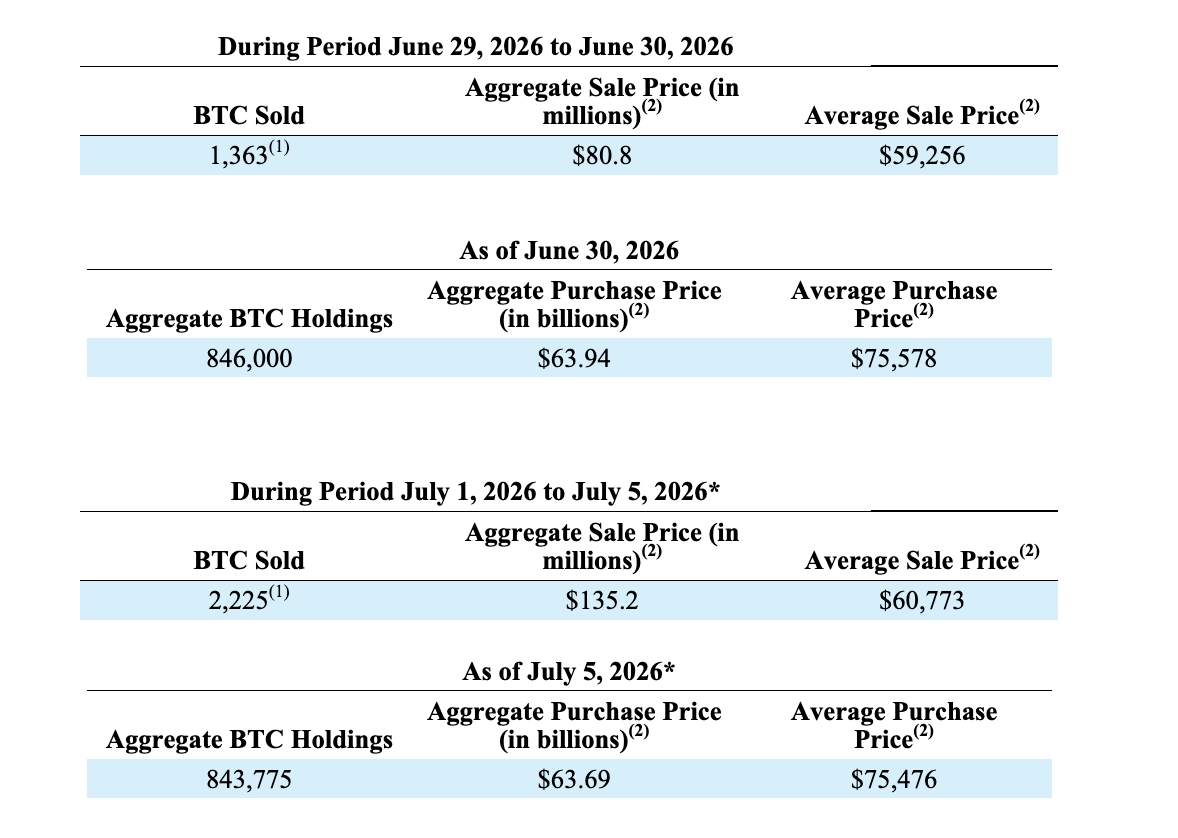
On July 6, Strategy (formerly MicroStrategy) disclosed in an SEC 8-K filing that the company sold 1,363 Bitcoin from June 29 to 30 at an average price of approximately $59,256, totaling about $80.8 million; and sold 2,225 Bitcoin from July 1 to 5 at an average price of approximately $60,773, totaling about $135.2 million. The proceeds were used to pay preferred stock dividends and supplement US dollar reserves.


This is the largest net sale by Strategy since initiating its Bitcoin strategy in 2020, and the company's first institutionalized reduction of core assets in six years. The average selling price was approximately $60,200, below the company's average cost basis of about $75,476 per Bitcoin, resulting in a loss of approximately $15,276 per coin, totaling $54.81 million.


As of July 5, Strategy cumulatively holds 843,775 Bitcoin, with a total acquisition cost of approximately $63.69 billion. It remains the publicly traded company with the largest Bitcoin holdings globally.


According to official statements, as of July 5, Strategy's US dollar reserve balance was $2.55 billion, unchanged from the previous week. In the second quarter of 2026, the company reported a digital asset loss of approximately $8.32 billion, including approximately $8.31 billion in unrealized losses and about $900,000 in realized losses. As of June 30, the book value of its Bitcoin holdings decreased to $49.67 billion, falling below the acquisition cost. Strategy will record a full valuation allowance for the related deferred tax assets.


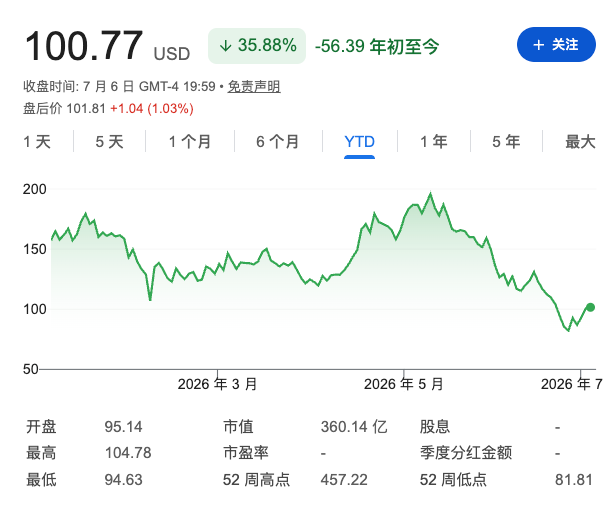
After the disclosure, Bitcoin quickly dipped below $61,500, then reversed after the US stock market opened, with buying interest pushing it back up to around $64,500. MSTR's stock price corrected by about 2% following a 21% gain the previous week but is still down over 35% year-to-date.


From 32 to 3,588, a 100-Fold Increase in Six Weeks


Selling Bitcoin was once a taboo for Strategy. In September 2020, after completing his first $425 million Bitcoin purchase, founder Michael Saylor told CoinDesk in an interview, "I didn't buy it to sell it. Ever." For the next five years, Strategy only bought and never sold, positioning itself as a permanent holder of Bitcoin using its corporate balance sheet.


December 2022 was the only exception. Strategy announced the sale of 704 Bitcoin at an average price of about $16,776, but repurchased 810 Bitcoin two days later, resulting in a net increase in holdings. The SEC filing characterized this move as tax-loss harvesting, using capital losses to offset previous capital gains for tax benefits.


On May 5, 2026, during its Q1 earnings call, Strategy first signaled a potential sale. Michael Saylor stated, "We might sell some Bitcoin to pay dividends, to get the market accustomed to it."


He later told Fortune in an interview that the purpose of those remarks was "to create panic and squeeze shorts and haters." However, an SEC filing three weeks later revealed that Strategy sold 32 Bitcoin between May 26 and 31, raising approximately $2.5 million.


Six weeks later, that number grew from 32 to 3,588.


$1.25 Billion Sales Authorization, 17% Burned in a Week


The sale of 3,588 coins was not a temporary decision. On the same day as the first Bitcoin sale (June 29), Strategy released a new capital framework titled "Digital Credit Capital Framework," formally institutionalizing Bitcoin sales into company policy.


The framework's core provisions include a US Dollar Reserve Policy, adjustments to the STRC Dividend Policy, a Preferred Stock Repurchase Plan, a Common Stock Repurchase Plan, and a BTC Liquidation Plan. Key points authorize management to sell up to $1.25 billion worth of Bitcoin (approximately 20,800 coins at current prices, representing 2.5% of total holdings) when necessary; establish a US dollar reserve system with a minimum level equal to the sum of preferred stock dividends and interest expenses for the next 12 months; increase the STRC preferred stock's annual dividend rate from 11.5% to 12%, effective July 1; and authorize up to $1 billion in preferred stock repurchases and $1 billion in common stock repurchases.


As of June 28, Strategy's US dollar reserves stood at $2.55 billion. When releasing the framework, Strategy aimed to signal that selling Bitcoin was merely one option in its overall capital management toolbox and that the company had sufficient cash reserves to meet dividend obligations. However, the speed of the sales clearly exceeded market expectations. 3,588 coins, $216 million, meant that 17% of the $1.25 billion sales authorization was consumed in its first week of effectiveness.


From 2020 to 2025, Strategy's Bitcoin acquisition strategy was built on an aggressive financing engineering model—issuing convertible bonds, offering common stock, issuing preferred stock, and using all raised funds to purchase Bitcoin. This model worked perfectly during Bitcoin bull runs, as asset appreciation covered financing costs, creating a positive feedback loop between the company's stock price and Bitcoin.


Strategy currently has four series of preferred stock trading in the market: STRC (12% annual dividend), STRK (8%), STRF (10%), and STRD (10%), with combined annual dividend obligations of approximately $1 billion. Preferred stock dividends are rigid expenses that must be paid on time regardless of Bitcoin's price movement. The company's software business (formerly MicroStrategy's BI products) generates less than $500 million in annual revenue, far from enough to cover the dividends.


This creates a significant contradiction: Strategy raises funds by issuing preferred stock to buy Bitcoin, but the dividend obligations of those preferred stocks then force the company to sell Bitcoin to pay the dividends. This contradiction was masked when Bitcoin's price was above the acquisition cost.


Bitcoin has fallen significantly from its October 2025 all-time high. Strategy's comprehensive average cost is approximately $75,476, while this batch was sold at an average price of only about $60,200, incurring a loss of over $15,000 per coin. The Q1 financials recorded a $12.5 billion digital asset impairment loss, and Q2 recorded another $8.32 billion. The company is now selling Bitcoin below cost to pay dividends on securities issued to buy Bitcoin in the first place.


Premium Collateral


3,588 coins represent 0.4% of the total 840,000-coin holdings, having a limited direct impact on Bitcoin's market price. The $1.25 billion sales authorization ceiling represents 2.5% of total holdings; even if fully utilized, it's far from a liquidation. From a balance sheet perspective, Strategy faces no solvency crisis.


But MSTR's stock price has never been priced based solely on its balance sheet. This stock has long traded at a premium of 1.5 to 3 times its Bitcoin Net Asset Value (NAV). The premium investors pay is not for the 840,000 Bitcoin themselves (directly buying BTC or an ETF is cheaper). Instead, it's for a narrative product provided by Michael Saylor: a Bitcoin absorption machine that only buys and never sells, with holdings perpetually growing, never appearing on the sell side. This promise was the collateral for MSTR's entire premium.


As of June 28, Strategy had $2.55 billion in US dollar reserves and annual preferred stock dividend obligations of about $1 billion. The cash was sufficient to cover over two years of payments. Financially, Michael Saylor did not need to sell Bitcoin now. Yet, he still initiated the institutionalized sales framework, raised the STRC dividend rate, and executed $216 million in sales within a week. The four series of preferred stocks generate monthly cash outflow obligations, while the promise of "never selling" precluded using core assets for repayment.


When these two realities coexist on the same balance sheet, one must give way. Michael Saylor chose to give way on the latter.


Following the first coin sale this year, Michael Saylor's new narrative is that if the interest/dividends on issued bonds or preferred stocks can be serviced at a low financial cost, Strategy can use leverage to buy and lock in more Bitcoin at lower prices. Since overall asset appreciation during a bull market far outweighs interest costs, theoretically, through instruments like convertible notes, the company could buy 20 Bitcoin for every one it sells.


But each time Saylor sells Bitcoin, he must explain why it doesn't constitute breaking his promise, and the explanations themselves consume the credibility he has built over six years.


MSTR's premium over its BTC NAV has never been because this company holds Bitcoin more efficiently than an ETF. It was largely because Saylor turned "never selling" into a corporate governance-level religious ritual. Once the ritual is interrupted, MSTR becomes just a leveraged Bitcoin holding vehicle, and the market already has plenty of cheaper alternatives.


Strategy's balance sheet can withstand the paper volatility of 840,000 Bitcoin, but it may not withstand a story that is fading.


Criptomoedas em alta

Perguntas relacionadas

QAccording to the article, why did Strategy (formerly MicroStrategy) sell 3,588 Bitcoin in late June and early July 2026?

AStrategy sold the Bitcoin to raise funds for paying dividends on its preferred shares and to supplement its dollar reserves.

QHow much was the realized loss on this specific sale of 3,588 BTC, and what was the approximate cost basis per Bitcoin for the company at that time?

AThe company realized a loss of approximately $54.81 million on the sale. The average selling price was around $60,200 per Bitcoin, which was below the company's approximate cost basis of $75,476 per Bitcoin, resulting in a loss of about $15,276 per coin.

QWhat major shift in company policy did Strategy announce alongside the Bitcoin sales, and what is the authorized limit for future sales under this new framework?

AStrategy announced a new 'Digital Credit Capital Framework' which institutionalized the sale of Bitcoin as a capital management tool. It authorized management to sell up to $1.25 billion worth of Bitcoin (approximately 20,800 BTC at the time) if necessary.

QThe premium was based on Michael Saylor's narrative and commitment that Strategy would be a 'permanent holder' that only buys and never sells Bitcoin, making it a unique 'absorption machine.' This commitment was the 'collateral' for the stock's premium. The recent institutionalized selling breaks this core promise, risking the erosion of this narrative-based premium as the company becomes seen as just another leveraged Bitcoin holding tool with cheaper alternatives available.

AThe article suggests MSTR stock historically traded at a significant premium to its Bitcoin holdings. What was the implied reason for this premium, and why is it now considered at risk?

QWhat financial obligation is creating pressure for Strategy to sell Bitcoin, even at a loss, according to the analysis in the article?

AThe company has annual dividend obligations of approximately $1 billion from its four series of outstanding preferred shares. Its core software business generates less than $500 million in annual revenue, which is insufficient to cover these mandatory dividend payments, forcing the company to use other assets like Bitcoin.

Leituras Relacionadas

With Mining Profits Depressed, What Kind of Mining Companies Can Survive a Bear Market?

Mining Profitability Slumps: Which Miners Can Survive the Bear Market? A comprehensive Bitcoin miner stress indicator has recently hit a historically low "extreme stress" zone, aligning with the typical market cycle pattern where industry bottoms coincide with severe miner pressure. The current situation presents a direct survival test: if hashprice (daily USD revenue per PH/s of computing power) remains weak, only the most robust mining firms will endure. Hashprice, which incorporates block rewards, transaction fees, network difficulty, and BTC price, is the core metric for mining profitability. Despite Bitcoin's price holding above previous lows, profitability is shrinking due to rising difficulty and low fees. Recent data shows hashprice around $32-33/PH/s/day, with a significant divide: newer, energy-efficient rigs (<19 J/TH) generate ~$81 per megawatt, while older, inefficient models (25-38 J/TH) make only ~$43/MW. This gap is forcing inefficient operators to shut down. The industry has a self-correcting mechanism. As high-cost miners power down, the network's total computing power (hashrate) drops. This eventually triggers a downward adjustment in mining difficulty, increasing the rewards for remaining miners. Data from Q2 2026 shows the hashrate has already fallen by 5.8%, with an estimated 252 EH/s of inefficient mining capacity idled. Firms at risk of淘汰 (elimination) are those reliant on old hardware, high electricity costs, and significant debt. Survivors will likely be miners with newer equipment, low-cost power contracts, strong cash reserves, and flexible operations. A key trend is diversification into AI and high-performance computing (HPC) hosting, though this path is only viable for miners with the necessary infrastructure, capital, and clients. The miner stress indicator serves as a warning, not a precise timing tool for a market bottom. Key signals to watch are whether hashprice stabilizes above ~$30, difficulty continues to adjust downward, hashrate finds a floor, and miner Bitcoin selling subsides. The duration of this low-profitability period will act as a solvency test, determining which miners are positioned to survive and eventually benefit from the next cycle.

Foresight NewsHá 12m

With Mining Profits Depressed, What Kind of Mining Companies Can Survive a Bear Market?

Foresight NewsHá 12m

Dialogue with Yihui Capital, SoundAI Technology, Ling Universe, and Zhongbo Jili: Opportunities and Challenges in the AI Smart Hardware Track

On June 28, 2026, an event titled "New Opportunities in AI Hardware: The Battle for Interactive Entry Points Begins" was held in Beijing. It featured a report from ITJuzi and discussions with experts from SoundAI, Ling Universe, One Reed Capital, and Zhongbo Juli on the opportunities and challenges in China's AI hardware sector. Key report findings highlight the sector's intense activity: 327 out of 431 startups founded post-2023 have secured funding, with 179 investments in H1 2026 alone. The landscape is dominated by embodied intelligent robots, while wearable tech like smart rings and AI glasses shows rapid growth. Geographically, Shenzhen leads, leveraging its superior hardware supply chain, followed by Beijing and Shanghai. The overarching trend is for companies to focus on micro-innovations within specific scenarios rather than reinventing foundational technology. Industry leaders shared several critical insights: 1. **Balancing Innovation & Market Readiness**: Entrepreneurs face the "hammer looking for a nail" dilemma. Success requires balancing technical capability with user acceptance, cost control, and incremental design improvements rather than chasing disruptive innovation. 2. **Competitive Landscape**: The future interactive entry point may not be a single super-device but a mix of universal terminals and specialized, scenario-specific hardware. While large companies have ecosystem advantages, startups can win by deeply targeting vertical markets and specific user groups. 3. **Core Challenges & Business Models**: Key hurdles include deep understanding of AI models and navigating non-transparent hardware supply chains. Viable business models may involve selling hardware at cost and generating revenue through software subscriptions, but this requires tight control over both hardware BOM and model inference costs. 4. **The Road to Commercialization**: The ultimate test is market validation—achieving sales growth and sustainable cash flow. Companies must find the right application scenario, use edge computing effectively, and close the loop from technology to commercial success. 5. **The Future of Interaction**: Proactive, context-aware interaction is the next frontier, though it's currently limited by issues like model hallucinations and environmental perception. The near-term focus should be on identifying target users and creating a coherent experience in specific domains, such as health wearables. In summary, to succeed in the competitive AI hardware arena, companies must strategically choose their niche, build a team with the right geographical advantages (e.g., leveraging Shenzhen's supply chain), and most importantly, execute a flawless commercialization strategy that translates technology into market-accepted products and sustainable business growth.

marsbitHá 2h

Dialogue with Yihui Capital, SoundAI Technology, Ling Universe, and Zhongbo Jili: Opportunities and Challenges in the AI Smart Hardware Track

marsbitHá 2h

Trading

Spot

Artigos em Destaque

O que é BITCOIN

Compreender o HarryPotterObamaSonic10Inu (ERC-20) e a Sua Posição no Espaço Cripto Nos últimos anos, o mercado de criptomoedas assistiu a um aumento na popularidade das moedas meme, cativando não apenas os traders, mas também aqueles que procuram envolvimento comunitário e valor de entretenimento. Entre estes tokens únicos está o HarryPotterObamaSonic10Inu (ERC-20), um projeto intrigante que mistura referências culturais no tecido das criptomoedas. Este artigo explora os principais aspetos do HarryPotterObamaSonic10Inu, examinando os seus mecanismos, a sua ética orientada pela comunidade e o seu envolvimento com o vasto panorama cripto. O que é o HarryPotterObamaSonic10Inu (ERC-20)? Como o nome sugere, o HarryPotterObamaSonic10Inu é uma moeda meme construída na blockchain Ethereum, classificada sob o padrão ERC-20. Ao contrário das criptomoedas tradicionais, que podem enfatizar a utilidade prática ou o potencial de investimento, este token prospera no valor de entretenimento e na força da sua comunidade. O projeto visa promover um ambiente onde utilizadores envolvidos possam reunir-se, partilhar ideias e participar em atividades inspiradas por diversos fenómenos culturais. Uma característica notável do HarryPotterObamaSonic10Inu é a zero taxa sobre transações. Este elemento atraente visa encorajar a negociação e o envolvimento da comunidade, isento de encargos adicionais que podem desencorajar os traders de pequena escala. A oferta total da moeda está fixada em mil milhões de tokens, uma cifra que marca a sua intenção de manter uma circulação substancial dentro da comunidade. Criador do HarryPotterObamaSonic10Inu (ERC-20) As origens do HarryPotterObamaSonic10Inu estão um pouco envoltas em mistério; os detalhes sobre o criador permanecem desconhecidos. O desenvolvimento deste token carece de uma equipa identificável ou de um plano explícito, o que não é raro no setor das moedas meme. Em vez disso, o projeto surgiu de forma orgânica, com o seu progresso a depender fortemente do entusiasmo e da participação da sua comunidade. Investidores do HarryPotterObamaSonic10Inu (ERC-20) No que diz respeito a investimentos externos e apoios, o HarryPotterObamaSonic10Inu também permanece ambíguo. O token não lista quaisquer fundações de investimento conhecidas ou apoio organizacional significativo. Em vez disso, o “sangue vital” do projeto é a sua comunidade de base, que informa o seu crescimento e sustentabilidade através da ação coletiva e do envolvimento no espaço cripto. Como Funciona o HarryPotterObamaSonic10Inu (ERC-20)? Como uma moeda meme, o HarryPotterObamaSonic10Inu opera principalmente fora dos quadros tradicionais que muitas vezes governam o valor dos ativos. Existem vários aspetos distintivos que definem como o projeto funciona: Transações Sem Taxas: Sem taxas sobre transações, os utilizadores podem comprar e vender o token livremente, sem a preocupação de custos ocultos. Envolvimento da Comunidade: O projeto prospera na interação da comunidade, aproveitando plataformas de redes sociais para criar entusiasmo e facilitar a participação. Discussões, partilha de conteúdo e envolvimento são elementos cruciais que ajudam a expandir o seu alcance e a fomentar a lealdade entre os apoiantes. Sem Utilidade Prática: Deve ser notado que o HarryPotterObamaSonic10Inu não oferece utilidade concreta dentro do ecossistema financeiro. Em vez disso, é classificado como um token principalmente para entretenimento e atividades comunitárias. Referência Cultural: O token incorpora de forma inteligente elementos da cultura popular para atrair interesse, conectando-se tanto com entusiastas de memes como com seguidores de criptomoedas. HarryPotterObamaSonic10Inu exemplifica como as moedas meme operam de forma diferente de projetos de criptomoedas mais tradicionais, entrando no mercado como construções sociais inovadoras em vez de ativos utilitários. Linha do Tempo do HarryPotterObamaSonic10Inu (ERC-20) A história do HarryPotterObamaSonic10Inu é marcada por vários marcos notáveis: Criação: O token surgiu de um meme viral, capturando a imaginação de muitos entusiastas de criptomoedas. Datas específicas de criação não estão disponíveis, sublinhando a sua ascensão orgânica. Listagem em Exchanges: O HarryPotterObamaSonic10Inu conseguiu entrar em várias exchanges, permitindo um acesso e negociação mais fáceis pela comunidade. Iniciativas de Envolvimento da Comunidade: Atividades contínuas direcionadas a melhorar a interação comunitária, incluindo concursos, campanhas em redes sociais e geração de conteúdo por fãs e defensores. Planos de Expansão Futura: O roteiro do projeto inclui o lançamento de uma coleção de NFTs, mercadorias e um site de eCommerce relacionado aos seus temas culturais, envolvendo ainda mais a comunidade e tentando adicionar mais dimensões ao seu ecossistema. Pontos-Chave sobre o HarryPotterObamaSonic10Inu (ERC-20) Natureza Orientada pela Comunidade: O projeto prioriza a contribuição coletiva e a criatividade, assegurando que o envolvimento dos utilizadores está na vanguarda do seu desenvolvimento. Classificação como Moeda Meme: Representa o epítome da criptomoeda baseada em entretenimento, destacando-se dos veículos de investimento tradicionais. Sem Afiliação Direta com o Bitcoin: Apesar da semelhança no nome do ticker, o HarryPotterObamaSonic10Inu é distinto e não tem qualquer relação com o Bitcoin ou outras criptomoedas estabelecidas. Foco na Colaboração: O HarryPotterObamaSonic10Inu é projetado para criar um espaço de colaboração e partilha de histórias entre os seus detentores, proporcionando uma via para a criatividade e o fortalecimento da comunidade. Perspectivas Futuras: A ambição de expandir além da sua premissa inicial para NFTs e mercadorias delineia um caminho para o projeto potencialmente entrar em avenidas mais mainstream dentro da cultura digital. À medida que as moedas meme continuam a capturar a imaginação da comunidade cripto, HarryPotterObamaSonic10Inu (ERC-20) destaca-se devido aos seus laços culturais e abordagem centrada na comunidade. Embora possa não se encaixar no molde típico de um token orientado para utilidade, a sua essência reside na alegria e camaradagem fomentadas entre os seus apoiantes, destacando a natureza em evolução das criptomoedas em uma era cada vez mais digital. À medida que o projeto continua a desenvolver-se, será importante observar como as dinâmicas comunitárias influenciam a sua trajetória no panorama em constante mudança da tecnologia blockchain.

1.7k Visualizações TotaisPublicado em {updateTime}Atualizado em 2024.12.03

O que é BITCOIN

Como comprar BTC

Bem-vindo à HTX.com!Tornámos a compra de Bitcoin (BTC) simples e conveniente.Segue o nosso guia passo a passo para iniciar a tua jornada no mundo das criptos.Passo 1: cria a tua conta HTXUtiliza o teu e-mail ou número de telefone para te inscreveres numa conta gratuita na HTX.Desfruta de um processo de inscrição sem complicações e desbloqueia todas as funcionalidades.Obter a minha contaPasso 2: vai para Comprar Cripto e escolhe o teu método de pagamentoCartão de crédito/débito: usa o teu visa ou mastercard para comprar Bitcoin (BTC) instantaneamente.Saldo: usa os fundos da tua conta HTX para transacionar sem problemas.Terceiros: adicionamos métodos de pagamento populares, como Google Pay e Apple Pay, para aumentar a conveniência.P2P: transaciona diretamente com outros utilizadores na HTX.Mercado de balcão (OTC): oferecemos serviços personalizados e taxas de câmbio competitivas para os traders.Passo 3: armazena teu Bitcoin (BTC)Depois de comprar o teu Bitcoin (BTC), armazena-o na tua conta HTX.Alternativamente, podes enviá-lo para outro lugar através de transferência blockchain ou usá-lo para transacionar outras criptomoedas.Passo 4: transaciona Bitcoin (BTC)Transaciona facilmente Bitcoin (BTC) no mercado à vista da HTX.Acede simplesmente à tua conta, seleciona o teu par de trading, executa as tuas transações e monitoriza em tempo real.Oferecemos uma experiência de fácil utilização tanto para principiantes como para traders experientes.

4.2k Visualizações TotaisPublicado em {updateTime}Atualizado em 2026.06.02

Como comprar BTC

O que é $BITCOIN

OURO DIGITAL ($BITCOIN): Uma Análise Abrangente Introdução ao OURO DIGITAL ($BITCOIN) OURO DIGITAL ($BITCOIN) é um projeto baseado em blockchain que opera na rede Solana, com o objetivo de combinar as características dos metais preciosos tradicionais com a inovação das tecnologias descentralizadas. Embora partilhe um nome com o Bitcoin, frequentemente referido como “ouro digital” devido à sua percepção como uma reserva de valor, o OURO DIGITAL é um token separado projetado para criar um ecossistema único dentro da paisagem Web3. O seu objetivo é posicionar-se como um ativo digital alternativo viável, embora os detalhes sobre as suas aplicações e funcionalidades ainda estejam em desenvolvimento. O que é o OURO DIGITAL ($BITCOIN)? OURO DIGITAL ($BITCOIN) é um token de criptomoeda explicitamente projetado para uso na blockchain Solana. Em contraste com o Bitcoin, que fornece um papel amplamente reconhecido como armazenamento de valor, este token parece focar em aplicações e características mais amplas. Aspectos notáveis incluem: Infraestrutura Blockchain: O token é construído na blockchain Solana, conhecida pela sua capacidade de lidar com transações de alta velocidade e baixo custo. Dinâmicas de Oferta: O OURO DIGITAL tem um fornecimento máximo limitado a 100 quatrilhões de tokens (100P $BITCOIN), embora os detalhes sobre o seu fornecimento circulante ainda não tenham sido divulgados. Utilidade: Embora as funcionalidades precisas não estejam explicitamente delineadas, existem indicações de que o token poderia ser utilizado para várias aplicações, potencialmente envolvendo aplicações descentralizadas (dApps) ou estratégias de tokenização de ativos. Quem é o Criador do OURO DIGITAL ($BITCOIN)? Neste momento, a identidade dos criadores e da equipa de desenvolvimento por trás do OURO DIGITAL ($BITCOIN) permanece desconhecida. Esta situação é típica entre muitos projetos inovadores no espaço da blockchain, particularmente aqueles alinhados com finanças descentralizadas e fenómenos de moedas meme. Embora tal anonimato possa fomentar uma cultura orientada pela comunidade, intensifica as preocupações sobre governança e responsabilidade. Quem são os Investidores do OURO DIGITAL ($BITCOIN)? As informações disponíveis indicam que o OURO DIGITAL ($BITCOIN) não tem apoiantes institucionais conhecidos ou investimentos proeminentes de capital de risco. O projeto parece operar num modelo peer-to-peer focado no apoio e adoção da comunidade, em vez de rotas de financiamento tradicionais. A sua atividade e liquidez estão principalmente situadas em exchanges descentralizadas (DEXs), como a PumpSwap, em vez de plataformas de negociação centralizadas estabelecidas, destacando ainda mais a sua abordagem de base. Como Funciona o OURO DIGITAL ($BITCOIN) A mecânica operacional do OURO DIGITAL ($BITCOIN) pode ser elaborada com base no seu design de blockchain e nas características da rede: Mecanismo de Consenso: Ao aproveitar o exclusivo proof-of-history (PoH) da Solana combinado com um modelo de proof-of-stake (PoS), o projeto assegura uma validação eficiente das transações, contribuindo para o alto desempenho da rede. Tokenomics: Embora mecanismos deflacionários específicos não tenham sido extensivamente detalhados, o vasto fornecimento máximo de tokens implica que pode atender a microtransações ou casos de uso de nicho que ainda estão por definir. Interoperabilidade: Existe o potencial para integração com o ecossistema mais amplo da Solana, incluindo várias plataformas de finanças descentralizadas (DeFi). No entanto, os detalhes sobre integrações específicas permanecem não especificados. Cronologia de Eventos Chave Aqui está uma cronologia que destaca marcos significativos relacionados ao OURO DIGITAL ($BITCOIN): 2023: O lançamento inicial do token ocorre na blockchain Solana, marcado pelo seu endereço de contrato. 2024: O OURO DIGITAL ganha visibilidade ao tornar-se disponível para negociação em exchanges descentralizadas como a PumpSwap, permitindo que os utilizadores o negociem contra SOL. 2025: O projeto testemunha atividade de negociação esporádica e potencial interesse em envolvimentos liderados pela comunidade, embora não tenham sido documentadas parcerias ou avanços técnicos notáveis até ao momento. Análise Crítica Forças Escalabilidade: A infraestrutura subjacente da Solana suporta altos volumes de transações, o que pode aumentar a utilidade do $BITCOIN em vários cenários de transação. Acessibilidade: O potencial preço de negociação baixo por token pode atrair investidores de retalho, facilitando uma participação mais ampla devido a oportunidades de propriedade fracionada. Riscos Falta de Transparência: A ausência de apoiantes, desenvolvedores ou um processo de auditoria publicamente conhecidos pode gerar ceticismo em relação à sustentabilidade e confiabilidade do projeto. Volatilidade do Mercado: A atividade de negociação depende fortemente do comportamento especulativo, o que pode resultar em volatilidade significativa dos preços e incerteza para os investidores. Conclusão O OURO DIGITAL ($BITCOIN) surge como um projeto intrigante, mas ambíguo, dentro do ecossistema em rápida evolução da Solana. Embora tente aproveitar a narrativa do “ouro digital”, a sua divergência do papel estabelecido do Bitcoin como reserva de valor sublinha a necessidade de uma diferenciação mais clara da sua utilidade pretendida e estrutura de governança. A aceitação e adoção futuras dependerão provavelmente da abordagem da atual opacidade e da definição mais explícita das suas estratégias operacionais e económicas. Nota: Este relatório abrange informações sintetizadas disponíveis até outubro de 2023, e desenvolvimentos podem ter ocorrido além do período de pesquisa.

121 Visualizações TotaisPublicado em {updateTime}Atualizado em 2025.05.13

O que é $BITCOIN

Discussões

Bem-vindo à Comunidade HTX. Aqui, pode manter-se informado sobre os mais recentes desenvolvimentos da plataforma e obter acesso a análises profissionais de mercado. As opiniões dos utilizadores sobre o preço de BTC (BTC) são apresentadas abaixo.

活动图片