Blockmaze Defines the Future of RWA Tokenisation with Compliance-First Infrastructure for a $500T On-Chain World

TheNewsCryptoPublicado em 2026-06-03Última atualização em 2026-06-03

Resumo

Blockmaze, a regulated ecosystem for tokenized real-world assets (RWAs) backed by Finvasia Group, is launching compliance-first infrastructure to bridge traditional finance and blockchain. It aims to solve the critical challenge of connecting digital tokens to legally recognized ownership and regulatory frameworks. With licenses across eight jurisdictions and over 45 regulatory registrations, Blockmaze provides a platform for issuers and institutions to tokenize assets like real estate, stocks, and commodities securely and compliantly. The goal is to unlock institutional trust and accelerate the transition of a portion of the estimated $500+ trillion global asset market onto the blockchain. The company's CEO, Tajinder Virk, emphasizes that the future of tokenization hinges not just on technology, but on regulated infrastructure that ensures legal recognition and trust.

Dubai, AUE, June 3rd, 2026, Chainwire

Backed by Finvasia Group, Blockmaze bridges traditional finance and blockchain through compliance-first infrastructure designed to bring trust, transparency, and legal recognition to tokenised assets

Blockmaze, the largest regulated ecosystem for tokenised assets backed by Finvasia Group, is setting new standards by building the most compliant infrastructure to bridge traditional financial markets and blockchain technology in a way that has never been done before. Built to solve one of the biggest challenges in tokenisation—trust and legal ownership, Blockmaze connects digital assets with real-world regulatory frameworks through its presence across 45+ regulatory registrations, including Europe, the GCC, and Asia, with licenses across eight jurisdictions.

Designed to accelerate the adoption of real-world asset (RWA) tokenisation, Blockmaze ensures tokenised assets are not just created, but legally recognised, compliant, and connected to real-world ownership across a global asset market estimated at more than US$500 trillion. This strengthens the tokenisation ecosystem, enabling issuers to bring assets on-chain faster, more securely, and with greater regulatory confidence.

Through its regulated ecosystem, Blockmaze provides ready-to-launch solutions for issuers, institutions, brokers, exchanges, and financial platforms looking to participate in the next era of on-chain finance. Built for compliant players, by compliant players, Blockmaze enables traditional assets to move on-chain at a time when the world is moving rapidly into the Web3 blockchain environment. More than US$2 trillion worth of assets could move on-chain by 2030, according to McKinsey.

Tokenisation and Real-World Assets (RWAs) represent the next evolution of financial markets by bringing traditional assets onto blockchain infrastructure. While the current crypto market is approximately US$3 trillion, global investable assets represent an estimated US$500+ trillion opportunity across real estate, stocks, bonds, gold, commodities, and other financial assets.

Blockmaze’s growth comes at a time when the momentum to tokenise RWAs is accelerating worldwide but the industry continues to face a critical challenge – bridging the gap between digital tokens and legally recognised ownership. As governments and regulators worldwide build clearer frameworks for tokenised assets, regulated infrastructure will become the foundation for sustainable adoption.

Blockmaze is addressing this gap by embedding compliance at the core of its infrastructure rather than treating it as an additional layer. Through its regulatory-first framework, the platform enables issuers to build tokenised assets supported by licensing, verification, and connectivity with traditional financial systems. This foundation is designed to unlock institutional confidence and support the next phase of RWA adoption, where the future of tokenisation will be defined not just by technology, but by trust.

“The future opportunity is not limited to crypto. The larger transformation is bringing the world’s existing financial assets on-chain. Current penetration remains extremely low, with only around US$40 billion of the US$500 trillion global asset opportunity tokenised today. While the technology to create tokens already exists, the biggest challenge has always been connecting those tokens to real-world ownership, regulatory acceptance, and institutional trust. This is the gap Blockmaze was built to solve,” said Tajinder Virk, Co-Founder & CEO of Blockmaze and Finvasia Group.

“The next era of tokenisation will not be defined by who can create compliant and licensed digital tokens the fastest. It will be defined by who can create trusted, legally recognised assets backed by strong regulatory frameworks. The world is moving fast towards a regulated blockchain environment where tokenised assets will need to be supported by licensing, compliance, and legal recognition to build long-term trust.”

“Blockmaze combines regulatory-first infrastructure with the finality of blockchain to enable secure, transparent and verifiable ownership of tokenised assets – protecting both issuers and investors across the asset lifecycle”, he added.

“Although blockchain technology has been around for more than a decade, mainstream adoption requires institutions, regulators, and governments to transition from legacy financial systems into trusted digital infrastructure” Tajinder Virk explains.

“The biggest challenge is not token creation — it is trust, legal recognition, and regulatory acceptance. Today, anyone can create a token, but the question is whether the token represents a genuine underlying asset and whether ownership is recognised and enforceable beyond the blockchain,” he stresses.

“A token representing real estate only creates true value when ownership rights are recognised beyond the blockchain and connected to the legal framework of that jurisdiction. Tokenisation needs to connect digital ownership with real-world ownership – and Blockmaze has been built to bridge this gap.

“We are future-proofing tokenised assets through legal compliance, transparency, real-time transactions, and blockchain efficiency to support secure adoption at scale.”

Blockmaze enables traditional financial assets to transition into the digital asset economy by connecting real-world ownership with blockchain technology. Unlike conventional crypto platforms, Blockmaze is purpose-built to enable issuers and institutions to transform traditional assets into secure, accessible, and compliant digital investment products. Developed through first-hand experience in regulated financial markets, Blockmaze combines deep financial expertise, regulatory understanding, and blockchain innovation to support the future of tokenised finance.

It has been built specifically for real-world assets with a regulation-first infrastructure, focused on security, compliance, and institutional adoption. Designed for issuers and institutions, Blockmaze is backed by a strong licensing footprint across key financial jurisdictions including the UAE, Europe, and the GCC. The company has built regulatory coverage through licenses and registrations across multiple jurisdictions, supporting its global vision for trusted tokenised finance.

Blockmaze is a Layer-1 blockchain infrastructure designed to power the inevitable tokenisation of real-world assets. It is not just another blockchain — it is a regulated financial infrastructure designed for a future where real-world assets can move on-chain securely, transparently, and with legal recognition.

About Blockmaze

Blockmaze is a regulated tokenised asset infrastructure platform backed by Finvasia Group, focused on bridging traditional finance and the digital asset economy. Positioned as one of the largest regulated ecosystems for tokenised assets, Blockmaze enables businesses and institutions to launch, manage, and scale compliant tokenised asset offerings across multiple jurisdictions.

The platform provides enterprise-grade solutions spanning tokenised stocks, tokenised CFDs, tokenised gold, tokenised real estate, and white-label tokenisation infrastructure, supported by integrated payment, compliance, custody, and regulatory frameworks. By combining blockchain innovation with institutional-grade governance, licensing, and operational trust, Blockmaze aims to accelerate the adoption of legally recognised real-world asset tokenisation globally.

Blockmaze operates across key financial jurisdictions, including the UAE, Europe, and the GCC, helping financial institutions, brokers, exchanges, wealth managers, fintechs, and payment providers participate in the next evolution of global capital markets.

For more information, users can visit www.blockmaze.org

Users can tag Blockmaze when sharing this information on their social media accounts.

Twitter – @BlockmazeRWA

Linkedin – https://www.linkedin.com/company/bmzcoin

Telegram – https://t.me/blockmazeRWA

For more information, users can contact tanu@hopefounderz.com

Contact

Founder & Chief Storyteller
Tanu Chopra
Tanu@hopefounderz.com

Perguntas relacionadas

QWhat is the core value proposition of Blockmaze as presented in the article?

ABlockmaze's core value proposition is providing a compliance-first, regulated infrastructure for tokenizing real-world assets (RWAs). It bridges traditional finance and blockchain by ensuring tokenized assets are legally recognized, compliant, and connected to real-world ownership, addressing the critical challenges of trust and legal enforcement in the tokenization space.

QWhat is the estimated size of the global asset market mentioned as the opportunity for real-world asset tokenization?

AThe article states that the global asset market represents an estimated opportunity of more than US$500 trillion.

QAccording to the article, what is the primary challenge Blockmaze is built to solve in the tokenization industry?

ABlockmaze is built to solve the challenge of connecting digital tokens to legally recognized real-world ownership and gaining regulatory acceptance. The article emphasizes that the biggest challenge is not creating tokens, but ensuring they represent genuine underlying assets with ownership rights enforceable beyond the blockchain.

QHow does Blockmaze's regulatory approach differentiate it from conventional crypto platforms?

ABlockmaze differentiates itself by embedding compliance at the core of its infrastructure, rather than treating it as an add-on. It operates with a regulatory-first framework, holding over 45 regulatory registrations and licenses across eight jurisdictions (including Europe, the GCC, and Asia), which is designed to provide legal recognition and build institutional trust for tokenized assets.

QWhat types of tokenized assets does the Blockmaze platform support, according to the 'About Blockmaze' section?

AAccording to the article, Blockmaze provides solutions for tokenized stocks, tokenized CFDs, tokenized gold, tokenized real estate, and offers white-label tokenization infrastructure.

Leituras Relacionadas

Conversation with Co-founder of Hyperdash: Why is Hyperliquid Still Severely Undervalued?

Interview Summary with Hanson Birringer, Co-founder of Hyperdash: Why Hyperliquid Remains Undervalued In an interview on *The Rollup*, Hanson Birringer, Co-founder and Chief Revenue Officer of Hyperdash—a trading data analytics platform for Hyperliquid—shared his investment thesis on the Hyperliquid ecosystem. He described Hyperliquid as a pure play on three key crypto super-trends: perpetual contracts, real-world assets (RWAs), and stablecoins. The platform is an open-source, decentralized, and high-performance financial system uniquely positioned to bridge traditional institutional capital with decentralized finance. Birringer highlighted Hyperliquid's leadership in perpetual DEX trading and its recent innovation of RWA perpetual contracts. He emphasized the significance of USDC becoming a core quoting asset, which, by allocating 90% of its backend yield from assets like US treasuries to a protocol buyback fund, creates substantial, programmatic buy pressure for the Hype token. He addressed regulatory challenges, noting that Hyperliquid's policy team is actively engaging with US regulators like the CFTC to establish clear rules for decentralized venues. Once achieved, regulated brokers could route orders directly to Hyperliquid's backend, tapping into its low-cost liquidity layer. Regarding revenue, Birringer was optimistic, citing the immense size of traditional financial markets. Even capturing a small fraction of global trading volume in products like RWA perpetuals could lead to exponential growth for the protocol. The recently launched Grayscale Hyperliquid ETF, seeded by their SPV (Hyper Holdings Global), provides a compliant on-ramp for institutional investors drawn to the clear "cash flow + token buyback" model. Finally, he discussed Hyperdash's acquisition of Imperator, enhancing its data and node infrastructure to serve both retail traders and traditional asset managers. His bullish case rests on Hyperliquid's potential to provide unprecedented global access to dollar-based capital markets. He struggled to articulate a bear case, seeing the long-term trends of internet adoption and financial inclusion as powerful tailwinds.

marsbitHá 41m

Conversation with Co-founder of Hyperdash: Why is Hyperliquid Still Severely Undervalued?

marsbitHá 41m

DeepSeek V4 'Full-Blooded Edition' Leaked, Could Be Released As Early As Tomorrow

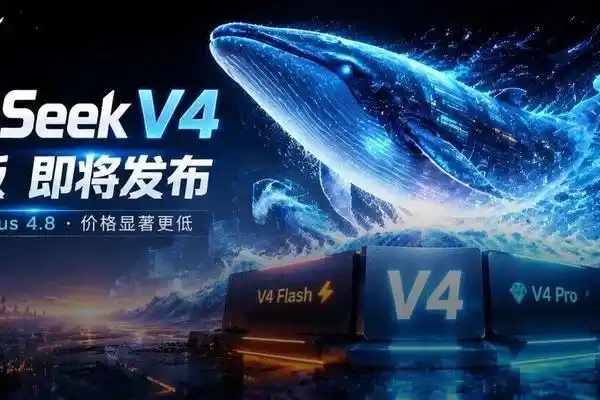
The highly anticipated full release of DeepSeek V4 is imminent, expected to launch as early as tomorrow after nearly three months of waiting. A select group has already received access to the GA (General Availability) beta, which includes two versions: DeepSeek V4 Flash and DeepSeek V4 Pro. Early testers report that V4's overall performance is close to the level of Opus 4.8, with coding capabilities rivaling GPT-5.6 Sol. Its agent abilities are significantly enhanced, and 3D/SVG generation has improved notably. While it may not surpass the recently released Kimi K3 in performance, its expected price point is significantly lower. The official release will introduce a new "peak/off-peak" pricing model for its API. For example, deepseek-v4-pro will cost $0.87 per million output tokens during standard times and $1.74 during peak hours. The flash version is even more aggressive at $0.28/$0.56 per million tokens, with cached input tokens priced extremely low at $0.0028. This makes V4 a strong contender in terms of cost-effectiveness, potentially offering Opus-level capabilities at a fraction of the cost, continuing DeepSeek's reputation as a "price disruptor" in the AI market. Initial demos showcasing V4's capabilities have begun circulating, including generated 3D simulation games, HTML games blending elements of Minecraft and No Man's Sky, and classic games like a "Cut the Rope" clone. The final GA version is set to replace the older deepseek-chat and deepseek-reasoner models, which will be retired on July 24th.

marsbitHá 50m

DeepSeek V4 'Full-Blooded Edition' Leaked, Could Be Released As Early As Tomorrow

marsbitHá 50m

WEEX Labs Weekly Observation: The 'Power Restructuring' of AI Infrastructure and the 'Deep Dive Movement' into the Real Economy

WEEX Labs Weekly Review: AI Infrastructure's "Power Restructuring" and the "Deep Dive" into the Real Economy Mid-July 2026 marks a pivotal shift in the global AI industry. The allocation of computing power is transferring from cloud giants to compute resource owners, while the core value of AI is solidifying around its penetration into physical industry, moving beyond the race for model parameters. The era of fragmented model development is over, replaced by a capital-intensive, integrated chain driven by hard tech. Key developments this week include Meta's planned entry into the cloud computing market with "MetaCompute." This move by social media giants with massive GPU clusters challenges traditional cloud providers like AWS, integrating compute, models, and data into one-stop services, which will squeeze smaller rental providers and shift enterprise focus towards underlying model ecosystems. Chinese foundational models like DeepSeek-V4 and Tencent's Hy-3 are pushing towards "utility" status through open-source releases and extreme cost reductions via MoE architectures. This lowers entry barriers for enterprises, allowing them to focus resources on private deployment and deep business integration. Embodied intelligence, particularly humanoid robots, is transitioning from lab demos to real-world factory applications, driven by policies promoting large-scale, practical deployment in logistics and manufacturing. The value focus is shifting from spectacle to stable industrial data and real operational efficiency. Global governance, through forums like WAIC, is evolving from theoretical ethics to practical operational frameworks for "Sovereign AI," raising geopolitical compliance barriers and making auditability and data sovereignty core design requirements from the outset. WEEX Labs Insights: The current transformation shows AI's prosperity is deeply embedding into the fabric of global manufacturing. Strategic recommendations include: 1) leveraging open-source models for private, proprietary knowledge bases; 2) maintaining cloud provider diversity to avoid vendor lock-in from integrated model ecosystems; and 3) seeking opportunities in the "embodied infrastructure" supporting robots, such as data collection, industrial simulation, and factory AI adaptation services.

marsbitHá 1h

WEEX Labs Weekly Observation: The 'Power Restructuring' of AI Infrastructure and the 'Deep Dive Movement' into the Real Economy

marsbitHá 1h

Is WEEX TradFi Reliable? What You Should Know Before Your First Trade of U.S. Stock Tokens

In recent years, cryptocurrency users have expanded their focus beyond Bitcoin and Ethereum to include popular traditional financial (TradFi) assets like Nvidia, Apple, and Tesla stocks. This shift raises key questions: What do these TradFi assets represent on crypto trading platforms? How do they differ from traditional stock ownership? And how can users assess the reliability of platforms offering such products? TradFi products, such as those offered by WEEX TradFi (including NVDA, MSFT, AAPL, TSLA, and QQQ tokens), are blurring the lines between crypto and traditional markets. They allow users to trade based on the price movements of traditional assets within a familiar digital asset trading environment. However, it's crucial to understand that trading a "stock token" is not equivalent to owning the actual stock. Users are participating in price speculation, not gaining shareholder rights like dividends or voting. A key feature of these products is 7x24 trading, offering flexibility beyond traditional market hours. While convenient, this also introduces unique risks, such as potential liquidity gaps and volatility when underlying markets are closed. For users evaluating TradFi products, reliability hinges on transparency and risk management. Critical factors include understanding the product mechanism, how prices track the underlying assets, and the associated risks—especially when using leverage. Popular stocks and indices are still subject to company performance, macroeconomic shifts, and sector trends. Ultimately, TradFi represents a new gateway connecting crypto users to global markets. The future points toward integrated trading environments where the distinction between "crypto investor" and "traditional investor" fades. For newcomers, a platform's reliability stems not from promises, but from a clear understanding of the product, a comprehensive view of risks, and informed judgment of the platform's capabilities.

marsbitHá 1h

Is WEEX TradFi Reliable? What You Should Know Before Your First Trade of U.S. Stock Tokens

marsbitHá 1h

Trading

Spot
活动图片