BitGo Targets Nearly $2 Billion Valuation As It Prepares For IPO In The US

bitcoinistPublicado em 2026-01-13Última atualização em 2026-01-13

Resumo

Crypto custody firm BitGo is targeting a valuation of up to $1.96 billion in its upcoming U.S. IPO, planning to raise $201 million by offering 11.8 million shares priced between $15 and $17. Despite a volatile market environment and recent selloffs, BitGo aims to leverage positive momentum in early 2026. The company, which secured a national trust charter from the OCC, has enlisted Goldman Sachs and Citigroup as lead managers for the offering. It plans to list on the NYSE under the ticker "BTGO," joining other major crypto firms entering public markets.

Crypto custody firm BitGo announced on Monday that it aims for a valuation of up to $1.96 billion in its upcoming initial public offering (IPO) in the United States, amid major interest by these firms to trade in public markets.

As reported by Reuters, the crypto company plans to raise as much as $201 million by offering 11.8 million shares, with prices expected to range from $15 to $17 per share.

Investing Climate Remains Shaky

Established in 2013, BitGo has emerged as one of the largest crypto custody firms in the United States, specializing in the secure storage and protection of digital assets. This role has become increasingly important amid rising institutional interest in cryptocurrencies.

Following a strong showing for other major crypto firms in 2025, including successful market debuts from stablecoin issuer Circle (CRCL) and cryptocurrency exchange Bullish (BLSH), BitGo is entering a competitive landscape. Crypto exchange Kraken is also looking to go public.

However, recent market volatility, particularly the sharp selloff in October of last year, whipping out nearly $20 billion in long positions, has created challenges for companies looking to attract investors. Additionally, ongoing pressure on technology and artificial intelligence (AI) valuations has heightened scrutiny across risk assets.

According to Lukas Muehlbauer, an IPOX research analyst, this shift has led to a “flight to quality,” favoring established and regulated companies like BitGo over more speculative ventures.

BitGo Targets IPO Success

Despite the challenges, BitGo aims to leverage positive market momentum in early 2026, when outperformance by small and mid-cap indices could provide a favorable environment for mid-sized offerings.

The firm has enlisted Goldman Sachs as the lead book-running manager for the IPO, with Citigroup also serving as a book-running manager. Other financial institutions in the offering include Deutsche Bank Securities, Mizuho, Wells Fargo Securities, Keefe, Bruyette & Woods, Canaccord Genuity, and Cantor.

Clear Street, Compass Point, Craig-Hallum, Rosenblatt, Wedbush Securities, and SoFi will act as co-managers. BitGo plans to list its shares on the New York Stock Exchange under the ticker symbol “BTGO.”

Notably, the company is one of five crypto firms, alongside Ripple, Circle, Fidelity Digital Assets, and Paxos Trust Company, to receive national trust charter applications approved by the US Office of the Comptroller of the Currency (OCC) in December of last year.

This national trust bank charter would empower BitGo to manage and hold assets for its customers, enabling faster payment settlements—a move that could bolster the firm’s competitive edge in the evolving landscape of cryptocurrency and digital finance.

The daily chart shows the total crypto market cap recovery and subsequent consolidation above the $3 trillion mark. Source: TOTAL on TradingView.com

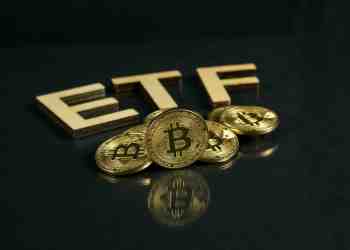
Featured image from DALL-E, chart from TradingView.com

Perguntas relacionadas

QWhat is the target valuation and how much does BitGo aim to raise in its upcoming IPO?

ABitGo aims for a valuation of up to $1.96 billion and plans to raise as much as $201 million by offering 11.8 million shares at a price range of $15 to $17 per share.

QWhat is BitGo's primary business and why has its role become increasingly important?

ABitGo is a crypto custody firm that specializes in the secure storage and protection of digital assets. Its role has become increasingly important due to rising institutional interest in cryptocurrencies.

QWhich major financial institutions are leading BitGo's IPO process?

AGoldman Sachs is the lead book-running manager for the IPO, with Citigroup also serving as a book-running manager. Other institutions involved include Deutsche Bank Securities, Mizuho, Wells Fargo Securities, and several others.

QWhat significant regulatory approval did BitGo receive recently and what does it allow the company to do?

AIn December of last year, BitGo was one of five crypto firms to have its national trust charter application approved by the US Office of the Comptroller of the Currency (OCC). This charter empowers BitGo to manage and hold assets for its customers and enables faster payment settlements.

QOn which stock exchange and under what ticker symbol does BitGo plan to list its shares?

ABitGo plans to list its shares on the New York Stock Exchange under the ticker symbol 'BTGO'.

Leituras Relacionadas

GPT-5.6 Countdown: Abandon the Illusion of a Single API, Computational Iteration Can't Outpace a Single Page of Compliance

In mid-June, three seemingly independent industry events—the compliance-driven throttling of Fable 5, the open-sourcing of GLM-5.2, and the leaked release timeline for GPT-5.6—are pushing the global AI industry toward a watershed moment. These shifts signal a fundamental restructuring of the industry's underlying logic. First, **"usability" has substantially overtaken "advanced capabilities"** as the primary weight, pushing the global large language model (LLM) supply chain into a "dual-track" phase of controlled closed-source and local open-source coexistence. Second, **the competitive moats of closed-source giants are shifting**. Their technical focus is moving from "language intelligence" toward "spatial intelligence (world models)"—a domain heavily reliant on computing power. Third, faced with常态化 transnational compliance risks, **a "model-agnostic" decoupled design has become a survival necessity for application-layer developers to maintain business continuity.** The article details how Anthropic's Fable 5, despite its advanced engineering feats, was restricted for non-U.S. citizens within 72 hours of launch, highlighting how geopolitical compliance can instantly limit even the most advanced models. In response, the open-source camp, exemplified by Zhipu AI's MIT-licensed GLM-5.2, is gaining market share by offering stable performance improvements and significant cost advantages (up to 70% savings for enterprises), while achieving full adaptation with domestic semiconductor platforms. Meanwhile, closed-source leaders like OpenAI are pivoting. The anticipated GPT-5.6 reportedly shifts focus from language to spatial intelligence and world models, aiming to rebuild a generational gap in areas like 3D understanding, simulation, and industrial design that demand immense compute. The core conclusion is that the LLM supply chain's logic has changed. Enterprises must now evaluate infrastructure based on a composite of technical performance and policy compliance. For developers, complete reliance on a single closed-source API poses unacceptable risk. Implementing a truly model-agnostic architecture—enabling swift switches to compliant, locally deployable open-source alternatives—is no longer just good practice but a fundamental baseline for business continuity.

marsbitHá 2h

GPT-5.6 Countdown: Abandon the Illusion of a Single API, Computational Iteration Can't Outpace a Single Page of Compliance

marsbitHá 2h

Is the 'Token Subsidy War' Among AI Giants Almost Over?

The article discusses the ongoing "token subsidy war" among AI giants like OpenAI and Anthropic, questioning whether it's nearing its end. It reveals that current AI subscription prices are heavily subsidized, with some plans offering tokens at up to 70 times the actual cost to attract and retain heavy users, especially developers and enterprises. This strategy mirrors past internet-era subsidy battles, but with a key difference: AI tokens lack "lock-in" effects. Unlike ride-hailing or food delivery apps, users can easily switch between AI providers as APIs become standardized, making it difficult for companies to raise prices post-subsidy. The piece highlights a structural asymmetry in the competition. Giants like Google, with massive advertising revenue, can afford to subsidize tokens indefinitely, akin to using "tokens as a weapon." In contrast, venture-backed companies like OpenAI and Anthropic face pressure to become profitable, especially as they approach IPO. The article cites Google Ventures founder Bill Maris, who suggests Google could slash token prices by 80%, putting immense pressure on competitors. Two potential endgames are presented: the "internet service" model (subsidize, monopolize, then raise prices) and the "utility" model (tokens become a standardized, low-margin commodity like electricity). Given the low switching costs, the latter seems more likely. The competition may not have a single winner but could instead accelerate AI's evolution into a foundational, infrastructure-level technology, akin to a public utility. For now, users continue to benefit from heavily subsidized token costs.

marsbitHá 2h

Is the 'Token Subsidy War' Among AI Giants Almost Over?

marsbitHá 2h

Beyond the Stadium: The Profitable Games Surrounding the World Cup

"Beyond the Pitch: The Profit Game Around the World Cup" The FIFA World Cup transcends being a sporting spectacle, evolving into a massive global arena for speculation and profit-seeking. The 2026 tournament has amplified this dynamic, creating a multi-layered ecosystem of financial opportunism alongside the football. **Prediction markets** have surged into the mainstream. Platforms like Polymarket and Kalshi saw trading volumes for World Cup contracts soar, attracting new users with their financial trading model and high-profile, chain-based wealth stories that overshadow traditional sports betting in terms of growth and narrative. However, **traditional sportsbooks** remain the dominant force, leveraging established user habits, legal markets, and comprehensive product offerings to handle the vast majority of speculative wagers, with projections suggesting record-breaking betting volumes. Capital markets also react. **"Concept stocks"** in countries like South Korea and Japan experience volatile price swings based on team performance and anticipated fan spending on items like chicken, beer, and viewing parties, effectively becoming a stock market reflecting fan sentiment. The **ticket resale market** has become a sophisticated arena for arbitrage. Prices fluctuate wildly based on team draws and star power, with sellers sometimes listing tickets they don't yet own in a practice akin to short-selling, while FIFA's own "Right to Buy" tokens add another layer of speculative trading. **Collectibles and merchandise** offer another avenue. Panini sticker albums, with their inherent scarcity and nostalgic value, can become high-value collectibles. Limited-edition or locally themed jerseys command significant premiums on secondary markets, and even counterfeit vendors profit from fans' desire for affordable match-day identity. The **cryptocurrency** space has seen a frenzy of speculative, unauthorized World Cup-themed meme coins on chains like Solana. These tokens, often exploiting team names and player imagery, experience extreme pump-and-dump cycles, creating stories of massive gains for a few early entrants and steep losses for many others. Finally, an entire industry thrives on **providing information and tools** to other speculators. Developers create platforms like SeatSidekick to track ticket inventory and prices, while paid Telegram groups and subscriptions sell betting tips and predictions, monetizing the widespread desire for an informational edge. In essence, the World Cup has become a compressed, global laboratory for speculation. While the games determine champions on the field, a parallel, complex network of financial transactions—spanning prediction contracts, bets, stocks, tickets, collectibles, crypto, and information services—settles its own scores in the global market.

marsbitHá 3h

Beyond the Stadium: The Profitable Games Surrounding the World Cup

marsbitHá 3h

Trading

Spot
Futuros
活动图片