BIT Trading Moment: BTC Buying Pressure Rises but Bearish Sentiment Remains Strong, 50-Month EMA Difficult to Break, SK Hynix Attempts to Stabilize Memory

marsbitPublicado em 2026-08-19Última atualização em 2026-08-19

Resumo

BIT Trading Hours: BTC Buying Rebounds but Bearish Sentiment Persists; 50-Month EMA Presents Resistance; SK Hynix Attempts to Stabilize the Memory Sector. Bitcoin briefly reclaimed $65,000, its first time since August 10th, showing a temporary decoupling from traditional risk assets pressured by soaring long-term U.S. Treasury yields. Key support is seen at $62k-$63k, with resistance near the 50-month Exponential Moving Average around $65.4k. While on-chain data indicates recovering spot demand, potentially signaling a local bottom, the options market remains skewed bearish. BIT analysis notes significant downside risk remains if historical bear market patterns repeat, with a potential drop to ~$45.5k. Global equity markets faced intense selling pressure, driven by a bond market storm. The U.S. 30-year yield hit a multi-year high above 5.33%, raising global funding costs. The AI sector was at the epicenter of the sell-off, with the Philadelphia Semiconductor Index plunging ~5% as investors questioned the sustainability of massive AI capital expenditures amid high debt costs. Storage stocks like Micron led declines. SK Hynix's announcement of a major share buyback provided some stability to the memory sector during after-hours trading. However, most tech stocks remained under pressure. In Asia, South Korean and Japanese indices fell sharply, heavily impacted by chip stock declines. Chinese robotics company Unitree Tech had a volatile market debut on Shanghai's STAR Market,...

This article is jointly produced by PANews and BIT U.S. Stocks. BIT U.S. Stocks provides 10,000+ mainboard U.S. stocks and ETFs, supports stablecoin deposits/withdrawals and traditional USD wire transfers, and allows for full shareholder rights including dividends and voting.

Bitcoin On-Chain Buying Pressure Warms Up, Downside Risks Remain

Bitcoin returned above $65,000 yesterday, touching this level for the first time since August 10. Meanwhile, U.S. stock risk assets are still pressured by the surge in long-term Treasury yields. The 30-year Treasury yield once rose to a multi-year high of 5.34%, indicating a temporary divergence between BTC and traditional risk assets.

Most traders focus key support around the $62,000 to $63,000 range. If this level breaks, a drop to $60,000 to $61,000 to sweep liquidity is possible. Resistance above is concentrated around the 50-month Exponential Moving Average near approximately $65,400 and the potential head-and-shoulders bottom neckline area. Analyst Aksel Kibar pointed out that if the head-and-shoulders bottom structure holds, the rebound target could be as high as $76,000; however, if it fails, a drop to $53,000 is possible.

On-chain data research firm CryptoQuant noted that Bitcoin's 30-day apparent spot demand has significantly recovered from negative 206,000 BTC on July 23 to the current negative 5,000 BTC, approaching the critical point of turning positive for the first time since February 26. Historically, after spot demand turns from negative to positive, the median BTC gain over the next 60 days is 18.1%, with a win rate of 78%.

VanEck also believes Bitcoin may be nearing the end of its correction. Its model shows that 8 out of 12 "capitulation indicators" have been triggered, and BTC has already entered its 11th month of adjustment; the average time from peak to trough in the past three cycles (excluding 2011) was about 12.7 months, suggesting September to November could be an important window for the accumulation phase this round. However, VanEck also emphasized that capitulation signals do not have a stable excess return advantage over the next 90 and 180 days. The real thing to wait for is the reconfirmation of capital demand.
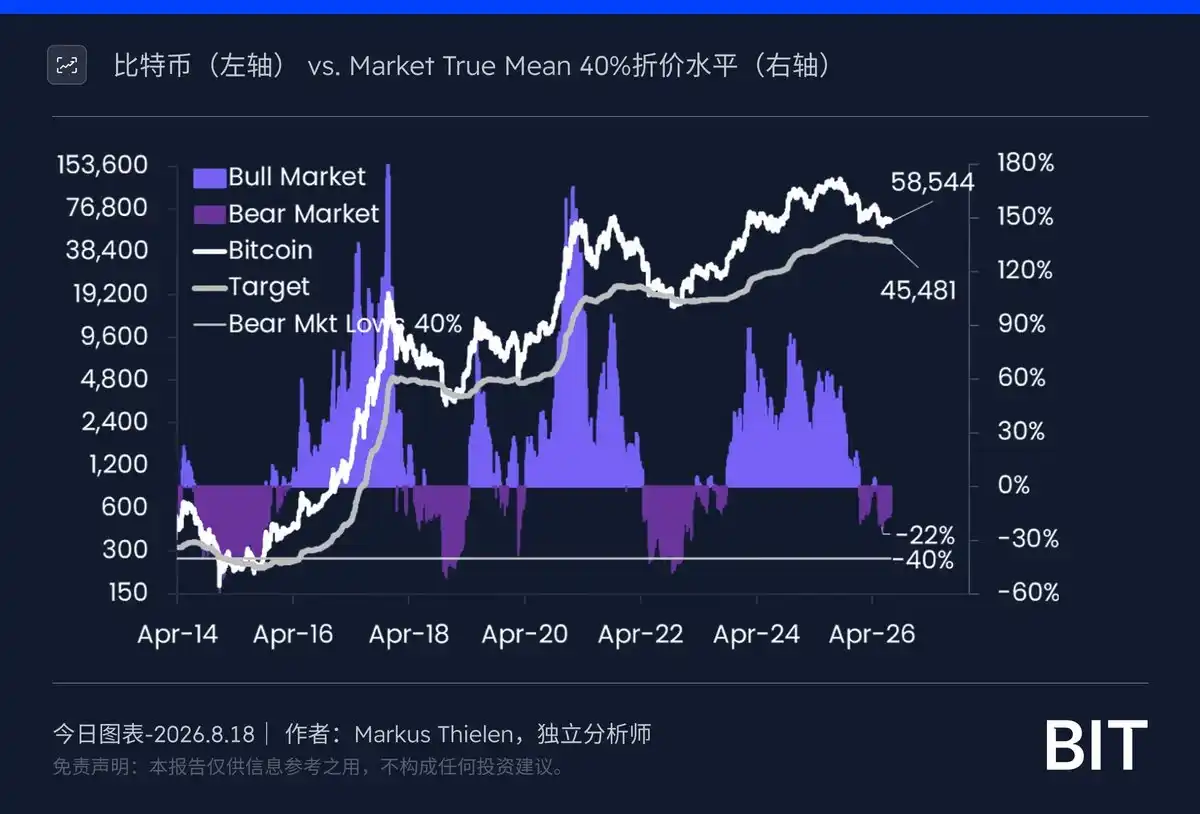
The options market still shows strong bearish sentiment, with put option premiums significantly higher than calls, but open interest and funding rates indicate a gradual unwinding of leverage. BIT's view is that, based on historical data, Bitcoin has traded about 40% below its long-term market average during bear markets. If this pattern repeats, the price could drop to around $45,500. Currently, the potential downside risk from the current price is about 20%, corresponding to an upside potential of about 60%. The risk-reward ratio is gradually improving, but macro risks could still drive another downturn. The real test is whether spot demand can sustainably turn positive and hold above the cost basis.

The key focus for BTC moving forward is two things: whether the Fed meeting minutes are hawkish, and whether the U.S. 20-year Treasury auction goes smoothly. If the bond market remains concerning, BTC may test around $63,000; if interest rate pressure eases, BTC has a chance to challenge the $66,000 to $70,000 range again.

Key Points for Today:

  • Ethereum will conduct the Glamsterdam upgrade fork on the Platåberget testnet on August 20.

  • KAITO (KAITO) unlocks approximately 32.6 million tokens, valued around $11.5 million.

  • LayerZero (ZRO) unlocks approximately 25.72 million tokens, valued around $19.62 million.

  • Upbit 24-hour trading volume ranking: BTC, XRP, ETH, LA, DOS.

  • Bitcoin Spot ETF: +$189 million.

  • Ethereum Spot ETF: +$71.468 million.

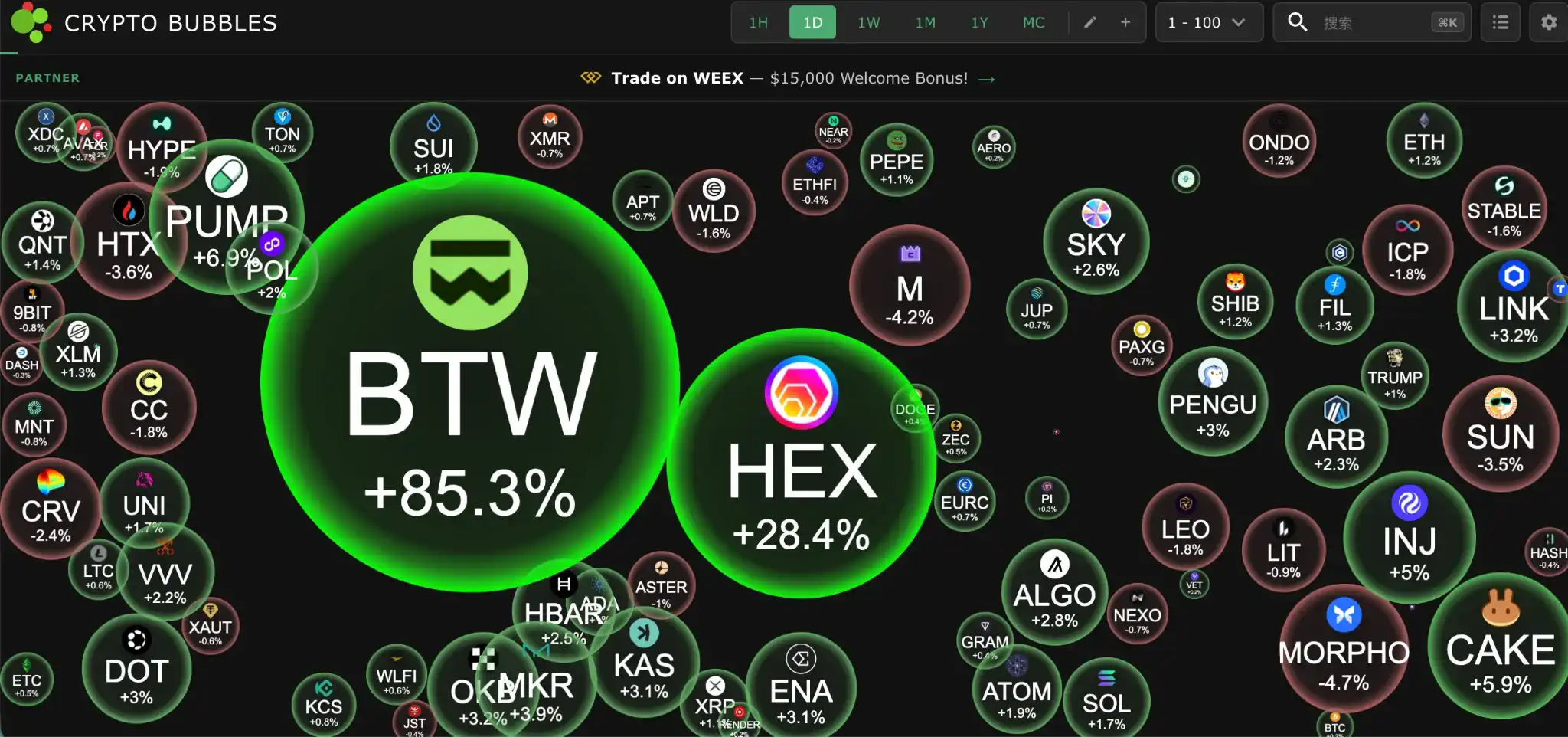
Today's top gainers among the top 100 cryptocurrencies by market cap: BTW up 85.3%, HEX up 28.4%, PUMP up 6.9%, CAKE up 5.9%, INJ up 5%.
Stock Index Futures Test Rebound, AI Sector Remains the Eye of the Storm

U.S. stock index futures showed mixed performance, with Dow futures up 0.06%, Nasdaq 100 futures down 0.04%, and S&P 500 futures up 0.02%.
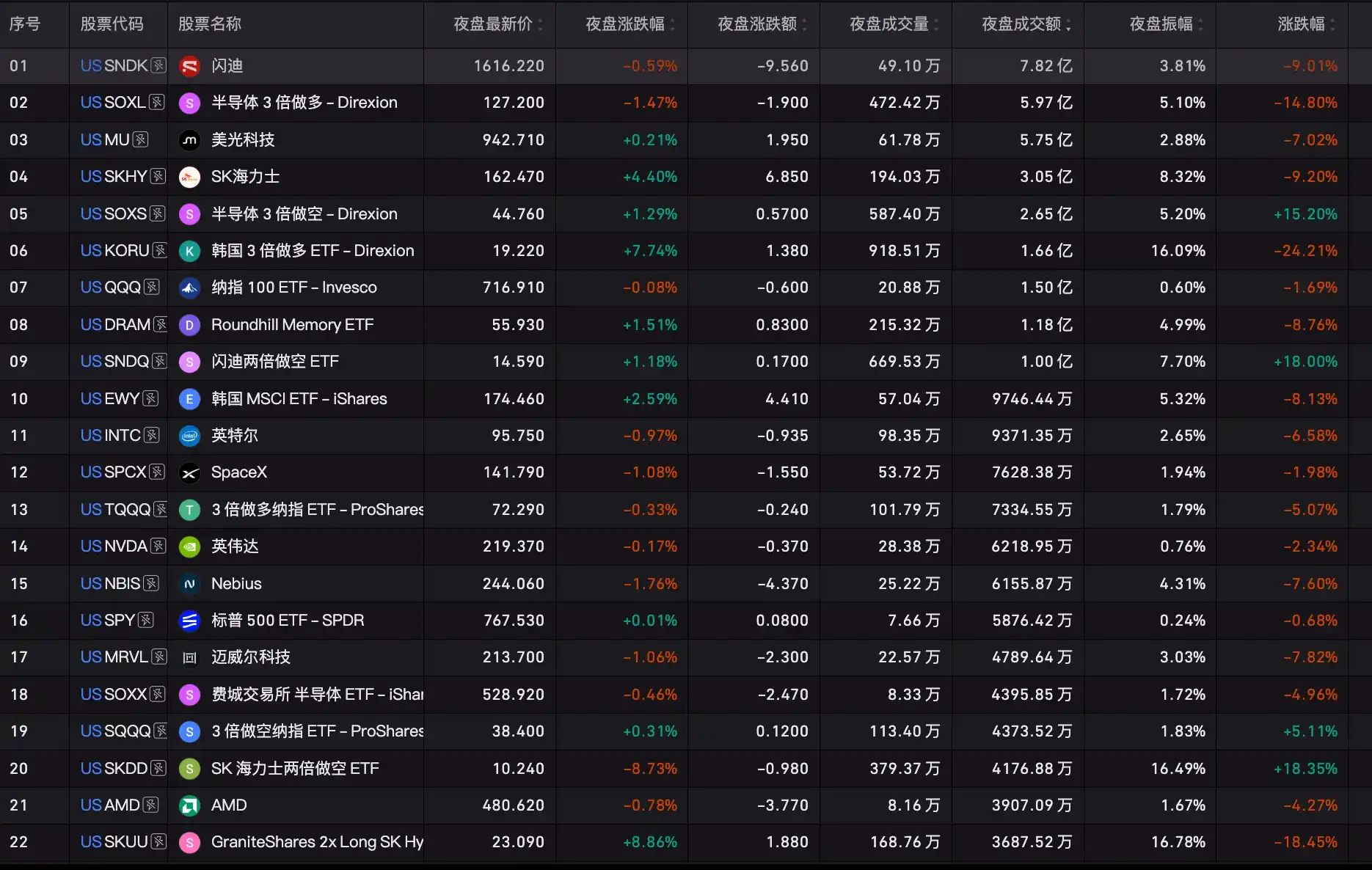
BIT after-hours data shows that SK Hynix was the most watched stock in after-hours trading, rising over 4%. The company announced a stock buyback plan worth 40 trillion won. The repurchased shares will be canceled to enhance shareholder returns. This move temporarily stabilized sentiment in the memory sector. The memory ETF DRAM rose 1.51%, Micron Technology rose slightly by 0.21%, while SanDisk fell 0.59%.

However, most U.S. stocks remained in a downtrend: NVIDIA fell 0.17%, AMD fell 0.78%, Nebius fell 1.76%, and Marvell Technology fell 1.06%.

Bond Market Storm Overwhelms AI Narrative, Funds Turn Defensive
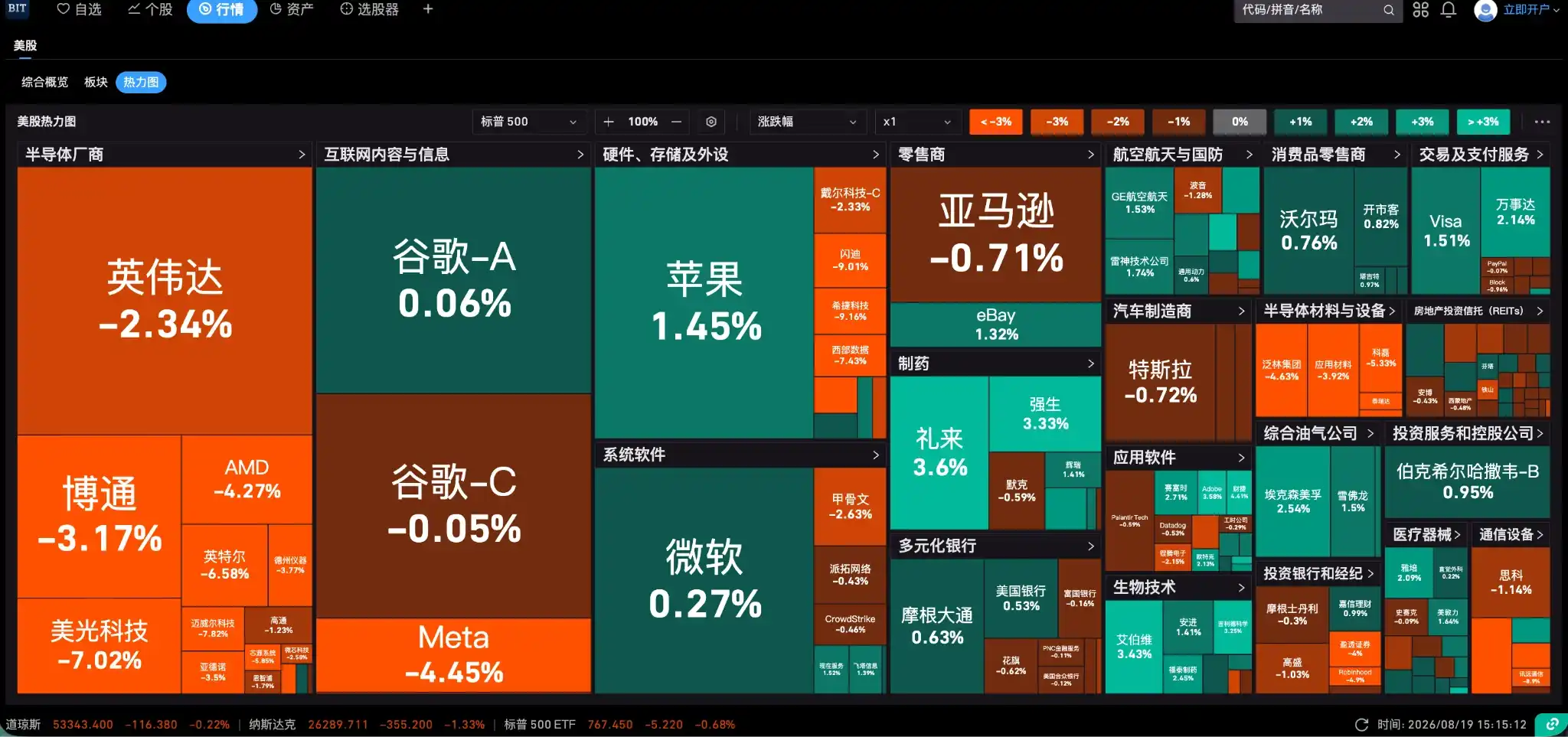
Last night's main theme in U.S. stocks wasn't equities, but bonds. The U.S. 30-year Treasury yield touched 5.338% intraday, hitting its highest level since 2007, while the 10-year yield approached 4.75%. Long-term bond yields in France, Germany, the UK, and Japan also surged simultaneously, raising global funding costs together.

The AI sector became the center of selling. The Philadelphia Semiconductor Index fell about 5% as market logic regarding AI capital expenditures wavered, with concerns shifting from a "growth story" to a "debt story." Goldman Sachs data shows that AI-related bond issuance this year has reached $489 billion, far exceeding the full-year 2025 level. Meanwhile, OpenAI's Q2 operating loss widened to $12.3 billion, and Anthropic's annualized revenue run rate fell short of market expectations, further intensifying investor anxiety over the mismatch between high AI investment and return cycles.

Memory stocks, as the most elastic segment in AI server expansion, led the decline: Micron Technology fell about 7%, Seagate fell over 9%, and SK Hynix ADR fell over 9%. Optical communication and AI cloud service providers faced more intense valuation reassessments: Applied Optoelectronics fell about 15%, Coherent fell over 12%, and CoreWeave fell over 12%. BIT analysis points out that for companies whose business models heavily rely on continuous financing, their valuation elasticity has an inverse amplification effect in the environment of surging long-term rates.

Meta fell 4.45% amid a joint lawsuit from 29 states. In contrast, Apple, which is not deeply involved in the "arms race" of AI data center capital expenditures, was viewed as a tech defensive stock by the market and rose 1.45%. Microsoft, Google, and Amazon performed relatively steadily.

Analysts note that the core of the current bond market turmoil lies in the U.S. fiscal deficit outlook for the next decade. Currently, nearly one out of every five dollars of U.S. government revenue is used to pay interest. This "normalization" is forcing the market to re-evaluate the intrinsic value of high-valuation tech stocks.
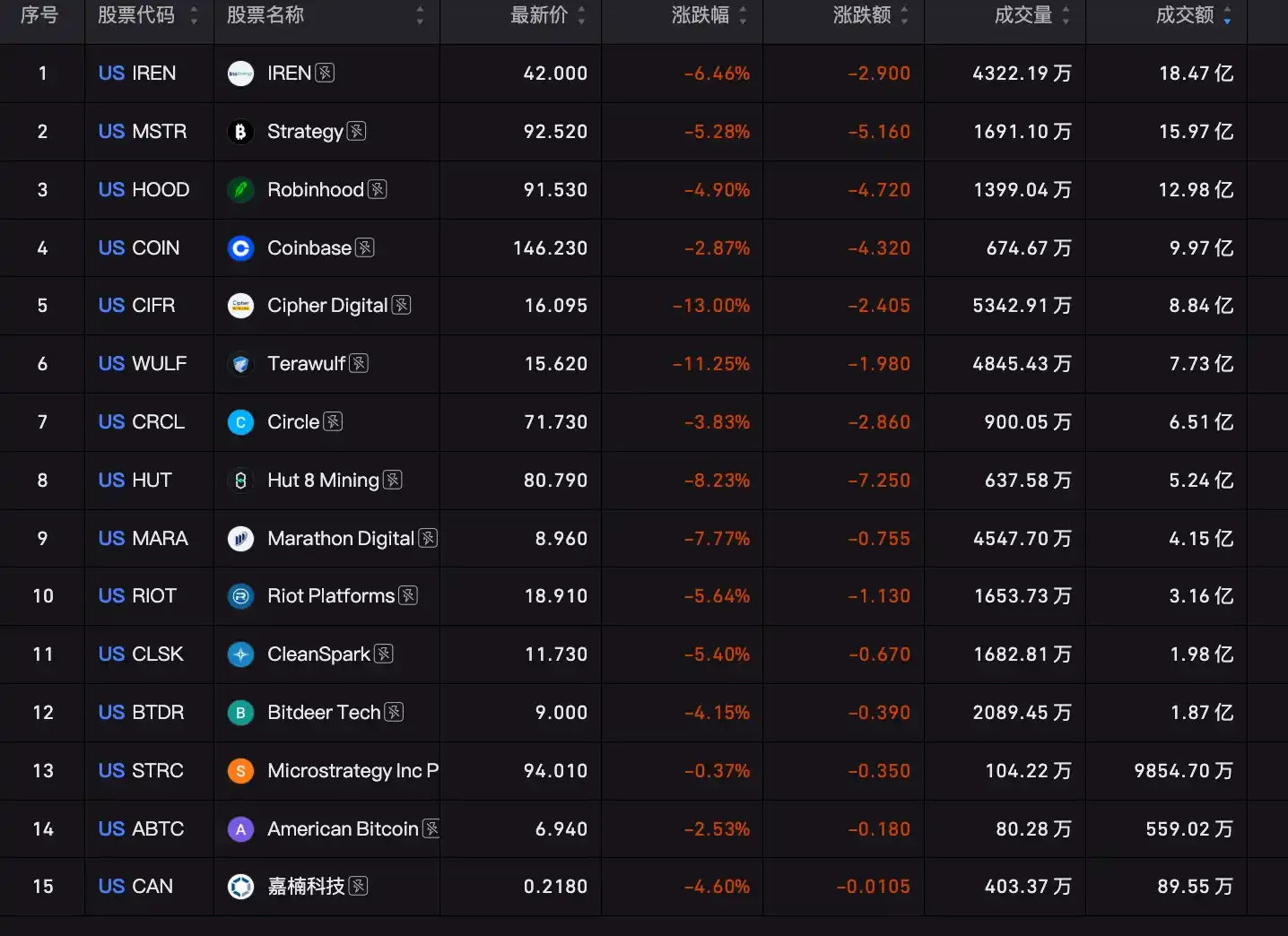
Crypto-related stocks fell sharply. According to BIT U.S. Stocks data, Coinbase fell 2.87%, Robinhood fell 4.9%, Strategy fell 5.28%, and Circle fell 3.83%.

Among mining companies: Cipher Digital fell 13%, TeraWulf fell 11.25%, Hut 8 fell 8.23%, MARA fell 7.77%, IREN fell 6.46%; CleanSpark, Canaan, Riot, and Bitdeer fell between 5% and 6%. VanEck remains optimistic about the long-term value of some miners transitioning to AI data centers, but short-term factors like rising rates, data center scrutiny, and AI capex concerns will pressure the sector.

Seoul and Tokyo Slam the Brakes, Chip Stocks Become Core of Asia-Pacific Sell-off, Unitree Tech IPO Sets New Benchmark for Humanoid Robot Valuations

High global bond yields and oil price inflation concerns directly impacted Asian risk assets. South Korea's KOSPI index closed down 5.80%, with chip stocks being the main drag. SK Hynix closed down about 10%, and Samsung Electronics fell nearly 8%. Although revenue and net profit for listed companies on Korea's main board saw significant growth in the first half (with semiconductor leaders contributing significantly), short-term sentiment was dominated by U.S. bond and stock sell-offs.

The Japanese market also opened low and moved lower, with the Nikkei 225 closing down 3.16% and the Topix index also falling significantly by about 2%. Heavyweight tech giants like SoftBank Group, Tokyo Electron, and memory chip maker Kioxia faced concentrated profit-taking. Tech giants like SoftBank were hit by a double whammy of valuation concerns and bond market volatility.

A-shares opened low and moved lower throughout the day. The Shanghai Composite Index fell about 2.4%, the Shenzhen Component Index fell about 5%, the ChiNext Index fell over 6%, and the STAR 50 Index once fell nearly 7%. Over 5,000 stocks declined across the market. Robotics, computing hardware, semiconductors, and MLCC concepts were heavily hit, with many stocks limit-down. Coal and some shipping and banking sectors showed relative resilience.

Unitree Technology became the strongest narrative and the biggest source of volatility in A-shares. On its first day of listing on the STAR Market, the stock surged 629.44% at open to 1,100 yuan per share, with total market capitalization once reaching 444.9 billion yuan. Subsequently, gains moderated to around 460%, with the stock price around 845 yuan. Chairman Wang Xingxing's shareholding value exceeded 100 billion yuan, making him the new richest person among those born in the 1990s. Lei Jun's Shunwei Capital, Liang Wenfeng's DeepSeek, and Huanfang Quantitative also profited handsomely. Nomura Securities assigned a "Buy" rating, forecasting its 2026-2028 revenue CAGR at 122%. However, the overall robotics sector was hit hard, with stocks like Julong Intelligence, Wuzhou Xinchun, Qinchuan Machine Tool, and many others limit-down. This indicates a rapid switch between "leader frenzy" and "sector pullback" in the market.

In Hong Kong stocks, the Hang Seng Index rose slightly by 0.09%, while the Hang Seng Tech Index fell 1.21%. Tech stocks fell broadly: MINIMAX fell about 8%, Baidu Group fell about 11%, while China Unicom, Huahong Grace, and Cambridge Technology all fell around 12%. Kuaishou Technology released its 2026 Q2 earnings, with revenue of 35.54 billion yuan and adjusted net profit of 3.91 billion yuan, both exceeding market expectations. Average monthly active users reached 800 million, significantly surpassing the estimated 740 million. Among these, Kling AI performed brilliantly, with quarterly revenue exceeding 850 million yuan, a year-on-year increase of over 200%, continuing to lead the commercialization of the global AI video generation industry. Despite solid earnings, Hong Kong-listed internet stocks still faced significant selling pressure amid market risk-off sentiment.

What to Watch Next:

August 19 (Wednesday)

  • Seoul AI Summit held from August 19-21: Tech leaders including Google DeepMind, Google Cloud, Microsoft Research, NVIDIA, LG AI Research, and Hyundai Motor are attending. Market focus is on new collaborations in large models, AI cloud, autonomous driving, AI chips, and enterprise applications. Related signals may catalyze global AI software, cloud computing, chip, and robotics supply chains.

  • World Robot Conference held in Beijing from August 19-23: Unitree, Ubtech, Siasun, Galaxy General, Tiangang, and others will showcase humanoid robots and industrial robot solutions. If mass production progress, order fulfillment, or cost reductions exceed expectations, it could catalyze sentiment in the A-share robotics supply chain (reducers, servos, motors, sensors, controllers, and OEMs).

  • HKEX, Kuaishou (19:00 conference call), Hengrui Medicine, ZTO Express, Kingsoft, Kingsoft Cloud, Weibo earnings: For Kuaishou, focus on e-commerce GMV, advertising recovery, profit margins, and AI video tools; HKEX - watch trading volume, IPO pipeline, and derivatives business; Hengrui Medicine - validates innovative drug overseas expansion and R&D delivery; Kingsoft Cloud - an observation point for elasticity in China-concept AI cloud demand.

August 20 (Thursday)

  • 01:00 U.S. Treasury auctions 20-year bonds: Following last week's surge in yields for 10-year and 30-year bond auctions, the bid-to-cover ratio and foreign demand for this 20-year auction will serve as a "super stress test" for the bond market. If demand is weak, it could directly push the 30-year Treasury yield above the 5.35% level, triggering a severe chain reaction in global fixed income markets.

  • 02:00 Release of Fed's July Monetary Policy Meeting Minutes: The market will scrutinize internal discussion details, especially regarding tolerance for inflation (including energy-driven) and the inclination of some members towards rate hikes. Hawkish wording could push long-end yields higher, increasing pressure on high-valuation assets like AI. If it shows increased focus on economic slowdown, it may moderate the pace of rate increases.

  • 09:00 China's 1-year Loan Prime Rate (LPR) announcement: If July economic data was weak, whether the LPR is cut will serve as a litmus test for policy stance. A rate cut would benefit property-related sectors, consumption, Hong Kong-listed internet stocks, and high-dividend assets. If unchanged, the market may turn to waiting for RRR cuts, fiscal expansion, or further property policy easing.

  • 20:30 U.S. Initial Jobless Claims: Employment data will influence Fed pricing together with the previously weak Non-Farm Payrolls. If claims rise, it will reinforce expectations of economic cooling and a September pause in rate hikes. If the job market remains strong, market confidence in "no action" may decrease.

  • Alibaba (20:00 conference call), Pop Mart, NetEase, Walmart, Ping An Insurance, China Telecom, AIA Group, Li Ning, Futu Holdings earnings: Alibaba is the top focus among China concepts. Watch e-commerce GMV, Cloud Intelligence revenue, AI investment, and commercialization of Tongyi Qianwen. For Pop Mart, focus on IP overseas expansion, store expansion, and gross margin. NetEase validates gaming revenue and AI tools. Walmart is a key bellwether for U.S. consumer resilience.

August 21 (Friday)

  • 07:30 Japan's July Core CPI: If inflation is higher than expected, expectations for a BOJ rate hike in September will heat up, potentially causing volatility in the yen and global yield curves. If inflation cools, it will ease pressure on global carry trade unwinding and reduce upward pressure on global long-term rates.

  • 08:00 South Korea's August 1-20 Export Data: Previous data showed a year-on-year increase as high as 52.3%, driven mainly by memory price increases and AI chip exports. This data is a leading indicator for the global semiconductor cycle and the sustainability of AI capital expenditures, directly impacting sentiment for Samsung, SK Hynix, Micron, TSMC, AMD, NVIDIA, and the A-share semiconductor supply chain.

  • Announcement of Q2 Hang Seng Index Series review results: CICC predicts Zijing Mining International, Zhipu AI, MINIMAX-W, etc., are high on the potential inclusion candidate list. If inclusion expectations materialize, it will bring passive fund allocation and short-term liquidity catalysts. If expectations are dashed, related stocks may face selling pressure.

  • NYMEX September Crude Oil Futures contract rollover: Against the backdrop of Hormuz Strait risks and expectations of U.S. sanctions on Iran, the rollover could amplify volatility in near-month contracts. If the spot premium widens, it indicates tight physical supply. If the spread narrows, upward momentum in oil prices may weaken.

  • ZTE, Zijing Mining, Zhongji Innolight, Yangtze Optical Fibre and Cable, KE Holdings, Sinopec earnings: Zhongji Innolight and Yangtze Optical Fibre will validate AI optical module and fiber demand. Watch ZTE's computing power network and carrier capex. Zijing Mining is driven by gold and copper prices. KE Holdings reflects recovery in China's property transaction chain. Sinopec is directly influenced by oil prices and refining margins.


Criptomoedas em alta

Perguntas relacionadas

QWhat are the key technical resistance and support levels for Bitcoin mentioned in the article?

AThe key resistance level for Bitcoin is concentrated around $65.4K near the 50-month Exponential Moving Average (EMA) and the potential head-and-shoulders bottom neckline. The main support is focused on the $62K to $63K range. If this support fails, the price could test the $60K to $61K range to sweep out liquidity. Analyst Aksel Kibar notes that if the head-and-shoulders bottom pattern holds, the rebound target could be $76K; otherwise, it might drop to $53K.

QHow has the bond market impacted AI and tech stocks according to the article?

AThe surge in long-term U.S. Treasury yields, with the 30-year yield hitting a multi-year high of 5.338%, has increased global funding costs and triggered a sell-off in AI and high-valuation tech stocks. AI is now at the center of the sell-off, with the Philadelphia Semiconductor Index dropping about 5%. The market is questioning the AI capital expenditure narrative, fearing it may be shifting from a 'growth story' to a 'debt story'. Companies with business models heavily reliant on continuous financing, such as those in AI cloud services and optical communication, are facing severe valuation reassessment.

QWhat actions did SK Hynix take, and what was the market reaction?

ASK Hynix announced a share buyback plan worth 40 trillion won. The repurchased shares will be cancelled to enhance shareholder returns. This move provided short-term stability for the memory sector sentiment. In the U.S. stock overnight market, SK Hynix's stock rose over 4%, the memory ETF DRAM rose 1.51%, and Micron Technology rose slightly by 0.21%.

QWhat significant event occurred for Unitree Robotics, and how did the broader robotics sector react?

AUnitree Robotics debuted on the STAR Market, with its stock price surging 629.44% at the opening to 1,100 yuan per share, giving it a peak market cap of approximately 444.9 billion yuan. Chairman Wang Xingxing's holdings exceeded 100 billion yuan, making him the richest post-90s individual. However, the broader robotics sector in the A-share market experienced a significant downturn. Stocks like Julong Intelligent, Wuzhou Xinchun, and Qinchuan Machine Tool fell to their daily limit-downs, indicating a rapid market shift between 'leader frenzy' and 'sector pullback'.

QWhat are the two upcoming events the article suggests are critical to watch for Bitcoin's near-term price direction?

AThe article highlights two critical upcoming events for Bitcoin's near-term price direction: 1) The release of the Federal Reserve's July FOMC meeting minutes, to see if the tone is hawkish. 2) The U.S. 20-year Treasury bond auction, to gauge its success. If bond market pressures persist, Bitcoin could test around $63K. If interest rate pressures ease, Bitcoin may have another chance to challenge the $66K to $70K range.

Leituras Relacionadas

BONK Crypto Treasury Company Has Only $2.14 Million Cash Left, 70% of Revenue Comes from Founder's Own Platform

BONK Inc. (BNKK), the NASDAQ-listed company associated with the Solana meme coin BONK, reported stark financials for the first half of the year. While revenue skyrocketed 6,218% year-over-year to $5.5 million, the company posted a net loss of $7.88 million and its cash reserves plummeted to just $214,000. Its auditors issued a "going concern" warning, citing cumulative losses of $191.4 million, negative operating cash flow, and critically low liquidity. A critical detail is that $3.92 million, or 71%, of its revenue came from an "affiliate revenue share" with LetsBonk.fun, a meme coin launchpad. This platform is linked to founder Mitchell Rudy, whose entity, Lucky Dog Holdings, beneficially owns approximately 40.2% of common stock and all C Series preferred shares. These preferred shares grant the holder the right to elect half of the company's board. The company's financial structure is further intertwined with Rudy; it sold $50 million worth of stock to his entities, accepting payment in BONK tokens. Fluctuations in the value of these and other held digital assets led to an $8.17 million unrealized loss, the primary driver of the net loss. With operating cash outflows of $4.17 million for the half-year, the remaining cash covers roughly nine days of operations at the current burn rate, highlighting severe financial strain despite top-line growth.

marsbitHá 25m

BONK Crypto Treasury Company Has Only $2.14 Million Cash Left, 70% of Revenue Comes from Founder's Own Platform

marsbitHá 25m

CryptoQuant Noted a Signal of a Bitcoin Reversal

CryptoQuant has highlighted a potential reversal signal for Bitcoin, suggesting the bearish phase might be nearing its end as on-chain metrics show initial signs of spot demand recovery. Their analysis indicates that the 30-day spot demand metric has recovered from -206,000 BTC in late July to approximately -5,000, close to turning positive for the first time since February 2026. Historically, such a reversal has been followed by a median 60-day price gain of 18.1%, with a win rate of 78% (increasing to 87% when valuations are depressed). However, they caution that this is a favorable sign, not a guarantee. Analysts from Bitfinex Alpha note that two of three conditions for a sustainable Bitcoin recovery are already met: improved Federal Reserve rate expectations and relatively accommodative financial conditions, thanks to easing inflation and reduced odds of a near-term rate hike. The missing third catalyst is a capital rotation from traditional markets (like stocks and AI infrastructure) into cryptocurrencies. If this occurs, Bitcoin could reclaim $70,000. Conversely, continued negative flows might see support tested around $57,000. Current headwinds include significant weekly outflows from US spot Bitcoin ETFs (roughly $385 million) and reduced stablecoin supply. Wintermute offers a more cautious outlook, pointing to the same large ETF outflows and ongoing miner selling pressure. They note that Bitcoin has failed to rally despite the improved Fed outlook, which is typically bullish for risk assets. As an example, they cite miner Riot Platforms, which sold a substantial portion of its Bitcoin reserves in Q2 as its mining cost (~$91,000 per BTC) remains far above the current market price, forcing sales for liquidity. This combination of ETF outflows and miner selling is suppressing new demand.

cryptonews.ruHá 27m

CryptoQuant Noted a Signal of a Bitcoin Reversal

cryptonews.ruHá 27m

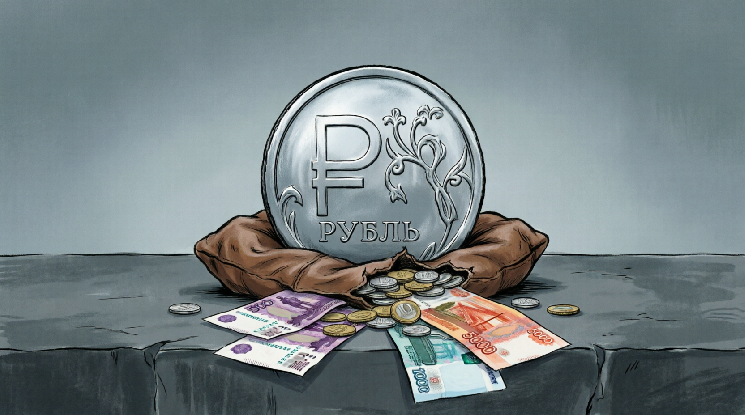
Is a Strong Ruble Good? Not for the Budget: Treasury Already Short 1.5 Trillion

The Russian budget has lost about 1.5 trillion rubles in revenue since the start of 2026 due to the ruble being stronger than the government's planned exchange rate. The budget was based on an average annual rate of 92.2 rubles per US dollar, but the actual average for the first seven and a half months was just 76.9 rubles. This discrepancy creates a significant shortfall, as every ruble of appreciation against the dollar reduces annual budget revenues by 140–160 billion rubles. When accounting for oil and gas revenues, the sensitivity is even higher, with potential annual losses reaching up to 2.5 trillion rubles. So far this year, the budget has already missed out on roughly 1.7 trillion rubles. The ruble's exchange rate has shown considerable volatility in 2026, ranging from a low near 71 rubles per dollar in May to over 85 rubles by mid-August. Despite this recent weakening, the year's average remains well below the budget target, creating a structural deficit in oil and gas revenues. Forecasts suggest the final average rate for 2026 will be around 80–82 rubles, which would result in a budget shortfall of about 1.6 trillion rubles. A strong ruble reduces import costs and inflation but also cuts the ruble earnings of exporters and threatens the funding of social obligations. The gap between the planned and actual rate is attributed not only to oil price dynamics but also to the fiscal rule mechanism, which can influence the currency's direction. The Ministry of Finance recently halted foreign currency sales under this rule, removing dollar supply from the market and contributing to pressure on the exchange rate. The budget policy is now forced to adapt to a stronger ruble than originally planned.

cryptonews.ruHá 28m

Is a Strong Ruble Good? Not for the Budget: Treasury Already Short 1.5 Trillion

cryptonews.ruHá 28m

Trading

Spot

Artigos em Destaque

O que é BITCOIN

Compreender o HarryPotterObamaSonic10Inu (ERC-20) e a Sua Posição no Espaço Cripto Nos últimos anos, o mercado de criptomoedas assistiu a um aumento na popularidade das moedas meme, cativando não apenas os traders, mas também aqueles que procuram envolvimento comunitário e valor de entretenimento. Entre estes tokens únicos está o HarryPotterObamaSonic10Inu (ERC-20), um projeto intrigante que mistura referências culturais no tecido das criptomoedas. Este artigo explora os principais aspetos do HarryPotterObamaSonic10Inu, examinando os seus mecanismos, a sua ética orientada pela comunidade e o seu envolvimento com o vasto panorama cripto. O que é o HarryPotterObamaSonic10Inu (ERC-20)? Como o nome sugere, o HarryPotterObamaSonic10Inu é uma moeda meme construída na blockchain Ethereum, classificada sob o padrão ERC-20. Ao contrário das criptomoedas tradicionais, que podem enfatizar a utilidade prática ou o potencial de investimento, este token prospera no valor de entretenimento e na força da sua comunidade. O projeto visa promover um ambiente onde utilizadores envolvidos possam reunir-se, partilhar ideias e participar em atividades inspiradas por diversos fenómenos culturais. Uma característica notável do HarryPotterObamaSonic10Inu é a zero taxa sobre transações. Este elemento atraente visa encorajar a negociação e o envolvimento da comunidade, isento de encargos adicionais que podem desencorajar os traders de pequena escala. A oferta total da moeda está fixada em mil milhões de tokens, uma cifra que marca a sua intenção de manter uma circulação substancial dentro da comunidade. Criador do HarryPotterObamaSonic10Inu (ERC-20) As origens do HarryPotterObamaSonic10Inu estão um pouco envoltas em mistério; os detalhes sobre o criador permanecem desconhecidos. O desenvolvimento deste token carece de uma equipa identificável ou de um plano explícito, o que não é raro no setor das moedas meme. Em vez disso, o projeto surgiu de forma orgânica, com o seu progresso a depender fortemente do entusiasmo e da participação da sua comunidade. Investidores do HarryPotterObamaSonic10Inu (ERC-20) No que diz respeito a investimentos externos e apoios, o HarryPotterObamaSonic10Inu também permanece ambíguo. O token não lista quaisquer fundações de investimento conhecidas ou apoio organizacional significativo. Em vez disso, o “sangue vital” do projeto é a sua comunidade de base, que informa o seu crescimento e sustentabilidade através da ação coletiva e do envolvimento no espaço cripto. Como Funciona o HarryPotterObamaSonic10Inu (ERC-20)? Como uma moeda meme, o HarryPotterObamaSonic10Inu opera principalmente fora dos quadros tradicionais que muitas vezes governam o valor dos ativos. Existem vários aspetos distintivos que definem como o projeto funciona: Transações Sem Taxas: Sem taxas sobre transações, os utilizadores podem comprar e vender o token livremente, sem a preocupação de custos ocultos. Envolvimento da Comunidade: O projeto prospera na interação da comunidade, aproveitando plataformas de redes sociais para criar entusiasmo e facilitar a participação. Discussões, partilha de conteúdo e envolvimento são elementos cruciais que ajudam a expandir o seu alcance e a fomentar a lealdade entre os apoiantes. Sem Utilidade Prática: Deve ser notado que o HarryPotterObamaSonic10Inu não oferece utilidade concreta dentro do ecossistema financeiro. Em vez disso, é classificado como um token principalmente para entretenimento e atividades comunitárias. Referência Cultural: O token incorpora de forma inteligente elementos da cultura popular para atrair interesse, conectando-se tanto com entusiastas de memes como com seguidores de criptomoedas. HarryPotterObamaSonic10Inu exemplifica como as moedas meme operam de forma diferente de projetos de criptomoedas mais tradicionais, entrando no mercado como construções sociais inovadoras em vez de ativos utilitários. Linha do Tempo do HarryPotterObamaSonic10Inu (ERC-20) A história do HarryPotterObamaSonic10Inu é marcada por vários marcos notáveis: Criação: O token surgiu de um meme viral, capturando a imaginação de muitos entusiastas de criptomoedas. Datas específicas de criação não estão disponíveis, sublinhando a sua ascensão orgânica. Listagem em Exchanges: O HarryPotterObamaSonic10Inu conseguiu entrar em várias exchanges, permitindo um acesso e negociação mais fáceis pela comunidade. Iniciativas de Envolvimento da Comunidade: Atividades contínuas direcionadas a melhorar a interação comunitária, incluindo concursos, campanhas em redes sociais e geração de conteúdo por fãs e defensores. Planos de Expansão Futura: O roteiro do projeto inclui o lançamento de uma coleção de NFTs, mercadorias e um site de eCommerce relacionado aos seus temas culturais, envolvendo ainda mais a comunidade e tentando adicionar mais dimensões ao seu ecossistema. Pontos-Chave sobre o HarryPotterObamaSonic10Inu (ERC-20) Natureza Orientada pela Comunidade: O projeto prioriza a contribuição coletiva e a criatividade, assegurando que o envolvimento dos utilizadores está na vanguarda do seu desenvolvimento. Classificação como Moeda Meme: Representa o epítome da criptomoeda baseada em entretenimento, destacando-se dos veículos de investimento tradicionais. Sem Afiliação Direta com o Bitcoin: Apesar da semelhança no nome do ticker, o HarryPotterObamaSonic10Inu é distinto e não tem qualquer relação com o Bitcoin ou outras criptomoedas estabelecidas. Foco na Colaboração: O HarryPotterObamaSonic10Inu é projetado para criar um espaço de colaboração e partilha de histórias entre os seus detentores, proporcionando uma via para a criatividade e o fortalecimento da comunidade. Perspectivas Futuras: A ambição de expandir além da sua premissa inicial para NFTs e mercadorias delineia um caminho para o projeto potencialmente entrar em avenidas mais mainstream dentro da cultura digital. À medida que as moedas meme continuam a capturar a imaginação da comunidade cripto, HarryPotterObamaSonic10Inu (ERC-20) destaca-se devido aos seus laços culturais e abordagem centrada na comunidade. Embora possa não se encaixar no molde típico de um token orientado para utilidade, a sua essência reside na alegria e camaradagem fomentadas entre os seus apoiantes, destacando a natureza em evolução das criptomoedas em uma era cada vez mais digital. À medida que o projeto continua a desenvolver-se, será importante observar como as dinâmicas comunitárias influenciam a sua trajetória no panorama em constante mudança da tecnologia blockchain.

2.4k Visualizações TotaisPublicado em {updateTime}Atualizado em 2024.12.03

O que é BITCOIN

Como comprar BTC

Bem-vindo à HTX.com!Tornámos a compra de Bitcoin (BTC) simples e conveniente.Segue o nosso guia passo a passo para iniciar a tua jornada no mundo das criptos.Passo 1: cria a tua conta HTXUtiliza o teu e-mail ou número de telefone para te inscreveres numa conta gratuita na HTX.Desfruta de um processo de inscrição sem complicações e desbloqueia todas as funcionalidades.Obter a minha contaPasso 2: vai para Comprar Cripto e escolhe o teu método de pagamentoCartão de crédito/débito: usa o teu visa ou mastercard para comprar Bitcoin (BTC) instantaneamente.Saldo: usa os fundos da tua conta HTX para transacionar sem problemas.Terceiros: adicionamos métodos de pagamento populares, como Google Pay e Apple Pay, para aumentar a conveniência.P2P: transaciona diretamente com outros utilizadores na HTX.Mercado de balcão (OTC): oferecemos serviços personalizados e taxas de câmbio competitivas para os traders.Passo 3: armazena teu Bitcoin (BTC)Depois de comprar o teu Bitcoin (BTC), armazena-o na tua conta HTX.Alternativamente, podes enviá-lo para outro lugar através de transferência blockchain ou usá-lo para transacionar outras criptomoedas.Passo 4: transaciona Bitcoin (BTC)Transaciona facilmente Bitcoin (BTC) no mercado à vista da HTX.Acede simplesmente à tua conta, seleciona o teu par de trading, executa as tuas transações e monitoriza em tempo real.Oferecemos uma experiência de fácil utilização tanto para principiantes como para traders experientes.

4.9k Visualizações TotaisPublicado em {updateTime}Atualizado em 2026.06.02

Como comprar BTC

O que é $BITCOIN

OURO DIGITAL ($BITCOIN): Uma Análise Abrangente Introdução ao OURO DIGITAL ($BITCOIN) OURO DIGITAL ($BITCOIN) é um projeto baseado em blockchain que opera na rede Solana, com o objetivo de combinar as características dos metais preciosos tradicionais com a inovação das tecnologias descentralizadas. Embora partilhe um nome com o Bitcoin, frequentemente referido como “ouro digital” devido à sua percepção como uma reserva de valor, o OURO DIGITAL é um token separado projetado para criar um ecossistema único dentro da paisagem Web3. O seu objetivo é posicionar-se como um ativo digital alternativo viável, embora os detalhes sobre as suas aplicações e funcionalidades ainda estejam em desenvolvimento. O que é o OURO DIGITAL ($BITCOIN)? OURO DIGITAL ($BITCOIN) é um token de criptomoeda explicitamente projetado para uso na blockchain Solana. Em contraste com o Bitcoin, que fornece um papel amplamente reconhecido como armazenamento de valor, este token parece focar em aplicações e características mais amplas. Aspectos notáveis incluem: Infraestrutura Blockchain: O token é construído na blockchain Solana, conhecida pela sua capacidade de lidar com transações de alta velocidade e baixo custo. Dinâmicas de Oferta: O OURO DIGITAL tem um fornecimento máximo limitado a 100 quatrilhões de tokens (100P $BITCOIN), embora os detalhes sobre o seu fornecimento circulante ainda não tenham sido divulgados. Utilidade: Embora as funcionalidades precisas não estejam explicitamente delineadas, existem indicações de que o token poderia ser utilizado para várias aplicações, potencialmente envolvendo aplicações descentralizadas (dApps) ou estratégias de tokenização de ativos. Quem é o Criador do OURO DIGITAL ($BITCOIN)? Neste momento, a identidade dos criadores e da equipa de desenvolvimento por trás do OURO DIGITAL ($BITCOIN) permanece desconhecida. Esta situação é típica entre muitos projetos inovadores no espaço da blockchain, particularmente aqueles alinhados com finanças descentralizadas e fenómenos de moedas meme. Embora tal anonimato possa fomentar uma cultura orientada pela comunidade, intensifica as preocupações sobre governança e responsabilidade. Quem são os Investidores do OURO DIGITAL ($BITCOIN)? As informações disponíveis indicam que o OURO DIGITAL ($BITCOIN) não tem apoiantes institucionais conhecidos ou investimentos proeminentes de capital de risco. O projeto parece operar num modelo peer-to-peer focado no apoio e adoção da comunidade, em vez de rotas de financiamento tradicionais. A sua atividade e liquidez estão principalmente situadas em exchanges descentralizadas (DEXs), como a PumpSwap, em vez de plataformas de negociação centralizadas estabelecidas, destacando ainda mais a sua abordagem de base. Como Funciona o OURO DIGITAL ($BITCOIN) A mecânica operacional do OURO DIGITAL ($BITCOIN) pode ser elaborada com base no seu design de blockchain e nas características da rede: Mecanismo de Consenso: Ao aproveitar o exclusivo proof-of-history (PoH) da Solana combinado com um modelo de proof-of-stake (PoS), o projeto assegura uma validação eficiente das transações, contribuindo para o alto desempenho da rede. Tokenomics: Embora mecanismos deflacionários específicos não tenham sido extensivamente detalhados, o vasto fornecimento máximo de tokens implica que pode atender a microtransações ou casos de uso de nicho que ainda estão por definir. Interoperabilidade: Existe o potencial para integração com o ecossistema mais amplo da Solana, incluindo várias plataformas de finanças descentralizadas (DeFi). No entanto, os detalhes sobre integrações específicas permanecem não especificados. Cronologia de Eventos Chave Aqui está uma cronologia que destaca marcos significativos relacionados ao OURO DIGITAL ($BITCOIN): 2023: O lançamento inicial do token ocorre na blockchain Solana, marcado pelo seu endereço de contrato. 2024: O OURO DIGITAL ganha visibilidade ao tornar-se disponível para negociação em exchanges descentralizadas como a PumpSwap, permitindo que os utilizadores o negociem contra SOL. 2025: O projeto testemunha atividade de negociação esporádica e potencial interesse em envolvimentos liderados pela comunidade, embora não tenham sido documentadas parcerias ou avanços técnicos notáveis até ao momento. Análise Crítica Forças Escalabilidade: A infraestrutura subjacente da Solana suporta altos volumes de transações, o que pode aumentar a utilidade do $BITCOIN em vários cenários de transação. Acessibilidade: O potencial preço de negociação baixo por token pode atrair investidores de retalho, facilitando uma participação mais ampla devido a oportunidades de propriedade fracionada. Riscos Falta de Transparência: A ausência de apoiantes, desenvolvedores ou um processo de auditoria publicamente conhecidos pode gerar ceticismo em relação à sustentabilidade e confiabilidade do projeto. Volatilidade do Mercado: A atividade de negociação depende fortemente do comportamento especulativo, o que pode resultar em volatilidade significativa dos preços e incerteza para os investidores. Conclusão O OURO DIGITAL ($BITCOIN) surge como um projeto intrigante, mas ambíguo, dentro do ecossistema em rápida evolução da Solana. Embora tente aproveitar a narrativa do “ouro digital”, a sua divergência do papel estabelecido do Bitcoin como reserva de valor sublinha a necessidade de uma diferenciação mais clara da sua utilidade pretendida e estrutura de governança. A aceitação e adoção futuras dependerão provavelmente da abordagem da atual opacidade e da definição mais explícita das suas estratégias operacionais e económicas. Nota: Este relatório abrange informações sintetizadas disponíveis até outubro de 2023, e desenvolvimentos podem ter ocorrido além do período de pesquisa.

493 Visualizações TotaisPublicado em {updateTime}Atualizado em 2025.05.13

O que é $BITCOIN

Discussões

Bem-vindo à Comunidade HTX. Aqui, pode manter-se informado sobre os mais recentes desenvolvimentos da plataforma e obter acesso a análises profissionais de mercado. As opiniões dos utilizadores sobre o preço de BTC (BTC) são apresentadas abaixo.

活动图片