Big Short Prototype: Trillion-Dollar AI Investment Started on the Wrong Path from the Beginning

marsbitPublicado em 2026-03-02Última atualização em 2026-03-02

Resumo

Michael Burry draws a parallel between a 19th-century case study and modern AI development to argue that the current path of large language models (LLMs) is fundamentally flawed. He references an 1880 article from the Smithsonian about Melville Ballard, a deaf man who, without formal language, engaged in complex abstract reasoning about the origins of the universe, life, and God. This story demonstrates that true reasoning and understanding exist prior to and independent of language. Burry contends that by prioritizing language processing over the development of genuine reasoning capabilities, LLMs are merely creating sophisticated mirrors of data, not true understanding. They operate in an intermediate zone, simulating reasoning but lacking the innate rational capacity that precedes language. This "language-first" approach, driven by immense computational brute force, leads to inherent flaws like hallucinations and an inability to achieve real comprehension. The proposed solution is a shift towards a "reasoning-first" architecture, which would focus on compressing information and utilizing System 2 reasoning to drastically reduce computational needs. Burry suggests that true AI must pass a "Ballard Test": demonstrating rational thought without language. He concludes by linking this technological critique to a cyclical pattern of speculative investment booms, comparing the current AI hype to the 19th-century mining speculation in San Francisco, warning of an inevitable bust...

Author: Michael Burry

Compiled by: Deep Tide TechFlow

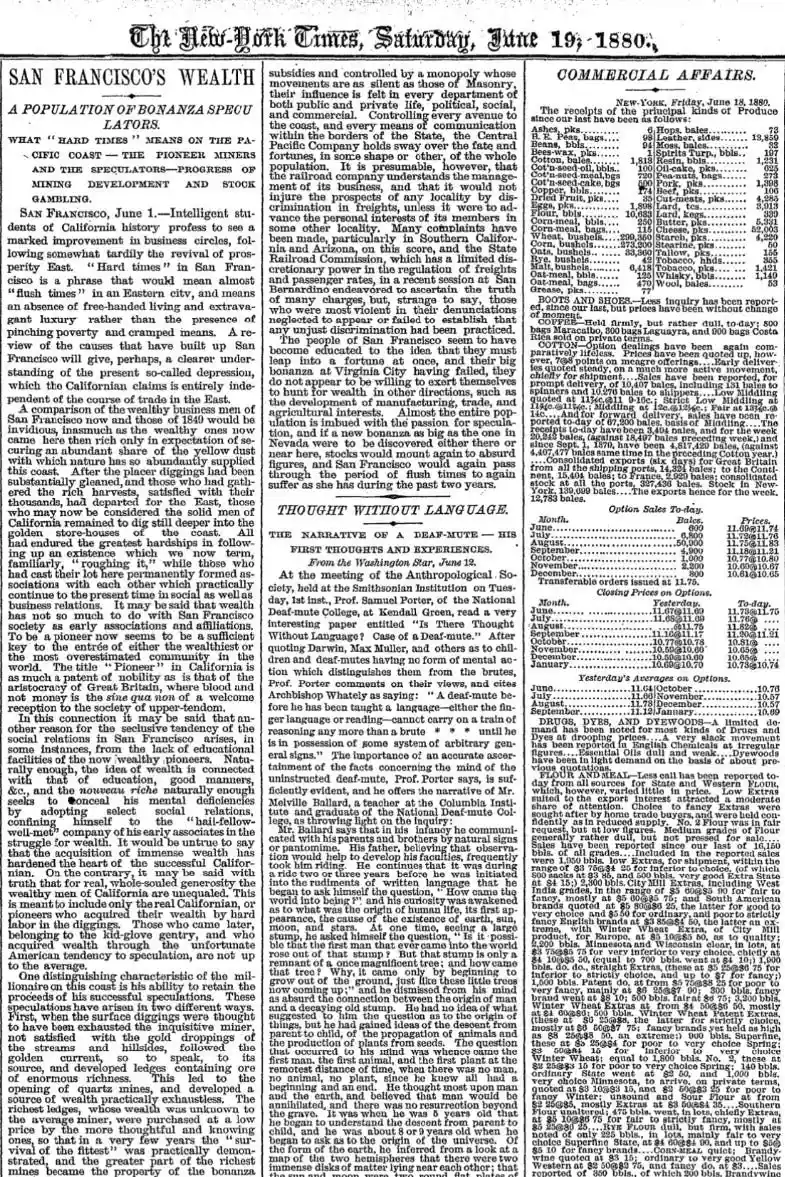
The New York Times, Saturday, June 19, 1880

Welcome to the "History Always Rhymes" series. In this series, I illuminate current events from the key perspectives of the distant past.

On a quiet Saturday, as I was perusing old newspapers—a hobby of mine—I came across a report from June 19, 1880, which has a startling relevance to our current anxieties about AI.

This is the story of Melville Ballard. He grew up without language, yet by staring at a tree stump, he asked himself a question: Did the first man grow from here?
This case from 144 years ago—officially presented at the Smithsonian Institution—poses a potentially fatal challenge to today's large language models and the massive investments behind them. Through the story of an ordinary person, it boldly declares: complex thought is born in the silence that precedes language.

Today, deep in the 21st century, by placing language before rational capacity, we are not building intelligence—we are merely crafting an increasingly refined mirror.

In that old newspaper, two articles are worth noting. Let's start with the one in the middle of the third page, titled: "Thought Without Language."

Of course, large language models, small language models, and reasoning capabilities are the hottest topics right now.

The full title of that article was: "Thought Without Language—A Deaf-Mute's Account of His Earliest Thoughts and Experiences." It was first published in The Washington Star on June 12, 1880.

The subject was Professor Samuel Porter of the Kendall Green National Deaf-Mute College, who presented a paper at the Smithsonian Institution titled, "Can There Be Thought Without Language? A Case of a Deaf-Mute."

The paper began by discussing the mental activities of deaf-mutes and children without linguistic forms, using terminology far behind today's standards, and I was about to skip it.

But the case's subject was a teacher at the Columbia Institution for the Instruction of the Deaf and Dumb—Melville Ballard himself, a deaf-mute and also a graduate of the National Deaf-Mute College.

Ballard said that in his childhood he communicated with his parents and brothers through natural gestures or pantomime. His father believed observation would develop his intellect and often took him out riding.

He continued: Two or three years before he was formally introduced to the basics of written language, during one of these rides, he began to ask himself: "How did the world come to be?" He developed a strong curiosity about the origin of human life, its initial appearance, and the reason for the existence of the earth, sun, moon, and stars.

Once, he saw a large tree stump and a question arose in his mind: "Could the first man to come into the world have grown from that stump?" But then he thought, that stump was just the remnant of a once majestic tree; how did that tree come to be? It grew slowly from the ground, just like the small saplings before him—he then dismissed the idea of linking human origin to a decayed old stump as absurd.

He didn't know what triggered his inquiry into the origin of all things, but he had already established concepts of parental inheritance, animal reproduction, and plants growing from seeds.

The question truly lingering in his mind was: At the most distant beginning, when there were no people, no animals, no plants, where did the first man, the first animal, the first plant actually come from? He thought most about people and the earth, believing that people would eventually perish, with no resurrection after death.

Around the age of 5, he began to understand the concept of parental inheritance; by 8 or 9, he began to question the origin of the universe. Regarding the shape of the earth, he inferred from a map of two hemispheres that they were two huge material disks, adjacent to each other; the sun and moon were two circular luminous plates, and he felt a certain awe towards them, inferring from their rising and setting that there must be something with power governing their paths.

He thought the sun entered a hole in the west and emerged from another hole in the east, traveling through a huge pipe inside the earth along the same arc it traced in the sky. The stars, in his eyes, were tiny points of light embedded in the celestial curtain. He described how he pondered all this in vain until he entered school at age 11.

Before that, his mother had told him about a mysterious being in the sky, but when she couldn't answer his further questions, he could only give up in despair, filled with sadness because he couldn't gain any definite knowledge about that mysterious celestial life.

In his first year at school, he only learned a few sentences each Sunday, and although he studied these simple words, he never truly understood their meaning. He attended services, but due to insufficient mastery of sign language, he understood almost nothing. In the second year, he had a small catechism with a series of questions and answers.

The combination of language and rational capacity thus propelled the development of understanding.

Thereafter, he was able to understand the sign language used by the teachers. One might think his curious nature should have been satisfied. This was not the case—when he learned that the universe was created by that great ruling Spirit, he began to ask: Where did the Creator come from? He continued to pursue the nature and origin of that Ruler. Thinking about this, he asked himself: "After we enter the Lord's kingdom, can we know God's essence and understand His infinity?" Should he, like that patriarch, say: "Can you find out the deep things of God?"

Professor Porter then presented his core argument to the 1880 Smithsonian audience.

He said that animals might understand certain words and distinguish certain objects. But he pointed out:

"Even granting all the possibilities possessed by animals, is it not obvious—that man possesses some faculties which we cannot conceive of as developed from anything held in common with the lower animals, nor as merely an enhancement in degree of those common traits."

"...However similar the mode of impression or the structure of the organs, however dependent on organic activities—that is, however closely connected physiologically—the perception of the eye, as a sensation or perception, is inherently different from that of the ear, head, or tongue, and implies a special gift or faculty not contained in the latter. Rational action and the operation of the lower faculties are not so."

"...That the two share certain elements does not prove they belong to the same order, nor make it possible for one to develop into the other. If the soul's eye—that higher reason which enables us to discern the universe of things—cannot look inward and clearly distinguish its own nature and operations, we should not therefore forget its function, deny its essential superiority, or equate it with those lower, subordinate faculties which we can use it to examine. That which enables us to understand all things must, in its essence, be superior to anything understood by it."

One audience member particularly noted that Ballard's eyes, above all, perfectly conveyed meaning, without any misunderstanding:

"The most interesting part of the meeting was Mr. Ballard's description in gesture of how his mother told him he was going to a faraway school where he would read from books and write letters to fold and send to her; and the pantomime of a hunter who, after shooting a squirrel, accidentally shot himself. Mr. Ballard's gestures and movements, along with his eyes and facial expressions, perfectly conveyed his meaning to the audience. In the words of one member, the expression of the eyes is a language that cannot be misunderstood."

Consider these two sentences:

  • "That which enables us to understand all things must, in its essence, be superior to anything understood by it."
  • "The expression of the eyes is a language that cannot be misunderstood."

To summarize:

  • Language without rational capacity cannot achieve understanding
  • Only when rational capacity exists can language unlock understanding
  • Fully realized understanding transcends language itself

Large language models place language first, building a primitive form of reason purely through logical inference. But this reason has proven flawed, prone to hallucinations at the many rough edges of knowledge.

Rational capacity never truly exists within them. Therefore, language cannot be sublimated into understanding through reason.

The professor, in his work with deaf-mutes, found: true rational capacity must precede language for language to unlock understanding—understanding is the result produced by true rational capacity and language together.

"The expression of the eyes is a language that cannot be misunderstood."

In other words, the expression of the eyes is the form of perfect understanding—without the need for language.

Large language models, by placing language before true rational capacity, can never reach understanding.

If understanding truly transcends language—as revealed in this Smithsonian presentation 144 years ago—we shouldn't have trouble finding evidence for it today.

I can appreciate this from my own study and practice of medicine. Throughout pre-med courses and most of medical school, deductive logic is the tool students use to organize the vast body of medical knowledge. Entering the clinical phase, the art of medicine—physical signs, emotions, human expertise—develops. Then, at some point during residency or early practice, with the accumulation of much of this experience, understanding finally arrives. All the parts connect with each other in a vast, complex network, allowing experienced physicians to provide complete patient care.

Two surgeons handling a complex head and neck cancer surgery or trauma, or the nurses working with them, can sometimes communicate with just a glance—complete understanding is conveyed, action is triggered, because everyone present has reached an understanding that transcends logical inference and the primitive reasoning forms of memorization and puzzle-solving from early medical education.

The glance thus provides an intuitive grasp of reality, built on shared understanding, which in turn comes from rational capacity in the presence of language.

Large language models—and small language models—are permanently stuck in the middle. They can simulate reasoning, but lack true rational capacity, lack eyes, lack understanding.

The Ballard Test: An entity must demonstrate reason without language to truly possess understanding.

This is a known flaw, a bad starting point. The initial direction of AI research was to generate true rational capacity first, but this was never achieved, so the field turned to language-first—because it was easier.

This "bad starting point" led to a "parameter trap": brute-force language processing powered by countless power-hungry chips has become an extremely ironic bottleneck.

As highlighted in my conversation with Klarna founder Sebastian Siemiatkowski, the way forward lies in compression—prioritizing "System 2" reasoning, digesting information redundancy and the relatively limited set of queries generated by humans, thereby drastically reducing computational demands.

This new path rejects the route of language models talking to each other in an infinite mirror pursuit of the singularity—a directionless waste of resources and, lacking support from economic reality, ultimately impossible.

Cutting-edge research like Google's AlphaGeometry and Meta's Coconut is shifting towards this "reason-first" architecture, but they are essentially rediscovering what was presented at the Smithsonian 144 years ago: Language is the output of understanding, not the engine of reason.

This multi-trillion-dollar "compute myth" might be broken by a return—a return to the silence of pre-linguistic reason. It is the return of the full-bandwidth rational capacity of the deaf-mute, whose silent thoughts reached for the stars in the firmament before finding the words to express them.

Silicon Valley

As mentioned earlier, there was another noteworthy article on the same page. Its relevance to the first is greater than anyone in the 1880s could have imagined.

This article was called: "The Wealth of San Francisco: A City Full of Speculators Who Get Rich Quick."

It was written in San Francisco on June 1, 1880, but not published in The New York Times until June 19.

The French saying comes to mind: "The more things change, the more they stay the same." It feels apt here.

"What San Francisco calls 'hard times' might mean 'quite comfortable days' in Eastern cities, referring to a lack of extravagance and lavish spending, rather than poverty and dire straits."

California at that time was a paradise for small-scale capital players. To satisfy the desire for speculation, a unique open bidding system emerged: for just $50, you could buy a share in a mine, at one dollar per share, or two shares for fifty cents, or any quantity at different prices.

When a certain stock "boomed," it seemed only to fuel the urge to "do it again." It ignited the same speculative fervor in San Francisco, with people vying to chase the lost opportunities of the get-rich-quick groups; the "boom" came with market losses, the "boom" faded, and stock prices returned to normal.

The article's conclusion hits remarkably hard on today's reality:

San Franciscans seem to have grown accustomed to the notion that wealth must be obtained in one fell swoop, and after their big get-rich-quick scheme in Virginia City fell through, they seemed unwilling to rouse themselves to seek wealth in other directions like manufacturing, trade, and agriculture. Almost the entire city is filled with speculative enthusiasm, and if a new bonanza mine as big as Nevada's were discovered here or nearby, stock prices would again soar to absurd heights, San Francisco would again experience those get-rich-quick years, and then again endure everything it has suffered the past two years.

In my article "The Core Sign of a Bubble: Greed on the Supply Side," I traced this astonishing tendency originating from the San Francisco Bay Area: speculation constantly heats up, driving investment far beyond what any anticipated end demand could absorb in any reasonable timeframe.

Reading such old newspapers allows us to interpret today's events from a unique perspective. Whether Silicon Valley will "again experience those get-rich-quick years, and then again endure everything," as it has done time and again, or whether it will break the pattern—no one can say for sure. I hope this article has been beneficial to you.

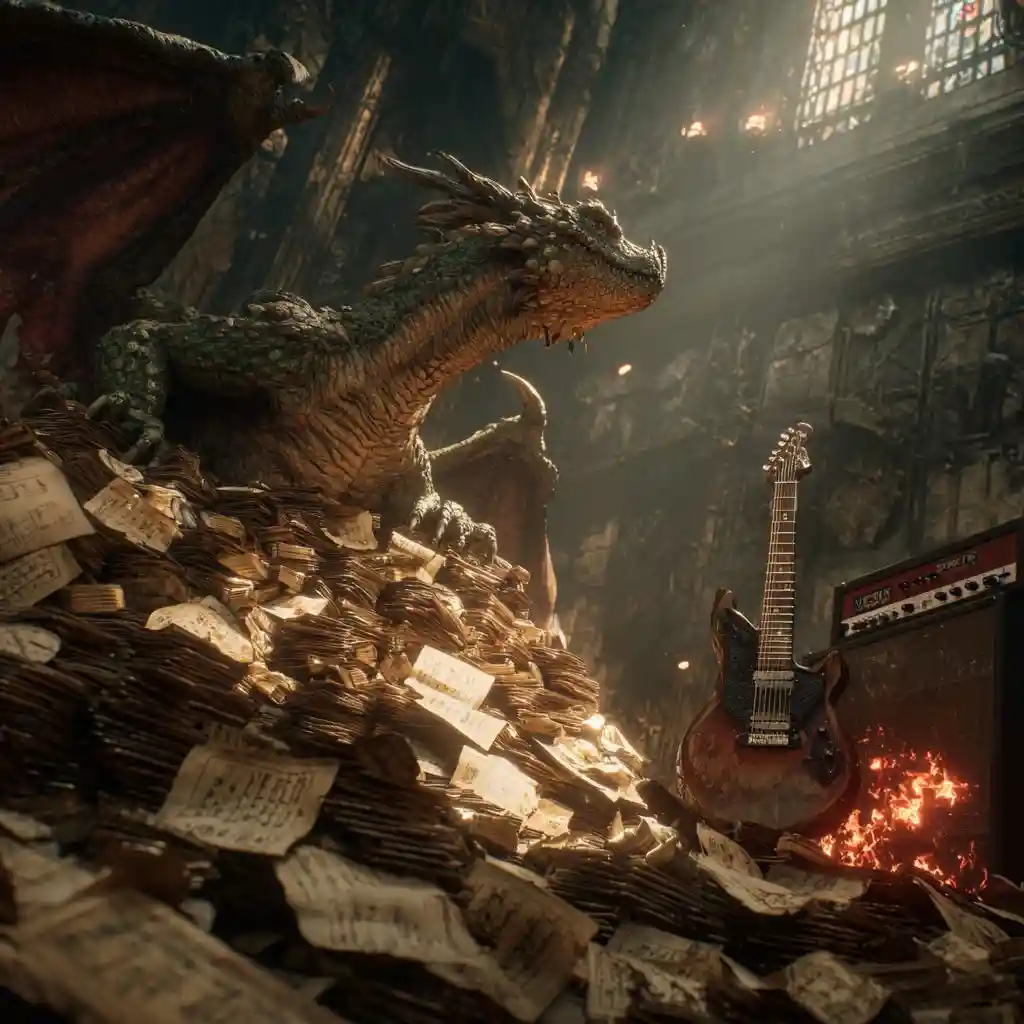
Finally, I want to recommend Midjourney, a tool for generating images and videos, to the readers.

It's incredibly fun and thought-provoking. Get creative!
Until next time!

Perguntas relacionadas

QWhat is the core argument presented by Michael Burry regarding current AI investments?

ABurry argues that the current approach of prioritizing language processing over genuine reasoning capabilities in AI development is fundamentally flawed, leading to systems that can mimic but not truly understand, resulting in hallucinations and inefficient resource use.

QWho was Melville Ballard and why is his story significant to the AI discussion?

AMelville Ballard was a deaf-mute individual from the 19th century who developed complex abstract thoughts about existence and cosmology without formal language. His case demonstrates that reasoning and understanding can exist prior to language, challenging the language-first approach of current AI models.

QWhat does the 'Barrett Test' propose as a measure of true understanding in AI?

AThe 'Barrett Test' proposes that an entity must demonstrate reasoning capabilities without relying on language to be considered truly capable of understanding, emphasizing that genuine intelligence precedes linguistic expression.

QHow does Burry connect the historical speculation in 1880s San Francisco to modern AI investments?

ABurry draws a parallel between the speculative frenzy in 1880s San Francisco mining stocks and today's AI investment boom, highlighting how both are driven by irrational exuberance and overinvestment without realistic economic foundations, leading to inevitable bust cycles.

QWhat alternative approach does Burry suggest for future AI development?

ABurry advocates for a 'reasoning-first' architecture that prioritizes genuine cognitive capabilities and compression of information, reducing computational waste and moving away from the inefficient 'language-first' model that dominates current AI research.

Leituras Relacionadas

Cook's Curtain Call and Ternus Takes the Helm: The Disruption and Reboot of Apple's 4 Trillion Dollar Empire

Tim Cook has officially announced he will step down as CEO of Apple in September, transitioning to executive chairman after a 15-year tenure during which he grew the company’s market value from around $350 billion to nearly $4 trillion. He will be succeeded by John Ternus, a 50-year-old hardware engineering veteran who has been groomed for the role through increasing public visibility and internal responsibility. Ternus’s appointment signals a strategic shift toward hardware and engineering leadership, with Johny Srouji—head of Apple Silicon—taking on an expanded role as Chief Hardware Officer. This consolidation aims to strengthen Apple’s core technological capabilities. However, Cook’s departure highlights a significant unresolved issue: Apple’s delayed and fragmented approach to artificial intelligence. Despite early efforts, such as hiring John Giannandrea from Google in 2018, Apple’s AI initiatives—particularly around Siri—have struggled with internal restructuring and reliance on external partnerships, including with Google. The transition comes at a critical moment as Apple faces paradigm shifts with the rise of artificial general intelligence (ASI). The company’s closed ecosystem of hardware, software, and services—once a major advantage—now presents challenges in adapting to an AI-centric world where intelligence may matter more than the device itself. Ternus must quickly articulate a clear AI strategy, possibly starting at WWDC, to reassure markets and redefine Apple’s role in a new technological era. His task is not only to maintain Apple’s operational excellence but also to reinvigorate its capacity to innovate and lead in the age of AI.

marsbitHá 43m

Cook's Curtain Call and Ternus Takes the Helm: The Disruption and Reboot of Apple's 4 Trillion Dollar Empire

marsbitHá 43m

Trading

Spot
Futuros

Artigos em Destaque

O que é GROK AI

Grok AI: Revolucionar a Tecnologia Conversacional na Era Web3 Introdução No panorama em rápida evolução da inteligência artificial, a Grok AI destaca-se como um projeto notável que liga os domínios da tecnologia avançada e da interação com o utilizador. Desenvolvida pela xAI, uma empresa liderada pelo renomado empreendedor Elon Musk, a Grok AI procura redefinir a forma como interagimos com a inteligência artificial. À medida que o movimento Web3 continua a florescer, a Grok AI visa aproveitar o poder da IA conversacional para responder a consultas complexas, proporcionando aos utilizadores uma experiência que é não apenas informativa, mas também divertida. O que é a Grok AI? A Grok AI é um sofisticado chatbot de IA conversacional projetado para interagir com os utilizadores de forma dinâmica. Ao contrário de muitos sistemas de IA tradicionais, a Grok AI abraça uma gama mais ampla de perguntas, incluindo aquelas tipicamente consideradas inadequadas ou fora das respostas padrão. Os principais objetivos do projeto incluem: Raciocínio Fiável: A Grok AI enfatiza o raciocínio de senso comum para fornecer respostas lógicas com base na compreensão contextual. Supervisão Escalável: A integração de assistência de ferramentas garante que as interações dos utilizadores sejam monitorizadas e otimizadas para qualidade. Verificação Formal: A segurança é primordial; a Grok AI incorpora métodos de verificação formal para aumentar a fiabilidade das suas saídas. Compreensão de Longo Contexto: O modelo de IA destaca-se na retenção e recordação de um extenso histórico de conversas, facilitando discussões significativas e contextualizadas. Robustez Adversarial: Ao focar na melhoria das suas defesas contra entradas manipuladas ou maliciosas, a Grok AI visa manter a integridade das interações dos utilizadores. Em essência, a Grok AI não é apenas um dispositivo de recuperação de informações; é um parceiro conversacional imersivo que incentiva um diálogo dinâmico. Criador da Grok AI A mente por trás da Grok AI não é outra senão Elon Musk, um indivíduo sinónimo de inovação em vários campos, incluindo automóvel, viagens espaciais e tecnologia. Sob a égide da xAI, uma empresa focada em avançar a tecnologia de IA de maneiras benéficas, a visão de Musk visa reformular a compreensão das interações com a IA. A liderança e a ética fundacional são profundamente influenciadas pelo compromisso de Musk em ultrapassar os limites tecnológicos. Investidores da Grok AI Embora os detalhes específicos sobre os investidores que apoiam a Grok AI permaneçam limitados, é reconhecido publicamente que a xAI, a incubadora do projeto, é fundada e apoiada principalmente pelo próprio Elon Musk. As anteriores empreitadas e participações de Musk fornecem um forte apoio, reforçando ainda mais a credibilidade e o potencial de crescimento da Grok AI. No entanto, até agora, informações sobre fundações ou organizações de investimento adicionais que apoiam a Grok AI não estão prontamente acessíveis, marcando uma área para exploração futura potencial. Como Funciona a Grok AI? A mecânica operacional da Grok AI é tão inovadora quanto a sua estrutura conceptual. O projeto integra várias tecnologias de ponta que facilitam as suas funcionalidades únicas: Infraestrutura Robusta: A Grok AI é construída utilizando Kubernetes para orquestração de contêineres, Rust para desempenho e segurança, e JAX para computação numérica de alto desempenho. Este trio assegura que o chatbot opere de forma eficiente, escale eficazmente e sirva os utilizadores prontamente. Acesso a Conhecimento em Tempo Real: Uma das características distintivas da Grok AI é a sua capacidade de aceder a dados em tempo real através da plataforma X—anteriormente conhecida como Twitter. Esta capacidade concede à IA acesso às informações mais recentes, permitindo-lhe fornecer respostas e recomendações oportunas que outros modelos de IA poderiam perder. Dois Modos de Interação: A Grok AI oferece aos utilizadores a escolha entre “Modo Divertido” e “Modo Regular”. O Modo Divertido permite um estilo de interação mais lúdico e humorístico, enquanto o Modo Regular foca em fornecer respostas precisas e exatas. Esta versatilidade assegura uma experiência adaptada que atende a várias preferências dos utilizadores. Em essência, a Grok AI combina desempenho com envolvimento, criando uma experiência que é tanto enriquecedora quanto divertida. Cronologia da Grok AI A jornada da Grok AI é marcada por marcos fundamentais que refletem as suas fases de desenvolvimento e implementação: Desenvolvimento Inicial: A fase fundamental da Grok AI ocorreu ao longo de aproximadamente dois meses, durante os quais o treinamento inicial e o ajuste do modelo foram realizados. Lançamento Beta do Grok-2: Numa evolução significativa, o beta do Grok-2 foi anunciado. Este lançamento introduziu duas versões do chatbot—Grok-2 e Grok-2 mini—cada uma equipada com capacidades para conversar, programar e raciocinar. Acesso Público: Após o seu desenvolvimento beta, a Grok AI tornou-se disponível para os utilizadores da plataforma X. Aqueles com contas verificadas por um número de telefone e ativas há pelo menos sete dias podem aceder a uma versão limitada, tornando a tecnologia disponível para um público mais amplo. Esta cronologia encapsula o crescimento sistemático da Grok AI desde a sua concepção até ao envolvimento público, enfatizando o seu compromisso com a melhoria contínua e a interação com o utilizador. Principais Características da Grok AI A Grok AI abrange várias características principais que contribuem para a sua identidade inovadora: Integração de Conhecimento em Tempo Real: O acesso a informações atuais e relevantes diferencia a Grok AI de muitos modelos estáticos, permitindo uma experiência de utilizador envolvente e precisa. Estilos de Interação Versáteis: Ao oferecer modos de interação distintos, a Grok AI atende a várias preferências dos utilizadores, convidando à criatividade e personalização na conversa com a IA. Base Tecnológica Avançada: A utilização de Kubernetes, Rust e JAX fornece ao projeto uma estrutura sólida para garantir fiabilidade e desempenho ótimo. Consideração de Discurso Ético: A inclusão de uma função de geração de imagens demonstra o espírito inovador do projeto. No entanto, também levanta considerações éticas em torno dos direitos autorais e da representação respeitosa de figuras reconhecíveis—uma discussão em curso dentro da comunidade de IA. Conclusão Como uma entidade pioneira no domínio da IA conversacional, a Grok AI encapsula o potencial para experiências transformadoras do utilizador na era digital. Desenvolvida pela xAI e impulsionada pela abordagem visionária de Elon Musk, a Grok AI integra conhecimento em tempo real com capacidades avançadas de interação. Esforça-se por ultrapassar os limites do que a inteligência artificial pode alcançar, mantendo um foco nas considerações éticas e na segurança do utilizador. A Grok AI não apenas incorpora o avanço tecnológico, mas também representa um novo paradigma de conversas no panorama Web3, prometendo envolver os utilizadores com conhecimento hábil e interação lúdica. À medida que o projeto continua a evoluir, ele permanece como um testemunho do que a interseção da tecnologia, criatividade e interação humana pode alcançar.

349 Visualizações TotaisPublicado em {updateTime}Atualizado em 2024.12.26

O que é GROK AI

O que é ERC AI

Euruka Tech: Uma Visão Geral do $erc ai e as suas Ambições no Web3 Introdução No panorama em rápida evolução da tecnologia blockchain e das aplicações descentralizadas, novos projetos surgem frequentemente, cada um com objetivos e metodologias únicas. Um desses projetos é a Euruka Tech, que opera no vasto domínio das criptomoedas e do Web3. O foco principal da Euruka Tech, particularmente do seu token $erc ai, é apresentar soluções inovadoras concebidas para aproveitar as capacidades crescentes da tecnologia descentralizada. Este artigo tem como objetivo fornecer uma visão abrangente da Euruka Tech, uma exploração das suas metas, funcionalidade, a identidade do seu criador, potenciais investidores e a sua importância no contexto mais amplo do Web3. O que é a Euruka Tech, $erc ai? A Euruka Tech é caracterizada como um projeto que aproveita as ferramentas e funcionalidades oferecidas pelo ambiente Web3, focando na integração da inteligência artificial nas suas operações. Embora os detalhes específicos sobre a estrutura do projeto sejam um tanto elusivos, ele é concebido para melhorar o envolvimento dos utilizadores e automatizar processos no espaço cripto. O projeto visa criar um ecossistema descentralizado que não só facilita transações, mas também incorpora funcionalidades preditivas através da inteligência artificial, daí a designação do seu token, $erc ai. O objetivo é fornecer uma plataforma intuitiva que facilite interações mais inteligentes e um processamento eficiente de transações dentro da crescente esfera do Web3. Quem é o Criador da Euruka Tech, $erc ai? Neste momento, a informação sobre o criador ou a equipa fundadora da Euruka Tech permanece não especificada e algo opaca. Esta ausência de dados levanta preocupações, uma vez que o conhecimento sobre o histórico da equipa é frequentemente essencial para estabelecer credibilidade no setor blockchain. Portanto, categorizamos esta informação como desconhecida até que detalhes concretos sejam disponibilizados no domínio público. Quem são os Investidores da Euruka Tech, $erc ai? De forma semelhante, a identificação de investidores ou organizações de apoio para o projeto Euruka Tech não é prontamente fornecida através da pesquisa disponível. Um aspeto que é crucial para potenciais partes interessadas ou utilizadores que consideram envolver-se com a Euruka Tech é a garantia que vem de parcerias financeiras estabelecidas ou apoio de empresas de investimento respeitáveis. Sem divulgações sobre afiliações de investimento, é difícil tirar conclusões abrangentes sobre a segurança financeira ou a longevidade do projeto. Em linha com a informação encontrada, esta seção também se encontra no estado de desconhecido. Como funciona a Euruka Tech, $erc ai? Apesar da falta de especificações técnicas detalhadas para a Euruka Tech, é essencial considerar as suas ambições inovadoras. O projeto procura aproveitar o poder computacional da inteligência artificial para automatizar e melhorar a experiência do utilizador no ambiente das criptomoedas. Ao integrar IA com tecnologia blockchain, a Euruka Tech visa fornecer funcionalidades como negociações automatizadas, avaliações de risco e interfaces de utilizador personalizadas. A essência inovadora da Euruka Tech reside no seu objetivo de criar uma conexão fluida entre os utilizadores e as vastas possibilidades apresentadas pelas redes descentralizadas. Através da utilização de algoritmos de aprendizagem automática e IA, visa minimizar os desafios enfrentados por utilizadores de primeira viagem e agilizar as experiências transacionais dentro do quadro do Web3. Esta simbiose entre IA e blockchain sublinha a importância do token $erc ai, que se apresenta como uma ponte entre interfaces de utilizador tradicionais e as capacidades avançadas das tecnologias descentralizadas. Cronologia da Euruka Tech, $erc ai Infelizmente, devido à informação limitada disponível sobre a Euruka Tech, não conseguimos apresentar uma cronologia detalhada dos principais desenvolvimentos ou marcos na jornada do projeto. Esta cronologia, tipicamente inestimável para traçar a evolução de um projeto e compreender a sua trajetória de crescimento, não está atualmente disponível. À medida que informações sobre eventos notáveis, parcerias ou adições funcionais se tornem evidentes, atualizações certamente aumentarão a visibilidade da Euruka Tech na esfera cripto. Esclarecimento sobre Outros Projetos “Eureka” É importante abordar que múltiplos projetos e empresas partilham uma nomenclatura semelhante com “Eureka.” A pesquisa identificou iniciativas como um agente de IA da NVIDIA Research, que se concentra em ensinar robôs a realizar tarefas complexas utilizando métodos generativos, bem como a Eureka Labs e a Eureka AI, que melhoram a experiência do utilizador na educação e na análise de serviços ao cliente, respetivamente. No entanto, estes projetos são distintos da Euruka Tech e não devem ser confundidos com os seus objetivos ou funcionalidades. Conclusão A Euruka Tech, juntamente com o seu token $erc ai, representa um jogador promissor, mas atualmente obscuro, dentro do panorama do Web3. Embora os detalhes sobre o seu criador e investidores permaneçam não divulgados, a ambição central de combinar inteligência artificial com tecnologia blockchain destaca-se como um ponto focal de interesse. As abordagens únicas do projeto em promover o envolvimento do utilizador através da automação avançada podem diferenciá-lo à medida que o ecossistema Web3 avança. À medida que o mercado cripto continua a evoluir, as partes interessadas devem manter um olhar atento sobre os avanços em torno da Euruka Tech, uma vez que o desenvolvimento de inovações documentadas, parcerias ou um roteiro definido pode apresentar oportunidades significativas no futuro próximo. Neste momento, aguardamos por insights mais substanciais que possam desvendar o potencial da Euruka Tech e a sua posição no competitivo panorama cripto.

397 Visualizações TotaisPublicado em {updateTime}Atualizado em 2025.01.02

O que é ERC AI

O que é DUOLINGO AI

DUOLINGO AI: Integrar a Aprendizagem de Línguas com Inovação Web3 e IA Numa era em que a tecnologia transforma a educação, a integração da inteligência artificial (IA) e das redes blockchain anuncia uma nova fronteira para a aprendizagem de línguas. Apresentamos DUOLINGO AI e a sua criptomoeda associada, $DUOLINGO AI. Este projeto aspira a unir o poder educativo das principais plataformas de aprendizagem de línguas com os benefícios da tecnologia descentralizada Web3. Este artigo explora os principais aspectos do DUOLINGO AI, analisando os seus objetivos, estrutura tecnológica, desenvolvimento histórico e potencial futuro, mantendo a clareza entre o recurso educativo original e esta iniciativa independente de criptomoeda. Visão Geral do DUOLINGO AI No seu cerne, DUOLINGO AI procura estabelecer um ambiente descentralizado onde os alunos podem ganhar recompensas criptográficas por alcançar marcos educativos em proficiência linguística. Ao aplicar contratos inteligentes, o projeto visa automatizar processos de verificação de habilidades e alocação de tokens, aderindo aos princípios do Web3 que enfatizam a transparência e a propriedade do utilizador. O modelo diverge das abordagens tradicionais de aquisição de línguas ao apoiar-se fortemente numa estrutura de governança orientada pela comunidade, permitindo que os detentores de tokens sugiram melhorias ao conteúdo dos cursos e à distribuição de recompensas. Alguns dos objetivos notáveis do DUOLINGO AI incluem: Aprendizagem Gamificada: O projeto integra conquistas em blockchain e tokens não fungíveis (NFTs) para representar níveis de proficiência linguística, promovendo a motivação através de recompensas digitais envolventes. Criação de Conteúdo Descentralizada: Abre caminhos para educadores e entusiastas de línguas contribuírem com os seus cursos, facilitando um modelo de partilha de receitas que beneficia todos os colaboradores. Personalização Através de IA: Ao empregar modelos avançados de aprendizagem de máquina, o DUOLINGO AI personaliza as lições para se adaptar ao progresso de aprendizagem individual, semelhante às características adaptativas encontradas em plataformas estabelecidas. Criadores do Projeto e Governança A partir de abril de 2025, a equipa por trás do $DUOLINGO AI permanece pseudónima, uma prática frequente no panorama descentralizado das criptomoedas. Esta anonimidade visa promover o crescimento coletivo e o envolvimento das partes interessadas, em vez de se concentrar em desenvolvedores individuais. O contrato inteligente implementado na blockchain Solana indica o endereço da carteira do desenvolvedor, o que significa o compromisso com a transparência em relação às transações, apesar da identidade dos criadores ser desconhecida. De acordo com o seu roteiro, o DUOLINGO AI pretende evoluir para uma Organização Autónoma Descentralizada (DAO). Esta estrutura de governança permite que os detentores de tokens votem em questões críticas, como implementações de funcionalidades e alocação de tesouraria. Este modelo alinha-se com a ética de empoderamento comunitário encontrada em várias aplicações descentralizadas, enfatizando a importância da tomada de decisão coletiva. Investidores e Parcerias Estratégicas Atualmente, não existem investidores institucionais ou capitalistas de risco publicamente identificáveis ligados ao $DUOLINGO AI. Em vez disso, a liquidez do projeto origina-se principalmente de trocas descentralizadas (DEXs), marcando um contraste acentuado com as estratégias de financiamento das empresas tradicionais de tecnologia educacional. Este modelo de base indica uma abordagem orientada pela comunidade, refletindo o compromisso do projeto com a descentralização. No seu whitepaper, o DUOLINGO AI menciona a formação de colaborações com “plataformas de educação blockchain” não especificadas, com o objetivo de enriquecer a sua oferta de cursos. Embora parcerias específicas ainda não tenham sido divulgadas, estes esforços colaborativos sugerem uma estratégia para misturar inovação em blockchain com iniciativas educativas, expandindo o acesso e o envolvimento dos utilizadores em diversas vias de aprendizagem. Arquitetura Tecnológica Integração de IA O DUOLINGO AI incorpora dois componentes principais impulsionados por IA para melhorar as suas ofertas educativas: Motor de Aprendizagem Adaptativa: Este motor sofisticado aprende a partir das interações dos utilizadores, semelhante a modelos proprietários de grandes plataformas educativas. Ele ajusta dinamicamente a dificuldade das lições para abordar desafios específicos dos alunos, reforçando áreas fracas através de exercícios direcionados. Agentes Conversacionais: Ao empregar chatbots alimentados por GPT-4, o DUOLINGO AI oferece uma plataforma para os utilizadores se envolverem em conversas simuladas, promovendo uma experiência de aprendizagem de línguas mais interativa e prática. Infraestrutura Blockchain Construído na blockchain Solana, o $DUOLINGO AI utiliza uma estrutura tecnológica abrangente que inclui: Contratos Inteligentes de Verificação de Habilidades: Esta funcionalidade atribui automaticamente tokens aos utilizadores que passam com sucesso em testes de proficiência, reforçando a estrutura de incentivos para resultados de aprendizagem genuínos. Emblemas NFT: Estes tokens digitais significam vários marcos que os alunos alcançam, como completar uma seção do seu curso ou dominar habilidades específicas, permitindo-lhes negociar ou exibir as suas conquistas digitalmente. Governança DAO: Membros da comunidade com tokens podem participar na governança votando em propostas-chave, facilitando uma cultura participativa que incentiva a inovação nas ofertas de cursos e funcionalidades da plataforma. Cronologia Histórica 2022–2023: Conceituação O trabalho preliminar para o DUOLINGO AI começa com a criação de um whitepaper, destacando a sinergia entre os avanços em IA na aprendizagem de línguas e o potencial descentralizado da tecnologia blockchain. 2024: Lançamento Beta Um lançamento beta limitado introduz ofertas em línguas populares, recompensando os primeiros utilizadores com incentivos em tokens como parte da estratégia de envolvimento comunitário do projeto. 2025: Transição para DAO Em abril, ocorre um lançamento completo da mainnet com a circulação de tokens, promovendo discussões comunitárias sobre possíveis expansões para línguas asiáticas e outros desenvolvimentos de cursos. Desafios e Direções Futuras Obstáculos Técnicos Apesar dos seus objetivos ambiciosos, o DUOLINGO AI enfrenta desafios significativos. A escalabilidade continua a ser uma preocupação constante, particularmente no equilíbrio dos custos associados ao processamento de IA e à manutenção de uma rede descentralizada responsiva. Além disso, garantir a criação e moderação de conteúdo de qualidade num ambiente descentralizado apresenta complexidades na manutenção dos padrões educativos. Oportunidades Estratégicas Olhando para o futuro, o DUOLINGO AI tem o potencial de aproveitar parcerias de micro-certificação com instituições académicas, proporcionando validações verificadas em blockchain das habilidades linguísticas. Além disso, a expansão cross-chain poderia permitir que o projeto acedesse a bases de utilizadores mais amplas e a ecossistemas de blockchain adicionais, melhorando a sua interoperabilidade e alcance. Conclusão DUOLINGO AI representa uma fusão inovadora de inteligência artificial e tecnologia blockchain, apresentando uma alternativa focada na comunidade aos sistemas tradicionais de aprendizagem de línguas. Embora o seu desenvolvimento pseudónimo e o modelo económico emergente tragam certos riscos, o compromisso do projeto com a aprendizagem gamificada, educação personalizada e governança descentralizada ilumina um caminho a seguir para a tecnologia educativa no domínio do Web3. À medida que a IA continua a avançar e o ecossistema blockchain evolui, iniciativas como o DUOLINGO AI poderão redefinir a forma como os utilizadores interagem com a educação linguística, empoderando comunidades e recompensando o envolvimento através de mecanismos de aprendizagem inovadores.

383 Visualizações TotaisPublicado em {updateTime}Atualizado em 2025.04.11

O que é DUOLINGO AI

Discussões

Bem-vindo à Comunidade HTX. Aqui, pode manter-se informado sobre os mais recentes desenvolvimentos da plataforma e obter acesso a análises profissionais de mercado. As opiniões dos utilizadores sobre o preço de AI (AI) são apresentadas abaixo.

活动图片