Australia’s Crypto Sector Pushes Forward Amid Structural Challenges

TheNewsCryptoPublicado em 2026-02-27Última atualização em 2026-02-27

Resumo

Cryptocurrency adoption is growing in Australia, particularly within self-managed superannuation funds (SMSFs), which collectively hold around A$3 billion in digital assets. Younger trustees are increasingly diversifying their retirement portfolios with cryptocurrencies like Bitcoin and Ethereum, typically allocating 4–10% of total assets. Regulatory developments, including stricter licensing requirements and the introduction of crypto exchange-traded funds (ETFs), have facilitated compliant investment. ETFs allow exposure without direct key management, aligning with conservative strategies. The sector's growth is driven by demographic trends, regulatory evolution, and financial infrastructure improvements, positioning it at a critical juncture of rising investor interest and maturing oversight.

The adoption of cryptocurrency remains on the rise in Australia, especially in the self-managed superannuation funds industry. The self-managed super funds, also known as SMSFs, have billions of dollars invested in digital assets. Information from the Australian Taxation Office indicates that SMSFs together manage about A$3 billion worth of cryptocurrency investments. Trustees are increasingly setting aside small pieces of their retirement funds for investments in digital assets like Bitcoin and Ethereum. Younger trustees have demonstrated greater interest in diversifying retirement investment programs with digital assets.

A majority of SMSFs hold moderate levels of exposure, which range from four to ten percent of the total assets of the fund. Service providers have developed custody and reporting solutions specifically for SMSFs. These solutions make it easier for trustees to comply with the requirements.

The authorities have made it mandatory for SMSFs to have documented investment strategies and segregation of wallets. The retirement preservation goals of super funds are highlighted by the authorities instead of focusing on short-term speculative trading.

Regulation and ETFs Influence Structured Investment Adoption

The regulatory environment in Australia has impacted the way in which trustees decide to invest in cryptocurrencies in retirement savings. The government is working to fine-tune legislation related to digital assets, ensuring that the industry complies with licensing regulations for financial services. This means that digital asset operators will have to seek approval under Australian financial law.

Crypto exchange-traded funds have also played a role in adoption by making it easier to have compliant exposure for SMSFs. ETFs enable trustees to gain exposure to cryptocurrency markets without having to handle the private keys. The regulated ETF products function within the existing framework of financial market regulation. Institutional investors and financial advisors are now recommending ETF structures for conservative retirement investment strategies.

It is suggested that by making regulations and investment structures more accessible, the adoption trend can be improved. The compliance rules also support anti-money laundering and consumer protection regulations. The trustees are also keeping a close watch on legislative changes to ensure that they are compliant with superannuation rules.

Industry analysts are of the view that structured regulatory integration helps in sustainable digital asset investment in retirement schemes. The expansion of crypto in the SMSF sector in Australia is a result of demographic shifts, regulatory evolution, and the development of financial infrastructure. The industry is currently at a critical point where prudent regulation meets increasing investor interest.

Highlighted Crypto News:

Vitalik Buterin Unveils Four-Point Quantum Security Plan for Ethereum

TagsAustraliaCryptocurrencyETFETFs

Criptomoedas em alta

Perguntas relacionadas

QWhat is the total value of cryptocurrency investments managed by SMSFs in Australia, according to the Australian Taxation Office?

ASMSFs together manage about A$3 billion worth of cryptocurrency investments.

QHow have crypto exchange-traded funds (ETFs) influenced cryptocurrency adoption in SMSFs?

AETFs have made it easier for SMSFs to gain compliant exposure to cryptocurrency markets without having to handle private keys, and they function within the existing financial market regulation framework.

QWhat are the authorities emphasizing for super funds instead of short-term speculative trading?

AThe authorities are highlighting the retirement preservation goals of super funds instead of focusing on short-term speculative trading.

QWhat factors have contributed to the expansion of cryptocurrency in Australia's SMSF sector?

AThe expansion is a result of demographic shifts, regulatory evolution, and the development of financial infrastructure.

QWhat specific requirement have authorities made mandatory for SMSFs investing in cryptocurrency?

AAuthorities have made it mandatory for SMSFs to have documented investment strategies and segregation of wallets.

Leituras Relacionadas

CPU Makes a Comeback to the Table, A $170 Billion "Power Seizure" Drama Begins

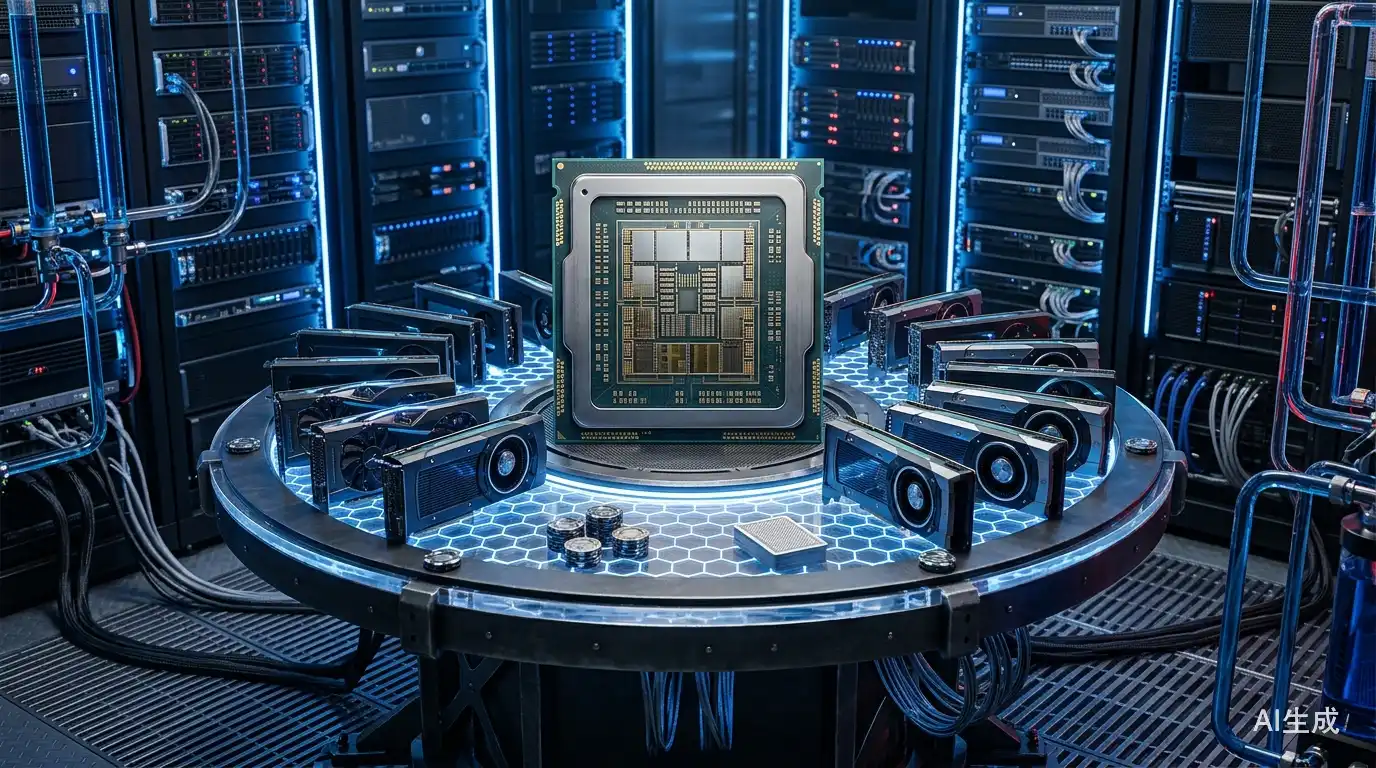
A new era is dawning for the server CPU (Central Processing Unit), driven by the shift from AI model training to large-scale reasoning and the rise of Agentic AI. This article explores how the CPU is reclaiming a central role in the AI data center. For years, the focus has been on the GPU (Graphics Processing Unit) for AI training. However, as AI moves to the inference and Agent phase—where tasks involve complex, multi-step reasoning, tool calls, and data management—the workload balance is flipping. Studies show CPUs now handle over 70% of the workload in Agentic AI, up from 10-30% in training. This is because Agent tasks generate massive intermediate data (KV Cache) that exceeds GPU memory, forcing it to be offloaded to the CPU's larger, more scalable memory pools. This increased importance is translating into market changes. Major players are taking note: NVIDIA launched its first standalone CPU line, Vera, based on ARM architecture and optimized for Agent performance. AMD doubled its server CPU market forecast to over $1200 billion by 2030. Analyst reports project the total server CPU market could reach $1700 billion by 2030, with AI-driven demand being a primary driver. Furthermore, the classic ratio of CPUs to GPUs in AI servers is rapidly changing, converging from 1:8 toward 1:1 for Agent deployments. This surge in demand has led to a rare industry-wide price increase of 10-15% for server CPUs from Intel and AMD, breaking a decade-long trend of "more performance for the same price." Demand is bifurcating into high-core-count CPUs for in-rack GPU support and moderate-core CPUs for standalone Agent task orchestration. In China, this global trend presents an opportunity for domestic CPU manufacturers like Hygon (海光信息) and Huawei Kunpeng, who are bolstered by both growing AI infrastructure needs and national policies promoting technological self-reliance ("xin chuang"). The maturity of their software ecosystems is also accelerating, evidenced by faster adaptation to new AI models. In conclusion, the narrative is shifting from a GPU-centric view to one where CPU-GPU synergy is critical. The CPU is no longer a peripheral component but a performance-defining bottleneck and a key growth driver in the AI hardware stack, opening a massive new market estimated in the hundreds of billions of dollars.

marsbitHá 4h

CPU Makes a Comeback to the Table, A $170 Billion "Power Seizure" Drama Begins

marsbitHá 4h

TechFlow Intelligence: AMD AI Director Publicly Criticizes Claude Code for "Becoming Dumber and Lazier", Trump Claims Full Ceasefire in Hormuz But Strait Still Has 80 Unexploded Mines

TechFlow Intelligence Report: This daily digest covers key developments in AI, crypto, hardware, and geopolitics. In AI, SK Telecom faces US export control scrutiny over its partnership with Anthropic, while a Gemini user reports being misled in a scam scenario, sparking safety debates. China's Z.AI launches the GLM-5.2 model, rivaling Claude Opus without NVIDIA chips. In crypto, Bithumb lists ReProtocol, and Upbit delists KernelDAO. On the hardware front, MIT researchers build a custom OS to study chips, ASML denies US claims its advanced lithography machines are in China, and Amazon considers selling its in-house AI chips. Apple's future A21 Pro chip may use TSMC's latest N2P process. Major tech issues include 10,000 GitHub repositories distributing malware and Apple patching a critical eavesdropping flaw in Beats earbuds. US stocks rise, led by semiconductors, with Intel surging 10.6%, while SpaceX falls 3.5%. Geopolitically, despite a US-Iran deal, the Strait of Hormuz remains risky with ~80 uncleared mines, stalling 80M barrels of oil on standby tankers. Iran postpones Switzerland talks, and Trump calls the agreement an "unconditional surrender." The report highlights a contrast: temporary geopolitical calm versus the ongoing, fundamental restructuring of tech supply chains and chip independence.

marsbitHá 4h

TechFlow Intelligence: AMD AI Director Publicly Criticizes Claude Code for "Becoming Dumber and Lazier", Trump Claims Full Ceasefire in Hormuz But Strait Still Has 80 Unexploded Mines

marsbitHá 4h

Trading

Spot
Futuros

Artigos em Destaque

Como comprar T

Bem-vindo à HTX.com!Tornámos a compra de Threshold Network Token (T) simples e conveniente.Segue o nosso guia passo a passo para iniciar a tua jornada no mundo das criptos.Passo 1: cria a tua conta HTXUtiliza o teu e-mail ou número de telefone para te inscreveres numa conta gratuita na HTX.Desfruta de um processo de inscrição sem complicações e desbloqueia todas as funcionalidades.Obter a minha contaPasso 2: vai para Comprar Cripto e escolhe o teu método de pagamentoCartão de crédito/débito: usa o teu visa ou mastercard para comprar Threshold Network Token (T) instantaneamente.Saldo: usa os fundos da tua conta HTX para transacionar sem problemas.Terceiros: adicionamos métodos de pagamento populares, como Google Pay e Apple Pay, para aumentar a conveniência.P2P: transaciona diretamente com outros utilizadores na HTX.Mercado de balcão (OTC): oferecemos serviços personalizados e taxas de câmbio competitivas para os traders.Passo 3: armazena teu Threshold Network Token (T)Depois de comprar o teu Threshold Network Token (T), armazena-o na tua conta HTX.Alternativamente, podes enviá-lo para outro lugar através de transferência blockchain ou usá-lo para transacionar outras criptomoedas.Passo 4: transaciona Threshold Network Token (T)Transaciona facilmente Threshold Network Token (T) no mercado à vista da HTX.Acede simplesmente à tua conta, seleciona o teu par de trading, executa as tuas transações e monitoriza em tempo real.Oferecemos uma experiência de fácil utilização tanto para principiantes como para traders experientes.

478 Visualizações TotaisPublicado em {updateTime}Atualizado em 2026.06.02

Como comprar T

Discussões

Bem-vindo à Comunidade HTX. Aqui, pode manter-se informado sobre os mais recentes desenvolvimentos da plataforma e obter acesso a análises profissionais de mercado. As opiniões dos utilizadores sobre o preço de T (T) são apresentadas abaixo.

活动图片