Australian Official Sold Cyber Tools for $1.26M in Crypto

TheNewsCryptoPublicado em 2026-02-20Última atualização em 2026-02-20

Resumo

An Australian official, Peter Williams, pleaded guilty to selling sensitive cyber tools, including zero-day exploits, to a Russian broker for over $1.26 million in cryptocurrency. The tools, developed for the U.S. intelligence community and shared with Five Eyes allies, compromised national security. Williams continued selling the exploits even after learning of an FBI investigation. He used anonymized crypto transactions to launder proceeds, spending over $715,000 on luxury items and property. Prosecutors are seeking a nine-year prison sentence, $35 million in restitution, and a $250,000 fine. The case highlights the growing role of cryptocurrency in espionage and national security breaches.

An official from Australia who was admitted guilty to selling sensitive cyber tools to a broker from Russia, and the payment was done in crypto under contracts guaranteeing millions more, making crypto the core of a case prosecutors claimed endangered Five Eyes intelligence abilities.

Prosecutors claimed Peter Williams, a native of Australia, sold 8 safeguarded cyber-exploit components, adding zero-day capabilities, to a Russia-based broker known to do business with the government of Russia.

The tools were made for use by the U.S. intelligence community and shared with Five Eyes partners. The intelligence alliance comprises the U.S., the UK, Canada, Australia and New Zealand.

The U.S. Department of Justice officially accepted in October 2025 that Williams entered into various written contracts with the Russian broker and got over $1.26 million in crypto payments associated with the sales.

The claimed doing is coming into the limelight for the first time as Williams, an ex-Australian Air Force staffer, prepares to be sentenced in Washington in the upcoming week, as per the report by the Cairns Post.

The Penalty For The Accused

A sentencing memo published earlier this month shows extra payments of up to $4 million guaranteed under current cooperation agreements. The memo also reveals that the companies involved have lost over $35 million, adding that Williams kept selling exploits through July 2025 even after he knew the FBI was investigating.

As per the claims, Williams also shifted the crypto via anonymised transactions before cashing out and spent more than $715,000 on vacations, luxury cars, jewellery, and a $1.5 million down payment for a Washington property.

Prosecutors are looking for a sentence of nine years in prison, $35 million in compulsory return, a fine of $250,000 and three years of supervised release. Prosecutions in the last few years reveal how crypto has come up in spying and national security cases.

Highlighted Crypto News Today:

Bybit EU Launches USDC and EURC Stablecoin Earn Campaigns Across Europe

TagsAustraliaCryptoDOJ

Perguntas relacionadas

QWhat was the Australian official accused of selling to a Russian broker, and what was the payment method?

AThe Australian official, Peter Williams, was accused of selling 8 safeguarded cyber-exploit components, including zero-day capabilities, to a Russian broker. The payment was made in cryptocurrency.

QHow much cryptocurrency did Peter Williams receive from the sales, according to the U.S. Department of Justice?

AThe U.S. Department of Justice stated that Peter Williams received over $1.26 million in cryptocurrency payments associated with the sales.

QWhich intelligence alliance's capabilities were allegedly endangered by this case, as claimed by prosecutors?

AProsecutors claimed the case endangered the intelligence abilities of the Five Eyes alliance, which comprises the U.S., the UK, Canada, Australia, and New Zealand.

QWhat additional financial penalties are prosecutors seeking for Peter Williams besides a prison sentence?

ABesides a prison sentence, prosecutors are seeking $35 million in compulsory return, a fine of $250,000, and three years of supervised release.

QWhat did Peter Williams allegedly spend more than $715,000 of the cryptocurrency on?

AHe allegedly spent more than $715,000 on vacations, luxury cars, jewellery, and a $1.5 million down payment for a property in Washington.

Leituras Relacionadas

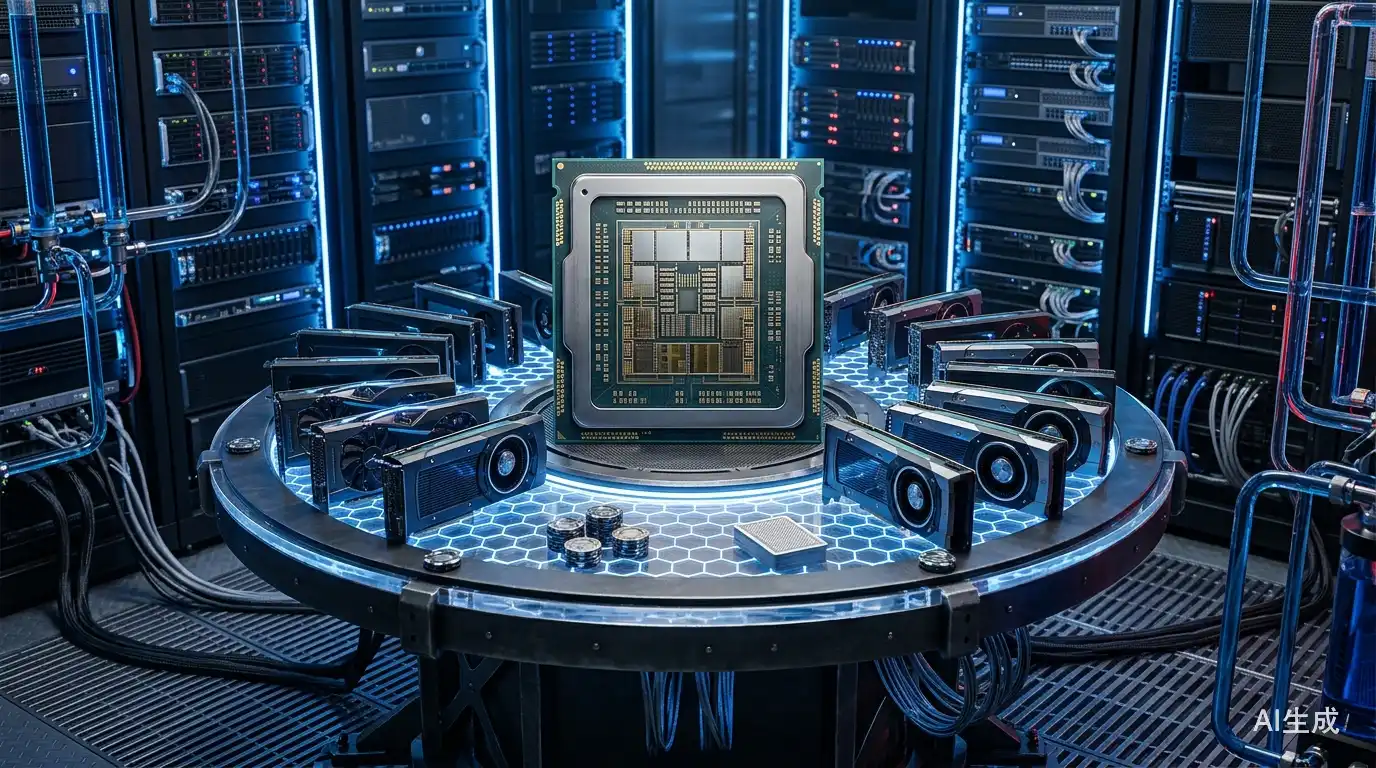
CPU Makes a Comeback to the Table, A $170 Billion "Power Seizure" Drama Begins

A new era is dawning for the server CPU (Central Processing Unit), driven by the shift from AI model training to large-scale reasoning and the rise of Agentic AI. This article explores how the CPU is reclaiming a central role in the AI data center. For years, the focus has been on the GPU (Graphics Processing Unit) for AI training. However, as AI moves to the inference and Agent phase—where tasks involve complex, multi-step reasoning, tool calls, and data management—the workload balance is flipping. Studies show CPUs now handle over 70% of the workload in Agentic AI, up from 10-30% in training. This is because Agent tasks generate massive intermediate data (KV Cache) that exceeds GPU memory, forcing it to be offloaded to the CPU's larger, more scalable memory pools. This increased importance is translating into market changes. Major players are taking note: NVIDIA launched its first standalone CPU line, Vera, based on ARM architecture and optimized for Agent performance. AMD doubled its server CPU market forecast to over $1200 billion by 2030. Analyst reports project the total server CPU market could reach $1700 billion by 2030, with AI-driven demand being a primary driver. Furthermore, the classic ratio of CPUs to GPUs in AI servers is rapidly changing, converging from 1:8 toward 1:1 for Agent deployments. This surge in demand has led to a rare industry-wide price increase of 10-15% for server CPUs from Intel and AMD, breaking a decade-long trend of "more performance for the same price." Demand is bifurcating into high-core-count CPUs for in-rack GPU support and moderate-core CPUs for standalone Agent task orchestration. In China, this global trend presents an opportunity for domestic CPU manufacturers like Hygon (海光信息) and Huawei Kunpeng, who are bolstered by both growing AI infrastructure needs and national policies promoting technological self-reliance ("xin chuang"). The maturity of their software ecosystems is also accelerating, evidenced by faster adaptation to new AI models. In conclusion, the narrative is shifting from a GPU-centric view to one where CPU-GPU synergy is critical. The CPU is no longer a peripheral component but a performance-defining bottleneck and a key growth driver in the AI hardware stack, opening a massive new market estimated in the hundreds of billions of dollars.

marsbitHá 9h

CPU Makes a Comeback to the Table, A $170 Billion "Power Seizure" Drama Begins

marsbitHá 9h

TechFlow Intelligence: AMD AI Director Publicly Criticizes Claude Code for "Becoming Dumber and Lazier", Trump Claims Full Ceasefire in Hormuz But Strait Still Has 80 Unexploded Mines

TechFlow Intelligence Report: This daily digest covers key developments in AI, crypto, hardware, and geopolitics. In AI, SK Telecom faces US export control scrutiny over its partnership with Anthropic, while a Gemini user reports being misled in a scam scenario, sparking safety debates. China's Z.AI launches the GLM-5.2 model, rivaling Claude Opus without NVIDIA chips. In crypto, Bithumb lists ReProtocol, and Upbit delists KernelDAO. On the hardware front, MIT researchers build a custom OS to study chips, ASML denies US claims its advanced lithography machines are in China, and Amazon considers selling its in-house AI chips. Apple's future A21 Pro chip may use TSMC's latest N2P process. Major tech issues include 10,000 GitHub repositories distributing malware and Apple patching a critical eavesdropping flaw in Beats earbuds. US stocks rise, led by semiconductors, with Intel surging 10.6%, while SpaceX falls 3.5%. Geopolitically, despite a US-Iran deal, the Strait of Hormuz remains risky with ~80 uncleared mines, stalling 80M barrels of oil on standby tankers. Iran postpones Switzerland talks, and Trump calls the agreement an "unconditional surrender." The report highlights a contrast: temporary geopolitical calm versus the ongoing, fundamental restructuring of tech supply chains and chip independence.

marsbitHá 9h

TechFlow Intelligence: AMD AI Director Publicly Criticizes Claude Code for "Becoming Dumber and Lazier", Trump Claims Full Ceasefire in Hormuz But Strait Still Has 80 Unexploded Mines

marsbitHá 9h

Trading

Spot
Futuros
活动图片