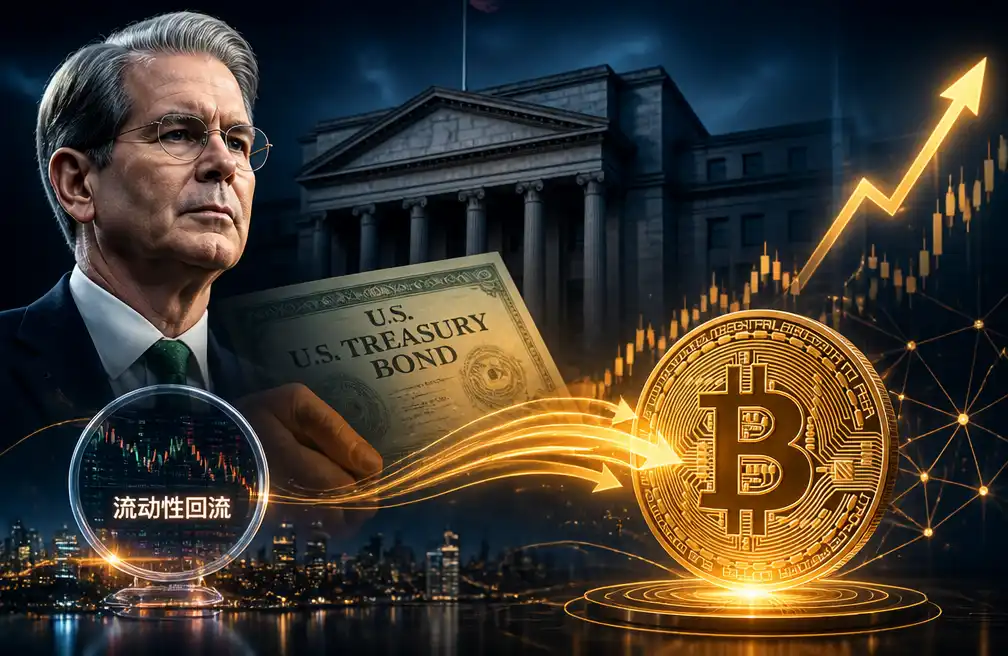
Arthur Hayes Discusses the Sudden Surge in Bitcoin and the Reasons for Bullish Outlook on Ethereum

marsbitPublicado em 2026-08-25Última atualização em 2026-08-25

Resumo

In a podcast interview, BitMEX co-founder Arthur Hayes discusses the recent surge in Bitcoin and his optimism for Ethereum. He attributes Bitcoin's rise to mounting concerns over the US's $40 trillion debt, unsustainable interest payments, and recent Treasury actions, including doubling its long-term bond buyback program. Hayes argues these measures signal impending "yield curve control" and will inject significant liquidity into the market, benefiting scarce assets like Bitcoin. He sees this as a replay of the 2008 financial crisis dynamics that led to Bitcoin's creation. Hayes expresses particular bullishness on Ethereum (ETH), citing its underperformance relative to its previous all-time high and other major crypto assets. He highlights Ethereum's strengths: the largest and most innovative developer community, the "Lindy effect" from its longevity since 2015, and narratives like asset tokenization (e.g., Robinhood's involvement). He believes Ethereum is well-positioned to outperform in a liquidity-driven bull market and could significantly reduce Bitcoin's current market dominance. Regarding regulation, Hayes downplays the importance of the US "CLARITY Act" for crypto's core value proposition, stating Bitcoin's primary driver is macroeconomic liquidity, not legislation. He identifies war or catastrophic infrastructure failure as the biggest risk to crypto assets. For year-end predictions, Hayes forecasts Bitcoin reaching $126,000, breaking its previous record high. His a...

Editor| WuBlockchain

In a video interview on the Altcoin Daily podcast, BitMEX co-founder Arthur Hayes stated that U.S. debt pressure, Treasury buybacks, and potential yield curve control will continue to release liquidity, driving Bitcoin higher, while also expressing a bullish outlook on the relatively lagging ETH. Notably, BitMEX, which he co-founded in 2014, has announced it will officially shut down on September 23, 2026, ending 11 years of operation; the operator stated the decision was based on business and industry strategic assessments, following over a year of seeking a sale.

Audio transcription was done by GPT, may contain errors, please watch the original video on YT.

Traditional Finance Faces a Crisis of Confidence in U.S. Debt Amid $40 Trillion in Liabilities

Host: As someone from the traditional financial system, what do you think traditional financial institutions are thinking now? If Crypto becomes a significant market theme by 2026, what exactly are traditional financial players thinking today when they look at the crypto market?

Arthur Hayes: I think everyone in the TradFi circle is now talking about a new term — "sustainability." The U.S. already has about $40 trillion in debt, with rising interest payments, and many other major sovereign bond markets also have problems. People are starting to worry: "Will these bonds I hold still be valuable in five years? Could inflation surge again? Are the assets I hold right now even correct?"

And after the U.S. Treasury started bond buyback operations today, this concern has clearly been amplified. The U.S. Treasury at least doubled the authorized buyback size for long-term Treasuries. These things reinforce a fear in the market: "Oh my, I'm holding so much government debt, but its performance lags far behind almost every other asset. Why should I still hold this stuff?"

Moreover, the U.S. government has proven time and again one thing: when you really need to sell these bonds on a large scale, you might not be able to smoothly sell them, right? If any country wants to sell U.S. Treasuries on a massive scale, problems immediately arise: "Wait, let's handle this through the FIMA Repo Facility first," "Let's find another way," "Are you a sufficiently important ally?" Things like that.

So, for a country, you originally held this asset as part of your national savings — perhaps reserves accumulated from long-term trade surpluses. You didn't choose to hold oil, gold, fertilizer, or other physical assets; you chose to hold U.S. Treasuries. But when you actually need to liquidate these assets for your domestic economy or any other purpose — the specific reason isn't important — the U.S. might tell you: "No, you can't just sell it like that. Let's find another way for you to exit this position — provided you're our friend."

Why Do U.S. Treasury Buybacks Drive Bitcoin Higher?

Host: So, how does Traditional Finance view Crypto? If they're so worried about debt and bonds now, is Crypto even on their radar?

Arthur Hayes: No. I think Crypto is just one of the "pressure relief valves"; it's essentially a pressure valve for the massive money printing by central banks before. So, when the market starts worrying more that the U.S. will implement some form of milder but clearer yield curve control, Bitcoin and other Crypto asset prices become that relief valve. Last night, after this announcement, you already saw this mechanism start to work.

While the scale itself isn't particularly exaggerated this time, maybe just increasing from $20 billion to $40 billion or something, the specific number isn't the point. More important is the signal. The market sees: the U.S. 10-year Treasury yield once rose to about 4.75%, and it seemed it might even hit 5% soon. That obviously scared them, so within weeks, they suddenly launched something like "Operation Twist," and doubled its size.

At the same time, the Federal Reserve — I have a friend working in Washington — they're not going to raise interest rates now, even though according to existing data, they really should. Looking at U.S. inflation data, economic growth, and the 2-year Treasury yield being about 50 to 60 basis points higher than the effective federal funds rate, the Fed theoretically should hike, no question.

But they won't. Why? Because the U.S. Treasury still needs to issue massive amounts of short-term T-bills, using these tools for various operations in the market. The fundamental reason is, fewer and fewer people are willing to hold this debt long-term.

Host: So, the Fed should hike, but because the U.S. debt burden is too heavy, it actually can't do that. And just on the day we're recording this episode, the U.S. Treasury just announced it's doubling the bond buyback size. For those who entered the Bitcoin market in the past year or two and are still trying to understand macroeconomics, in simple terms, what do these bond buybacks really mean?

Arthur Hayes: It means more liquidity. It means there will be more fiat currency units chasing a limited number of goods and assets, and Bitcoin is one of them. Simply put, it's "numbers go up." This is the path to 2008, and 2008 ultimately gave birth to Bitcoin. So, this is precisely the moment you should hold Bitcoin.

The truly important node is when everyone starts realizing: "This government-issued bond, these U.S. Treasuries, may not be worth what I thought. I can't buy truly scarce things with it, and even this market itself has been heavily manipulated. I need a true store-of-value asset." You need an asset that truly responds positively when more and more dollars chase scarce assets.

That's Bitcoin. This was the logic when Bitcoin was born in 2009, and since then, this logic hasn't changed. Of course, it fluctuates with liquidity cycles. But if you're looking for a crucial moment, a moment when the world realizes "the emperor has no clothes," then now is such a node.

When the market starts truly worrying that the world's largest, most liquid sovereign bond market may be approaching yield curve control, I think Bitcoin's price will rise to hundreds of thousands of dollars very quickly.

Why Did the 2008 Financial Crisis Give Birth to Bitcoin?

Host: During the 2008 global financial crisis, you were in the market. What did you mainly observe then? In the year or two before the crisis broke out, were they also intervening in the market through bond buybacks and such? How similar was the situation to now? Before the real crash, were they doing similar things?

Arthur Hayes: Of course. After the crisis truly erupted, the first thing they did was handle Bear Stearns. Strictly speaking, it wasn't a direct bailout of Bear Stearns but allowing Jamie Dimon-led JPMorgan Chase to acquire Bear Stearns at a very low price, while providing massive loan support. This was actually a very favorable deal for JPMorgan Chase.

That was probably the first very clear signal. Later, they initially thought they believed in the "free market," so they let Lehman Brothers collapse.

Then they realized they actually didn't like the free market that much. Next, you saw the CEOs of major banks taking trains to Washington. Do these people normally take trains to Washington themselves? Of course not. But that time, they were going to get public money.

So they went to Washington, asked the government for help, and eventually got about $700 billion in bailout funds. Of course, ordinary people would ask: "Why?" Why can Goldman Sachs bankers still get bonuses while my house gets foreclosed because I can't repay the loan?

They also didn't fulfill their obligations, right? Why did Goldman get bailed out? Why did AIG get bailed out? Why were all these institutions saved, while I lost my house? This is the backdrop for Bitcoin's birth.

Of course, I don't know Satoshi Nakamoto, so no one can be sure what he personally thought. But if you look at the social sentiment then, the content of the Bitcoin whitepaper, and its release timing, I think a direct catalyst for Bitcoin's birth was the U.S. abandoning its responsibility to maintain a sound monetary system during the massive bailouts after the 2008 financial crisis.

Host: So, what other tools do they have to release liquidity? What could happen next in 2026, 2027, and beyond?

Arthur Hayes: I think a very important signal Besant released is the FIMA repo facility. You can understand it this way: Many foreign governments globally hold large amounts of U.S. assets. Now the most noteworthy is Japan, not necessarily because Japan faces the most pressure, but it's the case we're most concerned about now.

Japan holds about $1 trillion in U.S. Treasuries. Now Japan needs its currency to strengthen, needs to bring capital back domestically for remilitarization, to support citizens hit by inflation, and other domestic spending. And Japan has signaled readiness to adjust policies, encouraging the corporate sector, private sector, and government-related institutions to sell overseas assets.

What does this mean? Sell U.S. stocks and U.S. bonds, exchange the dollars for yen, bring the funds back to Japan to build a better Japan. The EU, Germany, and many other regions are actually similar. They need to increase spending, whether for military or various social programs. And much of the assets they hold are concentrated in U.S. financial markets.

So, they all eventually need to sell some U.S. assets. But the U.S. can't afford its biggest past buyers suddenly becoming the biggest sellers, because that would destroy the market. For the past two to three decades, a key reason U.S. financial assets performed so well is that these countries kept continuously buying U.S. assets.

If this capital flow reverses, then both the U.S. Treasury market and stock market face significant downside risks. And the U.S. absolutely cannot allow this to happen. That's why they started proposing another solution: increase the counterparty limit for the FIMA repo facility, even ultimately make it unlimited.

That is, if you want to sell U.S. Treasuries, the U.S. will tell you: "Don't sell directly in the market yet; come to the Fed." The Fed can directly create dollars, give them to you, take your U.S. Treasuries, and keep rolling over this financing. After you get the dollars, you can enter the forex market, sell dollars, buy back your domestic currency.

And now, the U.S. government wants a weaker dollar, and many other countries also want a weaker dollar. Through this method, the dollar can depreciate without directly impacting U.S. financial markets due to large-scale foreign investor selling of U.S. assets. So, the real "pressure relief valve" is the Fed's balance sheet.

I think this is actually a more important signal than the U.S. Treasury bond buybacks. Of course, they can't do this immediately now, because it requires consensus within the Fed, including New York Fed President John Williams, Fed Governor Christopher Waller, and Vice Chair Philip Jefferson, all need to agree.

But eventually, they will reach some behind-the-scenes agreement to get this going. I even think maybe they'll announce something like this in a few weeks at the Jackson Hole Economic Symposium in Wyoming. But regardless, Besant has actually told us the future direction: have the Fed conduct near-unlimited money creation to absorb U.S. Treasuries and other U.S. assets that foreign governments might sell.

This will expand the Fed's balance sheet. I think this is the real big story. As for these bond buybacks now, I think it more tells us where the U.S. government's pain point is — roughly when the 10-year U.S. Treasury yield hits around 5%. If yields look like they're about to break through this level, they'll keep going down this path until eventually entering explicit yield curve control.

Which Technical Indicators Does Arthur Hayes Focus on for Bitcoin?

Host: For traders now, if looking only at Bitcoin, what do you think are the most noteworthy technical analysis (TA) signals currently? When you observe Bitcoin from a TA perspective, what do you usually look at?

Arthur Hayes: Honestly, I don't really look at technical analysis much. I pay attention to a person named Milton Berg, who mainly does technical analysis on the stock market. And now Bitcoin largely follows the stock market, especially the U.S. stock market's movements.

So, if the logic of the U.S. stock market starts to collapse, since the assets people hold are actually quite similar, once someone gets a margin call, they'll sell what they can sell, right? What do you sell then? Of course, you sell assets that are liquid and can be sold.

So, I observe when Milton Berg buys and when he sells to judge the overall market environment. But if you ask me if I have a dedicated TA trading system specifically for Bitcoin? No.

Of course, I think $60,000 is a very important level, $100,000 is obviously a key hurdle, and the previous all-time high around $125,000 to $126,000 is also a key level. But between these key price points, I don't dive into very detailed technical charts for short-term trading. That's not my style.

Host: For any asset that has achieved product-market fit, is the 200-week moving average one of the most noteworthy technical indicators?

Arthur Hayes: Maybe, I don't know. I can't say that because I never look at this indicator. I don't trade based on technical indicators. I lean more towards looking at the overall vibe, macro story, and market sentiment. Because ultimately, each of us must tell ourselves a story in our minds, explaining why we buy and why we sell.

Of course, it's best if the liquidity logic aligns with this market narrative, or the market sentiment that's forming. Moreover, you shouldn't invest only after a market sentiment has become so strong that everyone believes it. What you really want to do is get in when this sentiment just emerges from below the surface, before it becomes consensus.

At the same time, I also want to find an asset that is currently not popular with the market. That's why I really like Ethereum now. I think, in this round of liquidity-driven Crypto rally, Ethereum will outperform any other mainstream crypto asset.

Why Bullish on ETH

Host: In my view, if I have to choose one altcoin now, almost all signals point to Ethereum. It at least has a full cycle opportunity, maybe even ten years or longer of development space. For example, Robinhood is pushing asset tokenization, their chain is also built on the Ethereum ecosystem; Ethereum has the most stablecoins; and from a market narrative perspective, asset tokenization has clearly become a very defined trend.

So the feeling I get now is still: buying Ethereum is almost a "no one gets fired for this" choice.

Arthur Hayes: Yes, I think the Robinhood and Arbitrum narrative is indeed good. Of course, the actual Gas Fee flowing to the Ethereum base layer is minimal, but that's not the point; the point is the narrative. Moreover, Ethereum hasn't yet broken its 2021 all-time high of around $5,000, while almost every other ultra-large-cap Crypto asset has broken its previous all-time high in this past cycle.

So, Ethereum is lagging now, and that's precisely why I like it. Also, it's unlikely to suddenly go to zero. At least I don't think I'll wake up one morning and suddenly see ETH plummet 75% because of something. Of course, that could theoretically happen. But Ethereum has been running since 2015. In comparison, some other blockchains have only existed for one or two years, two or three years, so the risk of such extreme situations is much greater.

Precisely because of this "Lindy Effect," Ethereum has survived long enough, so in our portfolio, if making an ETH long trade, I'd feel more comfortable allocating a larger nominal position, without taking the same size position on other Crypto assets.

Host: If someone asks me, why choose Ethereum? Other chains also have many highlights, like Solana being faster, cheaper, etc. But Ethereum has the largest network. According to Metcalfe's law, a larger network gives it higher value.

So, what's more important? The network itself, or usability advantages like speed and low fees? After all, Silicon Valley always chases the "next big thing."

Arthur Hayes: I think, ultimately, the most important question is: Who has the largest developer community? The answer is Ethereum. Those other fancy features, I don't care that much. Tell me, which DeFi primitive was first created on a network other than Ethereum? None.

So, where is the real creativity concentrated? On Ethereum. Where is the real developer talent concentrated? Also on Ethereum. Of course, others will take these ideas, make them prettier, sexier on Solana or other platforms, and some have indeed made a lot of money that way. But that was last year, or two years ago.

Now the question I ask is: "What have you done for me lately?" What truly new thing has Solana made recently? Not really. Similarly, Ethereum hasn't brought me anything particularly amazing in the past four or five years, and precisely because it has been neglected by the market for so long, I think it's now very likely to become the outperforming asset in the next phase.

Host: Suppose Bitcoin rises to $200,000 within five years, maybe sooner, let's not discuss exactly when. Then what price do you think Ethereum would reach?

Arthur Hayes: I don't even know what the ETH/BTC ratio is specifically now. Maybe $20,000, $25,000 equivalent?

Host: Because if looking at past ratios — I know this is using past performance to judge the future — Ethereum can usually be seen as Bitcoin's high Beta asset. If Bitcoin can rise to a certain level, then according to past patterns, Ethereum usually rises with higher elasticity, that's roughly the logic.

Arthur Hayes: Basically yes. Look at Bitcoin Dominance, Bitcoin's market cap as a percentage of the total Crypto market. It's now risen to about 60%. During the 2020-2021 DeFi Summer, this ratio once dropped to about 25% to 26%.

Do I think it could drop that low again? Probably not. But I think dropping to around 40% is entirely possible. And if Bitcoin Dominance really drops from current levels to around 40%, the main driving force will likely be Ethereum. Because ETH is the largest asset besides Bitcoin. No other asset can appreciate so massively in a short enough time to truly push Bitcoin Dominance down significantly.

Does Bitcoin Need the CLARITY Act to Rise?

Host: That calculation would put Ethereum above $20,000. Arthur, you're someone who relies more on "market feel," and have traded in financial markets for decades. So how important do you think the crypto-focused CLARITY Act really is?

Arthur Hayes: Not that important. Whatever, who cares? If I'm a U.S.-focused Crypto project founder and need to raise funds from U.S. venture capital firms, then I fully understand why you'd like the CLARITY Act.

You certainly want a regulatory framework to build some kind of "moat" for yourself. For example, you can spend more on lawyers, meet regulatory requirements, and then use that to block some competitors or restrict clients from doing certain things. I fully understand this logic.

But this isn't how I like to invest in Crypto. If I wanted to play this game, I might as well just buy stocks. So, if that's your play, fine. But I think the CLARITY Act is actually a very bad thing for the U.S. Crypto industry, real innovation, and developers who truly make useful products and find product-market fit.

Bitcoin has developed from its birth in 2009 until today, never needing the CLARITY Act. What does it really need? What it really needs is Besant increasing Treasury buyback size overnight to save the U.S. Treasury market; or creating liquidity through the Fed to help Japan exchange its U.S. Treasuries for cash.

These things are Bitcoin's real drivers. Bitcoin doesn't need any CLARITY Act to rise. And, how long has the CLARITY Act been discussed in the market? About two years. But what just drove the market to one of its biggest rallies in recent years? It was the market finally realizing the U.S. debt problem is truly problematic, and yield curve control is approaching.

Host: But this would undoubtedly benefit Ethereum, right? Stablecoins would develop more around Ethereum, the GENIUS Act might also help drive it. The U.S. government and market are obviously pushing AI heavily. Their hand is on the button, wanting funds to flow into AI. Similarly, they also want funds to flow into stablecoins, because that increases demand for U.S. Treasuries.

Arthur Hayes: But you can think from another angle. Has the U.S. Department of Defense or the U.S. Treasury bought equity in Circle? No. But they will now buy equity in rare earth mining companies, Intel, IBM, and various other companies. So where's the government bailout for Crypto companies? I haven't seen it.

Of course, they talk about various acts, this bill, that bill, say a lot of things. But as you just said, they're truly all-in on AI. They'll require banks to cooperate, change regulations to let banks hold more related assets on their balance sheets; they'll even use funds from passed acts to directly buy corporate equity.

This is pure state socialism, not capitalism. What about Crypto? Where's the government bailout for Circle? Where's the government investment in Coinbase? So, of course they say many nice things verbally. But when it comes time to put money down, what Crypto companies have they actually invested in? I haven't seen it. I guess they've said some nice things at least.

Host: If Donald Trump is watching this episode right now, what would you want to say to him about the CLARITY Act?

Arthur Hayes: Veto.

Host: Veto forever?

Arthur Hayes: Not forever, just veto this one.

Host: Anyway, both the SEC and CFTC participated in the White House summit this week and are continuing to advance related work. What do you think? Now the SEC and CFTC are basically acting very supportive of Crypto.

Arthur Hayes: That's good. Good for U.S. companies, I support it. Good. I have no negative comments on that.

Host: If Bitcoin suddenly dropped to $35,000 tomorrow, what would most likely cause it? And what would happen next in the market?

Arthur Hayes: Possibly because Michael Saylor gets liquidated and has to sell all his Bitcoin at once.

Host: If that's the cause, would that lead us into a long bear market lasting two or even eight years? Or would it instead bring us closer to the bottom? Maybe that would be a complete capitulation sell-off, bringing the market closer to the real bottom.

Arthur Hayes: That's the "capitulation drop" candlestick everyone is waiting for. That's the real time to buy, equivalent to that moment in March 2020. And don't forget, there's still a lot of money in the market. So even if there's some brief price dislocation then, you should buy that drop.

Host: If Bitcoin suddenly rose to $120,000 tomorrow, what would most likely cause it? And what would happen next in the market?

Arthur Hayes: The Fed might remove the counterparty limit for the FIMA repo facility, and then Bitcoin would rise to $500,000 very quickly. And once it breaks the all-time high, the market will start chasing again. This would become a momentum trade.

Host: Those were two extreme scenarios. More realistically, where do you think Bitcoin will be by the end of this year?

Arthur Hayes: $126,000, breaking the previous all-time high.

Host: What would really keep you up at night? You seem like a fearless person and a long-term investor. But if there's one thing, considering your main positions are in Crypto, what are you truly worried about?

Arthur Hayes: War. Because ultimately, if the power grid is cut off, then Crypto is gone. At that point, what do you have? Can e-dollars help you? Can fiat money still be used? Where's your physical gold? Where's your gun? I worry about situations where social order truly collapses.

Of course, it doesn't have to be war. Like a severe cyber attack causing widespread internet outages, or water supply systems being shut down, things like that. If it really gets to that degree, we're entering a "Mad Max" world.

Host: Then do you think such a situation would first impact those more fragile, more easily attacked protocols.

Arthur Hayes: As for those weaker protocols, this is like asking: in that situation, what can still function as money? You have to engage in a "coordination game" with others, collectively deciding what can actually buy other people's time and labor. Of course, we can discuss theories all day, but one thing I'm sure — it definitely wouldn't be SUI.

Host: For those just starting with "Vibe Trading" today, they see Arthur Hayes and think: "I like this person's trajectory, I want to learn trading like him." What advice would you give to people just entering the trading market?

Arthur Hayes: Patience and commitment. The market exists to take your money, not to help you make money. So, you must have patience, truly commit, and read many books.

Host: Is there a specific book you particularly like?

Arthur Hayes:Reminiscences of a Stock Operator, about the story of Jesse Livermore. He was a very famous speculative trader during the American Great Depression.


Criptomoedas em alta

Perguntas relacionadas

QAccording to Arthur Hayes, what is the primary reason for Bitcoin's recent sudden rise?

AAccording to Arthur Hayes, Bitcoin's recent rise is primarily driven by increased liquidity stemming from the US government's actions to manage its large debt and bond market, such as doubling the size of its Treasury bond buyback program. These actions signal potential future 'Yield Curve Control' and erode confidence in traditional sovereign bonds, leading investors to seek assets like Bitcoin as a true store of value.

QWhy does Arthur Hayes express optimism about Ethereum (ETH) compared to other cryptocurrencies?

AArthur Hayes is optimistic about Ethereum because it has underperformed relative to other major crypto assets in this cycle, not having yet broken its 2021 all-time high. He cites its strong 'Lindy effect' (proven longevity since 2015), its large and innovative developer community, and its position as the network with the most significant developer talent and foundational DeFi primitives as key reasons for potential outperformance.

QWhat is Arthur Hayes's view on the importance of the CLARITY Act for Bitcoin's price growth?

AArthur Hayes believes the CLARITY Act is not important for Bitcoin's price growth. He argues that Bitcoin's primary drivers are macroeconomic factors like debt concerns and central bank liquidity measures, not regulatory clarity. He views such acts as potentially creating barriers to innovation and more beneficial for established US-based companies than for the core value proposition of cryptocurrencies like Bitcoin.

QWhat macroeconomic mechanism does Hayes describe as a potential major 'pressure release valve' for liquidity, even more significant than Treasury buybacks?

AHayes describes the potential expansion of the Federal Reserve's balance sheet through mechanisms like the FIMA (Foreign and International Monetary Authorities) Repo Facility as a major 'pressure release valve'. This would allow foreign governments to swap their US Treasury holdings for dollars with the Fed without selling them on the open market, thereby creating significant dollar liquidity to support asset prices, including cryptocurrencies.

QWhat is Arthur Hayes's year-end price prediction for Bitcoin, and what underlying condition does it depend on?

AArthur Hayes predicts Bitcoin will reach $126,000 by the end of the year, breaking its previous all-time high. This prediction is based on the continuation of the current macroeconomic trend where concerns about US debt sustainability and the path toward potential Yield Curve Control drive liquidity into scarce assets like Bitcoin.

Leituras Relacionadas

NVIDIA Stuns with First Vera Rubin Test, DeepSeek Throughput Skyrockets 30x

NVIDIA has unveiled the first on-silicon test results for its next-generation flagship cabinet, the Vera Rubin NVL72, using DeepSeek-V4-Pro on real "agent coding" workloads. The results are staggering: compared to the current leading GB300 NVL72, Vera Rubin delivers up to a 30x increase in throughput per megawatt and reduces token generation cost by up to 35x. The benchmark used was the AgentX test from SemiAnalysis, which captures full AI agent workflows with growing context, tool calls, and sub-agent generation, moving beyond traditional LLM benchmarks. This highlights a shift from the LLM era to the Agent era. Key innovations behind Vera Rubin's performance include extreme co-design, separation of services, distributed KV cache, KV-aware routing, MegaMoE architecture, 4-bit NVFP4 quantization, and 6th-gen NVLink for efficient MoE model execution. Simultaneously, NVIDIA announced the full-scale production of two new chips: 1. **Groq 3 LPX:** A low-latency inference accelerator designed for the Vera Rubin platform. When paired with Rubin GPUs for context processing, it achieves record-breaking output speeds—e.g., running Gemma 4 31B at 3,400 tokens/sec—drastically reducing multi-step agent task times. 2. **Vera CPU:** A processor specifically built for agentic AI, featuring 88 custom Olympus cores and 1.2TB/s memory bandwidth to handle the complex orchestration of agent tasks. SpaceXAI is already deploying it, with plans for space-based Vera Rubin systems by 2028. NVIDIA's strategy has evolved from selling GPUs to providing a complete, optimized "AI factory" stack—encompassing GPU, CPU, and specialized accelerators—to power the emerging Agent AI economy.

marsbitHá 32m

NVIDIA Stuns with First Vera Rubin Test, DeepSeek Throughput Skyrockets 30x

marsbitHá 32m

Bessent Repurchases U.S. Treasury Bonds, So Why Is Bitcoin Rising?

On August 19, U.S. Treasury Secretary Scott Bessent significantly increased the limits for buying back long-term Treasury bonds (10, 20, and 30-year maturities), calling it a "Treasury Twist Operation." The goal was to lower soaring long-term yields, which had recently hit multi-decade highs, by boosting demand for these bonds. However, the effect on yields was brief and limited. The article explains that the Treasury's bond buybacks, funded by issuing more short-term debt or using its cash reserves, do not create new money but merely restructure government debt. Major factors pushing yields higher—such as large budget deficits, corporate borrowing for AI investments, inflation driven by rising oil prices, and Federal Reserve policy uncertainty—remained unaddressed, limiting the operation's impact. Instead of taming bond yields, the intervention was interpreted by markets as a sign of official concern over debt sustainability and potential future currency depreciation. This triggered a rally in assets perceived as hedges against such risks: Bitcoin surged toward $80,000, gold rose, and the U.S. dollar weakened. Further context includes Bessent's unusual suggestion for corporations to issue more medium-term ("belly") debt and the potential long-term role of dollar-pegged stablecoins (backed heavily by Treasuries) in influencing government borrowing costs. The move broke with the Treasury's traditional "regular and predictable" debt management approach. Analysts warn that such unexpected interventions could ultimately increase long-term borrowing costs if they erode investor confidence, creating a potential "Bessent put" similar to the "Greenspan put" for equities. Ultimately, the operation twisted markets for currencies and alternative assets more than the Treasury yield curve itself.

marsbitHá 38m

Bessent Repurchases U.S. Treasury Bonds, So Why Is Bitcoin Rising?

marsbitHá 38m

DeFi Sector Bounces Back Strongest: Which High-Revenue Projects Offer Entry Opportunities?

DeFi Sector Leads Recovery: Which High-Revenue Projects Are Worth Watching? DeFi has been one of the most active sectors during the recent market rebound. Beyond chasing price action, a key fundamental metric for evaluating DeFi protocols is sustainable revenue, which indicates real user demand. This analysis highlights high-revenue projects across key categories, using protocol fee data (net of supplier payouts). **DEX** * **Uniswap (UNI)**: Leads with $7.18M in 30-day revenue. Protocol fees from v2 and select v3 pools are used for UNI token burns. * **Solana DEXs**: Jupiter (JUP, $4.69M 30-day revenue) uses 50% of revenue for JUP buybacks. Meteora (MET, $1.67M) and Raydium (RAY, $1.13M) also allocate portions of fees to token buybacks. * **PancakeSwap (CAKE)**: Earned $5.16M in 30 days, with part of its fees used for CAKE burns, maintaining a net deflationary supply. * **Aerodrome (AERO)**: On Base, it generated $4.11M in 30 days. Revenue is directly distributed to veAERO holders rather than used for buybacks. **Lending** * **World Liberty Financial (WLFI)**: Top earner with $10.47M in 30-day revenue. A proposal passed to use 100% of fees from its Protocol-Owned Liquidity (POL) for WLFI buybacks, but holder net income remains zero. * **Aave (AAVE)**: Generated $4.12M in 30 days. Its buyback program was paused in April 2026 following the rsETH bridge attack. **ETH Staking** * **ether.fi (ETHFI)**: Earned $3.03M in 30 days. Revenue from eETH withdrawals is used for ETHFI buybacks, which are then distributed to sETHFI stakers. * **Lido (LDO)**: Generated $2.31M. Its new NEST mechanism automatically uses 50% of annual revenue exceeding $40M for LDO buybacks. In summary, several DeFi protocols are generating significant revenue, with many employing token buyback or direct distribution mechanisms. This revenue provides a fundamental basis for evaluation amid market volatility.

marsbitHá 42m

DeFi Sector Bounces Back Strongest: Which High-Revenue Projects Offer Entry Opportunities?

marsbitHá 42m

Hyperliquid is also getting a Layer2, what is Elysium?

Hyperliquid, a decentralized exchange, is set to launch its own Layer 2 solution called Elysium, developed by its largest liquid staking protocol, Kinetiq. This move aims to address key limitations in Hyperliquid's current ecosystem, particularly the performance and user experience issues on its existing HyperEVM. The article explains that HyperEVM has struggled with network congestion, high gas fees (sometimes exceeding $10-$20 per simple swap), and a fragmented infrastructure for launching and trading new tokens, especially memecoins. While there is significant speculative interest, the current setup lacks the efficient trading infrastructure to sustain it. Elysium is designed as a high-performance L2 that will use HYPE as its gas token. Its goals are to provide drastically faster block times and higher throughput compared to HyperEVM, create a seamless pipeline for token launches (from initial creation on Elysium to eventual listing as spot and perpetual markets on Hyperliquid's main chain, HyperCore), and offer developers richer access to HyperCore's order book data for better hedging and market-making. The L2 is positioned not as a competitor to HyperCore but as a "value-accrual" layer that aims to drive more activity and volume back to the main chain. Potential use cases extend beyond memecoins to include complex applications like PaperTrade (a novel perpetual DEX) and other DeFi protocols requiring fast settlement and real-time data. Elysium's sequencer revenue is planned to be shared with applications, the Kinetiq treasury, and used to buy back and burn the KNTQ token.

marsbitHá 42m

Hyperliquid is also getting a Layer2, what is Elysium?

marsbitHá 42m

Trading

Spot

Artigos em Destaque

O que é ETH 2.0

ETH 2.0: Uma Nova Era para o Ethereum Introdução ETH 2.0, amplamente conhecido como Ethereum 2.0, marca uma atualização monumental à blockchain do Ethereum. Esta transição não é meramente uma mudança estética; visa melhorar fundamentalmente a escalabilidade, segurança e sustentabilidade da rede. Com uma mudança do mecanismo de consenso em Proof of Work (PoW), intensivo em energia, para um Proof of Stake (PoS) mais eficiente, o ETH 2.0 promete uma abordagem transformadora ao ecossistema blockchain. O que é ETH 2.0? ETH 2.0 é um conjunto de atualizações distintas e interconectadas focadas na otimização das capacidades e desempenho do Ethereum. Esta reformulação foi projetada para abordar desafios críticos que o mecanismo atual do Ethereum enfrentou, particularmente em relação à velocidade das transações e à congestão da rede. Objetivos do ETH 2.0 Os principais objetivos do ETH 2.0 giram em torno da melhoria de três aspectos centrais: Escalabilidade: Com o objetivo de melhorar significativamente o número de transações que a rede pode manejar por segundo, o ETH 2.0 procura ultrapassar a limitação atual de aproximadamente 15 transações por segundo, alcançando potencialmente milhares. Segurança: Medidas de segurança melhoradas são integrais ao ETH 2.0, especialmente através da resistência aprimorada contra ciberataques e da preservação do ethos descentralizado do Ethereum. Sustentabilidade: O novo mecanismo PoS foi projetado não apenas para melhorar a eficiência, mas também para reduzir drasticamente o consumo de energia, alinhando a estrutura operacional do Ethereum com considerações ambientais. Quem é o Criador do ETH 2.0? A criação do ETH 2.0 pode ser atribuída à Ethereum Foundation. Esta organização sem fins lucrativos, que desempenha um papel crucial no apoio ao desenvolvimento do Ethereum, é liderada pelo co-fundador notável Vitalik Buterin. A sua visão de um Ethereum mais escalável e sustentável tem sido a força motriz por trás desta atualização, envolvendo contribuições de uma comunidade global de desenvolvedores e entusiastas dedicados a melhorar o protocolo. Quem são os Investidores do ETH 2.0? Embora os detalhes sobre os investidores do ETH 2.0 não tenham sido tornados públicos, é sabido que a Ethereum Foundation recebe apoio de várias organizações e indivíduos no espaço da blockchain e tecnologia. Esses parceiros incluem firmas de capital de risco, empresas de tecnologia e organizações filantrópicas que compartilham um interesse mútuo em apoiar o desenvolvimento de tecnologias descentralizadas e infraestrutura de blockchain. Como Funciona o ETH 2.0? ETH 2.0 é notável por introduzir uma série de características chave que o diferenciam do seu predecessor. Proof of Stake (PoS) A transição para um mecanismo de consenso PoS é uma das mudanças de destaque do ETH 2.0. Ao contrário do PoW, que depende da mineração intensiva em energia para a verificação de transações, o PoS permite que os utilizadores validem transações e criem novos blocos de acordo com a quantidade de ETH que apostam na rede. Isso leva a uma maior eficiência energética, reduzindo o consumo em aproximadamente 99,95%, tornando o Ethereum 2.0 uma alternativa consideravelmente mais ecológica. Shard Chains As shard chains são outra inovação crítica do ETH 2.0. Estas cadeias menores operam em paralelo com a cadeia principal do Ethereum, permitindo que várias transações sejam processadas simultaneamente. Esta abordagem melhora a capacidade geral da rede, abordando preocupações de escalabilidade que têm atormentado o Ethereum. Beacon Chain No coração do ETH 2.0 está a Beacon Chain, que coordena a rede e gere o protocolo PoS. Ela atua como uma espécie de organizador: supervisiona os validadores, garante que as shards permaneçam conectadas à rede e monitora a saúde geral do ecossistema blockchain. Linha do Tempo do ETH 2.0 A jornada do ETH 2.0 tem sido marcada por vários marcos chave que traçam a evolução desta atualização significativa: Dezembro de 2020: O lançamento da Beacon Chain marcou a introdução do PoS, preparando o caminho para a migração para o ETH 2.0. Setembro de 2022: A conclusão de “The Merge” representa um momento crucial em que a rede Ethereum fez a transição com sucesso de um quadro PoW para um PoS, anunciando uma nova era para o Ethereum. 2023: O lançamento esperado das shard chains visa melhorar ainda mais a escalabilidade da rede Ethereum, solidificando o ETH 2.0 como uma plataforma robusta para aplicações e serviços descentralizados. Características Chave e Benefícios Escalabilidade Melhorada Uma das vantagens mais significativas do ETH 2.0 é a sua escalabilidade melhorada. A combinação de PoS e shard chains permite que a rede expanda a sua capacidade, permitindo que acomode um volume de transações muito maior em comparação com o sistema legado. Eficiência Energética A implementação do PoS representa um enorme passo em direção à eficiência energética na tecnologia blockchain. Ao reduzir drasticamente o consumo de energia, o ETH 2.0 não só reduz os custos operacionais, mas também se alinha mais estreitamente com os objetivos globais de sustentabilidade. Segurança Aprimorada Os mecanismos atualizados do ETH 2.0 contribuem para uma segurança melhorada em toda a rede. O uso do PoS, juntamente com medidas de controle inovadoras estabelecidas através das shard chains e da Beacon Chain, assegura um maior grau de proteção contra potenciais ameaças. Custos Mais Baixos para os Utilizadores À medida que a escalabilidade melhora, os efeitos sobre os custos de transação também serão evidentes. Aumentada a capacidade e reduzida a congestão, espera-se que isso se traduza em taxas mais baixas para os utilizadores, tornando o Ethereum mais acessível para transações do dia a dia. Conclusão ETH 2.0 marca uma evolução significativa no ecossistema da blockchain do Ethereum. Ao abordar questões fundamentais como a escalabilidade, o consumo de energia, a eficiência das transações e a segurança geral, a importância desta atualização não pode ser subestimada. A transição para o Proof of Stake, a introdução das shard chains e o trabalho fundamental da Beacon Chain são indicativos de um futuro em que o Ethereum pode atender à crescente demanda do mercado descentralizado. Em uma indústria movida pela inovação e progresso, o ETH 2.0 representa um testemunho das capacidades da tecnologia blockchain em pavimentar o caminho para uma economia digital mais sustentável e eficiente.

289 Visualizações TotaisPublicado em {updateTime}Atualizado em 2024.12.03

O que é ETH 2.0

O que é ETH 3.0

ETH3.0 e $eth 3.0: Uma Análise Profunda do Futuro do Ethereum Introdução No ambiente em rápida evolução da criptomoeda e da tecnologia blockchain, o ETH3.0, frequentemente denotado como $eth 3.0, emergiu como um tema de considerável interesse e especulação. O termo abrange dois conceitos principais que merecem esclarecimento: Ethereum 3.0: Esta representa uma potencial atualização futura destinada a aumentar as capacidades da atual blockchain do Ethereum, focando especialmente na melhoria da escalabilidade e desempenho. ETH3.0 Meme Token: Este distinto projeto de criptomoeda procura aproveitar a blockchain do Ethereum na criação de um ecossistema centrado em memes, promovendo o envolvimento na comunidade de criptomoedas. Compreender esses aspectos do ETH3.0 é essencial não apenas para entusiastas de criptomoedas, mas também para aqueles que observam as tendências tecnológicas mais amplas no espaço digital. O que é ETH3.0? Ethereum 3.0 Ethereum 3.0 é promovido como uma atualização proposta para a rede Ethereum já estabelecida, que tem sido a espinha dorsal de muitas aplicações descentralizadas (dApps) e contratos inteligentes desde a sua criação. As melhorias vislumbradas concentram-se principalmente na escalabilidade—integrando tecnologias avançadas como sharding e provas de conhecimento zero (zk-proofs). Essas inovações tecnológicas visam facilitar um número sem precedentes de transações por segundo (TPS), potencialmente alcançando milhões, abordando assim uma das limitações mais significativas enfrentadas pela tecnologia blockchain atual. A melhoria não é meramente técnica, mas também estratégica; visa preparar a rede Ethereum para uma adoção generalizada e utilidade em um futuro marcado por uma maior demanda por soluções descentralizadas. ETH3.0 Meme Token Em contraste com o Ethereum 3.0, o ETH3.0 Meme Token aventura-se por um domínio mais leve e divertido, combinando a cultura dos memes da internet com a dinâmica das criptomoedas. Este projeto permite que os usuários comprem, vendam e negociem memes na blockchain do Ethereum, proporcionando uma plataforma que fomenta o envolvimento da comunidade através da criatividade e interesses compartilhados. O ETH3.0 Meme Token visa demonstrar como a tecnologia blockchain pode interseccionar com a cultura digital, criando casos de uso que são tanto divertidos quanto financeiramente viáveis. Quem é o Criador do ETH3.0? Ethereum 3.0 A iniciativa em direção ao Ethereum 3.0 é impulsionada principalmente por um consórcio de desenvolvedores e pesquisadores dentro da comunidade Ethereum, notavelmente incluindo Justin Drake. Conhecido por suas percepções e contribuições para a evolução do Ethereum, Drake tem sido uma figura proeminente nas discussões sobre a transição do Ethereum para uma nova camada de consenso, referida como “Beam Chain”. Esta abordagem colaborativa ao desenvolvimento significa que o Ethereum 3.0 não é fruto de um único criador, mas sim uma manifestação da engenhosidade coletiva focada no avanço da tecnologia blockchain. ETH3.0 Meme Token Os detalhes sobre o criador do ETH3.0 Meme Token são atualmente indetectáveis. A natureza dos tokens de meme frequentemente leva a uma estrutura mais descentralizada e impulsionada pela comunidade, o que poderia explicar a falta de atribuição específica. Isso alinha-se com a ethos da comunidade de criptomoedas mais ampla, onde a inovação geralmente surge de esforços colaborativos em vez de esforços individuais. Quem são os Investidores do ETH3.0? Ethereum 3.0 O apoio ao Ethereum 3.0 provém principalmente da Fundação Ethereum, juntamente com uma comunidade entusiástica de desenvolvedores e investidores. Esta associação fundacional proporciona um grau significativo de legitimidade e melhora as perspectivas de uma implementação bem-sucedida, uma vez que aproveita a confiança e credibilidade construída ao longo de anos de operações de rede. Em um clima em rápida mudança no mundo das criptomoedas, o apoio da comunidade desempenha um papel crucial no impulso ao desenvolvimento e adoção, posicionando o Ethereum 3.0 como um sério candidato a futuros avanços na blockchain. ETH3.0 Meme Token Embora as fontes atualmente disponíveis não forneçam informações explícitas sobre as fundações ou organizações de investimento que apoiam o ETH3.0 Meme Token, é indicativo do modelo típico de financiamento para tokens de meme, que frequentemente depende de apoio base e engajamento da comunidade. Os investidores em tais projetos costumam consistir em indivíduos motivados pelo potencial de inovação impulsionada pela comunidade e pelo espírito de cooperação encontrado dentro da comunidade cripto. Como Funciona o ETH3.0? Ethereum 3.0 As características distintivas do Ethereum 3.0 residem em sua proposta de implementação de sharding e tecnologia zk-proof. Sharding é um método de partição da blockchain em partes menores e gerenciáveis ou “shards”, que podem processar transações simultaneamente em vez de sequencialmente. Esta descentralização do processamento ajuda a prevenir congestionamentos e garante que a rede permaneça responsiva mesmo sob carga pesada. A tecnologia de prova de conhecimento zero (zk-proof) contribui com outra camada de sofisticação ao permitir a validação de transações sem revelar os dados subjacentes envolvidos. Este aspecto não apenas melhora a privacidade, mas também aumenta a eficiência geral da rede. Há também conversas sobre a incorporação de uma Máquina Virtual Ethereum de conhecimento zero (zkEVM) nesta atualização, amplificando ainda mais as capacidades e utilidade da rede. ETH3.0 Meme Token O ETH3.0 Meme Token distingue-se ao capitalizar sobre a popularidade da cultura dos memes. Estabelece um mercado para que os usuários participem da negociação de memes, não apenas para entretenimento, mas também para potencial ganho econômico. Ao integrar recursos como staking, provisão de liquidez e mecanismos de governança, o projeto fomenta um ambiente que incentiva a interação e participação da comunidade. Ao oferecer uma mistura única de entretenimento e oportunidade econômica, o ETH3.0 Meme Token visa atrair um público diversificado, variando de entusiastas de criptomoedas a conhecedores casuais de memes. Cronologia do ETH3.0 Ethereum 3.0 11 de novembro de 2024: Justin Drake sugere a próxima atualização do ETH 3.0, centrada nas melhorias de escalabilidade. Este anúncio sinaliza o início de discussões formais sobre a futura arquitetura do Ethereum. 12 de novembro de 2024: A proposta antecipada para Ethereum 3.0 deve ser revelada no Devcon em Bangkok, preparando o cenário para um feedback mais amplo da comunidade e potenciais próximos passos no desenvolvimento. ETH3.0 Meme Token 21 de março de 2024: O ETH3.0 Meme Token é oficialmente listado no CoinMarketCap, marcando sua entrada no domínio público das criptomoedas e aumentando a visibilidade de seu ecossistema baseado em memes. Pontos Chave Em conclusão, Ethereum 3.0 representa uma evolução significativa dentro da rede Ethereum, focando em superar limitações quanto à escalabilidade e desempenho através de tecnologias avançadas. As atualizações propostas refletem uma abordagem proativa às futuras demandas e usabilidade. Por outro lado, o ETH3.0 Meme Token encapsula a essência da cultura impulsionada pela comunidade no espaço das criptomoedas, aproveitando a cultura dos memes para criar plataformas envolventes que incentivam a criatividade e participação dos usuários. Compreender os distintos propósitos e funcionalidades do ETH3.0 e $eth 3.0 é fundamental para qualquer pessoa interessada nos desenvolvimentos contínuos dentro do espaço cripto. Com ambas as iniciativas a pavimentar caminhos únicos, elas sublinham coletivamente a natureza dinâmica e multifacetada da inovação em blockchain.

298 Visualizações TotaisPublicado em {updateTime}Atualizado em 2024.12.03

O que é ETH 3.0

Como comprar ETH

Bem-vindo à HTX.com!Tornámos a compra de Ethereum (ETH) simples e conveniente.Segue o nosso guia passo a passo para iniciar a tua jornada no mundo das criptos.Passo 1: cria a tua conta HTXUtiliza o teu e-mail ou número de telefone para te inscreveres numa conta gratuita na HTX.Desfruta de um processo de inscrição sem complicações e desbloqueia todas as funcionalidades.Obter a minha contaPasso 2: vai para Comprar Cripto e escolhe o teu método de pagamentoCartão de crédito/débito: usa o teu visa ou mastercard para comprar Ethereum (ETH) instantaneamente.Saldo: usa os fundos da tua conta HTX para transacionar sem problemas.Terceiros: adicionamos métodos de pagamento populares, como Google Pay e Apple Pay, para aumentar a conveniência.P2P: transaciona diretamente com outros utilizadores na HTX.Mercado de balcão (OTC): oferecemos serviços personalizados e taxas de câmbio competitivas para os traders.Passo 3: armazena teu Ethereum (ETH)Depois de comprar o teu Ethereum (ETH), armazena-o na tua conta HTX.Alternativamente, podes enviá-lo para outro lugar através de transferência blockchain ou usá-lo para transacionar outras criptomoedas.Passo 4: transaciona Ethereum (ETH)Transaciona facilmente Ethereum (ETH) no mercado à vista da HTX.Acede simplesmente à tua conta, seleciona o teu par de trading, executa as tuas transações e monitoriza em tempo real.Oferecemos uma experiência de fácil utilização tanto para principiantes como para traders experientes.

3.9k Visualizações TotaisPublicado em {updateTime}Atualizado em 2026.06.02

Como comprar ETH

Discussões

Bem-vindo à Comunidade HTX. Aqui, pode manter-se informado sobre os mais recentes desenvolvimentos da plataforma e obter acesso a análises profissionais de mercado. As opiniões dos utilizadores sobre o preço de ETH (ETH) são apresentadas abaixo.

活动图片