Arthur Hayes’ Bombshell CLARITY Act Warning Just Resurfaced — And The Timing Couldn’t Be Worse

bitcoinistPublicado em 2026-05-20Última atualização em 2026-05-20

Resumo

BitMEX co-founder Arthur Hayes has strongly opposed the CLARITY Act, urging for its veto. He argues that regulation is structurally incompatible with Bitcoin and decentralized systems, which derive value from operating outside regulatory frameworks. Hayes contends the bill primarily benefits centralized exchanges and institutions seeking traditional capital, not decentralized assets. He believes Bitcoin's price is driven by global liquidity and money supply, not legislation. His comments resurface as the CLARITY Act gains significant momentum, having just cleared the Senate Banking Committee with a bipartisan 15-9 vote. The bill now moves toward further reconciliation and votes, with industry warnings that delay could push action to 2030. Hayes's investment positions reflect his thesis: his largest holdings outside Bitcoin are Hyperliquid's HYPE and privacy-focused ZCash, assets rooted in decentralization rather than regulatory accommodation. This stance creates a stark divide as the crypto industry nears a potential U.S. regulatory framework.

Arthur Hayes, co-founder of BitMEX and Chief Investment Officer of Maelstrom, called for the CLARITY Act to be vetoed in a recent interview with Scott Melker, host of The Wolf of All Streets — comments that have resurfaced at a moment of peak legislative momentum, just days after the bill cleared the Senate Banking Committee with a bipartisan 15-9 vote.

Speaking with Melker, Hayes delivered his position without qualification. “The CLARITY Act should be vetoed. We don’t need no regulation.” The remark, amplified by Wu Blockchain (@WuBlockchain) on X, puts him in direct and public opposition to virtually every major centralized exchange, lobby group, and corporate executive in the space — all of whom have spent months treating the bill as the most consequential piece of crypto legislation in US history.

Why Hayes Says The Industry Is Wrong

The argument Hayes is making is not that regulation is inconvenient. It is that regulation is structurally incompatible with what Bitcoin and decentralized systems actually are.

His framing is pointed: the companies lobbying hardest for the CLARITY Act — exchanges, custodians, and institutional platforms — are entities that need regulatory frameworks to operate and attract traditional capital.

The bill clears their path. It does not, in Hayes’ view, do anything meaningful for Bitcoin or genuinely decentralized systems, which derive their value precisely from operating outside any regulatory architecture. “Regulation is for people who own centralized companies — obviously they want this, that makes complete sense,” he said, per reporting of his remarks at Consensus Miami 2026 where he expanded on the same thesis.

The macro argument runs beneath the regulatory one. Hayes has consistently maintained that Bitcoin’s price is driven by global liquidity conditions and fiat money supply expansion — not legislative milestones. “So what is CLARITY going to bring? Nothing — unless there’s more money printing,” he said. “Otherwise, there’s no value here, because it’s just another asset on a bank balance sheet,” per Yahoo Finance’s reporting of his Consensus remarks. AI-related job disruption and rising geopolitical tensions, he argued, may ultimately force central banks toward fresh liquidity injections — and that, not the CLARITY Act, is what actually moves Bitcoin.

The Bill That Just Got Harder To Stop

Hayes’ comments land at an uncomfortable moment for anyone who shares his skepticism. The CLARITY Act cleared the Senate Banking Committee with a 15-9 vote — two Democrats, Ruben Gallego and Andy Kim, crossed the aisle to support it — a margin that surprised even supporters who had anticipated a strict party-line outcome, per Scott Melker’s reporting on Yahoo Finance. The bill now moves toward reconciliation with the Senate Agriculture Committee’s version, a floor vote requiring seven Democratic senators, and ultimately a presidential signature.

Ripple CEO Brad Garlinghouse, speaking at Consensus Miami, warned that if passage doesn’t happen before the summer recess, the probability drops sharply — potentially pushing any action to 2030 or beyond, per dMarket Forces. Senator Bernie Moreno has described the current window as Congress’s last real opportunity before the 2026 midterm calendar complicates everything.

The Portfolio Behind The Conviction

Hayes’ own positions reflect the worldview driving his CLARITY Act argument. Outside Bitcoin, his two largest holdings are HYPE — Hyperliquid’s token, which he targets at $150 by August 2026 — and ZCash, a privacy-focused cryptocurrency he has set a $10,000 long-term price target for, per Stocktwits’ reporting of his Consensus remarks.
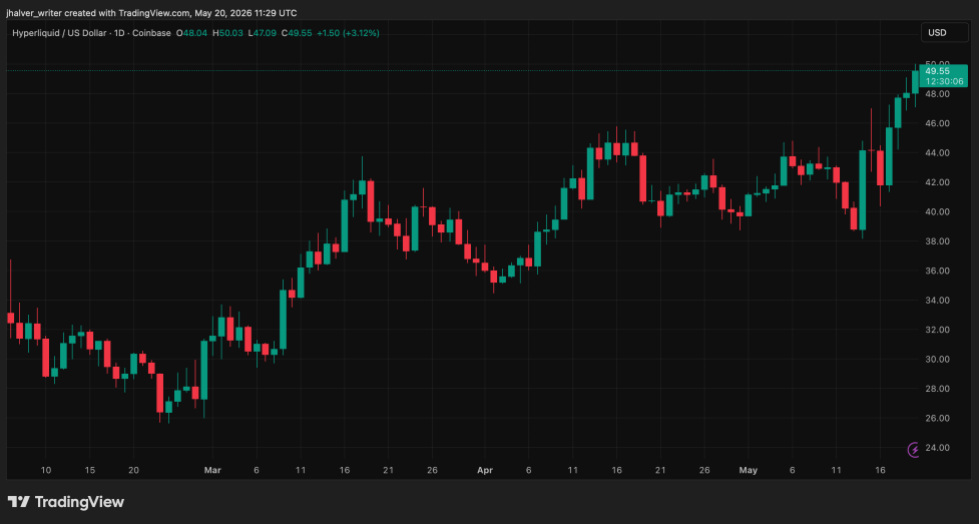
HYPE's price trends to the upside as seen on the daily chart. Source: HYPEUSD on Tradingview

Both are assets whose value proposition is rooted in decentralization and censorship resistance rather than regulatory accommodation. Neither benefits meaningfully from the CLARITY Act. The portfolio is an argument made in capital.

This development marks a critical and genuinely uncomfortable moment for the nascent sector. The industry is closer than it has ever been to a durable US regulatory framework — the Senate Banking Committee just proved it — and one of Bitcoin’s most prominent voices is on record saying that getting there may be exactly the wrong outcome.

Cover image from ChatGPT, HYPEUSD chart from Tradingview

Perguntas relacionadas

QAccording to Arthur Hayes, why is the CLARITY Act incompatible with Bitcoin and decentralized systems?

AArthur Hayes argues that regulation is structurally incompatible with Bitcoin and decentralized systems because their value is derived from operating outside any regulatory architecture. He states that the CLARITY Act primarily benefits centralized entities like exchanges and custodians who need regulatory frameworks, but does nothing meaningful for genuinely decentralized systems.

QWhat was the margin of the Senate Banking Committee vote on the CLARITY Act, as mentioned in the article?

AThe CLARITY Act cleared the Senate Banking Committee with a bipartisan 15-9 vote.

QBesides Bitcoin, what are Arthur Hayes's two largest cryptocurrency holdings, and what are his price targets for them?

AArthur Hayes's two largest holdings besides Bitcoin are HYPE (Hyperliquid's token) and ZCash. He has a price target of $150 for HYPE by August 2026 and a long-term target of $10,000 for ZCash.

QWhat does Arthur Hayes believe is the primary driver of Bitcoin's price, according to the article?

AArthur Hayes believes that Bitcoin's price is driven primarily by global liquidity conditions and fiat money supply expansion, not by legislative milestones like the CLARITY Act.

QWhat warning did Ripple CEO Brad Garlinghouse give regarding the timeline for passing the CLARITY Act?

ARipple CEO Brad Garlinghouse warned that if the CLARITY Act is not passed before the summer recess, the probability of passage drops sharply, potentially pushing any legislative action to 2030 or beyond.

Leituras Relacionadas

Trading

Spot
Futuros

Artigos em Destaque

Como comprar T

Bem-vindo à HTX.com!Tornámos a compra de Threshold Network Token (T) simples e conveniente.Segue o nosso guia passo a passo para iniciar a tua jornada no mundo das criptos.Passo 1: cria a tua conta HTXUtiliza o teu e-mail ou número de telefone para te inscreveres numa conta gratuita na HTX.Desfruta de um processo de inscrição sem complicações e desbloqueia todas as funcionalidades.Obter a minha contaPasso 2: vai para Comprar Cripto e escolhe o teu método de pagamentoCartão de crédito/débito: usa o teu visa ou mastercard para comprar Threshold Network Token (T) instantaneamente.Saldo: usa os fundos da tua conta HTX para transacionar sem problemas.Terceiros: adicionamos métodos de pagamento populares, como Google Pay e Apple Pay, para aumentar a conveniência.P2P: transaciona diretamente com outros utilizadores na HTX.Mercado de balcão (OTC): oferecemos serviços personalizados e taxas de câmbio competitivas para os traders.Passo 3: armazena teu Threshold Network Token (T)Depois de comprar o teu Threshold Network Token (T), armazena-o na tua conta HTX.Alternativamente, podes enviá-lo para outro lugar através de transferência blockchain ou usá-lo para transacionar outras criptomoedas.Passo 4: transaciona Threshold Network Token (T)Transaciona facilmente Threshold Network Token (T) no mercado à vista da HTX.Acede simplesmente à tua conta, seleciona o teu par de trading, executa as tuas transações e monitoriza em tempo real.Oferecemos uma experiência de fácil utilização tanto para principiantes como para traders experientes.

411 Visualizações TotaisPublicado em {updateTime}Atualizado em 2025.03.21

Como comprar T

Discussões

Bem-vindo à Comunidade HTX. Aqui, pode manter-se informado sobre os mais recentes desenvolvimentos da plataforma e obter acesso a análises profissionais de mercado. As opiniões dos utilizadores sobre o preço de T (T) são apresentadas abaixo.

活动图片