ARK Founder Cathie Wood's 2026 Forecast: Gold Peaks, Dollar Rebounds, Bitcoin Charts Its Own Course

marsbitPublicado em 2026-01-20Última atualização em 2026-01-20

Resumo

ARK Invest founder Cathie Wood's 2026 outlook predicts a "Reaganomics on steroids" era for the U.S. economy, driven by deregulation, tax cuts, stable monetary policy, and technological innovation. She anticipates a strong economic rebound from a "coiled spring" state, with productivity surges (4-6% annually) and controlled inflation (possibly negative) fueling 6-8% nominal GDP growth. Wood forecasts a significant dollar rally, similar to the 1980s, which could halt gold's momentum, while Bitcoin may outperform due to its supply constraints and low correlation with other assets. She dismisses AI bubble concerns, arguing that earnings growth will justify high valuations, and expects market returns even with compressed P/E ratios. Key themes include AI-driven capital expenditure booms, corporate tax rates near 10%, and deflationary pressures from innovation.

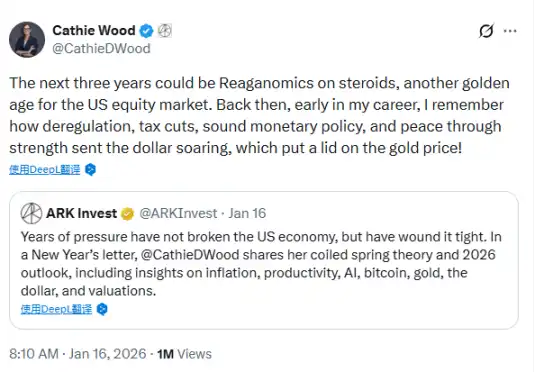
ARK Invest founder Cathie Wood ("Wood Sister") released a macro outlook in her latest New Year's letter to investors for 2026, likening the next three years to "Reaganomics on steroids." She pointed out that with the convergence of deregulation, tax cuts, sound monetary policy, and innovative technology, the U.S. stock market is set to usher in another "golden age," while an impending surge in the U.S. dollar could put an end to gold's upward momentum.
Specifically, Cathie Wood believes that despite continuous real GDP growth over the past three years, the underlying U.S. economy has actually experienced a rolling recession and is currently in a "coiled spring" state, poised for a strong rebound in the coming years. She particularly emphasized that with David Sacks appointed as the first AI and Cryptocurrency Czar to lead deregulation, and the effective corporate tax rate moving towards 10%, U.S. economic growth will receive a significant policy dividend.

At the macro level, Wood predicts that inflation will be further controlled, possibly even turning negative, driven by a productivity boom. She expects the U.S. nominal GDP growth rate to remain in the range of 6% to 8% in the coming years, primarily driven by productivity gains rather than inflation.

In terms of market impact, Wood predicts that the relative advantage of U.S. investment returns will drive the dollar exchange rate significantly higher, replaying the nearly doubling of the dollar in the 1980s. She warned that although gold prices have risen substantially in recent years, the strengthening dollar will suppress gold prices, while Bitcoin, due to its supply mechanism and low asset correlation, will show a different trend from gold.

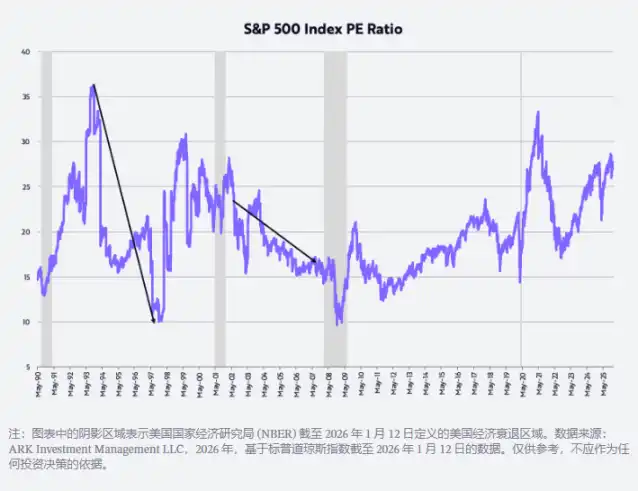
Regarding investor concerns about market valuation, Wood does not believe an AI bubble has formed. She pointed out that although price-to-earnings ratios are at historically high levels, as AI, robotics, and other technologies drive a productivity explosion, corporate profit growth will digest high valuations, and the market may achieve positive returns while compressing P/E ratios, similar to the bull market path of the mid-to-late 1990s.

Below is the original text of the letter to investors:

Happy New Year to ARK's investors and other supporters! We are very grateful for your support.

As I elaborate in this letter, we truly believe there are many reasons for investors to be optimistic! I hope you enjoy our discussion. From the perspective of economic history, we are at a pivotal moment.

Coiled Spring

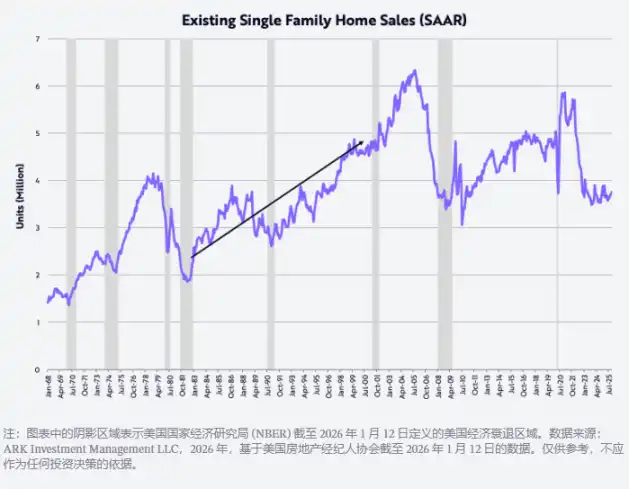
Although U.S. real Gross Domestic Product (GDP) has continued to grow over the past three years, the underlying structure of the U.S. economy has experienced a rolling recession and has gradually become a spring compressed to its limit, likely to rebound strongly in the coming years. In response to supply shocks related to the COVID-19 pandemic, the Federal Reserve raised the federal funds rate from 0.25% in March 2022 to 5.5% by July 2023 over a 16-month period, a record increase of 22 times. This rate hike pushed housing, manufacturing, non-AI-related capital expenditures, and the U.S. middle- and low-income groups into a recession, as shown in the chart below.

Measured by existing home sales, the housing market declined by 40% from an annualized rate of 5.9 million units in January 2021 to 3.5 million units in October 2023. This level was last seen in November 2010, and over the past two years, existing home sales have fluctuated around this level. This indicates how tightly the spring is compressed: the current level of existing home sales is comparable to the early 1980s, when the U.S. population was about 35% smaller than it is now.
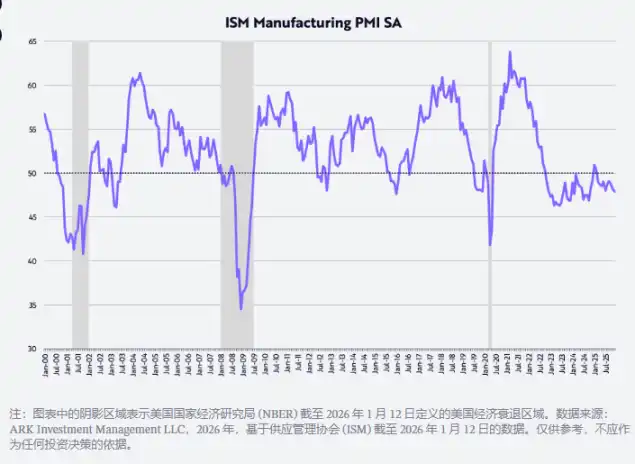
Measured by the U.S. Purchasing Managers' Index (PMI), manufacturing has been in contraction for about three years. According to this diffusion index, 50 is the dividing line between expansion and contraction, as shown below.
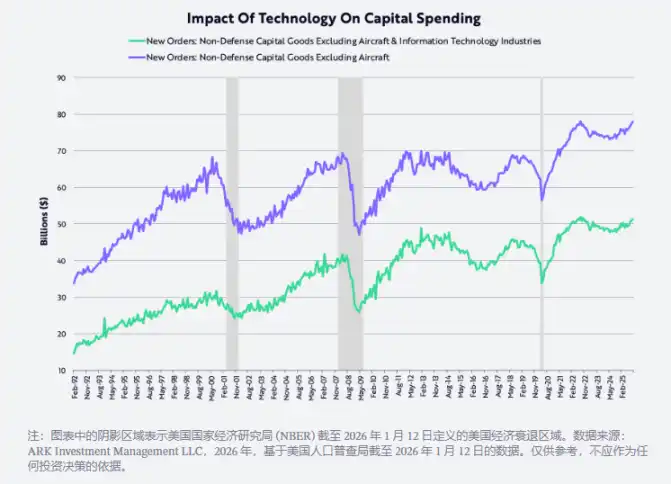
Meanwhile, capital expenditures measured by non-defense capital goods (excluding aircraft) peaked in mid-2022 and have since recovered to that level, whether affected by technology or not. In fact, this capital expenditure indicator struggled for more than 20 years to break through after the tech and telecom bubble burst, until 2021, when COVID-19-related supply shocks forced both digital and physical investment to accelerate. The former spending cap seems to have turned into a spending floor, as AI, robotics, energy storage, blockchain technology, and multi-omics sequencing are ready to enter their golden age. Following the tech and telecom bubble of the 1990s, a peak expenditure of about $70 billion persisted for 20 years; now, as the following chart shows, this could be the strongest capital expenditure cycle in history. We believe an AI bubble is still a long way off!
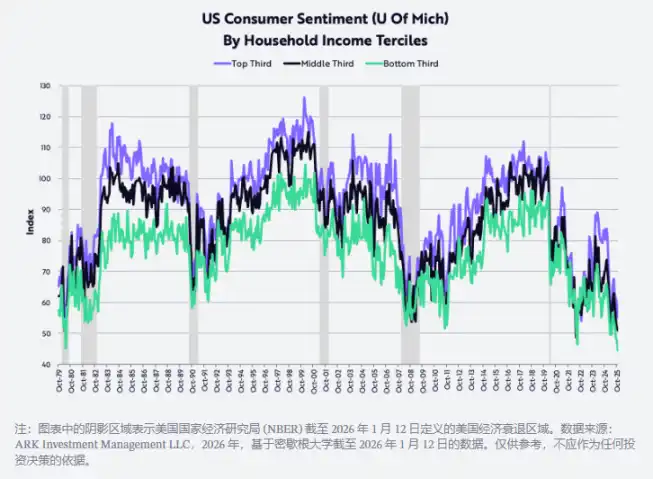
At the same time, data from the University of Michigan shows that confidence among middle- and low-income groups has fallen to its lowest level since the early 1980s. Back then, double-digit inflation and high interest rates severely eroded purchasing power and pushed the U.S. economy into consecutive recessions. Moreover, as shown below, confidence among high-income groups has also declined in recent months. In our view, consumer confidence is currently one of the most tightly compressed "springs" with the greatest rebound potential.
Deregulation, Coupled with Lower Taxes, Inflation, and Interest Rates

Thanks to the combined effects of deregulation, lower taxes (including tariffs), inflation, and interest rates, the rolling recession experienced by the U.S. in recent years could reverse rapidly and dramatically in the coming year and beyond.

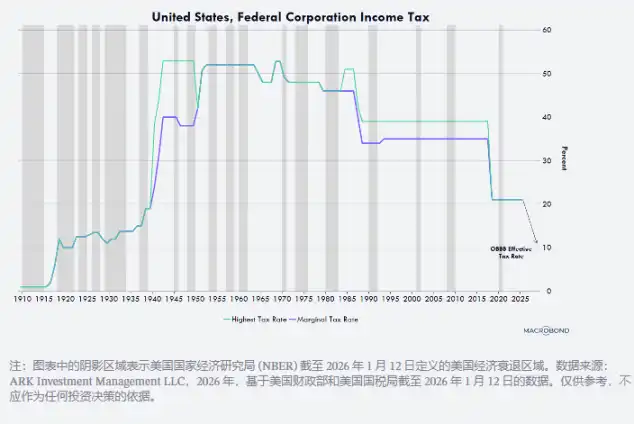
Deregulation is unleashing innovative vitality across various fields, particularly in artificial intelligence and digital assets, led by the first "AI and Cryptocurrency Czar," David Sacks. Meanwhile, reductions in tip, overtime, and social security taxes will provide U.S. consumers with substantial tax refunds this quarter, potentially boosting the annualized growth rate of real disposable income from about 2% in the second half of 2025 to about 8.3% this quarter. Additionally, with accelerated depreciation for manufacturing facilities, equipment, software, and domestic R&D expenditures, the effective corporate tax rate will be pushed down to near 10% (as shown below), corporate tax refunds are expected to rise significantly, and 10% is one of the lowest tax rates globally.

For example, any company that begins construction on a manufacturing plant in the U.S. by the end of 2028 can fully depreciate the building in the first year it is placed in service, instead of over 30 to 40 years as in the past. Equipment, software, and domestic R&D expenditures can also be 100% depreciated in the first year. This cash flow incentive was made permanent in last year's budget bill and is retroactive to January 1, 2025.
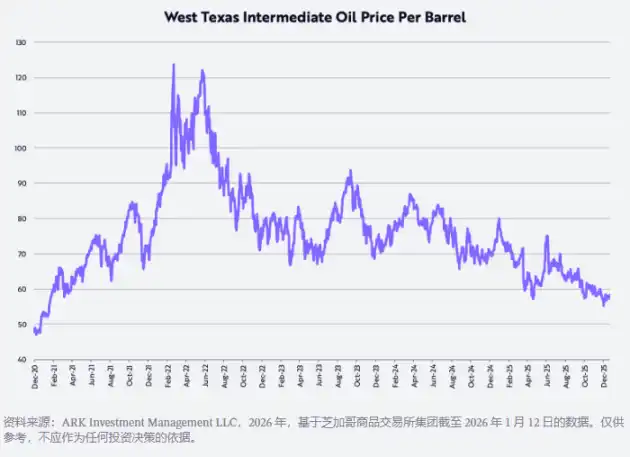
Over the past few years, inflation as measured by the Consumer Price Index (CPI) has stubbornly hovered in the 2% to 3% range, but in the coming years, for several reasons shown below, the inflation rate is likely to fall to a surprisingly low level—possibly even negative. First, West Texas Intermediate (WTI) crude oil prices have fallen by about 53% since the post-COVID peak of about $124 per barrel on March 8, 2022, and are currently down about 22% year-over-year.
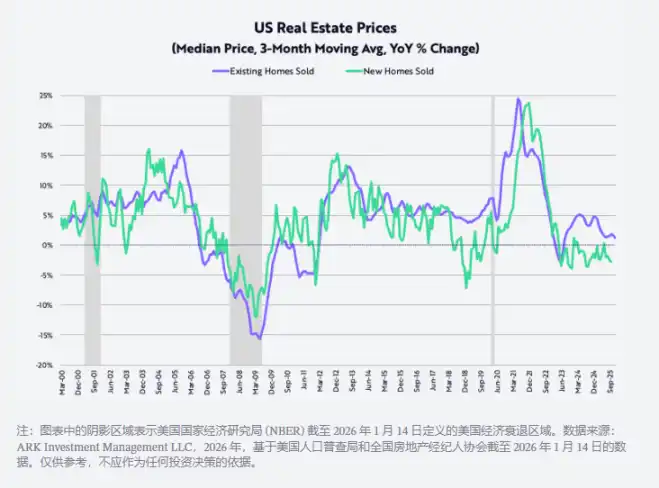
Since peaking in October 2022, the sales price of new single-family homes has fallen by about 15%; meanwhile, the inflation rate for existing single-family home prices—based on a three-month moving average—has dropped from about 24% year-over-year at the post-COVID peak in June 2021 to about 1.3%, as shown below.
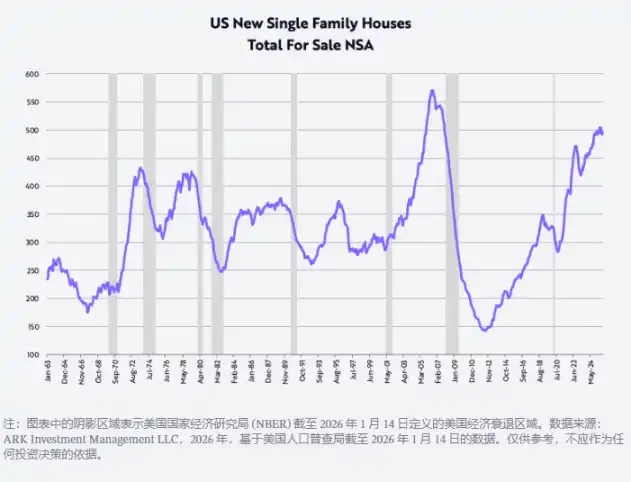
In the fourth quarter, to digest the inventory of nearly 500,000 new single-family homes (the highest level since October 2007, just before the global financial crisis, as shown below), the major homebuilders significantly reduced prices, with year-over-year declines of: Lennar -10%, KBHomes -7%, and DRHorton -3%. The impact of these price declines will be reflected in the Consumer Price Index (CPI) with a lag over the coming years.
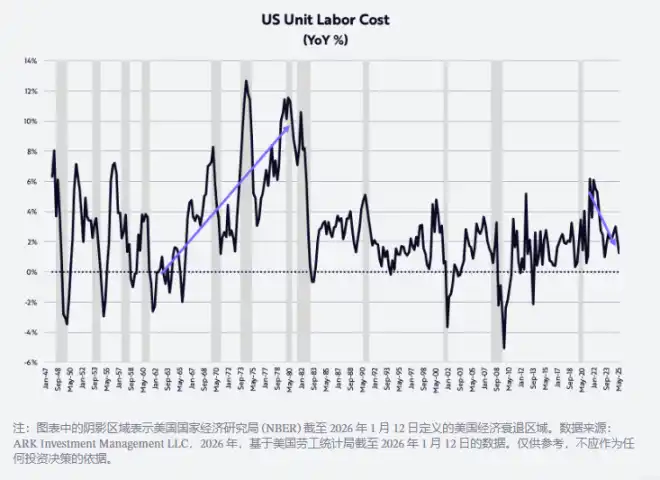
Finally, nonfarm productivity, one of the most powerful forces curbing inflation, grew against the trend in the context of a continuous recession, increasing 1.9% year-over-year in the third quarter. In contrast to a 3.2% increase in compensation per hour worked, the rise in productivity has reduced unit labor cost inflation to 1.2%, as shown below. There is no sign of 1970s-style cost-push inflation in this number!
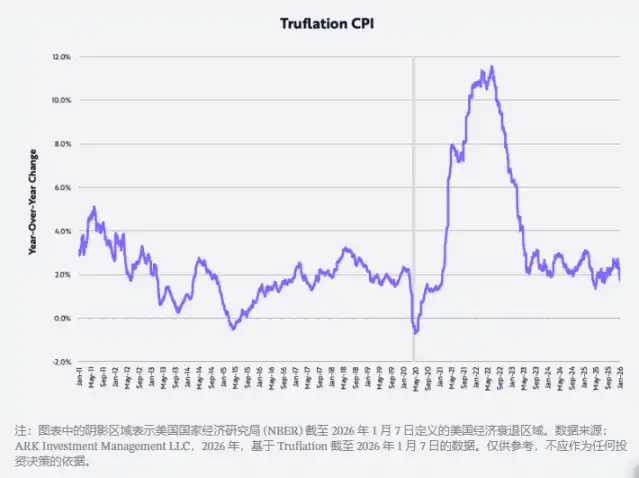
This improvement is also validated: the inflation rate measured by Truflation has recently fallen to 1.7% year-over-year, as shown below, nearly 100 basis points (bps) lower than the inflation rate calculated by the Bureau of Labor Statistics (BLS) based on CPI.
Productivity Boom

Indeed, if our research on technology-driven disruptive innovation is correct, then in the coming years, nonfarm productivity growth should accelerate to 4-6% per year, driven by both cyclical and long-term factors, further reducing unit labor cost inflation. The convergence of the major innovation platforms currently developing—artificial intelligence, robotics, energy storage, public blockchain technology, and multi-omics—is expected not only to drive productivity growth to sustainably new highs but also to create enormous wealth.

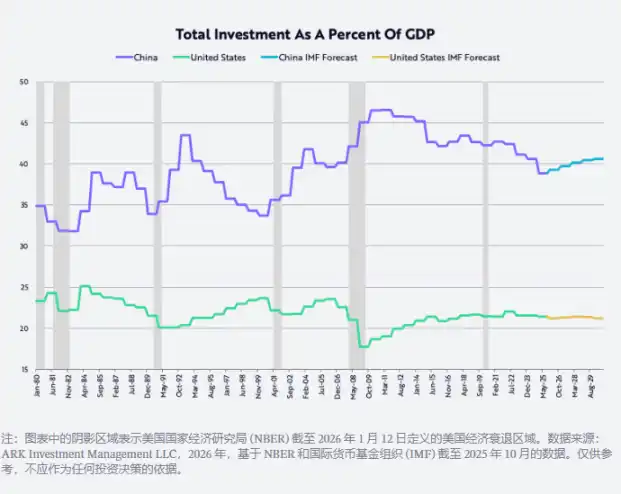
Productivity gains could also correct significant geo-economic imbalances in the global economy. Companies can direct the benefits of productivity gains to one or more of the following four strategic directions: expanding profit margins, increasing R&D and other investments, raising wages, and/or lowering prices. In China, raising wages for more productive employees and/or increasing profit margins could help the economy break free from its structural problem of overinvestment. Since joining the World Trade Organization (WTO) in 2001, China's investment as a percentage of GDP has averaged about 40%, nearly double that of the U.S., as shown below. Raising wages would shift the Chinese economy toward a consumption-oriented model, moving away from a commoditized path.
However, in the short term, technology-driven productivity gains may continue to slow U.S. job growth, pushing the unemployment rate from 4.4% to above 5.0% and prompting the Federal Reserve to continue cutting interest rates. Subsequently, deregulation and other fiscal stimulus measures should amplify the impact of low interest rates and accelerate GDP growth in the second half of 2026. Meanwhile, inflation is likely to continue to slow, not only due to falling oil prices, housing prices, and tariffs but also thanks to technological advancements that boost productivity and reduce unit labor costs.

Surprisingly, AI training costs are falling by 75% annually, while AI inference costs (i.e., the cost of running AI application models) are falling by up to 99% annually (according to some benchmarks). These unprecedented declines in the cost of various technologies should drive a surge in their unit growth. Therefore, we expect the U.S. nominal GDP growth rate to remain in the range of 6% to 8% in the coming years, primarily driven by productivity growth of 5% to 7%, labor force growth of 1%, and an inflation rate of -2% to +1%.

The cumulative deflationary effects of AI and the other four major innovation platforms will shape an economic environment similar to the last major technological revolution period from 1879 to 1929, triggered by the internal combustion engine, electricity, and the telephone. During that period, short-term interest rates moved in sync with nominal GDP growth, while long-term rates responded to the deflationary undercurrents accompanying the technology boom, causing the yield curve to invert by an average of about 100 basis points, as shown below.

Other New Year Thoughts

Gold Price Rise vs. Bitcoin Price Fall

During 2025, the price of gold rose by 65%, while the price of Bitcoin fell by 6%. Many observers attributed the surge in gold prices from $1,600 per ounce in October 2022, at the end of the U.S. stock market bear market, to $4,300, a gain of 166%, to inflation risks. However, another explanation is that global wealth growth (exemplified by the 93% rise in the MSCI World Equity Index) has exceeded the annualized growth rate of global gold supply of about 1.8%. In other words, the incremental demand for gold may have exceeded its supply growth. Interestingly, during the same period, the price of Bitcoin rose by 360%, while its supply grew at an annualized rate of only about 1.3%. It is worth noting that gold and Bitcoin miners may react very differently to these price signals: gold miners respond by increasing gold production, while Bitcoin cannot do this. Mathematically, Bitcoin will grow by about 0.82% annually over the next two years, after which its growth rate will slow to about 0.41% per year.

A Long-Term Perspective on Gold Prices

Measured by the ratio of market capitalization to M2 money supply, the price of gold has only been higher than this level once in the past 125 years, during the Great Depression of the early 1930s. At that time, the gold price was fixed at $20.67 per ounce, while the M2 money supply plummeted by about 30% (as shown below). Recently, the gold-to-M2 ratio has exceeded the previous peak, which occurred in 1980 when inflation and interest rates soared into double digits. In other words, from a historical perspective, the price of gold has reached an extremely high level.

The chart below also shows that the long-term decline in this ratio has been closely related to solid stock market returns. According to research by Ibbotson and Sinquefield, stocks have had a compound annual return of about 10% since 1926. After the ratio reached two major long-term peaks in 1934 and 1980, stock prices as measured by the Dow Jones Industrial Average (DJIA) achieved returns of 670% and 1015% over the 35 and 21 years ending in 1969 and 2001, respectively, representing annualized returns of 6% and 12%. Notably, small-cap stocks had annualized returns of 12% and 13%, respectively.
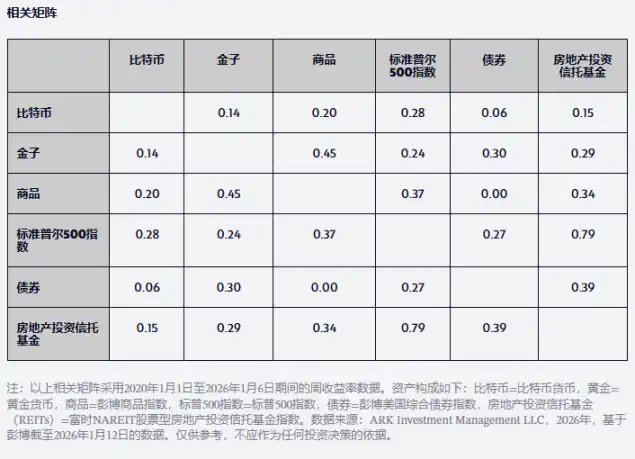
For asset allocators, another important consideration is Bitcoin's relatively low correlation with gold returns and with other major asset classes since 2020, as shown in the table below. Notably, Bitcoin's correlation with gold is even lower than the correlation between the S&P 500 and bonds. In other words, for asset allocators seeking higher risk-adjusted returns in the coming years, Bitcoin should be a good diversification option.
U.S. Dollar Outlook

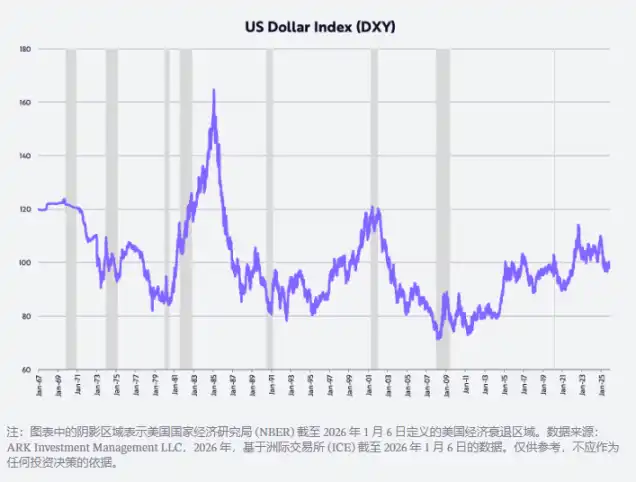
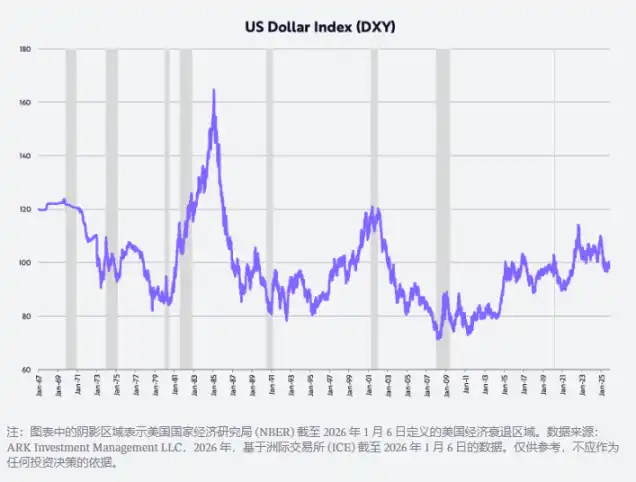
Over the past few years, a popular narrative has been the end of American exceptionalism, with the dollar recording its largest first-half decline since 1973 and its largest full-year decline since 2017. Last year, as measured by the trade-weighted dollar index (DXY), the dollar fell 11% in the first half and 9% for the full year. If our predictions about fiscal policy, monetary policy, deregulation, and U.S.-led technological breakthroughs are correct, then U.S. investment returns will improve relative to the rest of the world, pushing the dollar exchange rate higher. The Trump administration's policies mirror the situation during the Reaganomics era of the early 1980s, when the dollar exchange rate nearly doubled, as shown below.
AI Hype

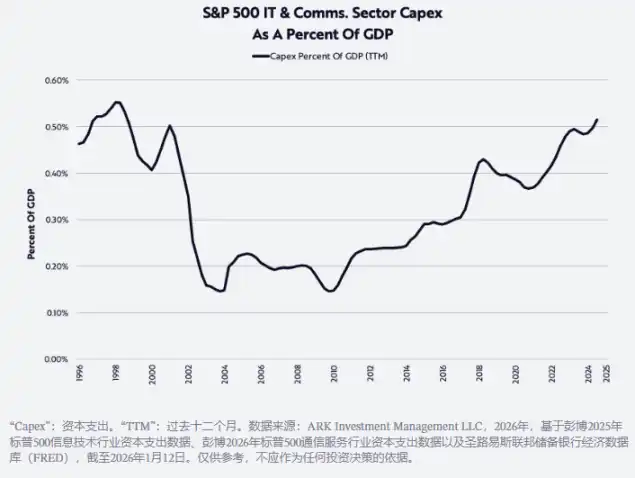
As shown below, the AI boom is driving capital expenditures to their highest levels since the late 1990s. In 2025, investment in data center systems (including computing, networking, and storage equipment) grew by 47% to nearly $500 billion, and is expected to grow another 20% in 2026 to about $600 billion, far above the long-term trend of $150-200 billion annually in the launch of ChatGPT a decade ago. Such massive investment规模 inevitably raises the question: "What is the return on this investment? And where will it be reflected?"
Beyond semiconductors and listed large cloud companies, unlisted AI-native companies are also benefiting from growth and investment returns. AI companies are among the fastest-growing businesses in history. Our research shows that consumer adoption of AI is twice as fast as the adoption of the internet in the 1990s, as shown below.
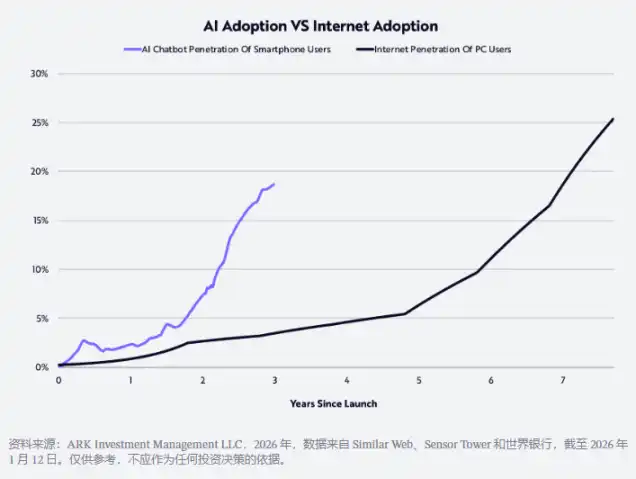
It is reported that by the end of 2025, OpenAI and Anthropic's annualized revenue will reach $20 billion and $9 billion, respectively, up 12.5 times and 90 times from $1.6 billion and $100 million a year earlier! Rumors suggest that both companies are considering initial public offerings (IPOs) in the next year or two to raise funds for the massive investments required to support their product models.

As Fidji Simo, CEO of OpenAI's applied division, said: "The capabilities of AI models far exceed what most people experience in their daily lives, and 2026 is the year to bridge this gap. The leaders in AI will be those who can translate cutting-edge research into products that are truly useful for individuals, businesses, and developers." This year, with more humane, intuitive, and integrated user experiences, we expect to make substantial progress in this area. ChatGPT Health is an early example, a dedicated section within the ChatGPT platform that helps users improve their health based on their personal health data.

In enterprises, many AI applications are still in their early stages, hindered by bureaucracy, inertia, and/or prerequisites such as restructuring and building data infrastructure, leading to slow progress. By 2026, organizations may realize that they need to use their own data to train models and iterate quickly, or risk being left behind by more aggressive competitors. AI-driven use cases should provide immediate and excellent customer service, faster product launch speeds, and help startups create more value with fewer resources.

Overvalued Market

Many investors are concerned about overvalued stock markets, which are currently at historically high levels, as shown below. Our own valuation assumption is that the price-to-earnings (P/E) ratio will fall back to around 20 times, the average of the past 35 years. Some of the most significant bull markets have occurred alongside P/E compression. For example, from mid-October 1993 to mid-November 1997, the S&P 500 had an annualized return of 21%, while its P/E ratio fell from 36 times to 10 times. Similarly, from July 2002 to October 2007, the S&P 500 had an annualized return of 14%, while its P/E ratio fell from 21 times to 17 times. Given our expectations that real GDP growth will be driven by productivity gains and slowing inflation, the same dynamics should reappear in this market cycle, possibly even more significantly.
As always, many thanks to ARK's investors and other supporters, and also to Dan, Will, Katie, and Keith for helping me write this very long New Year's greeting!


Perguntas relacionadas

QWhat are Cathie Wood's main predictions for the US economy and markets by 2026?

ACathie Wood predicts a strong US economic rebound driven by deregulation, tax cuts, and technological innovation. She expects productivity growth of 4-6%, controlled inflation (possibly negative), nominal GDP growth of 6-8%, a surging US dollar, a peak in gold prices, and Bitcoin outperforming due to its low correlation with other assets.

QHow does Cathie Wood justify her view that the AI bubble has not yet formed?

AShe argues that despite high capital expenditure in AI infrastructure (e.g., data centers), the adoption rate of AI is twice as fast as the internet in the 1990s. Companies like OpenAI and Anthropic show explosive revenue growth, and AI-driven productivity gains will justify current investments and valuations.

QWhy does Wood believe the US dollar will strengthen significantly by 2026?

AShe attributes the expected dollar strength to US policy advantages (deregulation, tax cuts), higher relative investment returns, and a productivity boom. This mirrors the 1980s 'Reaganomics' era when the dollar nearly doubled in value.

QWhat is Wood's rationale for predicting a peak in gold prices and Bitcoin's independent performance?

AGold prices have surged due to demand outpacing supply, but historical ratios (e.g., gold/M2) suggest overvaluation. Bitcoin, with its fixed supply growth (~1.3% annually) and low correlation to other assets, is seen as a better diversification tool and less susceptible to dollar strength.

QHow does Wood address concerns about high market valuations in US stocks?

AShe acknowledges high P/E ratios but argues that productivity-driven earnings growth will compress valuations organically. Historical examples (e.g., 1993-1997) show markets can deliver strong returns even as P/E ratios decline if earnings expand sufficiently.

Leituras Relacionadas

Day 6 of the rsETH Incident: DeFi United Secures Approximately $100 Million in Intentional Commitments, but a $50 Million Gap Remains

On April 18, Kelp DAO’s rsETH LayerZero bridge was exploited, resulting in the unauthorized minting of 116.5k rsETH (approx. $292M). The attacker borrowed around $190M on Aave V3. The Arbitrum Security Council froze 30,766 ETH linked to the incident. DeFi United, a cross-protocol rescue initiative led by Awe, was formed to cover a total shortfall of 112.2k rsETH ($258M). As of April 24, several protocols have pledged around $100M in support, though most commitments are still under DAO voting or discussion. Key pledges include: - Golem: 1,000 ETH ($2.3M) - Aave founder Stani Kulechov: 5,000 ETH ($11.5M) - EtherFi: up to 5,000 ETH ($11.5M) - Lido: up to 2,500 stETH ($5.75M), contingent on full coverage - Mantle: proposed a $69M loan to Aave DAO under specific terms The remaining shortfall is estimated at $50M. Aave’s treasury and safety module (~$236M combined) can cover the worst-case bad debt scenario ($230M). Three potential loss distribution paths were outlined by DefiLlama’s 0xngmi: 1. Uniform 18.5% haircut for all rsETH holders: Aave bad debt ~$216M 2. Only protect Mainnet, abandon L2: bad debt up to $341M 3. Repay only pre-attack holders: technically difficult, ~$91M net loss KelpDAO has not yet announced a specific plan. The success of DeFi United depends heavily on KelpDAO’s final decision on loss allocation.

marsbitHá 27m

Day 6 of the rsETH Incident: DeFi United Secures Approximately $100 Million in Intentional Commitments, but a $50 Million Gap Remains

marsbitHá 27m

Kicked Out of PayPal, Musk Aims for a Comeback in the Crypto Market

Elon Musk's X (formerly Twitter) has launched its "Smart Cashtags" feature, generating approximately $1 billion in trading volume within days of its April 2026 pilot launch. The feature allows users to click on stock or crypto tickers (or even full Solana token contract addresses) in posts to view real-time price charts and discussions without leaving the app. Initially available to iPhone users in the US and Canada, with a partnership in Canada enabling direct trading via the Wealthsimple app. This move is part of Musk's broader "Everything App" vision, spearheaded by the upcoming X Money platform. Analysts, such as Mizuho's Dan Dolev, see this as a potential disruptor to the US payments market, even prompting a downgrade of PayPal's stock. X Money's beta offers services like 6% APY on deposits, cashback, and P2P transfers, with speculation it may later incorporate crypto trading and stablecoin settlements for faster transactions. However, the ambitious plan faces significant regulatory scrutiny. Senator Elizabeth Warren has questioned the sustainability of the high 6% yield and raised concerns over X's banking partner, Cross River Bank, which has a history of regulatory violations. Additional risks involve the "GENIUS Act," which may create loopholes for stablecoin issuance without full FDIC insurance coverage, potentially leaving users unprotected. The integration of social trading on a platform with over 500 million users could inject new liquidity and retail interest into the crypto market. Yet, it also amplifies risks like herd mentality and the blurring of lines between entertainment and financial speculation. Musk's return to finance, after his ouster from PayPal, hinges on balancing innovation with regulatory compliance.

marsbitHá 2h

Kicked Out of PayPal, Musk Aims for a Comeback in the Crypto Market

marsbitHá 2h

Trading

Spot
Futuros

Artigos em Destaque

O que é $S$

Compreender o SPERO: Uma Visão Abrangente Introdução ao SPERO À medida que o panorama da inovação continua a evoluir, o surgimento de tecnologias web3 e projetos de criptomoeda desempenha um papel fundamental na formação do futuro digital. Um projeto que tem atraído atenção neste campo dinâmico é o SPERO, denotado como SPERO,$$s$. Este artigo tem como objetivo reunir e apresentar informações detalhadas sobre o SPERO, para ajudar entusiastas e investidores a compreender as suas bases, objetivos e inovações nos domínios web3 e cripto. O que é o SPERO,$$s$? O SPERO,$$s$ é um projeto único dentro do espaço cripto que procura aproveitar os princípios da descentralização e da tecnologia blockchain para criar um ecossistema que promove o envolvimento, a utilidade e a inclusão financeira. O projeto é concebido para facilitar interações peer-to-peer de novas maneiras, proporcionando aos utilizadores soluções e serviços financeiros inovadores. No seu núcleo, o SPERO,$$s$ visa capacitar indivíduos ao fornecer ferramentas e plataformas que melhoram a experiência do utilizador no espaço das criptomoedas. Isso inclui a possibilidade de métodos de transação mais flexíveis, a promoção de iniciativas impulsionadas pela comunidade e a criação de caminhos para oportunidades financeiras através de aplicações descentralizadas (dApps). A visão subjacente do SPERO,$$s$ gira em torno da inclusão, visando fechar lacunas dentro das finanças tradicionais enquanto aproveita os benefícios da tecnologia blockchain. Quem é o Criador do SPERO,$$s$? A identidade do criador do SPERO,$$s$ permanece algo obscura, uma vez que existem recursos publicamente disponíveis limitados que fornecem informações detalhadas sobre o(s) seu(s) fundador(es). Esta falta de transparência pode resultar do compromisso do projeto com a descentralização—uma ética que muitos projetos web3 partilham, priorizando contribuições coletivas em vez de reconhecimento individual. Ao centrar as discussões em torno da comunidade e dos seus objetivos coletivos, o SPERO,$$s$ incorpora a essência do empoderamento sem destacar indivíduos específicos. Assim, compreender a ética e a missão do SPERO é mais importante do que identificar um criador singular. Quem são os Investidores do SPERO,$$s$? O SPERO,$$s$ é apoiado por uma diversidade de investidores que vão desde capitalistas de risco a investidores-anjo dedicados a promover a inovação no setor cripto. O foco desses investidores geralmente alinha-se com a missão do SPERO—priorizando projetos que prometem avanço tecnológico social, inclusão financeira e governança descentralizada. Essas fundações de investidores estão tipicamente interessadas em projetos que não apenas oferecem produtos inovadores, mas que também contribuem positivamente para a comunidade blockchain e os seus ecossistemas. O apoio desses investidores reforça o SPERO,$$s$ como um concorrente notável no domínio em rápida evolução dos projetos cripto. Como Funciona o SPERO,$$s$? O SPERO,$$s$ emprega uma estrutura multifacetada que o distingue de projetos de criptomoeda convencionais. Aqui estão algumas das características-chave que sublinham a sua singularidade e inovação: Governança Descentralizada: O SPERO,$$s$ integra modelos de governança descentralizada, capacitando os utilizadores a participar ativamente nos processos de tomada de decisão sobre o futuro do projeto. Esta abordagem promove um sentido de propriedade e responsabilidade entre os membros da comunidade. Utilidade do Token: O SPERO,$$s$ utiliza o seu próprio token de criptomoeda, concebido para servir várias funções dentro do ecossistema. Esses tokens permitem transações, recompensas e a facilitação de serviços oferecidos na plataforma, melhorando o envolvimento e a utilidade gerais. Arquitetura em Camadas: A arquitetura técnica do SPERO,$$s$ suporta modularidade e escalabilidade, permitindo a integração contínua de funcionalidades e aplicações adicionais à medida que o projeto evolui. Esta adaptabilidade é fundamental para manter a relevância no panorama cripto em constante mudança. Envolvimento da Comunidade: O projeto enfatiza iniciativas impulsionadas pela comunidade, empregando mecanismos que incentivam a colaboração e o feedback. Ao nutrir uma comunidade forte, o SPERO,$$s$ pode melhor atender às necessidades dos utilizadores e adaptar-se às tendências do mercado. Foco na Inclusão: Ao oferecer taxas de transação baixas e interfaces amigáveis, o SPERO,$$s$ visa atrair uma base de utilizadores diversificada, incluindo indivíduos que anteriormente podem não ter participado no espaço cripto. Este compromisso com a inclusão alinha-se com a sua missão abrangente de empoderamento através da acessibilidade. Cronologia do SPERO,$$s$ Compreender a história de um projeto fornece insights cruciais sobre a sua trajetória de desenvolvimento e marcos. Abaixo está uma cronologia sugerida que mapeia eventos significativos na evolução do SPERO,$$s$: Fase de Conceituação e Ideação: As ideias iniciais que formam a base do SPERO,$$s$ foram concebidas, alinhando-se de perto com os princípios de descentralização e foco na comunidade dentro da indústria blockchain. Lançamento do Whitepaper do Projeto: Após a fase conceitual, um whitepaper abrangente detalhando a visão, os objetivos e a infraestrutura tecnológica do SPERO,$$s$ foi lançado para atrair o interesse e o feedback da comunidade. Construção da Comunidade e Primeiros Envolvimentos: Esforços ativos de divulgação foram feitos para construir uma comunidade de primeiros adotantes e investidores potenciais, facilitando discussões em torno dos objetivos do projeto e angariando apoio. Evento de Geração de Tokens: O SPERO,$$s$ realizou um evento de geração de tokens (TGE) para distribuir os seus tokens nativos a apoiantes iniciais e estabelecer liquidez inicial dentro do ecossistema. Lançamento da dApp Inicial: A primeira aplicação descentralizada (dApp) associada ao SPERO,$$s$ foi lançada, permitindo que os utilizadores interagissem com as funcionalidades principais da plataforma. Desenvolvimento Contínuo e Parcerias: Atualizações e melhorias contínuas nas ofertas do projeto, incluindo parcerias estratégicas com outros players no espaço blockchain, moldaram o SPERO,$$s$ em um jogador competitivo e em evolução no mercado cripto. Conclusão O SPERO,$$s$ é um testemunho do potencial do web3 e das criptomoedas para revolucionar os sistemas financeiros e capacitar indivíduos. Com um compromisso com a governança descentralizada, o envolvimento da comunidade e funcionalidades inovadoras, abre caminho para um panorama financeiro mais inclusivo. Como em qualquer investimento no espaço cripto em rápida evolução, potenciais investidores e utilizadores são incentivados a pesquisar minuciosamente e a envolver-se de forma ponderada com os desenvolvimentos em curso dentro do SPERO,$$s$. O projeto demonstra o espírito inovador da indústria cripto, convidando a uma exploração mais aprofundada das suas inúmeras possibilidades. Embora a jornada do SPERO,$$s$ ainda esteja a desenrolar-se, os seus princípios fundamentais podem, de facto, influenciar o futuro de como interagimos com a tecnologia, as finanças e uns com os outros em ecossistemas digitais interconectados.

69 Visualizações TotaisPublicado em {updateTime}Atualizado em 2024.12.17

O que é $S$

O que é AGENT S

Agent S: O Futuro da Interação Autónoma no Web3 Introdução No panorama em constante evolução do Web3 e das criptomoedas, as inovações estão constantemente a redefinir a forma como os indivíduos interagem com plataformas digitais. Um projeto pioneiro, o Agent S, promete revolucionar a interação humano-computador através do seu framework aberto e agente. Ao abrir caminho para interações autónomas, o Agent S visa simplificar tarefas complexas, oferecendo aplicações transformadoras em inteligência artificial (IA). Esta exploração detalhada irá aprofundar-se nas complexidades do projeto, nas suas características únicas e nas implicações para o domínio das criptomoedas. O que é o Agent S? O Agent S é um framework aberto e agente, especificamente concebido para abordar três desafios fundamentais na automação de tarefas computacionais: Aquisição de Conhecimento Específico de Domínio: O framework aprende inteligentemente a partir de várias fontes de conhecimento externas e experiências internas. Esta abordagem dupla capacita-o a construir um rico repositório de conhecimento específico de domínio, melhorando o seu desempenho na execução de tarefas. Planeamento ao Longo de Longos Horizontes de Tarefas: O Agent S emprega planeamento hierárquico aumentado por experiência, uma abordagem estratégica que facilita a decomposição e execução eficientes de tarefas intrincadas. Esta característica melhora significativamente a sua capacidade de gerir múltiplas subtarefas de forma eficiente e eficaz. Gestão de Interfaces Dinâmicas e Não Uniformes: O projeto introduz a Interface Agente-Computador (ACI), uma solução inovadora que melhora a interação entre agentes e utilizadores. Utilizando Modelos de Linguagem Multimodais de Grande Escala (MLLMs), o Agent S pode navegar e manipular diversas interfaces gráficas de utilizador de forma fluida. Através destas características pioneiras, o Agent S fornece um framework robusto que aborda as complexidades envolvidas na automação da interação humana com máquinas, preparando o terreno para uma infinidade de aplicações em IA e além. Quem é o Criador do Agent S? Embora o conceito de Agent S seja fundamentalmente inovador, informações específicas sobre o seu criador permanecem elusivas. O criador é atualmente desconhecido, o que destaca ou o estágio nascente do projeto ou a escolha estratégica de manter os membros fundadores em anonimato. Independentemente da anonimidade, o foco permanece nas capacidades e no potencial do framework. Quem são os Investidores do Agent S? Como o Agent S é relativamente novo no ecossistema criptográfico, informações detalhadas sobre os seus investidores e financiadores não estão explicitamente documentadas. A falta de informações disponíveis publicamente sobre as fundações de investimento ou organizações que apoiam o projeto levanta questões sobre a sua estrutura de financiamento e roteiro de desenvolvimento. Compreender o apoio é crucial para avaliar a sustentabilidade do projeto e o seu impacto potencial no mercado. Como Funciona o Agent S? No núcleo do Agent S reside uma tecnologia de ponta que lhe permite funcionar eficazmente em diversos ambientes. O seu modelo operacional é construído em torno de várias características-chave: Interação Humano-Computador Semelhante: O framework oferece planeamento avançado em IA, esforçando-se para tornar as interações com computadores mais intuitivas. Ao imitar o comportamento humano na execução de tarefas, promete elevar as experiências dos utilizadores. Memória Narrativa: Utilizada para aproveitar experiências de alto nível, o Agent S utiliza memória narrativa para acompanhar os históricos de tarefas, melhorando assim os seus processos de tomada de decisão. Memória Episódica: Esta característica fornece aos utilizadores orientações passo a passo, permitindo que o framework ofereça suporte contextual à medida que as tarefas se desenrolam. Suporte para OpenACI: Com a capacidade de funcionar localmente, o Agent S permite que os utilizadores mantenham o controlo sobre as suas interações e fluxos de trabalho, alinhando-se com a ética descentralizada do Web3. Fácil Integração com APIs Externas: A sua versatilidade e compatibilidade com várias plataformas de IA garantem que o Agent S possa integrar-se perfeitamente em ecossistemas tecnológicos existentes, tornando-o uma escolha apelativa para desenvolvedores e organizações. Estas funcionalidades contribuem coletivamente para a posição única do Agent S no espaço cripto, à medida que automatiza tarefas complexas e em múltiplos passos com mínima intervenção humana. À medida que o projeto evolui, as suas potenciais aplicações no Web3 podem redefinir a forma como as interações digitais se desenrolam. Cronologia do Agent S O desenvolvimento e os marcos do Agent S podem ser encapsulados numa cronologia que destaca os seus eventos significativos: 27 de Setembro de 2024: O conceito de Agent S foi lançado num artigo de pesquisa abrangente intitulado “Um Framework Agente Aberto que Usa Computadores como um Humano”, mostrando a base para o projeto. 10 de Outubro de 2024: O artigo de pesquisa foi disponibilizado publicamente no arXiv, oferecendo uma exploração aprofundada do framework e da sua avaliação de desempenho com base no benchmark OSWorld. 12 de Outubro de 2024: Uma apresentação em vídeo foi lançada, proporcionando uma visão visual das capacidades e características do Agent S, envolvendo ainda mais potenciais utilizadores e investidores. Estes marcos na cronologia não apenas ilustram o progresso do Agent S, mas também indicam o seu compromisso com a transparência e o envolvimento da comunidade. Pontos-Chave Sobre o Agent S À medida que o framework Agent S continua a evoluir, várias características-chave destacam-se, sublinhando a sua natureza inovadora e potencial: Framework Inovador: Concebido para proporcionar um uso intuitivo de computadores semelhante à interação humana, o Agent S traz uma abordagem nova à automação de tarefas. Interação Autónoma: A capacidade de interagir autonomamente com computadores através de GUI significa um avanço em direção a soluções computacionais mais inteligentes e eficientes. Automação de Tarefas Complexas: Com a sua metodologia robusta, pode automatizar tarefas complexas e em múltiplos passos, tornando os processos mais rápidos e menos propensos a erros. Melhoria Contínua: Os mecanismos de aprendizagem permitem que o Agent S melhore a partir de experiências passadas, aprimorando continuamente o seu desempenho e eficácia. Versatilidade: A sua adaptabilidade em diferentes ambientes operacionais, como OSWorld e WindowsAgentArena, garante que pode servir uma ampla gama de aplicações. À medida que o Agent S se posiciona no panorama do Web3 e das criptomoedas, o seu potencial para melhorar as capacidades de interação e automatizar processos significa um avanço significativo nas tecnologias de IA. Através do seu framework inovador, o Agent S exemplifica o futuro das interações digitais, prometendo uma experiência mais fluida e eficiente para os utilizadores em diversas indústrias. Conclusão O Agent S representa um ousado avanço na união da IA e do Web3, com a capacidade de redefinir a forma como interagimos com a tecnologia. Embora ainda esteja nas suas fases iniciais, as possibilidades para a sua aplicação são vastas e cativantes. Através do seu framework abrangente que aborda desafios críticos, o Agent S visa trazer interações autónomas para o primeiro plano da experiência digital. À medida que avançamos mais profundamente nos domínios das criptomoedas e da descentralização, projetos como o Agent S desempenharão, sem dúvida, um papel crucial na formação do futuro da tecnologia e da colaboração humano-computador.

532 Visualizações TotaisPublicado em {updateTime}Atualizado em 2025.01.14

O que é AGENT S

Como comprar S

Bem-vindo à HTX.com!Tornámos a compra de Sonic (S) simples e conveniente.Segue o nosso guia passo a passo para iniciar a tua jornada no mundo das criptos.Passo 1: cria a tua conta HTXUtiliza o teu e-mail ou número de telefone para te inscreveres numa conta gratuita na HTX.Desfruta de um processo de inscrição sem complicações e desbloqueia todas as funcionalidades.Obter a minha contaPasso 2: vai para Comprar Cripto e escolhe o teu método de pagamentoCartão de crédito/débito: usa o teu visa ou mastercard para comprar Sonic (S) instantaneamente.Saldo: usa os fundos da tua conta HTX para transacionar sem problemas.Terceiros: adicionamos métodos de pagamento populares, como Google Pay e Apple Pay, para aumentar a conveniência.P2P: transaciona diretamente com outros utilizadores na HTX.Mercado de balcão (OTC): oferecemos serviços personalizados e taxas de câmbio competitivas para os traders.Passo 3: armazena teu Sonic (S)Depois de comprar o teu Sonic (S), armazena-o na tua conta HTX.Alternativamente, podes enviá-lo para outro lugar através de transferência blockchain ou usá-lo para transacionar outras criptomoedas.Passo 4: transaciona Sonic (S)Transaciona facilmente Sonic (S) no mercado à vista da HTX.Acede simplesmente à tua conta, seleciona o teu par de trading, executa as tuas transações e monitoriza em tempo real.Oferecemos uma experiência de fácil utilização tanto para principiantes como para traders experientes.

1.0k Visualizações TotaisPublicado em {updateTime}Atualizado em 2025.03.21

Como comprar S

Discussões

Bem-vindo à Comunidade HTX. Aqui, pode manter-se informado sobre os mais recentes desenvolvimentos da plataforma e obter acesso a análises profissionais de mercado. As opiniões dos utilizadores sobre o preço de S (S) são apresentadas abaixo.

活动图片













