Analyzing Noise's New Beta Version: How to 'Trade Hype' On-Chain?

marsbitPublicado em 2026-04-13Última atualização em 2026-04-13

Resumo

Noise, a "relevance prediction market," has launched its Beta version, allowing users to trade on the perceived importance of events and cultural trends. The platform generates a "Relevance Index" by algorithmically analyzing data from social platforms like X, Reddit, and YouTube, as well as prediction markets such as Polymarket. Users can speculate on whether the热度 of a topic will rise or fall, using up to 5x leverage. Transactions in Beta are conducted with credits purchased via fiat or crypto (USDC on Ethereum/Solana), though cash-out functionality is not yet available. Founded by a young team from USC and backed by Paradigm, Noise aims to move beyond traditional prediction markets by quantifying and trading cultural relevance rather than just event outcomes. Potential use cases include hedging marketing campaigns or investment strategies. The platform plans to launch on Base with real-money trading in the coming months.

On April 1, 2026, Beijing time, the "hype prediction market" Noise launched its Beta version, officially opening for trading. Users are required to pay $5 to trade on the Beta version DApp to prevent malicious activities.

Noise announced in January of this year that it had raised $7.1 million in a seed round led by Paradigm, with participation from Figment Capital, Anagram, GSR, and JPEG Trading. KaitoAI, a representative of the attention economy previously cut off from X's API, also participated in the investment.

The term "trading hype" has always referred to deliberately creating topics and sparking attention through various means to increase the exposure and discussion of an event. However, Noise quantifies hype into numbers, allowing users to trade the rise and fall of these numbers. In Noise's own words, prediction markets focus on "whether something will happen," while Noise focuses on "how important something is right now."

Hype Index Trading Platform

Noise's mechanism is actually quite simple to explain: Through Noise's algorithm, a hype index for a specific event or cultural symbol is generated. Users can predict whether the hype will rise or fall in the future and perform long or short operations.

Only two things need clarification: first, how to trade; second, how this index is calculated.

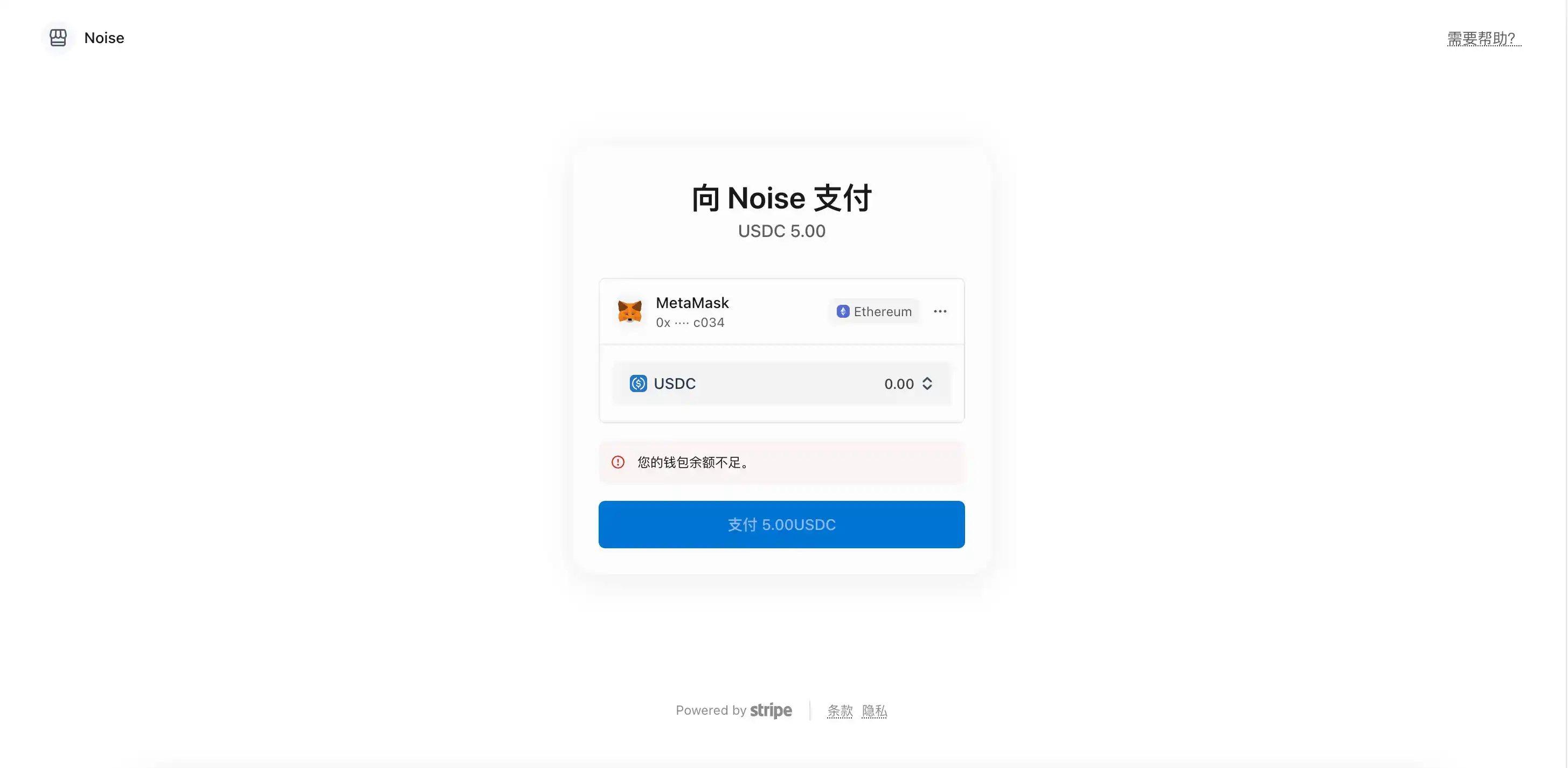
Perhaps because it is in the testing phase, trading on the Noise platform does not directly use fiat currency or cryptocurrency. Instead, users need to purchase "credits" on the platform and use these credits for trading.
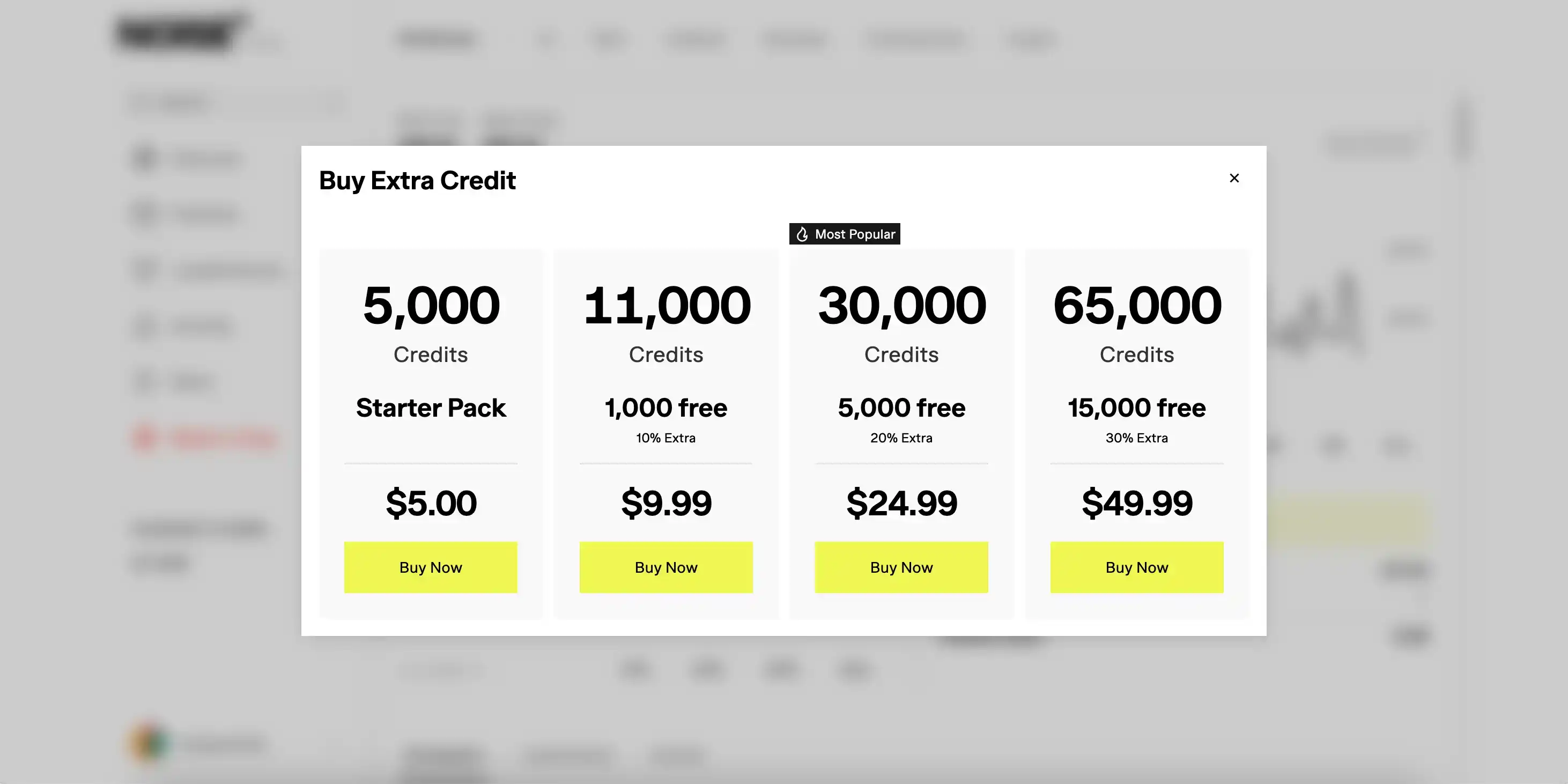
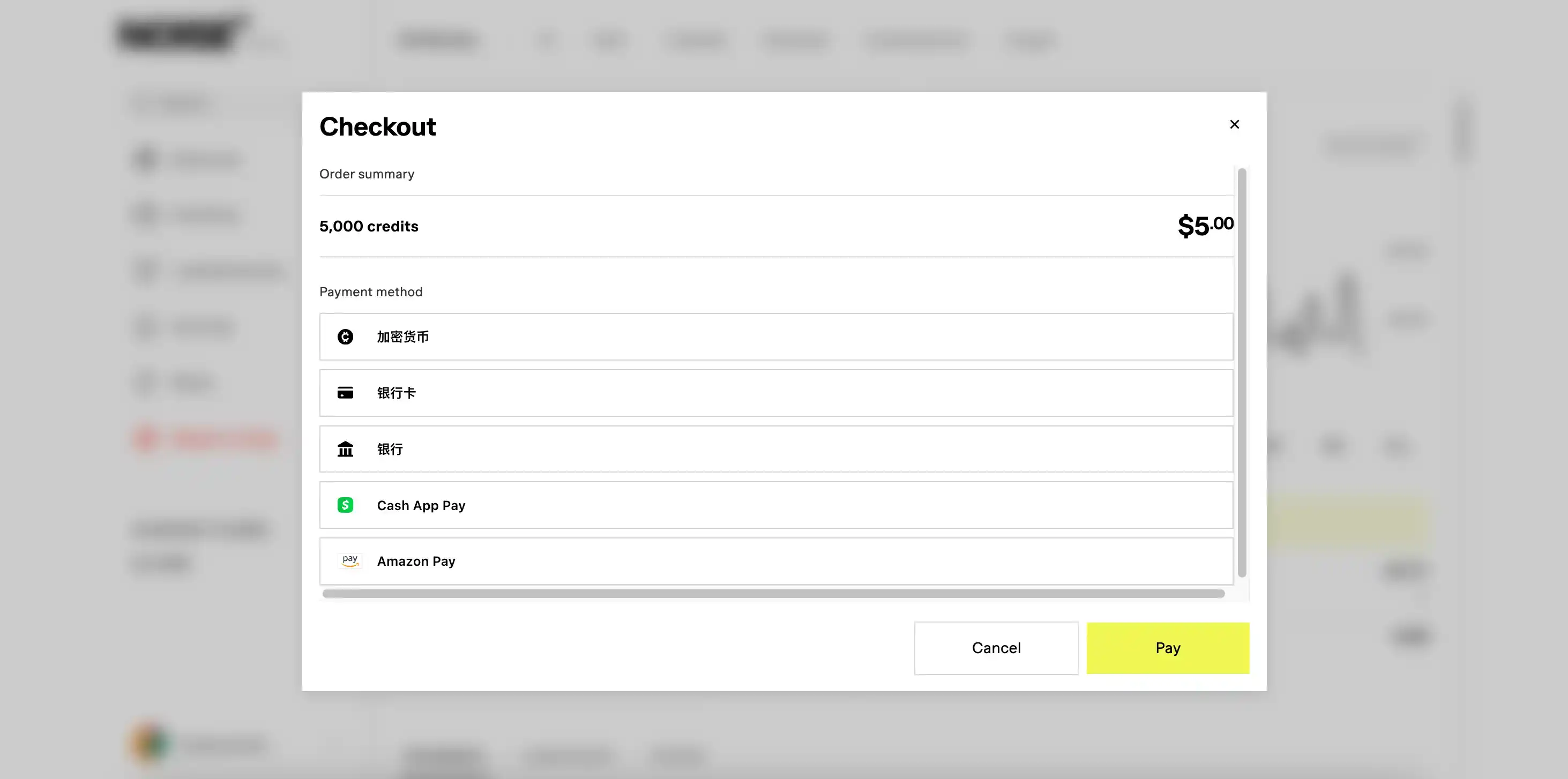
Fiat purchases are supported through banking channels, Cash App, and Amazon Pay. For cryptocurrency channels, transfers need to be made via MetaMask and Phantom, currently supporting USDC on Ethereum and Solana. The author did not find an entry to exchange credits back to fiat or stablecoins, possibly because the Beta version is only testing the trading engine and does not yet have a settlement function.

Taking "crude oil," a recent market focus with high attention, as an example, you can choose leverage from 1x to 5x for long or short trading. Currently, this market is one of the hottest in the Noise Beta version, but its 24-hour trading volume is only over 200,000, with an open interest value of about 2 million, which translates to less than $20 million in USD.

Although not displayed on the front end, Noise also uses an order book model. Unlike prediction markets, Noise's trading market is more like cryptocurrency perpetual contracts. The index provided by the oracle is the "mark price," and the market automatically adjusts the balance between the market price and the mark price through funding rates.
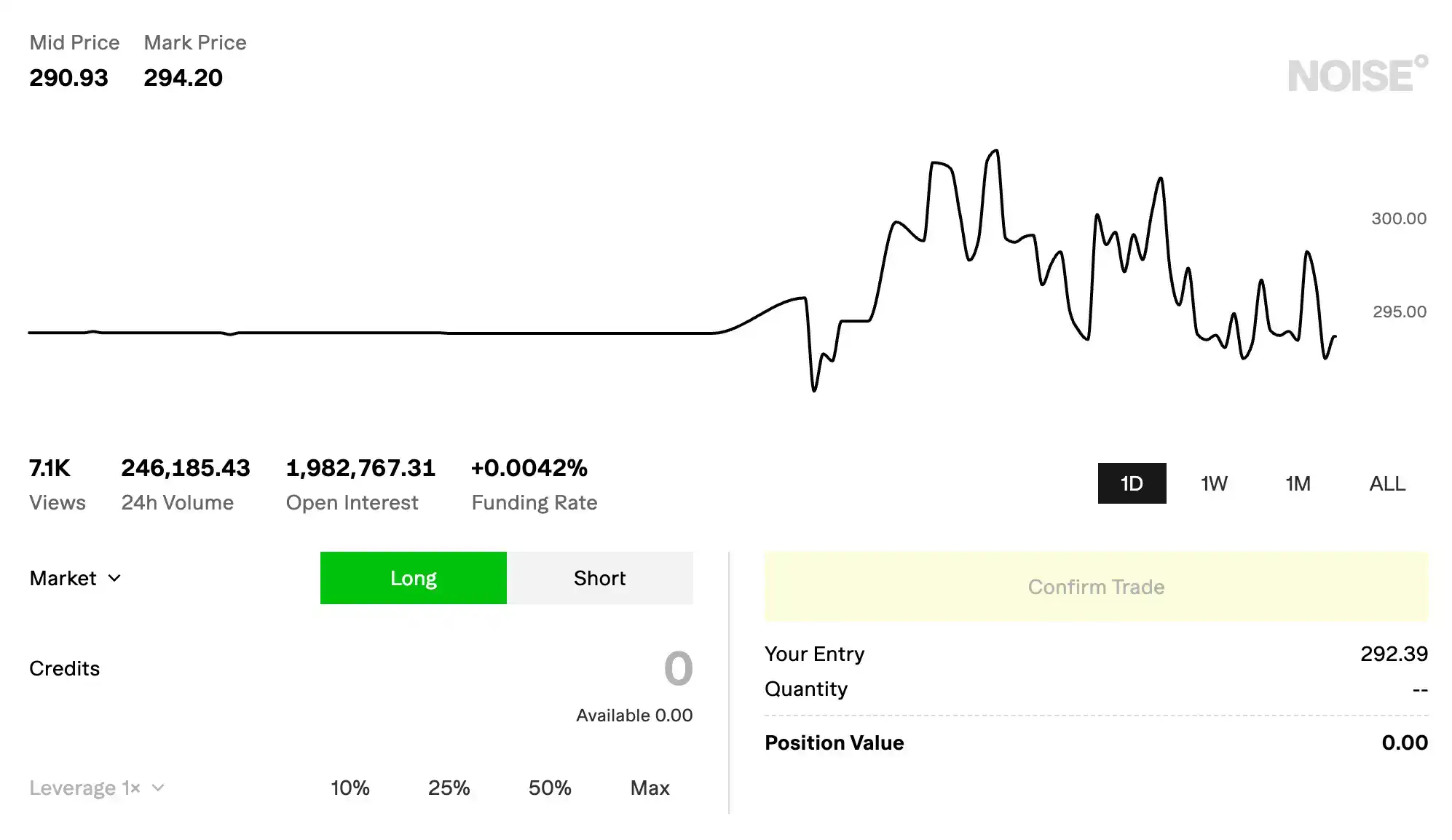
As for the hype index we are trading, Noise calls it the "Relevance Index." Data calculation is based on two sources: content and signals.

In terms of content, Noise tracks interactions, post counts, and unique author counts related to topics on platforms including X, Reddit, YouTube, Instagram, Substack, and RSS news feeds. Signals come from trading volume and market counts of related topics on Polymarket and Kalshi.

The smoothed values (to prevent short-term noise effects) of all sources and indicators are aggregated into a comprehensive value through weighting, which is the index users trade. However, Noise has not fully disclosed the specific algorithm, most likely to prevent someone from exploiting the algorithm's mechanism to artificially inflate the hype of an event or weaken the hype of a hot event with a large amount of irrelevant information.

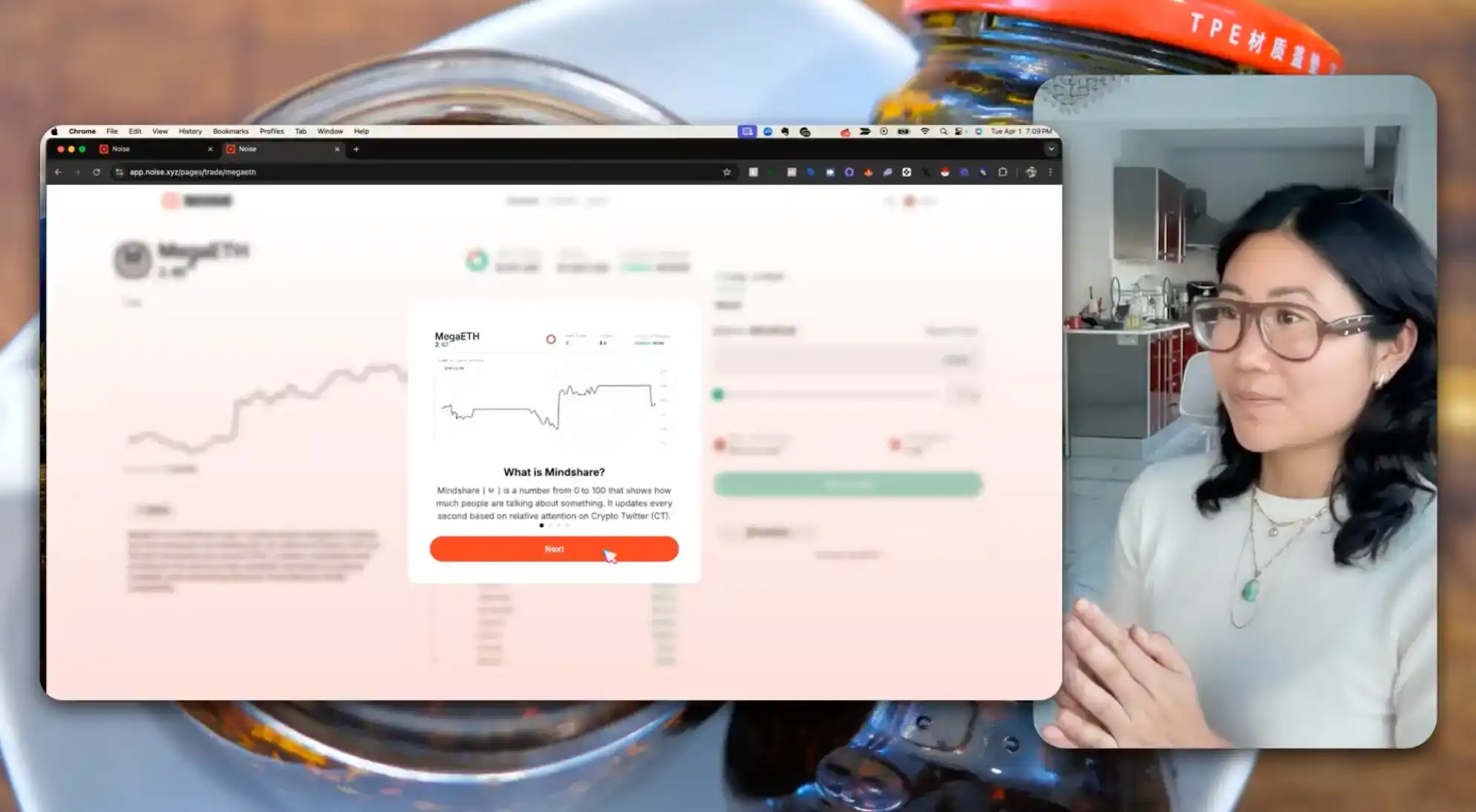
Interestingly, the author found a testnet experience video of Noise on YouTube from a year ago. In April 2025, Noise's index was still a "Mindshare" data between 0 and 100. Even in February of this year, Forbes' report on prediction markets still used this term.
The Founder Who Just Graduated from University

Noise's core founding team consists of three people, all from the University of Southern California: 22-year-old Luca Cordova Stuart, 26-year-old David Zhou, and 24-year-old Gabriel Perez Carafa.

Among them, Gabriel Perez Carafa had no work experience before Noise. Luca Cordova Stuart had an internship in BD at LayerZero Labs, and almost no public information can be found about David Zhou.

None of Noise's three co-founders have particularly impressive backgrounds, similar to Kalshi in its early days. The difference is, although Forbes categorizes Noise as a prediction market, these three young people do not agree. They wrote in the blog post announcing the Beta version launch, "You may have seen people compare Noise to prediction markets. We understand the reason for this comparison, but we do not agree with it. Speculation is just one of many factors. Our goal is to build a platform that helps people understand and spread deeper stories about modern culture, lifestyle, politics, and technological changes."

From multiple articles published in the past, Noise has always wanted to express: eliminate noise and gain true insight. Prediction markets provide the probability of an event happening, backed by real money. What Noise wants to discuss is "whether it is necessary to discuss whether this event will happen."

Besides Speculation, What Are the Application Scenarios?

Trading markets inevitably involve speculation, which is undeniable. The key is what practical use cases Noise has beyond speculation.

Previously, Kalshi's co-founder Lara shared at a conference that recently, there have been many multi-million dollar orders on Kalshi's inflation prediction market, and the source of these orders is large companies using them to hedge against potential wage increases due to a rebound in inflation. Noise provides a similar scenario here: companies can use a portion of their marketing budget to short the topics they plan to market, thereby hedging against the failure of marketing strategies.

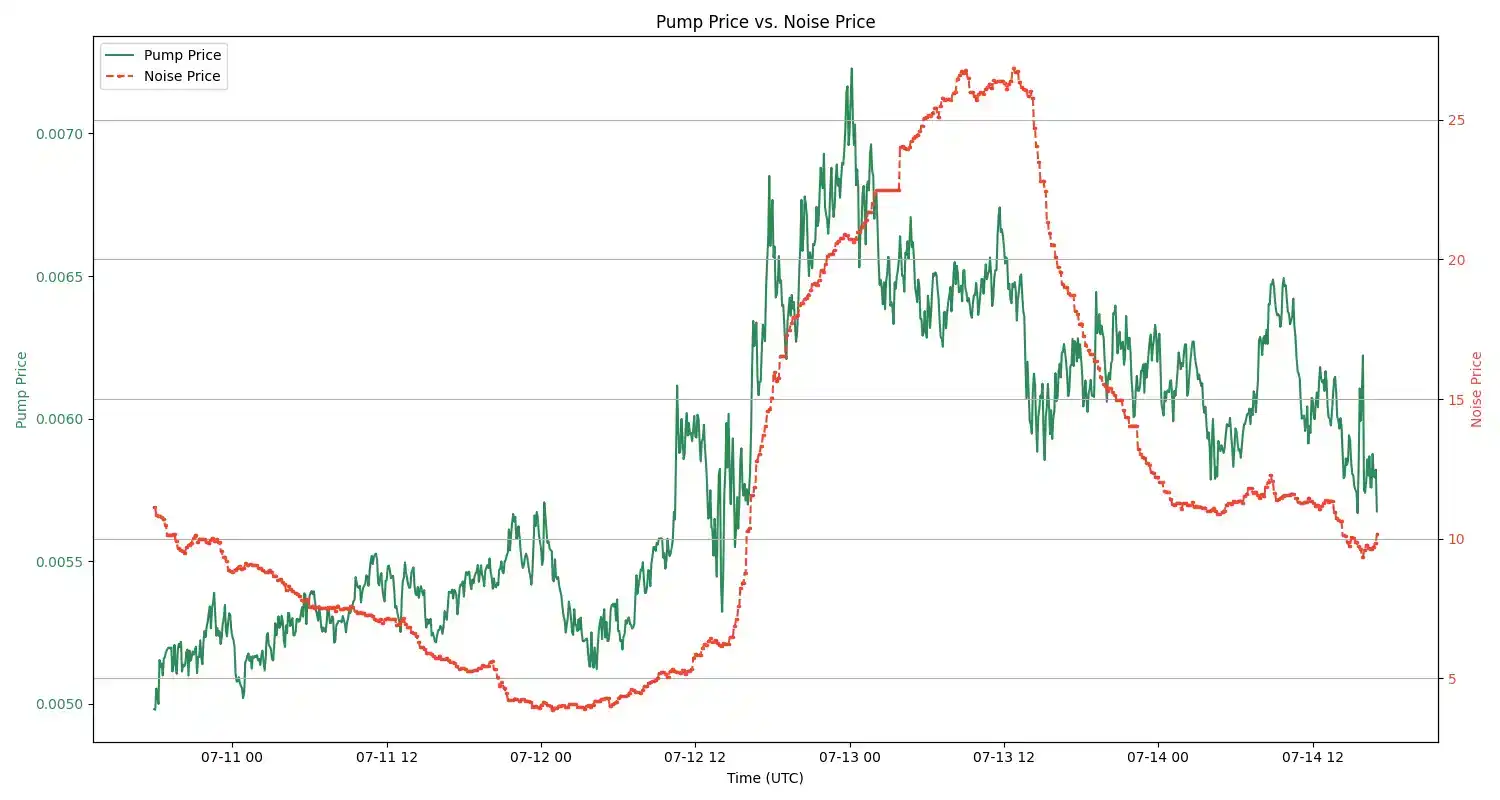
Additionally, "hype" has unique uses in trading such as cryptocurrencies and stocks. In Noise's market regarding the hype of the PUMP topic, the peak hype coincided with the rebound high point after PUMP's first wave of decline. For investors who believe in "buy when no one is interested, sell when everyone is talking," Noise's related markets might be a good reference and hedging channel.
Noise plans to launch its mainnet on Base in the coming months, at which time the platform will be open to everyone and support real money trading. From the author's perspective, Noise's idea is indeed relatively novel and has real application scenarios. However, like prediction markets over a decade ago, trading "hype" and "trends" might still be slightly ahead of its time. But at least in the recent market dominated by stablecoins and payment applications, Noise is a target for airdrop farming.


Perguntas relacionadas

QWhat is Noise and what does its Beta version allow users to do?

ANoise is a 'relevance prediction market' that launched its Beta version, allowing users to trade on the rise and fall of a 'Relevance Index' for various events or cultural symbols. Users can take long or short positions using leverage.

QHow does Noise generate the 'Relevance Index' that users trade on?

AThe 'Relevance Index' is calculated based on content (interactions, post counts, unique authors from platforms like X, Reddit, YouTube, etc.) and signals (trading volume and market count from prediction markets like Polymarket and Kalshi). These are weighted and smoothed to create a composite value.

QWhat is the purpose of using 'credits' for trading on the Noise Beta platform?

AIn the Beta version, users must purchase 'credits' with fiat currency or cryptocurrency to trade. This is primarily a measure to prevent malicious behavior and test the trading engine, as the platform does not yet support cashing out credits for real money.

QWho are the founders of Noise and what is their background?

ANoise was founded by three graduates from the University of Southern California: 22-year-old Luca Cordova Stuart, 26-year-old David Zhou, and 24-year-old Gabriel Perez Carafa. They have limited prior professional experience, with Stuart having a BD internship at LayerZero Labs.

QWhat are some potential real-world use cases for Noise beyond speculation?

ABeyond speculation, Noise can be used by companies to hedge marketing campaigns by shorting the topic they are promoting, thus hedging against campaign failure. It can also serve as a reference or hedging tool for investors in crypto or stocks by providing a measure of public interest or 'hype' around an asset.

Leituras Relacionadas

Will the Fed Still Cut Interest Rates? Tonight's Data Is Crucial

The core debate surrounding the Federal Reserve's potential interest rate cuts is intensifying amid geopolitical conflict and rebounding inflation. The key question is whether high energy prices will cause persistent inflation or weaken consumer demand enough to force the Fed to cut rates. Citigroup presents a bullish case for cuts, arguing that oil supply disruptions from the Strait of Hormuz are temporary and will not lead to lasting inflationary pressure. They point to receding bond yields and oil prices as evidence the market is pricing in a short-lived shock. Citi's data also shows tightening financial conditions, a stabilizing labor market, and healthy tax returns, supporting their view that the path to lower rates remains open. Conversely, Deutsche Bank offers a starkly contrasting, more hawkish outlook. They argue the Fed's current policy is already neutral and expect rates to remain unchanged indefinitely. Their view is based on stalled disinflation progress and a shift toward more hawkish rhetoric from key Fed officials like Waller, who cited risks from prolonged Middle East conflict and tariffs. Other officials, including Williams and Hammack, signaled rates would likely stay on hold for a "considerable time." The market pricing has shifted dramatically, now forecasting zero cuts in 2026. The imminent release of the March retail sales "control group" data is highlighted as a critical test. This metric, which excludes gas station sales, will reveal if high gasoline prices are eroding consumer spending in other areas. A weak reading could support the case for imminent rate cuts, while a strong one would bolster the argument for the Fed to hold steady. This data is pivotal for determining the near-term policy path.

marsbitHá 21m

Will the Fed Still Cut Interest Rates? Tonight's Data Is Crucial

marsbitHá 21m

The Second Half of Macro Influencer Fu Peng's Career

Fu Peng, a prominent Chinese macroeconomist and former chief economist of Northeast Securities, has joined Hong Kong-based digital asset management firm Bitfire Group (formerly New Huo Group) as its chief economist. This move, announced in April 2026, triggered an 11% surge in Bitfire's stock price. Fu, known for his accessible macroeconomic commentary and large social media following, will focus on integrating digital assets into global asset allocation frameworks, particularly combining FICC (fixed income, currencies, and commodities) with cryptocurrencies for institutional clients. His career includes roles at Lehman Brothers and Solomon International, with significant influence gained through public communication. However, in late 2024, Fu faced temporary social media bans after a controversial private speech at HSBC on China's economic challenges, though he denied regulatory sanctions. He later left Northeast Securities citing health reasons. Bitfire, a licensed virtual asset manager serving high-net-worth clients, seeks to build trust and attract traditional capital through Fu’s expertise and credibility. The partnership represents a strategic shift for both: Fu enters the crypto sector after a traditional finance peak, while Bitfire aims to leverage his macro framework for institutional adoption. Outcomes remain uncertain regarding capital inflows and compatibility within corporate structure.

marsbitHá 1h

The Second Half of Macro Influencer Fu Peng's Career

marsbitHá 1h

Trading

Spot
Futuros

Artigos em Destaque

Como comprar HYPE

Bem-vindo à HTX.com!Tornámos a compra de Supreme Finance (HYPE) simples e conveniente.Segue o nosso guia passo a passo para iniciar a tua jornada no mundo das criptos.Passo 1: cria a tua conta HTXUtiliza o teu e-mail ou número de telefone para te inscreveres numa conta gratuita na HTX.Desfruta de um processo de inscrição sem complicações e desbloqueia todas as funcionalidades.Obter a minha contaPasso 2: vai para Comprar Cripto e escolhe o teu método de pagamentoCartão de crédito/débito: usa o teu visa ou mastercard para comprar Supreme Finance (HYPE) instantaneamente.Saldo: usa os fundos da tua conta HTX para transacionar sem problemas.Terceiros: adicionamos métodos de pagamento populares, como Google Pay e Apple Pay, para aumentar a conveniência.P2P: transaciona diretamente com outros utilizadores na HTX.Mercado de balcão (OTC): oferecemos serviços personalizados e taxas de câmbio competitivas para os traders.Passo 3: armazena teu Supreme Finance (HYPE)Depois de comprar o teu Supreme Finance (HYPE), armazena-o na tua conta HTX.Alternativamente, podes enviá-lo para outro lugar através de transferência blockchain ou usá-lo para transacionar outras criptomoedas.Passo 4: transaciona Supreme Finance (HYPE)Transaciona facilmente Supreme Finance (HYPE) no mercado à vista da HTX.Acede simplesmente à tua conta, seleciona o teu par de trading, executa as tuas transações e monitoriza em tempo real.Oferecemos uma experiência de fácil utilização tanto para principiantes como para traders experientes.

269 Visualizações TotaisPublicado em {updateTime}Atualizado em 2024.12.11

Como comprar HYPE

Discussões

Bem-vindo à Comunidade HTX. Aqui, pode manter-se informado sobre os mais recentes desenvolvimentos da plataforma e obter acesso a análises profissionais de mercado. As opiniões dos utilizadores sobre o preço de HYPE (HYPE) são apresentadas abaixo.

活动图片