All about Dogecoin’s ‘muted’ price action and the distribution pressure on it

ambcryptoPublicado em 2026-03-21Última atualização em 2026-03-21

Resumo

Dogecoin's on-chain activity surged with 1.037 billion DOGE transferred, yet the price remained stagnant around $0.094. This divergence suggests the high volume stems from redistribution, exchange movements, or internal transfers rather than genuine buying pressure. Whale activity, including $90 million+ flows into exchanges like Bitget, indicates distribution, increasing sell-side pressure. Although exchange balances dropped 30% since late 2025, intermittent large inflows continue to introduce overhead resistance. With top holders controlling 66% of supply and not accumulating, DOGE remains range-bound, balancing between distribution and absorption forces.

Dogecoin’s [DOGE] on-chain activity has expanded sharply lately. And yet, the price action stayed muted, establishing a clear imbalance between flow and valuation. Transfer volume climbed to 1.037 billion DOGE, roughly $97.8 million, while the price held near $0.094 with gains of only 0.3%.

As this divergence developed, the transaction count increased to 26,627 alongside 32,915 active addresses, reflecting rising network engagement. However, the price failed to respond in tandem, shifting attention towards the composition of these flows.

The high volume is more likely a sign of redistribution, exchange routing, or internal wallet movements than accumulation. As activity intensifies without directional follow-through, the gap between volume and price will only widen.

This pattern also suggested that raw on-chain expansion, when unadjusted for internal transfers, does not quite confirm genuine demand or sustained buying pressure.

Whale flows signal distribution behind Dogecoin’s volume spike

As transaction volume cools down, whale flows can help clarify why the price has been unresponsive. Transfers above $90 million moved into Bitget-linked wallets within 24 hours, signaling distribution into available liquidity.

As these flows hit exchanges, they increased immediate sell pressure, which absorbed incoming demand rather than pushing the price higher.

Meanwhile, top-100 holders still control over 66% of supply, translating to approximately 101.99 billion DOGE, without expanding balances, reinforcing the absence of accumulation. This behavior implied a late-cycle rotation, where large players offload into retail-driven activity. As supply met demand at these levels, the price stabilized near $0.094 instead of breaking out.

However, since holdings have been concentrated, the downside stayed controlled, leaving DOGE range-bound until either accumulation resumes or sell pressure intensifies.

Exchange flows keep Dogecoin range-bound

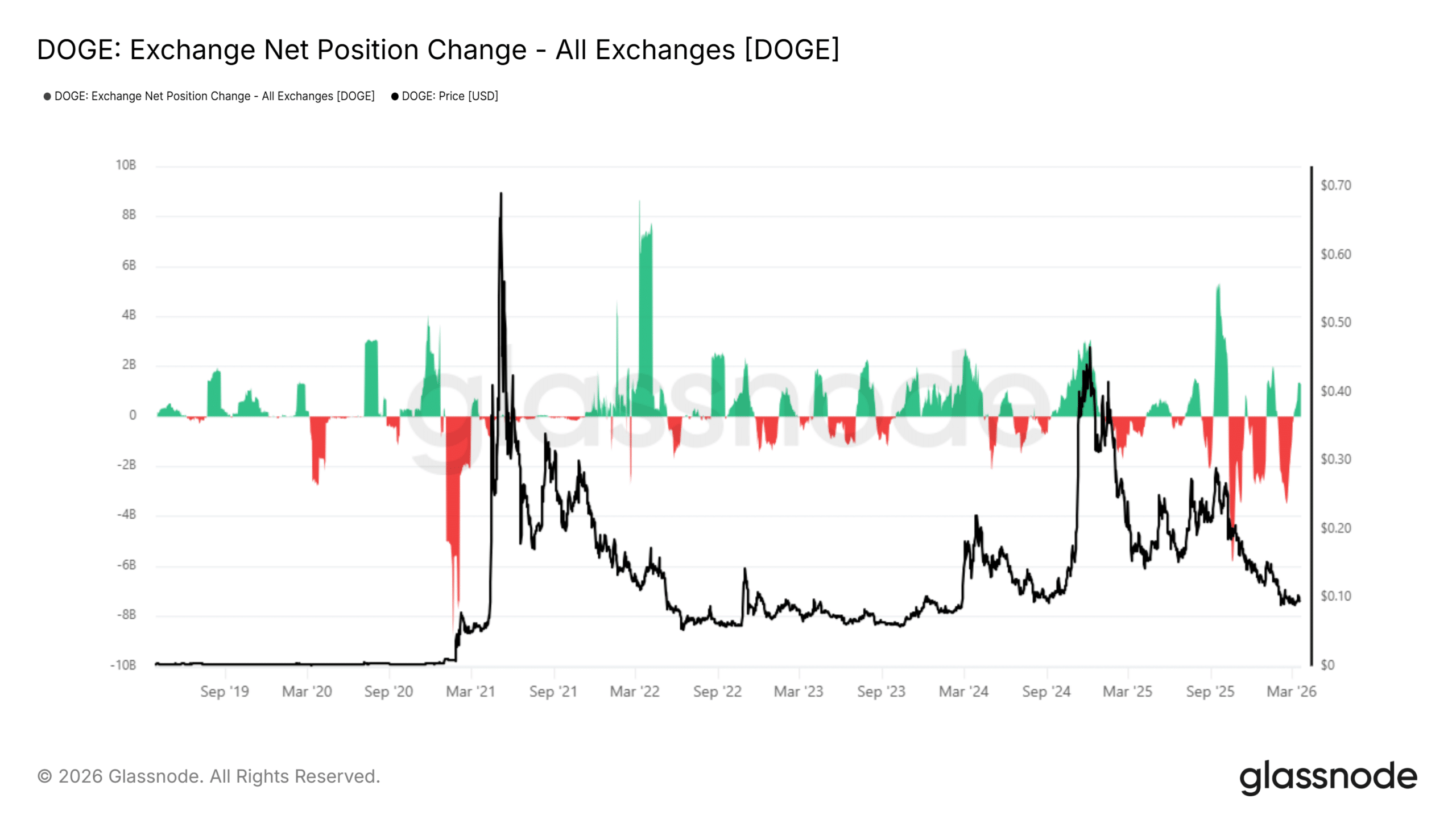
Exchange flows add context to the redistribution narrative. For example – The Net Position change showed repeated spikes above 4 billion DOGE, reflecting strong inflows into exchanges during key periods.
Source: Glassnode

As these inflows rise, the price often stalls or declines, reinforcing sell-side pressure. More recently, persistent negative flows hinted at intermittent outflows – Indicative of periods of absorption or accumulation.

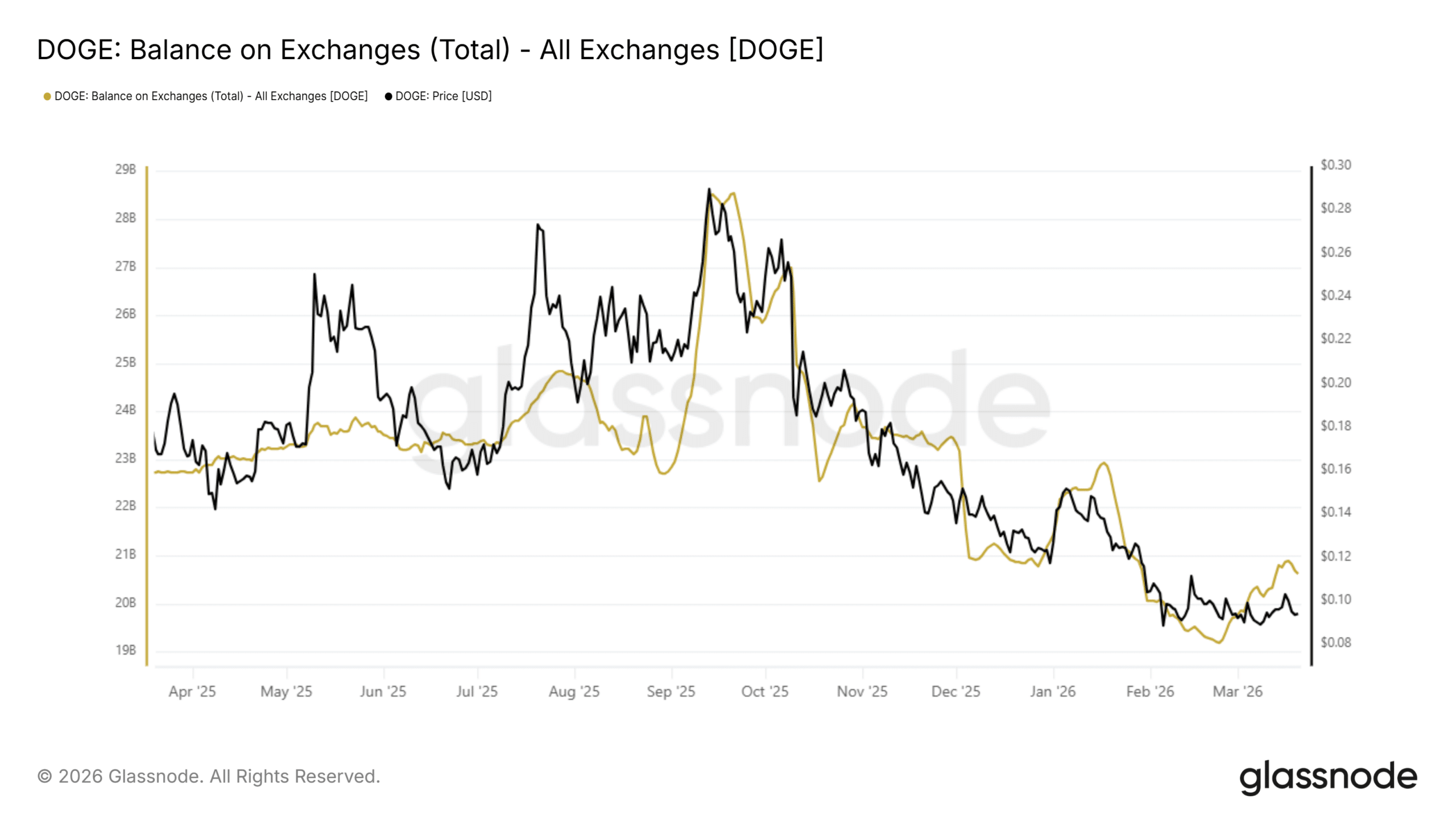
At the same time, total Exchange Balances declined from nearly 29 billion DOGE in late 2025 to around 20 billion DOGE at press time – Marking a roughly 30% drop. This reduction could allude to supply moving off exchanges, which can support price over time.
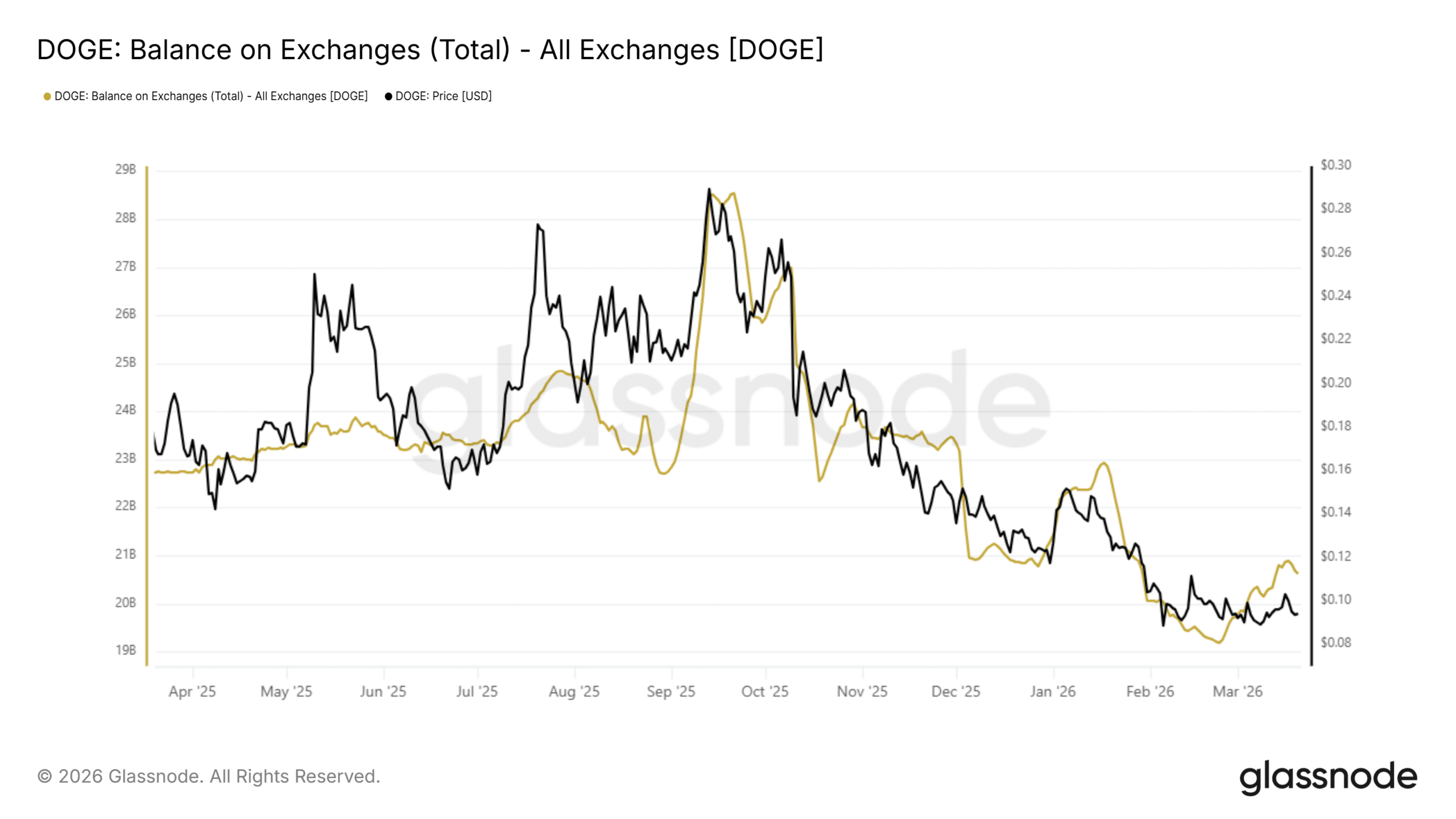
Source: Glassnode

However, intermittent inflow spikes have still introduced some overhead pressure. This is likely to keep DOGE range-bound as opposing forces balance market direction.


Final Summary

  • Dogecoin’s [DOGE] on-chain volume of 1.037 billion DOGE with the price near $0.094 reflected whale-led redistribution into exchanges.
  • Exchange inflows above 4 billion DOGE, alongside a 30% drop in balances, revealed ongoing absorption, despite intermittent sell pressure keeping price compressed.


Perguntas relacionadas

QWhat was the key divergence observed in Dogecoin's on-chain activity and price action?

ADogecoin's on-chain transfer volume climbed sharply to 1.037 billion DOGE, yet the price remained muted, holding near $0.094 with minimal gains of only 0.3%, establishing a clear imbalance between network flow and valuation.

QAccording to the article, what does the high transaction volume more likely signify rather than accumulation?

AThe high volume is more likely a sign of redistribution, exchange routing, or internal wallet movements, rather than genuine demand or sustained buying pressure from accumulation.

QHow did whale flows contribute to the unresponsive price of Dogecoin?

AWhale transfers above $90 million moved into Bitget-linked wallets, signaling distribution into available liquidity. This increased immediate sell pressure on exchanges, which absorbed incoming demand instead of pushing the price higher.

QWhat does the 30% drop in total exchange balances from late 2025 to the time of the article suggest?

AThe decline from nearly 29 billion DOGE to around 20 billion DOGE suggests that supply is moving off exchanges, which can be a supportive factor for the price over time, indicating periods of absorption.

QWhat are the two opposing forces that the article suggests are keeping DOGE's price range-bound?

AThe two opposing forces are intermittent inflow spikes that introduce overhead sell pressure and the reduction of supply on exchanges from absorption, which balance market direction and keep the price compressed.

Leituras Relacionadas

Cook's Curtain Call and Ternus Takes the Helm: The Disruption and Reboot of Apple's 4 Trillion Dollar Empire

Tim Cook has officially announced he will step down as CEO of Apple in September, transitioning to executive chairman after a 15-year tenure during which he grew the company’s market value from around $350 billion to nearly $4 trillion. He will be succeeded by John Ternus, a 50-year-old hardware engineering veteran who has been groomed for the role through increasing public visibility and internal responsibility. Ternus’s appointment signals a strategic shift toward hardware and engineering leadership, with Johny Srouji—head of Apple Silicon—taking on an expanded role as Chief Hardware Officer. This consolidation aims to strengthen Apple’s core technological capabilities. However, Cook’s departure highlights a significant unresolved issue: Apple’s delayed and fragmented approach to artificial intelligence. Despite early efforts, such as hiring John Giannandrea from Google in 2018, Apple’s AI initiatives—particularly around Siri—have struggled with internal restructuring and reliance on external partnerships, including with Google. The transition comes at a critical moment as Apple faces paradigm shifts with the rise of artificial general intelligence (ASI). The company’s closed ecosystem of hardware, software, and services—once a major advantage—now presents challenges in adapting to an AI-centric world where intelligence may matter more than the device itself. Ternus must quickly articulate a clear AI strategy, possibly starting at WWDC, to reassure markets and redefine Apple’s role in a new technological era. His task is not only to maintain Apple’s operational excellence but also to reinvigorate its capacity to innovate and lead in the age of AI.

marsbitHá 2h

Cook's Curtain Call and Ternus Takes the Helm: The Disruption and Reboot of Apple's 4 Trillion Dollar Empire

marsbitHá 2h

Trading

Spot
Futuros
活动图片