AI Bubble Is Bursting

链捕手Publicado em 2026-06-07Última atualização em 2026-06-07

Resumo

The AI Bubble is Bursting: A Necessary Purge on the Path to Ubiquitous Intelligence Market volatility has reignited debates about an AI bubble, with figures like Ray Dalio pointing to high valuations. However, this parallels the dot-com bubble, which, despite its crash, laid the physical infrastructure for today's internet era. The current AI investment frenzy, with tech giants planning trillions in infrastructure spending far outstripping current AI application revenues, appears similarly imbalanced. This 'bubble' is seen as an inevitable phase for a disruptive technology, paying the "innovation tax." Critically, AI inference costs have plummeted over 99.7% since 2023, making intelligence nearly free at the margin. This hasn't reduced spending but has instead unlocked massive new demand, as seen in enterprise AI cloud expenditure tripling. This follows the Jevons Paradox: efficiency gains lead to greater total consumption. The market is now entering a cleansing phase, weeding out speculative ventures lacking real moats. The deeper shift is a move from capital expenditure (CapEx) on hardware to value creation in operational expenditure (OpEx) through AI applications that solve real industry problems. While infrastructure valuations are high, rapid earnings growth from widespread AI adoption across sectors—from manufacturing and finance to law and healthcare—may digest these valuations over time. Ultimately, this creative destruction will leave behind robust infrastructure...

Original Title: AI Bubble Is Already Bursting

Original Author: Chengbei Xugong, Gelong

In recent days, the market has experienced severe volatility, with "AI bubble theories" swirling.

Ray Dalio, founder of Bridgewater Associates, said: There is a bubble in the AI market, and the level is "relatively high."

NVIDIA CEO Jensen Huang said: AI presents a massive opportunity, and the demand for computing power has just begun to explode.

Who to believe?

Both of them are correct.

Is there a bubble in the AI industry? Inevitably, yes.

However, bubbles in the technology field are often the only way society can pay homage to a disruptive advanced productive force.

It is not a purely derogatory term.

In the long run, this is an inevitable phenomenon at the beginning of the emergence of advanced productive forces.
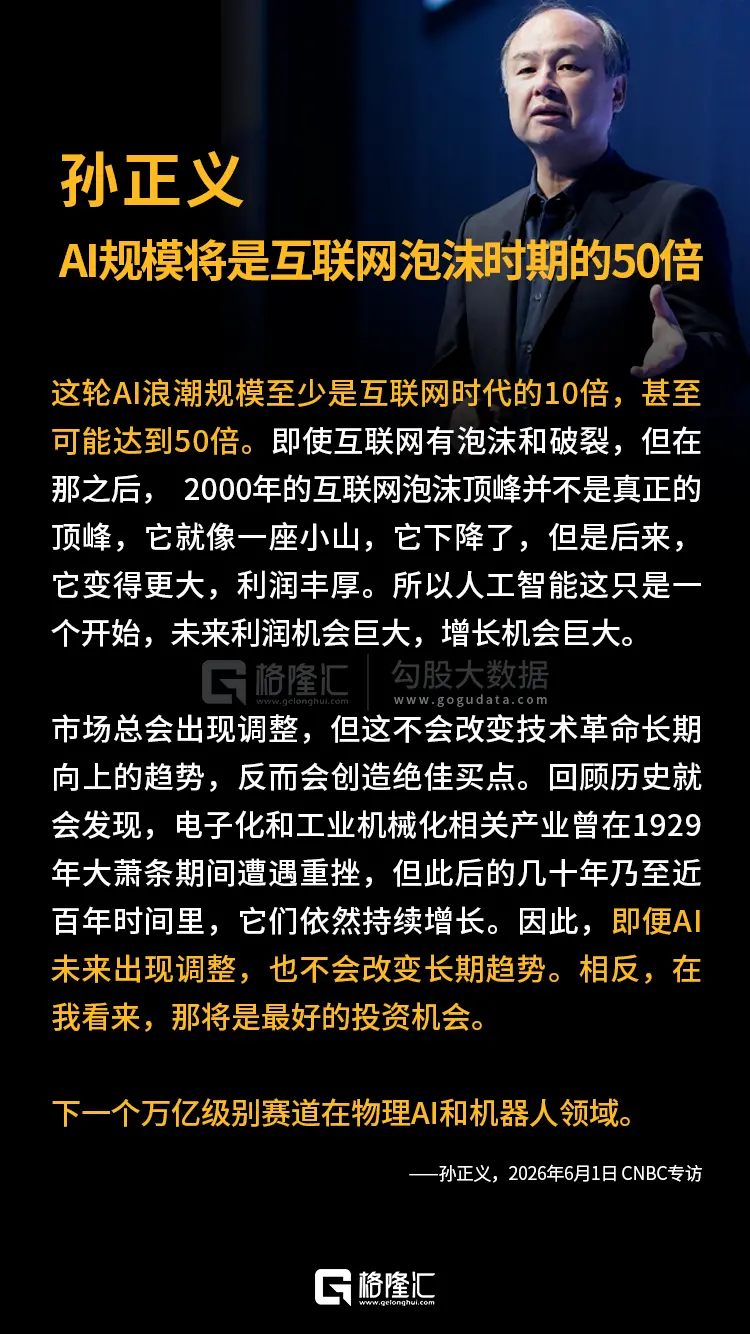
Many people compare the current situation to the 2000 internet bubble, feeling deeply concerned.

The dot-com bubble did cause the Nasdaq to plunge nearly 78%, evaporating over $5 trillion in wealth.

But twenty years later, which industry can operate without the internet?

Today, the value of the internet industry far exceeds that of the bubble era.

The AI bubble, at least on the surface, appears to be a similar situation.

The bubble existing in the capital markets cannot stop virtually every industry in society from actively being empowered by AI.

AI+ is an unstoppable trend.

Just as all industries today are inseparable from the internet, all industries in the future will be inseparable from AI.

01

In that era where any company with a '.com' in its name could go public and raise money, the Nasdaq soared nearly 600% between 1995 and 2000. Subsequently, a financial storm lasting two and a half years ensued.

Those prominent names back then, like software company MicroStrategy, plummeted 62% in a single day due to accounting scandals and overblown promises; Pets.com (selling pet food online) and Webvan (the pioneer of fresh grocery e-commerce) went bankrupt outright.

......

Amid the panic, almost everyone condemned the internet as a scam.

However, the physical infrastructure left behind by the reckless spending of speculative capital often nurtures the next era's supergiants at extremely low costs.

The bubble burst not because of the internet technology itself, but because the pace of physical infrastructure construction couldn't keep up with the market's rhythm.

For example, the once-dominant telecommunications companies (like WorldCom, Global Crossing) invested heavily in laying global submarine cables and dense wave division multiplexing networks. While they went bankrupt, these cheap "information superhighways" became the perfect breeding ground for the later rise of Netflix, Zoom, and mobile internet.

Without the frenzied, ahead-of-its-time global investment in telecom infrastructure around 2000, there would have been no later explosion of YouTube's video streaming or the development of cloud computing infrastructure.

Amazon is the most typical example.

Its stock price plunged from a high of $107 in 1999 to $7 in 2001, a drop of over 90%.

But it survived because its underlying business logic, "reconstructing retail through the network," aligned with the direction of advanced productive forces.

This is a classic case of Amara's Law: overestimating the short-term impact of a new technology while severely underestimating its long-term impact.

In the early stages of a technological revolution, the frenzy of speculative capital inevitably leads to overinvestment, forming a bubble.

This is the intelligence tax that innovation must pay.

But when the bubble subsides, what remains will be a more indestructible advanced productive force.

02

Returning to 2026, the bubble in the AI industry appears even larger.

Just the five major cloud service providers—Amazon, Google, Meta, Microsoft, and Oracle—are expected to have capital expenditures of $690 billion in 2026, with total AI infrastructure investment projected to reach $5.3 trillion by 2030.

Of this, only about 25% is spent on GPUs; the remaining 75% is invested entirely in physical infrastructure: liquid cooling systems, power transmission, network switches, optical modules, and land.

On the revenue side, the combined total revenue of all leading pure-play AI vendors like OpenAI, Anthropic, Cohere, Mistral, and Perplexity in 2026 is expected not to exceed $40 billion.

Nearly $700 billion poured into the foundational layer, only hundreds of billions returned from the application layer.

This severe asymmetry—what is it if not a bubble?

One cannot simply jump to such a conclusion.

There is a crucial point that cannot be overlooked.

In March 2023, when OpenAI released GPT-4, the blended cost per million input tokens was about $30.

By April 2025, thanks to model architecture optimization and inference computing improvements, the price for models with equivalent intelligence levels plummeted to $0.1-$0.15 per million tokens.

According to Stanford's "AI Index Report" and TokenCost data: AI inference costs have dropped over 99.7% in the past two years.

Following traditional linear thinking, with costs plummeting, corporate AI spending should decrease, right?

But the reality is, enterprise AI cloud spending tripled between 2024 and 2025.

Why?

Because when the marginal cost of "intelligence" approaches zero, AI is no longer just a simple text summarizer or chatbot; it has entered a new era of agents and multimodal augmented retrieval.

Companies are starting to let AI agents automatically run tasks thousands of times—writing code, scanning millions of legal contracts, simulating biological experiments.

Cheap tokens have unlocked a massive amount of long-tail demand previously uncommercializable due to cost constraints.

This point can also be gleaned by comparing NVIDIA in 2026 and Cisco, the network hardware kingpin of 2000.

Their ecological niches are strikingly similar, but their underlying financial health is worlds apart.
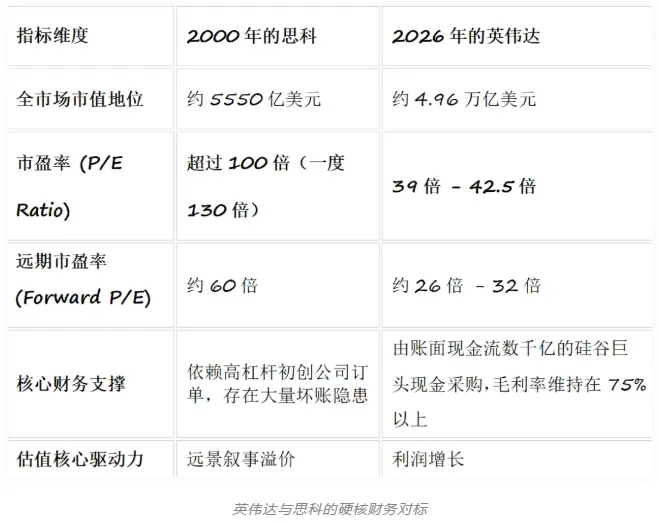
This precisely validates the economic principle known as the "Jevons Paradox": technological progress improves energy efficiency, but instead of reducing energy consumption, it leads to greater demand due to cost reduction.

Even after experiencing the so-called "DeepSeek moment" early last year, the market quickly sobered up in the following months: the more optimized the algorithms, the lower the barrier for enterprise AI adoption, ultimately leading to an exponential increase in total computing power consumption.

It is precisely because of this that AI can gradually embed itself into virtually every traditional industry.

Just as all industries embraced internet+ over the past two decades.

From SaaS software to biopharmaceuticals, and then to advanced manufacturing robotics driven by embodied intelligence, in 2026, almost every industry is embracing AI+.

No one discusses "should we use AI," but rather anxiously questions "is our data properly cleaned? Do we have enough API call quota? Is our RAG architecture optimal?"

Currently, the AI industry does indeed have a bubble.

But for enterprises, if you don't embrace the bubble, you will be crushed by the times.

This has been proven over the past two decades of the internet era.

03

Currently, we are undoubtedly at an extremely critical node in the technology lifecycle: just before the "Trough of Disillusionment" on Gartner's Hype Cycle, or at a turning point in the theory of "Technological Revolutions and Financial Capital."

The AI bubble is already bursting, it's just that many haven't realized it.

Over the past few years, a large number of venture capital firms suffered from fear of missing out (FOMO).

Any new startup, with just a few dozen PPT slides, wrapping a layer of OpenAI's API, could raise money. Now, as the tide recedes, these companies with no moat, only concepts, are dying en masse.

This is the market self-cleansing, a manifestation of the bubble bursting.

But this is only the surface phenomenon.

Three profound evolutions are taking place in the market's underlying logic:

First, the shift of value from CapEx to OpEx

Currently, the money is being made by the shovel sellers—NVIDIA, TSMC, and those selling optical modules and server liquid cooling equipment have captured most of the gains.

But as computing power gradually becomes "infrastructural," like water and electricity, the real excess profits will gradually shift to the application layer.

Namely, those AI-native enterprises that can use extremely low-cost tokens to genuinely solve pain points in vertical industries and reshape business processes (OpEx optimization).

Second, valuation multiple compression and earnings digestion

The market's high valuation for AI infrastructure does not necessarily mean a crash.

In many cases, the high-speed growth of corporate earnings will gradually digest lofty valuations through a "time-for-space" approach.

As long as the revenue growth of cloud computing giants keeps pace with the depreciation rate of capital expenditures, this game of pass-the-parcel can evolve into an unprecedented industrial upgrade.

For example, global automotive manufacturing giants and chip giants, by introducing end-to-end AI twin technology, have shortened the R&D-to-mass-production cycle for new products by 35% and improved overall equipment effectiveness (OEE) by 18%.

Another example: in the financial industry, by 2026, quantitative trading, risk control, and credit assessment are fully dominated by multimodal agents. AI is not only processing macro expectations with microsecond timestamps but also deeply involved in micro-level asset pricing for each transaction.

In highly knowledge-intensive industries like law, healthcare, and auditing, AI has completed its evolution from "junior assistant" to "partner-level expert."

Among the over 1 billion active users of ChatGPT, Gemini, Claude, a significant portion uses it as a substitute tool for daily high-intensity intellectual labor.

Including you and me.

All of the above are tangible developments, visible to everyone.

04

Looking back at the grand history of technology, Schumpeter's "creative destruction" is always unfolding.

Capital markets are always impatient, hoping that $1 invested today will return $10 tomorrow.

When nearly $700 billion in infrastructure investment cannot be fully transformed into application-layer profits in the short term, the market is bound to experience a brutal reshuffle.

Eliminating those speculative, shell companies that rely solely on PPT presentations, and retaining those with real technological depth and viable application scenarios.

After the reshuffle, those cheap and massive computing centers, highly optimized model algorithms, will serve thousands of industries at extremely low cost.

After 2000, humanity entered a digital age where no industry could function without the internet.

Today, we are also irreversibly heading towards a fully intelligent era where all industries are governed and empowered by AI.

Amidst the noise of the bubble, the underlying momentum of productive force contains not a drop of water.

Criptomoedas em alta

Perguntas relacionadas

QThe article mentions that AI market bubbles are a recurring phenomenon in technological revolutions. What specific historical example does it draw a parallel to, and what was the long-term outcome?

AThe article draws a direct parallel to the dot-com bubble of 2000. While it caused a massive market crash and wealth destruction in the short term, the long-term outcome was that the internet's value far surpassed its pre-bubble valuation, becoming indispensable to almost every industry. The author suggests AI is following a similar pattern: short-term speculative excess (the bubble) funding the infrastructure for long-term, transformative adoption across all sectors.

QAccording to the article, what is the "Jevons Paradox" in the context of AI, and how does it explain the surge in corporate AI spending despite falling costs?

AThe Jevons Paradox states that technological progress that increases the efficiency of using a resource (like AI computing power) often leads to an *increase*, not a decrease, in the total consumption of that resource. The article applies this to AI: as the cost per token (the unit of AI computation) plummets (over 99.7%), it unlocks vast new, previously cost-prohibitive use cases. Companies don't just do the same tasks cheaper; they deploy AI for massively scaled, complex applications (like automated agents running thousands of tasks), leading to a net explosion in total AI spending and compute demand.

QThe article describes a significant asymmetry between AI infrastructure investment and application-layer revenue. What are the figures cited for 2026, and what broader point does this contrast illustrate?

AThe article states that for 2026, major cloud service providers are projected to have capital expenditures of $690 billion on AI infrastructure. In contrast, the combined revenue of all leading pure-play AI companies (like OpenAI, Anthropic) is projected to be under $40 billion. This massive asymmetry (nearly 700B in vs. ~40B out) illustrates the current 'bubble' characteristic of over-investment in anticipation of future demand. However, the author argues this infrastructure buildup is necessary, akin to the telecom overbuild during the dot-com era, which later enabled the rise of streaming and cloud computing.

QWhat are the three 'profound evolutions' in the market's deep logic that the article identifies as happening beneath the surface of the apparent bubble burst?

A1. Value shift from CapEx to OpEx: Profits will gradually move from sellers of infrastructure (hardware like GPUs) to AI-native application companies that use cheap compute to solve real business problems and optimize operational expenses. 2. Valuation compression and earnings digestion: High valuations for infrastructure may be sustained not by perpetual hype, but by companies growing their earnings fast enough to eventually justify the high prices ('time for space'). 3. The article heavily implies a third evolution (though not explicitly numbered as such in the provided text): The widespread, tangible integration of AI into core industries (automotive, finance, law, medicine), moving from concept to essential, productivity-enhancing tool, which validates the underlying technological shift.

QHow does the article characterize the nature of the current AI bubble's burst, and what is the primary mechanism of this 'self-purification' of the market?

AThe article characterizes the current bubble burst as a necessary 'market self-purification' or 'creative destruction.' The primary mechanism is the widespread failure and weeding out of speculative, low-substance companies that lacked a true technological moat—specifically, those that were merely 'wrapping' existing AI APIs (like OpenAI's) in a presentation without solving a unique problem or building defensible technology. This clears the field for serious companies with real technology and viable business models.

Leituras Relacionadas

This Strategy Earned Hefei One Trillion Yuan

This article analyzes the "Hefei Model" that enabled a municipal state-owned investment to generate paper profits exceeding one trillion yuan through the 2026 IPO of ChangXin Memory Technologies (CXMT). It argues against framing this success as a "lucky gamble," instead presenting it as the result of a deliberate institutional system designed to enable long-term industrial investment. The system comprises three core components. First, a **quantified risk-tolerance mechanism**, including a 40% loss allowance for venture funds and a clear "duty-fulfilled exemption" list, decouples project failure from personal career risk for decision-makers, allowing them to focus on industrial potential rather than personal liability. Second, **strategic investment in critical supply chain gaps**: Hefei doesn't just invest in "good" projects, but targets "missing" links essential for its key industries (appliances, displays, cars). The investment in CXMT aimed to fill the critical DRAM memory chip gap, subsequently attracting over 450 upstream and downstream firms and creating a full semiconductor cluster. Third, **institutional authorization for counter-cyclical investment**: Protected by the risk-tolerance framework, Hefei supported CXMT with increased investment during the 2023 global memory industry downturn, enabling it to scale production and capitalize on the 2025 AI-driven demand surge. The article concludes that the true lesson is not the specific investment but building the institutional infrastructure—quantified risk tolerance, deep industry chain analysis, and counter-cyclical mandates—that makes such long-term, strategic bets possible. It notes the final challenge is perfecting the exit mechanism to complete the investment cycle and transform paper gains into sustainable fiscal returns and reinvestment capacity.

marsbitHá 14m

This Strategy Earned Hefei One Trillion Yuan

marsbitHá 14m

Silicon Valley VC's On-the-Ground Observations of Chinese Entrepreneurship: A Harsher Capital Environment Breeding Fiercer Companies

A Silicon Valley VC's on-the-ground observations of China's startup ecosystem reveal a harsher capital environment forging more aggressive and execution-driven companies. Unlike Silicon Valley's patient capital focused on long-term growth, China's venture landscape is characterized by intense pressure for exits. Startups often face "equity in name, debt in reality" terms with strict timelines and personal founder liability, pushing IPO as the nearly mandatory exit path due to a virtually non-existent M&A market. This high-stakes system, while potentially fostering short-termism, cultivates extreme cost discipline, rapid execution, and formidable commercialization skills—traits evident as these companies expand overseas. The funding ecosystem comprises three main pools: local RMB funds (often government-backed with economic development mandates), domestic USD funds (more founder-friendly, like Sequoia China), and dwindling direct foreign capital. Financial Advisors (FAs) play a crucial intermediary role, packaging deals and navigating China's opaque, relationship-based business networks where platforms like LinkedIn haven't taken root. Underpinning it all is significant state influence through industrial policy, directing capital and incentives toward strategic sectors like semiconductors and AI. The result is a distinct, parallel innovation model—less forgiving than Silicon Valley's, but capable of concentrating resources, accelerating iteration, and producing fiercely competitive companies in targeted industries.

marsbitHá 19m

Silicon Valley VC's On-the-Ground Observations of Chinese Entrepreneurship: A Harsher Capital Environment Breeding Fiercer Companies

marsbitHá 19m

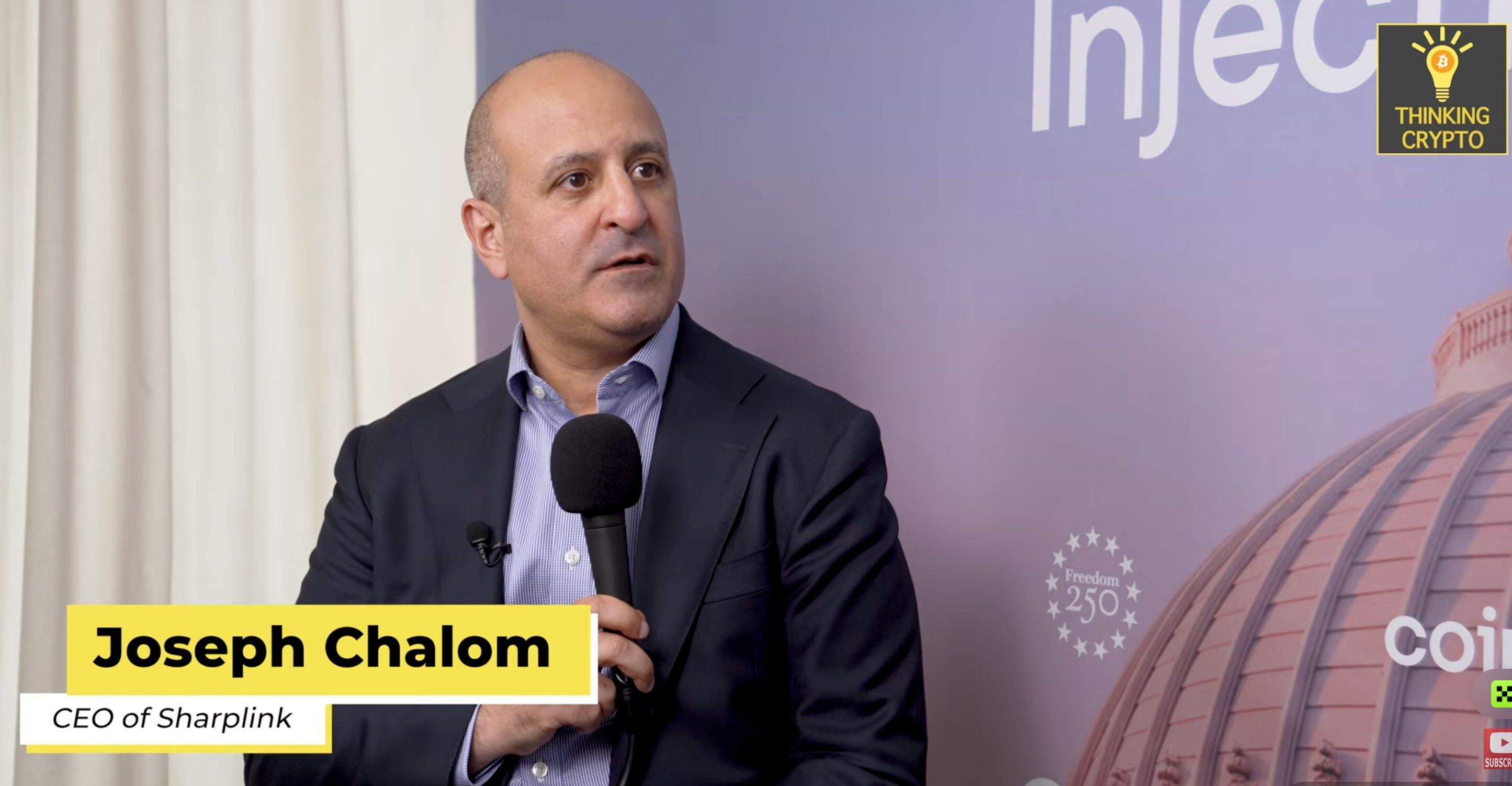
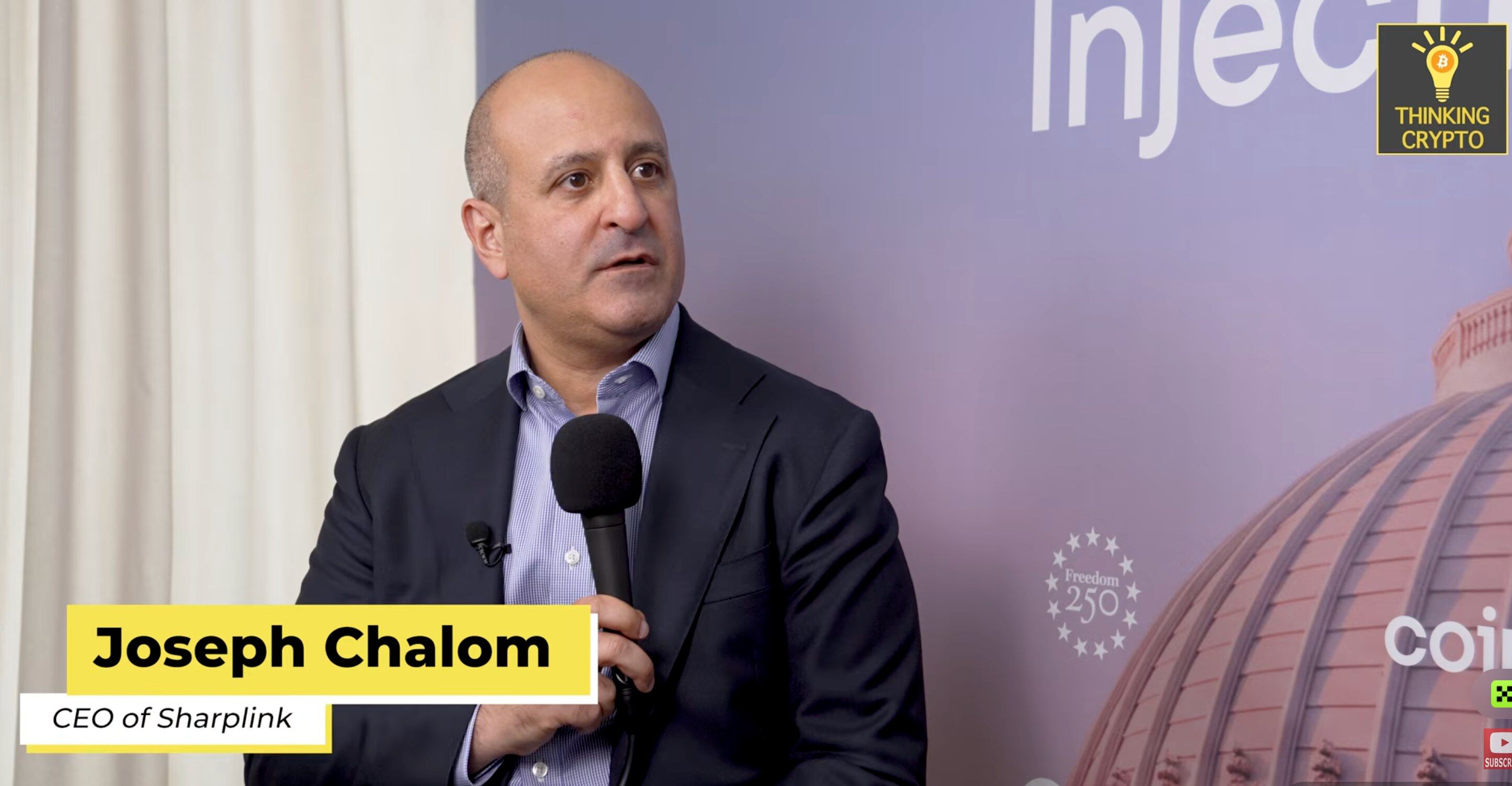
SharpLink's Helm: Buying Only, Never Selling, Making ETH Generate Profits Through the Cold Winter

SharpLink co-CEO Joseph Chalom shares his bullish outlook on Ethereum during the recent "Injective Summit 2026." Despite prevailing negative market sentiment, Chalom argues that fundamentals and data tell a different story: Ethereum dominates with over 50% of stablecoin transaction volume, nearly 60% of tokenized real-world assets (RWA), and remains the uncontested leader in DeFi. He attributes the communication gap and lack of confidence partly to the Ethereum Foundation's restructuring. In response, SharpLink, alongside ConsenSys and Bitmain, is funding three key spin-off teams from the Foundation: ETH Labs (for institutional-scale scalability), Ethereum Institutional (for business development and marketing), and EthSystems (for next-gen privacy and compliance solutions). Chalom emphasizes these are critical for accelerating institutional adoption. Regarding SharpLink's strategy, Chalom details a conservative, yield-focused approach. The firm holds 886,725 ETH, acquired with zero leverage or debt. They generate revenue by staking ETH and strategically deploying capital into DeFi protocols via a dedicated fund, aiming for returns above the native staking yield. This contrasts with some Bitcoin-focused firms that have become net sellers. On the broader institutional adoption of tokenization, Chalom sees current progress as just the beginning. He breaks it down into layers: stablecoins as the currency/value layer, tokenized assets as the exposure layer, and DeFi as the execution layer. He predicts regulatory clarity, like the potential Clarity Act, will be a major catalyst. A key future inflection point will be when fiduciary managers prefer tokenized, 24/7 tradable digital assets over traditional "analog" versions due to their programmability and instant settlement. In conclusion, Chalom positions SharpLink not just as an ETH accumulator and yield generator, but as an active "ecosystem steward," funding essential development and marketing initiatives to support Ethereum's long-term growth, which he believes is directly aligned with shareholder interests.

Odaily星球日报Há 19m

SharpLink's Helm: Buying Only, Never Selling, Making ETH Generate Profits Through the Cold Winter

Odaily星球日报Há 19m

Ten European Banks Launch Blockchain Initiative RL1

On July 28, 2026, ten European financial institutions launched the Regulated Layer One (RL1) initiative. This open, neutral, and compliance-focused blockchain network is specialized for institutional digital asset operations. The founding members include ABN AMRO, Cecabank, Chartered Investment, Crédit Mutuel Alliance Fédérale, DekaBank, DZ BANK, LBBW, Natixis CIB, SC Ventures, and Seturion, formed as a European cooperative society (SCE) and led by Henning Voelkel, former head of SWIAT. The network is open to new participants, with NatWest currently in discussions to join. RL1 is built on the SWIAT blockchain, which will remain its software and services provider. The underlying SWIAT network, operational for three years, has processed 50 transactions totaling €700 million. The initiative is described as a collective European effort to create a foundation for a shared, openly and trustworthily managed distributed ledger. Its primary goal is to overcome fragmentation in the regulated financial sector by establishing a neutral, participant-owned, pan-European DLT infrastructure for tokenized assets, digital money, and next-generation financial services. The move responds to growing EU demand for scalable real-world asset (RWA) infrastructure, evidenced by projects like Pontes and Appia. This launch aligns with broader sector growth expectations, including Standard Chartered's forecast for DeFi and RWA market capitalization to reach $2 trillion.

cryptonews.ruHá 25m

Ten European Banks Launch Blockchain Initiative RL1

cryptonews.ruHá 25m

Trading

Spot

Artigos em Destaque

O que é GROK AI

Grok AI: Revolucionar a Tecnologia Conversacional na Era Web3 Introdução No panorama em rápida evolução da inteligência artificial, a Grok AI destaca-se como um projeto notável que liga os domínios da tecnologia avançada e da interação com o utilizador. Desenvolvida pela xAI, uma empresa liderada pelo renomado empreendedor Elon Musk, a Grok AI procura redefinir a forma como interagimos com a inteligência artificial. À medida que o movimento Web3 continua a florescer, a Grok AI visa aproveitar o poder da IA conversacional para responder a consultas complexas, proporcionando aos utilizadores uma experiência que é não apenas informativa, mas também divertida. O que é a Grok AI? A Grok AI é um sofisticado chatbot de IA conversacional projetado para interagir com os utilizadores de forma dinâmica. Ao contrário de muitos sistemas de IA tradicionais, a Grok AI abraça uma gama mais ampla de perguntas, incluindo aquelas tipicamente consideradas inadequadas ou fora das respostas padrão. Os principais objetivos do projeto incluem: Raciocínio Fiável: A Grok AI enfatiza o raciocínio de senso comum para fornecer respostas lógicas com base na compreensão contextual. Supervisão Escalável: A integração de assistência de ferramentas garante que as interações dos utilizadores sejam monitorizadas e otimizadas para qualidade. Verificação Formal: A segurança é primordial; a Grok AI incorpora métodos de verificação formal para aumentar a fiabilidade das suas saídas. Compreensão de Longo Contexto: O modelo de IA destaca-se na retenção e recordação de um extenso histórico de conversas, facilitando discussões significativas e contextualizadas. Robustez Adversarial: Ao focar na melhoria das suas defesas contra entradas manipuladas ou maliciosas, a Grok AI visa manter a integridade das interações dos utilizadores. Em essência, a Grok AI não é apenas um dispositivo de recuperação de informações; é um parceiro conversacional imersivo que incentiva um diálogo dinâmico. Criador da Grok AI A mente por trás da Grok AI não é outra senão Elon Musk, um indivíduo sinónimo de inovação em vários campos, incluindo automóvel, viagens espaciais e tecnologia. Sob a égide da xAI, uma empresa focada em avançar a tecnologia de IA de maneiras benéficas, a visão de Musk visa reformular a compreensão das interações com a IA. A liderança e a ética fundacional são profundamente influenciadas pelo compromisso de Musk em ultrapassar os limites tecnológicos. Investidores da Grok AI Embora os detalhes específicos sobre os investidores que apoiam a Grok AI permaneçam limitados, é reconhecido publicamente que a xAI, a incubadora do projeto, é fundada e apoiada principalmente pelo próprio Elon Musk. As anteriores empreitadas e participações de Musk fornecem um forte apoio, reforçando ainda mais a credibilidade e o potencial de crescimento da Grok AI. No entanto, até agora, informações sobre fundações ou organizações de investimento adicionais que apoiam a Grok AI não estão prontamente acessíveis, marcando uma área para exploração futura potencial. Como Funciona a Grok AI? A mecânica operacional da Grok AI é tão inovadora quanto a sua estrutura conceptual. O projeto integra várias tecnologias de ponta que facilitam as suas funcionalidades únicas: Infraestrutura Robusta: A Grok AI é construída utilizando Kubernetes para orquestração de contêineres, Rust para desempenho e segurança, e JAX para computação numérica de alto desempenho. Este trio assegura que o chatbot opere de forma eficiente, escale eficazmente e sirva os utilizadores prontamente. Acesso a Conhecimento em Tempo Real: Uma das características distintivas da Grok AI é a sua capacidade de aceder a dados em tempo real através da plataforma X—anteriormente conhecida como Twitter. Esta capacidade concede à IA acesso às informações mais recentes, permitindo-lhe fornecer respostas e recomendações oportunas que outros modelos de IA poderiam perder. Dois Modos de Interação: A Grok AI oferece aos utilizadores a escolha entre “Modo Divertido” e “Modo Regular”. O Modo Divertido permite um estilo de interação mais lúdico e humorístico, enquanto o Modo Regular foca em fornecer respostas precisas e exatas. Esta versatilidade assegura uma experiência adaptada que atende a várias preferências dos utilizadores. Em essência, a Grok AI combina desempenho com envolvimento, criando uma experiência que é tanto enriquecedora quanto divertida. Cronologia da Grok AI A jornada da Grok AI é marcada por marcos fundamentais que refletem as suas fases de desenvolvimento e implementação: Desenvolvimento Inicial: A fase fundamental da Grok AI ocorreu ao longo de aproximadamente dois meses, durante os quais o treinamento inicial e o ajuste do modelo foram realizados. Lançamento Beta do Grok-2: Numa evolução significativa, o beta do Grok-2 foi anunciado. Este lançamento introduziu duas versões do chatbot—Grok-2 e Grok-2 mini—cada uma equipada com capacidades para conversar, programar e raciocinar. Acesso Público: Após o seu desenvolvimento beta, a Grok AI tornou-se disponível para os utilizadores da plataforma X. Aqueles com contas verificadas por um número de telefone e ativas há pelo menos sete dias podem aceder a uma versão limitada, tornando a tecnologia disponível para um público mais amplo. Esta cronologia encapsula o crescimento sistemático da Grok AI desde a sua concepção até ao envolvimento público, enfatizando o seu compromisso com a melhoria contínua e a interação com o utilizador. Principais Características da Grok AI A Grok AI abrange várias características principais que contribuem para a sua identidade inovadora: Integração de Conhecimento em Tempo Real: O acesso a informações atuais e relevantes diferencia a Grok AI de muitos modelos estáticos, permitindo uma experiência de utilizador envolvente e precisa. Estilos de Interação Versáteis: Ao oferecer modos de interação distintos, a Grok AI atende a várias preferências dos utilizadores, convidando à criatividade e personalização na conversa com a IA. Base Tecnológica Avançada: A utilização de Kubernetes, Rust e JAX fornece ao projeto uma estrutura sólida para garantir fiabilidade e desempenho ótimo. Consideração de Discurso Ético: A inclusão de uma função de geração de imagens demonstra o espírito inovador do projeto. No entanto, também levanta considerações éticas em torno dos direitos autorais e da representação respeitosa de figuras reconhecíveis—uma discussão em curso dentro da comunidade de IA. Conclusão Como uma entidade pioneira no domínio da IA conversacional, a Grok AI encapsula o potencial para experiências transformadoras do utilizador na era digital. Desenvolvida pela xAI e impulsionada pela abordagem visionária de Elon Musk, a Grok AI integra conhecimento em tempo real com capacidades avançadas de interação. Esforça-se por ultrapassar os limites do que a inteligência artificial pode alcançar, mantendo um foco nas considerações éticas e na segurança do utilizador. A Grok AI não apenas incorpora o avanço tecnológico, mas também representa um novo paradigma de conversas no panorama Web3, prometendo envolver os utilizadores com conhecimento hábil e interação lúdica. À medida que o projeto continua a evoluir, ele permanece como um testemunho do que a interseção da tecnologia, criatividade e interação humana pode alcançar.

529 Visualizações TotaisPublicado em {updateTime}Atualizado em 2024.12.26

O que é GROK AI

O que é ERC AI

Euruka Tech: Uma Visão Geral do $erc ai e as suas Ambições no Web3 Introdução No panorama em rápida evolução da tecnologia blockchain e das aplicações descentralizadas, novos projetos surgem frequentemente, cada um com objetivos e metodologias únicas. Um desses projetos é a Euruka Tech, que opera no vasto domínio das criptomoedas e do Web3. O foco principal da Euruka Tech, particularmente do seu token $erc ai, é apresentar soluções inovadoras concebidas para aproveitar as capacidades crescentes da tecnologia descentralizada. Este artigo tem como objetivo fornecer uma visão abrangente da Euruka Tech, uma exploração das suas metas, funcionalidade, a identidade do seu criador, potenciais investidores e a sua importância no contexto mais amplo do Web3. O que é a Euruka Tech, $erc ai? A Euruka Tech é caracterizada como um projeto que aproveita as ferramentas e funcionalidades oferecidas pelo ambiente Web3, focando na integração da inteligência artificial nas suas operações. Embora os detalhes específicos sobre a estrutura do projeto sejam um tanto elusivos, ele é concebido para melhorar o envolvimento dos utilizadores e automatizar processos no espaço cripto. O projeto visa criar um ecossistema descentralizado que não só facilita transações, mas também incorpora funcionalidades preditivas através da inteligência artificial, daí a designação do seu token, $erc ai. O objetivo é fornecer uma plataforma intuitiva que facilite interações mais inteligentes e um processamento eficiente de transações dentro da crescente esfera do Web3. Quem é o Criador da Euruka Tech, $erc ai? Neste momento, a informação sobre o criador ou a equipa fundadora da Euruka Tech permanece não especificada e algo opaca. Esta ausência de dados levanta preocupações, uma vez que o conhecimento sobre o histórico da equipa é frequentemente essencial para estabelecer credibilidade no setor blockchain. Portanto, categorizamos esta informação como desconhecida até que detalhes concretos sejam disponibilizados no domínio público. Quem são os Investidores da Euruka Tech, $erc ai? De forma semelhante, a identificação de investidores ou organizações de apoio para o projeto Euruka Tech não é prontamente fornecida através da pesquisa disponível. Um aspeto que é crucial para potenciais partes interessadas ou utilizadores que consideram envolver-se com a Euruka Tech é a garantia que vem de parcerias financeiras estabelecidas ou apoio de empresas de investimento respeitáveis. Sem divulgações sobre afiliações de investimento, é difícil tirar conclusões abrangentes sobre a segurança financeira ou a longevidade do projeto. Em linha com a informação encontrada, esta seção também se encontra no estado de desconhecido. Como funciona a Euruka Tech, $erc ai? Apesar da falta de especificações técnicas detalhadas para a Euruka Tech, é essencial considerar as suas ambições inovadoras. O projeto procura aproveitar o poder computacional da inteligência artificial para automatizar e melhorar a experiência do utilizador no ambiente das criptomoedas. Ao integrar IA com tecnologia blockchain, a Euruka Tech visa fornecer funcionalidades como negociações automatizadas, avaliações de risco e interfaces de utilizador personalizadas. A essência inovadora da Euruka Tech reside no seu objetivo de criar uma conexão fluida entre os utilizadores e as vastas possibilidades apresentadas pelas redes descentralizadas. Através da utilização de algoritmos de aprendizagem automática e IA, visa minimizar os desafios enfrentados por utilizadores de primeira viagem e agilizar as experiências transacionais dentro do quadro do Web3. Esta simbiose entre IA e blockchain sublinha a importância do token $erc ai, que se apresenta como uma ponte entre interfaces de utilizador tradicionais e as capacidades avançadas das tecnologias descentralizadas. Cronologia da Euruka Tech, $erc ai Infelizmente, devido à informação limitada disponível sobre a Euruka Tech, não conseguimos apresentar uma cronologia detalhada dos principais desenvolvimentos ou marcos na jornada do projeto. Esta cronologia, tipicamente inestimável para traçar a evolução de um projeto e compreender a sua trajetória de crescimento, não está atualmente disponível. À medida que informações sobre eventos notáveis, parcerias ou adições funcionais se tornem evidentes, atualizações certamente aumentarão a visibilidade da Euruka Tech na esfera cripto. Esclarecimento sobre Outros Projetos “Eureka” É importante abordar que múltiplos projetos e empresas partilham uma nomenclatura semelhante com “Eureka.” A pesquisa identificou iniciativas como um agente de IA da NVIDIA Research, que se concentra em ensinar robôs a realizar tarefas complexas utilizando métodos generativos, bem como a Eureka Labs e a Eureka AI, que melhoram a experiência do utilizador na educação e na análise de serviços ao cliente, respetivamente. No entanto, estes projetos são distintos da Euruka Tech e não devem ser confundidos com os seus objetivos ou funcionalidades. Conclusão A Euruka Tech, juntamente com o seu token $erc ai, representa um jogador promissor, mas atualmente obscuro, dentro do panorama do Web3. Embora os detalhes sobre o seu criador e investidores permaneçam não divulgados, a ambição central de combinar inteligência artificial com tecnologia blockchain destaca-se como um ponto focal de interesse. As abordagens únicas do projeto em promover o envolvimento do utilizador através da automação avançada podem diferenciá-lo à medida que o ecossistema Web3 avança. À medida que o mercado cripto continua a evoluir, as partes interessadas devem manter um olhar atento sobre os avanços em torno da Euruka Tech, uma vez que o desenvolvimento de inovações documentadas, parcerias ou um roteiro definido pode apresentar oportunidades significativas no futuro próximo. Neste momento, aguardamos por insights mais substanciais que possam desvendar o potencial da Euruka Tech e a sua posição no competitivo panorama cripto.

583 Visualizações TotaisPublicado em {updateTime}Atualizado em 2025.01.02

O que é ERC AI

O que é DUOLINGO AI

DUOLINGO AI: Integrar a Aprendizagem de Línguas com Inovação Web3 e IA Numa era em que a tecnologia transforma a educação, a integração da inteligência artificial (IA) e das redes blockchain anuncia uma nova fronteira para a aprendizagem de línguas. Apresentamos DUOLINGO AI e a sua criptomoeda associada, $DUOLINGO AI. Este projeto aspira a unir o poder educativo das principais plataformas de aprendizagem de línguas com os benefícios da tecnologia descentralizada Web3. Este artigo explora os principais aspectos do DUOLINGO AI, analisando os seus objetivos, estrutura tecnológica, desenvolvimento histórico e potencial futuro, mantendo a clareza entre o recurso educativo original e esta iniciativa independente de criptomoeda. Visão Geral do DUOLINGO AI No seu cerne, DUOLINGO AI procura estabelecer um ambiente descentralizado onde os alunos podem ganhar recompensas criptográficas por alcançar marcos educativos em proficiência linguística. Ao aplicar contratos inteligentes, o projeto visa automatizar processos de verificação de habilidades e alocação de tokens, aderindo aos princípios do Web3 que enfatizam a transparência e a propriedade do utilizador. O modelo diverge das abordagens tradicionais de aquisição de línguas ao apoiar-se fortemente numa estrutura de governança orientada pela comunidade, permitindo que os detentores de tokens sugiram melhorias ao conteúdo dos cursos e à distribuição de recompensas. Alguns dos objetivos notáveis do DUOLINGO AI incluem: Aprendizagem Gamificada: O projeto integra conquistas em blockchain e tokens não fungíveis (NFTs) para representar níveis de proficiência linguística, promovendo a motivação através de recompensas digitais envolventes. Criação de Conteúdo Descentralizada: Abre caminhos para educadores e entusiastas de línguas contribuírem com os seus cursos, facilitando um modelo de partilha de receitas que beneficia todos os colaboradores. Personalização Através de IA: Ao empregar modelos avançados de aprendizagem de máquina, o DUOLINGO AI personaliza as lições para se adaptar ao progresso de aprendizagem individual, semelhante às características adaptativas encontradas em plataformas estabelecidas. Criadores do Projeto e Governança A partir de abril de 2025, a equipa por trás do $DUOLINGO AI permanece pseudónima, uma prática frequente no panorama descentralizado das criptomoedas. Esta anonimidade visa promover o crescimento coletivo e o envolvimento das partes interessadas, em vez de se concentrar em desenvolvedores individuais. O contrato inteligente implementado na blockchain Solana indica o endereço da carteira do desenvolvedor, o que significa o compromisso com a transparência em relação às transações, apesar da identidade dos criadores ser desconhecida. De acordo com o seu roteiro, o DUOLINGO AI pretende evoluir para uma Organização Autónoma Descentralizada (DAO). Esta estrutura de governança permite que os detentores de tokens votem em questões críticas, como implementações de funcionalidades e alocação de tesouraria. Este modelo alinha-se com a ética de empoderamento comunitário encontrada em várias aplicações descentralizadas, enfatizando a importância da tomada de decisão coletiva. Investidores e Parcerias Estratégicas Atualmente, não existem investidores institucionais ou capitalistas de risco publicamente identificáveis ligados ao $DUOLINGO AI. Em vez disso, a liquidez do projeto origina-se principalmente de trocas descentralizadas (DEXs), marcando um contraste acentuado com as estratégias de financiamento das empresas tradicionais de tecnologia educacional. Este modelo de base indica uma abordagem orientada pela comunidade, refletindo o compromisso do projeto com a descentralização. No seu whitepaper, o DUOLINGO AI menciona a formação de colaborações com “plataformas de educação blockchain” não especificadas, com o objetivo de enriquecer a sua oferta de cursos. Embora parcerias específicas ainda não tenham sido divulgadas, estes esforços colaborativos sugerem uma estratégia para misturar inovação em blockchain com iniciativas educativas, expandindo o acesso e o envolvimento dos utilizadores em diversas vias de aprendizagem. Arquitetura Tecnológica Integração de IA O DUOLINGO AI incorpora dois componentes principais impulsionados por IA para melhorar as suas ofertas educativas: Motor de Aprendizagem Adaptativa: Este motor sofisticado aprende a partir das interações dos utilizadores, semelhante a modelos proprietários de grandes plataformas educativas. Ele ajusta dinamicamente a dificuldade das lições para abordar desafios específicos dos alunos, reforçando áreas fracas através de exercícios direcionados. Agentes Conversacionais: Ao empregar chatbots alimentados por GPT-4, o DUOLINGO AI oferece uma plataforma para os utilizadores se envolverem em conversas simuladas, promovendo uma experiência de aprendizagem de línguas mais interativa e prática. Infraestrutura Blockchain Construído na blockchain Solana, o $DUOLINGO AI utiliza uma estrutura tecnológica abrangente que inclui: Contratos Inteligentes de Verificação de Habilidades: Esta funcionalidade atribui automaticamente tokens aos utilizadores que passam com sucesso em testes de proficiência, reforçando a estrutura de incentivos para resultados de aprendizagem genuínos. Emblemas NFT: Estes tokens digitais significam vários marcos que os alunos alcançam, como completar uma seção do seu curso ou dominar habilidades específicas, permitindo-lhes negociar ou exibir as suas conquistas digitalmente. Governança DAO: Membros da comunidade com tokens podem participar na governança votando em propostas-chave, facilitando uma cultura participativa que incentiva a inovação nas ofertas de cursos e funcionalidades da plataforma. Cronologia Histórica 2022–2023: Conceituação O trabalho preliminar para o DUOLINGO AI começa com a criação de um whitepaper, destacando a sinergia entre os avanços em IA na aprendizagem de línguas e o potencial descentralizado da tecnologia blockchain. 2024: Lançamento Beta Um lançamento beta limitado introduz ofertas em línguas populares, recompensando os primeiros utilizadores com incentivos em tokens como parte da estratégia de envolvimento comunitário do projeto. 2025: Transição para DAO Em abril, ocorre um lançamento completo da mainnet com a circulação de tokens, promovendo discussões comunitárias sobre possíveis expansões para línguas asiáticas e outros desenvolvimentos de cursos. Desafios e Direções Futuras Obstáculos Técnicos Apesar dos seus objetivos ambiciosos, o DUOLINGO AI enfrenta desafios significativos. A escalabilidade continua a ser uma preocupação constante, particularmente no equilíbrio dos custos associados ao processamento de IA e à manutenção de uma rede descentralizada responsiva. Além disso, garantir a criação e moderação de conteúdo de qualidade num ambiente descentralizado apresenta complexidades na manutenção dos padrões educativos. Oportunidades Estratégicas Olhando para o futuro, o DUOLINGO AI tem o potencial de aproveitar parcerias de micro-certificação com instituições académicas, proporcionando validações verificadas em blockchain das habilidades linguísticas. Além disso, a expansão cross-chain poderia permitir que o projeto acedesse a bases de utilizadores mais amplas e a ecossistemas de blockchain adicionais, melhorando a sua interoperabilidade e alcance. Conclusão DUOLINGO AI representa uma fusão inovadora de inteligência artificial e tecnologia blockchain, apresentando uma alternativa focada na comunidade aos sistemas tradicionais de aprendizagem de línguas. Embora o seu desenvolvimento pseudónimo e o modelo económico emergente tragam certos riscos, o compromisso do projeto com a aprendizagem gamificada, educação personalizada e governança descentralizada ilumina um caminho a seguir para a tecnologia educativa no domínio do Web3. À medida que a IA continua a avançar e o ecossistema blockchain evolui, iniciativas como o DUOLINGO AI poderão redefinir a forma como os utilizadores interagem com a educação linguística, empoderando comunidades e recompensando o envolvimento através de mecanismos de aprendizagem inovadores.

502 Visualizações TotaisPublicado em {updateTime}Atualizado em 2025.04.11

O que é DUOLINGO AI

Discussões

Bem-vindo à Comunidade HTX. Aqui, pode manter-se informado sobre os mais recentes desenvolvimentos da plataforma e obter acesso a análises profissionais de mercado. As opiniões dos utilizadores sobre o preço de AI (AI) são apresentadas abaixo.

活动图片