AI Bubble Concerns Reignite, Oracle Plunges 16%, US Stocks Mixed, Gold and Oil Under Pressure, Bitcoin Drops Over 2%

华尔街日报Publicado em 2025-12-11Última atualização em 2025-12-11

Resumo

Concerns about an AI investment bubble resurfaced, triggering a broad sell-off in risk assets. Oracle's stock plummeted 16% after reporting disappointing quarterly results, with both revenue and cloud business income missing analyst expectations. The company also reported negative free cash flow and announced significantly higher-than-expected capital expenditures, largely debt-funded, for AI infrastructure. This development dampened market sentiment, particularly towards tech and AI-related stocks. Major U.S. indices were mixed, with the Nasdaq falling 0.6%. Global markets reacted similarly, with Asian and European shares mostly lower. The negative risk sentiment flowed into other asset classes. Bitcoin fell over 2%, briefly dropping below $90,000, while gold and crude oil prices also declined. In contrast, silver and copper posted gains. Analysts noted that Oracle's performance has intensified scrutiny on AI-driven spending strategies, especially those financed through debt. The market's reaction highlights growing investor caution regarding the sustainability of AI investments, marking a shift from previous excitement around capital expenditure increases in the sector.

Due to market concerns over Oracle Corporation's plans to heavily invest in artificial intelligence infrastructure, leading to a broad sell-off of risk assets, US stocks declined.

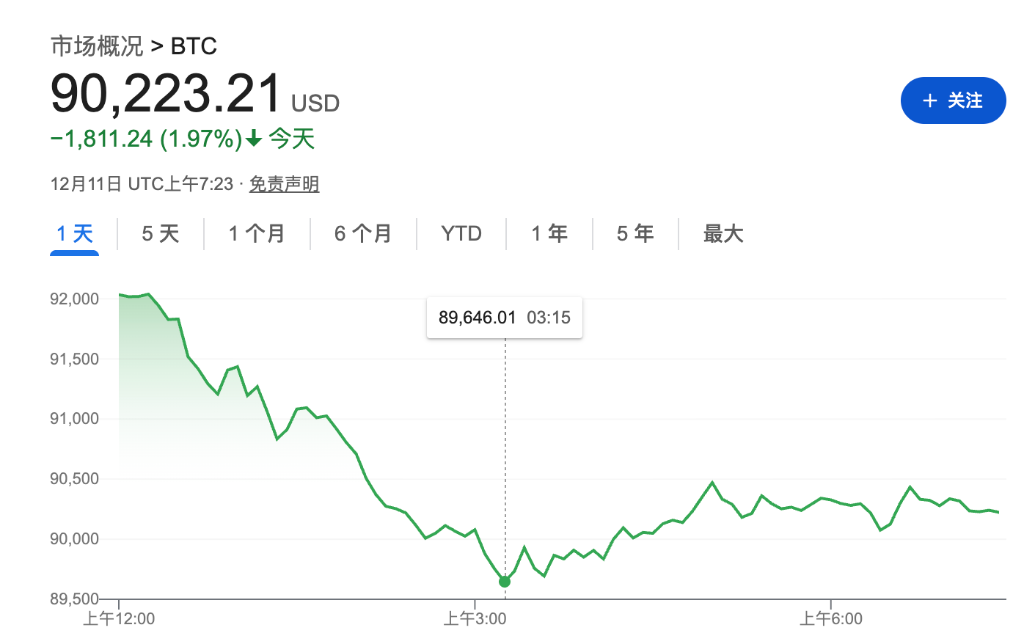
On December 11, US stocks were mixed, European stocks varied, Asian stocks gave up early gains, with most markets moving lower. US Treasury prices rose, and the US dollar saw a slight rebound. Commodities were mixed, with silver and copper rising, while gold and crude oil fell. Cryptocurrencies were under pressure, with Bitcoin briefly falling below $90,000.

Panmure Liberum strategist Susana Cruz said:

"Market caution regarding AI-related spending has significantly increased, contrasting sharply with the situation in mid-2025, when any hint of increased capital expenditure would trigger market excitement. Oracle Corporation has been the weakest link in this chain of events, primarily because a large portion of its investments are debt-financed."

Core market movements are as follows:

  • The S&P 500 opened 25.38 points lower, down 0.37%, at 6,861.30 points; the Dow Jones Industrial Average opened 25.15 points higher, up 0.05%, at 48,082.90 points; the Nasdaq Composite opened 144.94 points lower, down 0.61%, at 23,509.22 points.
  • Germany's DAX 30 index opened down 0.10%, the UK's FTSE 100 opened down 0.10%, France's CAC 40 opened up 0.21%,
    The Euro Stoxx 50 index opened down 0.03%.
  • Japan's Nikkei 225 index closed down 0.9% at 50,148.82 points, Japan's TOPIX index closed down 0.9%, South Korea's KOSPI closed down 0.66% at 4,107.77 points.
  • The 10-year US Treasury yield fell 1 basis point to 4.14%.
  • The US Dollar Index was largely flat, the euro rose 0.2% against the dollar to $1.1715.
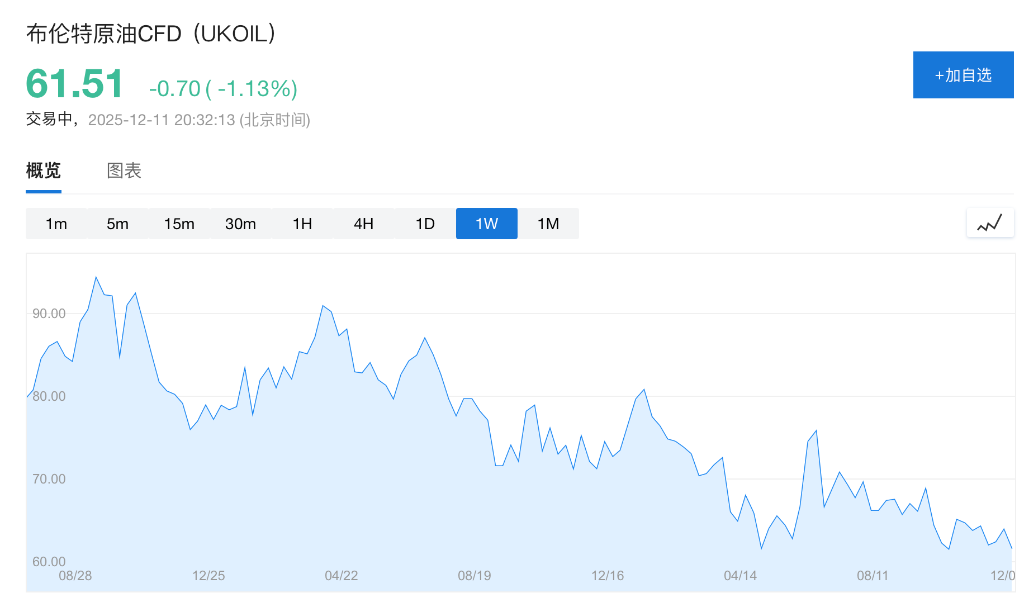
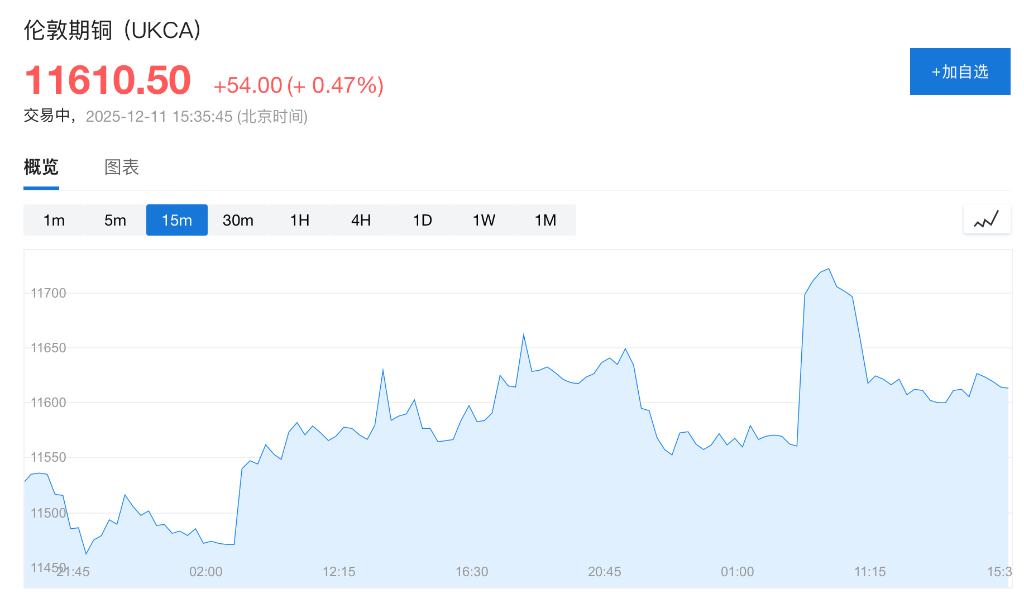
  • Spot gold fell 0.3% to $4,215.05 per ounce, spot silver extended gains to 1%, now at $62.541 per ounce, London copper futures rose over 0.5% to $11,618 per ton, Brent crude fell 0.7% to $61.51 per barrel.
  • Bitcoin fell 2.3% to $90,224.89, Ethereum fell 4.1% to $3,204.4.

Oracle's weaker-than-expected earnings report ignited market concerns about an AI bubble, leading to a decline in tech stocks. Earlier, the optimistic market sentiment reversed after overnight gains. On one hand, positive factors such as the Fed's interest rate cut, the initiation of a $40 billion monthly Treasury purchase program (seen by the market as "stealth QE"), and dovish remarks had been fully digested. On the other hand, Oracle's sharp post-market decline due to missed revenue expectations, and the performance pressure it exposed as a key AI player, sparked worries about the return on investment in the AI sector.

According to Wall Street News, the market had expected a "hawkish rate cut" from the Fed, but the actual results showed no additional dissenters, no higher dot plot, and the anticipated strong stance from Chairman Powell did not materialize. Wall Street analysts expect the actual rate cuts next year could exceed the 25 basis points indicated by the dot plot. Leadership changes and policy uncertainty are potential drivers of market volatility in 2026.

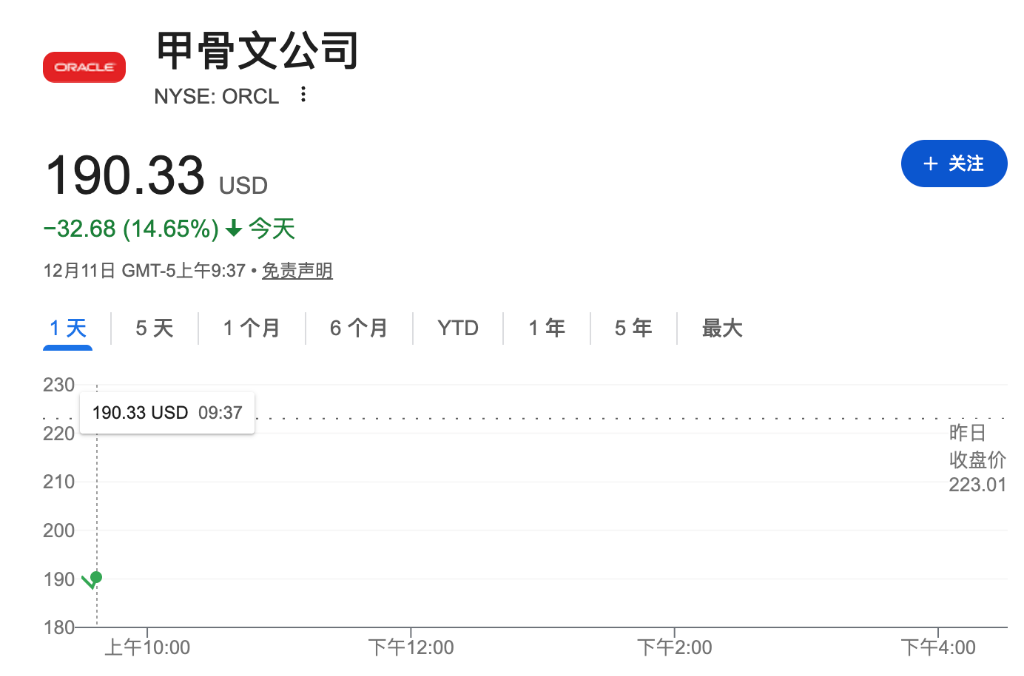
Oracle's stock plunged 16% after hours. According to Wall Street News, the company reported its Q2 FY2026 results after the market closed on Wednesday, with both revenue and cloud business income falling short of analyst expectations. Quarterly free cash flow (FCF) was -$10 billion, and annual capital expenditures are expected to be approximately $15 billion higher than previously anticipated.

Emarketer analyst Jacob Bourne stated, Against the backdrop of ongoing uncertainty in AI spending prospects, Oracle is facing increasing scrutiny due to its debt-driven data center expansion and customer concentration risks. This revenue miss is likely to heighten concerns among already cautious investors regarding its OpenAI partnership and aggressive AI spending strategy.

Alberto Torchio, portfolio manager at Kairos Partners, said:

"Oracle's impact even surpassed the Fed's. That says it all, because we've consistently seen highly concentrated markets, with the AI theme leading the way. This doesn't mean AI is obsolete or in a bubble, but we need to look at this issue from a broader perspective."
As risk assets like global stocks fell broadly, macro risk-off sentiment dominated the market, causing oil prices to give up early gains. Previously, concerns over oil supply risks and escalating geopolitical conflicts, triggered by the US seizure of a sanctioned Venezuelan oil tanker, had pushed oil prices higher.

According to Wall Street News, the crude oil market is experiencing an unprecedented surplus. However, Brent oil prices remain stable between $61-66, primarily because the market finds it difficult to judge whether crude oil from sanctioned countries like Russia and Iran (accounting for 15% of global supply) should be counted as effective supply. Analysis suggests that sanctions make market direction unpredictable, and once floating storage moves onshore, oil prices could fall sharply.
London copper futures pared some gains, now up nearly 0.5% to $11,610.5 per ton. Earlier, buoyed by the Fed's rate cut, London copper approached record highs. So far this year, copper prices have accumulated gains of over 30%. Besides liquidity expectations, a series of mine shutdowns, concerns about overseas supply shortages, and traders rushing to buy in the US market ahead of potential tariffs have all provided upward momentum for copper prices.
Oracle's disappointing earnings report dealt a blow to market sentiment, causing Bitcoin to fall sharply, once breaking below the $90,000 mark. Tony Sycamore, market analyst at IG in Sydney, said: "The cryptocurrency space really needs to see stronger evidence that the sell-off on October 10th has completely ended, but currently, such evidence does not seem to exist."

Standard Chartered significantly lowered its year-end 2025 Bitcoin forecast from $200,000 to $100,000. Geoff Kendrick, head of global digital assets research at Standard Chartered, said: "We believe the buying activity by Bitcoin digital asset fund companies may have concluded. Therefore, we now believe that future Bitcoin price increases will essentially be driven by just one factor—ETF purchases."

Criptomoedas em alta

Perguntas relacionadas

QWhat was the main reason for the decline in Oracle's stock price and the broader market's risk-off sentiment?

AOracle's stock price plummeted 16% after its Q2 FY2026 earnings report showed both revenue and cloud business income fell short of analyst expectations. The company also reported negative free cash flow of $10 billion and announced significantly higher-than-expected capital expenditures, primarily debt-funded for AI infrastructure. This sparked renewed concerns about an AI bubble and the return on investment in the AI sector, leading to a broad sell-off in risk assets.

QHow did major U.S. stock indices perform at the open on December 11th?

AThe S&P 500 opened down 25.38 points (0.37%) at 6,861.30 points. The Dow Jones Industrial Average opened up 25.15 points (0.05%) at 48,082.90 points. The Nasdaq Composite opened down 144.94 points (0.61%) at 23,509.22 points.

QWhat was the performance of key commodities like gold, oil, and copper?

ASpot gold fell 0.3% to $4,215.05 per ounce. Brent crude oil fell 0.7% to $61.51 per barrel. In contrast, London copper futures rose nearly 0.5% to $11,610.5 per ton, and spot silver gained 1% to $62.541 per ounce.

QWhat happened to Bitcoin's price and what was a key factor behind the sell-off according to analysts?

ABitcoin's price fell 2.3% to $90,224.89, briefly falling below the $90,000 level. Analysts cited the negative market sentiment from Oracle's disappointing earnings as a key factor. An IG market analyst also noted that there was a lack of strong evidence that the sell-off from October 10th had conclusively ended, contributing to the pressure on cryptocurrencies.

QHow did Standard Chartered Bank revise its Bitcoin price forecast and why?

AStandard Chartered Bank significantly lowered its Bitcoin price forecast for the end of 2025 from $200,000 to $100,000. Their global head of digital assets research, Geoff Kendrick, stated that purchasing activity from Bitcoin digital asset fund companies was likely over, and future price appreciation would now be driven solely by ETF purchases.

Leituras Relacionadas

Stripe’s 16-Year Chronicle: From 7 Lines of Code to a $100 Billion Valuation

Stripe's 16-year journey began with a simple promise: "7 lines of code to accept payments." Founded by Patrick and John Collison, the company started by hiding the complexity of bank integrations and merchant accounts behind a clean API, initially targeting developers at startups. This early focus on user experience and technical simplicity fueled rapid adoption. A key early milestone was establishing vital bank partnerships, a challenge overcome by hiring Billy Alvarado, who brought crucial institutional relationship skills. From this foundation, Stripe systematically expanded its product boundaries. It launched Connect for platform payments, Atlas for company formation, Radar for fraud prevention, and Billing for subscriptions. This transformed Stripe from a payment processor into a broader financial infrastructure suite for internet businesses. The COVID-19 pandemic accelerated growth but also led to over-hiring. A 14% layoff in 2022 marked a period of organizational correction. Subsequently, Stripe shifted its growth strategy towards strategic acquisitions to enter new domains quickly. It acquired Bridge (stablecoin infrastructure), Privy (wallet infrastructure), Metronome (usage-based billing), and agreed to buy OpenRouter (AI model routing). These moves signal Stripe's ambition to build a "programmable money system" for the emerging AI and agent-based economy, managing not just currency flows but also the measurement and pricing of computational resources like AI tokens. Internally, Stripe leverages AI agents (like "Minions") to boost engineering productivity. Despite scaling to nearly 8,000 employees and processing $1.9 trillion in payment volume annually, the company remains private. A recent employee tender offer valued it at $159 billion. The core question for Stripe's future is whether it can successfully integrate its expanding product matrix—spanning payments, crypto, and AI infrastructure—into a cohesive platform, positioning itself as the foundational economic layer for autonomous software agents.

marsbitHá 28m

Stripe’s 16-Year Chronicle: From 7 Lines of Code to a $100 Billion Valuation

marsbitHá 28m

Treasury Secretary's Move to Suppress Treasury Yields Ignites 'Currency Debasement Trade'! Gold Hits Three-Month High, Bitcoin Surges Over 25% in a Single Week

US Treasury Secretary Besant's efforts to lower long-term Treasury yields by announcing expanded buybacks had only a brief market impact. However, this move fueled a "currency devaluation trade," weakening the US dollar while boosting both gold (to a three-month high) and Bitcoin (up over 25% for the week). Analysts attribute this reaction to deepening market concerns over the massive US fiscal deficit and structural pressures keeping long-term rates elevated, including fierce competition for capital from global government borrowing and massive AI sector financing. Despite the Treasury's actions, fundamental forces like growth, inflation, and capital demand are seen as limiting its ability to sustainably suppress yields. Bitcoin's strong positive correlation with gold has reinforced its narrative as a hedge against devaluation. While equity markets have shown resilience, some strategists warn that Treasury yields nearing 5% increase pressure on the dollar and high-leverage assets. Figures like Ray Dalio have advised reducing bond exposure in favor of gold and some Bitcoin, citing US debt risks. Market opinions are divided on the sustainability of the devaluation trade, with some noting the lack of a near-term catalyst for its next leg higher. The underlying tension between the Treasury's desire for lower borrowing costs and the Federal Reserve's focus on inflation and reducing market intervention remains a key theme. Upcoming events like Nvidia's earnings and the Jackson Hole symposium will test whether AI profits can continue supporting stocks and if the Fed aligns more with Washington's preference for easier financial conditions.

华尔街日报Há 2h

Treasury Secretary's Move to Suppress Treasury Yields Ignites 'Currency Debasement Trade'! Gold Hits Three-Month High, Bitcoin Surges Over 25% in a Single Week

华尔街日报Há 2h

Alexander Shokhin: Business Needs an Interest Rate Below 10% and the Dollar at 90-95 Rubles

Alexander Shokhin, head of the Russian Union of Industrialists and Entrepreneurs (RSPP), has advocated for potentially using "non-market" tools to keep the ruble within a target exchange rate corridor. This, he argues on August 21, would help avoid excessive volatility, though he called the topic a separate discussion. Shokhin had previously raised the idea of a currency corridor in late May, noting the ruble's current exchange rate is not fully market-driven due to a limited currency segment and reduced foreign currency demand. He stated that many business community colleagues propose fixing a corridor, even through non-market methods, to ensure predictability. The business community's key targets, as outlined by Shokhin in late December 2025, are a Central Bank key rate of 12%, inflation of 4–5%, and a US dollar exchange rate of 90–95 rubles by the end of 2026. A turning point for investment, he said, would be lowering the rate to 12% with 6% inflation, though truly comfortable business conditions would require a rate below 10%. He stressed the critical importance of currency predictability for corporate investment decisions. From a data analysis perspective, the idea of a ruble corridor is not new. A similar mechanism was used in Russia from 1995 to 1998, where the central bank held the dollar within fixed boundaries through regular interventions. This regime lasted three years before ending abruptly during the 1998 default, illustrating the fragility of rigid targets under external shocks. The macro-economic link is clear: stricter corridors require more reserves to defend against currency pressure. The key unresolved technical aspect is the specific sources and volume of such interventions given the current market's limited liquidity. Whether this discussion remains theoretical or leads to concrete corridor parameters will be seen in the coming months.

cryptonews.ruHá 4h

Alexander Shokhin: Business Needs an Interest Rate Below 10% and the Dollar at 90-95 Rubles

cryptonews.ruHá 4h

Trading

Spot

Artigos em Destaque

O que é BITCOIN

Compreender o HarryPotterObamaSonic10Inu (ERC-20) e a Sua Posição no Espaço Cripto Nos últimos anos, o mercado de criptomoedas assistiu a um aumento na popularidade das moedas meme, cativando não apenas os traders, mas também aqueles que procuram envolvimento comunitário e valor de entretenimento. Entre estes tokens únicos está o HarryPotterObamaSonic10Inu (ERC-20), um projeto intrigante que mistura referências culturais no tecido das criptomoedas. Este artigo explora os principais aspetos do HarryPotterObamaSonic10Inu, examinando os seus mecanismos, a sua ética orientada pela comunidade e o seu envolvimento com o vasto panorama cripto. O que é o HarryPotterObamaSonic10Inu (ERC-20)? Como o nome sugere, o HarryPotterObamaSonic10Inu é uma moeda meme construída na blockchain Ethereum, classificada sob o padrão ERC-20. Ao contrário das criptomoedas tradicionais, que podem enfatizar a utilidade prática ou o potencial de investimento, este token prospera no valor de entretenimento e na força da sua comunidade. O projeto visa promover um ambiente onde utilizadores envolvidos possam reunir-se, partilhar ideias e participar em atividades inspiradas por diversos fenómenos culturais. Uma característica notável do HarryPotterObamaSonic10Inu é a zero taxa sobre transações. Este elemento atraente visa encorajar a negociação e o envolvimento da comunidade, isento de encargos adicionais que podem desencorajar os traders de pequena escala. A oferta total da moeda está fixada em mil milhões de tokens, uma cifra que marca a sua intenção de manter uma circulação substancial dentro da comunidade. Criador do HarryPotterObamaSonic10Inu (ERC-20) As origens do HarryPotterObamaSonic10Inu estão um pouco envoltas em mistério; os detalhes sobre o criador permanecem desconhecidos. O desenvolvimento deste token carece de uma equipa identificável ou de um plano explícito, o que não é raro no setor das moedas meme. Em vez disso, o projeto surgiu de forma orgânica, com o seu progresso a depender fortemente do entusiasmo e da participação da sua comunidade. Investidores do HarryPotterObamaSonic10Inu (ERC-20) No que diz respeito a investimentos externos e apoios, o HarryPotterObamaSonic10Inu também permanece ambíguo. O token não lista quaisquer fundações de investimento conhecidas ou apoio organizacional significativo. Em vez disso, o “sangue vital” do projeto é a sua comunidade de base, que informa o seu crescimento e sustentabilidade através da ação coletiva e do envolvimento no espaço cripto. Como Funciona o HarryPotterObamaSonic10Inu (ERC-20)? Como uma moeda meme, o HarryPotterObamaSonic10Inu opera principalmente fora dos quadros tradicionais que muitas vezes governam o valor dos ativos. Existem vários aspetos distintivos que definem como o projeto funciona: Transações Sem Taxas: Sem taxas sobre transações, os utilizadores podem comprar e vender o token livremente, sem a preocupação de custos ocultos. Envolvimento da Comunidade: O projeto prospera na interação da comunidade, aproveitando plataformas de redes sociais para criar entusiasmo e facilitar a participação. Discussões, partilha de conteúdo e envolvimento são elementos cruciais que ajudam a expandir o seu alcance e a fomentar a lealdade entre os apoiantes. Sem Utilidade Prática: Deve ser notado que o HarryPotterObamaSonic10Inu não oferece utilidade concreta dentro do ecossistema financeiro. Em vez disso, é classificado como um token principalmente para entretenimento e atividades comunitárias. Referência Cultural: O token incorpora de forma inteligente elementos da cultura popular para atrair interesse, conectando-se tanto com entusiastas de memes como com seguidores de criptomoedas. HarryPotterObamaSonic10Inu exemplifica como as moedas meme operam de forma diferente de projetos de criptomoedas mais tradicionais, entrando no mercado como construções sociais inovadoras em vez de ativos utilitários. Linha do Tempo do HarryPotterObamaSonic10Inu (ERC-20) A história do HarryPotterObamaSonic10Inu é marcada por vários marcos notáveis: Criação: O token surgiu de um meme viral, capturando a imaginação de muitos entusiastas de criptomoedas. Datas específicas de criação não estão disponíveis, sublinhando a sua ascensão orgânica. Listagem em Exchanges: O HarryPotterObamaSonic10Inu conseguiu entrar em várias exchanges, permitindo um acesso e negociação mais fáceis pela comunidade. Iniciativas de Envolvimento da Comunidade: Atividades contínuas direcionadas a melhorar a interação comunitária, incluindo concursos, campanhas em redes sociais e geração de conteúdo por fãs e defensores. Planos de Expansão Futura: O roteiro do projeto inclui o lançamento de uma coleção de NFTs, mercadorias e um site de eCommerce relacionado aos seus temas culturais, envolvendo ainda mais a comunidade e tentando adicionar mais dimensões ao seu ecossistema. Pontos-Chave sobre o HarryPotterObamaSonic10Inu (ERC-20) Natureza Orientada pela Comunidade: O projeto prioriza a contribuição coletiva e a criatividade, assegurando que o envolvimento dos utilizadores está na vanguarda do seu desenvolvimento. Classificação como Moeda Meme: Representa o epítome da criptomoeda baseada em entretenimento, destacando-se dos veículos de investimento tradicionais. Sem Afiliação Direta com o Bitcoin: Apesar da semelhança no nome do ticker, o HarryPotterObamaSonic10Inu é distinto e não tem qualquer relação com o Bitcoin ou outras criptomoedas estabelecidas. Foco na Colaboração: O HarryPotterObamaSonic10Inu é projetado para criar um espaço de colaboração e partilha de histórias entre os seus detentores, proporcionando uma via para a criatividade e o fortalecimento da comunidade. Perspectivas Futuras: A ambição de expandir além da sua premissa inicial para NFTs e mercadorias delineia um caminho para o projeto potencialmente entrar em avenidas mais mainstream dentro da cultura digital. À medida que as moedas meme continuam a capturar a imaginação da comunidade cripto, HarryPotterObamaSonic10Inu (ERC-20) destaca-se devido aos seus laços culturais e abordagem centrada na comunidade. Embora possa não se encaixar no molde típico de um token orientado para utilidade, a sua essência reside na alegria e camaradagem fomentadas entre os seus apoiantes, destacando a natureza em evolução das criptomoedas em uma era cada vez mais digital. À medida que o projeto continua a desenvolver-se, será importante observar como as dinâmicas comunitárias influenciam a sua trajetória no panorama em constante mudança da tecnologia blockchain.

2.4k Visualizações TotaisPublicado em {updateTime}Atualizado em 2024.12.03

O que é BITCOIN

Como comprar BTC

Bem-vindo à HTX.com!Tornámos a compra de Bitcoin (BTC) simples e conveniente.Segue o nosso guia passo a passo para iniciar a tua jornada no mundo das criptos.Passo 1: cria a tua conta HTXUtiliza o teu e-mail ou número de telefone para te inscreveres numa conta gratuita na HTX.Desfruta de um processo de inscrição sem complicações e desbloqueia todas as funcionalidades.Obter a minha contaPasso 2: vai para Comprar Cripto e escolhe o teu método de pagamentoCartão de crédito/débito: usa o teu visa ou mastercard para comprar Bitcoin (BTC) instantaneamente.Saldo: usa os fundos da tua conta HTX para transacionar sem problemas.Terceiros: adicionamos métodos de pagamento populares, como Google Pay e Apple Pay, para aumentar a conveniência.P2P: transaciona diretamente com outros utilizadores na HTX.Mercado de balcão (OTC): oferecemos serviços personalizados e taxas de câmbio competitivas para os traders.Passo 3: armazena teu Bitcoin (BTC)Depois de comprar o teu Bitcoin (BTC), armazena-o na tua conta HTX.Alternativamente, podes enviá-lo para outro lugar através de transferência blockchain ou usá-lo para transacionar outras criptomoedas.Passo 4: transaciona Bitcoin (BTC)Transaciona facilmente Bitcoin (BTC) no mercado à vista da HTX.Acede simplesmente à tua conta, seleciona o teu par de trading, executa as tuas transações e monitoriza em tempo real.Oferecemos uma experiência de fácil utilização tanto para principiantes como para traders experientes.

5.0k Visualizações TotaisPublicado em {updateTime}Atualizado em 2026.06.02

Como comprar BTC

O que é $BITCOIN

OURO DIGITAL ($BITCOIN): Uma Análise Abrangente Introdução ao OURO DIGITAL ($BITCOIN) OURO DIGITAL ($BITCOIN) é um projeto baseado em blockchain que opera na rede Solana, com o objetivo de combinar as características dos metais preciosos tradicionais com a inovação das tecnologias descentralizadas. Embora partilhe um nome com o Bitcoin, frequentemente referido como “ouro digital” devido à sua percepção como uma reserva de valor, o OURO DIGITAL é um token separado projetado para criar um ecossistema único dentro da paisagem Web3. O seu objetivo é posicionar-se como um ativo digital alternativo viável, embora os detalhes sobre as suas aplicações e funcionalidades ainda estejam em desenvolvimento. O que é o OURO DIGITAL ($BITCOIN)? OURO DIGITAL ($BITCOIN) é um token de criptomoeda explicitamente projetado para uso na blockchain Solana. Em contraste com o Bitcoin, que fornece um papel amplamente reconhecido como armazenamento de valor, este token parece focar em aplicações e características mais amplas. Aspectos notáveis incluem: Infraestrutura Blockchain: O token é construído na blockchain Solana, conhecida pela sua capacidade de lidar com transações de alta velocidade e baixo custo. Dinâmicas de Oferta: O OURO DIGITAL tem um fornecimento máximo limitado a 100 quatrilhões de tokens (100P $BITCOIN), embora os detalhes sobre o seu fornecimento circulante ainda não tenham sido divulgados. Utilidade: Embora as funcionalidades precisas não estejam explicitamente delineadas, existem indicações de que o token poderia ser utilizado para várias aplicações, potencialmente envolvendo aplicações descentralizadas (dApps) ou estratégias de tokenização de ativos. Quem é o Criador do OURO DIGITAL ($BITCOIN)? Neste momento, a identidade dos criadores e da equipa de desenvolvimento por trás do OURO DIGITAL ($BITCOIN) permanece desconhecida. Esta situação é típica entre muitos projetos inovadores no espaço da blockchain, particularmente aqueles alinhados com finanças descentralizadas e fenómenos de moedas meme. Embora tal anonimato possa fomentar uma cultura orientada pela comunidade, intensifica as preocupações sobre governança e responsabilidade. Quem são os Investidores do OURO DIGITAL ($BITCOIN)? As informações disponíveis indicam que o OURO DIGITAL ($BITCOIN) não tem apoiantes institucionais conhecidos ou investimentos proeminentes de capital de risco. O projeto parece operar num modelo peer-to-peer focado no apoio e adoção da comunidade, em vez de rotas de financiamento tradicionais. A sua atividade e liquidez estão principalmente situadas em exchanges descentralizadas (DEXs), como a PumpSwap, em vez de plataformas de negociação centralizadas estabelecidas, destacando ainda mais a sua abordagem de base. Como Funciona o OURO DIGITAL ($BITCOIN) A mecânica operacional do OURO DIGITAL ($BITCOIN) pode ser elaborada com base no seu design de blockchain e nas características da rede: Mecanismo de Consenso: Ao aproveitar o exclusivo proof-of-history (PoH) da Solana combinado com um modelo de proof-of-stake (PoS), o projeto assegura uma validação eficiente das transações, contribuindo para o alto desempenho da rede. Tokenomics: Embora mecanismos deflacionários específicos não tenham sido extensivamente detalhados, o vasto fornecimento máximo de tokens implica que pode atender a microtransações ou casos de uso de nicho que ainda estão por definir. Interoperabilidade: Existe o potencial para integração com o ecossistema mais amplo da Solana, incluindo várias plataformas de finanças descentralizadas (DeFi). No entanto, os detalhes sobre integrações específicas permanecem não especificados. Cronologia de Eventos Chave Aqui está uma cronologia que destaca marcos significativos relacionados ao OURO DIGITAL ($BITCOIN): 2023: O lançamento inicial do token ocorre na blockchain Solana, marcado pelo seu endereço de contrato. 2024: O OURO DIGITAL ganha visibilidade ao tornar-se disponível para negociação em exchanges descentralizadas como a PumpSwap, permitindo que os utilizadores o negociem contra SOL. 2025: O projeto testemunha atividade de negociação esporádica e potencial interesse em envolvimentos liderados pela comunidade, embora não tenham sido documentadas parcerias ou avanços técnicos notáveis até ao momento. Análise Crítica Forças Escalabilidade: A infraestrutura subjacente da Solana suporta altos volumes de transações, o que pode aumentar a utilidade do $BITCOIN em vários cenários de transação. Acessibilidade: O potencial preço de negociação baixo por token pode atrair investidores de retalho, facilitando uma participação mais ampla devido a oportunidades de propriedade fracionada. Riscos Falta de Transparência: A ausência de apoiantes, desenvolvedores ou um processo de auditoria publicamente conhecidos pode gerar ceticismo em relação à sustentabilidade e confiabilidade do projeto. Volatilidade do Mercado: A atividade de negociação depende fortemente do comportamento especulativo, o que pode resultar em volatilidade significativa dos preços e incerteza para os investidores. Conclusão O OURO DIGITAL ($BITCOIN) surge como um projeto intrigante, mas ambíguo, dentro do ecossistema em rápida evolução da Solana. Embora tente aproveitar a narrativa do “ouro digital”, a sua divergência do papel estabelecido do Bitcoin como reserva de valor sublinha a necessidade de uma diferenciação mais clara da sua utilidade pretendida e estrutura de governança. A aceitação e adoção futuras dependerão provavelmente da abordagem da atual opacidade e da definição mais explícita das suas estratégias operacionais e económicas. Nota: Este relatório abrange informações sintetizadas disponíveis até outubro de 2023, e desenvolvimentos podem ter ocorrido além do período de pesquisa.

531 Visualizações TotaisPublicado em {updateTime}Atualizado em 2025.05.13

O que é $BITCOIN

Discussões

Bem-vindo à Comunidade HTX. Aqui, pode manter-se informado sobre os mais recentes desenvolvimentos da plataforma e obter acesso a análises profissionais de mercado. As opiniões dos utilizadores sobre o preço de BTC (BTC) são apresentadas abaixo.

活动图片