After Two Years and 36 Applicants Narrowed to 2! Hong Kong's First Batch of Stablecoin Licenses Issued, HSBC and Standard Chartered Successfully Break Through

Odaily星球日报Publicado em 2026-04-10Última atualização em 2026-04-10

Resumo

Hong Kong has issued its first batch of stablecoin licenses to two institutions after a two-year regulatory process. The Hong Kong Monetary Authority (HKMA) granted approval to HSBC and AnchorFin Tech Limited, a joint venture involving Standard Chartered Bank, HKT, and Animoca Brands. The licensed entities are expected to launch regulated stablecoins by mid-to-late this year. The move marks a major milestone in Hong Kong’s digital asset development, following the introduction of a sandbox arrangement in March 2024 and the formal enactment of the Stablecoin Ordinance in August 2025. Initially, over 70 companies showed interest in applying, but only 36 eventually submitted applications. The HKMA emphasized a cautious and quality-focused approach to licensing. This development is seen as a key step in strengthening Hong Kong’s position as an international digital asset hub. It is expected to promote the use of compliant stablecoins in areas such as cross-border payments, tokenized securities, and decentralized finance (DeFi), while ensuring user protection and risk management. The issuance of the first licenses is viewed not as an endpoint, but as the beginning of a broader expansion of Hong Kong’s stablecoin ecosystem.

Original | Odaily Planet Daily (@OdailyChina)

Author | Golem (@web3_golem)
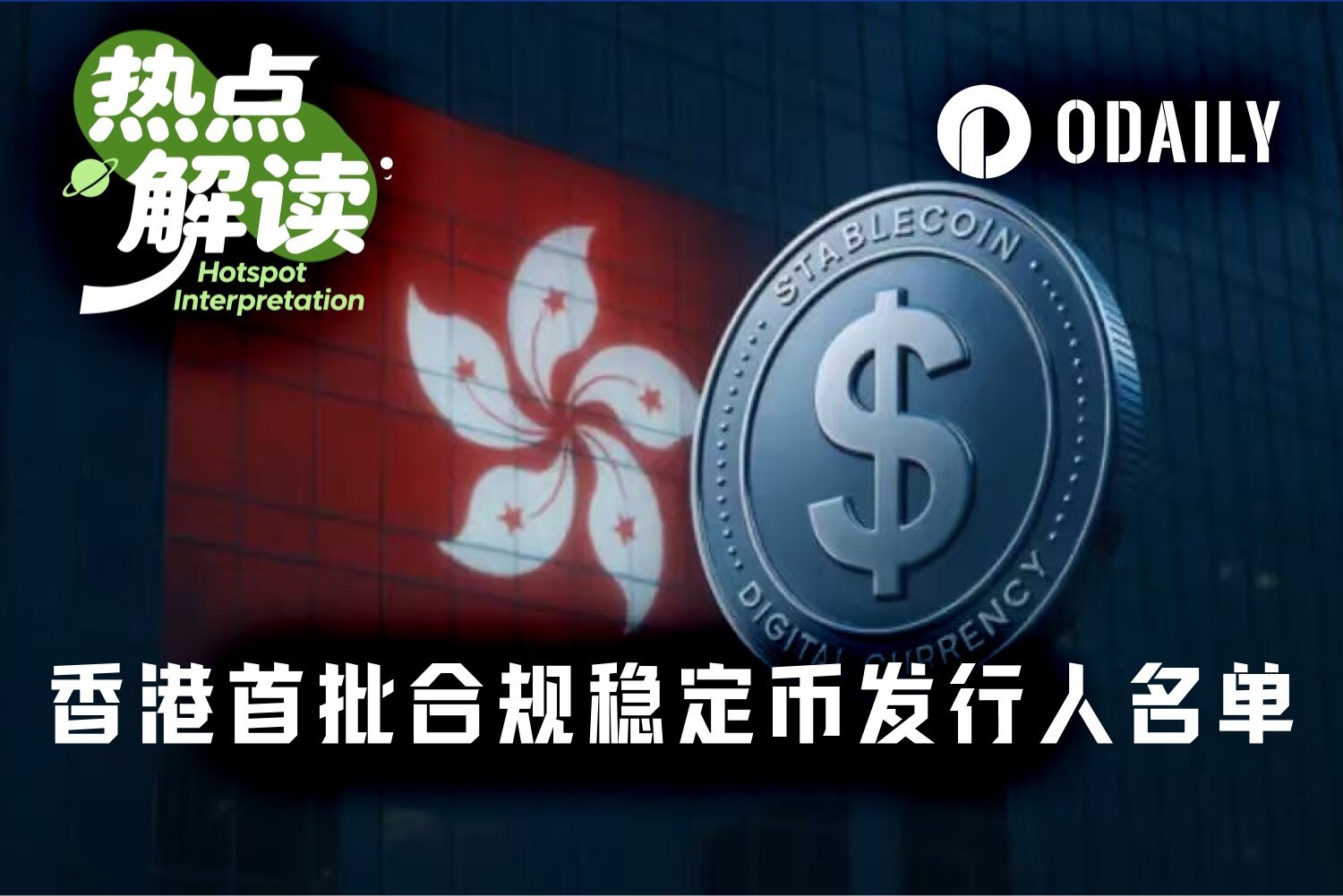
Hong Kong's first batch of stablecoin licenses has finally been issued.

At 5 PM on April 10th, the Hong Kong Monetary Authority (HKMA) announced that the first batch of stablecoin issuer licenses were granted to two institutions: HSBC Bank and Anchor FinTech Company Limited (a joint venture established by Standard Chartered Bank (Hong Kong) Limited, Hong Kong Telecom (HKT), and ANX Group). It also stated that, according to the current business plans of the two institutions, regulated stablecoins in Hong Kong will be launched successively from the middle to the second half of this year.

Mr. Eddie Yue, Chief Executive of the HKMA, said: "The issuance of the stablecoin issuer licenses is an important milestone in the development of digital assets in Hong Kong. The regulatory regime provides an orderly operating environment, allowing stablecoin issuers to apply innovative technology while properly safeguarding user rights and managing related risks, enabling the healthy, responsible, and sustainable development of Hong Kong's stablecoin ecosystem. I look forward to the issuers launching their businesses as planned, actively exploring development opportunities while managing risks well, promoting the application of compliant stablecoins, addressing pain points in financial and economic activities, creating value for the public and enterprises, and driving the healthy development of Hong Kong's digital assets."

Previous news indicated that the HKMA had completed the final review of the first batch of applications in mid-March 2026. The HKMA received a total of 36 applications.

After Two Years, Hong Kong's Compliant Stablecoins Finally Land

The issuance of Hong Kong's first batch of stablecoin licenses marks a new phase in the implementation of Hong Kong's stablecoin regulatory system. However, the market waited a full two years for this compliant stablecoin license to materialize, making it an achievement reached after a precise博弈 (game/balancing act) between financial innovation and regulatory safety in Hong Kong.

Rewind two years to March 2024, when the Hong Kong Monetary Authority (HKMA) officially launched the "Stablecoin Issuer Sandbox Arrangement." This was a crucial starting point for Hong Kong's stablecoin regulation moving towards practical implementation. The market saw the Hong Kong regulator's open attitude towards crypto finance, which attracted applications from multiple institutions, including traditional financial giants and native Web3 enterprises, to participate in the sandbox experiment.

In July of the same year, after four months of review, the HKMA announced the sandbox participants. Five institutions, including JD CoinChain Technology (Hong Kong) Limited, RD InnoTech Limited, Standard Chartered Bank (Hong Kong) Limited, ANX Group Limited, and Hong Kong Telecom (HKT) Limited, obtained participation qualifications. Market expectations were ignited because this indicated that Hong Kong's stablecoin regulation had entered the stage of specific institutional testing and regulatory磨合 (breaking-in/磨合), and Hong Kong was not far from bringing stablecoins into the formal regulatory framework.

Hong Kong's stablecoin sandbox experiment lasted for one year. On August 1, 2025, Hong Kong's "Stablecoin Ordinance" came into effect, and the stablecoin issuer regulatory system was officially implemented. This was a key node in the development of Hong Kong's virtual assets, marking the entry of Hong Kong's stablecoins into the era of licensed regulation.

The second half of 2025 also coincided with the peak of narratives intersecting crypto and traditional finance, such as RWA, stock tokenization, and listed company crypto treasuries. After the Hong Kong "Stablecoin Ordinance" took effect, the market expected Hong Kong's crypto finance to enter a great navigation era. Therefore, when the HKMA opened the first round of stablecoin issuer license applications, it was reported that over 70 companies intended to apply for Hong Kong stablecoin licenses, including financial institutions, Web2 internet companies, and blockchain enterprises.

But just as the situation was heating up, Hong Kong's stablecoin and RWA businesses faced a regulatory cool-down. In September 2025, market rumors emerged that companies involved in stablecoin and RWA businesses in Hong Kong were "warned" to keep a low profile in their business and statements related to stablecoins and RWA. Simultaneously, the participation of Chinese-funded enterprises in Hong Kong's stablecoin business was strictly controlled. According to a Caixin report at the time, because Hong Kong's stablecoin business was still in its infancy, excessive participation by Chinese-funded entities might bring risks, so it was necessary to isolate the risks first.

This temporary incident directly led to a sharp decrease in the number of enterprises applying for Hong Kong stablecoin licenses. Not only did Chinese-funded banks and state-owned enterprises withdraw, but Web2 internet companies also suspended their stablecoin issuance plans. In October 2025, informed sources revealed that Ant Group, affiliated with Alibaba, and JD.com had suspended their related plans to issue stablecoins in Hong Kong. Ultimately, the HKMA received only 36 stablecoin license applications from institutions, and the market calmed down accordingly.

In early February this year, Mr. Eddie Yue, Chief Executive of the HKMA, stated that they aimed to issue Hong Kong's first batch of stablecoin issuer licenses by March this year. He emphasized: "The number of licenses issued in the first batch will certainly be small, with the goal being稳妥 (prudence/safety first)."

Back to the present, it has been over 8 months since the Hong Kong "Stablecoin Ordinance" came into effect. The issuance of Hong Kong's first batch of stablecoin licenses finally landed today. Over these two years, the market has been hyped, capital has been hot, concepts have been speculated on, and regulation has also been controlled. After going through countless hardships, the path for Hong Kong's compliant stablecoins has finally been fully traversed from "sandbox testing — legislative landing — application review — official licensing".

The Great Era of Hong Kong Stablecoins is Coming

Undoubtedly, the issuance of Hong Kong's first batch of stablecoin licenses is another important milestone on its way to becoming an "International Digital Asset Financial Center".

For Hong Kong, this licensing means that stablecoin regulation is no longer just at the institutional level. With the actual launch of stablecoin businesses by licensed institutions, such as cross-border payments, digital securities, and DeFi fields, Hong Kong's digital financial market will gain more vitality and grasp more discourse power in the future world digital financial system, seizing the strategic high ground of "digital currency sovereignty".

Looking more specifically at the market level, after the first batch of licenses are issued, the Hong Kong crypto market has the opportunity to regain some vitality. In the past, many people thought of forums, summits, and expectations when mentioning Hong Kong stablecoins—it was lively, but always half a step away from real business. Now, the first batch of licensed enterprises can finally legally conduct stablecoin businesses, practically exploring the potential of the Hong Kong market in areas such as cross-border payments, institutional settlements, and on-chain finance.

Of course, the issuance of the first batch of licenses does not mean the overall market situation is settled. Although first movers will have a leading advantage, it doesn't mean latecomers cannot catch up. Only when the second and third batches of licenses are issued in the future will the market truly enter the stage of competing on scenarios, execution capabilities, and products and services.

Therefore, the first batch of licenses is not the climax of the Hong Kong stablecoin story; on the contrary, it is just the beginning. The great era of Hong Kong stablecoins is about to begin.


Perguntas relacionadas

QWhich two institutions were granted the first stablecoin issuer licenses in Hong Kong?

AHSBC and AnchorX Financial Technology Limited (a joint venture between Standard Chartered Bank Hong Kong, HKT, and Ant Group).

QWhen did the Hong Kong Monetary Authority (HKMA) announce the issuance of the first stablecoin licenses?

AAt 5 p.m. on April 10th.

QHow many applications did the HKMA receive for the stablecoin issuer license?

AThe HKMA received 36 applications.

QWhat was the name of the regulatory sandbox arrangement launched by the HKMA in March 2024 for stablecoin issuers?

AThe 'stablecoin issuer sandbox arrangement'.

QWhen did Hong Kong's 'Stablecoin Ordinance' officially come into effect?

AThe 'Stablecoin Ordinance' officially came into effect on August 1, 2025.

Leituras Relacionadas

Will the Fed Definitely Raise Interest Rates in September? How Will Crypto and U.S. Stocks Withstand the Pressure?

The market's expectation for a September Fed rate hike surged dramatically in early August, jumping from under 50% to over 80% within a week. This shift followed a contentious July FOMC meeting, where a 9-3 vote to hold rates revealed growing dissent from hawkish members advocating for an immediate hike to combat persistent inflation. The primary catalyst for this repricing is rising oil prices, driven by renewed geopolitical tensions around the Strait of Hormuz, which threaten global supply. Energy costs directly influence inflation metrics, making the upcoming July CPI report (due August 12th) a critical data point. If it shows inflation reaccelerating, the probability of a September hike will solidify. For Bitcoin and crypto assets, this is typically bearish news. Bitcoin continues to behave as a high-beta, liquidity-sensitive risk asset. A rate hike raises the opportunity cost of holding non-yielding assets and could drive capital toward money markets, pressuring crypto prices in the short term. However, historical patterns suggest that if a hike is perceived as the end of a tightening cycle rather than the start, any negative price impact may be brief. U.S. stocks, particularly crypto-linked equities like Coinbase and growth-oriented tech stocks, are also vulnerable. Higher rates increase discount rates in valuation models, putting pressure on high-multiple companies. This coincides with a pivotal tech earnings season where investor focus has shifted from massive AI capital expenditure to tangible revenue and cash flow generation. Companies with negative cash flow and weak growth narratives could face heightened volatility if borrowing costs rise in September. In summary, a September Fed hike has evolved into a mainstream market scenario. Key factors to watch are oil prices, the July CPI report, and Fed communications, which will determine the final decision and its impact on volatile crypto and equity markets.

marsbitHá 7m

Will the Fed Definitely Raise Interest Rates in September? How Will Crypto and U.S. Stocks Withstand the Pressure?

marsbitHá 7m

A 'Overlooked' Market Event: Joint US-Japan-South Korea Intervention, Rare US Treasury Involvement, and Bessent's Quiet 'Market Rescue'?

Summary: The United States, Japan, and South Korea executed their largest coordinated foreign exchange intervention in nearly 30 years. The action targeted depreciation pressure on the Japanese yen and South Korean won. This move is seen as a significant effort by the US to stabilize the financial markets of its key allies and prevent the spillover of risks. Key details: * Japan reportedly intervened on July 30 using approximately 8.45 trillion yen (about $52.8 billion). South Korean authorities also intervened that day, selling dollars to support the won. * Notably, the US Treasury Department intervened directly in yen markets for the first time in roughly 30 years. The New York Fed, reportedly acting on behalf of the Treasury, sold euros to buy yen via Goldman Sachs and Morgan Stanley on July 31. Analysts view the use of the euro-yen pair as a way to alleviate yen pressure without adding selling pressure to the US dollar. * Prior to the action, the New York Fed conducted "rate checks" on both USD/JPY and EUR/JPY, a newer signaling tool that falls between verbal and physical intervention. The intervention is interpreted as going beyond traditional currency stabilization. Analysts, such as Michael Hartnett of Bank of America, suggest it resembles a "Price Keeping Operation" for the AI era. The core US objectives are perceived to be: 1. Preventing rapid yen depreciation from triggering a sharp rise in Japanese government bond yields. 2. Containing financial stress from spreading across Asian markets like South Korea and Japan. 3. Reducing the risk of disorderly capital flows impacting the US bond market. This coordinated action underscores the importance of Japan and South Korea as critical partners in the US semiconductor and AI supply chain. Stabilizing their financial markets is seen as vital to mitigating risks to the broader tech industry and the US market itself. The intervention coincides with market pressures, including the KOSDAQ index hitting a low since October 2022. While seen as a move to control volatility, some analysts caution it may not fundamentally reverse existing market trends.

marsbitHá 11m

A 'Overlooked' Market Event: Joint US-Japan-South Korea Intervention, Rare US Treasury Involvement, and Bessent's Quiet 'Market Rescue'?

marsbitHá 11m

Will the Federal Reserve Definitely Raise Interest Rates in September? How Will Cryptocurrencies and US Stocks Bear the Pressure?

In early August 2024, market expectations for a September Federal Reserve rate hike surged dramatically, from below 50% to over 80%, driven by renewed inflation concerns. This shift followed a contentious July FOMC meeting where a 9-3 vote to hold rates revealed a growing hawkish faction advocating for an immediate hike, citing prolonged above-target inflation. The key catalyst is escalating conflict near the Strait of Hormuz, which has pushed oil prices up approximately 20% in July, threatening to reignite inflation. The next critical data point is the July CPI report on August 12th; a hot reading could solidify hike expectations. For crypto assets, particularly Bitcoin, this represents near-term pressure. Bitcoin continues to exhibit high-beta, risk-on characteristics, making it sensitive to tightening liquidity and higher opportunity costs. However, historical precedent suggests that if a hike is perceived as the cycle's end rather than its start, the negative impact may be brief, with markets quickly pivoting to anticipate future rate cuts. U.S. stocks, especially crypto-linked equities like Coinbase and high-valuation tech stocks, face amplified volatility. Higher rates increase discount rates in valuation models, pressuring growth stocks. This coincides with a pivotal tech earnings season where investor focus has shifted from massive AI capital expenditures to demonstrable revenue and cash flow generation. Companies with negative cash flows and weak growth narratives could see severe pressure if a September hike materializes, as financing costs would rise. Key indicators to watch include oil prices, upcoming inflation data, and Fed commentary at events like the Jackson Hole symposium.

Odaily星球日报Há 11m

Will the Federal Reserve Definitely Raise Interest Rates in September? How Will Cryptocurrencies and US Stocks Bear the Pressure?

Odaily星球日报Há 11m

Trading

Spot
活动图片