After Three Days on Hotel Wi-Fi, My Crypto Wallet Was Drained

marsbitPublicado em 2026-01-09Última atualização em 2026-01-09

Resumo

While on vacation, the author connected to an unsecured hotel Wi-Fi network without a password, only a captive portal login. After discussing cryptocurrency topics on a phone call in a shared space, an attacker nearby identified him as a crypto user with a Phantom wallet. The attacker executed a man-in-the-middle attack, injecting malicious code into a webpage the author visited. While using JupiterExchange for a swap, a fraudulent transaction approval request was triggered, disguised as a legitimate platform action. The author approved what appeared to be an authorization or session confirmation—not a direct fund transfer—granting the attacker permission to access his wallet. Days after leaving the hotel, the attacker drained his SOL, tokens, and NFTs. The author lost around $5,000 from a secondary hot wallet, emphasizing mistakes: using public Wi-Fi, discussing crypto in public, and approving transactions without thorough verification. He advises using mobile hotspots, avoiding public crypto discussions, and scrutinizing every wallet request.

Original Author:The Smart Ape

Original Compilation: Deep Tide TechFlow

A few days ago, I went with my family to a very nice hotel for the year-end holiday. One day after leaving the hotel, my wallet was completely drained. I couldn't figure out why, as I hadn't clicked on any phishing links or signed any malicious transactions.

After hours of investigation and seeking help from experts, I finally uncovered the truth. It all turned out to be due to the hotel's Wi-Fi network, a brief phone call, and a series of foolish mistakes.
Like most cryptocurrency enthusiasts, I brought my laptop with me, thinking I could squeeze in some work while on vacation with my family. My wife repeatedly insisted that I shouldn't work during these three days—I really should have listened to her.

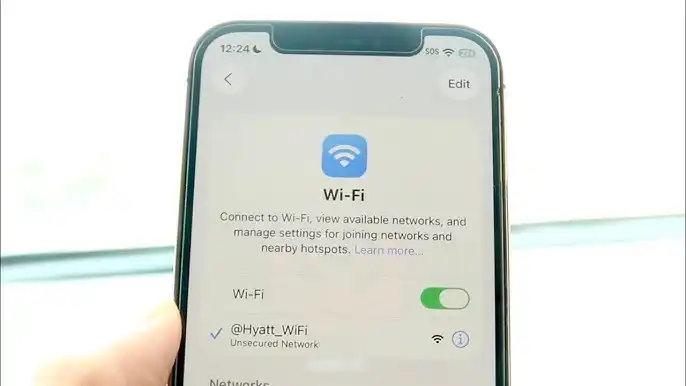
Like other guests, I connected to the hotel's Wi-Fi network. This network didn't require a password; it only needed to be logged into via a captive portal.

I worked as usual in the hotel without doing anything risky: I didn't create new wallets, click on strange links, or visit suspicious decentralized applications (dApps). I just checked X (Twitter), my balances, Discord, Telegram, etc.

At one point, I received a call from a crypto friend, and we chatted about market trends, Bitcoin, and other cryptocurrency-related topics. But what I didn't know was that someone nearby was eavesdropping on our conversation and realized I was involved in cryptocurrency. This was my first mistake. The other party learned from our conversation that I was using a Phantom wallet and that I was a user with significant holdings.

This made me his target.

In public Wi-Fi networks, all devices share the same network, and the visibility between devices is actually much higher than you might think. There is almost no real protection between users, which creates an opportunity for "Man-in-the-Middle Attacks." The attacker acts like a middleman, quietly inserting themselves between you and the internet, much like someone secretly reading and tampering with your mail before it reaches you.
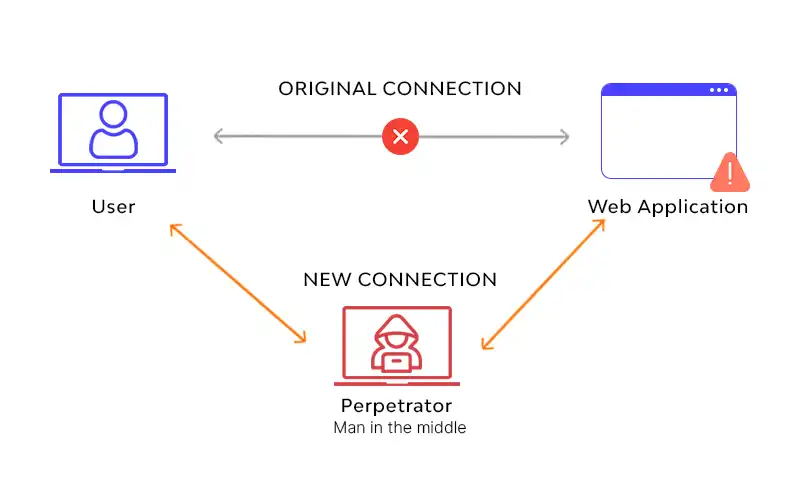
While I was browsing the web on the hotel Wi-Fi, one website appeared to load normally, but in reality, malicious code was injected behind the page. I didn't notice anything unusual at the time. If I had installed some security tools, I might have detected these issues, but unfortunately, I hadn't.

Normally, websites might request your wallet to sign certain operations. The Phantom wallet would pop up a window, and you could choose to approve or reject. Generally, you would sign without suspicion because you trust the website and the browser. However, I shouldn't have done so that day.

Just as I was performing a token swap on the @JupiterExchange platform, the malicious code triggered a wallet request that replaced my normal swap operation. I could have detected it as a malicious request by carefully checking the transaction details, but since I was already performing a swap on Jupiter, I didn't suspect anything.
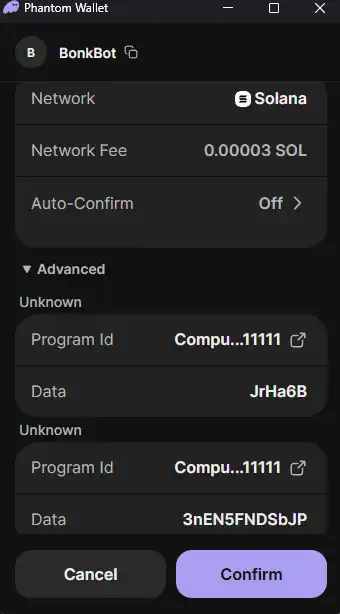
That day, I didn't sign any transaction to transfer funds; instead, I signed an authorization. This was the reason my assets were stolen days later.

The malicious code didn't directly ask me to send SOL (Solana), as that would have been too obvious. Instead, it requested me to "authorize access," "approve account," or "confirm session." In simple terms, I was actually giving another address permission to operate on my behalf.

I approved it because I mistakenly thought it was related to my operation on Jupiter. The message that popped up in the Phantom wallet at the time looked very technical, showing no amounts and no prompt for an immediate transfer.

And that was all the attacker needed. He waited patiently until I left the hotel before taking action. He transferred my SOL, withdrew my tokens, and moved my NFTs to another address.
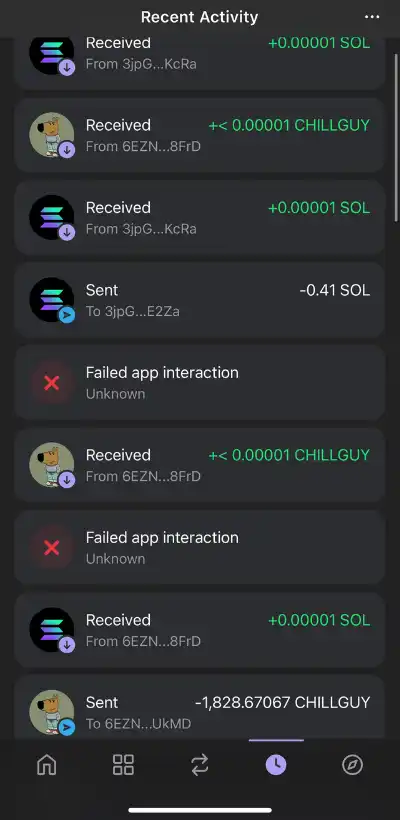
I never thought something like this would happen to me. Fortunately, this wasn't my main wallet but a hot wallet used for specific operations, not for long-term asset holding. But even so, I made many mistakes, and I believe I am primarily responsible for this.

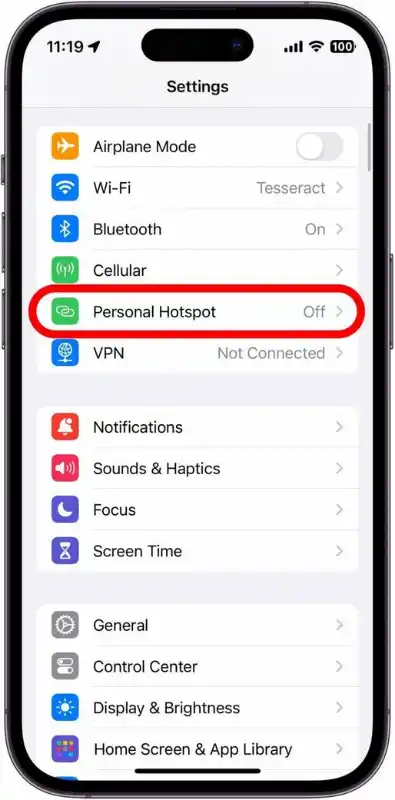
First, I should never have connected to the hotel's public Wi-Fi. I should have used my phone's hotspot for internet access.
My second mistake was talking about cryptocurrency in the hotel's public area, where many people might have overheard our conversation. My father once warned me never to let others know you're involved in cryptocurrency. This time, I was lucky; some people have even faced kidnapping or worse because of their crypto assets.
Another mistake was approving the wallet request without paying full attention. Because I was sure the request came from Jupiter, I didn't analyze it carefully. In fact, every wallet request should be carefully reviewed, even on applications you trust. Requests can be intercepted and may not actually come from the app you think.

In the end, I lost about $5,000 from a secondary wallet. While it wasn't the worst-case scenario, it was still very frustrating.


Perguntas relacionadas

QWhat was the primary security vulnerability that led to the author's wallet being drained?

AThe author connected to the hotel's unsecured public Wi-Fi network, which allowed an attacker to perform a Man-in-the-Middle (MitM) attack, intercept and inject malicious code into web pages, and trick the author into signing a malicious transaction approval.

QHow did the attacker identify the author as a potential target for the cryptocurrency theft?

AThe attacker overheard the author's phone conversation about cryptocurrency, market trends, and Bitcoin in a public area, which revealed that the author used a Phantom wallet and was a sizable holder.

QWhat specific action did the author unknowingly approve that led to the theft days later?

AThe author approved a malicious transaction that granted authorization or permission for another address to operate on their behalf, rather than directly transferring funds. This approval was disguised as part of a normal token swap on Jupiter Exchange.

QWhat security measures does the author mention could have prevented this incident?

AThe author states they should have used a mobile hotspot instead of public Wi-Fi, avoided discussing cryptocurrency in public, and carefully inspected every wallet transaction request, even from trusted applications.

QWhat was the financial impact of the attack on the author?

AThe author lost approximately $5,000 from a secondary hot wallet used for specific operations, not their main wallet, which mitigated the severity of the loss.

Leituras Relacionadas

a16z: AI's 'Amnesia', Can Continuous Learning Cure It?

The article "a16z: AI's 'Amnesia' – Can Continual Learning Cure It?" explores the limitations of current large language models (LLMs), which, like the protagonist in the film *Memento*, are trapped in a perpetual present—unable to form new memories after training. While methods like in-context learning (ICL), retrieval-augmented generation (RAG), and external scaffolding (e.g., chat history, prompts) provide temporary solutions, they fail to enable true internalization of new knowledge. The authors argue that compression—the core of learning during training—is halted at deployment, preventing models from generalizing, discovering novel solutions (e.g., mathematical proofs), or handling adversarial scenarios. The piece introduces *continual learning* as a critical research direction to address this, categorizing approaches into three paths: 1. **Context**: Scaling external memory via longer context windows, multi-agent systems, and smarter retrieval. 2. **Modules**: Using pluggable adapters or external memory layers for specialization without full retraining. 3. **Weights**: Enabling parameter updates through sparse training, test-time training, meta-learning, distillation, and reinforcement learning from feedback. Challenges include catastrophic forgetting, safety risks, and auditability, but overcoming these could unlock models that learn iteratively from experience. The conclusion emphasizes that while context-based methods are effective, true breakthroughs require models to compress new information into weights post-deployment, moving from mere retrieval to genuine learning.

marsbitHá 2h

a16z: AI's 'Amnesia', Can Continuous Learning Cure It?

marsbitHá 2h

Can a Hair Dryer Earn $34,000? Deciphering the Reflexivity Paradox in Prediction Markets

An individual manipulated a weather sensor at Paris Charles de Gaulle Airport with a portable heat source, causing a Polymarket weather market to settle at 22°C and earning $34,000. This incident highlights a fundamental issue in prediction markets: when a market aims to reflect reality, it also incentivizes participants to influence that reality. Prediction markets operate on two layers: platform rules (what outcome counts as a win) and data sources (what actually happened). While most focus on rules, the real vulnerability lies in the data source. If reality is recorded through a specific source, influencing that source directly affects market settlement. The article categorizes markets by their vulnerability: 1. **Single-point physical data sources** (e.g., weather stations): Easily manipulated through physical interference. 2. **Insider information markets** (e.g., MrBeast video details): Insiders like team members use non-public information to trade. Kalshi fined a剪辑师 $20,000 for insider trading. 3. **Actor-manipulated markets** (e.g., Andrew Tate’s tweet counts): The subject of the market can control the outcome. Evidence suggests Tate’sociated accounts coordinated to profit. 4. **Individual-action markets** (e.g., WNBA disruptions): A single person can execute an event to profit from their pre-placed bets. Kalshi and Polymarket handle these issues differently. Kalshi enforces strict KYC, publicly penalizes insider trading, and reports to regulators. Polymarket, with its anonymous wallet-based system, has historically been more permissive, arguing that insider information improves market accuracy. However, it cooperated with authorities in the "Van Dyke case," where a user traded on classified government information. The core paradox is reflexivity: prediction markets are designed to discover truth, but their financial incentives can distort reality. The more valuable a prediction becomes, the more likely participants are to influence the event itself. The market ceases to be a mirror of reality and instead shapes it.

marsbitHá 3h

Can a Hair Dryer Earn $34,000? Deciphering the Reflexivity Paradox in Prediction Markets

marsbitHá 3h

Trading

Spot
Futuros
活动图片




