Written by: Nicholas Fandos, Debra Kamin
Compiled by: Chopper, Foresight News
Two weeks ago, Eric Adams held one of the most powerful positions in the U.S. government system; today, he stands under the neon billboards of Times Square, peddling a New York City-themed cryptocurrency.
For anyone else, such a shift in identity might be embarrassing, but the former mayor of New York was all smiles, enthusiastically discussing the advantages of blockchain technology and promising not to profit from it for the time being.
"I've missed you all so much, ladies and gentlemen," he said to a group of reporters, before shifting gears to criticize his successor's "major mistakes," talk about business opportunities in foreign capitals, and admit that his experience in municipal services like garbage collection has now become monetizable "expert capital."
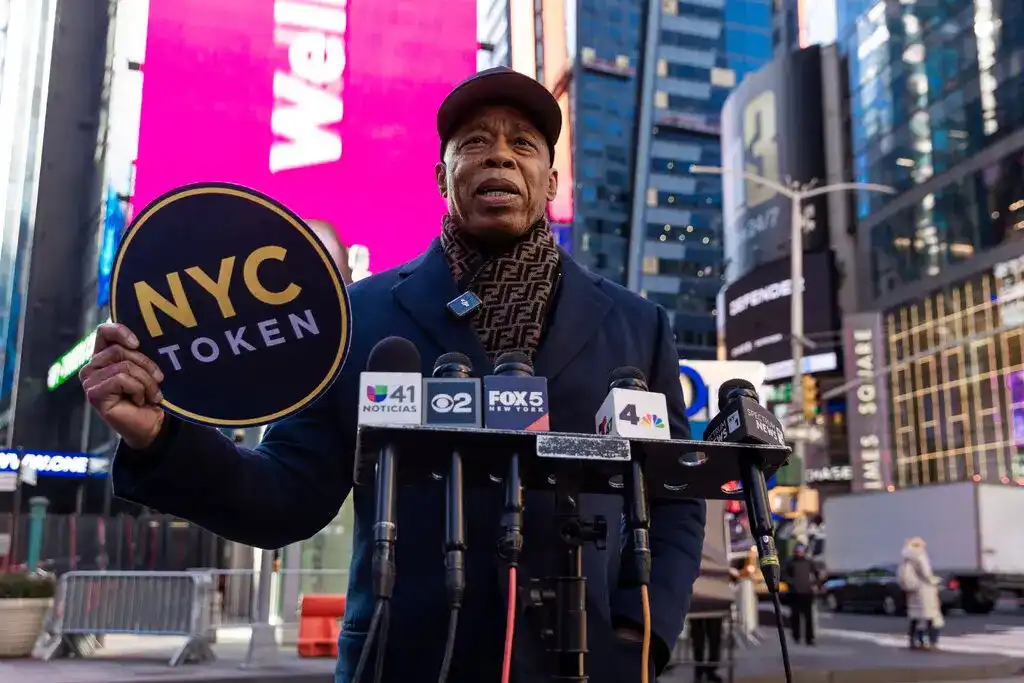
This was his first public appearance since leaving office on January 1st, but it ended abruptly because he had to catch a flight. He was headed first to Dallas, then to Senegal, claiming more opportunities awaited him there.
The 65-year-old Adams is one of the most unconventional mayors in New York City's history: from a working-class background, a former police officer, yet federally indicted for his pursuit of a luxurious lifestyle. All signs suggest that his post-mayoral career will continue this "unconventional" approach.
In just the past two weeks, he has met with a Saudi prince in Dubai, visited the President of the Democratic Republic of the Congo, and repeatedly attacked his successor, Zohran Mamdani, for overturning some of the pro-Israel policies he implemented during his term. This move breaks the unwritten tradition of former mayors showing respect to their successors.
Details of Adams's various business dealings remain shrouded in mystery, including his partnership in the cryptocurrency project. But his post-mayoral core agenda is becoming increasingly clear: restoring his personal reputation, criticizing his successor, and repaying the massive debts incurred from legal battles. The priority among these three, however, remains unclear.
"I won't be looking for a nine-to-five salaried job," Adams said. "I only work for myself."
Adams is not the only one planning his post-office livelihood while targeting Mamdani. Former New York Governor Andrew Cuomo is finalizing a deal to host a weekly show on the conservative talk radio station WABC, where he was a frequent guest during his unsuccessful campaign.
According to the New York Post, the show will provide Cuomo with a platform to promote his centrist Democratic political views, and he will likely use it to criticize Mamdani, whom he has previously called an "extreme left radical."
The station's owner, Republican billionaire John Catsimatidis, said he does not plan to pay Cuomo, but merely wants to help him after his electoral defeat. The broadcast time has not yet been finalized. "We feel sorry for what happened to him, and we love New York deeply," Catsimatidis said. "He wants to maintain public visibility and stay connected with New Yorkers."
But so far, Adams's post-mayoral performance has undoubtedly been more eye-catching.
Just hours after attending Mamdani's inauguration, he boarded an Emirates flight to Dubai with his long-time partner, Tracey Collins. Besides the Saudi prince, he was also photographed meeting with several wealthy Israeli and Uzbek businessmen.
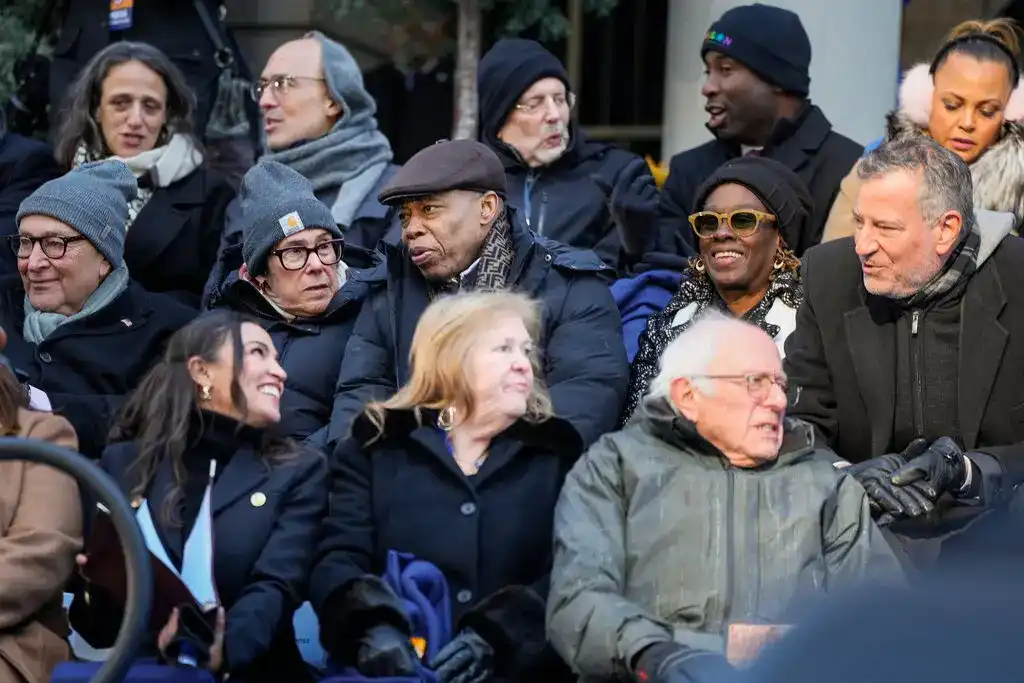
Numerous current and former political figures attended Zohran Mamdani's mayoral inauguration, Adams among them
He had dinner with real estate agent and reality TV star Eleonora Srugo and posted a photo on social media with Amir Marashi, an Iranian-born New York gynecologist and women's health advocate specializing in procedures like vaginal rejuvenation.
Meanwhile, Adams kept a close eye on developments in New York City. He frequently posted on social media to express dissatisfaction with Mamdani's policies: for example, Mamdani's reversal of the city's previously adopted expanded definition of anti-Semitism and his criticism of some of Mamdani's appointments.
"Everyone needs a grace period, but hate allows no one any grace," Adams said at Monday's event.
Mamdani, at another event, declined to respond to Adams's criticism.
Adams's interest in cryptocurrency is not new. During his mayoral term, he chose to receive his first paycheck in cryptocurrency; he is close friends with cryptocurrency billionaire Brock Pierce, who, along with other crypto industry figures, funded his campaign last fall before he dropped his re-election bid.
Having made "supporting Israel and combating anti-Semitism" a core part of his administration, Adams also packaged this new token as a public welfare project, claiming its proceeds would be used to fight anti-Semitism, anti-Americanism, and "teaching children to embrace blockchain technology."
The token's official website states that its total issuance will be 1 billion tokens. Adams said he would donate the proceeds from some of these tokens to non-profit organizations dedicated to the aforementioned causes and stated that he would not receive a salary or any compensation, at least initially.
"NYC Token is a new generation cryptocurrency inspired by the relentless energy and innovative spirit of New York City," the project's website reads. "Leveraging cutting-edge blockchain technology, we are building a decentralized financial ecosystem with ambitions matching those of this city."
Despite this, Adams seemed struggling at times when describing the project's details. At Monday's event and in an interview with Fox News, he repeatedly misnamed the new product as "New York City Coin."
Adams's image is prominently featured on the token's website, which invites visitors to "Buy Now," but as of Monday evening, all purchase links on the site were non-functional.
The former mayor said he is also exploring other business areas, including plans to be advanced during his trip to Africa this week.
"I realize that many services New York City has, even garbage collection, are hard to find in many parts of the world," Adams said. "I plan to provide such help to other cities and countries."
All these actions raise questions about whether Adams will continue to reside in New York in the future. He had previously stated that he hoped to retire in a city overseas rather than return to his home in Bedford-Stuyvesant, Brooklyn.
But two people familiar with the matter revealed that the former mayor plans to keep New York City as his base and intends to rent an apartment in Manhattan, preferably with a view. Adams himself tried to dispel doubts at Monday's event. "I'm not going anywhere," he said.