The Future Outlook of Bitcoin

marsbitPublicado em 2026-08-09Última atualização em 2026-08-09

Resumo

Bitcoin: A Mid-2026 Perspective Bitcoin analyst Will Clemente assesses the asset's outlook, arguing that despite a challenging period, it now presents a compelling long-term value opportunity. The current bear market, while less severe in peak drawdown than 2022, has been difficult due to a lack of clear catalysts, underperformance versus assets like gold, and persistent ETF outflows. However, key negative pressures are showing signs of abating. Digital Asset Treasuries (DATs), a major source of sell pressure during the bull market, are slowing accumulation or shifting strategies. While quantum computing remains a long-term concern, its risk is likely significantly priced in at current levels. Fundamentally, the Bitcoin network remains decentralized and healthy, with a robust global node distribution. Although hash rate has declined as miners pivot to AI/HPC, the network's difficulty adjustment ensures security, and the resilience suggests a diverse, non-public mining base. Valuation metrics indicate Bitcoin is in deeply undervalued territory. It is consolidating near its 2021 highs, below the 200-week EMA, with weekly RSI showing a bullish divergence from oversold levels. The MVRV ratio is at historically low levels, signaling the market's aggregate cost basis is near the current price. Long-term holders have resumed accumulation, and trading volume across spot, ETF, and derivatives markets has dried up to multi-year lows. Implied volatility is cheap, and futures basis i...

Author:Will Clemente,Bitcoin On-chain Analyst

Compiled by: Jiahuan, ChainCatcher

Hope everyone had a good summer. It's been a while since I last wrote a long piece about Bitcoin. In this article, I want to consolidate my thoughts on this asset, as well as some ideas that have gradually taken shape in my mind recently, discussing how to view and allocate Bitcoin going forward.

Last year, I basically shifted my personal focus on markets to commodities. The reason was, it had become evident that the crypto market was facing a supply glut, which weighed heavily on the entire market.

Meanwhile, apart from niche areas like Hyperliquid, the industry lacked sufficient innovation, at least compared to the active performance of other markets. Consequently, there was also a lack of demand to digest the massive supply.

I originally thought there was a window for Bitcoin strength late last year: small-cap stocks were surging, and gold had just experienced a strong run. But Bitcoin basically only staged a failed breakout – just a few days before October 10th – which was very disappointing.

In January this year, due to market behavior resembling the previous bear market we experienced in 2022, I further reduced my remaining Bitcoin exposure.

Frankly, this has not been a pleasant year to focus on Bitcoin, or the crypto market at large. Judging solely by the percentage decline from highs, this cycle has been milder than the last one, but in many ways, this bear market might be even harder to endure than 2022.

At least in 2022, you could clearly point to reasons for the market decline: rising rates, the cleansing of leverage and fraud, and the FTX collapse. Then you could say: 'If these factors could change, and by late 2022 the scope for further deterioration was clearly smaller than for improvement, then Bitcoin was likely a good long-term buy.'

But today, there is no similar logic, with Digital Asset Treasuries (DATs) and quantum computing risk perhaps being the few exceptions – which will be discussed later and, in my view, are finally starting to show some signs of repair.

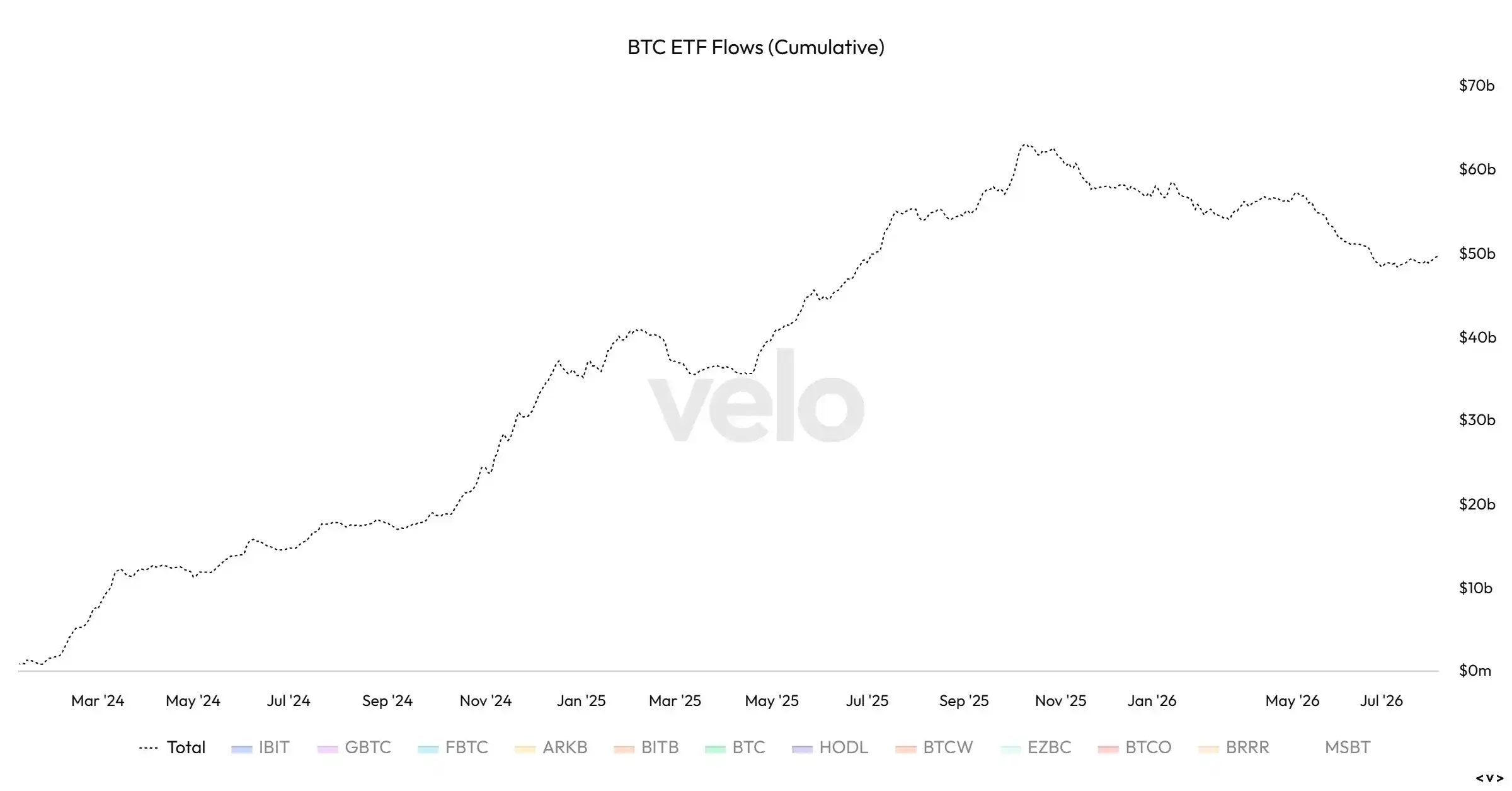
Bitcoin ETFs hold about $50 billion in assets. They set records for inflows at launch, only surpassed by memory ETFs earlier this year. Large financial institutions have also started launching related lending products.

Last year, driven by central bank reserve demand and the 'de-dollarization' narrative, gold performed exceptionally well; logically, that should have been Bitcoin's time to shine.

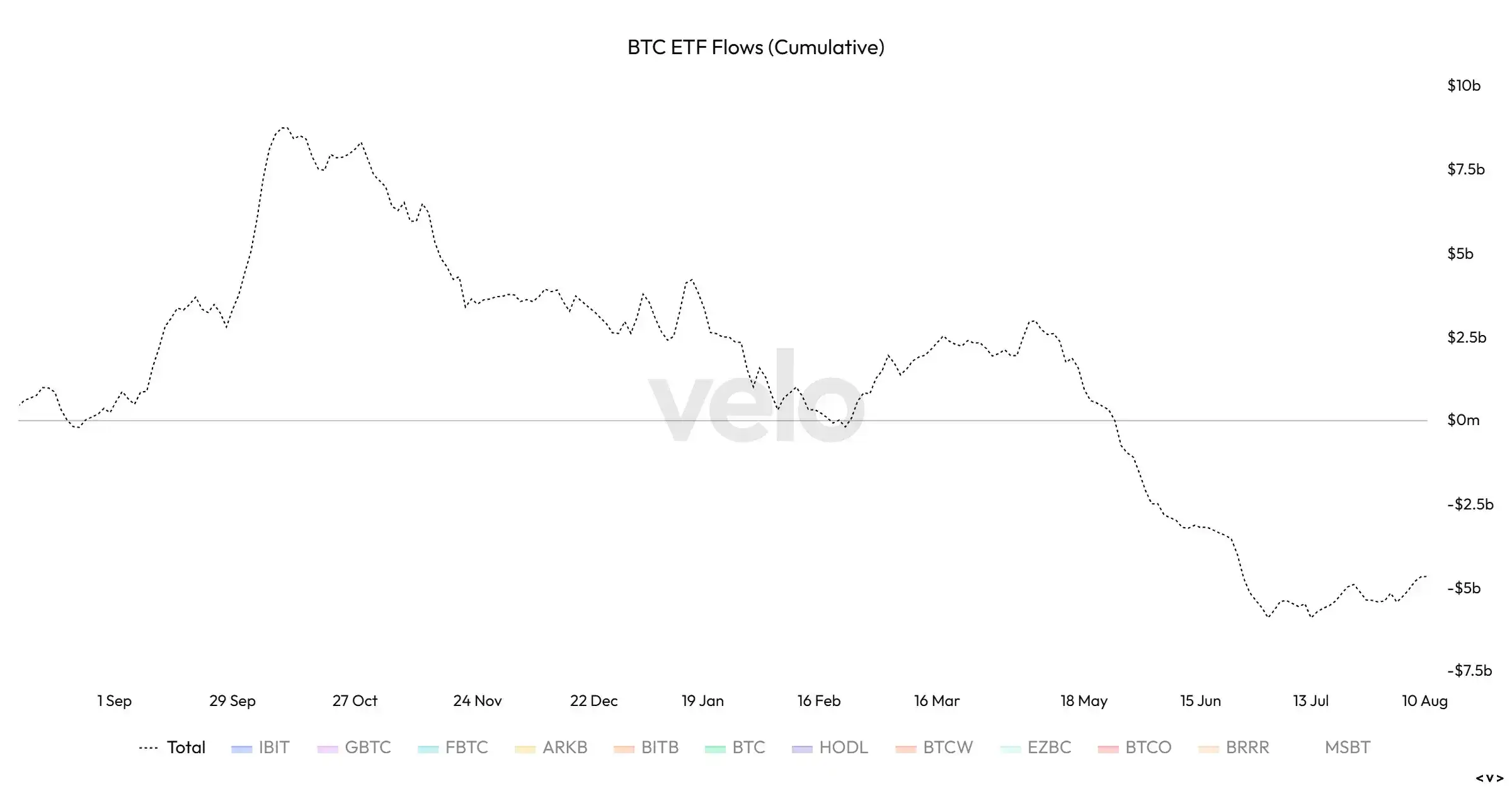
Now, almost any individual or institution wanting Bitcoin exposure has a channel to do so. It is precisely because of this that the contrast is particularly disappointing: Bitcoin ETFs have seen $5 billion in net outflows over the past year, while DRAM-related products attracted $10 billion in a month.
Network Health

When discussing Bitcoin's fundamentals, we are obviously not talking about traditional financial metrics, but observing the underlying state of the network itself. I won't go through every metric just for the sake of listing data, but there are two points I believe are truly important.

In an increasingly centralized world – state-led economies, state-influenced markets, combined with the possibly most powerful technological centralizing force we've ever seen from big tech – I truly believe 'decentralization' itself has value.

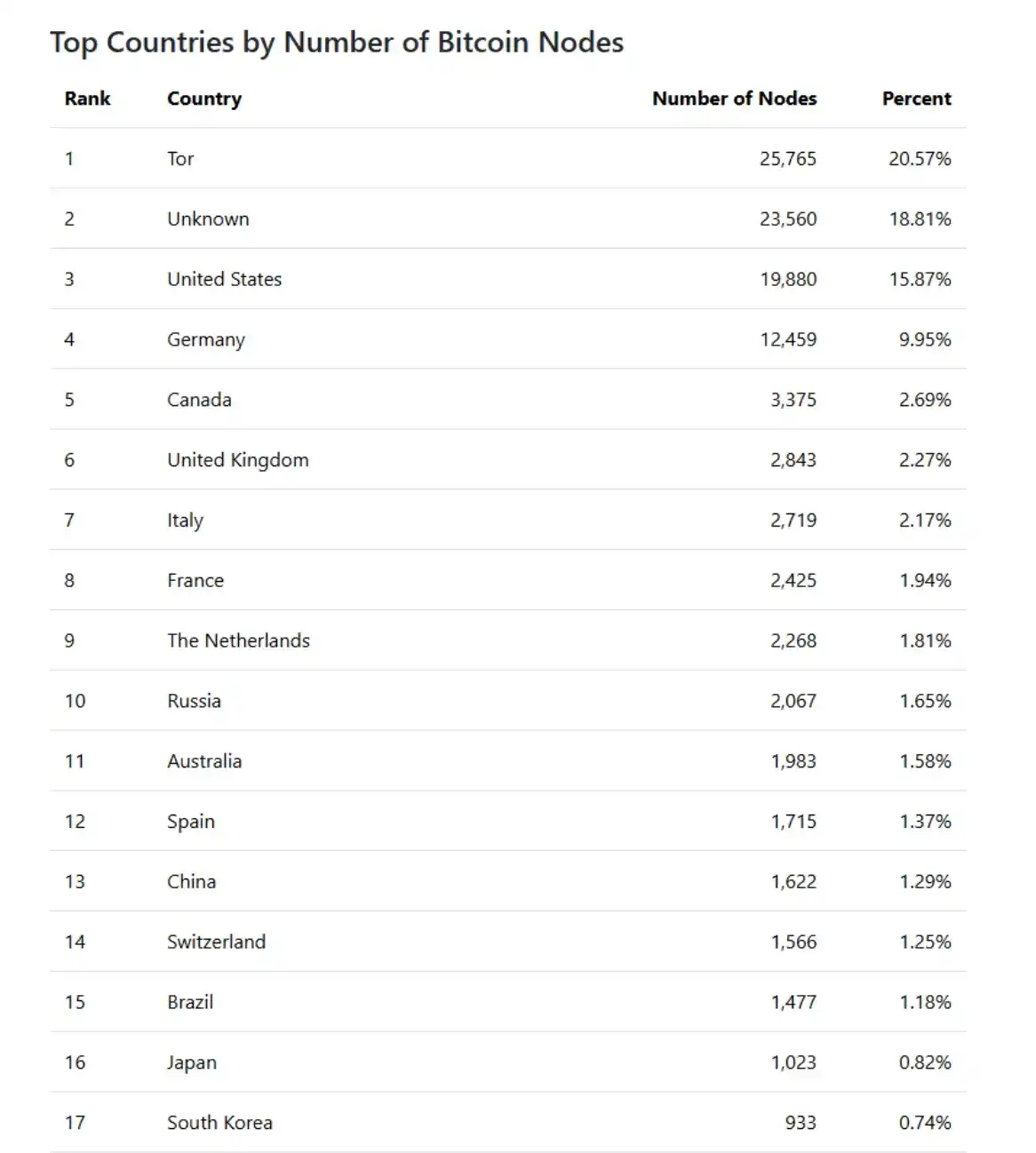
For those less familiar with Bitcoin's underlying mechanics, the network has both the widely known miners and nodes. Anyone can run a node. Nodes enforce rules and validate the network, while miners secure it through computational work backed by massive energy. Nodes are spread globally, and there are likely many more not easily tracked. The list below alone covers nearly 200 countries.
We can look at mining pools – though pools don't control individual miners within them – but it's difficult to track each independent miner like nodes. However, we can observe the total energy input supporting the network through hash rate.

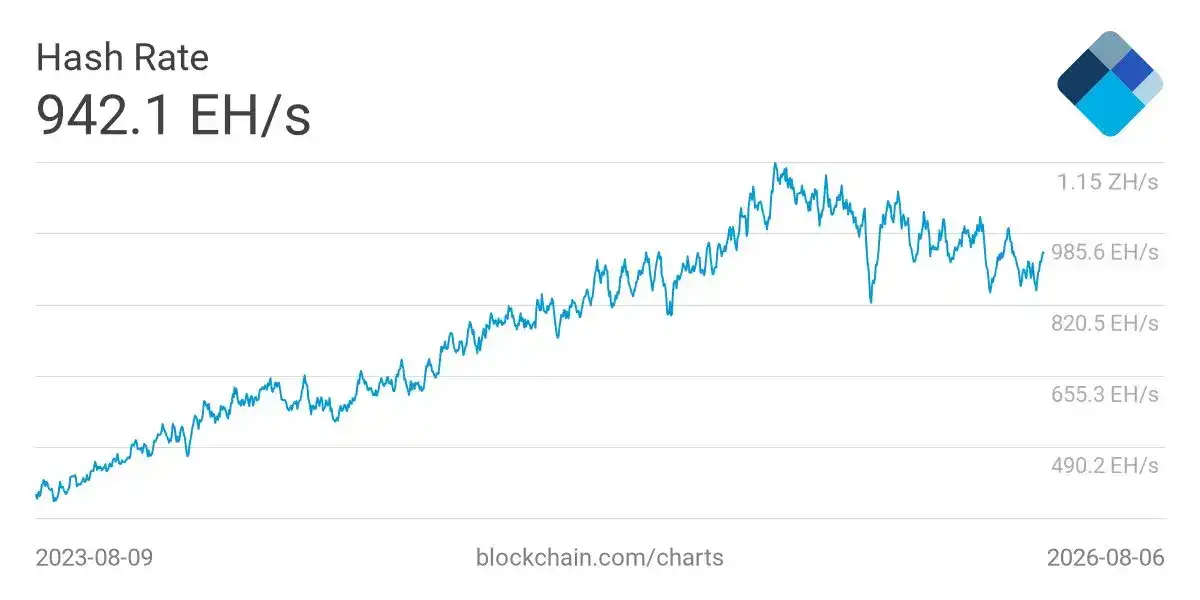
From any perspective, Bitcoin's total network hash rate is declining. Post-2022, miner profit margins were squeezed due to increased competition and rising energy prices. More importantly, many miners began pivoting to Artificial Intelligence/High-Performance Computing (AI/HPC). So far, for public miners who have transitioned, this has proven a prudent business decision.

Bitcoin's performance lagged behind AI-related assets, while demand for computing power grew strongly, further reinforcing this trend. So, this can be interpreted both pessimistically and optimistically.

The pessimistic side: in terms of energy input securing the network, Bitcoin is technically less secure; meanwhile, as a digital commodity, the energy input value – i.e., the cost of production – supporting each unit of Bitcoin has also decreased.

It's worth noting, however, that the network itself is not in crisis due to its difficulty adjustment mechanism. The network automatically adjusts mining difficulty and reward conditions every two weeks based on hash rate levels. This mechanism incentivizes new miners to join and secure the network when competition decreases.

The optimistic side: despite almost every public miner we know pivoting to AI/HPC, the total hash rate has only retreated to mid-last-year levels. This suggests there may be more entities actually mining Bitcoin with access to cheap energy than some originally thought. Combined with node distribution data, the Bitcoin network remains decentralized and healthy.
Overall, I think the Bitcoin network itself remains as decentralized and healthy as ever.

Valuation Methods and Current Metrics

Bitcoin obviously does not generate cash flows, but we can still compare its current valuation to historical market performance through several unique methods.

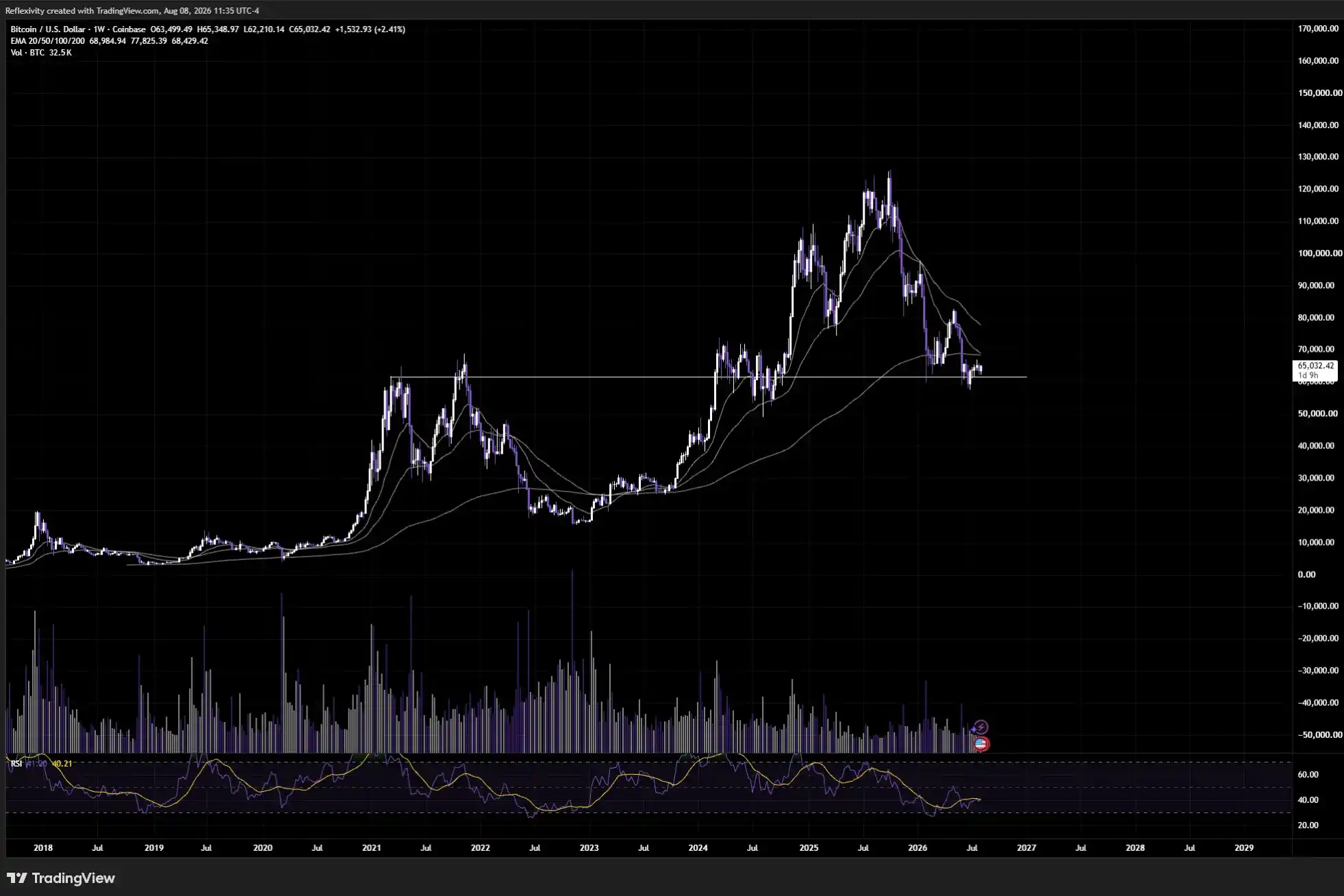
From a technical perspective, Bitcoin is currently consolidating near the 2021 all-time highs, slightly below the 200-week Exponential Moving Average (EMA). The weekly RSI is showing a bullish divergence emerging from oversold territory, with the last time reaching such oversold levels being at the depths of the previous bear market.

Historically, the 200-week moving average has been a decent basic threshold to start considering gradually accumulating Bitcoin spot positions.
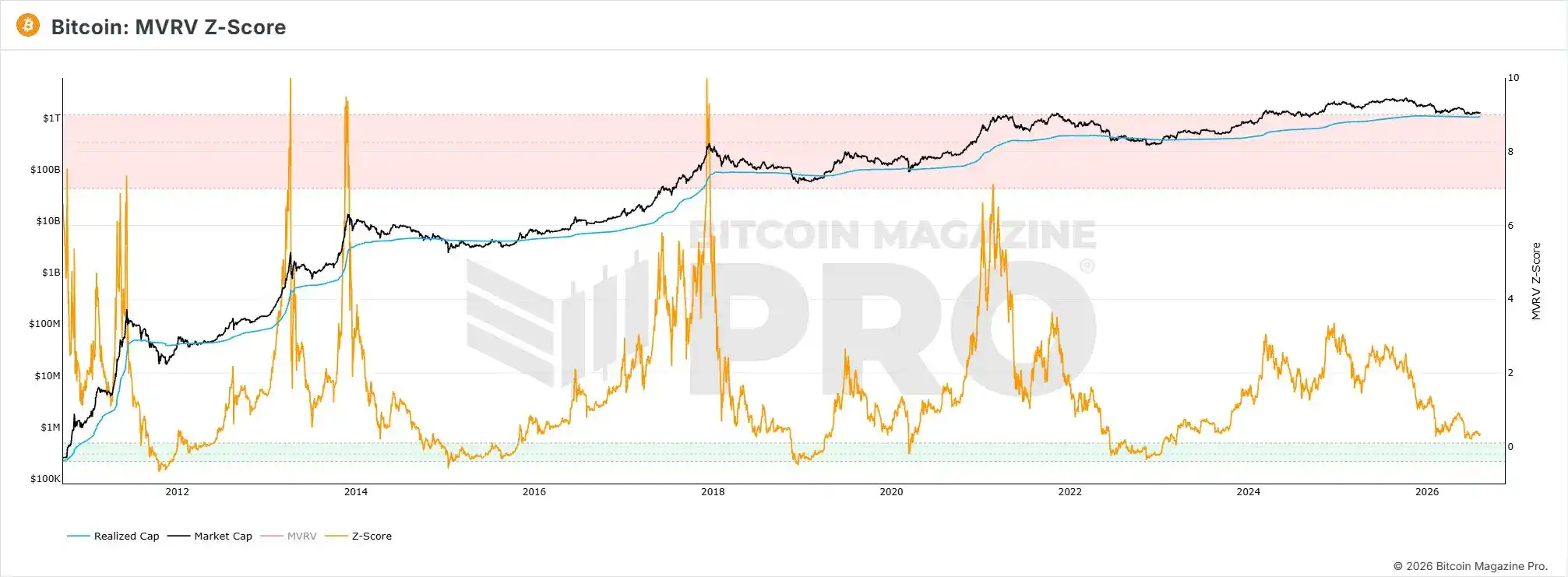
Among on-chain data-based valuation methods, one of the most effective metrics is the Market Value to Realized Value ratio (MVRV). It compares Bitcoin's current marginal trading price with the aggregated cost basis of the entire network; the latter is calculated based on the price when tokens last moved to a new wallet cluster.

When this ratio is high, it means the current marginal trading price is far above the network's average cost. There is a large amount of unrealized paper profit (PNL) in the market, giving many holders strong motivation to take profits.

When the ratio is below 0, it means that, on aggregate, market participants are sitting on paper losses. Historically, this has often marked a phase more suitable for accumulating positions.

You'll notice that in 2024–2025, this metric never truly reached the frenzied, blow-off top levels of the past. This reflects the gradual maturation of this asset class in recent years and the consequent contraction in volatility.

Considering that each bull market's metric peaks have been lower, and each bear market's deepest lows have been slightly higher, a reasonable conclusion might be that the market doesn't necessarily have to enter negative territory to bottom this time.

Buying the exact bottom is extremely difficult. The most important takeaway here is that Bitcoin is currently already in the lower historical valuation range.
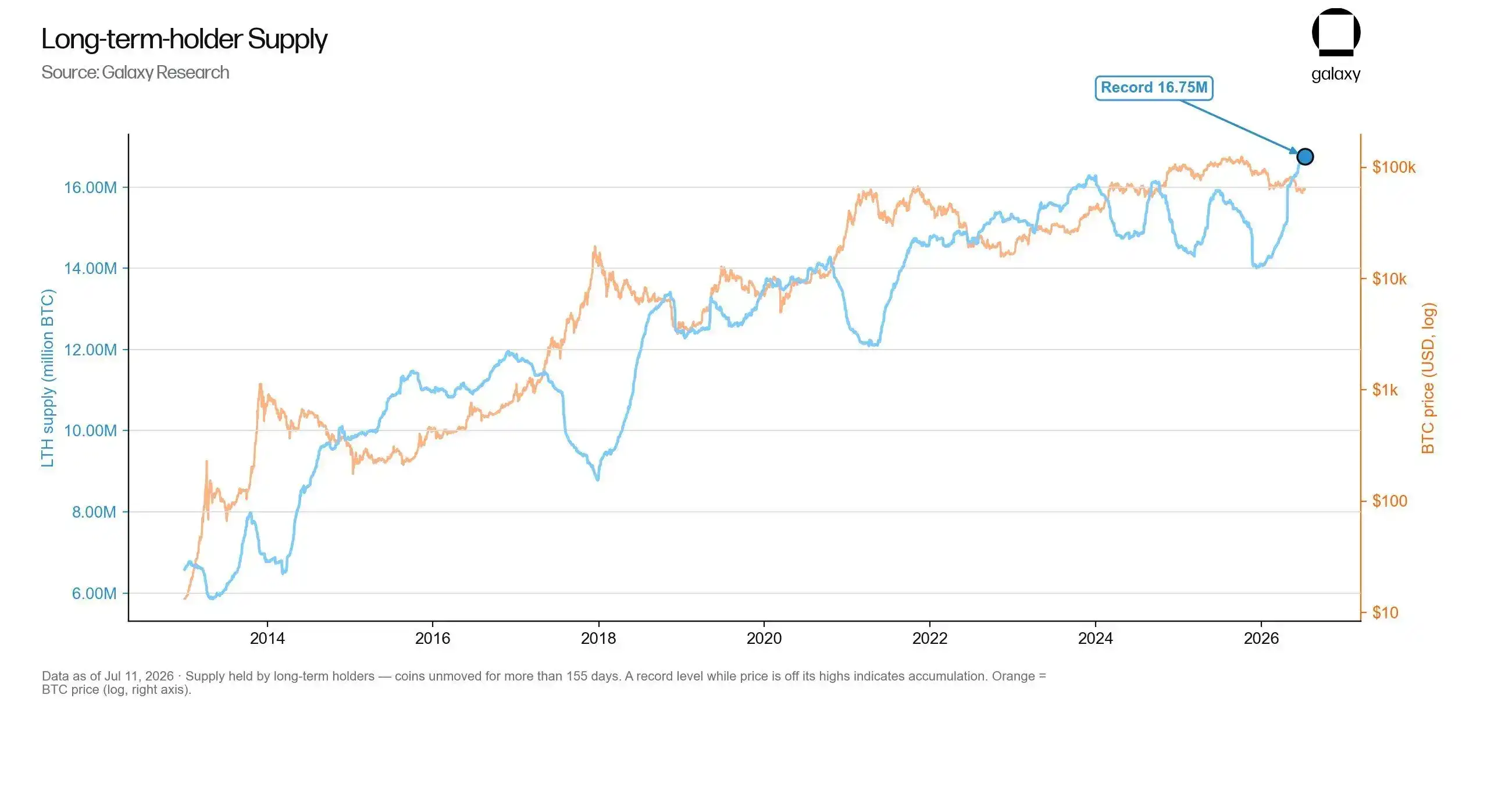
Long-term holders also seem to be accumulating quite actively. After a period of distribution in mid-to-late 2025, they have resumed adding to their holdings, indicating they see value at current prices.
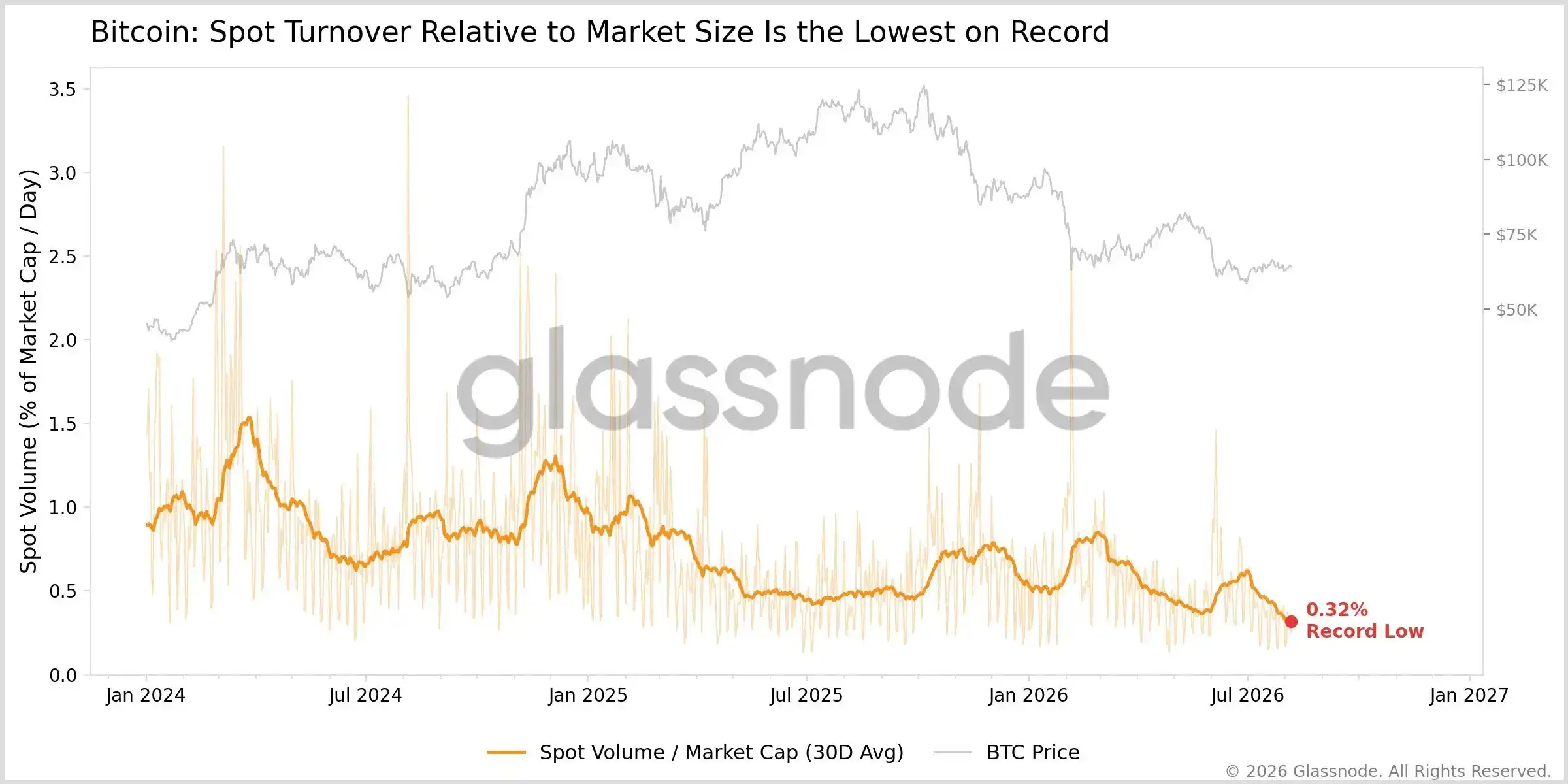
Trading volume has almost completely dried up. @n3ocortex made a great chart showing Bitcoin spot turnover relative to its market cap has fallen to historical lows. ETF and DAT trading volumes show a similar state.
Near-term implied volatility in the options market has fallen to multi-year lows, meaning the market sees Bitcoin as 'dead money' with no near-term performance. Meanwhile, options skew data shows that over the past year, the only thing the market has been clearly interested in is buying more downside protection.
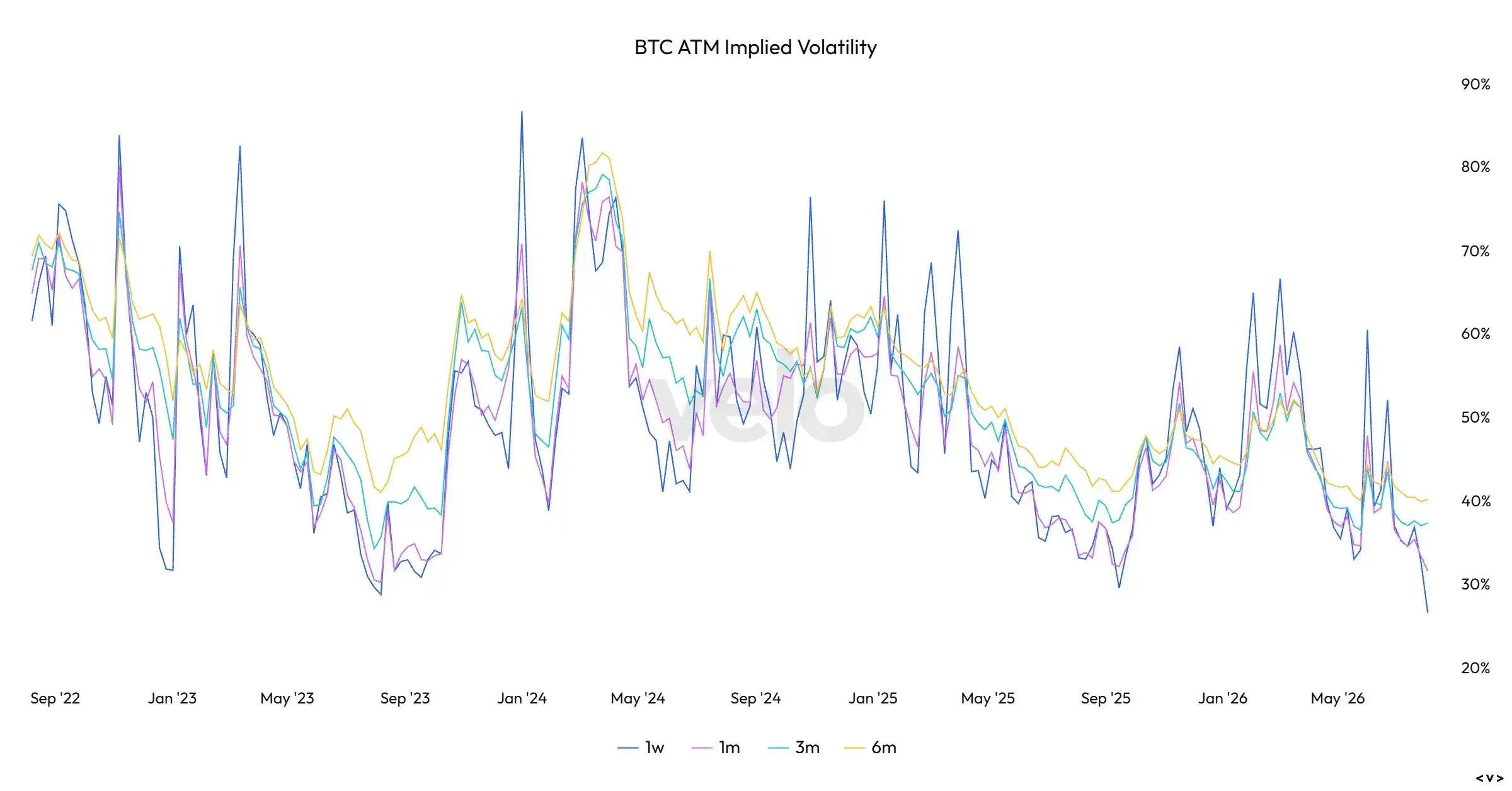
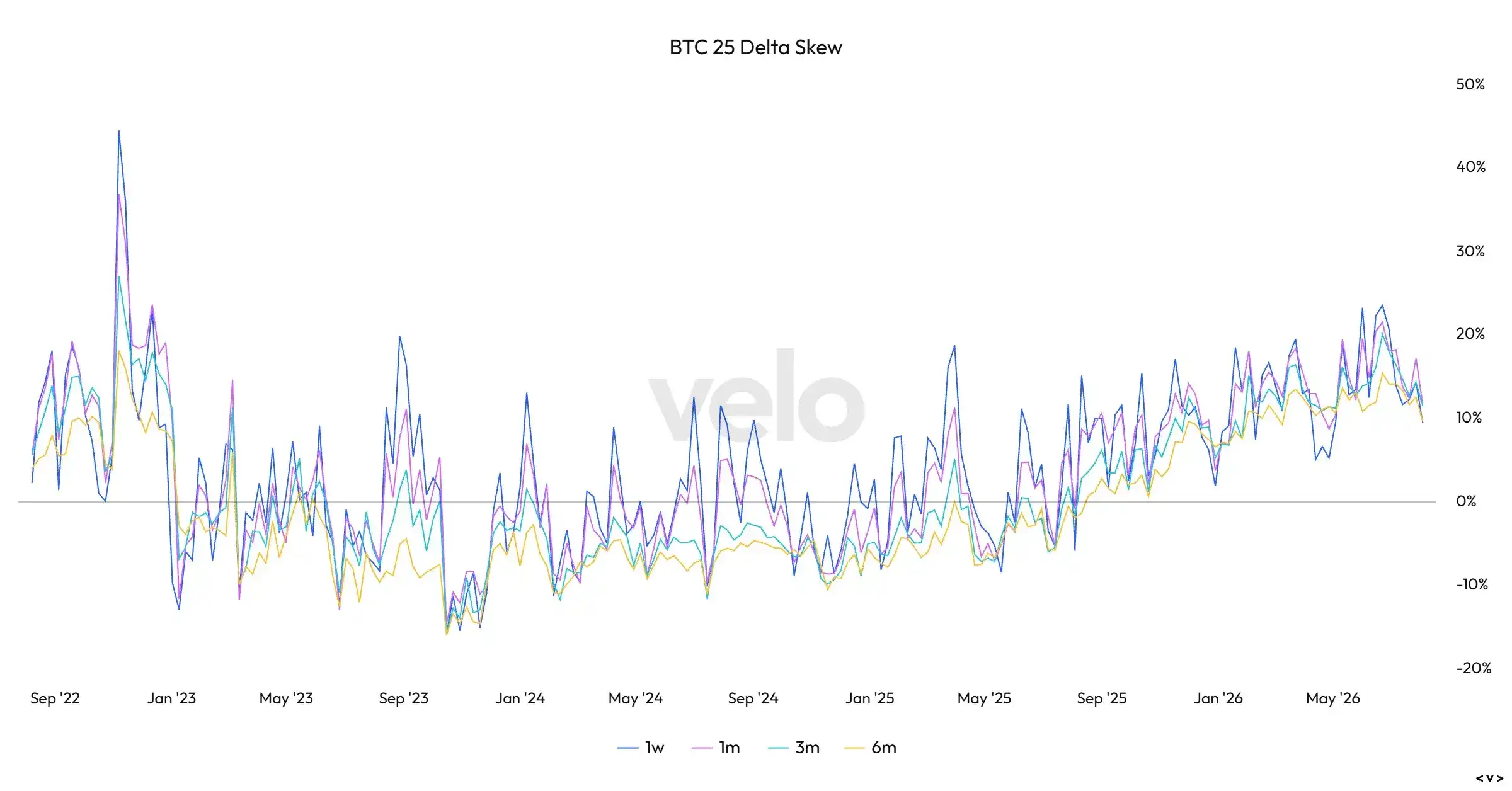
Finally, looking at the derivatives market: Bitcoin futures basis – the spread between futures contract prices and the Bitcoin spot price – has been declining for years, even struggling to reach levels comparable to US Treasury bill yields.

This indicates two things:

  1. Increasingly more funds are arbitraging Bitcoin futures basis;
  2. The market is not pricing in much of a premium for forward Bitcoin futures contracts relative to spot prices.
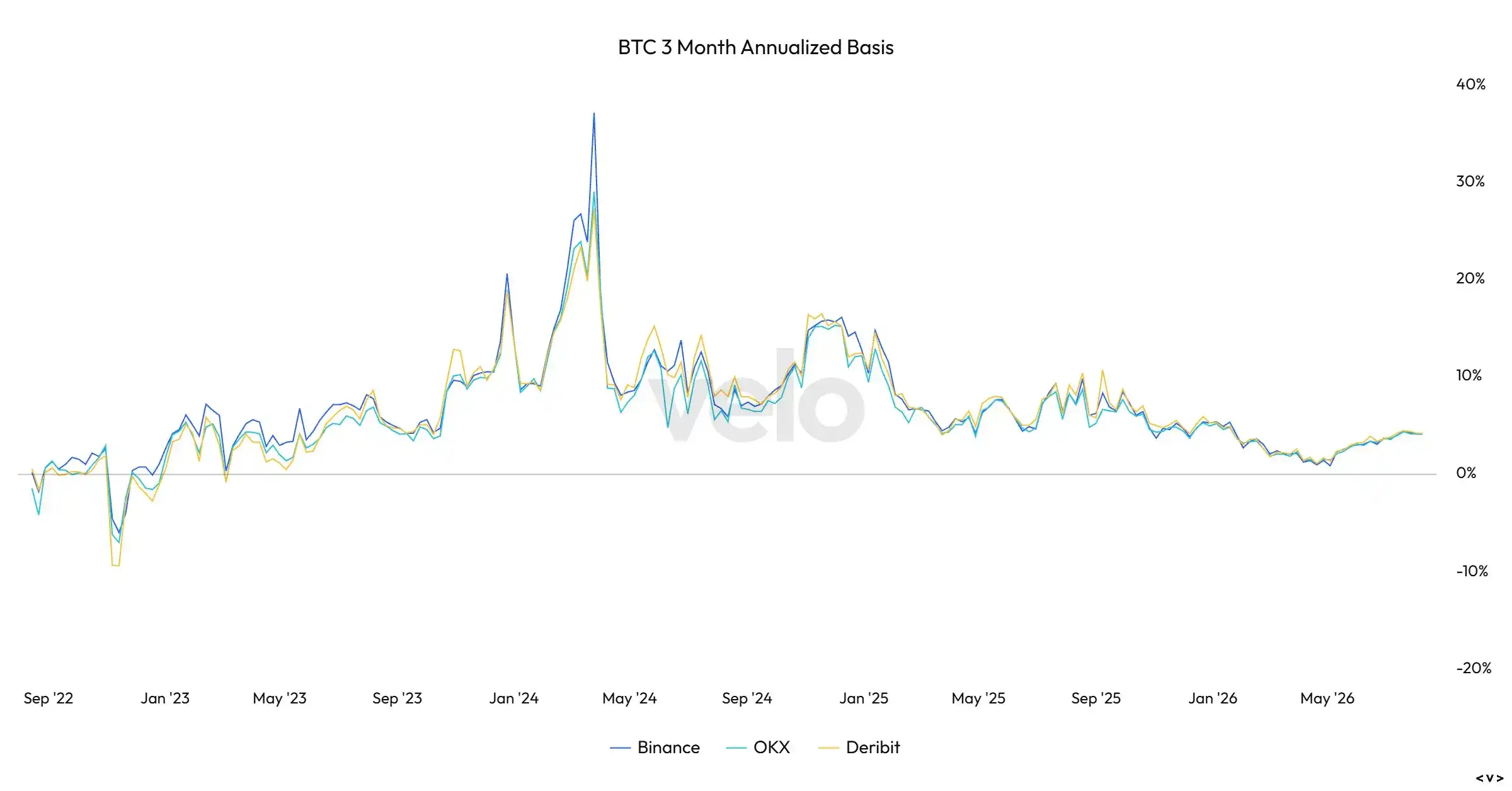
Putting these factors together, the objective picture is: the market is completely dead. Neither futures nor options traders are expressing bullish views, and they are pricing in continued flattening of Bitcoin volatility.

Meanwhile, multiple metrics show Bitcoin is entering deep value territory; long-term holders are accumulating again. This seems to contradict both trader sentiment and the trend of $5 billion in net outflows from Bitcoin ETFs over the past 52 weeks.

DATs and the Specter of 'Quantum Computing'

One of the biggest pressures on the market during the 2023–2025 bull run was Digital Asset Treasuries (DATs). At least in theory, the design logic of these vehicles was: to accumulate more Bitcoin by diluting common shareholders in a way that accretes per-share value, ultimately enhancing shareholder value.

However, after successes like Strategy and Japan's Metaplanet, competition intensified significantly as numerous similar companies emerged vying for return opportunities. Inflows into these vehicles were spread too thin, eventually leading to their narrowing premiums to Net Asset Value (NAV).

In recent months, we've seen multiple related news items: some treasuries have slowed their Bitcoin accumulation pace, some have started directly selling Bitcoin, and a few have even changed strategies altogether. I view these as positive signs of market self-repair.

Recently, even when Saylor announced selling Bitcoin, the price actually rose. According to information from Strategy's latest earnings call, the company is consolidating its capital structure and prioritizing STRC. This contrasts sharply with the previous pattern where 'announcing Bitcoin buys led to price declines.'

Looking ahead, I don't think DATs will exert the same degree of pressure on the market as they did 6–9 months ago, especially given Bitcoin is already down more than 50% from its highs.

I do believe quantum computing is a real concern, especially on a time horizon of five-plus years. In recent months, while assisting with investment analysis at STIX, I've interacted with a few quantum computing startups beginning to mature and spoken with people in the industry, giving me some understanding. Of course, I'm far from an expert.

My view is that this threat should be taken seriously. However, with Bitcoin at $60,000, down 50% from highs, and underperforming other assets, I think the current price has already priced in a significant portion of this risk.

From here on out, even in the most extreme doomsday scenarios, the direction of these widely discussed, publicly known concerns will likely only improve. The worse Bitcoin performs due to market concerns about quantum risk, the more incentive large holders, and institutions making money from Bitcoin trading, custody, and lending, have to push a cohort of developers to find and propose solutions.

This is similar to the ETF approval in the last cycle: the market trades ahead of the probability of the problem being solved. Therefore, once the risk is completely resolved, you cannot buy at extremely low prices anymore.

Potential Bullish Logic

Even if you think Bitcoin is probably now at a level suitable for long-term allocation, for medium-to-short-term capital allocators, opportunity cost remains an extremely important consideration: with a hot economy and truly worthwhile innovation opportunities for speculation and investment in the market, allocating capital to Bitcoin seems to miss out on a lot by comparison.

The core question that has persisted for months is: Since gold rose and high-beta stocks performed strongly this year without Bitcoin following, what would need to happen for Bitcoin to perform from now on?

As shown in previous charts, on-chain data indicates long-term holders are buying with considerable force. Meanwhile, DATs have seen capitulatory selling, and ETFs have brought significant net selling pressure.

Previous Bitcoin bear markets ended due to exhaustion of selling pressure, not necessarily requiring a catalyst that sparked massive new demand. At this point, if you were ever worried about DATs, quantum computing risks, or Bitcoin's underperformance, how many haven't sold and can continue selling at a pace exceeding the last 6–9 months?

Clearly, Bitcoin could still experience a sharp drop due to a sudden spike in asset correlation if macroeconomic or geopolitical turmoil occurs. But we are discussing a judgment on a higher time frame over the coming months.

I fully understand there is no clear catalyst currently. The 'Clarity' Act might be one, but I don't think it will significantly impact Bitcoin itself. However, market bottoms often look like this.

What you weigh is the probability of things getting worse relative to the expectations already priced into the current price. It's the opposite of judgment in a bull market: in a bull market, people assess the probability of reality being better than expected.

I'm not ruling out one last leg down sometime this year, but at this point, I think the market has priced in many of these risks over the past year.

A potential catalyst for Bitcoin could simply be stable, requirement-driven buying by large institutions. The initial Asset Under Management (AUM) growth of ETFs at launch was staggering, but we are long past the initial excitement phase. Since last October, total ETF AUM has been slowly declining.

One possible catalyst could be large asset management firms deciding to include a small, single-digit percentage Bitcoin allocation across their various investment portfolios. This would bring price-insensitive inflows to Bitcoin.

This might sound like clutching at straws for comfort, but Bitcoin's lack of clear correlation with multiple asset classes over the past year could indeed provide a reasonable basis for large management institutions, which often seek to diversify asset correlations and risk exposures, to allocate a small amount of Bitcoin.
Conclusion: How to Think About Allocation Going Forward

In short: I think Bitcoin is 'cheap,' though it could still take another leg down sometime this year. The network's fundamentals are broadly healthy. At this point, most risks have been priced in; those who would sell because of these risks have likely already sold. It's almost impossible to buy the exact bottom.

In my view, there are a few ways to allocate from here. Of course, this is not investment advice.

The simplest strategy is to consider gradually buying Bitcoin spot via dollar-cost averaging over the next few months. You could also wait for a final leg down or for the market to regain vitality and upward momentum before acting.

Another strategy is to start allocating now. Since implied volatility is very cheap, you can simultaneously use the options market to hedge against any final leg down that might shake you out of your position.

I haven't really pulled the trigger myself yet, but will likely start acting in some capacity soon.

I hope this article has provided some valuable thoughts and sparked discussion on how others are viewing these issues. Maybe the 'four-year cycle' proves we live in a simulation. Either way, the coming months look interesting for this orange coin.


Criptomoedas em alta

Perguntas relacionadas

QAccording to the article, what are the two major factors that have been depressing the Bitcoin market and are now showing signs of improvement?

AAccording to the article, the two major factors are the selling pressure from Digital Asset Treasuries (DATs) and the perceived risk from quantum computing. The author states that both of these issues are finally starting to show signs of being repaired.

QWhat does the author conclude about the current health of the Bitcoin network itself?

AThe author concludes that the Bitcoin network remains as distributed and healthy as it ever has been. While mining hash rate has declined, the network's difficulty adjustment mechanism keeps it secure, and a wide, global distribution of nodes shows its decentralized nature is intact.

QBased on the MVRV (Market Value to Realized Value) metric discussed, what is the key conclusion about Bitcoin's current valuation?

AThe key conclusion is that Bitcoin is currently in the lower end of its historical valuation range. The MVRV ratio indicates that the market is largely in an unrealized loss position, which historically has been a favorable zone for accumulation, even if it may not necessarily need to turn negative to find a bottom in this cycle.

QWhat is the current sentiment reflected in Bitcoin's derivatives markets (futures and options), as described in the article?

AThe derivatives markets reflect complete apathy. Futures basis (the premium of futures over spot) has been declining for years. Options implied volatility is at multi-year lows, and skew data shows the market's only consistent interest has been in buying downside protection. This indicates traders are not expressing bullish views and are pricing in continued low volatility.

QWhat is one potential catalyst for Bitcoin mentioned by the author that involves large institutional asset managers?

AOne potential catalyst is large asset management institutions deciding to add a small, single-digit percentage allocation of Bitcoin to their various investment portfolios. This would create price-insensitive inflows, as Bitcoin's lack of correlation with other assets over the past year could serve as a rationale for diversification.

Leituras Relacionadas

$20k Signing Fee + $30k Monthly Salary: The Story Behind Pump.fun Poaching FOMO's Corner

The meme market has become increasingly fragmented, with a significant divide between overseas and Chinese users in terms of ecosystem and trading tools. Recently, a piece of gossip spread within overseas meme communities: Pump.fun, the largest token launch platform, is allegedly offering lucrative incentives to poach users from its competitor FOMO. According to a leaked agreement, eligible users are reportedly offered a one-time $20,000 signing bonus plus a $30,000 monthly salary to migrate their funds and trading activity exclusively to Pump.fun, close their FOMO accounts, and meet specific trading volume requirements. This aggressive move highlights FOMO's rapid rise. Launched just over a year ago, FOMO has secured $94 million in funding and, crucially, its revenue over the past 30 days has surpassed that of Uniswap and Phantom. Its market share in trading bots has even overtaken GMGN to become the leader. FOMO's success is attributed to its "social-first" product design, featuring a profit leaderboard and a feed tracking top traders' activities—effectively creating "trading celebrities" that users follow. In response, Pump.fun has recently upgraded its app to replicate these social features, shifting its homepage focus to trader activity feeds. The platform's founder has actively welcomed prominent meme traders. This competition underscores a major shift in the overseas meme market: the battleground has moved from launch tools and liquidity to a fight for attention and influence. The market is now dominated by a "网红带货模式" (influencer-driven model), where platforms compete to sign the most influential trading Key Opinion Leaders (KOLs), who have become the new carriers of market consensus. While this mirrors early competition in livestreaming platforms, it signals a potential risk for the meme space: losing the organic, community-driven vitality that originally fueled its growth, as competition centers increasingly on a concentrated group of trading influencers.

marsbitHá 29m

$20k Signing Fee + $30k Monthly Salary: The Story Behind Pump.fun Poaching FOMO's Corner

marsbitHá 29m

The Inside Story of Pump.fun Poaching FOMO's Top Users: $20K Signing Bonus + $30K Monthly Salary

Pump.fun, a leading meme coin launchpad, is reportedly offering exclusive contracts to lure high-value users and traders away from its competitor FOMO. The alleged agreement includes a $20,000 signing bonus, a $30,000 monthly stipend, and requires users to migrate funds, use a dedicated wallet, and permanently close their FOMO accounts. This aggressive move highlights a significant shift in the competitive landscape of the meme market. FOMO, a multi-chain mobile-focused trading platform launched in 2025, has rapidly grown to challenge incumbents. Data shows its 30-day revenue recently surpassed Uniswap and Phantom, and it has overtaken GMGN to become the market leader in trading bot share. FOMO's success is largely attributed to its "social-first" design, featuring profit leaderboards and feeds that track top traders' moves. This effectively creates and promotes "meme trading influencers," turning successful traders into attention hubs that drive platform engagement and user growth. Recognizing this model's power, Pump.fun recently updated its app to replicate similar social features. The competition for influential traders signals the meme market's evolution into a "influencer-driven" phase. Platform growth now hinges less on technical features and more on securing key personalities who can attract followers and trading volume. While a standard competitive tactic, this trend risks centralizing attention around a few individuals and potentially stifling the organic, community-driven culture that originally fueled the meme coin ecosystem.

Odaily星球日报Há 39m

The Inside Story of Pump.fun Poaching FOMO's Top Users: $20K Signing Bonus + $30K Monthly Salary

Odaily星球日报Há 39m

Grayscale Clarifies Whether the Cryptocurrency Market Growth-Promoting Clarity Act Will Be Passed This Year

Zach Pandl, the Research Director at Grayscale, stated that the passage of the CLARITY Act—legislation aimed at establishing a comprehensive regulatory framework for the crypto market in the U.S.—is unlikely to occur in Congress this year. According to Pandl, the Senate's tight schedule and the political climate in an election year make bipartisan agreement on the bill difficult. Pandl noted that the failure of the Clarity Act will not directly impact Bitcoin's role as a store of value, the operation of core blockchains, or the growth of stablecoin payments in the short term. The U.S. crypto sector has operated for nearly 17 years without such comprehensive market structure legislation. However, he warned that the absence of a clear regulatory framework could slow the influx of new investment and capital formation in the U.S. The proposed law aims to open new avenues for capital formation via blockchain, support the development of tokenized securities markets, and create a comprehensive oversight system for digital asset intermediaries, along with various consumer, investor, and software developer protections. Pandl believes federal regulators, particularly the SEC, will continue to fill regulatory gaps even without new legislation, issuing rules in areas like tokenized securities in the coming months. While significant progress has been made under the current administration regarding institutional custody, banking access, staking, and crypto ETPs, Pandl cautioned that without comprehensive market structure laws, much new investment and developer activity may shift outside the United States.

cryptonews.ruHá 2h

Grayscale Clarifies Whether the Cryptocurrency Market Growth-Promoting Clarity Act Will Be Passed This Year

cryptonews.ruHá 2h

Trading

Spot

Artigos em Destaque

O que é BITCOIN

Compreender o HarryPotterObamaSonic10Inu (ERC-20) e a Sua Posição no Espaço Cripto Nos últimos anos, o mercado de criptomoedas assistiu a um aumento na popularidade das moedas meme, cativando não apenas os traders, mas também aqueles que procuram envolvimento comunitário e valor de entretenimento. Entre estes tokens únicos está o HarryPotterObamaSonic10Inu (ERC-20), um projeto intrigante que mistura referências culturais no tecido das criptomoedas. Este artigo explora os principais aspetos do HarryPotterObamaSonic10Inu, examinando os seus mecanismos, a sua ética orientada pela comunidade e o seu envolvimento com o vasto panorama cripto. O que é o HarryPotterObamaSonic10Inu (ERC-20)? Como o nome sugere, o HarryPotterObamaSonic10Inu é uma moeda meme construída na blockchain Ethereum, classificada sob o padrão ERC-20. Ao contrário das criptomoedas tradicionais, que podem enfatizar a utilidade prática ou o potencial de investimento, este token prospera no valor de entretenimento e na força da sua comunidade. O projeto visa promover um ambiente onde utilizadores envolvidos possam reunir-se, partilhar ideias e participar em atividades inspiradas por diversos fenómenos culturais. Uma característica notável do HarryPotterObamaSonic10Inu é a zero taxa sobre transações. Este elemento atraente visa encorajar a negociação e o envolvimento da comunidade, isento de encargos adicionais que podem desencorajar os traders de pequena escala. A oferta total da moeda está fixada em mil milhões de tokens, uma cifra que marca a sua intenção de manter uma circulação substancial dentro da comunidade. Criador do HarryPotterObamaSonic10Inu (ERC-20) As origens do HarryPotterObamaSonic10Inu estão um pouco envoltas em mistério; os detalhes sobre o criador permanecem desconhecidos. O desenvolvimento deste token carece de uma equipa identificável ou de um plano explícito, o que não é raro no setor das moedas meme. Em vez disso, o projeto surgiu de forma orgânica, com o seu progresso a depender fortemente do entusiasmo e da participação da sua comunidade. Investidores do HarryPotterObamaSonic10Inu (ERC-20) No que diz respeito a investimentos externos e apoios, o HarryPotterObamaSonic10Inu também permanece ambíguo. O token não lista quaisquer fundações de investimento conhecidas ou apoio organizacional significativo. Em vez disso, o “sangue vital” do projeto é a sua comunidade de base, que informa o seu crescimento e sustentabilidade através da ação coletiva e do envolvimento no espaço cripto. Como Funciona o HarryPotterObamaSonic10Inu (ERC-20)? Como uma moeda meme, o HarryPotterObamaSonic10Inu opera principalmente fora dos quadros tradicionais que muitas vezes governam o valor dos ativos. Existem vários aspetos distintivos que definem como o projeto funciona: Transações Sem Taxas: Sem taxas sobre transações, os utilizadores podem comprar e vender o token livremente, sem a preocupação de custos ocultos. Envolvimento da Comunidade: O projeto prospera na interação da comunidade, aproveitando plataformas de redes sociais para criar entusiasmo e facilitar a participação. Discussões, partilha de conteúdo e envolvimento são elementos cruciais que ajudam a expandir o seu alcance e a fomentar a lealdade entre os apoiantes. Sem Utilidade Prática: Deve ser notado que o HarryPotterObamaSonic10Inu não oferece utilidade concreta dentro do ecossistema financeiro. Em vez disso, é classificado como um token principalmente para entretenimento e atividades comunitárias. Referência Cultural: O token incorpora de forma inteligente elementos da cultura popular para atrair interesse, conectando-se tanto com entusiastas de memes como com seguidores de criptomoedas. HarryPotterObamaSonic10Inu exemplifica como as moedas meme operam de forma diferente de projetos de criptomoedas mais tradicionais, entrando no mercado como construções sociais inovadoras em vez de ativos utilitários. Linha do Tempo do HarryPotterObamaSonic10Inu (ERC-20) A história do HarryPotterObamaSonic10Inu é marcada por vários marcos notáveis: Criação: O token surgiu de um meme viral, capturando a imaginação de muitos entusiastas de criptomoedas. Datas específicas de criação não estão disponíveis, sublinhando a sua ascensão orgânica. Listagem em Exchanges: O HarryPotterObamaSonic10Inu conseguiu entrar em várias exchanges, permitindo um acesso e negociação mais fáceis pela comunidade. Iniciativas de Envolvimento da Comunidade: Atividades contínuas direcionadas a melhorar a interação comunitária, incluindo concursos, campanhas em redes sociais e geração de conteúdo por fãs e defensores. Planos de Expansão Futura: O roteiro do projeto inclui o lançamento de uma coleção de NFTs, mercadorias e um site de eCommerce relacionado aos seus temas culturais, envolvendo ainda mais a comunidade e tentando adicionar mais dimensões ao seu ecossistema. Pontos-Chave sobre o HarryPotterObamaSonic10Inu (ERC-20) Natureza Orientada pela Comunidade: O projeto prioriza a contribuição coletiva e a criatividade, assegurando que o envolvimento dos utilizadores está na vanguarda do seu desenvolvimento. Classificação como Moeda Meme: Representa o epítome da criptomoeda baseada em entretenimento, destacando-se dos veículos de investimento tradicionais. Sem Afiliação Direta com o Bitcoin: Apesar da semelhança no nome do ticker, o HarryPotterObamaSonic10Inu é distinto e não tem qualquer relação com o Bitcoin ou outras criptomoedas estabelecidas. Foco na Colaboração: O HarryPotterObamaSonic10Inu é projetado para criar um espaço de colaboração e partilha de histórias entre os seus detentores, proporcionando uma via para a criatividade e o fortalecimento da comunidade. Perspectivas Futuras: A ambição de expandir além da sua premissa inicial para NFTs e mercadorias delineia um caminho para o projeto potencialmente entrar em avenidas mais mainstream dentro da cultura digital. À medida que as moedas meme continuam a capturar a imaginação da comunidade cripto, HarryPotterObamaSonic10Inu (ERC-20) destaca-se devido aos seus laços culturais e abordagem centrada na comunidade. Embora possa não se encaixar no molde típico de um token orientado para utilidade, a sua essência reside na alegria e camaradagem fomentadas entre os seus apoiantes, destacando a natureza em evolução das criptomoedas em uma era cada vez mais digital. À medida que o projeto continua a desenvolver-se, será importante observar como as dinâmicas comunitárias influenciam a sua trajetória no panorama em constante mudança da tecnologia blockchain.

2.2k Visualizações TotaisPublicado em {updateTime}Atualizado em 2024.12.03

O que é BITCOIN

Como comprar BTC

Bem-vindo à HTX.com!Tornámos a compra de Bitcoin (BTC) simples e conveniente.Segue o nosso guia passo a passo para iniciar a tua jornada no mundo das criptos.Passo 1: cria a tua conta HTXUtiliza o teu e-mail ou número de telefone para te inscreveres numa conta gratuita na HTX.Desfruta de um processo de inscrição sem complicações e desbloqueia todas as funcionalidades.Obter a minha contaPasso 2: vai para Comprar Cripto e escolhe o teu método de pagamentoCartão de crédito/débito: usa o teu visa ou mastercard para comprar Bitcoin (BTC) instantaneamente.Saldo: usa os fundos da tua conta HTX para transacionar sem problemas.Terceiros: adicionamos métodos de pagamento populares, como Google Pay e Apple Pay, para aumentar a conveniência.P2P: transaciona diretamente com outros utilizadores na HTX.Mercado de balcão (OTC): oferecemos serviços personalizados e taxas de câmbio competitivas para os traders.Passo 3: armazena teu Bitcoin (BTC)Depois de comprar o teu Bitcoin (BTC), armazena-o na tua conta HTX.Alternativamente, podes enviá-lo para outro lugar através de transferência blockchain ou usá-lo para transacionar outras criptomoedas.Passo 4: transaciona Bitcoin (BTC)Transaciona facilmente Bitcoin (BTC) no mercado à vista da HTX.Acede simplesmente à tua conta, seleciona o teu par de trading, executa as tuas transações e monitoriza em tempo real.Oferecemos uma experiência de fácil utilização tanto para principiantes como para traders experientes.

4.8k Visualizações TotaisPublicado em {updateTime}Atualizado em 2026.06.02

Como comprar BTC

O que é $BITCOIN

OURO DIGITAL ($BITCOIN): Uma Análise Abrangente Introdução ao OURO DIGITAL ($BITCOIN) OURO DIGITAL ($BITCOIN) é um projeto baseado em blockchain que opera na rede Solana, com o objetivo de combinar as características dos metais preciosos tradicionais com a inovação das tecnologias descentralizadas. Embora partilhe um nome com o Bitcoin, frequentemente referido como “ouro digital” devido à sua percepção como uma reserva de valor, o OURO DIGITAL é um token separado projetado para criar um ecossistema único dentro da paisagem Web3. O seu objetivo é posicionar-se como um ativo digital alternativo viável, embora os detalhes sobre as suas aplicações e funcionalidades ainda estejam em desenvolvimento. O que é o OURO DIGITAL ($BITCOIN)? OURO DIGITAL ($BITCOIN) é um token de criptomoeda explicitamente projetado para uso na blockchain Solana. Em contraste com o Bitcoin, que fornece um papel amplamente reconhecido como armazenamento de valor, este token parece focar em aplicações e características mais amplas. Aspectos notáveis incluem: Infraestrutura Blockchain: O token é construído na blockchain Solana, conhecida pela sua capacidade de lidar com transações de alta velocidade e baixo custo. Dinâmicas de Oferta: O OURO DIGITAL tem um fornecimento máximo limitado a 100 quatrilhões de tokens (100P $BITCOIN), embora os detalhes sobre o seu fornecimento circulante ainda não tenham sido divulgados. Utilidade: Embora as funcionalidades precisas não estejam explicitamente delineadas, existem indicações de que o token poderia ser utilizado para várias aplicações, potencialmente envolvendo aplicações descentralizadas (dApps) ou estratégias de tokenização de ativos. Quem é o Criador do OURO DIGITAL ($BITCOIN)? Neste momento, a identidade dos criadores e da equipa de desenvolvimento por trás do OURO DIGITAL ($BITCOIN) permanece desconhecida. Esta situação é típica entre muitos projetos inovadores no espaço da blockchain, particularmente aqueles alinhados com finanças descentralizadas e fenómenos de moedas meme. Embora tal anonimato possa fomentar uma cultura orientada pela comunidade, intensifica as preocupações sobre governança e responsabilidade. Quem são os Investidores do OURO DIGITAL ($BITCOIN)? As informações disponíveis indicam que o OURO DIGITAL ($BITCOIN) não tem apoiantes institucionais conhecidos ou investimentos proeminentes de capital de risco. O projeto parece operar num modelo peer-to-peer focado no apoio e adoção da comunidade, em vez de rotas de financiamento tradicionais. A sua atividade e liquidez estão principalmente situadas em exchanges descentralizadas (DEXs), como a PumpSwap, em vez de plataformas de negociação centralizadas estabelecidas, destacando ainda mais a sua abordagem de base. Como Funciona o OURO DIGITAL ($BITCOIN) A mecânica operacional do OURO DIGITAL ($BITCOIN) pode ser elaborada com base no seu design de blockchain e nas características da rede: Mecanismo de Consenso: Ao aproveitar o exclusivo proof-of-history (PoH) da Solana combinado com um modelo de proof-of-stake (PoS), o projeto assegura uma validação eficiente das transações, contribuindo para o alto desempenho da rede. Tokenomics: Embora mecanismos deflacionários específicos não tenham sido extensivamente detalhados, o vasto fornecimento máximo de tokens implica que pode atender a microtransações ou casos de uso de nicho que ainda estão por definir. Interoperabilidade: Existe o potencial para integração com o ecossistema mais amplo da Solana, incluindo várias plataformas de finanças descentralizadas (DeFi). No entanto, os detalhes sobre integrações específicas permanecem não especificados. Cronologia de Eventos Chave Aqui está uma cronologia que destaca marcos significativos relacionados ao OURO DIGITAL ($BITCOIN): 2023: O lançamento inicial do token ocorre na blockchain Solana, marcado pelo seu endereço de contrato. 2024: O OURO DIGITAL ganha visibilidade ao tornar-se disponível para negociação em exchanges descentralizadas como a PumpSwap, permitindo que os utilizadores o negociem contra SOL. 2025: O projeto testemunha atividade de negociação esporádica e potencial interesse em envolvimentos liderados pela comunidade, embora não tenham sido documentadas parcerias ou avanços técnicos notáveis até ao momento. Análise Crítica Forças Escalabilidade: A infraestrutura subjacente da Solana suporta altos volumes de transações, o que pode aumentar a utilidade do $BITCOIN em vários cenários de transação. Acessibilidade: O potencial preço de negociação baixo por token pode atrair investidores de retalho, facilitando uma participação mais ampla devido a oportunidades de propriedade fracionada. Riscos Falta de Transparência: A ausência de apoiantes, desenvolvedores ou um processo de auditoria publicamente conhecidos pode gerar ceticismo em relação à sustentabilidade e confiabilidade do projeto. Volatilidade do Mercado: A atividade de negociação depende fortemente do comportamento especulativo, o que pode resultar em volatilidade significativa dos preços e incerteza para os investidores. Conclusão O OURO DIGITAL ($BITCOIN) surge como um projeto intrigante, mas ambíguo, dentro do ecossistema em rápida evolução da Solana. Embora tente aproveitar a narrativa do “ouro digital”, a sua divergência do papel estabelecido do Bitcoin como reserva de valor sublinha a necessidade de uma diferenciação mais clara da sua utilidade pretendida e estrutura de governança. A aceitação e adoção futuras dependerão provavelmente da abordagem da atual opacidade e da definição mais explícita das suas estratégias operacionais e económicas. Nota: Este relatório abrange informações sintetizadas disponíveis até outubro de 2023, e desenvolvimentos podem ter ocorrido além do período de pesquisa.

428 Visualizações TotaisPublicado em {updateTime}Atualizado em 2025.05.13

O que é $BITCOIN

Discussões

Bem-vindo à Comunidade HTX. Aqui, pode manter-se informado sobre os mais recentes desenvolvimentos da plataforma e obter acesso a análises profissionais de mercado. As opiniões dos utilizadores sobre o preço de BTC (BTC) são apresentadas abaixo.

活动图片