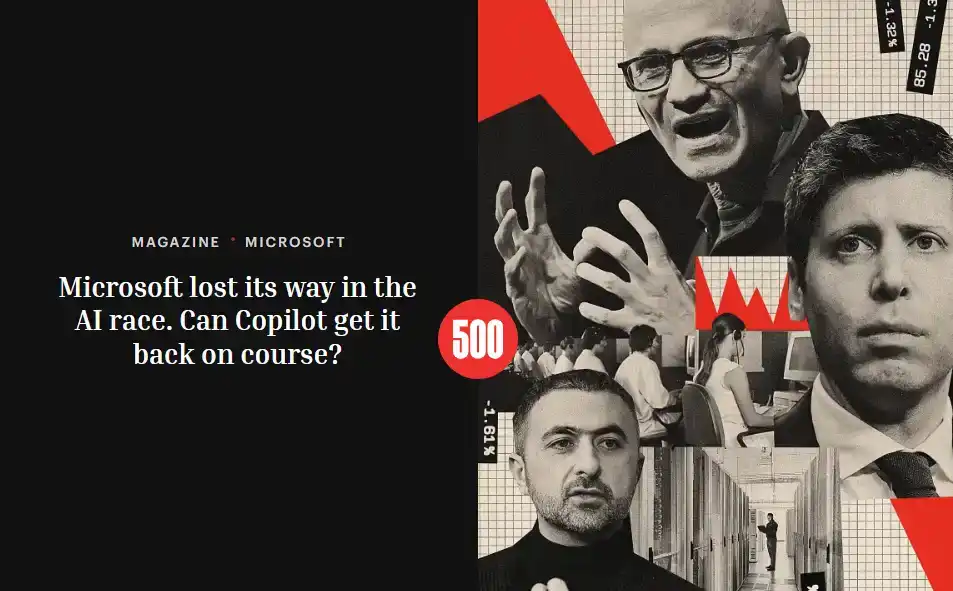
Has Microsoft Lost Its Way in the AI Race, and Can Copilot Bring It Back on Track?

marsbitPublicado em 2026-05-23Última atualização em 2026-05-23

Resumo

Microsoft, once seen as an early AI frontrunner due to its investment in OpenAI, is navigating a strategic shift amid increased competition. Its initial reliance on OpenAI’s GPT models has been complicated by OpenAI’s growing ambitions as a direct competitor, rapid advancements from rivals like Claude and Gemini, and the disruptive rise of AI agents, which challenge its traditional SaaS business model. These factors contributed to stock declines and slower-than-expected adoption of its flagship Copilot products. In response, CEO Satya Nadella has taken a hands-on role in product development, signaling the urgency of change. Microsoft is pivoting from a model-centric strategy to a "model-agnostic" enterprise platform approach. It aims to become the foundational layer connecting various AI models—from OpenAI, Anthropic, or its own new "Superintelligence" team—with enterprise workflows, data, security, and cloud services. Recent organizational changes merged consumer and enterprise Copilot teams to accelerate innovation, exemplified by new products like Copilot Tasks and Copilot Cowork. However, this transformation comes at a high cost. Microsoft faces massive capital expenditures, potentially reaching ~$190 billion by 2026, to support AI infrastructure. While its platform strategy shows early signs of traction with growing Azure AI revenue, it must balance startup-like agility with the reliability expected by enterprise clients. The core challenge is no longer being the sole ...

Editor's Note: Microsoft was once one of the first tech giants to place a winning bet on OpenAI in the generative AI wave. Thanks to its investment in OpenAI and exclusive cloud partnership, Microsoft was initially seen as the most certain winner of the AI era: Azure gained model advantages, and its Office, Bing, GitHub, and enterprise software lines were fully integrated with Copilot. Satya Nadella, like he did leading Microsoft's shift to the cloud, was expected to orchestrate another platform-level migration.

But two years later, Microsoft's advantages have become more complicated. OpenAI is no longer just Microsoft's technology supplier, but also a direct competitor vying for enterprise customers. Models like Claude and Gemini have rapidly caught up, diminishing the sense of lead brought by GPT's exclusivity. The emergence of AI Agents further challenges the long-term SaaS business model that Microsoft relies on. Stock price pullbacks, slower-than-expected Copilot paid adoption rates, and GitHub Copilot being overtaken by Cursor and Claude Code have forced Microsoft to re-evaluate its AI strategy.

The most noteworthy aspect of this article is not whether Microsoft can catch up to OpenAI, Anthropic, or Google in model capabilities, but that Microsoft is attempting to redefine its position: it is no longer betting entirely on a single model, but shifting towards an "model-agnostic" enterprise AI platform strategy. In other words, Microsoft wants to become the foundational layer connecting models, data, security, workflows, cloud computing, and enterprise software. Models can come from OpenAI, Anthropic, or even in the future from Microsoft's own Superintelligence team. What truly stays within Microsoft's ecosystem is the enterprise customer's work platform, data assets, development environment, and security framework.

This is also the context for Nadella personally getting involved in Copilot product development. For Microsoft, the AI competition is no longer just a model race between labs, but a systematic competition about organizational speed, product form, customer relationships, and capital expenditure. Claude Code and Claude Cowork have shown that AI Agents could reshape software development and office workflows; open-source projects like OpenClaw indicate that an "always-on" AI assistant is moving from concept to reality. What Microsoft must do is package these more radical AI-native experiences within the security, compliance, and governance frameworks acceptable to enterprise clients.

However, the cost of this path is not low. To catch up with cutting-edge models and support agent-based products, Microsoft is pushing the AI competition towards "gigawatt-scale" infrastructure investment: more data centers, larger chip clusters, higher capital expenditure. By 2026, Microsoft's capital expenditure is expected to reach about $190 billion. In other words, Microsoft in the AI era must both experiment rapidly like a startup and sustain heavy asset investments like a cloud computing giant.

The real problem Microsoft faces is not whether it can remain the sole winner of the AI era, but whether it can continue to hold the core gateway to enterprise software amid rapidly commoditizing models and ongoing disruption of software business models by Agents. For Nadella, this may not be an ordinary product adjustment, but more like Microsoft's second startup phase during this AI platform migration.

The following is the original text:
Mid-January 2026, Redmond, Washington. The weather was cold, gray, and dark, the kind of morning perfect for hitting the snooze button. But inside Building 92 on Microsoft's sprawling campus, a team of engineers had already arrived early.

They were fighting a tough battle, and they were already behind.

This team was developing a new AI product. It was more of a personal assistant, capable of helping users book flights, reply to emails, even find a reliable local plumber. The team members were well aware that other tech companies were developing similar products. Right at that moment, Microsoft CEO Satya Nadella arrived on the scene. He wanted to show them something.

Nadella opened his laptop and launched an application. It was a system for directing and controlling multiple AI Agents, which he called a "Chain of Debate." Nadella demonstrated it while explaining to the engineers. Team members exchanged knowing glances, like seasoned basketball players suddenly realizing a new teammate actually knew how to play.

Because this application wasn't something Nadella had asked someone else to build for him; he had written it himself using an AI tool called "vibe coding."

"It really set the tone for how hard the team was going to push over the coming weeks," recalls Jacob Andreou, Microsoft Executive Vice President in charge of Copilot design. Nadella was in the same room with them, almost standing behind the engineers, opening his own laptop and participating.

Seeing the CEO so excited about building a new product hands-on energized the team. By late February, the sprint concluded, and Microsoft launched Copilot Tasks—an AI tool that acts as a personal assistant capable of using a computer. The prototype Nadella had built also served as a reference model for a feature called "model council" within Copilot and other components.

But the fact that Nadella is diving this deeply and frequently into AI product teams, even personally building prototypes, itself speaks to Microsoft's current situation. After all, this is a $3 trillion tech giant, not a scrappy startup where the CEO frequently codes alongside developers during sprints.

Nadella's concern about Microsoft's AI strategy is evident enough. Last October, he announced he would step back from some commercial duties to focus more on AI research, product innovation, and AI data center construction.

This concern is not unfounded. Microsoft's stock had gone through a tough period. After hitting an all-time high last October, over the next five months, Microsoft's stock price fell by about 34%. Meanwhile, AI-related revenue for Microsoft's cloud platform Azure more than doubled over the past year.

Microsoft also became a poster child for the so-called "SaaSpocalypse" (SaaS Armageddon sell-off). The emergence of AI coding Agents triggered a collective sell-off of software stocks. Many investors began to believe such products meant companies would no longer buy AI products from SaaS vendors like Microsoft in the future, and might not even buy off-the-shelf software at all.

Between October 28, 2025, and March 27, 2026, Microsoft's stock price fell by 34%. Sales of Microsoft's enterprise Copilot product were also slower than the company expected. Among the 450 million users of the Microsoft 365 office suite, less than 4.5% currently pay for Copilot features. Meanwhile, usage of the consumer-facing Copilot chatbot also lags far behind ChatGPT, Gemini, and Claude. The once-leading AI coding assistant GitHub Copilot was also overtaken by AI startups Cursor and Anthropic's Claude Code.

Two years ago, Microsoft looked like one of the earliest winners of the AI era. Thanks to Nadella's foresighted bet on OpenAI, Microsoft gained exclusive access to the models of this rapidly growing AI startup and could integrate them into its own product suite. If enterprises wanted to use OpenAI's technology, the only cloud service provider they could choose was Microsoft Azure. Microsoft even once believed OpenAI gave it its best chance in years to challenge Google Search.

At that time, Nadella had been at Microsoft's helm for a decade. He had led Microsoft's platform migration from desktop software to the cloud, and now seemed poised to replicate that success in the AI era.

But AI changes too fast. Two years is already a long cycle. The story that follows is how Microsoft missed its early AI lead, and how it is trying to regain the initiative.

What Went Wrong

Microsoft's initial position at the forefront of the AI race was precisely due to its partnership with OpenAI; but what partly put it on the back foot was also this same partnership.

Microsoft spotted this young San Francisco company early, first investing $1 billion in 2019, with total committed investment in OpenAI reaching $13 billion later. Microsoft used OpenAI's technology to launch a series of AI products branded as Copilot across its consumer and enterprise software lines.

But after ChatGPT's release in late 2022, OpenAI's explosive growth and rapidly expanding ambitions quickly strained the relationship. The two companies clashed on multiple issues: on computing resources, OpenAI always wanted more; on intellectual property, Microsoft believed OpenAI wasn't fulfilling contractual obligations to share technological innovations promptly enough; on customer relationships, OpenAI began directly pitching AI models to the same enterprise customers Microsoft was also selling Copilot to; and when OpenAI sought restructuring, they disagreed over how much equity Microsoft should receive in the new for-profit company.

Nadella knew betting Microsoft's AI strategy on a single, not-yet-fully-proven startup was inherently risky. In November 2023, that risk was laid bare: the non-profit board controlling OpenAI's for-profit business fired CEO Sam Altman for "not being consistently candid," notifying Nadella only minutes before announcing the decision publicly.

Nadella had to quickly reassure investors, emphasizing Microsoft still had access to OpenAI's technology; simultaneously, he collaborated with Altman to pressure the board to reverse its decision. Nadella announced Microsoft was prepared to hire Altman and any OpenAI employees willing to follow him to Microsoft. The threat of a mass exodus ultimately forced the board to relent and reinstate Altman.

Within OpenAI, this five-day crisis later became known as "the blip." But according to people familiar with Nadella's thinking, it shook him deeply. He had to find a hedge for Microsoft's AI bets.

"When Nadella joined an AI engineer team's sprint, it really set the tone for how hard the team was going to push over the coming weeks." —Jacob Andreou, Microsoft Copilot Executive Vice President

Microsoft's Plan B was Mustafa Suleyman.

Suleyman is a co-founder of Google DeepMind who later left to start his own AI startup, Inflection. In March 2024, Microsoft hired Suleyman and Inflection's technical team in a $650 million deal, also licensing its technology. Suleyman was then appointed CEO of Microsoft's new AI division, abbreviated as MAI. Its responsibilities were twofold: first, building Microsoft's own cutting-edge models as a hedge against OpenAI risk; second, expanding the user base of Microsoft's Copilot chatbot.

But this step didn't go smoothly. Microsoft's partnership agreement with OpenAI prohibited it from training models beyond a certain size. Suleyman told Fortune: "We were essentially limited to training Microsoft's own native models, and only up to the scale of SLMs, or small language models."

MAI's first publicly tested general-purpose language model, named MAI-1 preview, launched in August 2025 but ranked quite low on various performance leaderboards and was never widely released.

MAI also failed to turn the Copilot chatbot into a consumer hit. According to media reports, a year after Suleyman took over, Copilot usage stagnated at around 20 million weekly active users, while ChatGPT's user base soared, eventually approaching 900 million. In 2025, Microsoft attempted a major upgrade of Copilot to make it more like a personal assistant capable of performing tasks, but this upgrade did not reignite growth. As for the new AI-powered version of Bing search, it also barely dented Google's share of the search market.

Meanwhile, Plan A also began to encounter trouble.

In 2023, OpenAI's GPT models led the industry by a wide margin. But by early 2025, Anthropic's Claude was often topping AI leaderboards, and many enterprises preferred it for complex tasks. Google's Gemini also became increasingly competitive in visual tasks. Yet Microsoft's Copilot products were still entirely powered by GPT. The engine that once underpinned Microsoft's AI strategy was starting to feel like a heavy burden.

Microsoft Commercial CEO Judson Althoff admits the company made several mistakes. First, naming both consumer and enterprise products "Copilot" was inherently confusing. Althoff, who holds a private pilot's license, quipped: "The only thing worse than not having a copilot is having more than one copilot."

Microsoft also incentivized sales reps to promote both free and premium versions of the enterprise M365 Copilot, but only the premium version truly delivered value for enterprise clients. "We got that wrong," he said.

Microsoft was also struggling to keep pace with the speed of AI evolution. A key turning point came in 2025 when Anthropic released Claude Code. Developers simply describe what they want, and it can autonomously write complete programs. This was no longer a "copilot," but "autopilot." Within six months, it reshaped software development.

Then in January this year, Anthropic launched Claude Cowork. This is an Agent capable of using software, including Microsoft productivity tools like Excel and PowerPoint, and autonomously completing tasks.

Claude Cowork poses a serious challenge to M365 Copilot and the AI Agents Microsoft has been pushing clients to adopt. In fact, it threatens not just Microsoft, but most commercial software. It was this realization that triggered the so-called "SaaSpocalypse" software stock sell-off. Ultimately, over $2 trillion was wiped from tech market value, including a single-day $357 billion plunge in Microsoft's market cap.

How Microsoft is Correcting Course

By the fall of 2025, Nadella realized Microsoft had to reboot its AI strategy. Since then, the company's actions reflect a difficult balancing act: on one hand, it must innovate quickly like an AI startup; on the other, it must still reliably serve investors and enterprise clients like the steady Microsoft of old.

Nadella handed off many commercial and day-to-day operational duties to Microsoft veteran Althoff so he could focus on AI product development. Althoff says he handles "Horizon Zero and Horizon One," while Nadella handles "Horizon Two and Horizon Three." Meanwhile, Nadella began breaking down internal silos, making Microsoft faster, flatter, and more agile.

In March this year, Nadella merged the consumer and enterprise Copilot teams. Suleyman no longer oversees consumer AI products, instead leading a renamed model development project: the Superintelligence team. Suleyman says the name reflects the team's ambition and helps attract top researchers.

Jacob Andreou joined Microsoft in 2025, previously at Snap and venture firm Greylock. He now oversees both consumer and enterprise Copilot Experience and reports directly to Nadella. Joining Suleyman and Andreou on the Copilot leadership team are three other Microsoft Executive Vice Presidents: Charles Lamanna, responsible for Copilot, AI Agents, and platform; Ryan Roslansky, responsible for Microsoft Office and LinkedIn; Perry Clarke, serving as Applications Chief Technology Officer.

Lamanna says: "We want it to be a back end, a brain, driving both the consumer side and the work side." Nadella himself attends the Copilot leadership team's weekly stand-up and participates in a dedicated Teams channel discussing Copilot development progress.

Microsoft faces a delicate balance: it must innovate fast enough to catch up with AI rivals like Anthropic and Google, yet must remain a reliable partner in the eyes of large enterprise customers.

Andreou points to two new products as evidence the unified Copilot team is operating as Nadella envisioned: one is Copilot Tasks for consumers, the product Nadella personally helped prototype in January; the other is Copilot Cowork for enterprise clients.

He says: "Both of those are basically frontier-level experiences, one for consumers, one for enterprise users. And they were both put together by our team pulling resources together and building them in a matter of weeks."

Microsoft has also agreed to OpenAI's long-pending restructuring, with significantly less restrictive terms. The software giant received a 27% equity stake in OpenAI. If OpenAI goes public as widely expected, this provides potential upside. But the exclusivity arrangements in the old agreement have been abandoned: OpenAI can now partner with other cloud providers, and Microsoft can use models from other AI companies.

Suleyman says the new agreement finally allows Microsoft to build larger, more capable frontier AI models and ultimately achieve self-sufficiency. But he adds it will still take Microsoft two to three years to catch up with top AI labs.

The reshaped partnership also allows Microsoft to embrace OpenAI's main rival, Anthropic. Last November, Microsoft pledged up to $5 billion in investment in Anthropic and began offering its models on Azure. The ability to power Copilot with Claude has proven popular with enterprise clients and helped Microsoft build Copilot Cowork.

"You've got to give credit: OpenAI and Anthropic are helping us go faster." —Judson Althoff, Microsoft Commercial CEO

But Microsoft isn't simply swapping dependence on one loss-making AI startup for another. The investment in Anthropic reflects Microsoft's judgment about industry direction: AI models will become increasingly commoditized. At least in the enterprise market, the real value won't concentrate solely in the AI "brain," but will shift to the tools, data, security, cloud computing, and workflow systems surrounding that brain.

This is precisely where Microsoft believes it can win.

It already possesses many key assets: software tools, security systems, data warehouses, and cloud computing capabilities. Microsoft has also built a series of products branded with "IQ" to help companies create customized workflows, aggregate their own data, and build, deploy, and monitor Agents running those workflows based on any AI model from any supplier.

Althoff says: "We don't believe enterprises will change their information work platform, their development environment, their security environment every time a new model drops."

This strategic pivot also brings a new business model.

Previously, Microsoft typically charged per-user licensing fees, such as $30 per user per month for Copilot. Customers liked this model because budgets were easier to plan. But if the AI Agents within these products use models Microsoft doesn't own, Microsoft must pay corresponding token usage fees to the AI supplier.

Therefore, Microsoft has begun shifting to a hybrid pricing model: a base portion still charged per user license, including a limited token quota; any excess is billed per token. This is to avoid the "model-agnostic" strategy eroding profit margins.

For cost control, Microsoft has also started streamlining its workforce. In April this year, Microsoft announced its first-ever voluntary employee severance program, primarily targeting its longest-tenured employees. The company said about 7% of its U.S. workforce, roughly 8,750 employees, were eligible for the program, with an expected cost of $900 million.

There are signs Microsoft's adjusted enterprise strategy is working. As of the end of March, Azure revenue grew 40% year-over-year, and Microsoft's overall AI business reached $37 billion in annualized sales, up 123% year-over-year. Currently, 20 million M365 users pay for Copilot, a quarter of whom signed up in the first four months of 2026. Althoff says adoption is accelerating.

UBS analyst Karl Keirstead says more Microsoft customers are telling him they're starting to see Copilot's value. But overall user numbers remain unsatisfactory. He says: "I don't think they're at a penetration rate yet that Wall Street would be happy with."

Microsoft's "model-agnostic" strategy may also have a vulnerability: what if those high-profile AI startups also begin building Microsoft-style enterprise tools and connective systems?

This is no longer hypothetical. In February this year, OpenAI launched its Frontier platform for enterprises, offering many capabilities Microsoft is building into its new tools. Anthropic is also moving in this direction, launching Claude Managed Agents service.

Microsoft's argument is that decades of enterprise customer relationships, reputation for reliability and security, and deep integration with customers' existing software systems give it an advantage. Althoff says he welcomes the competition. "You've got to give credit: OpenAI and Anthropic are helping us go faster," he says.

But some question whether a company of Microsoft's size can truly match the agility of AI-native startups. UBS's Keirstead says: "Microsoft, and frankly all software companies, are facing something they haven't faced in over a decade: highly innovative, brand-new competitors. Expecting a large incumbent like Microsoft to pivot as quickly as OpenAI and Anthropic is probably asking too much."

Bank of America analyst Tal Liani sides with "Team Nadella." He believes AI companies are unlikely to build the full suite of products Microsoft offers. This means Microsoft doesn't necessarily have to win the AI race; it just needs to not lose it.

He says: "It doesn't have to be the best, as long as it's good enough, and when you bundle it you get a high value, that's really Microsoft's value proposition."

Yet, even just "not losing" comes at a high cost.

Like other hyperscale cloud providers, Microsoft is spending huge sums on data centers and specialized chips. In fiscal year 2025, Microsoft's capital expenditure reached $88.2 billion, roughly on par with peers like Google Cloud and Amazon AWS. But in hindsight, this was still too conservative. Surging demand left Microsoft short on computing power and unable to recognize signed AI revenue as actual revenue at the expected pace.

"I thought we would catch up," CFO Amy Hood admitted on last October's earnings call. "We have not."

Now, Microsoft is doubling down. The company expects capital expenditure in 2026 could reach about $190 billion, more than triple its 2024 spending. Wall Street, once nervous about such spending levels, now seems willing to tolerate these massive investments. But if investor sentiment reverses, Microsoft will be more exposed to risk than ever before.

In November 2025, an independent developer named Peter Steinberger released OpenClaw. This is a free, open-source system that can turn any AI model into a long-running, autonomous, always-on Agent: it can develop software, act as a virtual executive assistant, even manage inventory for an online store.

OpenClaw became popular among developers and AI power users. Reportedly, Nadella is one of them.

But OpenClaw, while popular, has a clear problem: to truly function, it needs access to systems, data, payment information, and passwords, making it extremely risky. It also consumes tokens at a staggering rate.

Nadella said at a tech conference in San Francisco in March: "I can't launch OpenClaw at Microsoft. I don't have the authority to do that, because it would be considered Microsoft releasing a virus. But at the same time, it is an incredible innovation."

Nadella has tasked the unified Copilot team with building Microsoft's version of OpenClaw: one that retains the fun and ease-of-use of a consumer-grade product while having the security and governance capabilities enterprises require. Andreou sees this as a test for the new organization: "That's what we call winning here."

Lamanna believes this could be the key to igniting Copilot growth. He says: "The hardest problem has always been: how do you help people change the way they work?"

If a perpetually running AI assistant is truly feasible, it will make that change easier to happen. It also means the basic unit of AI will shift from "model" to "always-on Agent." This is precisely the kind of paradigm shift that will test whether Microsoft's "connective tissue" strategy can hold when the core form factor changes. Lamanna says an enterprise-grade Microsoft version of OpenClaw is not far off.

"Gigawatt" Scale

The week of March 30, Suleyman gathered the new Superintelligence team in Miami for a three-day offsite. The team, about 500 people from around the world, met to chart a roadmap for achieving "gigawatt-scale" AI training runs. Training at this scale would enable Microsoft to compete directly with OpenAI, Anthropic, Google DeepMind, Meta, and xAI.

Suleyman says this is crucial for Microsoft to achieve self-sufficiency by 2030. Microsoft will lose access to OpenAI's technology in 2032.

The entire team gathered in a large ballroom to hear keynote speeches from Suleyman and Nadella and participate in an "Ask Me Anything" session. According to Suleyman, Nadella described this moment as Microsoft's "refounding of the company" in response to the AI platform shift.

This is a telling statement.

After the keynote, the meeting broke into different workstreams. Teams huddled around 40 whiteboards placed around the ballroom, brainstorming and planning eight-week sprints. Nadella didn't leave; he stayed.

For the next three hours, he moved from table to table, talking with researchers, offering suggestions, sharing ideas.

If this is truly a "refounding," then Nadella is playing the role of startup CEO. He takes no advantage for granted. He knows Microsoft could lose everything, and still has everything to fight for.


Perguntas relacionadas

QWhat was Microsoft's initial strategy in the generative AI race, and why has it become complicated?

AMicrosoft's initial strategy was to leverage its exclusive partnership and investment in OpenAI, integrating GPT models into its product suite (Azure, Office, Bing, GitHub) under the Copilot brand. This positioned it as an early leader. However, the advantage became complicated because OpenAI started competing directly for enterprise clients, rival models like Claude and Gemini closed the capability gap, and the rise of AI Agents began to challenge Microsoft's core SaaS business model.

QHow is Microsoft redefining its AI strategy to address current challenges?

AMicrosoft is shifting from a model-centric strategy to a 'model-agnostic' enterprise AI platform strategy. It aims to become the foundational layer connecting models, data, security, workflows, and cloud services. The value proposition is no longer just the AI 'brain' (which can be sourced from OpenAI, Anthropic, or its own teams) but the secure, integrated platform where enterprise work, data, and applications reside.

QWhat key challenges and setbacks did Microsoft's Copilot products face according to the article?

AKey challenges and setbacks include: less than 4.5% of Microsoft 365's 450 million users paying for Copilot; consumer Copilot usage lagging far behind ChatGPT, Gemini, and Claude; GitHub Copilot being overtaken by competitors like Cursor and Claude Code; and the broader 'SaaSpocalypse' market sell-off triggered by AI Agents threatening traditional SaaS business models.

QWhat is the significance of Microsoft's increased capital expenditure, particularly the projection for 2026?

AThe projected capital expenditure of approximately $190 billion in 2026 (triple the 2024 spend) signifies the immense cost of staying competitive in the AI era. This 'gigawatt-scale' investment is for data centers and specialized chips needed to train frontier AI models and support agent-based products. It reflects a dual challenge: innovating like a startup while maintaining the massive infrastructure investments of a cloud giant.

QHow does Satya Nadella's direct involvement in AI product development reflect Microsoft's current situation?

ASatya Nadella's hands-on involvement, including personally coding prototypes (like the 'Chain of Debate' system) and participating in engineering sprints, signals a high level of strategic urgency. It reflects that Microsoft is in a fight to catch up and reinvent itself, requiring startup-like speed and agility that is unusual for a $3 trillion corporation. His shift in focus from commercial duties to AI innovation underscores the pivotal nature of this platform transition for the company's future.

Leituras Relacionadas

Warsh's First Day in Office, Markets Deliver a 'Wake-up Call': Rate Hike Expected This Year

On his first day in office, newly inaugurated Federal Reserve Chairman Warsh received a stark market warning, with expectations now fully pricing in a 25-basis-point interest rate hike this year. The shift was triggered by hawkish remarks from Fed Governor Waller, who stated that inflation is now the key policy "driver" and that the odds of a hike or cut are evenly split. This sent short-term Treasury yields higher. Waller signaled a significant pivot in his stance, citing disappointing inflation and labor data. He suggested removing "easing bias" language from Fed statements and did not rule out future rate increases if inflation fails to recede, though he noted immediate action isn't warranted without signs of unanchored inflation expectations. Chairman Warsh faces immediate pressure at his first FOMC meeting in June. With the preferred inflation gauge at a three-year high, analysts warn that failing to hike could be interpreted as an implicit easing of policy. The geopolitical situation in the Middle East is adding to existing price pressures. The market's expectation for a hike contrasts sharply with earlier forecasts for multiple cuts. While long-term Treasury yields have been contained by lower energy prices recently, analysts note they remain under structural upward pressure. Warsh's swearing-in at the White House highlights political scrutiny over Fed independence. However, the market has made it clear that inflation is the most urgent challenge, leaving the new chairman little time to settle in.

marsbitHá 6h

Warsh's First Day in Office, Markets Deliver a 'Wake-up Call': Rate Hike Expected This Year

marsbitHá 6h

Why Haven't Forex Stablecoins Taken Off?

Why FX Stablecoins Never Took Off: A Path Forward via Synthetic FX Despite the explosive growth of stablecoin-powered digital banking, which has seen ~$6B in VC investment and a 24x surge in crypto card spending in under a year, a major limitation persists: these banks are essentially dollar-only accounts. This leaves 95-99% of global accounts, which are denominated in non-USD currencies, underserved. Attempts to create native foreign currency (FX) stablecoins (like EURC) have largely failed, with total FX stablecoin TVL at ~$600M compared to $400B for USD stablecoins—a 700x gap. These FX tokens face critical challenges: fragile pegs due to low liquidity, limited exchange/FinTech acceptance, poor on/off-ramps, complex regional compliance, and a chicken-and-egg adoption problem. The article argues that the solution lies not in competing with entrenched USD stablecoin networks (USDT/USDC), but in adopting a synthetic FX model inspired by traditional finance. Specifically, it advocates for Mark-to-Market Non-Deliverable Forwards (NDFs)—cash-settled FX derivatives that allow users to maintain underlying USD stablecoin holdings while having their account balance and P&L denominated in a foreign currency. This approach offers key advantages: strong oracle-based pegs, retention of deep USD stablecoin liquidity and yield, superior on/off-ramps, scalability to any currency with a reliable feed, and capital efficiency. It mirrors how modern institutional FX markets operate. Primary use cases for on-chain NDFs include: 1. **Digital Banks/Wallets:** Enabling multi-currency accounts for international users without leaving the USD stablecoin ecosystem, boosting deposits and retention. 2. **FX Carry Trade Vaults:** Offering access to sovereign interest rate differentials (e.g., earning yield on BRL) in a more stable and scalable format than crypto-native products like Ethena. 3. **Global Enterprise Payments:** Allowing merchants to receive payments in local currency equivalents while settling in USD stablecoins, similar to services offered by Stripe for fiat. The conclusion is that synthetic FX, not native FX stablecoins, is the viable path to integrating foreign exchange into the growing stablecoin digital banking landscape, potentially unlocking the next phase of institutional DeFi and multi-trillion-dollar global adoption.

链捕手Há 7h

Why Haven't Forex Stablecoins Taken Off?

链捕手Há 7h

Trading

Spot
Futuros

Artigos em Destaque

O que é GROK AI

Grok AI: Revolucionar a Tecnologia Conversacional na Era Web3 Introdução No panorama em rápida evolução da inteligência artificial, a Grok AI destaca-se como um projeto notável que liga os domínios da tecnologia avançada e da interação com o utilizador. Desenvolvida pela xAI, uma empresa liderada pelo renomado empreendedor Elon Musk, a Grok AI procura redefinir a forma como interagimos com a inteligência artificial. À medida que o movimento Web3 continua a florescer, a Grok AI visa aproveitar o poder da IA conversacional para responder a consultas complexas, proporcionando aos utilizadores uma experiência que é não apenas informativa, mas também divertida. O que é a Grok AI? A Grok AI é um sofisticado chatbot de IA conversacional projetado para interagir com os utilizadores de forma dinâmica. Ao contrário de muitos sistemas de IA tradicionais, a Grok AI abraça uma gama mais ampla de perguntas, incluindo aquelas tipicamente consideradas inadequadas ou fora das respostas padrão. Os principais objetivos do projeto incluem: Raciocínio Fiável: A Grok AI enfatiza o raciocínio de senso comum para fornecer respostas lógicas com base na compreensão contextual. Supervisão Escalável: A integração de assistência de ferramentas garante que as interações dos utilizadores sejam monitorizadas e otimizadas para qualidade. Verificação Formal: A segurança é primordial; a Grok AI incorpora métodos de verificação formal para aumentar a fiabilidade das suas saídas. Compreensão de Longo Contexto: O modelo de IA destaca-se na retenção e recordação de um extenso histórico de conversas, facilitando discussões significativas e contextualizadas. Robustez Adversarial: Ao focar na melhoria das suas defesas contra entradas manipuladas ou maliciosas, a Grok AI visa manter a integridade das interações dos utilizadores. Em essência, a Grok AI não é apenas um dispositivo de recuperação de informações; é um parceiro conversacional imersivo que incentiva um diálogo dinâmico. Criador da Grok AI A mente por trás da Grok AI não é outra senão Elon Musk, um indivíduo sinónimo de inovação em vários campos, incluindo automóvel, viagens espaciais e tecnologia. Sob a égide da xAI, uma empresa focada em avançar a tecnologia de IA de maneiras benéficas, a visão de Musk visa reformular a compreensão das interações com a IA. A liderança e a ética fundacional são profundamente influenciadas pelo compromisso de Musk em ultrapassar os limites tecnológicos. Investidores da Grok AI Embora os detalhes específicos sobre os investidores que apoiam a Grok AI permaneçam limitados, é reconhecido publicamente que a xAI, a incubadora do projeto, é fundada e apoiada principalmente pelo próprio Elon Musk. As anteriores empreitadas e participações de Musk fornecem um forte apoio, reforçando ainda mais a credibilidade e o potencial de crescimento da Grok AI. No entanto, até agora, informações sobre fundações ou organizações de investimento adicionais que apoiam a Grok AI não estão prontamente acessíveis, marcando uma área para exploração futura potencial. Como Funciona a Grok AI? A mecânica operacional da Grok AI é tão inovadora quanto a sua estrutura conceptual. O projeto integra várias tecnologias de ponta que facilitam as suas funcionalidades únicas: Infraestrutura Robusta: A Grok AI é construída utilizando Kubernetes para orquestração de contêineres, Rust para desempenho e segurança, e JAX para computação numérica de alto desempenho. Este trio assegura que o chatbot opere de forma eficiente, escale eficazmente e sirva os utilizadores prontamente. Acesso a Conhecimento em Tempo Real: Uma das características distintivas da Grok AI é a sua capacidade de aceder a dados em tempo real através da plataforma X—anteriormente conhecida como Twitter. Esta capacidade concede à IA acesso às informações mais recentes, permitindo-lhe fornecer respostas e recomendações oportunas que outros modelos de IA poderiam perder. Dois Modos de Interação: A Grok AI oferece aos utilizadores a escolha entre “Modo Divertido” e “Modo Regular”. O Modo Divertido permite um estilo de interação mais lúdico e humorístico, enquanto o Modo Regular foca em fornecer respostas precisas e exatas. Esta versatilidade assegura uma experiência adaptada que atende a várias preferências dos utilizadores. Em essência, a Grok AI combina desempenho com envolvimento, criando uma experiência que é tanto enriquecedora quanto divertida. Cronologia da Grok AI A jornada da Grok AI é marcada por marcos fundamentais que refletem as suas fases de desenvolvimento e implementação: Desenvolvimento Inicial: A fase fundamental da Grok AI ocorreu ao longo de aproximadamente dois meses, durante os quais o treinamento inicial e o ajuste do modelo foram realizados. Lançamento Beta do Grok-2: Numa evolução significativa, o beta do Grok-2 foi anunciado. Este lançamento introduziu duas versões do chatbot—Grok-2 e Grok-2 mini—cada uma equipada com capacidades para conversar, programar e raciocinar. Acesso Público: Após o seu desenvolvimento beta, a Grok AI tornou-se disponível para os utilizadores da plataforma X. Aqueles com contas verificadas por um número de telefone e ativas há pelo menos sete dias podem aceder a uma versão limitada, tornando a tecnologia disponível para um público mais amplo. Esta cronologia encapsula o crescimento sistemático da Grok AI desde a sua concepção até ao envolvimento público, enfatizando o seu compromisso com a melhoria contínua e a interação com o utilizador. Principais Características da Grok AI A Grok AI abrange várias características principais que contribuem para a sua identidade inovadora: Integração de Conhecimento em Tempo Real: O acesso a informações atuais e relevantes diferencia a Grok AI de muitos modelos estáticos, permitindo uma experiência de utilizador envolvente e precisa. Estilos de Interação Versáteis: Ao oferecer modos de interação distintos, a Grok AI atende a várias preferências dos utilizadores, convidando à criatividade e personalização na conversa com a IA. Base Tecnológica Avançada: A utilização de Kubernetes, Rust e JAX fornece ao projeto uma estrutura sólida para garantir fiabilidade e desempenho ótimo. Consideração de Discurso Ético: A inclusão de uma função de geração de imagens demonstra o espírito inovador do projeto. No entanto, também levanta considerações éticas em torno dos direitos autorais e da representação respeitosa de figuras reconhecíveis—uma discussão em curso dentro da comunidade de IA. Conclusão Como uma entidade pioneira no domínio da IA conversacional, a Grok AI encapsula o potencial para experiências transformadoras do utilizador na era digital. Desenvolvida pela xAI e impulsionada pela abordagem visionária de Elon Musk, a Grok AI integra conhecimento em tempo real com capacidades avançadas de interação. Esforça-se por ultrapassar os limites do que a inteligência artificial pode alcançar, mantendo um foco nas considerações éticas e na segurança do utilizador. A Grok AI não apenas incorpora o avanço tecnológico, mas também representa um novo paradigma de conversas no panorama Web3, prometendo envolver os utilizadores com conhecimento hábil e interação lúdica. À medida que o projeto continua a evoluir, ele permanece como um testemunho do que a interseção da tecnologia, criatividade e interação humana pode alcançar.

442 Visualizações TotaisPublicado em {updateTime}Atualizado em 2024.12.26

O que é GROK AI

O que é ERC AI

Euruka Tech: Uma Visão Geral do $erc ai e as suas Ambições no Web3 Introdução No panorama em rápida evolução da tecnologia blockchain e das aplicações descentralizadas, novos projetos surgem frequentemente, cada um com objetivos e metodologias únicas. Um desses projetos é a Euruka Tech, que opera no vasto domínio das criptomoedas e do Web3. O foco principal da Euruka Tech, particularmente do seu token $erc ai, é apresentar soluções inovadoras concebidas para aproveitar as capacidades crescentes da tecnologia descentralizada. Este artigo tem como objetivo fornecer uma visão abrangente da Euruka Tech, uma exploração das suas metas, funcionalidade, a identidade do seu criador, potenciais investidores e a sua importância no contexto mais amplo do Web3. O que é a Euruka Tech, $erc ai? A Euruka Tech é caracterizada como um projeto que aproveita as ferramentas e funcionalidades oferecidas pelo ambiente Web3, focando na integração da inteligência artificial nas suas operações. Embora os detalhes específicos sobre a estrutura do projeto sejam um tanto elusivos, ele é concebido para melhorar o envolvimento dos utilizadores e automatizar processos no espaço cripto. O projeto visa criar um ecossistema descentralizado que não só facilita transações, mas também incorpora funcionalidades preditivas através da inteligência artificial, daí a designação do seu token, $erc ai. O objetivo é fornecer uma plataforma intuitiva que facilite interações mais inteligentes e um processamento eficiente de transações dentro da crescente esfera do Web3. Quem é o Criador da Euruka Tech, $erc ai? Neste momento, a informação sobre o criador ou a equipa fundadora da Euruka Tech permanece não especificada e algo opaca. Esta ausência de dados levanta preocupações, uma vez que o conhecimento sobre o histórico da equipa é frequentemente essencial para estabelecer credibilidade no setor blockchain. Portanto, categorizamos esta informação como desconhecida até que detalhes concretos sejam disponibilizados no domínio público. Quem são os Investidores da Euruka Tech, $erc ai? De forma semelhante, a identificação de investidores ou organizações de apoio para o projeto Euruka Tech não é prontamente fornecida através da pesquisa disponível. Um aspeto que é crucial para potenciais partes interessadas ou utilizadores que consideram envolver-se com a Euruka Tech é a garantia que vem de parcerias financeiras estabelecidas ou apoio de empresas de investimento respeitáveis. Sem divulgações sobre afiliações de investimento, é difícil tirar conclusões abrangentes sobre a segurança financeira ou a longevidade do projeto. Em linha com a informação encontrada, esta seção também se encontra no estado de desconhecido. Como funciona a Euruka Tech, $erc ai? Apesar da falta de especificações técnicas detalhadas para a Euruka Tech, é essencial considerar as suas ambições inovadoras. O projeto procura aproveitar o poder computacional da inteligência artificial para automatizar e melhorar a experiência do utilizador no ambiente das criptomoedas. Ao integrar IA com tecnologia blockchain, a Euruka Tech visa fornecer funcionalidades como negociações automatizadas, avaliações de risco e interfaces de utilizador personalizadas. A essência inovadora da Euruka Tech reside no seu objetivo de criar uma conexão fluida entre os utilizadores e as vastas possibilidades apresentadas pelas redes descentralizadas. Através da utilização de algoritmos de aprendizagem automática e IA, visa minimizar os desafios enfrentados por utilizadores de primeira viagem e agilizar as experiências transacionais dentro do quadro do Web3. Esta simbiose entre IA e blockchain sublinha a importância do token $erc ai, que se apresenta como uma ponte entre interfaces de utilizador tradicionais e as capacidades avançadas das tecnologias descentralizadas. Cronologia da Euruka Tech, $erc ai Infelizmente, devido à informação limitada disponível sobre a Euruka Tech, não conseguimos apresentar uma cronologia detalhada dos principais desenvolvimentos ou marcos na jornada do projeto. Esta cronologia, tipicamente inestimável para traçar a evolução de um projeto e compreender a sua trajetória de crescimento, não está atualmente disponível. À medida que informações sobre eventos notáveis, parcerias ou adições funcionais se tornem evidentes, atualizações certamente aumentarão a visibilidade da Euruka Tech na esfera cripto. Esclarecimento sobre Outros Projetos “Eureka” É importante abordar que múltiplos projetos e empresas partilham uma nomenclatura semelhante com “Eureka.” A pesquisa identificou iniciativas como um agente de IA da NVIDIA Research, que se concentra em ensinar robôs a realizar tarefas complexas utilizando métodos generativos, bem como a Eureka Labs e a Eureka AI, que melhoram a experiência do utilizador na educação e na análise de serviços ao cliente, respetivamente. No entanto, estes projetos são distintos da Euruka Tech e não devem ser confundidos com os seus objetivos ou funcionalidades. Conclusão A Euruka Tech, juntamente com o seu token $erc ai, representa um jogador promissor, mas atualmente obscuro, dentro do panorama do Web3. Embora os detalhes sobre o seu criador e investidores permaneçam não divulgados, a ambição central de combinar inteligência artificial com tecnologia blockchain destaca-se como um ponto focal de interesse. As abordagens únicas do projeto em promover o envolvimento do utilizador através da automação avançada podem diferenciá-lo à medida que o ecossistema Web3 avança. À medida que o mercado cripto continua a evoluir, as partes interessadas devem manter um olhar atento sobre os avanços em torno da Euruka Tech, uma vez que o desenvolvimento de inovações documentadas, parcerias ou um roteiro definido pode apresentar oportunidades significativas no futuro próximo. Neste momento, aguardamos por insights mais substanciais que possam desvendar o potencial da Euruka Tech e a sua posição no competitivo panorama cripto.

480 Visualizações TotaisPublicado em {updateTime}Atualizado em 2025.01.02

O que é ERC AI

O que é DUOLINGO AI

DUOLINGO AI: Integrar a Aprendizagem de Línguas com Inovação Web3 e IA Numa era em que a tecnologia transforma a educação, a integração da inteligência artificial (IA) e das redes blockchain anuncia uma nova fronteira para a aprendizagem de línguas. Apresentamos DUOLINGO AI e a sua criptomoeda associada, $DUOLINGO AI. Este projeto aspira a unir o poder educativo das principais plataformas de aprendizagem de línguas com os benefícios da tecnologia descentralizada Web3. Este artigo explora os principais aspectos do DUOLINGO AI, analisando os seus objetivos, estrutura tecnológica, desenvolvimento histórico e potencial futuro, mantendo a clareza entre o recurso educativo original e esta iniciativa independente de criptomoeda. Visão Geral do DUOLINGO AI No seu cerne, DUOLINGO AI procura estabelecer um ambiente descentralizado onde os alunos podem ganhar recompensas criptográficas por alcançar marcos educativos em proficiência linguística. Ao aplicar contratos inteligentes, o projeto visa automatizar processos de verificação de habilidades e alocação de tokens, aderindo aos princípios do Web3 que enfatizam a transparência e a propriedade do utilizador. O modelo diverge das abordagens tradicionais de aquisição de línguas ao apoiar-se fortemente numa estrutura de governança orientada pela comunidade, permitindo que os detentores de tokens sugiram melhorias ao conteúdo dos cursos e à distribuição de recompensas. Alguns dos objetivos notáveis do DUOLINGO AI incluem: Aprendizagem Gamificada: O projeto integra conquistas em blockchain e tokens não fungíveis (NFTs) para representar níveis de proficiência linguística, promovendo a motivação através de recompensas digitais envolventes. Criação de Conteúdo Descentralizada: Abre caminhos para educadores e entusiastas de línguas contribuírem com os seus cursos, facilitando um modelo de partilha de receitas que beneficia todos os colaboradores. Personalização Através de IA: Ao empregar modelos avançados de aprendizagem de máquina, o DUOLINGO AI personaliza as lições para se adaptar ao progresso de aprendizagem individual, semelhante às características adaptativas encontradas em plataformas estabelecidas. Criadores do Projeto e Governança A partir de abril de 2025, a equipa por trás do $DUOLINGO AI permanece pseudónima, uma prática frequente no panorama descentralizado das criptomoedas. Esta anonimidade visa promover o crescimento coletivo e o envolvimento das partes interessadas, em vez de se concentrar em desenvolvedores individuais. O contrato inteligente implementado na blockchain Solana indica o endereço da carteira do desenvolvedor, o que significa o compromisso com a transparência em relação às transações, apesar da identidade dos criadores ser desconhecida. De acordo com o seu roteiro, o DUOLINGO AI pretende evoluir para uma Organização Autónoma Descentralizada (DAO). Esta estrutura de governança permite que os detentores de tokens votem em questões críticas, como implementações de funcionalidades e alocação de tesouraria. Este modelo alinha-se com a ética de empoderamento comunitário encontrada em várias aplicações descentralizadas, enfatizando a importância da tomada de decisão coletiva. Investidores e Parcerias Estratégicas Atualmente, não existem investidores institucionais ou capitalistas de risco publicamente identificáveis ligados ao $DUOLINGO AI. Em vez disso, a liquidez do projeto origina-se principalmente de trocas descentralizadas (DEXs), marcando um contraste acentuado com as estratégias de financiamento das empresas tradicionais de tecnologia educacional. Este modelo de base indica uma abordagem orientada pela comunidade, refletindo o compromisso do projeto com a descentralização. No seu whitepaper, o DUOLINGO AI menciona a formação de colaborações com “plataformas de educação blockchain” não especificadas, com o objetivo de enriquecer a sua oferta de cursos. Embora parcerias específicas ainda não tenham sido divulgadas, estes esforços colaborativos sugerem uma estratégia para misturar inovação em blockchain com iniciativas educativas, expandindo o acesso e o envolvimento dos utilizadores em diversas vias de aprendizagem. Arquitetura Tecnológica Integração de IA O DUOLINGO AI incorpora dois componentes principais impulsionados por IA para melhorar as suas ofertas educativas: Motor de Aprendizagem Adaptativa: Este motor sofisticado aprende a partir das interações dos utilizadores, semelhante a modelos proprietários de grandes plataformas educativas. Ele ajusta dinamicamente a dificuldade das lições para abordar desafios específicos dos alunos, reforçando áreas fracas através de exercícios direcionados. Agentes Conversacionais: Ao empregar chatbots alimentados por GPT-4, o DUOLINGO AI oferece uma plataforma para os utilizadores se envolverem em conversas simuladas, promovendo uma experiência de aprendizagem de línguas mais interativa e prática. Infraestrutura Blockchain Construído na blockchain Solana, o $DUOLINGO AI utiliza uma estrutura tecnológica abrangente que inclui: Contratos Inteligentes de Verificação de Habilidades: Esta funcionalidade atribui automaticamente tokens aos utilizadores que passam com sucesso em testes de proficiência, reforçando a estrutura de incentivos para resultados de aprendizagem genuínos. Emblemas NFT: Estes tokens digitais significam vários marcos que os alunos alcançam, como completar uma seção do seu curso ou dominar habilidades específicas, permitindo-lhes negociar ou exibir as suas conquistas digitalmente. Governança DAO: Membros da comunidade com tokens podem participar na governança votando em propostas-chave, facilitando uma cultura participativa que incentiva a inovação nas ofertas de cursos e funcionalidades da plataforma. Cronologia Histórica 2022–2023: Conceituação O trabalho preliminar para o DUOLINGO AI começa com a criação de um whitepaper, destacando a sinergia entre os avanços em IA na aprendizagem de línguas e o potencial descentralizado da tecnologia blockchain. 2024: Lançamento Beta Um lançamento beta limitado introduz ofertas em línguas populares, recompensando os primeiros utilizadores com incentivos em tokens como parte da estratégia de envolvimento comunitário do projeto. 2025: Transição para DAO Em abril, ocorre um lançamento completo da mainnet com a circulação de tokens, promovendo discussões comunitárias sobre possíveis expansões para línguas asiáticas e outros desenvolvimentos de cursos. Desafios e Direções Futuras Obstáculos Técnicos Apesar dos seus objetivos ambiciosos, o DUOLINGO AI enfrenta desafios significativos. A escalabilidade continua a ser uma preocupação constante, particularmente no equilíbrio dos custos associados ao processamento de IA e à manutenção de uma rede descentralizada responsiva. Além disso, garantir a criação e moderação de conteúdo de qualidade num ambiente descentralizado apresenta complexidades na manutenção dos padrões educativos. Oportunidades Estratégicas Olhando para o futuro, o DUOLINGO AI tem o potencial de aproveitar parcerias de micro-certificação com instituições académicas, proporcionando validações verificadas em blockchain das habilidades linguísticas. Além disso, a expansão cross-chain poderia permitir que o projeto acedesse a bases de utilizadores mais amplas e a ecossistemas de blockchain adicionais, melhorando a sua interoperabilidade e alcance. Conclusão DUOLINGO AI representa uma fusão inovadora de inteligência artificial e tecnologia blockchain, apresentando uma alternativa focada na comunidade aos sistemas tradicionais de aprendizagem de línguas. Embora o seu desenvolvimento pseudónimo e o modelo económico emergente tragam certos riscos, o compromisso do projeto com a aprendizagem gamificada, educação personalizada e governança descentralizada ilumina um caminho a seguir para a tecnologia educativa no domínio do Web3. À medida que a IA continua a avançar e o ecossistema blockchain evolui, iniciativas como o DUOLINGO AI poderão redefinir a forma como os utilizadores interagem com a educação linguística, empoderando comunidades e recompensando o envolvimento através de mecanismos de aprendizagem inovadores.

411 Visualizações TotaisPublicado em {updateTime}Atualizado em 2025.04.11

O que é DUOLINGO AI

Discussões

Bem-vindo à Comunidade HTX. Aqui, pode manter-se informado sobre os mais recentes desenvolvimentos da plataforma e obter acesso a análises profissionais de mercado. As opiniões dos utilizadores sobre o preço de AI (AI) são apresentadas abaixo.

活动图片