Author: Claude, Shenchao TechFlow
Shenchao TechFlow Guide: On August 18, an anonymous account named CyberLeek began releasing what appeared to be actual gameplay footage of a development build of "GTA 6," with each video emblazoned with advertisements urging viewers to buy the identically named meme token $CyberLeek.
On-chain records show that the token appeared 7 hours and 47 minutes before the first leaked footage, with a single wallet covering all startup costs. The hacker will decide which game scene or gameplay footage to leak next based on votes from token holders.
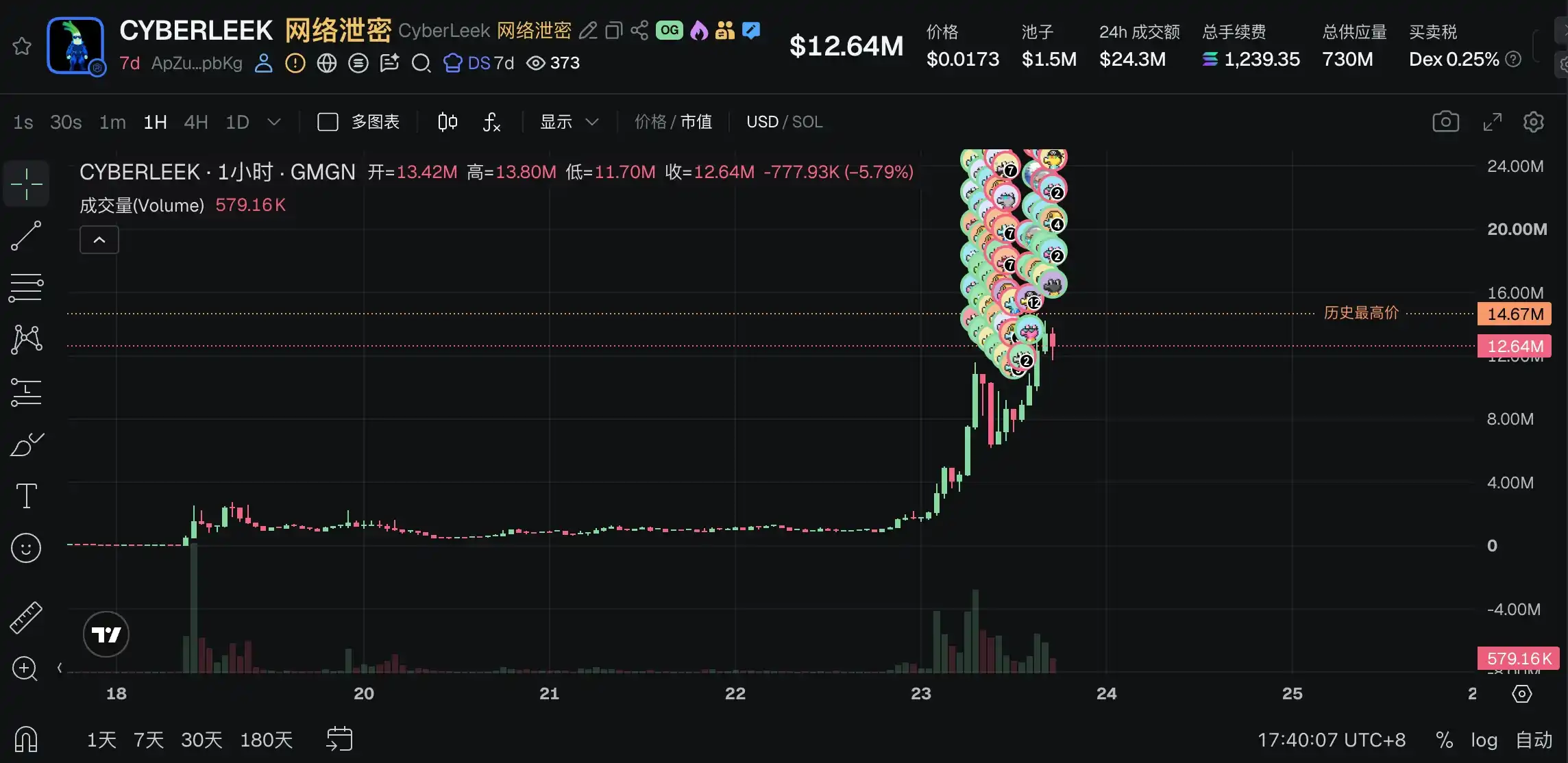
Currently, the token saw a first-day trading volume of $15 million, generating $30,000 in transaction fees alone, while the actual money spent was less than $30,000. For a blockbuster phenomenon like GTA6, which can influence the stock price of its development company, the hacker has bundled attention with hype, turning the meme market into an additional revenue-generating tool.
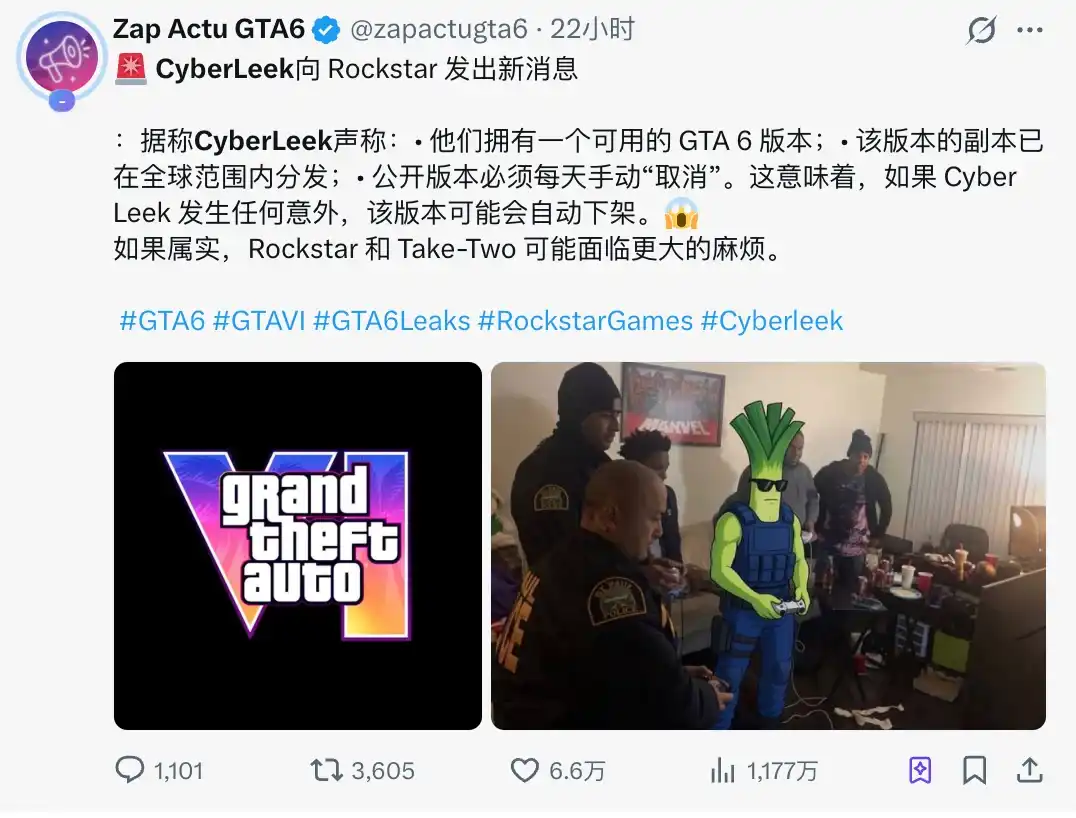
What is the magnitude of "GTA 6"? It's the most anticipated title in the gaming industry over the past decade, with individual trailers reaching over 100 million views on YouTube, and any news about it can instantly dominate global social media. Its developer, Take-Two Interactive, scheduled the release for November 19, 2026, with an official extended gameplay preview scheduled for August 27 on Netflix.
However, an anonymous hacker group calling itself CyberLeek claims to have obtained the game early and has been releasing snippets of actual gameplay. These are no longer just trailers but more like playable bootleg footage. The hacker has also threatened to release the entire leaked version if their safety is compromised, which would be devastating for the developer's official sales.
Furthermore, the group launched a token. On August 15, the identically named meme token $CYBERLEEK went live on Solana, reaching a peak market cap of $15M, currently around $12M at the time of writing.
Currently, every frame of the leaked game footage bears the CYBERLEEK watermark, along with the message "PLEASE BUY THIS MEME TOKEN." These leaked videos have already gone viral on overseas social media.
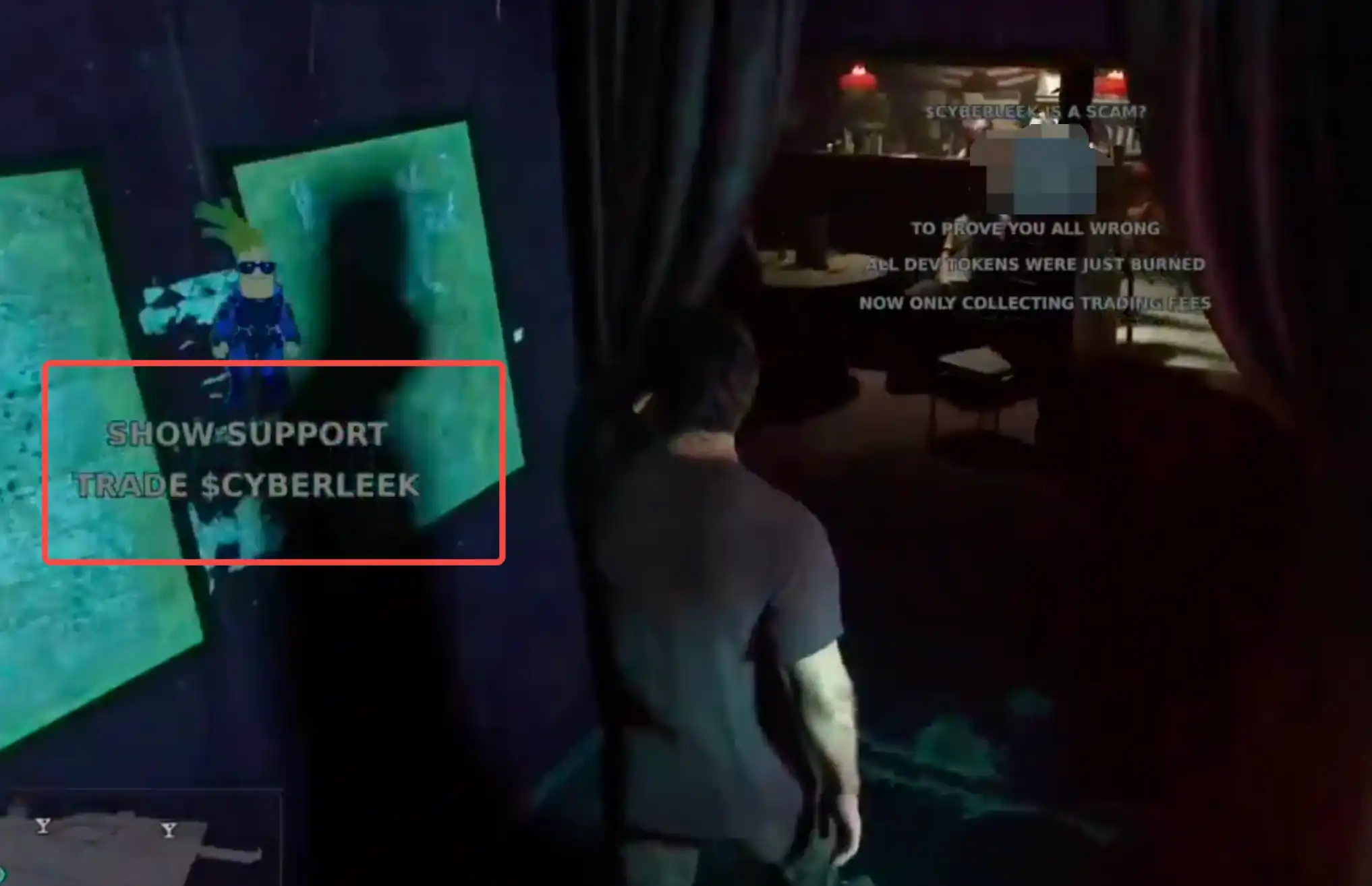
CyberLeek claims to be acting on behalf of gamers, dissatisfied with publishers pushing digital-only purchases without physical discs (which can be resold to reduce costs) and breaking up content that should be part of the game to charge for it again.
But on-chain records tell a different story. The identically named Meme token has already made them money.
The Token Was Created Before Game Leaks Were Released
On-chain records show that the entire operation's preparation can be traced down to the minute.
A Solana wallet starting with "3YLNDXnV" made 10 transfers between August 14 and 15, paying three separate amounts.
First, 1.0 SOL (approx. $80) to register the CyberLeek website domain. Second, 39.69 SOL (approx. $3000) to create the token and set up the liquidity pool. Third, 4.61 SOL (approx. $400) sent to the account that later distributed the leaked content.
All three payments came from the same wallet. The domain, the token, and the account distributing the leaks were all set up by the same people.
On August 15 at 17:20, the $CYBERLEEK token was created on Solana. At 17:23, 1 billion tokens were minted in one go. At 17:30, 270 million tokens (27%) were transferred to a separate reserve account.
Later that day, the creator renounced further minting authority. On August 16 at 00:07, the liquidity pool went live, injecting 730 million tokens plus 330 SOL (approx. $27,000), and was locked 19 minutes later.
At 01:08, the first piece of leaked game content appeared—a game map.
From token creation to the first footage, there was a gap of 7 hours and 47 minutes. The entire structure was built in less than a day.
Every subsequent video released carried a banner reading "BUY $CYBERLEEK ON SOLANA." This banner wasn't just text in the description; it was burned into the video frames themselves, floating around the screen, impossible to crop out.
According to analysis by the gaming media VGTimes, several of the videos were processed with the same software before release, and the banner was embedded at that time.
By August 22, CyberLeek had released eight pieces of GTA6 gameplay content—supercar driving, combat, indoor/outdoor scenes—each with the same watermark, same QR code, pointing to the same token.
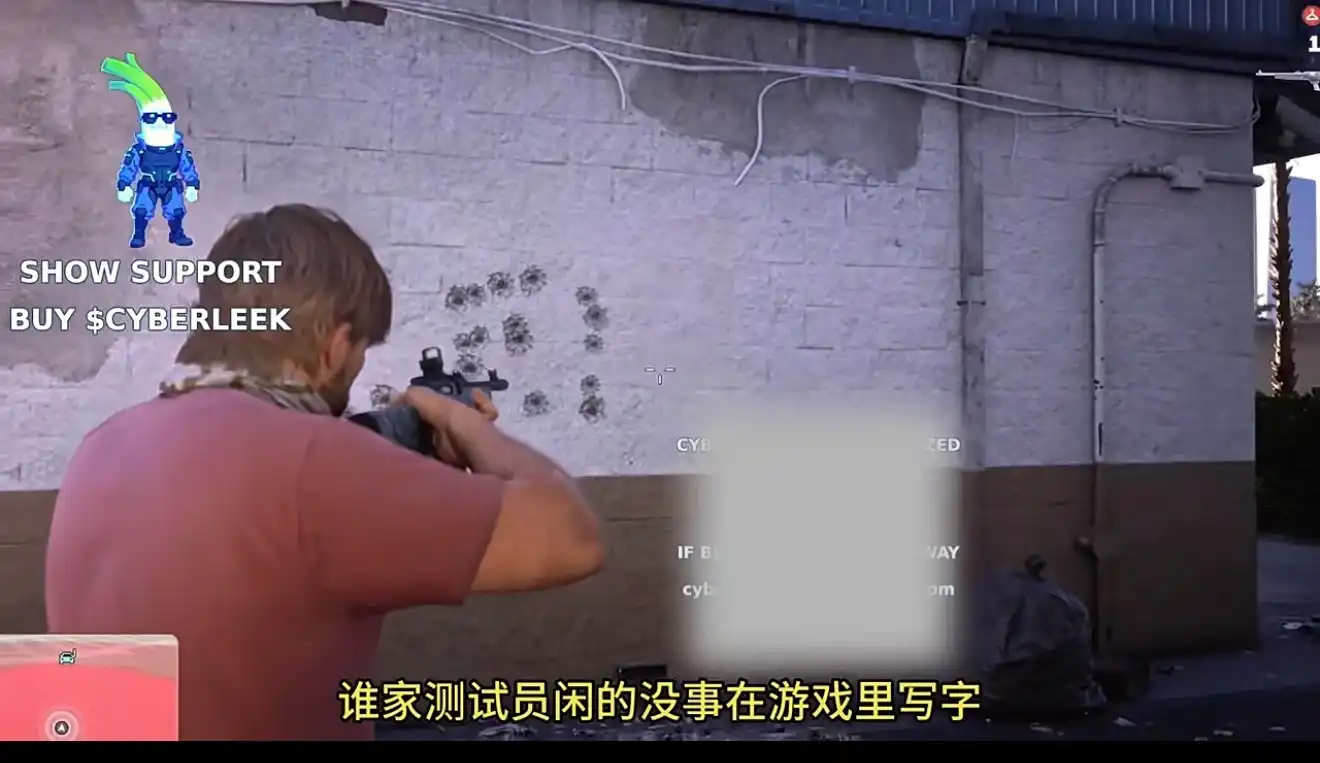
To prove they had access to the real, interactive game, in one clip, the hacker used their controlled character to shoot the letters "LEEK" into a wall with bullets.
Voting Requires Transferring Tokens: Must Buy Tokens to See the Next Clip
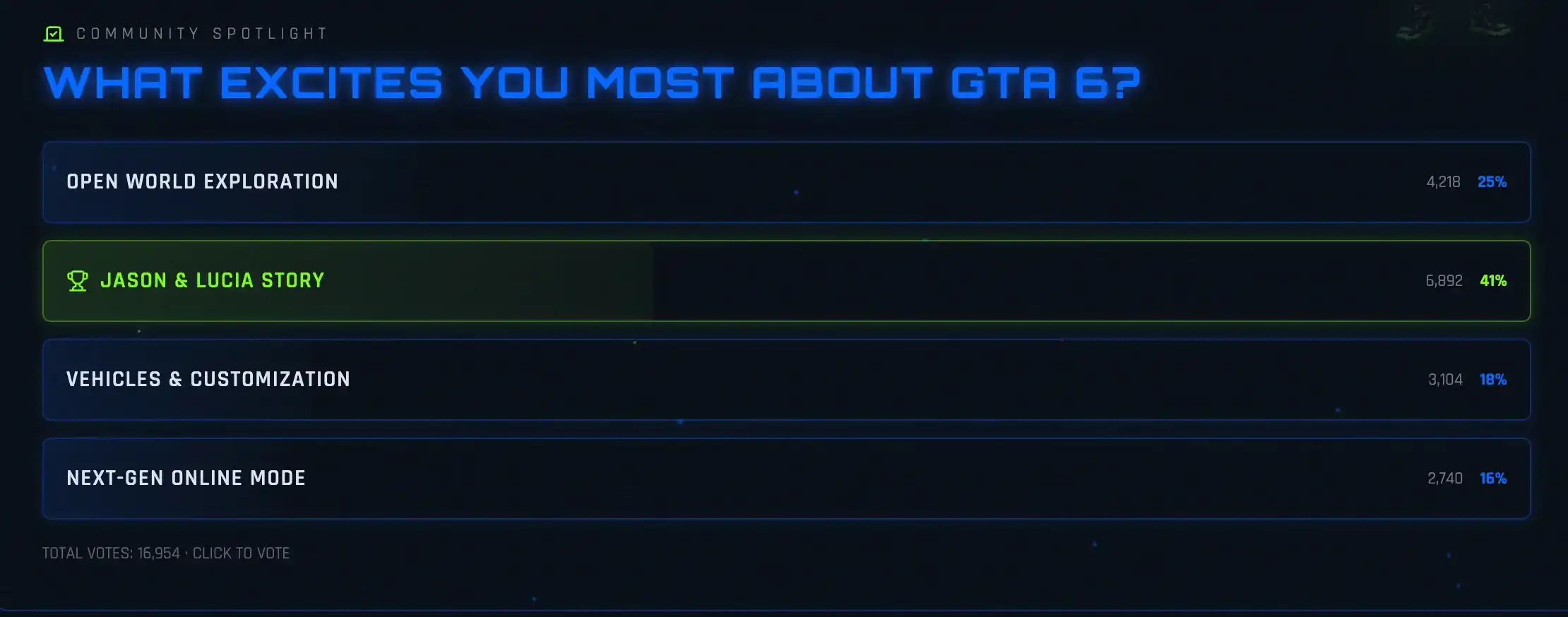
The CyberLeek website has a voting feature to decide the content of the next leak. The voting method is to send $CYBERLEEK tokens to the project's designated wallet—one token counts as one vote. The tokens sent are then owned by the project.
The tech media Comic Vibe documented a full voting round. There were four options: daytime cars, nighttime cars, nighttime motorcycles, and daytime airplanes. The airplane option won, receiving over 147,000 tokens, accounting for 64.4% of the total votes. CyberLeek subsequently released footage of an airplane flying over Vice City, ending, as usual, with the "LEEK" watermark.
Comic Vibe's conclusion was straightforward: this is a self-perpetuating business model. GTA 6 leaks generate interest in the token, and anyone wanting to influence the next leak must buy and spend the token.
The token's parameters were also carefully designed. Total supply is 1 billion tokens, with LP locked, minting authority revoked, and freeze authority revoked. The website prominently lists these three points as "proof of honesty."
On the surface, it doesn't look like one of those quick rug-pull meme coins. The top 10 wallets hold 51.6% of the supply, some of which may belong to trading pools or bot accounts, but this concentration means a few wallets can significantly influence the price.
First-Day Trading Volume Hits $15M, Generates $30K in Fees Alone
A GTAForums user named Vice Cit infiltrated the dark web for a deeper investigation and calculated the entire scheme's financial model. According to their estimates, CyberLeek's initial investment was approximately $29,000, mainly for building the website, launching the token, and injecting liquidity.
On the revenue side, they rely on transaction fees. For every $CYBERLEEK transaction, the project takes a cut of 0.21% to 0.25%. On its launch day, the token's trading volume reached $15 million, generating about $30,000 in fee revenue alone.
There's an even harsher way to calculate this. Of the $29,000 investment, $27,000 was for the liquidity pool, which is locked, but the tokens are still theirs. The actual money spent was only $80 for the domain, $3,000 for token creation, and $400 transferred to the distribution account, totaling less than $3,500. The first day's fees were over eight times the total expenditure.
Thereafter, the average daily trading volume stabilized at around $2.1 million, bringing in about $4,400 per day. By August 22, the cumulative fee revenue was estimated to be between $40,000 and $60,000. This doesn't even include the 270 million tokens in the reserve account, worth about $390,000 at the time.
Hacker Uses Token Burn for Psychological Warfare, Fee Printer Remains Untouched
On August 22 and 23, facing accusations of being a "cash-grab," CyberLeek did something that appeared aggressive. They sent approximately 270 million developer-reserved tokens to a burn address for permanent destruction, accounting for 27% of the total supply, with a paper value of about $1.04 million to $1.5 million at the time.
On-chain screenshots showed the transaction's valuation was precisely $1,043,550.95. The official explanation was to "prove we won't dump and run."
These tokens would have been difficult to cash out all at once anyway; a large-scale sell-off would cause price collapse, so they were likely intended to be sold slowly over time. Rather than carrying the stigma of a potential "dump," they burned them to gain a "we won't run" signal of trust.
Burning the developer tokens closed off one potential cash-out route, but the token's built-in buy/sell fee mechanism had already allowed CyberLeek to earn $40,000 to $70,000 in pure profit from transaction friction in just a few days.
On one hand, they burn tokens worth a million dollars on paper to build trust; on the other hand, they hold a daily fee pipeline generating thousands of dollars. The real intention is clear from the numbers.
When a Super IP Is Bundled as the Underlying Asset of a Meme Coin
The hacker group has now opened a second monetization channel: advertising placement solicitation. Advertisers wanting to place ads in future leaked videos must first pay a $165,000 consultation fee, which only buys them one email reply opportunity.
At this stage, the logic behind the entire operation no longer needs guessing.
Leaked content is released on a "drip-feed" schedule; each release triggers a wave of trading volume and corresponding fee revenue. Setting a market cap threshold before releasing new content directly tells the market: if you want to see the next clip, first push the token price up.
Legal action from the game developer Take-Two is also underway. They have submitted subpoena applications to the U.S. District Court for the Southern District of New York, demanding that Microsoft and Discord hand over identity information for the accounts involved. The court has approved the subpoena for Microsoft.
According to posts on overseas gaming forums, some users have traced the funding source of the token-launching wallet back to a cryptocurrency exchange requiring identity verification. Once an exchange receives a judicial subpoena, the account holder's identity and complete transaction records can theoretically be obtained. CyberLeek's website is currently inaccessible, and its Telegram channel has been shut down.
These legal actions come too late. The money on the chain has already been made.
The scale of $CYBERLEEK is actually not huge, but it has successfully executed a complete playbook. An anonymous group obtains leaked content of a global-level IP, launches the token first, then releases information in batches to extend the hype cycle. The voting mechanism turns onlookers into buyers, the burn action stabilizes external trust, and the market cap threshold directly drives buying. With less than $3,500 in actual expenditure, they leveraged a first-day trading volume of $15 million.
The next leak of a global-level IP is highly likely to be handled the same way. Meme coins have no real utility; their value relies entirely on attention and sentiment. When the hype dies down or legal pressure arrives, those left holding the bag will be the late entrants.