If the AI Bubble Is Already Bursting, Who Will Truly Remain?

链捕手Publicado em 2026-06-15Última atualização em 2026-06-15

Resumo

**Summary: If the AI Bubble is Bursting, What Will Remain?** The debate around an AI bubble is intensifying, with figures like Ray Dalio warning of high valuations while Jensen Huang sees immense opportunity. This echoes the dot-com bubble, which saw massive wealth destruction but ultimately left behind critical infrastructure like undersea cables and broadband, enabling future giants like Amazon and Netflix. Similarly, today's AI boom involves trillions invested in data centers, power, cooling, and GPUs, while application-layer revenue remains comparatively modest. This investment-disparity signals a bubble. However, the core technological progress is real and accelerating. AI inference costs have plummeted by over 99.7% since 2023, making intelligence increasingly cheap and accessible. This cost collapse is unlocking vast new demand. Instead of reducing spending, enterprises are tripling their AI cloud expenditure. Cheap "tokens" enable AI to move beyond simple chatbots into complex workflows—automating code writing, legal document review, financial analysis, and scientific research. This follows "Jevons's paradox": improved efficiency leads to greater total consumption. The market is now undergoing a necessary purification, weeding out "API-wrapper" startups with no real moat. The deeper evolution involves a shift from capital expenditure (CapEx) on infrastructure to operational expenditure (OpEx) on value-creation in applications. While hardware vendors currently prof...

Source: Gelong Chengbei Xugong

Data Support: GOGU Big Data

The AI bubble has become the most divisive consensus in the global market. Ray Dalio says the bubble is already high, while Jensen Huang says the opportunity is just beginning; one sees overheating in the capital markets, the other sees the dawn of a productivity revolution.

The real issue isn't whether there is an AI bubble, but what remains after it bursts. The 2000 dot-com bubble caused the Nasdaq to crash, companies to fail, and fortunes to evaporate, but it also left behind the physical infrastructure of undersea cables, broadband networks, and cloud computing, which ultimately supported Amazon, Netflix, YouTube, and the mobile internet.

Today's AI is in a similar position. On one side, hundreds of billions of dollars are pouring into data centers, power, liquid cooling, optical modules, and GPUs; on the other, there is a huge gap with application revenues yet to be fully realized. A bubble clearly exists, but the underlying productivity gains are not illusory. When token costs plummet and intelligence begins to be invoked like water and electricity, AI will no longer be just a chat tool but will enter real workflows in code, healthcare, finance, law, manufacturing, and research. The market will wash away shell companies and PPT-driven startups, but it will not reverse the direction of AI+. The bubble will burst, but the industry will remain. Below, Enjoy:

In recent days, the market has experienced intense volatility, and talk of an "AI bubble" is rampant.

  • Bridgewater founder Ray Dalio said: The AI market has a bubble, and the level is "relatively high."

  • Nvidia CEO Jensen Huang said: AI presents a huge opportunity, and demand for computing power is just beginning to explode.

Whom should we believe?

They are both correct.

Does the AI industry have a bubble? It certainly does.

But bubbles in the tech sector are often the only way society can pay homage to disruptive, advanced productive forces. They are not purely pejorative.

In the long run, this is an inevitable phenomenon at the dawn of an advanced productive force.

Many people compare today's situation to the 2000 internet bubble, feeling anxious. That bubble did indeed cause the Nasdaq to plummet nearly 78%, wiping out over $5 trillion in wealth.

But twenty years later, which industry can function without the internet? Today, the value of the internet industry far exceeds its value during the bubble period.

At least on the surface, the AI bubble is similar. The bubble in the capital market cannot stop almost every industry in society from actively being empowered by AI.

AI+ is the overarching trend. Just as no industry today can function without the internet, no industry will be able to function without AI in the future.

01 The "IQ Tax" That Innovation Must Pay

In the era when any company with .com in its name could go public and raise money, the Nasdaq surged nearly 600% between 1995 and 2000. This was followed by a two-and-a-half-year financial storm.

Illustrious names of that time: software company MicroStrategy, due to accounting scandals and overblown claims, plunged 62% in a single day; Pets.com (selling pet food online), Webvan (the pioneer of online grocery delivery) simply went out of business... In the panic, almost everyone declared the internet a scam.

However, the physical infrastructure that remains from the overinvestment of speculative capital often nourishes the supergiants of the next era at extremely low cost. The reason bubbles burst is not the technology itself, but the fact that the pace of physical infrastructure construction couldn't keep up with market expectations.

For example, the global undersea cables and dense wave-division multiplexing networks laid down by heavily investing telecom companies (like WorldCom, Global Crossing) at their peak, though they bankrupted themselves, later became the perfect breeding ground for the rise of Netflix, Zoom, and the mobile internet as cheap "information superhighways."

Without the frenzied over-investment in telecom infrastructure globally around 2000, there would have been no later video streaming explosion on YouTube, let alone the cloud computing infrastructure.

The most typical example is Amazon. Its stock price fell from a 1999 high of $107 all the way to $7 in 2001, a drop of over 90%. But it survived because its underlying business logic, "reconstructing retail with the network," aligned with the direction of advanced productive forces.

This is the classic Amara's Law: we tend to overestimate the effect of a technology in the short run and underestimate the effect in the long run. At the beginning of a technological revolution, the frenzy of speculative capital inevitably leads to overinvestment, forming bubbles. This is the IQ tax that innovation must pay. But when the bubble dissipates, what remains is an even more unshakable advanced productive force.

02 Why Are Corporate AI Spending Rising Instead of Falling?

Coming back to 2026, the bubble in the AI industry seems even bigger.

Just the five major cloud service providers—Amazon, Google, Meta, Microsoft, and Oracle—are expected to have capital expenditures of $690 billion in 2026, with total AI infrastructure investment expected to reach $5.3 trillion by 2030. Only about 25% of this buys GPUs; the remaining 75% is being poured into physical infrastructure: liquid cooling systems, power transmission, network switches, optical modules, and land.

In terms of revenue, the combined total revenue of all leading pure-play AI vendors like OpenAI, Anthropic, Cohere, Mistral, Perplexity in 2026 is expected to be no more than $40 billion.

The foundational layer is investing nearly $700 billion, while the application layer is generating a few hundred billion. This severe asymmetry—isn't that a bubble?

We shouldn't jump to that conclusion so simplistically. One key point cannot be ignored:

  • In March 2023, when OpenAI released GPT-4, the mixed cost per million input tokens was about $30.

  • By April 2025, with optimized model architectures and improved inference computing power, the price per million tokens for models of comparable intelligence had plummeted to $0.1–$0.15.

According to Stanford University's AI Index Report and data from TokenCost: AI inference costs have fallen by over 99.7% in the last two years.

Following traditional linear thinking, if costs plummet, corporate AI spending should decrease. But the reality is that enterprise AI cloud spending tripled between 2024 and 2025.

Why?

Because when the marginal cost of "intelligence" approaches zero, AI is no longer just a simple text summarizer or chat companion but enters a new era of agents and multimodal enhanced retrieval. Enterprises are starting to let AI agents automatically run thousands of tasks, write code, scan millions of legal contracts, simulate biology experiments.

Cheap tokens unlock a massive amount of long-tail demand that was previously uncommercializable due to cost constraints.

We can also see this by comparing Nvidia in 2026 with Cisco, the network hardware king in 2000. Their ecosystem positions are extremely similar, but the underlying financial health is worlds apart.
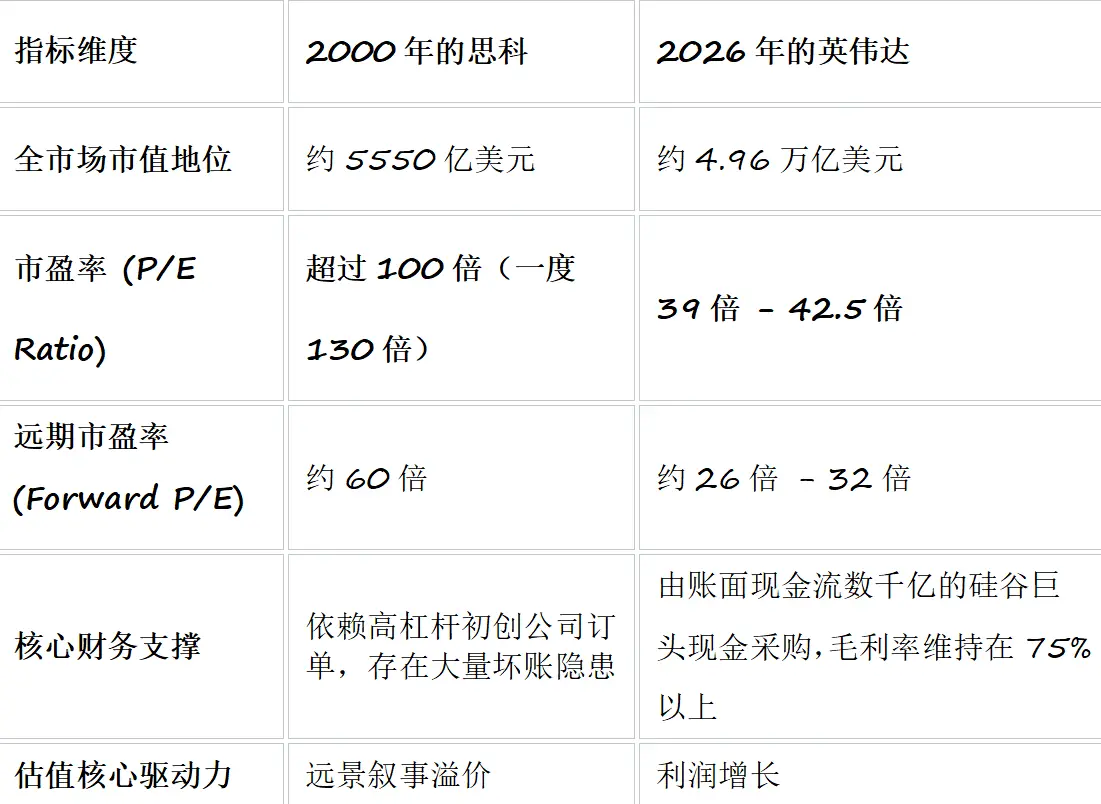
(A hardcore financial comparison between Nvidia and Cisco)

This precisely illustrates the economic "Jevons Paradox": technological progress improves the efficiency of energy (or intelligence) use, but instead of reducing consumption, the lower cost leads to even greater demand.

Even after experiencing the so-called "DeepSeek moment" early last year, the market quickly sobered up in the following months: the more optimized the algorithms, the lower the barrier for enterprises to adopt AI, and the final total computing power consumption actually rises exponentially.

It is precisely because of this that AI can gradually embed itself into almost every old industry. Just as in the past twenty years every industry embraced "Internet+". From SaaS software to biopharmaceuticals, to advanced manufacturing robots driven by embodied intelligence, in 2026, almost every industry is embracing AI+. No one discusses "whether we should use AI," but rather worries "Is our data cleaned? Do we have enough API call quotas? Is our RAG architecture optimal?"

Currently, the AI industry indeed has a bubble. But for enterprises, if you don't embrace the bubble, you will be crushed by the times. This was already proven during the internet era of the last twenty years.

03 Deep Market Evolution: From Infrastructure to Application

Currently, we are undoubtedly at a critical juncture in the technology lifecycle: on the eve of the "Trough of Disillusionment" on the Gartner Hype Cycle, or at the inflection point described in the theory of "Technological Revolutions and Financial Capital."

The AI bubble is already bursting, but many haven't realized it. Just a few years ago, newcomers could write a few dozen pages of PPT, wrap an OpenAI API, and raise money. Now, the tide is receding, and these companies with no moat, only concepts, are dying in large numbers.

This is the market purifying itself, a manifestation of the bubble bursting. But this is only the surface. The deep logic of the market is undergoing three profound evolutions:

First, value transfer from CapEx to OpEx

Currently, the money is being made by the shovel sellers—Nvidia, TSMC, and those selling optical modules and server liquid cooling equipment—are taking most of the profits. But as computing power gradually becomes "infrastructural," like water and electricity, true supernormal profits will gradually shift to the application layer. That is, to those AI-native enterprises that can use extremely low-cost tokens to truly solve pain points in vertical industries and reshape business processes (OpEx optimization).

Second, valuation multiple compression and earnings digestion

The market's high valuation for AI infrastructure doesn't necessarily mean a crash is imminent. In many cases, the rapid growth of corporate profits can gradually digest the high valuation by "trading time for space." As long as the revenue growth rate of cloud computing giants keeps pace with the depreciation rate of their capital expenditures, this game of hot potato can evolve into an unprecedented industrial upgrade.

  • For example, global auto manufacturing giants and chip giants, by introducing end-to-end AI twin technology, have shortened the R&D-to-mass-production cycle for new products by 35%, and improved overall equipment effectiveness by 18%.

  • In the financial industry, quantitative trading, risk control, and credit assessment in 2026 are fully dominated by multimodal Agents. AI is not only processing macro expectations at microsecond-level timestamps but also deeply participating in every micro-level asset pricing.

  • In industries like law, healthcare, and auditing that highly rely on senior expertise, AI has already completed the transformation from "junior assistant" to "partner-level expert."

Among the over 1 billion active users of ChatGPT, Gemini, and Claude, a significant portion use them as replacement tools for high-intensity daily mental labor. Including you and me. All the above are real things happening, visible to everyone.

04 Conclusion

Looking back at the grand history of technology, the "creative destruction" proposed by Schumpeter is always in play.

The capital market is always impatient, hoping that $1 invested today will earn $10 tomorrow. When nearly $700 billion in infrastructure investment cannot be fully converted into profits on the application side in the short term, the market is bound to face a brutal shakeout. It will eliminate those opportunistic shell companies surviving only on PPT presentations and leave behind those with real technical depth and viable application scenarios.

After this shakeout, those cheap yet massive computing centers and highly optimized model algorithms will serve all industries at extremely low cost.

After 2000, humanity entered a digital era where no industry could function without the internet. Today, we are also irreversibly heading towards an intelligent, flourishing era where all industries are led and empowered by AI.

Amidst the clamor of the bubble, the underlying productive force has no水分 (moisture) at all.

Perguntas relacionadas

QWhat is the core argument of the article regarding the AI bubble?

AThe article argues that while an AI investment bubble exists in capital markets, similar to the dot-com bubble, it is a necessary phenomenon that funds the underlying physical infrastructure (like data centers, power, and networks). This infrastructure, once built, will enable a fundamental productivity revolution (AI+ across all industries) that remains after the speculative hype fades. The 'bubble will burst, but the industry will stay.'

QHow does the article use the dot-com bubble as an analogy for the current AI situation?

AThe article draws a parallel, stating that the dot-com bubble led to massive wealth destruction but crucially left behind cheap, overbuilt infrastructure like global fiber optic cables and broadband networks. This infrastructure became the foundation for future giants like Amazon, Netflix, and the mobile internet era. Similarly, today's AI bubble is funding data centers and GPU clusters that will form the cheap, essential infrastructure for the future AI-powered economy.

QAccording to the article, why are corporate AI expenditures rising even as the cost per AI token plummets?

AThe article cites 'Jevons Paradox': as the cost of a resource (AI intelligence/tokens) falls dramatically (over 99.7%), it unlocks massive, previously cost-prohibitive demand. Companies are not just using AI for simple tasks but are deploying AI agents to run thousands of automated cycles for complex work like coding, legal document review, and scientific simulation. The lower marginal cost enables this massive scale of usage, driving total spending up.

QWhat are the three deep market evolutions the article identifies as happening beneath the surface of the AI bubble?

A1. Value transfer from CapEx to OpEx: Profits will shift from infrastructure sellers (like Nvidia) to application-layer companies that use cheap AI to solve real business problems and optimize operations. 2. Valuation compression and earnings digestion: High valuations for AI infrastructure may be sustained if company earnings growth keeps pace with capital expenditure depreciation, turning speculation into real industrial upgrade. 3. Market purification: The bubble bursting is cleansing the market of 'wrapper' or 'PPT' companies without real technology or defensible moats, leaving behind firms with genuine technical prowess and viable use cases.

QWhat is the ultimate conclusion about the relationship between the AI bubble and technological progress?

AThe conclusion is that the financial bubble is a noisy, but almost inevitable, side effect of a genuine technological revolution. The speculative capital frenzy, while creating volatility and waste, is simultaneously financing the critical physical and algorithmic foundation for AI. After the bubble bursts and speculative companies are washed away, the remaining, cheaply available infrastructure and advanced models will deeply integrate into and empower all sectors of the economy, leading to an 'intelligent era' as transformative as the internet age.

Leituras Relacionadas

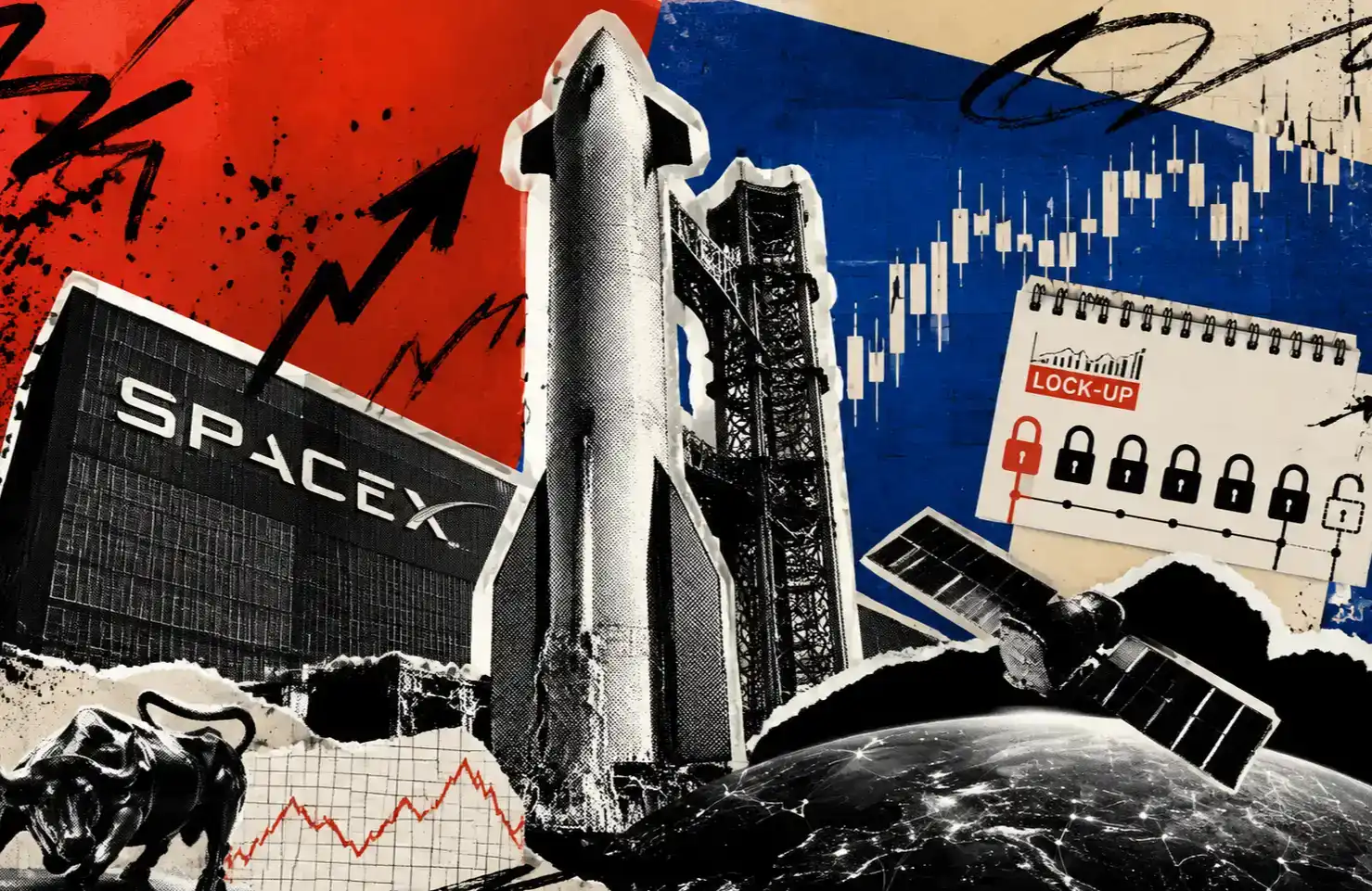
How Will the Price Move Before SpaceX's Next Share Unlock?

TL;DR Investors buying SPCX after SpaceX's IPO are not simply investing in a typical tech stock. It’s a high-valuation asset driven by Musk's narrative, Starlink, and space transport potential, but with a key twist: a very small initial float of ~4% has led to significant post-listing price appreciation. The current price action reflects a timing gap. Before the first lock-up expiration (estimated around August, subject to official confirmation), scarcity and high demand could continue to push prices up. Short-term bulls focus on low float, FOMO, and potential index inclusion. However, bears point to the supply dynamics that will change post-lockup. Existing shareholders still hold over 95% of shares, which will be released in stages starting from the first unlock window. This introduces future selling pressure from low-cost holders. The upcoming Q2 earnings report is a critical catalyst before the unlock. It will test whether the company's fundamentals can justify the current ~$2.1T valuation. Strong results could support the pre-unlock momentum, while weak figures could amplify concerns about future supply. The trading thesis is shifting from immediate scarcity ("can't buy enough") to evaluating future absorption capacity ("who will buy when more supply hits"). The path ahead hinges on the specifics of the unlock schedule, Q2 earnings performance, and whether anticipated passive index buying materializes.

marsbitHá 19m

How Will the Price Move Before SpaceX's Next Share Unlock?

marsbitHá 19m

Bitcoin Short-Term Bullish Structure Validated, HYPE Low-Entry Window Opens | Guest Analysis

**Market Analysis Summary (Week of June 2026)** **Overall Market Context:** The market environment is exceptionally complex, with the unexpected US-Iran agreement and the reopening of the Strait of Hormuz triggering a global asset repricing and significant volatility. This heightened noise underscores the importance of a structured analytical framework. **Bitcoin (BTC) Analysis & Strategy:** * **Current Status:** The price has climbed above $65,000, currently in a rebound phase (segment 38-39) following a complex 12-segment correction from the May high of $82,850. * **Key Levels:** * **Primary Resistance:** $69,500–$70,500. A successful breakout above $65,000 targets this zone. * **Primary Support:** $65,000 (immediate), followed by $59,000–$60,000 and $55,000. * **Weekly Outlook & Strategy:** The focus is on the confirmation of the $65,000 level. * **Bullish Scenario (Hold $65K):** A move toward the $69.5K–$70.5K resistance zone is anticipated, which is a potential area for initiating medium-term short positions. * **Bearish Scenario (Break below $65K):** A retest of the $60,000–$62,000 support range is likely. * **Medium-Term Strategy:** Currently neutral. Plan to establish short positions (up to 60% allocation) either in the $69.5K–$70.5K resistance zone upon signs of rejection, or on a confirmed breakdown below $65,000 and further below $59K–$60K. * **Short-Term Strategy:** Utilize 30% capital for scalping opportunities based on support/resistance levels, using 30/60-minute charts. **HYPE Analysis & Strategy:** * **Current Status:** The price has stabilized around $52 after a four-segment decline from the June high of $75.87 and is now in a rebound (segment 50-51). * **Key Levels:** * **Primary Resistance:** $62.50–$64.57. Watch for potential rejection here to form a lower high. * **Primary Support:** $52–$55.50, followed by $47–$49. * **Weekly Outlook & Strategy:** Adopt a "buy on dips, avoid chasing rallies" approach. * **Core View:** Monitor the price action and potential formation of a lower high ("endpoint 51") in the $62.50–$64.57 resistance zone. * **Short-Term Strategy:** Consider light long positions (max 30% allocation) if the price finds support and shows reversal signals in the $52–$54.50 or deeper $47–$49 support zones, confirmed by proprietary quantitative bottom signals. **Trade Review:** Last week's HYPE short-term long trade, executed based on proprietary "Price Difference" and "Momentum" model signals, yielded a profit of approximately 11.88%. The entry was near $54.39 and exit near $60.85. **Risk Management Reminder:** Always set an initial stop-loss upon entry. Move stop-loss to breakeven at +1% profit, then trail it upwards to lock in gains as the trade progresses. *Disclaimer: All analysis, models, and strategies are based on personal technical analysis for educational purposes only, not investment advice. The market carries inherent risk.*

Odaily星球日报Há 24m

Bitcoin Short-Term Bullish Structure Validated, HYPE Low-Entry Window Opens | Guest Analysis

Odaily星球日报Há 24m

Bitcoin Short-Term Bullish Structure Validated, HYPE Accumulation Window Opens | Guest Analysis

**Bitcoin and HYPE Market Analysis: Short-Term Outlook and Trading Strategies** This market analysis examines Bitcoin (BTC) and HYPE amid volatile conditions, providing short-term outlooks and specific trading strategies. **Key Outlooks:** * **Bitcoin (BTC):** Focus is on whether BTC's recent move above $65,000 holds. A successful breakout could lead to a test of the $69,500-$70,500 resistance zone, where medium-term short positions are considered. A failure, breaking below $65,000, may trigger a decline towards the $59,000-$60,000 support area. * **HYPE:** The token completed a four-wave correction and is now rebounding. The key resistance zone is $62.5-$64.57. The trading strategy is "buy on dips," looking for entry opportunities near the $52-$54.5 or deeper $47-$49 support zones, pending confirmation from proprietary models. **BTC Trading Strategy:** * **Medium-term:** Primarily looking to establish short positions (up to 60% allocated capital) if price rallies to the $69,500-$70,500 resistance area and shows signs of reversal. Alternative plans involve initiating shorts on a breakdown below $65,000. * **Short-term:** Allocate up to 30% capital for intraday "spread" trades based on support/resistance levels on 30/60-minute charts. **HYPE Trading Strategy:** * **Short-term:** Adopt a dip-buying approach. Consider light long positions (under 30% capital) when price tests key support levels ($52-$54.5 or $47-$49) and shows stabilization, confirmed by proprietary "Price Spread" and "Momentum Quant" models. **Trade Recap:** The analysis reviews a successful HYPE long trade from the previous week, executed at ~$54.39 and closed at ~$60.85 for an ~11.88% gain, based on signals from the aforementioned models. **Risk Management Emphasis:** The article stresses strict capital allocation (under 30-60%), immediate initial stop-loss placement, and a trailing stop-loss protocol to lock in profits as trades move favorably. ***Disclaimer:** All analysis, models, and strategies are for educational purposes based on technical analysis, not investment advice. Markets are volatile; trade with caution.*

marsbitHá 26m

Bitcoin Short-Term Bullish Structure Validated, HYPE Accumulation Window Opens | Guest Analysis

marsbitHá 26m

Trading

Spot
Futuros

Artigos em Destaque

O que é GROK AI

Grok AI: Revolucionar a Tecnologia Conversacional na Era Web3 Introdução No panorama em rápida evolução da inteligência artificial, a Grok AI destaca-se como um projeto notável que liga os domínios da tecnologia avançada e da interação com o utilizador. Desenvolvida pela xAI, uma empresa liderada pelo renomado empreendedor Elon Musk, a Grok AI procura redefinir a forma como interagimos com a inteligência artificial. À medida que o movimento Web3 continua a florescer, a Grok AI visa aproveitar o poder da IA conversacional para responder a consultas complexas, proporcionando aos utilizadores uma experiência que é não apenas informativa, mas também divertida. O que é a Grok AI? A Grok AI é um sofisticado chatbot de IA conversacional projetado para interagir com os utilizadores de forma dinâmica. Ao contrário de muitos sistemas de IA tradicionais, a Grok AI abraça uma gama mais ampla de perguntas, incluindo aquelas tipicamente consideradas inadequadas ou fora das respostas padrão. Os principais objetivos do projeto incluem: Raciocínio Fiável: A Grok AI enfatiza o raciocínio de senso comum para fornecer respostas lógicas com base na compreensão contextual. Supervisão Escalável: A integração de assistência de ferramentas garante que as interações dos utilizadores sejam monitorizadas e otimizadas para qualidade. Verificação Formal: A segurança é primordial; a Grok AI incorpora métodos de verificação formal para aumentar a fiabilidade das suas saídas. Compreensão de Longo Contexto: O modelo de IA destaca-se na retenção e recordação de um extenso histórico de conversas, facilitando discussões significativas e contextualizadas. Robustez Adversarial: Ao focar na melhoria das suas defesas contra entradas manipuladas ou maliciosas, a Grok AI visa manter a integridade das interações dos utilizadores. Em essência, a Grok AI não é apenas um dispositivo de recuperação de informações; é um parceiro conversacional imersivo que incentiva um diálogo dinâmico. Criador da Grok AI A mente por trás da Grok AI não é outra senão Elon Musk, um indivíduo sinónimo de inovação em vários campos, incluindo automóvel, viagens espaciais e tecnologia. Sob a égide da xAI, uma empresa focada em avançar a tecnologia de IA de maneiras benéficas, a visão de Musk visa reformular a compreensão das interações com a IA. A liderança e a ética fundacional são profundamente influenciadas pelo compromisso de Musk em ultrapassar os limites tecnológicos. Investidores da Grok AI Embora os detalhes específicos sobre os investidores que apoiam a Grok AI permaneçam limitados, é reconhecido publicamente que a xAI, a incubadora do projeto, é fundada e apoiada principalmente pelo próprio Elon Musk. As anteriores empreitadas e participações de Musk fornecem um forte apoio, reforçando ainda mais a credibilidade e o potencial de crescimento da Grok AI. No entanto, até agora, informações sobre fundações ou organizações de investimento adicionais que apoiam a Grok AI não estão prontamente acessíveis, marcando uma área para exploração futura potencial. Como Funciona a Grok AI? A mecânica operacional da Grok AI é tão inovadora quanto a sua estrutura conceptual. O projeto integra várias tecnologias de ponta que facilitam as suas funcionalidades únicas: Infraestrutura Robusta: A Grok AI é construída utilizando Kubernetes para orquestração de contêineres, Rust para desempenho e segurança, e JAX para computação numérica de alto desempenho. Este trio assegura que o chatbot opere de forma eficiente, escale eficazmente e sirva os utilizadores prontamente. Acesso a Conhecimento em Tempo Real: Uma das características distintivas da Grok AI é a sua capacidade de aceder a dados em tempo real através da plataforma X—anteriormente conhecida como Twitter. Esta capacidade concede à IA acesso às informações mais recentes, permitindo-lhe fornecer respostas e recomendações oportunas que outros modelos de IA poderiam perder. Dois Modos de Interação: A Grok AI oferece aos utilizadores a escolha entre “Modo Divertido” e “Modo Regular”. O Modo Divertido permite um estilo de interação mais lúdico e humorístico, enquanto o Modo Regular foca em fornecer respostas precisas e exatas. Esta versatilidade assegura uma experiência adaptada que atende a várias preferências dos utilizadores. Em essência, a Grok AI combina desempenho com envolvimento, criando uma experiência que é tanto enriquecedora quanto divertida. Cronologia da Grok AI A jornada da Grok AI é marcada por marcos fundamentais que refletem as suas fases de desenvolvimento e implementação: Desenvolvimento Inicial: A fase fundamental da Grok AI ocorreu ao longo de aproximadamente dois meses, durante os quais o treinamento inicial e o ajuste do modelo foram realizados. Lançamento Beta do Grok-2: Numa evolução significativa, o beta do Grok-2 foi anunciado. Este lançamento introduziu duas versões do chatbot—Grok-2 e Grok-2 mini—cada uma equipada com capacidades para conversar, programar e raciocinar. Acesso Público: Após o seu desenvolvimento beta, a Grok AI tornou-se disponível para os utilizadores da plataforma X. Aqueles com contas verificadas por um número de telefone e ativas há pelo menos sete dias podem aceder a uma versão limitada, tornando a tecnologia disponível para um público mais amplo. Esta cronologia encapsula o crescimento sistemático da Grok AI desde a sua concepção até ao envolvimento público, enfatizando o seu compromisso com a melhoria contínua e a interação com o utilizador. Principais Características da Grok AI A Grok AI abrange várias características principais que contribuem para a sua identidade inovadora: Integração de Conhecimento em Tempo Real: O acesso a informações atuais e relevantes diferencia a Grok AI de muitos modelos estáticos, permitindo uma experiência de utilizador envolvente e precisa. Estilos de Interação Versáteis: Ao oferecer modos de interação distintos, a Grok AI atende a várias preferências dos utilizadores, convidando à criatividade e personalização na conversa com a IA. Base Tecnológica Avançada: A utilização de Kubernetes, Rust e JAX fornece ao projeto uma estrutura sólida para garantir fiabilidade e desempenho ótimo. Consideração de Discurso Ético: A inclusão de uma função de geração de imagens demonstra o espírito inovador do projeto. No entanto, também levanta considerações éticas em torno dos direitos autorais e da representação respeitosa de figuras reconhecíveis—uma discussão em curso dentro da comunidade de IA. Conclusão Como uma entidade pioneira no domínio da IA conversacional, a Grok AI encapsula o potencial para experiências transformadoras do utilizador na era digital. Desenvolvida pela xAI e impulsionada pela abordagem visionária de Elon Musk, a Grok AI integra conhecimento em tempo real com capacidades avançadas de interação. Esforça-se por ultrapassar os limites do que a inteligência artificial pode alcançar, mantendo um foco nas considerações éticas e na segurança do utilizador. A Grok AI não apenas incorpora o avanço tecnológico, mas também representa um novo paradigma de conversas no panorama Web3, prometendo envolver os utilizadores com conhecimento hábil e interação lúdica. À medida que o projeto continua a evoluir, ele permanece como um testemunho do que a interseção da tecnologia, criatividade e interação humana pode alcançar.

479 Visualizações TotaisPublicado em {updateTime}Atualizado em 2024.12.26

O que é GROK AI

O que é ERC AI

Euruka Tech: Uma Visão Geral do $erc ai e as suas Ambições no Web3 Introdução No panorama em rápida evolução da tecnologia blockchain e das aplicações descentralizadas, novos projetos surgem frequentemente, cada um com objetivos e metodologias únicas. Um desses projetos é a Euruka Tech, que opera no vasto domínio das criptomoedas e do Web3. O foco principal da Euruka Tech, particularmente do seu token $erc ai, é apresentar soluções inovadoras concebidas para aproveitar as capacidades crescentes da tecnologia descentralizada. Este artigo tem como objetivo fornecer uma visão abrangente da Euruka Tech, uma exploração das suas metas, funcionalidade, a identidade do seu criador, potenciais investidores e a sua importância no contexto mais amplo do Web3. O que é a Euruka Tech, $erc ai? A Euruka Tech é caracterizada como um projeto que aproveita as ferramentas e funcionalidades oferecidas pelo ambiente Web3, focando na integração da inteligência artificial nas suas operações. Embora os detalhes específicos sobre a estrutura do projeto sejam um tanto elusivos, ele é concebido para melhorar o envolvimento dos utilizadores e automatizar processos no espaço cripto. O projeto visa criar um ecossistema descentralizado que não só facilita transações, mas também incorpora funcionalidades preditivas através da inteligência artificial, daí a designação do seu token, $erc ai. O objetivo é fornecer uma plataforma intuitiva que facilite interações mais inteligentes e um processamento eficiente de transações dentro da crescente esfera do Web3. Quem é o Criador da Euruka Tech, $erc ai? Neste momento, a informação sobre o criador ou a equipa fundadora da Euruka Tech permanece não especificada e algo opaca. Esta ausência de dados levanta preocupações, uma vez que o conhecimento sobre o histórico da equipa é frequentemente essencial para estabelecer credibilidade no setor blockchain. Portanto, categorizamos esta informação como desconhecida até que detalhes concretos sejam disponibilizados no domínio público. Quem são os Investidores da Euruka Tech, $erc ai? De forma semelhante, a identificação de investidores ou organizações de apoio para o projeto Euruka Tech não é prontamente fornecida através da pesquisa disponível. Um aspeto que é crucial para potenciais partes interessadas ou utilizadores que consideram envolver-se com a Euruka Tech é a garantia que vem de parcerias financeiras estabelecidas ou apoio de empresas de investimento respeitáveis. Sem divulgações sobre afiliações de investimento, é difícil tirar conclusões abrangentes sobre a segurança financeira ou a longevidade do projeto. Em linha com a informação encontrada, esta seção também se encontra no estado de desconhecido. Como funciona a Euruka Tech, $erc ai? Apesar da falta de especificações técnicas detalhadas para a Euruka Tech, é essencial considerar as suas ambições inovadoras. O projeto procura aproveitar o poder computacional da inteligência artificial para automatizar e melhorar a experiência do utilizador no ambiente das criptomoedas. Ao integrar IA com tecnologia blockchain, a Euruka Tech visa fornecer funcionalidades como negociações automatizadas, avaliações de risco e interfaces de utilizador personalizadas. A essência inovadora da Euruka Tech reside no seu objetivo de criar uma conexão fluida entre os utilizadores e as vastas possibilidades apresentadas pelas redes descentralizadas. Através da utilização de algoritmos de aprendizagem automática e IA, visa minimizar os desafios enfrentados por utilizadores de primeira viagem e agilizar as experiências transacionais dentro do quadro do Web3. Esta simbiose entre IA e blockchain sublinha a importância do token $erc ai, que se apresenta como uma ponte entre interfaces de utilizador tradicionais e as capacidades avançadas das tecnologias descentralizadas. Cronologia da Euruka Tech, $erc ai Infelizmente, devido à informação limitada disponível sobre a Euruka Tech, não conseguimos apresentar uma cronologia detalhada dos principais desenvolvimentos ou marcos na jornada do projeto. Esta cronologia, tipicamente inestimável para traçar a evolução de um projeto e compreender a sua trajetória de crescimento, não está atualmente disponível. À medida que informações sobre eventos notáveis, parcerias ou adições funcionais se tornem evidentes, atualizações certamente aumentarão a visibilidade da Euruka Tech na esfera cripto. Esclarecimento sobre Outros Projetos “Eureka” É importante abordar que múltiplos projetos e empresas partilham uma nomenclatura semelhante com “Eureka.” A pesquisa identificou iniciativas como um agente de IA da NVIDIA Research, que se concentra em ensinar robôs a realizar tarefas complexas utilizando métodos generativos, bem como a Eureka Labs e a Eureka AI, que melhoram a experiência do utilizador na educação e na análise de serviços ao cliente, respetivamente. No entanto, estes projetos são distintos da Euruka Tech e não devem ser confundidos com os seus objetivos ou funcionalidades. Conclusão A Euruka Tech, juntamente com o seu token $erc ai, representa um jogador promissor, mas atualmente obscuro, dentro do panorama do Web3. Embora os detalhes sobre o seu criador e investidores permaneçam não divulgados, a ambição central de combinar inteligência artificial com tecnologia blockchain destaca-se como um ponto focal de interesse. As abordagens únicas do projeto em promover o envolvimento do utilizador através da automação avançada podem diferenciá-lo à medida que o ecossistema Web3 avança. À medida que o mercado cripto continua a evoluir, as partes interessadas devem manter um olhar atento sobre os avanços em torno da Euruka Tech, uma vez que o desenvolvimento de inovações documentadas, parcerias ou um roteiro definido pode apresentar oportunidades significativas no futuro próximo. Neste momento, aguardamos por insights mais substanciais que possam desvendar o potencial da Euruka Tech e a sua posição no competitivo panorama cripto.

519 Visualizações TotaisPublicado em {updateTime}Atualizado em 2025.01.02

O que é ERC AI

O que é DUOLINGO AI

DUOLINGO AI: Integrar a Aprendizagem de Línguas com Inovação Web3 e IA Numa era em que a tecnologia transforma a educação, a integração da inteligência artificial (IA) e das redes blockchain anuncia uma nova fronteira para a aprendizagem de línguas. Apresentamos DUOLINGO AI e a sua criptomoeda associada, $DUOLINGO AI. Este projeto aspira a unir o poder educativo das principais plataformas de aprendizagem de línguas com os benefícios da tecnologia descentralizada Web3. Este artigo explora os principais aspectos do DUOLINGO AI, analisando os seus objetivos, estrutura tecnológica, desenvolvimento histórico e potencial futuro, mantendo a clareza entre o recurso educativo original e esta iniciativa independente de criptomoeda. Visão Geral do DUOLINGO AI No seu cerne, DUOLINGO AI procura estabelecer um ambiente descentralizado onde os alunos podem ganhar recompensas criptográficas por alcançar marcos educativos em proficiência linguística. Ao aplicar contratos inteligentes, o projeto visa automatizar processos de verificação de habilidades e alocação de tokens, aderindo aos princípios do Web3 que enfatizam a transparência e a propriedade do utilizador. O modelo diverge das abordagens tradicionais de aquisição de línguas ao apoiar-se fortemente numa estrutura de governança orientada pela comunidade, permitindo que os detentores de tokens sugiram melhorias ao conteúdo dos cursos e à distribuição de recompensas. Alguns dos objetivos notáveis do DUOLINGO AI incluem: Aprendizagem Gamificada: O projeto integra conquistas em blockchain e tokens não fungíveis (NFTs) para representar níveis de proficiência linguística, promovendo a motivação através de recompensas digitais envolventes. Criação de Conteúdo Descentralizada: Abre caminhos para educadores e entusiastas de línguas contribuírem com os seus cursos, facilitando um modelo de partilha de receitas que beneficia todos os colaboradores. Personalização Através de IA: Ao empregar modelos avançados de aprendizagem de máquina, o DUOLINGO AI personaliza as lições para se adaptar ao progresso de aprendizagem individual, semelhante às características adaptativas encontradas em plataformas estabelecidas. Criadores do Projeto e Governança A partir de abril de 2025, a equipa por trás do $DUOLINGO AI permanece pseudónima, uma prática frequente no panorama descentralizado das criptomoedas. Esta anonimidade visa promover o crescimento coletivo e o envolvimento das partes interessadas, em vez de se concentrar em desenvolvedores individuais. O contrato inteligente implementado na blockchain Solana indica o endereço da carteira do desenvolvedor, o que significa o compromisso com a transparência em relação às transações, apesar da identidade dos criadores ser desconhecida. De acordo com o seu roteiro, o DUOLINGO AI pretende evoluir para uma Organização Autónoma Descentralizada (DAO). Esta estrutura de governança permite que os detentores de tokens votem em questões críticas, como implementações de funcionalidades e alocação de tesouraria. Este modelo alinha-se com a ética de empoderamento comunitário encontrada em várias aplicações descentralizadas, enfatizando a importância da tomada de decisão coletiva. Investidores e Parcerias Estratégicas Atualmente, não existem investidores institucionais ou capitalistas de risco publicamente identificáveis ligados ao $DUOLINGO AI. Em vez disso, a liquidez do projeto origina-se principalmente de trocas descentralizadas (DEXs), marcando um contraste acentuado com as estratégias de financiamento das empresas tradicionais de tecnologia educacional. Este modelo de base indica uma abordagem orientada pela comunidade, refletindo o compromisso do projeto com a descentralização. No seu whitepaper, o DUOLINGO AI menciona a formação de colaborações com “plataformas de educação blockchain” não especificadas, com o objetivo de enriquecer a sua oferta de cursos. Embora parcerias específicas ainda não tenham sido divulgadas, estes esforços colaborativos sugerem uma estratégia para misturar inovação em blockchain com iniciativas educativas, expandindo o acesso e o envolvimento dos utilizadores em diversas vias de aprendizagem. Arquitetura Tecnológica Integração de IA O DUOLINGO AI incorpora dois componentes principais impulsionados por IA para melhorar as suas ofertas educativas: Motor de Aprendizagem Adaptativa: Este motor sofisticado aprende a partir das interações dos utilizadores, semelhante a modelos proprietários de grandes plataformas educativas. Ele ajusta dinamicamente a dificuldade das lições para abordar desafios específicos dos alunos, reforçando áreas fracas através de exercícios direcionados. Agentes Conversacionais: Ao empregar chatbots alimentados por GPT-4, o DUOLINGO AI oferece uma plataforma para os utilizadores se envolverem em conversas simuladas, promovendo uma experiência de aprendizagem de línguas mais interativa e prática. Infraestrutura Blockchain Construído na blockchain Solana, o $DUOLINGO AI utiliza uma estrutura tecnológica abrangente que inclui: Contratos Inteligentes de Verificação de Habilidades: Esta funcionalidade atribui automaticamente tokens aos utilizadores que passam com sucesso em testes de proficiência, reforçando a estrutura de incentivos para resultados de aprendizagem genuínos. Emblemas NFT: Estes tokens digitais significam vários marcos que os alunos alcançam, como completar uma seção do seu curso ou dominar habilidades específicas, permitindo-lhes negociar ou exibir as suas conquistas digitalmente. Governança DAO: Membros da comunidade com tokens podem participar na governança votando em propostas-chave, facilitando uma cultura participativa que incentiva a inovação nas ofertas de cursos e funcionalidades da plataforma. Cronologia Histórica 2022–2023: Conceituação O trabalho preliminar para o DUOLINGO AI começa com a criação de um whitepaper, destacando a sinergia entre os avanços em IA na aprendizagem de línguas e o potencial descentralizado da tecnologia blockchain. 2024: Lançamento Beta Um lançamento beta limitado introduz ofertas em línguas populares, recompensando os primeiros utilizadores com incentivos em tokens como parte da estratégia de envolvimento comunitário do projeto. 2025: Transição para DAO Em abril, ocorre um lançamento completo da mainnet com a circulação de tokens, promovendo discussões comunitárias sobre possíveis expansões para línguas asiáticas e outros desenvolvimentos de cursos. Desafios e Direções Futuras Obstáculos Técnicos Apesar dos seus objetivos ambiciosos, o DUOLINGO AI enfrenta desafios significativos. A escalabilidade continua a ser uma preocupação constante, particularmente no equilíbrio dos custos associados ao processamento de IA e à manutenção de uma rede descentralizada responsiva. Além disso, garantir a criação e moderação de conteúdo de qualidade num ambiente descentralizado apresenta complexidades na manutenção dos padrões educativos. Oportunidades Estratégicas Olhando para o futuro, o DUOLINGO AI tem o potencial de aproveitar parcerias de micro-certificação com instituições académicas, proporcionando validações verificadas em blockchain das habilidades linguísticas. Além disso, a expansão cross-chain poderia permitir que o projeto acedesse a bases de utilizadores mais amplas e a ecossistemas de blockchain adicionais, melhorando a sua interoperabilidade e alcance. Conclusão DUOLINGO AI representa uma fusão inovadora de inteligência artificial e tecnologia blockchain, apresentando uma alternativa focada na comunidade aos sistemas tradicionais de aprendizagem de línguas. Embora o seu desenvolvimento pseudónimo e o modelo económico emergente tragam certos riscos, o compromisso do projeto com a aprendizagem gamificada, educação personalizada e governança descentralizada ilumina um caminho a seguir para a tecnologia educativa no domínio do Web3. À medida que a IA continua a avançar e o ecossistema blockchain evolui, iniciativas como o DUOLINGO AI poderão redefinir a forma como os utilizadores interagem com a educação linguística, empoderando comunidades e recompensando o envolvimento através de mecanismos de aprendizagem inovadores.

450 Visualizações TotaisPublicado em {updateTime}Atualizado em 2025.04.11

O que é DUOLINGO AI

Discussões

Bem-vindo à Comunidade HTX. Aqui, pode manter-se informado sobre os mais recentes desenvolvimentos da plataforma e obter acesso a análises profissionais de mercado. As opiniões dos utilizadores sobre o preço de AI (AI) são apresentadas abaixo.

活动图片