Q2 Wall Street Institutional Crypto Holdings: Most Institutions Increased Positions Against the Trend, ETH Exposure Outperformed BTC Across the Board

marsbitPublicado em 2026-08-19Última atualização em 2026-08-19

Resumo

In Q2 2024, despite a roughly 14.2% decline in Bitcoin's price, many Wall Street institutions increased their crypto holdings, revealing a divergence from ETF flow trends. Overall institutional Bitcoin exposure grew by 7.5% to ~536k BTC, while aggregate spot Bitcoin ETF holdings declined. Notably, exposure concentration increased, with fewer reporting institutions holding larger positions. A key trend was the significant outperformance of Ethereum (ETH) exposure growth over Bitcoin (BTC) among major banks. For instance, JPMorgan's ETH exposure surged 67.3% versus 12.2% for BTC, and Morgan Stanley's ETH exposure grew 18.6% versus 3.7%. Individual bank holdings of Ethereum ETFs like ETHA saw dramatic increases, even as the overall Ethereum ETF market experienced net outflows during the quarter. Trading firms like Jane Street significantly rebuilt its iShares Bitcoin Trust (IBIT) position, while several hedge funds, including Brevan Howard and Graham Capital, reduced spot ETF holdings but added substantial option positions (both calls and puts), indicating more complex strategies. Institutions showed diverging views on crypto-related equities: some sold shares of MicroStrategy (MSTR) after its announced Bitcoin sales, while others like Renaissance Technologies and BlackRock were buyers. New entrants like Spain's Santander Bank disclosed initial crypto ETF positions. Meanwhile, long-term holders like Abu Dhabi's sovereign wealth funds paused their accumulation, and Harvard's e...

August 14th was the statutory deadline for US SEC-required institutional investors to submit Q2 13F forms. After the centralized disclosure of these documents, Wall Street's crypto holdings were once again laid bare.

This quarter's institutional movements formed a stark contrast with price trends. Bitcoin price fell approximately 14.2%, yet institutional crypto holdings reported in filings increased instead.

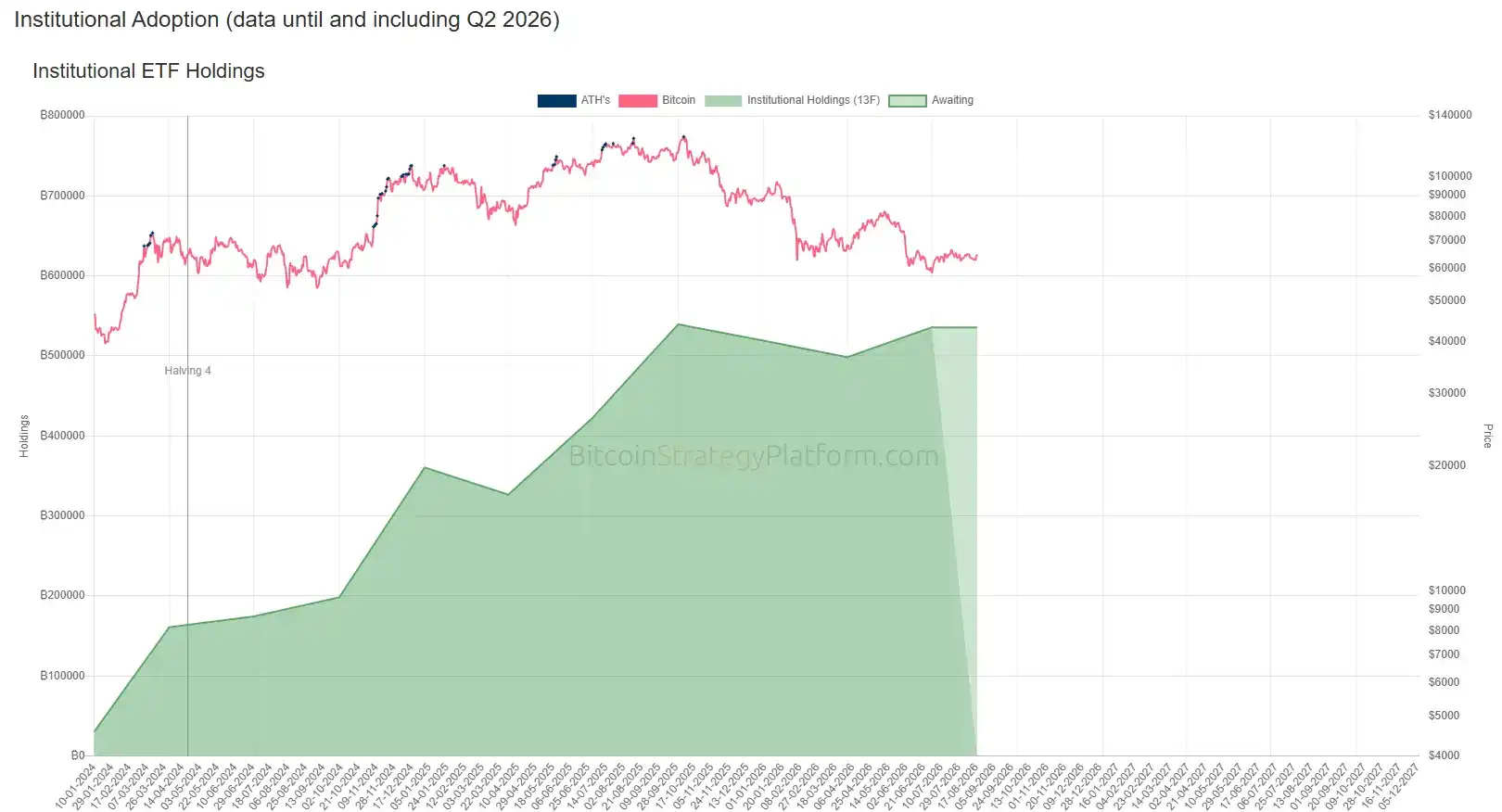
According to Bitcoin Strategy's calculations based on 13F data, institutional Bitcoin holdings rose from approximately 498,000 to about 536,000 BTC, a quarter-on-quarter increase of 7.5%. In contrast, total ETF holdings decreased from about 1.297 million to roughly 1.211 million BTC during the same period.
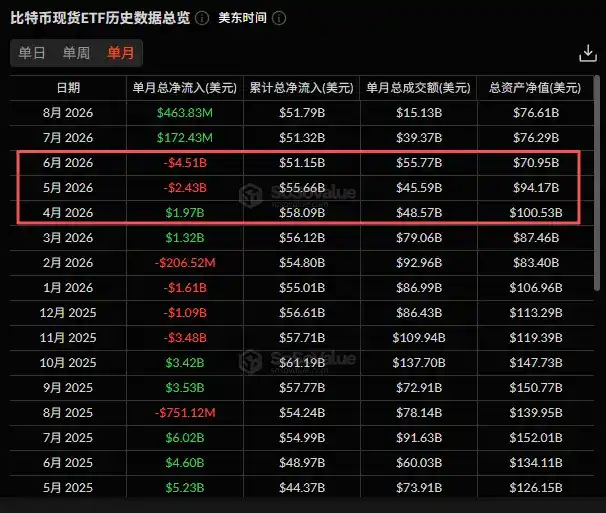
According to SoSoValue data, US spot Bitcoin ETFs experienced sustained net redemptions in Q2, with net outflows of approximately $2.4 billion and $4.5 billion in May and June respectively, with June setting the worst monthly record since launch. Spot Ethereum ETFs also saw cumulative net outflows of about $700 million during the same period.
Simultaneously, holdings are concentrating towards the top. The number of institutions reporting Bitcoin holdings decreased from about 2,000 to roughly 1,900. According to Bloomberg data, as of August 13, the iShares Bitcoin Trust (IBIT) alone had approximately 1,500 institutional holders and net assets of about $47.35 billion.

Ethereum Growth at Banks Outperformed Bitcoin Across the Board

Previously, ChainCatcher noted in its Q1 holdings summary: Institutional interest in Ethereum allocation was increasing, with Jane Street, Wells Fargo, and JPMorgan adding Ethereum ETFs during outflow phases. In Q2, this trend solidified on the banking side.

According to DWF Labs calculations based on corresponding crypto asset quantities, Morgan Stanley's Q2 BTC exposure grew 3.7% QoQ, while its ETH exposure grew 18.6%. JPMorgan's BTC exposure grew 12.2%, while its ETH exposure grew 67.3%. Both banks saw ETH growth rates significantly higher than BTC.

On an individual product level, it's more intuitive. Morgan Stanley's ETHA holdings increased by about 202% to 4.6 million shares, JPMorgan's ETHA increased by about 338% to nearly 1.17 million shares, and Bank of America's ETHA surged from about 67,500 shares to about 1.98 million shares, roughly 29 times the previous amount.

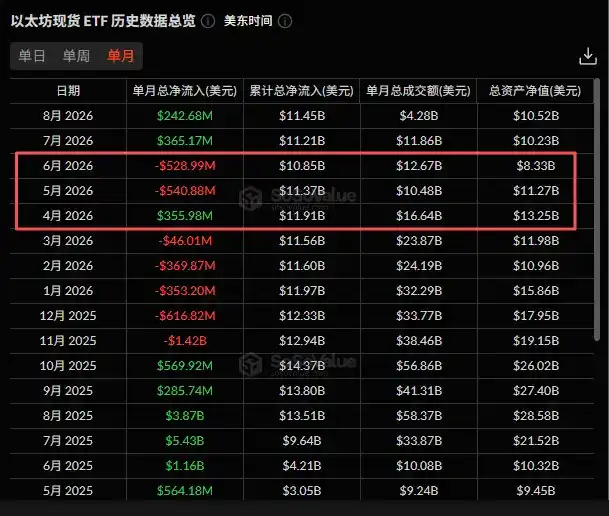
However, in reality, spot Ethereum ETFs saw net outflows overall in Q2. SoSoValue data shows that while there were about $356 million in net inflows in April, May and June saw net outflows of approximately $541 million and $529 million respectively, resulting in combined Q2 net outflows of about $714 million.
Jane Street Bought Back, Hedge Funds Moved Positions into Options

Last quarter, Jane Street cut its IBIT holdings by about 71%, leading the market to speculate it was bearish on Bitcoin. This quarter, it turned around and added back approximately 24.9 million shares of IBIT, a QoQ surge of about 324%, making it one of the largest buyers for the quarter. Currently, its spot Bitcoin ETF exposure is about $990 million, with approximately $828 million in IBIT.

As an authorized participant and market maker, its quarter-end inventory is related to creations/redemptions and hedging. A large addition in spot does not equate to a directional bet.

Notably, 13F only reports quarter-end spot long positions. If options are included, the profile of several institutions would also reverse.

Global macro hedge fund Brevan Howard cut its spot IBIT holdings from 24.3 million to 7.21 million shares in Q2, a reduction of about 70.4%. However, it simultaneously held call options corresponding to about 7.23 million IBIT shares and put options for 5.27 million shares.

Graham Capital reduced its spot IBIT holdings from about 926,000 to 259,000 shares during the same period, a cut of about 72%, yet held put options corresponding to approximately 1.74 million IBIT shares, with a reported value of about $57.94 million. Multi-strategy giant Millennium reduced its spot IBIT holdings from about 19.29 million to 9.69 million shares, a cut of about 49.8%.

UBS's directly held IBIT only increased by about 12% to 407,890 shares, while its call options exposure surged from 80,000 shares to about 1.95 million shares, a quarterly increase of over 24 times, while put options were reduced by about 53% during the same period.

In contrast, actions by Paul Tudor Jones's fund Tudor appear contradictory, increasing spot IBIT holdings by nearly 20% to 688,500 shares, ending nearly a year of reductions, while cutting IBIT-linked call options by about 85%, from 998,000 to about 148,000 shares.

Institutions Diverge on Crypto-Related Stocks

Our previous article noted that crypto-related stocks are becoming unavoidable allocation options for institutions. Among these, MicroStrategy (MSTR) is the most representative.

In Q2, MicroStrategy tore a hole in its "never sell Bitcoin" myth: at the end of May, it sold 32 bitcoins for the first time to pay preferred stock dividends, and on June 29, its board authorized a framework for bitcoin monetization of up to $1.25 billion.

The 13F snapshot is as of June 30; the actual larger sell-off occurred post-quarter, altering the narrative around BTC proxy plays.

Filings show Bank of America reduced its MSTR holdings from about 3.97 million to about 1.18 million shares, cutting about 70%. Renaissance Technologies, conversely, newly purchased 422,881 MSTR shares, increasing its total holdings to 2.55 million shares valued at approximately $242.3 million. BlackRock also added MSTR holdings to about 19.39 million shares, worth about $1.69 billion. However, as the world's largest index provider, BlackRock's addition may be more due to passive index-based allocation.

Renaissance Technologies newly purchased 422,881 shares of MicroStrategy, increasing its total holdings to 2.55 million shares with a value of $242.3 million, a 20% increase. Royal Bank of Canada (RBC) increased its MSTR holdings by 46,000 shares, now holding a total of approximately 385,000 shares with a total value of about $37.2 million, a 13.5% increase from before.

Additionally, Circle is one of the few related names receiving shared bullish sentiment. Morgan Stanley significantly increased its holdings from about 1.46 million to about 8.32 million shares, and ARK also slightly increased its holdings by about 1% to 4.56 million shares. Regarding Coinbase, the two institutions operated in completely opposite directions: Morgan Stanley reduced its holdings by about 550,000 shares, while ARK increased its holdings by about 5.8% to 2.51 million shares, while cutting Robinhood holdings by about 12.8%.

Notably, ARK's weighting of Circle in its portfolio dropped from about 3.34% in Q1 to 1.85%, but the actual share count slightly increased. The decline in weighting was mainly due to dilution after initiating a new position in SpaceX, which expanded the portfolio.

Furthermore, after significantly increasing its Circle holdings in Q2, Morgan Stanley cut its target price for CRCL from $106 to $38 in early August, citing that the contraction in USDC's scale exposed the sensitivity of Circle's reserve income, indicating a shift in revenue structure towards lower-margin transaction income.

New Money Enters for the First Time, Old Money Holds Steady

In Q2, Spain's Banco Santander disclosed Bitcoin and Ethereum ETF holdings for the first time, though the positions are minuscule relative to its over $10 billion US stock portfolio. UBS's crypto exposure is also rising quarter by quarter, this quarter adding a position worth about $1.5 million in the miner American Bitcoin Corp.

Morgan Stanley also newly established positions in Grayscale Solana Staking ETF and Fidelity Solana Fund in Q2, with market values of approximately $4.25 million and $2.26 million respectively; JPMorgan also established a new position in Bitwise Solana Staking ETF and bought back the XRP it had cleared in Q1, making small initial positions via Bitwise and Grayscale's XRP funds.

Additionally, investment advisory firm Edelman Financial Engines disclosed holdings of approximately $34 million in spot Bitcoin ETF positions, primarily allocated to BlackRock iShares Bitcoin Trust (IBIT) and Grayscale products. While this scale still represents a small portion of its overall portfolio, it already exceeds its holdings in Amazon, valued at around $25 million.

Abu Dhabi's Mubadala and the Abu Dhabi Investment Council maintained their IBIT holdings unchanged at approximately 14,721,900 and 8,218,700 shares respectively, totaling about $764 million, pausing their consecutive multi-quarter accumulation trend in Q2.

Harvard University Endowment's IBIT holdings remained precisely unchanged at about 3,044,600 shares, valued at approximately $101.4 million, ending two consecutive quarters of reductions. Its combined holdings in gold products iShares Gold Trust and SPDR Gold Trust total about $171.2 million, now exceeding its Bitcoin holdings.

Signals from Institutional Crypto Allocation Changes

Looking at this quarter's institutional actions collectively, several directional signals are taking shape.

First, ETF fund flows have decoupled from institutional behavior, indicating deepening institutionalization of crypto assets.

Second, institutional divergence on crypto-related stock names is growing, especially after MicroStrategy began selling bitcoin.

Additionally, Ethereum has become a clear buy-side focus among institutions, with Q3 fund flows also turning accordingly.

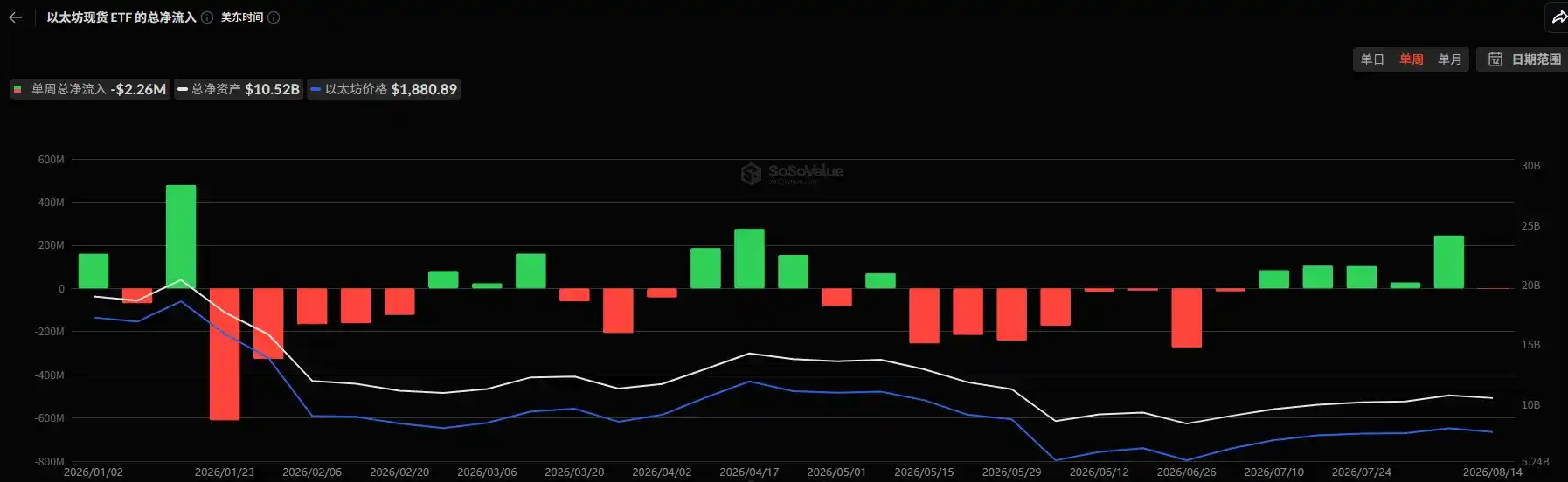
According to SoSoValue data, Ethereum ETFs saw net inflows of approximately $365 million in July and about $243 million so far in August, totaling over $600 million for the two months; ETH price has recovered from around $1,570 at the end of June to near $1,900 currently, a gain of about 20%.
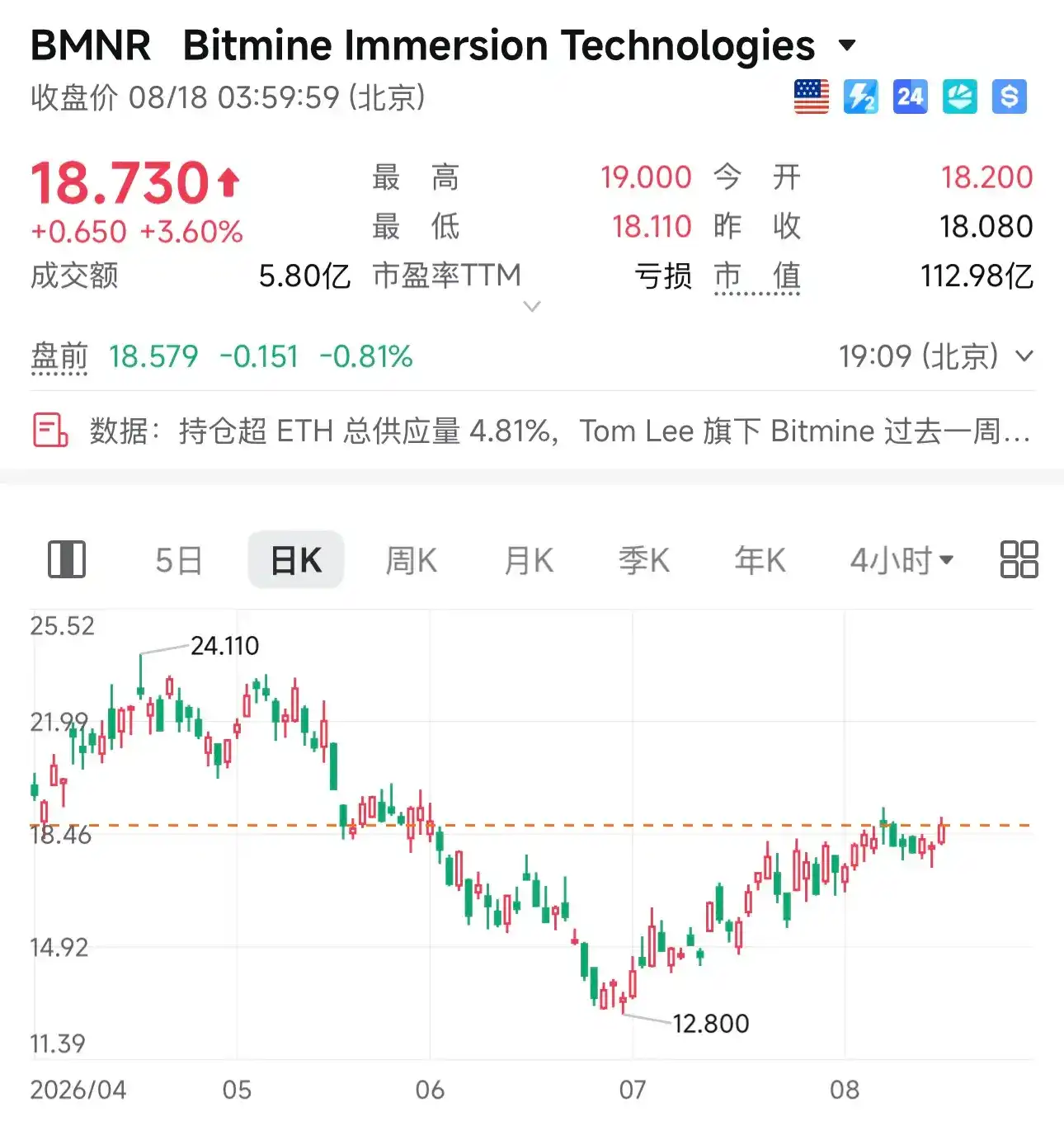
Even Ethereum treasury company BitMine has strengthened in sync, with its stock price rising from about $13.3 at the end of June to nearly $19, an increase of about 40%.
Perguntas relacionadas

QAccording to the article, what was the main trend in Wall Street institutions' Bitcoin holdings in Q2 compared to Bitcoin's price performance?

ADespite Bitcoin's price dropping approximately 14.2% in Q2, institutional Bitcoin holdings increased by about 7.5%, from roughly 498,000 to 536,000 coins, indicating institutions were buying against the trend.

QHow did the growth rates of institutional Ethereum (ETH) exposure compare to Bitcoin (BTC) exposure at major banks like Morgan Stanley and JPMorgan in Q2?

AAt Morgan Stanley, ETH exposure grew 18.6% compared to BTC's 3.7% growth. At JPMorgan, ETH exposure surged 67.3% compared to BTC's 12.2% growth, showing ETH's growth rate significantly outpaced BTC's at these banks.

QWhat significant action did Jane Street take regarding its IBIT (iShares Bitcoin Trust) holdings in Q2, and how should this be interpreted?

AJane Street increased its IBIT holdings by approximately 324% to about 24.9 million shares, making it one of the largest buyers for the quarter. However, as an Authorized Participant and market maker, this large addition in spot holdings is related to its creation/redemption and hedging activities and does not necessarily indicate a directional bet on Bitcoin.

QHow did the actions of some major hedge funds regarding Bitcoin exposure in Q2 differ when considering their options positions alongside their reported spot ETF holdings?

ASeveral hedge funds reduced their spot Bitcoin ETF holdings but simultaneously held significant options positions. For example, Brevan Howard cut its spot IBIT by 70.4% but held call options for ~7.23 million IBIT shares and put options for ~5.27 million shares. This shows a more complex, potentially hedged or tactical strategy than a simple reduction in exposure.

QWhat were the key directional signals regarding institutional cryptocurrency configuration identified from the Q2 13F data in the article?

AThe key signals were: 1) A decoupling between ETF fund flows (which were negative) and institutional holdings (which increased), signaling deepening institutionalization. 2) Growing divergence in institutional views on crypto-related stocks, especially after MicroStrategy's decision to sell Bitcoin. 3) Ethereum emerged as a clear buy-side target for institutions, with subsequent positive ETF inflows and price appreciation in Q3.

Leituras Relacionadas

Analysis of 13F Holdings of Seven Major Funds: What Are Buffett, Duan Yongping, Li Lu, and Dan Bin Thinking?

A summary of Q2 2026 13F filings from seven major funds (Berkshire Hathaway, Duquesne Family Office, H&H International Investment, Himalaya Capital, ARK Investment, Oriental Harbor Investment Master Fund, Situational Awareness LP) reveals AI remains the central investment theme, with significant capital reallocation within the sector. Berkshire Hathaway, under Greg Abel, made its largest net stock purchases in years, heavily increasing its stake in Alphabet, signaling a strategic tilt towards tech while maintaining core holdings in consumer and financial stocks. Duquesne Family Office (Stanley Druckenmiller) rotated within semiconductors, selling Micron, Broadcom, and Intel but adding to positions in TSMC, STMicroelectronics, and AMD, while also reinvesting in cloud giants Alphabet and Amazon and cautiously re-entering Chinese tech via Baidu. H&H International Investment (Duan Yongping) and Himalaya Capital (Li Lu) both significantly increased their stakes in PDD, with Li Lu also concentrating his portfolio by selling out of several financial and energy holdings to focus on core positions like Alphabet and Berkshire. H&H also took profits from high-flying AI/tech names like Nvidia and Google, viewing the moves as valuation adjustments rather than a loss of conviction. ARK Investment (Cathie Wood) aggressively bought SpaceX upon its IPO and continued hunting for disruptive innovation across AI, energy, and biotech, while reducing its Tesla holding. Oriental Harbor Investment Master Fund (Dan Bin) executed a dramatic shift towards AI hardware, launching major new positions in Intel, SanDisk, AMD, and others while selling down software/platform holdings like Google and clearing out consumer names Apple and Tesla. Situational Awareness LP's filing, reflecting pre-liquidation positions, showed a story of missed hedging opportunities leading to significant losses. The consensus is that AI growth is continuing, but capital is actively rotating to identify the next profit centers within the value chain—from semiconductors and infrastructure to eventual commercialization. The filings, while lagging, offer a snapshot of how sophisticated investors are positioning for AI's next phase.

Odaily星球日报Há 12m

Analysis of 13F Holdings of Seven Major Funds: What Are Buffett, Duan Yongping, Li Lu, and Dan Bin Thinking?

Odaily星球日报Há 12m

Arthur Hayes Makes a High-Profile Comeback, Flop Labs Aims to Become the "Fuel" for the Agent Economy

Arthur Hayes, co-founder of BitMEX, has announced his return as head of a new project called Flop Labs, declaring "FLOP is food for your AI agent." This marks his first high-profile return to a leadership role since stepping back from BitMEX. Flop Labs aims to be a native monetary network and verifiable computation settlement layer for the AI Agent economy, distinguishing itself from existing AI Agent projects. Its core concept is "Proof-of-Useful-Inference," which seeks to integrate useful AI inference tasks into the blockchain consensus mechanism, allowing FLOP tokens to serve as the native currency for Agents to purchase computing resources and store memory. The ecosystem involves four key roles: Miners (provide GPU compute), Validators (verify services), Agents (consume services), and KOLs/Partners (community growth). The project promises a 100% fair launch with no presale or VC involvement. A large airdrop is planned for Q4 2026, with the genesis block targeted for Q1 2027. While the announcement has generated community excitement, particularly around the airdrop, the project is in an early conceptual stage. It currently lacks a published whitepaper, detailed tokenomics, technical specifics on its consensus mechanism, or smart contract audits. Arthur Hayes has defended the venture, separating his belief in the potential of the Agentic Economy from concerns about an AI stock bubble. The success of Flop Labs will hinge on its ability to deliver substantive technical progress and ecosystem development in the coming months.

Odaily星球日报Há 27m

Arthur Hayes Makes a High-Profile Comeback, Flop Labs Aims to Become the "Fuel" for the Agent Economy

Odaily星球日报Há 27m

World Chain Launches EIP-7928 Block Access Lists on Mainnet

World Chain has launched EIP-7928 block access lists on its Mainnet, becoming the first production layer-2 network to implement this standard. This deployment aims to significantly increase blockchain throughput without substantially raising the hardware requirements for validators. By providing access list data incrementally every 200 milliseconds through its flashblock architecture, World Chain enables validators to verify transactions in parallel and begin validation while a block is still being built, eliminating the need for sequential re-execution. Implemented via a runtime flag rather than a hard fork, this approach is an extension of the EIP-7928 standard, which Ethereum may incorporate in a future update. Internal benchmarks on World Chain test networks showed validation latency remained stable as throughput scaled up to one gigabit per second on standard cloud infrastructure, suggesting the potential for increased throughput without a proportional increase in computational resources for validators. This mainnet launch represents the first production use of streaming EIP-7928 block access lists and contributes to Ethereum's broader scaling strategy by expanding verification capacity while remaining accessible to independent validators. Built on the OP Stack and secured by Ethereum, World Chain is designed for scalability within the Superchain ecosystem. It focuses on applications like stablecoin finance, international remittances, and trading, utilizing World ID's proof-of-human system. The network aims to make blockchain technology widely accessible, starting with discovery and use through compatible wallets like World App.

TheNewsCryptoHá 32m

World Chain Launches EIP-7928 Block Access Lists on Mainnet

TheNewsCryptoHá 32m

Trading

Spot
活动图片