Strategy's 'Money Printer': Is STRC Bitcoin's Savior or Destroyer?

marsbitPublicado em 2026-04-20Última atualização em 2026-04-20

Resumo

Bitcoin's recent price movement is being heavily influenced by Michael Saylor and his company, MicroStrategy, through a new financial instrument: STRC (Variable Rate Series A Perpetual Stretch Preferred Stock). This Nasdaq-listed perpetual preferred stock offers an 11.5% annual dividend, attracting significant capital. Crucially, funds raised from STRC are used to purchase Bitcoin, with a 3x leverage effect—for every $1 from STRC, MicroStrategy adds $2 from MSTR equity to buy $3 worth of BTC. This creates a powerful "flywheel": more STRC sales fuel massive BTC buying, supporting its price and improving MicroStrategy's credit, which in turn makes STRC more attractive to investors. However, this mechanism introduces risks. A significant "ex-dividend arbitrage" pattern has emerged, where traders buy STRC before its monthly dividend, collect the payout, and quickly sell, causing price volatility and potentially driving up Bitcoin's cost basis for MicroStrategy. In response, Saylor has proposed shifting STRC to a semi-monthly dividend to smooth out these effects. Furthermore, STRC's high yield is being integrated into DeFi protocols like Apyx Protocol and Saturn Credit, offering new on-chain yield opportunities. The central concern remains: as MicroStrategy aggressively accumulates over 3.5% of all BTC, it challenges Bitcoin's foundational principle of decentralization, creating a system where a single public company significantly influences the market.

After fluctuating for over two months, Bitcoin is finally showing signs of a breakout.

Leading the charge for Bitcoin is once again the familiar face Michael Saylor, but this time he has a new weapon: STRC.

If you scroll through Saylor's recent tweets, you'll find him promoting STRC almost daily. AI-generated, low-quality promotional videos featuring tropical resort pools and women holding cocktails send a clear signal: the man who propelled MSTR to the pinnacle of Nasdaq is applying the same marketing firepower to STRC.
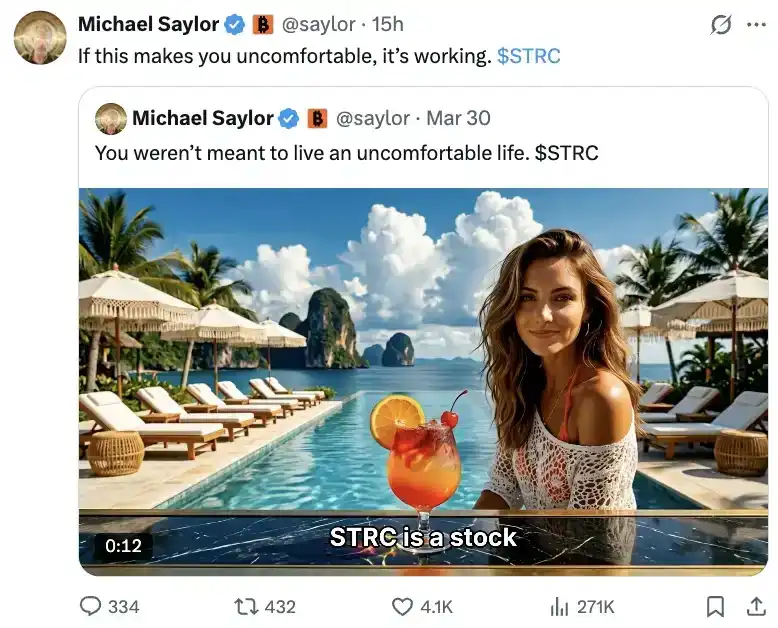
Why is he doing this? Because STRC is currently almost the only tool Strategy has to convert market money into BTC buying pressure. For the past three months, the funding source for every large-scale BTC acquisition announced by Strategy has pointed to STRC.

What is STRC

STRC stands for Variable Rate Series A Perpetual Stretch Preferred Stock, a type of perpetual preferred stock issued by Strategy that listed on Nasdaq last November.

Its operating mechanism is roughly as follows:

You spend about $100 to buy one share of STRC. Strategy pays a monthly cash dividend with an annualized yield of 11.5%, which is about 96 cents per share per month. It never matures, and Strategy does not need to repay the principal.

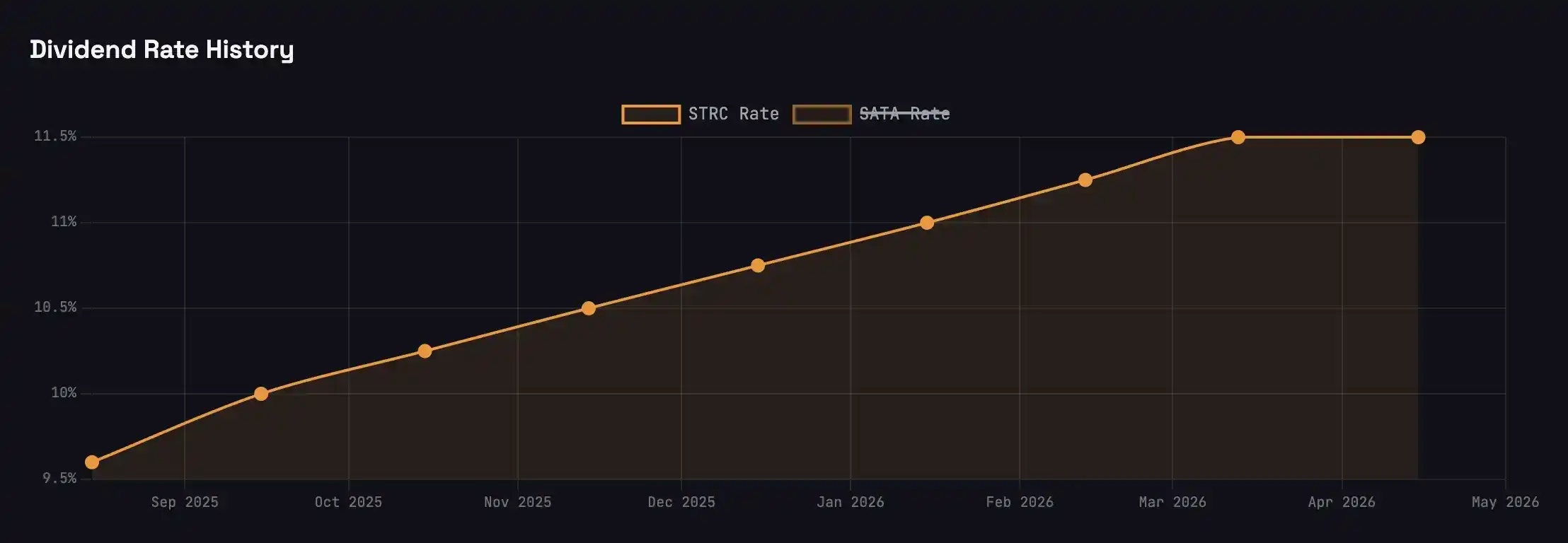
The share price is anchored near the $100 par value by adjusting the dividend rate monthly: if it falls below $100, the dividend rate is increased to attract buying interest; if it rises above $100, the dividend rate is decreased, allowing the price to fall back towards par. The maximum adjustment to the monthly dividend rate is 25 basis points.

Strategy can only issue new shares at par value to raise funds when the STRC share price is above $100—this is the premise of the entire flywheel. The proceeds from the issuance, after deducting the dividend reserve, are mostly used to purchase BTC.

Saylor calls this product "short-duration high-yield credit" or a "Bitcoin-backed money market fund." With current US Treasury yields around 3.5%, STRC offers a yield roughly three times that of Treasuries.

The Flywheel

A common misconception about Saylor is: he is printing unlimited money to buy BTC.

He can't. Saylor cannot create money out of thin air; he must wait for the market to hand it to him. Every additional share of STRC issued requires a real marginal buyer willing to pay $100 for it.

Buyers of STRC are essentially making a credit "trade." The extra 8% yield STRC provides compared to Treasuries is compensation for "Strategy's credit risk."

However, what many STRC buyers don't know is that the funds they use to purchase STRC will be indirectly magnified threefold before flowing into BTC.

Strategy has a public financial goal: a 33% leverage ratio.

Among the company's total funding sources, perpetual preferred shares like STRC, STRF, and STRK should make up about one-third, with the remaining two-thirds coming from MSTR common stock. Saylor calls this principle "intelligent leverage." This means that for every dollar Strategy raises through STRC, to maintain the 33% leverage line, they must issue approximately $2 worth of MSTR to be invested in BTC alongside it. $1 STRC + $2 MSTR = $3 BTC buying pressure.

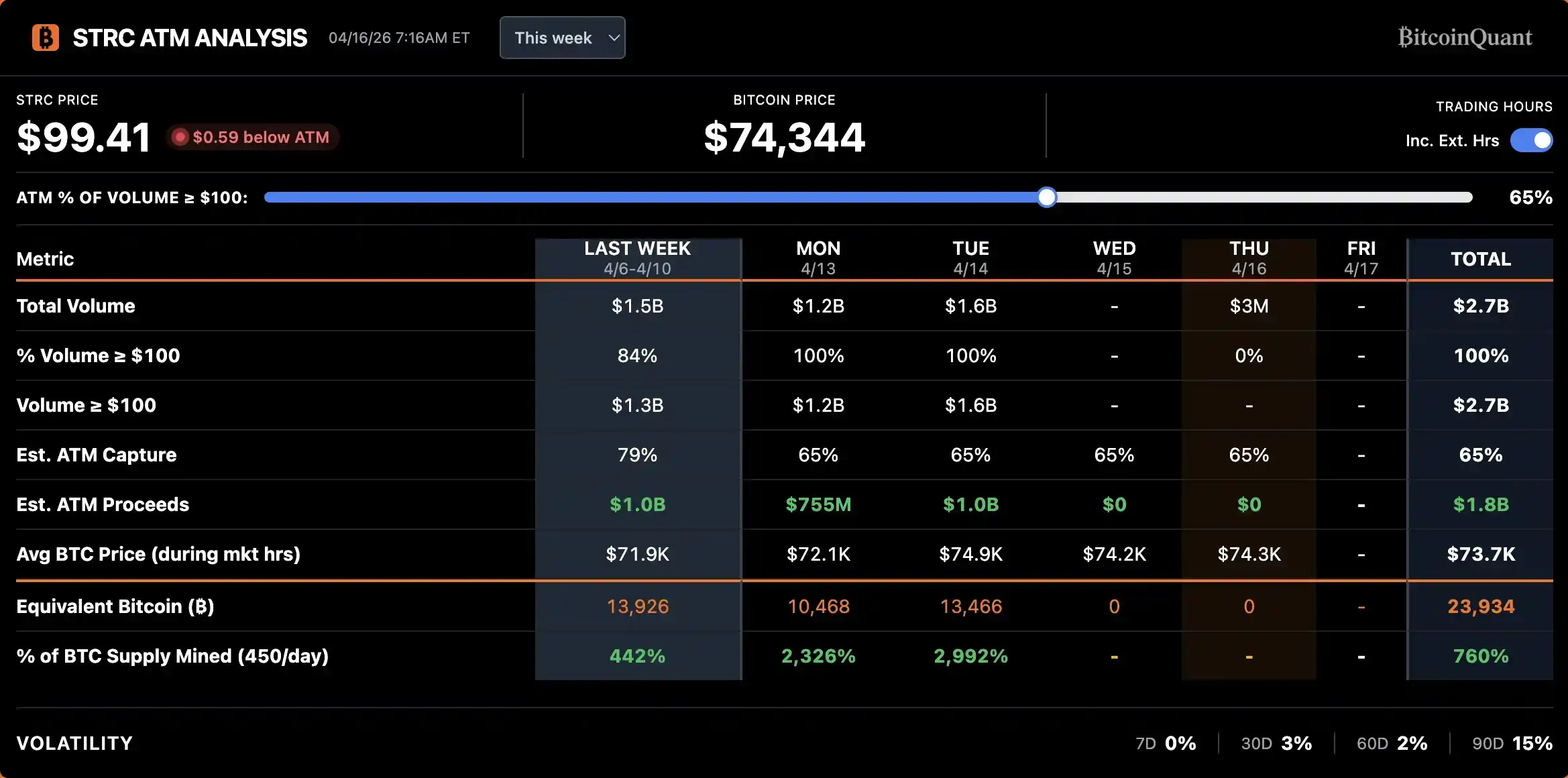
On April 14th, Strategy raised approximately $1 billion through STRC in a single day. With a 3x magnification, this corresponds to about $3 billion in BTC buying pressure, neatly matching the scale of BTC acquisitions in the first two weeks of April before the ex-dividend date.
When BTC falls, the collateral shrinks, STRC's credit risk increases, and Strategy must raise the dividend rate to compensate for the new risk level. But the higher the dividend rate, the greater the cash flow pressure and the higher the probability of default. This is an unstable feedback loop. During the period last October when BTC halved from $120,000 to $60,000, the STRC dividend rate was raised from 7% all the way to 11.5% to barely pull buying interest back.
Conversely, when BTC stabilizes and rises, the collateral thickens, credit quality improves, and STRC becomes more attractive at the same dividend rate, further amplifying demand. BlackRock's Preferred and Income Securities ETF listed Strategy's preferred stock as its second-largest holding in April, with its market value increasing from about $200 million in March to $344 million, a direct endorsement of Strategy's current credit status by fixed-income institutions.

Strategy's flywheel has turned positive: More funds buy STRC → Strategy buys BTC with 3x magnification → BTC price gets support → STRC collateral base becomes more solid, credit spread compresses → STRC becomes more attractive at the same dividend rate → More funds buy STRC.

Ex-Dividend Day Arbitrage

The dividend mechanism of preferred stock is different from bonds. Bonds accrue interest daily; you earn interest for each day you hold. Preferred stocks pay out in a lump sum on a fixed date. For STRC, as long as you hold the share at the close of the day before the ex-dividend date, you receive the full 96-cent monthly dividend.

This creates an obvious arbitrage window: buy in a few days before the ex-dividend date, collect the dividend, and sell the next day. Data from the past few months shows that STRC's average decline after the ex-dividend date is about 20 cents, far less than the 96-cent dividend itself. The net profit per share from a single ex-dividend arbitrage can reach about 40 to 50 cents.

Arbitrageurs won't miss this opportunity.
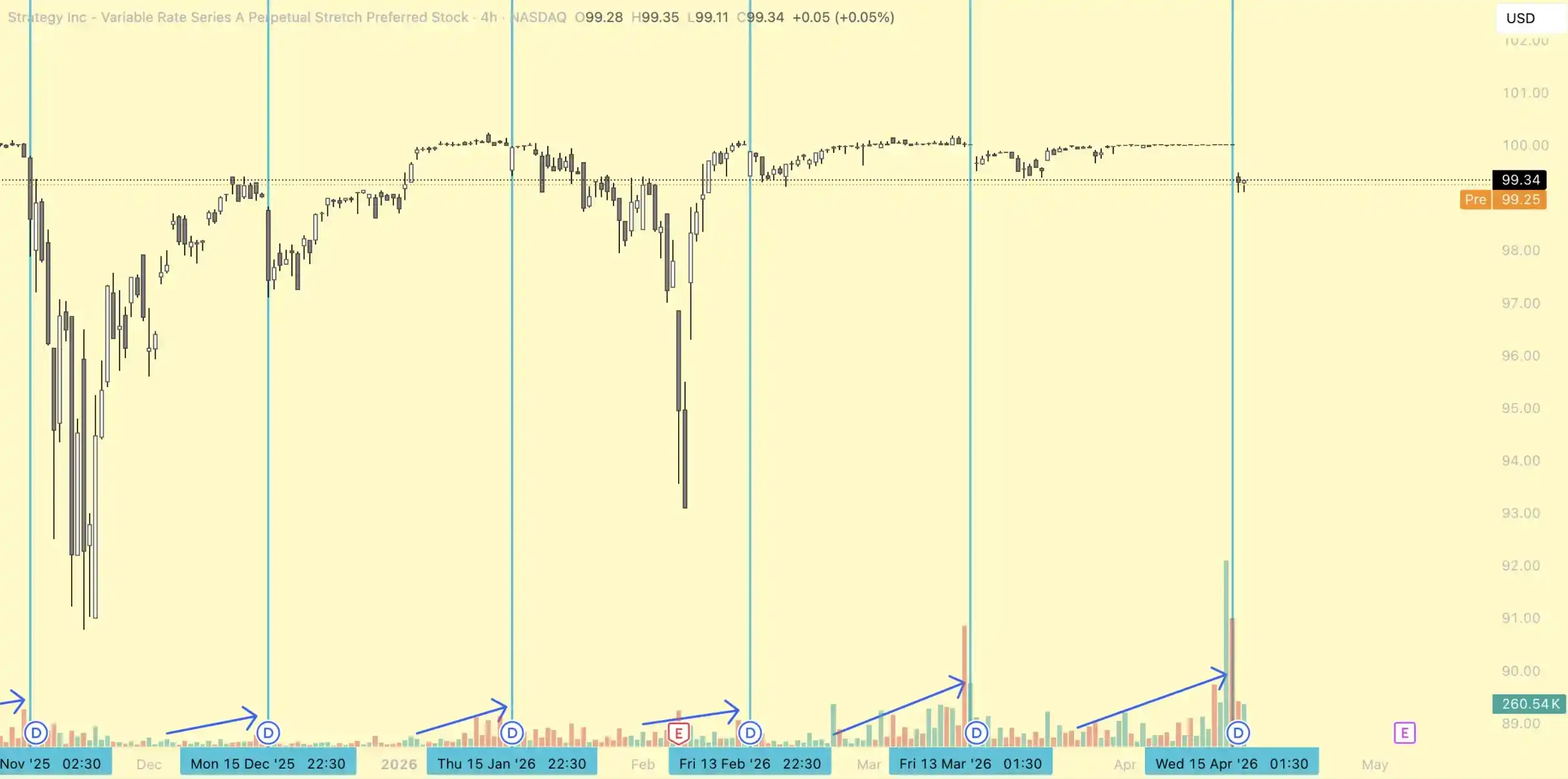
As shown in the chart, trading volume begins to climb about a week before the ex-dividend date, peaks on or the day before the ex-dividend date, and quickly subsides afterward. The surge in volume in April was significantly steeper than in March, indicating that more and more capital is participating in STRC's ex-dividend arbitrage.

However, such arbitrage behavior might not be a good thing.

For the STRC product itself, the two or three weeks after the ex-dividend date enter a "dead zone"—liquidity shrinks, bid-ask spreads widen, and the share price remains below the $100 par value for extended periods. This repeated de-anchoring erodes STRC's positioning as a "money market product," pushing it towards a form more akin to a monthly volatile bond.

For Saylor, his BTC purchases can easily be front-run by arbitrage capital. STRC issuances are concentrated in the two weeks before the ex-dividend date, meaning his BTC buying actions are also concentrated in those two weeks.

Now, traders engaging in arbitrage swarm in to buy STRC at the same time each month. They know Saylor is about to take this money to sweep the spot market for BTC, so they can buy BTC in advance and sell after Saylor pushes the price higher, thereby increasing Saylor's acquisition cost.
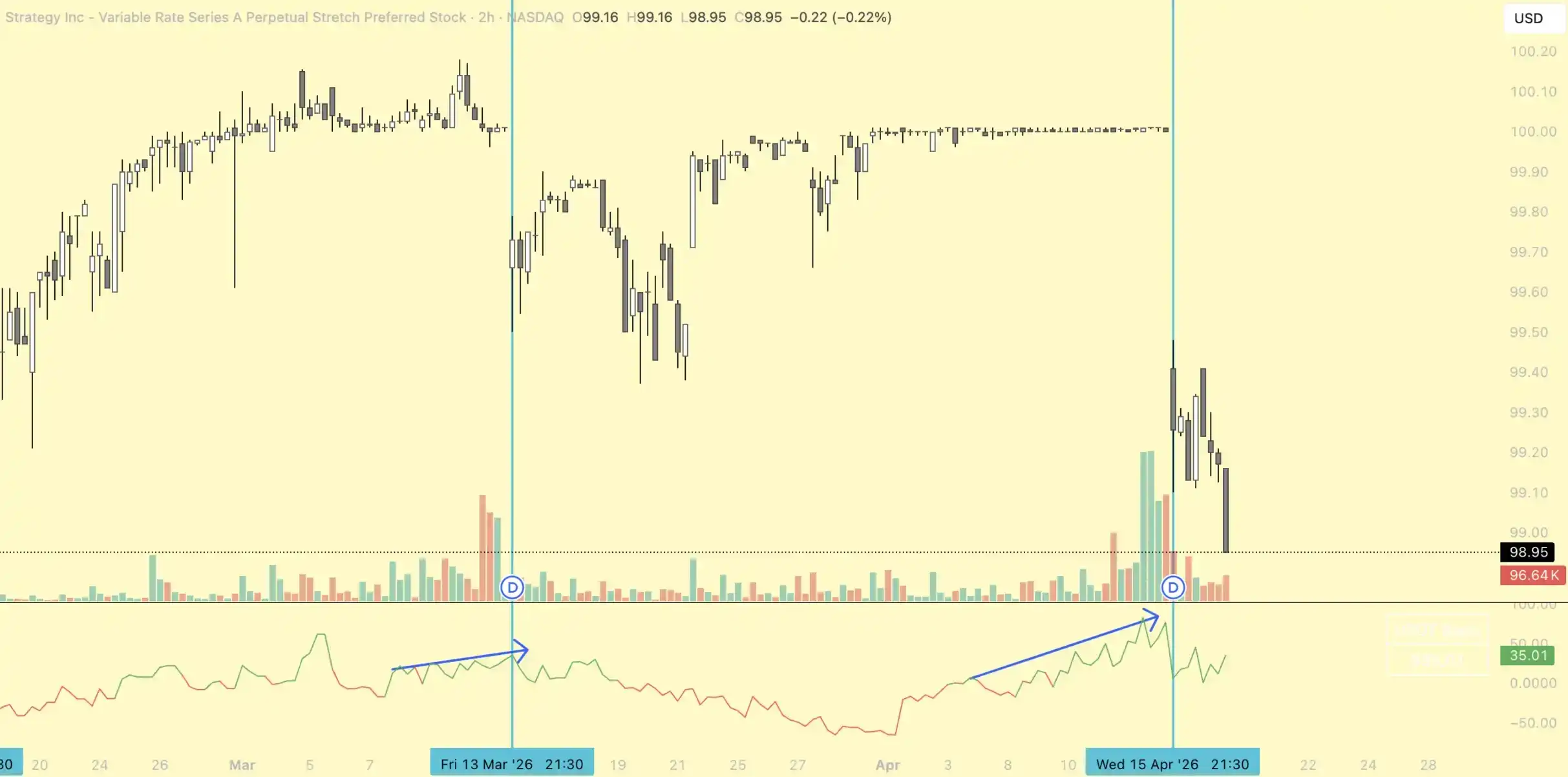
Significant increase in Coinbase spot premium around STRC's recent ex-dividend dates

There are two potential solutions: change the dividend frequency, for example from monthly to weekly, to spread out the arbitrage profits; or launch a more junior, more frequently paying derivative product to disperse the concentrated arbitrage trading.

Sure enough, Saylor acted quickly, announcing on Saturday that Strategy had filed a proxy statement proposing to change STRC's dividend payment frequency from monthly to semi-monthly. The annual dividend obligation and dividend rate would remain unchanged.
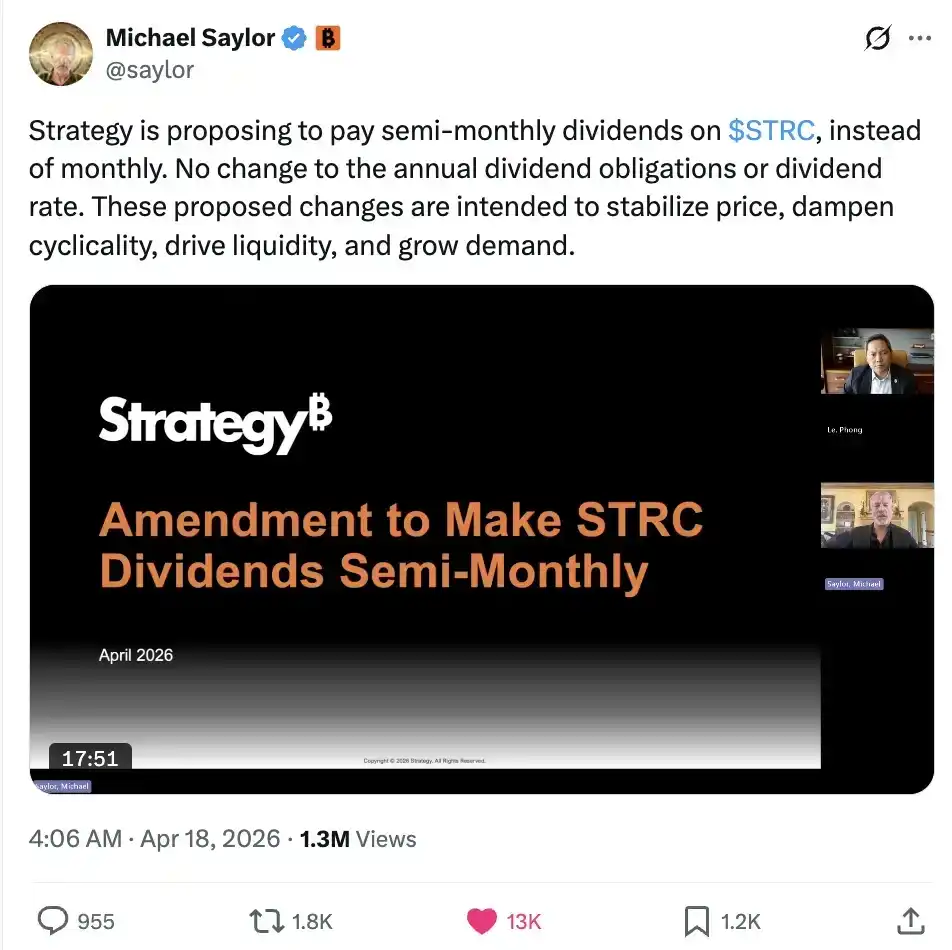
If the proposal is approved, the first semi-monthly dividend will be paid on July 15th.

Bitwise advisor Jeff Park pointed out that no corporate bonds currently use a semi-monthly dividend payment mechanism in the market, and retail investors' preference for higher frequency payments has been confirmed by the success of products like weekly dividend ETFs.

On a deeper level, Jeff Park sees this as a landmark step in the infiltration of the cryptocurrency industry's "streaming payments" vision into traditional capital markets: the frequency of interest payments essentially reflects the efficiency of converting monetary potential energy into kinetic energy. The digital currency era should naturally break the artificially set time cycle restrictions.

He believes STRC sets a new benchmark for traditional enterprises and is optimistic about the future evolution from semi-monthly, to daily, and even instant payments.

A New Narrative for DeFi

The emergence of STRC has brought a breath of fresh air to the bleak DeFi market.

Stablecoin yields in DeFi have been on a downward trend over the past year. Stablecoin deposit APY on Aave is around 2%, Ethena's USDe and Sky's USDS are both below 4%, and even PTs for mainstream stablecoins on Pendle struggle to break 6%. This level of return,对应 the risk exposure of smart contracts in the AI era, has deterred many DeFi veterans due to the risk-reward ratio.

DeFi needs a credible, sufficiently large source of yield to pull money from TradFi back on-chain, and STRC刚好 provides this opportunity.

Two projects are currently attempting to package STRC's yield onto the chain:

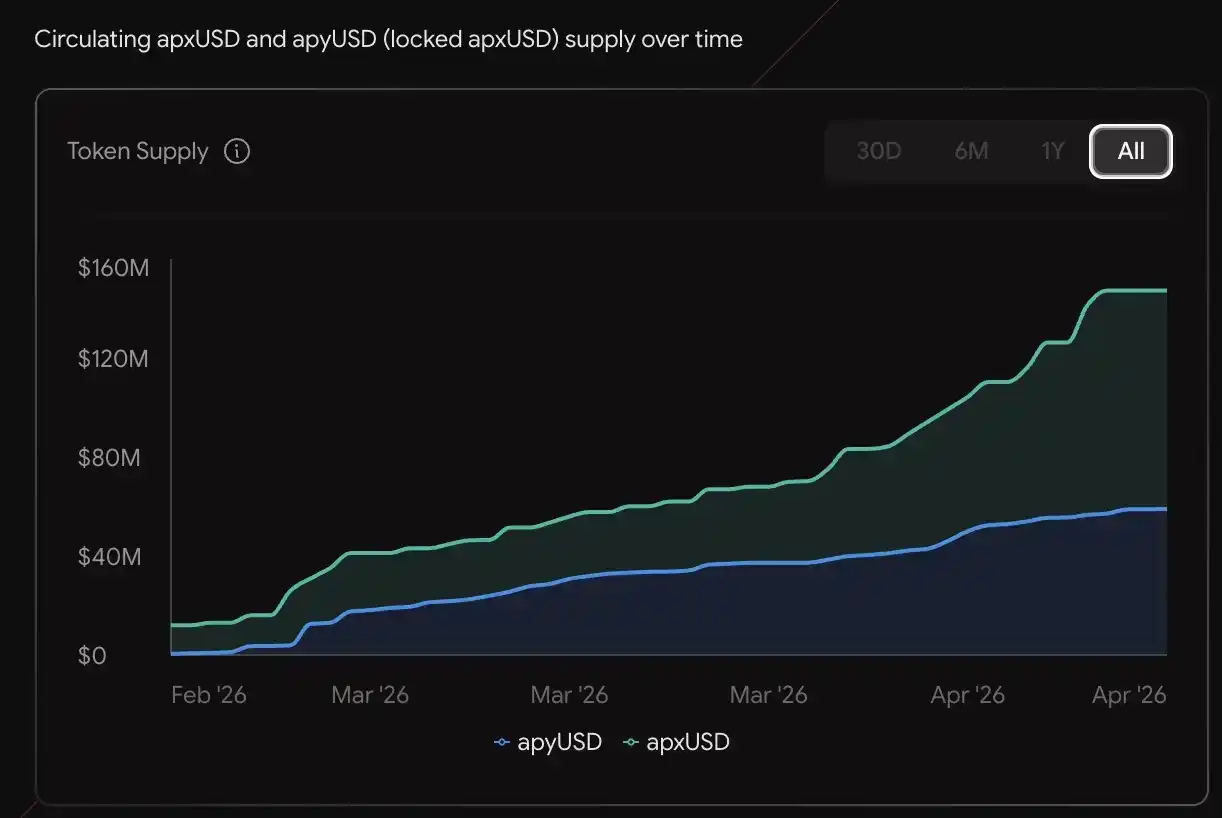
Apyx Protocol uses a dual-token model. apxUSD is the base stablecoin, over-collateralized by preferred stocks like STRC, SATA, and US Treasuries; apyUSD is the staked version, receiving the underlying dividend and interest income, currently with an APY of about 12.78%. The supply规模 has reached $130 million, and corresponding yield and leverage products are already available on Pendle and Morpho.
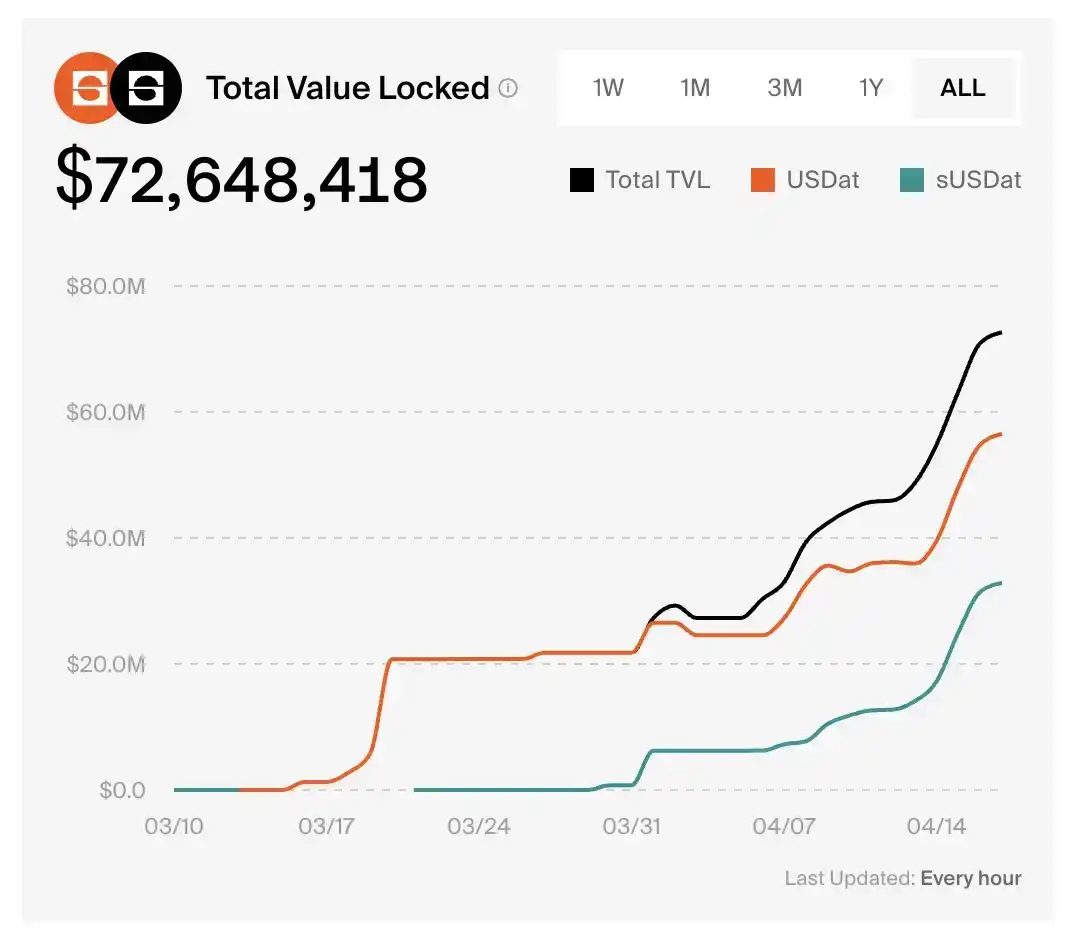
Saturn Credit's sUSDat is a staked, yield-bearing stablecoin that承接 STRC's yield. The protocol's TVL surged from zero to $72.6 million in just over a month.

According to Pendle market data, the current APY for PT-sUSDat is 9.2%.
Hoist with His Own Petard

The more successful Saylor's精心designed financial machine runs, the harder it becomes to avoid one question.

Strategy currently holds nearly 3.5% of the total BTC supply and continues to advance at a rate of billions of dollars per month.

What was BTC's original value proposition? A decentralized monetary asset that does not rely on any single entity and cannot be unilaterally manipulated by anyone.

When the perpetual preferred stock of a listed company becomes the primary marginal buyer for BTC—a decentralized, non-reliant-on-any-single-entity, cannot-be-unilaterally-manipulated monetary asset—is Bitcoin drifting away from its original form?

Perguntas relacionadas

QWhat is STRC and how does it function as a financial instrument for MicroStrategy?

ASTRC, or Variable Rate Series A Perpetual Stretch Preferred Stock, is a type of perpetual preferred stock issued by MicroStrategy and traded on the Nasdaq. Investors pay approximately $100 per share. MicroStrategy pays a monthly cash dividend, currently at an annualized rate of 11.5%, equating to about $0.96 per share per month. The stock is perpetual, meaning it has no maturity date, and MicroStrategy is not obligated to repay the principal. The share price is anchored near its $100 face value through monthly adjustments to the dividend rate. The primary function of STRC is to raise capital, which is then used, along with capital from MSTR common stock, to purchase Bitcoin (BTC).

QHow does MicroStrategy's 'intelligent leverage' principle work in relation to STRC and Bitcoin purchases?

AMicroStrategy's 'intelligent leverage' principle aims to maintain a leverage ratio of 33%. This means that for every $1 raised through STRC and other preferred shares (which constitute about one-third of the company's funding), the company must issue approximately $2 in MSTR common stock (the other two-thirds) to maintain this target ratio. The combined $3 is then used to purchase Bitcoin. This mechanism amplifies the capital inflow into BTC, turning $1 from STRC into $3 of BTC buying pressure.

QWhat is the 'ex-dividend date arbitrage' opportunity with STRC, and what are its potential negative consequences?

AThe ex-dividend date arbitrage involves buying STRC just before its ex-dividend date to receive the full monthly dividend (approx. $0.96) and then selling the shares after. Historically, the share price drop after the ex-dividend date has been smaller than the dividend, allowing for a profit of around $0.40 to $0.50 per share. The negative consequences are twofold: 1) It creates a 'dead zone' for STRC after the ex-dividend date where liquidity dries up and the price often falls below its $100 anchor, undermining its 'money market product' image. 2) It allows arbitrageurs to front-run MicroStrategy's predictable BTC purchases, buying BTC before the company does and driving up Saylor's acquisition cost.

QHow is STRC's high yield influencing the decentralized finance (DeFi) ecosystem?

ASTRC's high yield (currently 11.5% annualized) is providing a new, significant source of yield for the DeFi ecosystem, which has been suffering from low returns on stablecoins. Protocols like Apyx Protocol and Saturn Credit are creating wrapped, tokenized versions of STRC's yield on-chain. For example, Apyx offers apyUSD with a yield of ~12.78%, and Saturn Credit offers sUSDat. These products are attracting capital back to DeFi by offering a credible, high-yield source backed by a TradFi instrument, with a combined Total Value Locked (TVL) already in the hundreds of millions of dollars.

QWhat fundamental contradiction does the article highlight regarding MicroStrategy's growing Bitcoin holdings funded by STRC?

AThe article highlights a fundamental contradiction between Bitcoin's original value proposition and MicroStrategy's dominant role as a buyer. Bitcoin was conceived as a decentralized, censorship-resistant asset that no single entity could control. However, the primary marginal demand for new BTC is now coming from a single, centralized publicly-traded company (MicroStrategy) through a specific financial instrument (STRC). This centralizes a significant portion of buying pressure and potential influence over the market with one entity, which arguably moves Bitcoin away from its original decentralized ethos.

Leituras Relacionadas

Warsh Hearing Concludes: What Are the Notable Signals for the Crypto Industry?

The Senate Banking Committee held a confirmation hearing for Judy Shelton, a Federal Reserve nominee, who faced intense questioning regarding her ability to maintain the central bank's independence amid pressure from President Trump to lower interest rates. Shelton denied any pre-arranged commitments on rate cuts and emphasized her independence, though Democrats remained skeptical, citing contradictions with Trump's public statements. Shelton characterized post-pandemic inflation as a major policy failure and called for a "regime change" in the Fed’s approach, including reforms to inflation measurement and communication strategies. She criticized the current practice of Fed officials frequently signaling future rate moves and did not commit to maintaining post-meeting press conferences, suggesting potential reductions in transparency. Regarding crypto markets, Shelton’s extensive investments in digital asset companies—including Solana, DeFi, and blockchain infrastructure—were noted, though she has pledged to divest these holdings due to ethics rules. Her familiarity with the crypto industry and deregulatory leanings may signal a more open, though cautious, stance toward digital assets. However, concerns were raised about potential conflicts of interest, especially given Trump family involvement in crypto-financial ventures. The timing of her confirmation remains uncertain, pending a Justice Department investigation into current Chair Powell. Shelton’s potential leadership could lead to a more hawkish, productivity-focused Fed with tighter policy communication—factors that may significantly influence liquidity conditions and macro narratives for crypto markets.

marsbitHá 7h

Warsh Hearing Concludes: What Are the Notable Signals for the Crypto Industry?

marsbitHá 7h

Trading

Spot
Futuros

Artigos em Destaque

O que é BITCOIN

Compreender o HarryPotterObamaSonic10Inu (ERC-20) e a Sua Posição no Espaço Cripto Nos últimos anos, o mercado de criptomoedas assistiu a um aumento na popularidade das moedas meme, cativando não apenas os traders, mas também aqueles que procuram envolvimento comunitário e valor de entretenimento. Entre estes tokens únicos está o HarryPotterObamaSonic10Inu (ERC-20), um projeto intrigante que mistura referências culturais no tecido das criptomoedas. Este artigo explora os principais aspetos do HarryPotterObamaSonic10Inu, examinando os seus mecanismos, a sua ética orientada pela comunidade e o seu envolvimento com o vasto panorama cripto. O que é o HarryPotterObamaSonic10Inu (ERC-20)? Como o nome sugere, o HarryPotterObamaSonic10Inu é uma moeda meme construída na blockchain Ethereum, classificada sob o padrão ERC-20. Ao contrário das criptomoedas tradicionais, que podem enfatizar a utilidade prática ou o potencial de investimento, este token prospera no valor de entretenimento e na força da sua comunidade. O projeto visa promover um ambiente onde utilizadores envolvidos possam reunir-se, partilhar ideias e participar em atividades inspiradas por diversos fenómenos culturais. Uma característica notável do HarryPotterObamaSonic10Inu é a zero taxa sobre transações. Este elemento atraente visa encorajar a negociação e o envolvimento da comunidade, isento de encargos adicionais que podem desencorajar os traders de pequena escala. A oferta total da moeda está fixada em mil milhões de tokens, uma cifra que marca a sua intenção de manter uma circulação substancial dentro da comunidade. Criador do HarryPotterObamaSonic10Inu (ERC-20) As origens do HarryPotterObamaSonic10Inu estão um pouco envoltas em mistério; os detalhes sobre o criador permanecem desconhecidos. O desenvolvimento deste token carece de uma equipa identificável ou de um plano explícito, o que não é raro no setor das moedas meme. Em vez disso, o projeto surgiu de forma orgânica, com o seu progresso a depender fortemente do entusiasmo e da participação da sua comunidade. Investidores do HarryPotterObamaSonic10Inu (ERC-20) No que diz respeito a investimentos externos e apoios, o HarryPotterObamaSonic10Inu também permanece ambíguo. O token não lista quaisquer fundações de investimento conhecidas ou apoio organizacional significativo. Em vez disso, o “sangue vital” do projeto é a sua comunidade de base, que informa o seu crescimento e sustentabilidade através da ação coletiva e do envolvimento no espaço cripto. Como Funciona o HarryPotterObamaSonic10Inu (ERC-20)? Como uma moeda meme, o HarryPotterObamaSonic10Inu opera principalmente fora dos quadros tradicionais que muitas vezes governam o valor dos ativos. Existem vários aspetos distintivos que definem como o projeto funciona: Transações Sem Taxas: Sem taxas sobre transações, os utilizadores podem comprar e vender o token livremente, sem a preocupação de custos ocultos. Envolvimento da Comunidade: O projeto prospera na interação da comunidade, aproveitando plataformas de redes sociais para criar entusiasmo e facilitar a participação. Discussões, partilha de conteúdo e envolvimento são elementos cruciais que ajudam a expandir o seu alcance e a fomentar a lealdade entre os apoiantes. Sem Utilidade Prática: Deve ser notado que o HarryPotterObamaSonic10Inu não oferece utilidade concreta dentro do ecossistema financeiro. Em vez disso, é classificado como um token principalmente para entretenimento e atividades comunitárias. Referência Cultural: O token incorpora de forma inteligente elementos da cultura popular para atrair interesse, conectando-se tanto com entusiastas de memes como com seguidores de criptomoedas. HarryPotterObamaSonic10Inu exemplifica como as moedas meme operam de forma diferente de projetos de criptomoedas mais tradicionais, entrando no mercado como construções sociais inovadoras em vez de ativos utilitários. Linha do Tempo do HarryPotterObamaSonic10Inu (ERC-20) A história do HarryPotterObamaSonic10Inu é marcada por vários marcos notáveis: Criação: O token surgiu de um meme viral, capturando a imaginação de muitos entusiastas de criptomoedas. Datas específicas de criação não estão disponíveis, sublinhando a sua ascensão orgânica. Listagem em Exchanges: O HarryPotterObamaSonic10Inu conseguiu entrar em várias exchanges, permitindo um acesso e negociação mais fáceis pela comunidade. Iniciativas de Envolvimento da Comunidade: Atividades contínuas direcionadas a melhorar a interação comunitária, incluindo concursos, campanhas em redes sociais e geração de conteúdo por fãs e defensores. Planos de Expansão Futura: O roteiro do projeto inclui o lançamento de uma coleção de NFTs, mercadorias e um site de eCommerce relacionado aos seus temas culturais, envolvendo ainda mais a comunidade e tentando adicionar mais dimensões ao seu ecossistema. Pontos-Chave sobre o HarryPotterObamaSonic10Inu (ERC-20) Natureza Orientada pela Comunidade: O projeto prioriza a contribuição coletiva e a criatividade, assegurando que o envolvimento dos utilizadores está na vanguarda do seu desenvolvimento. Classificação como Moeda Meme: Representa o epítome da criptomoeda baseada em entretenimento, destacando-se dos veículos de investimento tradicionais. Sem Afiliação Direta com o Bitcoin: Apesar da semelhança no nome do ticker, o HarryPotterObamaSonic10Inu é distinto e não tem qualquer relação com o Bitcoin ou outras criptomoedas estabelecidas. Foco na Colaboração: O HarryPotterObamaSonic10Inu é projetado para criar um espaço de colaboração e partilha de histórias entre os seus detentores, proporcionando uma via para a criatividade e o fortalecimento da comunidade. Perspectivas Futuras: A ambição de expandir além da sua premissa inicial para NFTs e mercadorias delineia um caminho para o projeto potencialmente entrar em avenidas mais mainstream dentro da cultura digital. À medida que as moedas meme continuam a capturar a imaginação da comunidade cripto, HarryPotterObamaSonic10Inu (ERC-20) destaca-se devido aos seus laços culturais e abordagem centrada na comunidade. Embora possa não se encaixar no molde típico de um token orientado para utilidade, a sua essência reside na alegria e camaradagem fomentadas entre os seus apoiantes, destacando a natureza em evolução das criptomoedas em uma era cada vez mais digital. À medida que o projeto continua a desenvolver-se, será importante observar como as dinâmicas comunitárias influenciam a sua trajetória no panorama em constante mudança da tecnologia blockchain.

1.2k Visualizações TotaisPublicado em {updateTime}Atualizado em 2024.12.03

O que é BITCOIN

Como comprar BTC

Bem-vindo à HTX.com!Tornámos a compra de Bitcoin (BTC) simples e conveniente.Segue o nosso guia passo a passo para iniciar a tua jornada no mundo das criptos.Passo 1: cria a tua conta HTXUtiliza o teu e-mail ou número de telefone para te inscreveres numa conta gratuita na HTX.Desfruta de um processo de inscrição sem complicações e desbloqueia todas as funcionalidades.Obter a minha contaPasso 2: vai para Comprar Cripto e escolhe o teu método de pagamentoCartão de crédito/débito: usa o teu visa ou mastercard para comprar Bitcoin (BTC) instantaneamente.Saldo: usa os fundos da tua conta HTX para transacionar sem problemas.Terceiros: adicionamos métodos de pagamento populares, como Google Pay e Apple Pay, para aumentar a conveniência.P2P: transaciona diretamente com outros utilizadores na HTX.Mercado de balcão (OTC): oferecemos serviços personalizados e taxas de câmbio competitivas para os traders.Passo 3: armazena teu Bitcoin (BTC)Depois de comprar o teu Bitcoin (BTC), armazena-o na tua conta HTX.Alternativamente, podes enviá-lo para outro lugar através de transferência blockchain ou usá-lo para transacionar outras criptomoedas.Passo 4: transaciona Bitcoin (BTC)Transaciona facilmente Bitcoin (BTC) no mercado à vista da HTX.Acede simplesmente à tua conta, seleciona o teu par de trading, executa as tuas transações e monitoriza em tempo real.Oferecemos uma experiência de fácil utilização tanto para principiantes como para traders experientes.

3.8k Visualizações TotaisPublicado em {updateTime}Atualizado em 2025.03.21

Como comprar BTC

O que é $BITCOIN

OURO DIGITAL ($BITCOIN): Uma Análise Abrangente Introdução ao OURO DIGITAL ($BITCOIN) OURO DIGITAL ($BITCOIN) é um projeto baseado em blockchain que opera na rede Solana, com o objetivo de combinar as características dos metais preciosos tradicionais com a inovação das tecnologias descentralizadas. Embora partilhe um nome com o Bitcoin, frequentemente referido como “ouro digital” devido à sua percepção como uma reserva de valor, o OURO DIGITAL é um token separado projetado para criar um ecossistema único dentro da paisagem Web3. O seu objetivo é posicionar-se como um ativo digital alternativo viável, embora os detalhes sobre as suas aplicações e funcionalidades ainda estejam em desenvolvimento. O que é o OURO DIGITAL ($BITCOIN)? OURO DIGITAL ($BITCOIN) é um token de criptomoeda explicitamente projetado para uso na blockchain Solana. Em contraste com o Bitcoin, que fornece um papel amplamente reconhecido como armazenamento de valor, este token parece focar em aplicações e características mais amplas. Aspectos notáveis incluem: Infraestrutura Blockchain: O token é construído na blockchain Solana, conhecida pela sua capacidade de lidar com transações de alta velocidade e baixo custo. Dinâmicas de Oferta: O OURO DIGITAL tem um fornecimento máximo limitado a 100 quatrilhões de tokens (100P $BITCOIN), embora os detalhes sobre o seu fornecimento circulante ainda não tenham sido divulgados. Utilidade: Embora as funcionalidades precisas não estejam explicitamente delineadas, existem indicações de que o token poderia ser utilizado para várias aplicações, potencialmente envolvendo aplicações descentralizadas (dApps) ou estratégias de tokenização de ativos. Quem é o Criador do OURO DIGITAL ($BITCOIN)? Neste momento, a identidade dos criadores e da equipa de desenvolvimento por trás do OURO DIGITAL ($BITCOIN) permanece desconhecida. Esta situação é típica entre muitos projetos inovadores no espaço da blockchain, particularmente aqueles alinhados com finanças descentralizadas e fenómenos de moedas meme. Embora tal anonimato possa fomentar uma cultura orientada pela comunidade, intensifica as preocupações sobre governança e responsabilidade. Quem são os Investidores do OURO DIGITAL ($BITCOIN)? As informações disponíveis indicam que o OURO DIGITAL ($BITCOIN) não tem apoiantes institucionais conhecidos ou investimentos proeminentes de capital de risco. O projeto parece operar num modelo peer-to-peer focado no apoio e adoção da comunidade, em vez de rotas de financiamento tradicionais. A sua atividade e liquidez estão principalmente situadas em exchanges descentralizadas (DEXs), como a PumpSwap, em vez de plataformas de negociação centralizadas estabelecidas, destacando ainda mais a sua abordagem de base. Como Funciona o OURO DIGITAL ($BITCOIN) A mecânica operacional do OURO DIGITAL ($BITCOIN) pode ser elaborada com base no seu design de blockchain e nas características da rede: Mecanismo de Consenso: Ao aproveitar o exclusivo proof-of-history (PoH) da Solana combinado com um modelo de proof-of-stake (PoS), o projeto assegura uma validação eficiente das transações, contribuindo para o alto desempenho da rede. Tokenomics: Embora mecanismos deflacionários específicos não tenham sido extensivamente detalhados, o vasto fornecimento máximo de tokens implica que pode atender a microtransações ou casos de uso de nicho que ainda estão por definir. Interoperabilidade: Existe o potencial para integração com o ecossistema mais amplo da Solana, incluindo várias plataformas de finanças descentralizadas (DeFi). No entanto, os detalhes sobre integrações específicas permanecem não especificados. Cronologia de Eventos Chave Aqui está uma cronologia que destaca marcos significativos relacionados ao OURO DIGITAL ($BITCOIN): 2023: O lançamento inicial do token ocorre na blockchain Solana, marcado pelo seu endereço de contrato. 2024: O OURO DIGITAL ganha visibilidade ao tornar-se disponível para negociação em exchanges descentralizadas como a PumpSwap, permitindo que os utilizadores o negociem contra SOL. 2025: O projeto testemunha atividade de negociação esporádica e potencial interesse em envolvimentos liderados pela comunidade, embora não tenham sido documentadas parcerias ou avanços técnicos notáveis até ao momento. Análise Crítica Forças Escalabilidade: A infraestrutura subjacente da Solana suporta altos volumes de transações, o que pode aumentar a utilidade do $BITCOIN em vários cenários de transação. Acessibilidade: O potencial preço de negociação baixo por token pode atrair investidores de retalho, facilitando uma participação mais ampla devido a oportunidades de propriedade fracionada. Riscos Falta de Transparência: A ausência de apoiantes, desenvolvedores ou um processo de auditoria publicamente conhecidos pode gerar ceticismo em relação à sustentabilidade e confiabilidade do projeto. Volatilidade do Mercado: A atividade de negociação depende fortemente do comportamento especulativo, o que pode resultar em volatilidade significativa dos preços e incerteza para os investidores. Conclusão O OURO DIGITAL ($BITCOIN) surge como um projeto intrigante, mas ambíguo, dentro do ecossistema em rápida evolução da Solana. Embora tente aproveitar a narrativa do “ouro digital”, a sua divergência do papel estabelecido do Bitcoin como reserva de valor sublinha a necessidade de uma diferenciação mais clara da sua utilidade pretendida e estrutura de governança. A aceitação e adoção futuras dependerão provavelmente da abordagem da atual opacidade e da definição mais explícita das suas estratégias operacionais e económicas. Nota: Este relatório abrange informações sintetizadas disponíveis até outubro de 2023, e desenvolvimentos podem ter ocorrido além do período de pesquisa.

92 Visualizações TotaisPublicado em {updateTime}Atualizado em 2025.05.13

O que é $BITCOIN

Discussões

Bem-vindo à Comunidade HTX. Aqui, pode manter-se informado sobre os mais recentes desenvolvimentos da plataforma e obter acesso a análises profissionais de mercado. As opiniões dos utilizadores sobre o preço de BTC (BTC) são apresentadas abaixo.

活动图片