In Montenegro, cryptocurrency trading remains in a regulatory vacuum. People conduct transactions through offline cash dealings and unverified intermediaries to circumvent legal oversight.
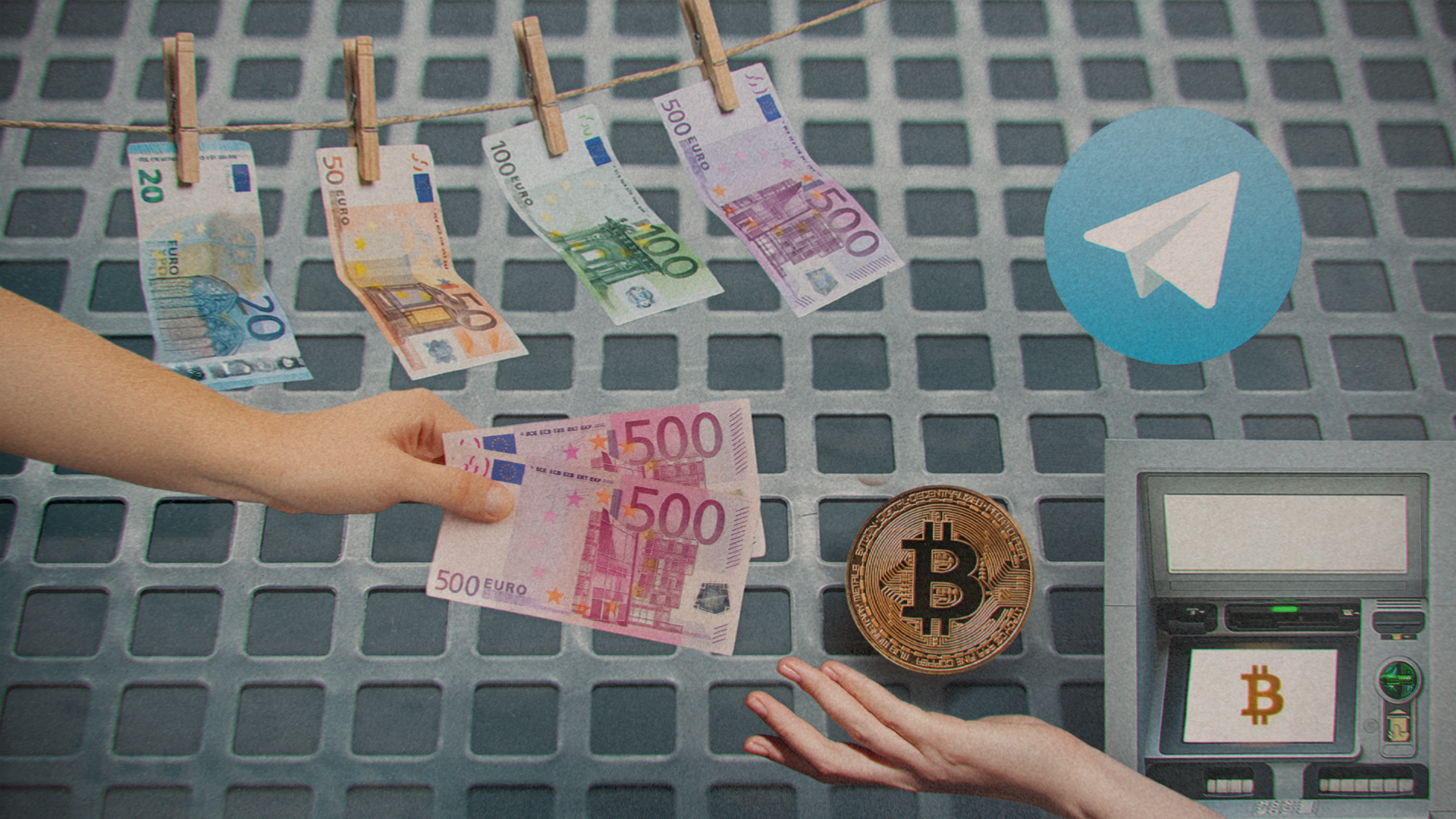
A trader posts an advertisement on social media, and both parties arrange the transaction details via chat software—within just a few minutes, 70 USDT is transferred from one crypto wallet to another, while 60 euros in cash are exchanged on the bustling streets of Podgorica (the capital of Montenegro). A fee of 5 euros is charged, with no questions asked and no inquiries about the source of funds.
After the transaction is completed, both parties quickly shake hands and depart. The trader mentions that he has other clients waiting for his services.
This scene is a true portrayal of Montenegro's cryptocurrency "gray area": cryptocurrencies are exchanged for cash outside the purview of legal regulation, with undercurrents flowing.
Anonymity, Cash, and High Risks
In fact, although Montenegro has promised to enact digital asset regulatory laws since 2020, they have yet to materialize.
While transferring funds from bank accounts to crypto trading platforms is not illegal in itself, cryptocurrencies cannot be converted into fiat currency through banks or registered exchange institutions.
At this point, intermediary platforms, Telegram groups, and online forums become the main channels for transactions—so-called "over-the-counter" (OTC) trading. Transactions are typically completed offline, with cryptocurrencies and cash exchanged directly and without any identity verification.
According to statistics from the blockchain forensics and crypto risk assessment platform "Global Ledger," the crypto wallet address involved in BIRN's transaction handled transactions worth millions of euros between October 2024 and October 2025. The largest single incoming transaction was $440,000, while the largest outgoing transaction exceeded $500,000.
Most of these transactions were conducted through well-known crypto platforms such as Binance and Gate.io, with about 75% of the activity occurring on low-risk platforms. However, a quarter of the transactions were classified as medium to high risk, including dealings with "frozen funds" (assets linked to frozen or sanctioned wallets) and entities sanctioned by the U.S. Financial Crimes Enforcement Network (FinCEN). Global Ledger rated the risk level of the trader's crypto wallet as "medium."
"In Podgorica, ask anyone involved in cryptocurrencies—everyone has their own 'dealer,'" said Ivan Jolicic, developer of Montenegro's digital currency Perper and a crypto expert. These dealers are not only locals but also include many expatriates from Russia, Ukraine, and Turkey.
"Participants include local crypto investors as well as foreigners, especially Russians, Ukrainians, and Turks. For them, this is the only way to make a living in Montenegro," Jolicic told BIRN. "They need to cover their living expenses in Montenegro, but banks are either unwilling or outright refuse to open accounts for them."
Another crypto trader active in the Balkans declined a request from a journalist to exchange 70 euros for Bitcoin, stating that their transaction threshold was "no less than 10,000 euros per transaction."
Russian-Language Telegram Groups Become Trading Hubs
BIRN's investigation found that multiple Telegram channels and online forums operate crypto exchange services in the Balkans or specifically for Montenegro. These groups range from a few dozen to several thousand members, with content including exchange amounts, rates, fees, and specific transaction locations.
A Russian-language Telegram group named "Обмен Валют Montenegro" (Montenegro Currency Exchange) has over 7,000 members and specializes in direct exchanges of cryptocurrencies for cash.
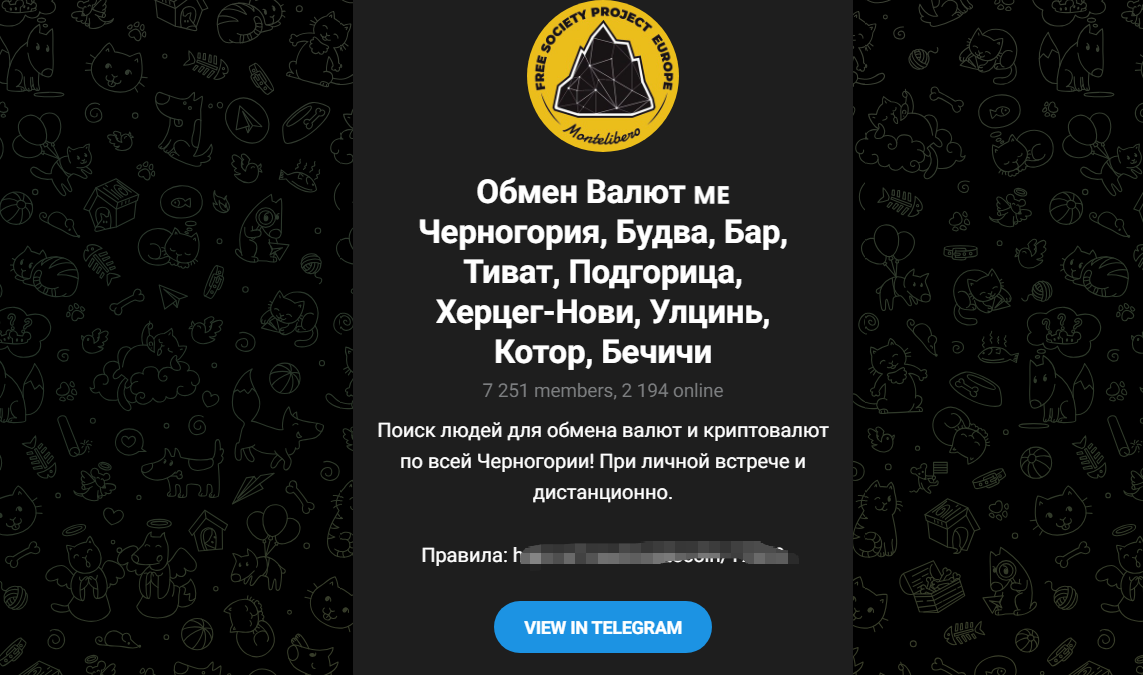
The group advises users to "only conduct transactions in person in public places and take necessary precautions," but also allows transactions through verified traders—these traders must submit passport information for group verification to receive a certified badge.
The group's logo and administrator usernames include the "Montelibero" community symbol. This community, located in Pecurice near the port city of Bar in Montenegro, was established by Russians in 2021. It claims to be a "free society" based on anarcho-capitalist principles and has issued its own cryptocurrency, EURMTL.
Victor Korb, a member of the Montelibero community council, denied any association between the community and the Telegram group: "Questions about others using the Montelibero project identifier should be directed to the users themselves."
Montenegro's tax authorities stated that, due to the lack of a legal basis, they are unable to tax such transactions.
"Until digital assets and their transactions are regulated by law, we cannot take any action," responded the Montenegrin Tax Authority. "Once the legal framework is established, the tax authorities will take all measures within their jurisdiction."
Although the process is slow, there has been preliminary progress.
In February 2025, the parliament passed an amendment to the "Anti-Money Laundering and Counter-Terrorist Financing Law," adding a "Register of Crypto-Asset Service Providers" and requiring "Know Your Customer" (KYC) verification for every crypto transaction exceeding 1,000 euros.
The Montenegrin Capital Market Committee (an independent securities and capital market regulatory body) was required to establish the register by mid-December 2025.
"Individuals or entities providing cryptocurrency-to-cash exchange services through social media operate in an unregulated 'gray area,'" the committee stated. "If service providers are unregistered and do not comply with the law, their activities may be deemed illegal—especially if there is suspicion of money laundering, unauthorized provision of financial services, or evasion of regulatory measures."
However, Jolicic remains skeptical. He believes that the registration requirements contradict the logic of the current gray market operations: "Those engaged in over-the-counter crypto trading must register and perform KYC verification for every client—but currently, no one is doing this. The law remains vague, and I believe these activities are inherently suspect under anti-money laundering regulations."
Legislative Revisions Imminent
BIRN previously exposed cases in Montenegro where cryptocurrencies were used to purchase real estate and vehicles, but such transactions were not incorporated into the tax or legal systems.
Due to the lack of a legal framework, authorities cannot even accurately track crypto assets held by public officials.
In mid-2023, the European Commission, the executive body of the EU, adopted the "Markets in Crypto-Assets Regulation" (MiCA), establishing a unified framework for digital asset regulation in the EU.
In September 2025, Montenegrin Prime Minister Milojko Spajic announced plans to draft digital asset laws in line with EU standards, and the Ministry of Finance has initiated public consultations on the relevant draft.
The proposed amendment to the "Credit Institutions Law" will, for the first time, define the concept of "digital assets," allowing credit institutions to provide crypto-related services (including digital token custody, trading platform operation, and transaction intermediation). The amendment to the "Tax Administration Law" will align Montenegrin law with the EU's "Directive on Automatic Exchange of Information on Crypto-Assets."
The Ministry of Finance stated that this will enable Montenegrin tax authorities to automatically exchange digital asset information with EU member states and other countries. Crypto service providers will need to collect and maintain user data (including accounts, transactions, and crypto income) and submit formal reports to the national service provider register.
"Regarding the taxation of crypto assets, we emphasize that once the digital asset regulatory law takes effect, the Ministry of Finance will amend tax laws to clarify the tax treatment of digital assets," the ministry responded.