AAVE jumps 9% after Fed cut – Can V4 upgrade fuel more upside?

ambcryptoPublicado em 2025-12-13Última atualização em 2025-12-13

Resumo

AAVE surged approximately 9% to around $205 following the Federal Reserve's interest rate cut, with increased attention on its upcoming V4 upgrade. The upgrade introduces a redesigned liquidation engine aimed at improving capital efficiency and risk controls. Market response was swift, with Open Interest rising by $34 million, indicating renewed leveraged trading interest. On-chain activity also strengthened, with receiving addresses nearly doubling to 1.2K, suggesting broader participation. Weekly protocol fees increased by $0.3 million, reaching $15.47 million. However, a significant liquidity cluster near $223 may act as a resistance level. While the upgrade has fueled momentum, high leverage could make the token sensitive to market volatility.

AAVE emerged as a key beneficiary of the recent Federal Reserve interest rate cuts.

The token gained roughly 9% on the day, trading near $205 at press time. That move unfolded as attention turned toward Aave’s [AAVE] upcoming V4 upgrade.

The upgrade introduced a redesigned liquidation engine, aimed at improving capital efficiency and strengthening risk controls across the protocol.

That shift appeared to resonate quickly with market participants, as both price action and derivatives data reflected renewed interest.

Liquidation engine sparked leverage rebound

Traders responded swiftly following the V4 announcement. Derivatives positioning, which had remained muted earlier, began to expand.

Open Interest climbed by approximately $34 million over the last 24 hours, according to CoinGlass data. That rise marked a clear reversal from the relatively flat positioning seen earlier in the week.

The increase suggested growing leveraged participation, particularly from larger traders willing to deploy capital alongside the upgrade narrative.

Even so, elevated Open Interest also raised sensitivity to sharp price swings, keeping volatility risks in focus.

Network activity picked up alongside price

On-chain activity strengthened in parallel with Derivatives expansion. Active Receiving Addresses increased sharply during the same period.

CryptoQuant data showed receiving addresses nearly doubled after the 7th of December. At press time, the metric stood near 1.2K.

That rise pointed to broader token movement across wallets, signaling increased participation rather than isolated whale transfers.

At the same time, Aave’s protocol revenue improved. Token Terminal data showed weekly network fees increased by roughly $0.3 million.

Total fees reached $15.47 million, reflecting income from lending interest and liquidation-related activity across the protocol.

That revenue growth aligned with higher loan usage, reinforcing the link between network fundamentals and price momentum.

Liquidity cluster defined upside focus

Despite the rally, Derivatives Heatmaps highlighted a clear liquidity barrier above current prices.

CoinGlass’ Liquidation Heatmap showed a $1.99 million liquidity cluster around the $223 level.

That zone stood out as a near-term price magnet if bullish momentum persisted and broader market conditions remained stable.

However, failure to sustain leverage support could expose AAVE to sharper pullbacks, given the recent build-up in derivatives positioning.


Final Thoughts

  • Aave’s recent move highlighted how protocol upgrades can quickly reshape trader behavior across derivatives and on-chain activity.
  • While leverage and fees supported momentum, elevated positioning suggested price action may remain sensitive to market conditions.


Leituras Relacionadas

Breaking: OpenAI Undergoes Major Reorganization, President Brockman Assumes Command

OpenAI has announced a major internal reorganization just months before its anticipated IPO. The company is merging its three flagship product lines—ChatGPT, Codex, and the API platform—into a single, unified product organization. The most significant leadership change involves co-founder and President Greg Brockman moving from a background technical role to take full, permanent control over all product strategy. This follows the indefinite medical leave of AGI Deployment CEO Fidji Simo. Additionally, ChatGPT's longtime lead, Nick Turley, has been reassigned to enterprise products, with former Instagram executive Ashley Alexander taking over consumer offerings. The consolidation, internally framed as a strategic move towards an "Agentic Future," aims to break down internal silos and create a cohesive "Super App." This planned desktop application would integrate ChatGPT's conversational abilities, Codex's coding power, and a rumored internal web browser named "Atlas" to autonomously perform complex user tasks. The reorganization occurs amid significant internal and external pressures. OpenAI has recently seen a wave of high-profile departures, including Sora co-lead Bill Peebles and other senior technical leaders, leading to concerns about a thinning executive bench. Externally, rival Anthropic recently secured funding at a staggering $900 billion valuation, surpassing OpenAI's own. Google's upcoming I/O developer conference also poses a competitive threat. Analysts suggest the dramatic restructure is a pre-IPO move to present a clearer, more focused narrative to Wall Street—streamlining operations and demonstrating decisive leadership under Brockman to counter internal turbulence and intense market competition.

marsbitHá 3h

Breaking: OpenAI Undergoes Major Reorganization, President Brockman Assumes Command

marsbitHá 3h

Two Survival Structures of Market Makers and Arbitrageurs

Market makers and arbitrageurs represent two distinct survival structures in high-frequency trading. Market makers primarily use limit orders (makers) to profit from the bid-ask spread, enjoying high capital efficiency (nominally 100%) but bearing inventory risk. This "inventory risk" arises from passive, fragmented, and discontinuous order fills in the limit order book (LOB). This risk, while a potential cost, can also contribute to excess profit if managed within control boundaries, allowing for mean reversion. Market makers essentially sell "time" (uncertainty over execution timing) to the market for price control and low fees. In contrast, cross-exchange arbitrageurs typically use market orders (takers) to exploit price differences or funding rates, resulting in lower nominal capital efficiency (requiring capital on both exchanges) and higher transaction costs. Their risk exposure stems from asymmetries in exchange rules (e.g., minimum order sizes), execution latency, and infrastructure risks (e.g., ADL, oracle drift). These exposures are active, exogenous gaps that primarily erode profits rather than contribute to them. Arbitrageurs essentially sell "space" (capital sunk across venues) for localized, immediate certainty. Both strategies engage in a trade-off between execution friction and residual risk. Optimal systems allow for temporary, controlled risk exposure rather than enforcing zero exposure at all costs. Their evolution converges towards hybrid models: arbitrageurs may use maker orders to reduce costs, while market makers may use taker orders or hedges for risk management. Ultimately, both use different forms of risk exposure—market makers exposing inventory, arbitrageurs immobilizing capital—to extract marginal, hard-won certainty from the market.

链捕手Há 3h

Two Survival Structures of Market Makers and Arbitrageurs

链捕手Há 3h

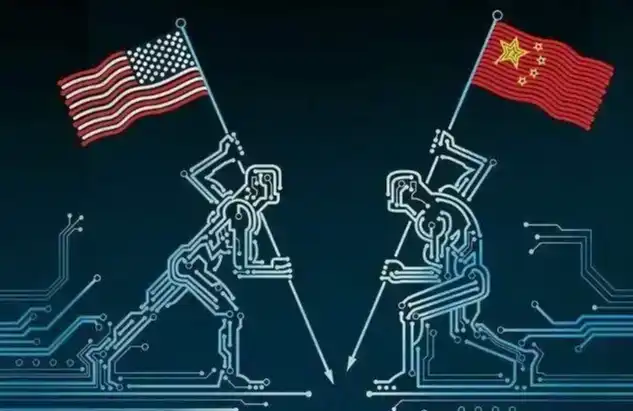
Who Will Define the Rules of the AI Era? Anthropic Discusses the 2028 US-China AI Landscape

This article, based on Anthropic's analysis, outlines the intensifying systemic competition between the U.S./allies and China for AI leadership by 2028. It argues that access to advanced computing power ("compute") is the critical bottleneck, where the U.S. currently holds a significant advantage through chip export controls and allied innovation. However, China's AI labs remain competitive by exploiting policy loopholes—via chip smuggling, overseas data center access, and "model distillation" attacks to copy U.S. model capabilities—keeping them close to the frontier. The piece presents two contrasting scenarios for 2028. In the first, decisive U.S. action to tighten compute controls and curb distillation locks in a 12-24 month AI capability lead, cementing democratic influence over global AI norms, security, and economic infrastructure. In the second, policy inaction allows China to achieve near-parity through continued access to U.S. technology, enabling Beijing to promote its AI stack globally and integrate advanced AI into its military and governance systems, altering the strategic balance. Anthropic contends that maintaining a decisive U.S. lead is essential for shaping safe AI development and governance. The core recommendation is for U.S. policymakers to urgently close compute and model access loopholes while promoting global adoption of the U.S. AI technology stack to secure a lasting strategic advantage.

marsbitHá 5h

Who Will Define the Rules of the AI Era? Anthropic Discusses the 2028 US-China AI Landscape

marsbitHá 5h

Trading

Spot
Futuros

Artigos em Destaque

Como comprar AAVE

Bem-vindo à HTX.com!Tornámos a compra de Aave Protocol (AAVE) simples e conveniente.Segue o nosso guia passo a passo para iniciar a tua jornada no mundo das criptos.Passo 1: cria a tua conta HTXUtiliza o teu e-mail ou número de telefone para te inscreveres numa conta gratuita na HTX.Desfruta de um processo de inscrição sem complicações e desbloqueia todas as funcionalidades.Obter a minha contaPasso 2: vai para Comprar Cripto e escolhe o teu método de pagamentoCartão de crédito/débito: usa o teu visa ou mastercard para comprar Aave Protocol (AAVE) instantaneamente.Saldo: usa os fundos da tua conta HTX para transacionar sem problemas.Terceiros: adicionamos métodos de pagamento populares, como Google Pay e Apple Pay, para aumentar a conveniência.P2P: transaciona diretamente com outros utilizadores na HTX.Mercado de balcão (OTC): oferecemos serviços personalizados e taxas de câmbio competitivas para os traders.Passo 3: armazena teu Aave Protocol (AAVE)Depois de comprar o teu Aave Protocol (AAVE), armazena-o na tua conta HTX.Alternativamente, podes enviá-lo para outro lugar através de transferência blockchain ou usá-lo para transacionar outras criptomoedas.Passo 4: transaciona Aave Protocol (AAVE)Transaciona facilmente Aave Protocol (AAVE) no mercado à vista da HTX.Acede simplesmente à tua conta, seleciona o teu par de trading, executa as tuas transações e monitoriza em tempo real.Oferecemos uma experiência de fácil utilização tanto para principiantes como para traders experientes.

400 Visualizações TotaisPublicado em {updateTime}Atualizado em 2025.03.21

Como comprar AAVE

Discussões

Bem-vindo à Comunidade HTX. Aqui, pode manter-se informado sobre os mais recentes desenvolvimentos da plataforma e obter acesso a análises profissionais de mercado. As opiniões dos utilizadores sobre o preço de AAVE (AAVE) são apresentadas abaixo.

活动图片