mRNA Vaccine Too Slow, Dog Owner Loses Beloved Pet, World's First AI-Customized Dog Cancer Vaccine Arrives

marsbitPublicado em 2026-08-24Última atualização em 2026-08-24

Resumo

A heartbreaking story from Australia showcases the intersection of AI, love, and loss. Paul Conyngham, an AI expert, lost his beloved bull terrier Rosie to cancer in 2024. Refusing to accept her prognosis, he used his machine learning skills, ChatGPT, and AlphaFold to design a personalized mRNA vaccine targeting her specific cancer mutations. The first vaccine dose, synthesized with help from university scientists, shrank Rosie's tumor by 75%, granting her a temporary reprieve. However, the cancer recurred with new mutations, requiring a second, updated vaccine. The traditional, slow production process couldn't deliver it in time, and Rosie passed away. Determined to prevent similar tragedies, Paul founded Gamgee, a startup named after a "Lord of the Rings" character. Backed by $4 million in seed funding from Founders Fund, Y Combinator, and others, Gamgee aims to industrialize and democratize personalized canine cancer vaccines. Their vision is an end-to-end platform where veterinarians submit tumor samples, AI algorithms rapidly identify target mutations, and customized mRNA vaccines are produced. The goal is to slash the design time to 48 hours and the total cost to around $2,000 per treatment. The addressable market is vast, with about 6 million dogs diagnosed with cancer annually in the US alone. Beyond pets, Gamgee's "N-of-1" medicine approach, validated in dogs, paves the way for similar ultra-personalized cancer therapies for humans, a field recently energized by M...

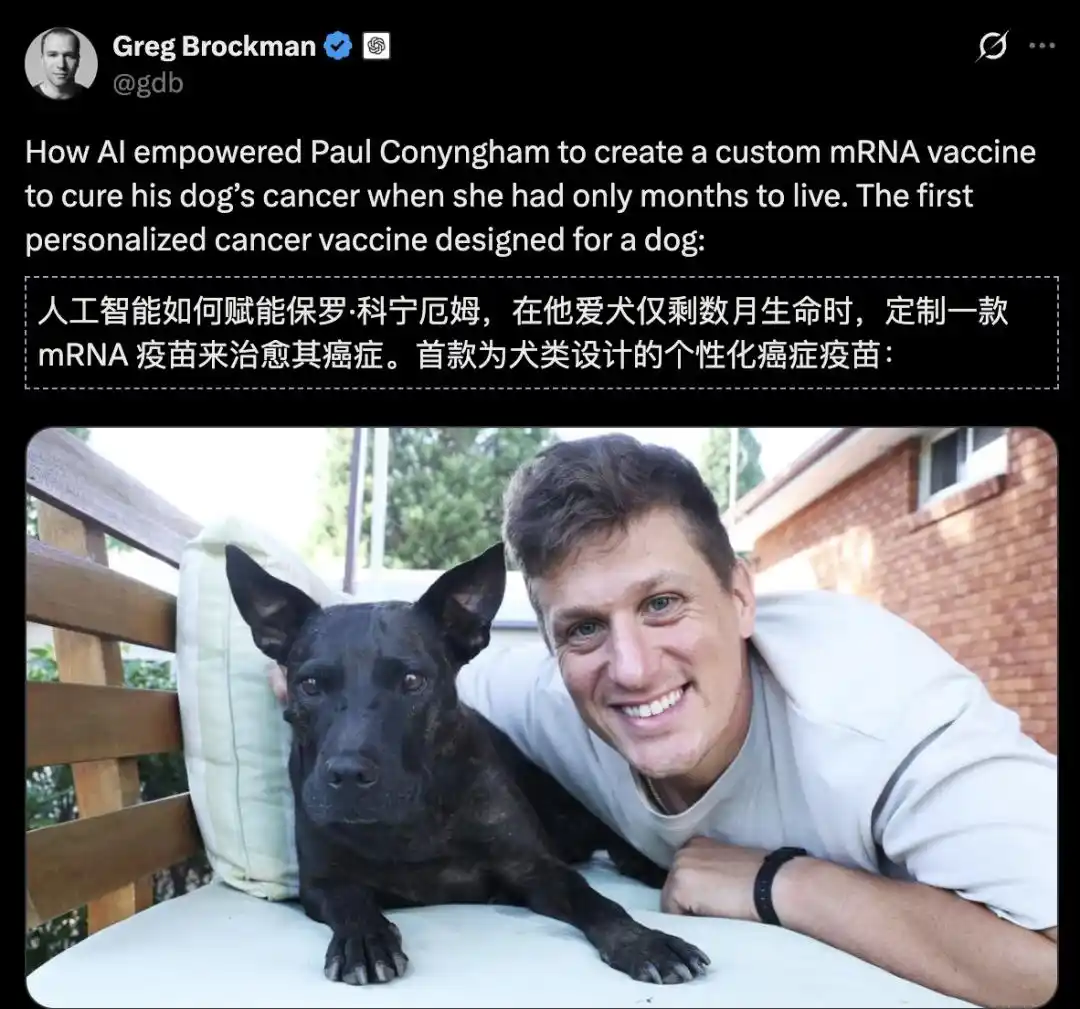
Remember the viral story of the "real-life Drug God" from a few months ago?

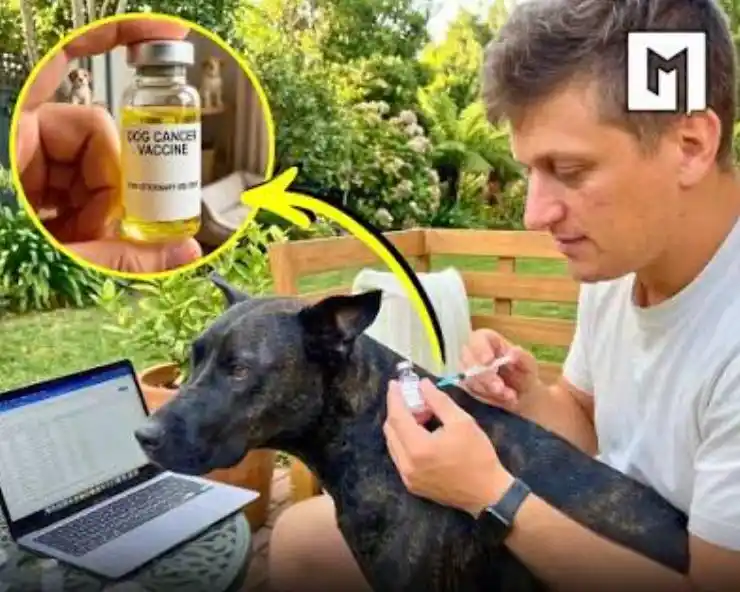
An Australian AI expert with no professional background, in order to save his terminally ill dog from cancer, taught himself genomics. Relying on ChatGPT and AlphaFold, he single-handedly created the world's first custom-made mRNA cancer vaccine.

After one injection, the tennis ball-sized tumor on the dog's leg miraculously shrank by 75%, successfully extending its life.
However, the latest outcome of the story unexpectedly broke hearts.

Today, Paul Conyngham announced heartbreaking news: his beloved dog Rosie has returned to the dog star.

This wasn't because the AI vaccine was ineffective, but because the vaccine production speed couldn't outrun Death.

Unable to manufacture the next dose of personalized mRNA cancer vaccine quickly enough, Rosie ultimately passed away.

But the story hasn't reached its conclusion.

Just now, Paul announced: the formal establishment of the startup Gamgee, which has already completed a $4 million seed round led by Founders Fund with participation from Y Combinator (YC).
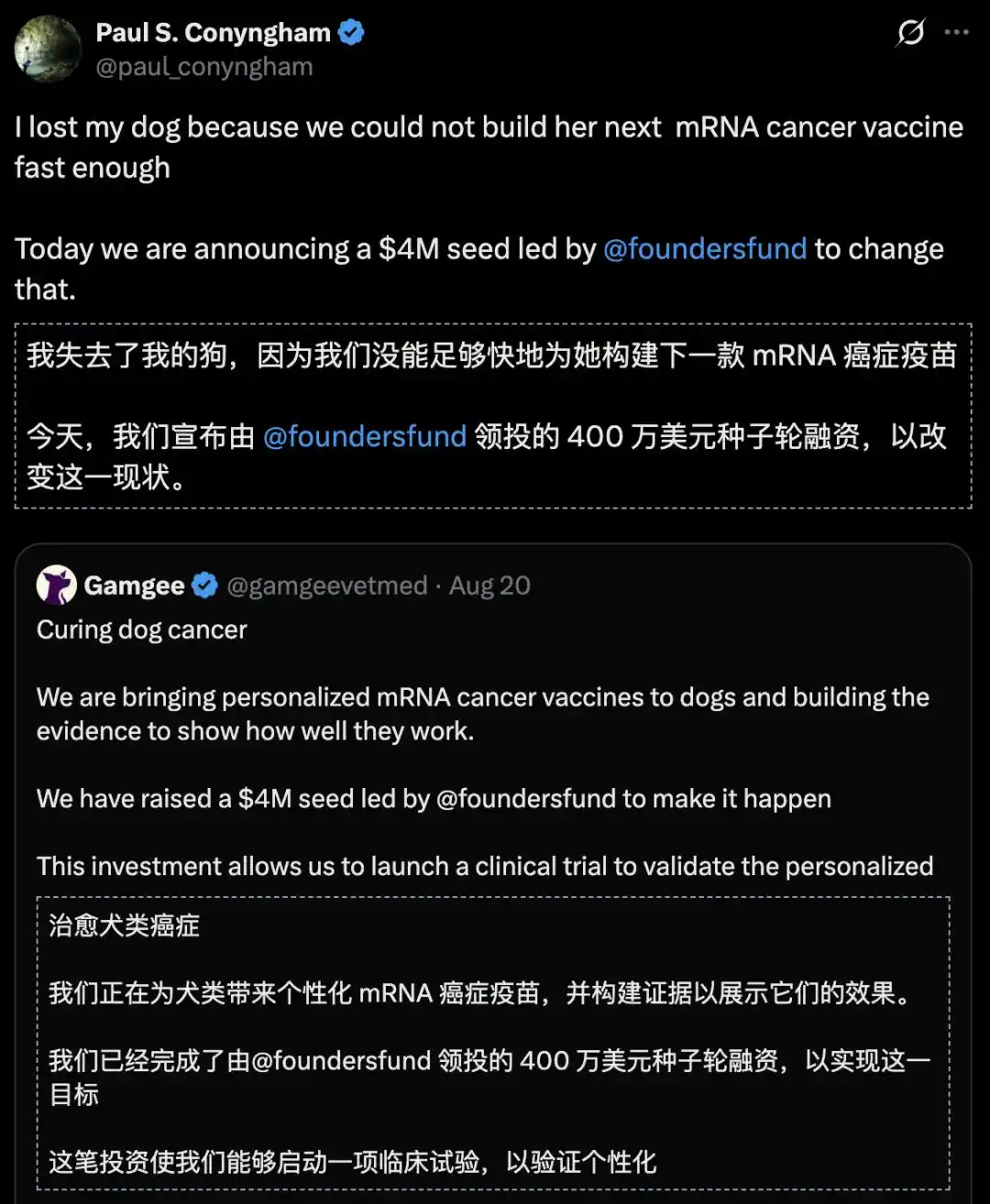
Although his own dog is gone, this "father" aims to create a clinically validated and scalable dog cancer vaccine for dogs worldwide.

A Worldwide Sensation: A "Medical Miracle"

In 2024, 8-year-old bull terrier Rosie was diagnosed with "mast cell cancer." The vet said: only a few months left.

Surgery, chemotherapy, immunotherapy... all methods failed. Paul, with 17 years of machine learning experience, decided: I'm going to save her my own way!

Spending just $3,000 on DNA sequencing of the tumor and healthy blood, Paul fed the massive genetic data into his own program. He consulted ChatGPT on biological principles, used AlphaFold for 3D modeling of mutated proteins, and finally pinpointed the specific attack targets tailored to Rosie's tumor.

AlphaFold's 3D modeling for Rosie's cancer
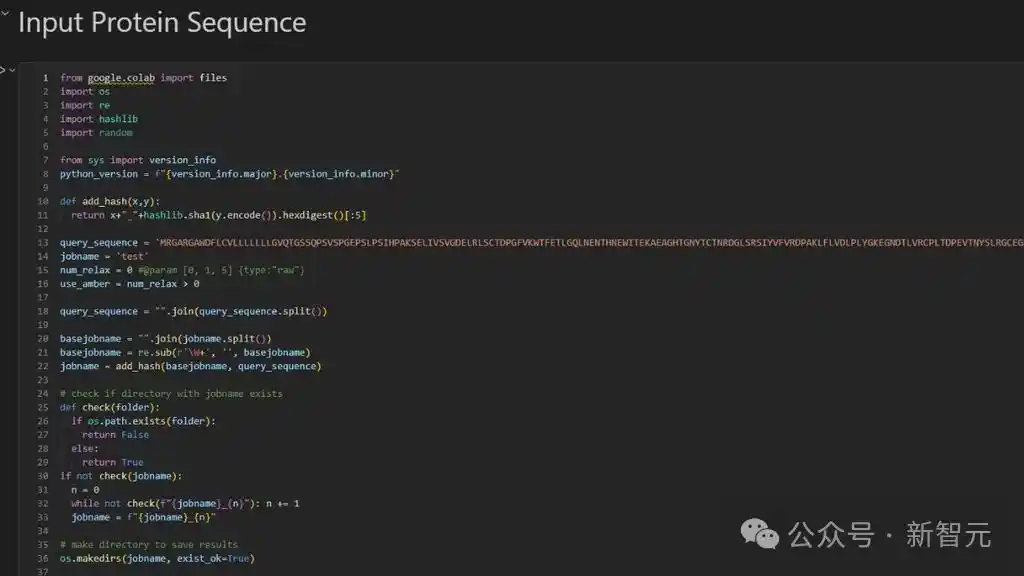
Part of the code for creating the mRNA therapy

With this AI-generated "vaccine formula" in hand, he ran around tirelessly, finally convincing scientists at the University of New South Wales and the University of Queensland to synthesize one dose of the vaccine.

In December 2025, after the first injection, a miracle occurred.

The massive tumor on Rosie's leg shrunk by 50%-75%.
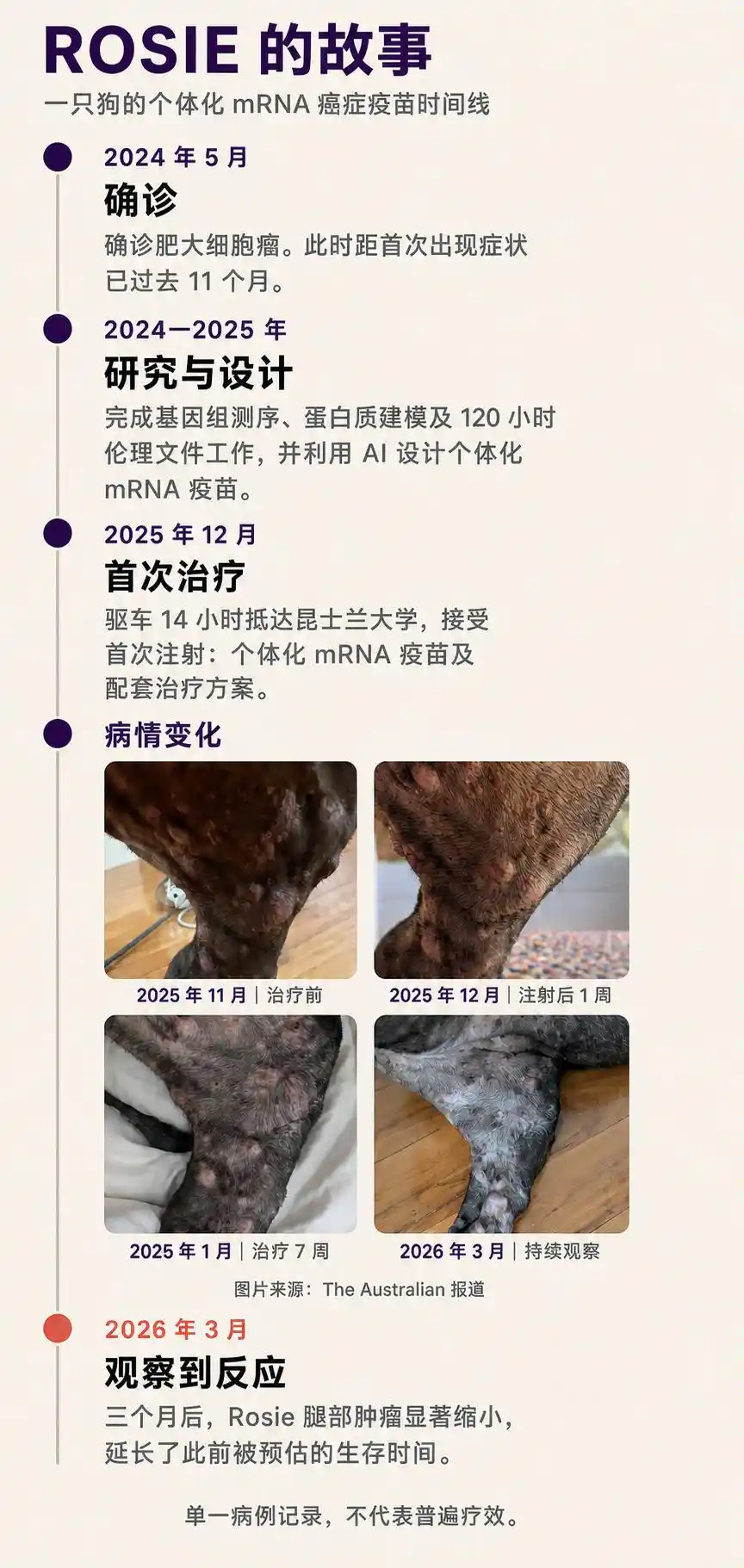
Microscopic analysis showed that large numbers of immune cells (macrophages and T cells) were vigorously attacking the cancer cells. Rosie regained her vitality; she could even jump fences again and chase rabbits.

The world was ecstatic: the era of personalized vaccines was at hand!

However, reality was far crueler than the movies.

The cancer cells were too cunning; they mutated and developed drug resistance—Rosie's cancer relapsed.

At this point, she urgently needed a second-generation mRNA vaccine customized based on the latest mutations.

Yet, the speed of traditional labs, the cumbersome manual production process, and the lengthy approval mechanisms couldn't get the vaccine to Rosie in time.

"I lost my dog because we couldn't make the next mRNA cancer vaccine fast enough," Paul wrote with anguish.

As an ordinary person, even with AI knowledge, trying to quickly customize an mRNA vaccine within a month or two within the existing medical-industrial system remained an almost impossible task.

"I shouldn't be the only person who can do this. Having a machine learning background and months of working through the night shouldn't be the barrier to accessing life-saving drugs."

Rosie is gone, but the legacy she left behind is just beginning to take root and sprout.
The "Father" Founds Gamgee for His Beloved Dog,

Making Exorbitant Vaccines Accessible

To prevent the tragedy from repeating, Paul founded Gamgee, a name derived from "The Lord of the Rings."

Gamgee's vision is: to cure canine cancer and bring personalized mRNA cancer vaccines to dogs all over the world.
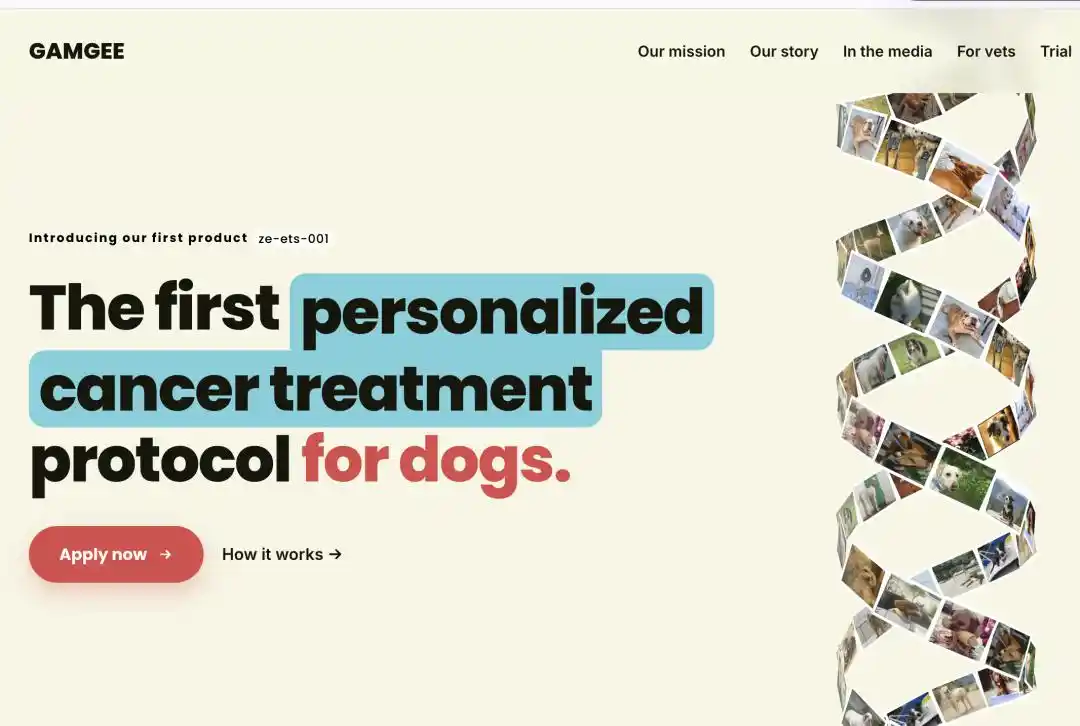
Currently, they have launched their first prototype for personalized cancer treatment customized for dogs.
Founders Fund, founded by Peter Thiel, didn't hesitate to lead the $4 million seed round. Top global incubator Y Combinator (YC), Loyal CEO Celine Halioua, Dropbox co-founder Arash Ferdowsi, and a host of other big names have also joined the investment.

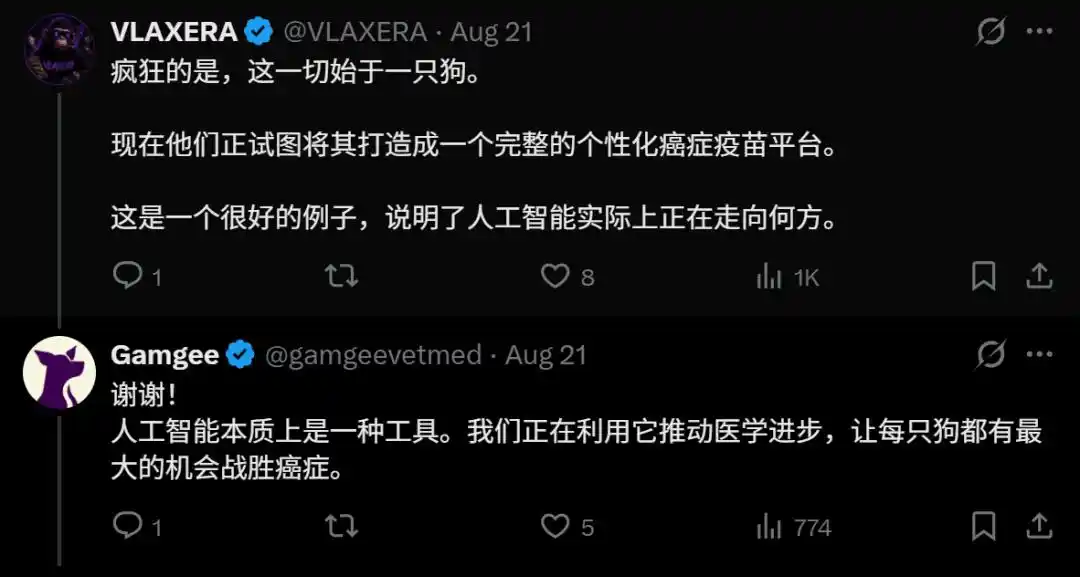
Why would top-tier Silicon Valley VCs invest in a project "to save dogs"?

Because what Gamgee aims to do is solve the fatal problem that led to Rosie's death: speed and cost.

It took Paul a whole year and $20,000 to navigate the entire process.

Now, Gamgee is turning this process into an industrialized SaaS assembly line.

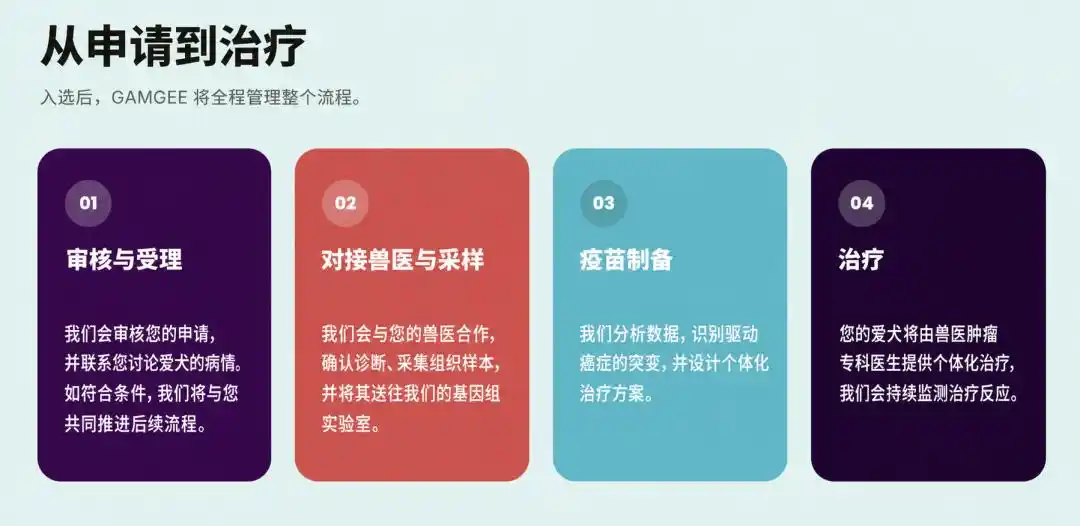
They have built an "end-to-end" closed-loop platform. Ordinary dog owners no longer need to run around like Paul did. All you need to do is follow these steps.

1. Input the Tumor: Gamgee will send you a collection kit. Your veterinarian extracts samples of the dog's tumor and healthy tissue and sends them back.

2. AI Deciphers at Lightning Speed: The samples go directly for DNA and RNA sequencing, and Gamgee's software system takes over everything. AI algorithms sift through the massive data to accurately identify and rank the actionable cancer cell mutation targets worth attacking, preserving evidence for every decision.

3. Output the Vaccine: The system automatically outputs the mRNA vaccine design ready for manufacturing. Gamgee coordinates production, cold-chain logistics, until the veterinarian administers the personalized vaccine to the dog.
Gamgee has set an audacious KPI: aiming to compress vaccine design time to within 48 hours and reduce the end-to-end cost of a full treatment course to $2,000!

"Genome sequencing, protein modeling, mRNA synthesis—the tools are all there. What I built for Rosie wasn't new science; it was new access," Paul stated.

This is nothing short of a revolutionary upheaval in the industry.
Saving 6 Million Cancer-Stricken Dogs Worldwide

In terms of commercial prospects, Gamgee demonstrates a strong Silicon Valley-style "data flywheel" mindset.

First, why dogs?

This is an enormous and heartbreaking market with urgent needs.

In the United States alone, approximately 6 million dogs are diagnosed with cancer each year.

Cancer is the leading cause of death in adult dogs. The vast majority of dog owners have no choice but to spend thousands of dollars on painful chemotherapy, radiation, or surgery.

More importantly, from a biological and AI algorithm training perspective, dogs are the perfect subjects for validating personalized cancer vaccines.

They have pure genetic pools.

Many modern pet dog breeds were developed over the past few centuries from small founder populations, resulting in relatively closed gene pools. This genetic concentration leads many breeds (like Golden Retrievers, Labradors) to be highly susceptible to specific cancers.
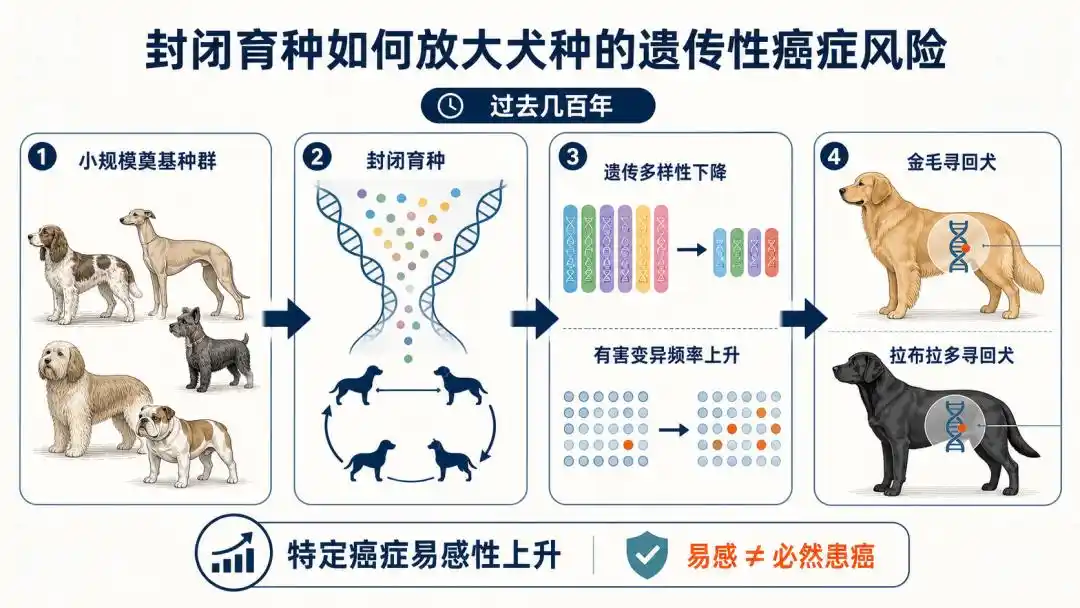
This makes it easier for AI to find patterns in mutations.

Additionally, pet dog cancers occur naturally, unlike those artificially induced in lab mice. Their immune systems are intact, and their disease progression timelines are well-suited for rapid clinical validation.

And the snowball effect of data is Gamgee's core moat.

Currently, datasets on animal genomes and immune responses are still extremely scarce. Every dog Gamgee treats yields a precious set of "sequencing + immune response + clinical outcome" data.

Once this data flywheel starts turning, it will become unstoppable.

Acquire data -> Optimize AI target selection models -> Produce next-generation, more potent vaccines -> Generate better treatment data -> Attract more dogs for treatment.

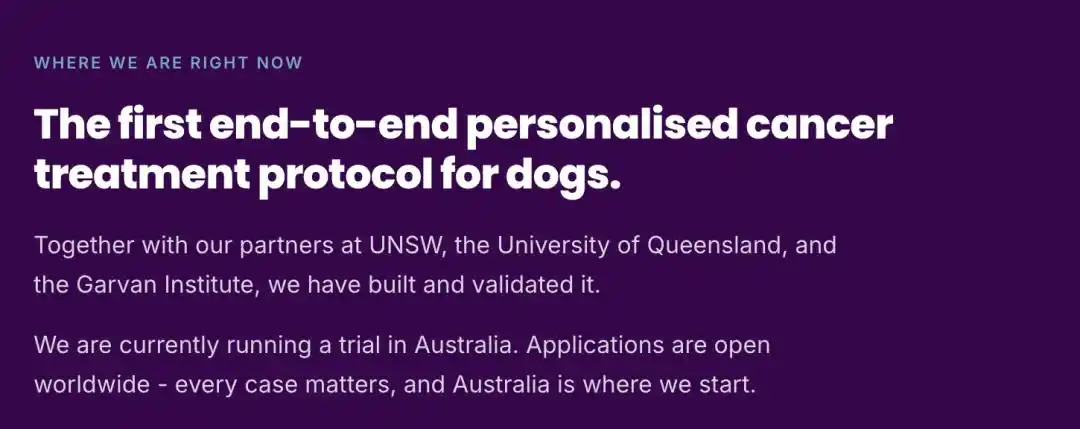
Currently, the $4 million seed funding has officially launched clinical trials. The first clinical trials are underway in Australia, in collaboration with top institutions like the University of New South Wales and the University of Queensland.

This trial will recruit 30 dogs with cancer. Eligible dogs will participate in the trial for free and receive the personalized vaccine.

Simultaneously, Gamgee is now accepting case registrations globally, with a waitlist already exceeding 300 dogs.
The Ultimate Vision: Starting with Rosie, Healing All of Humanity

But Gamgee's ambition extends far beyond canines.

For top-tier investors, what they see is not just the pet healthcare market, but the dawn of "N-of-1" medicine (i.e., extreme personalized medicine for a single patient).

Gamgee's ultimate goal is to establish a better treatment model based on "N-of-1," transcending species barriers, all the way to humans.
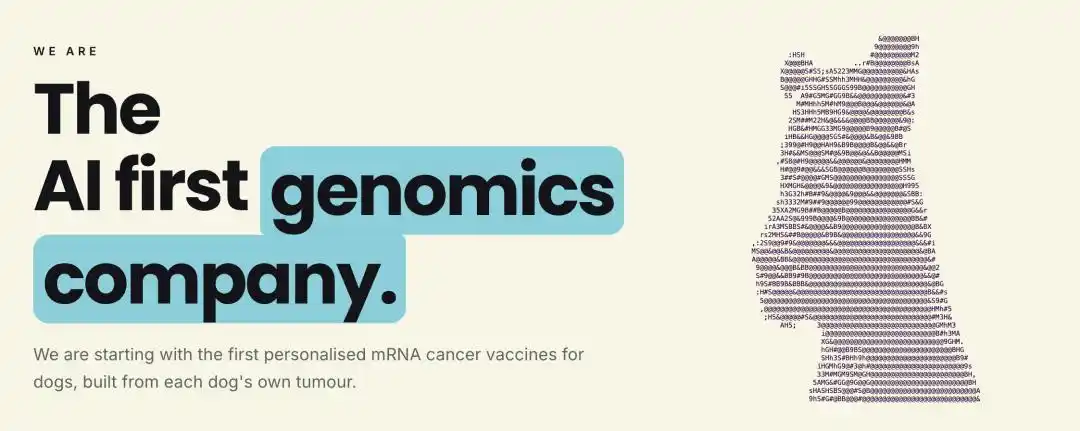
Imagine: if Gamgee can, through thousands of dogs, industrialize the process of "tumor sequencing -> AI design -> mRNA vaccine synthesis within 48 hours," soon, this technology will benefit humans.

As David Thomas, Director of the Centre for Molecular Oncology at UNSW, said: "If we can do this in dogs, why wouldn't we roll it out to all humans with cancer?"

Today, over 1,600 cancer therapeutics and vaccines are in development globally. The wave of mRNA and precision medicine has swept across the world.
And just a few days ago, Moderna and Merck jointly announced—

The world's first mRNA cancer therapy deeply involved with AI in its design, "privately customized" based on a patient's own cancer cell gene mutations, achieved historic success in a global Phase III clinical trial for high-risk melanoma!
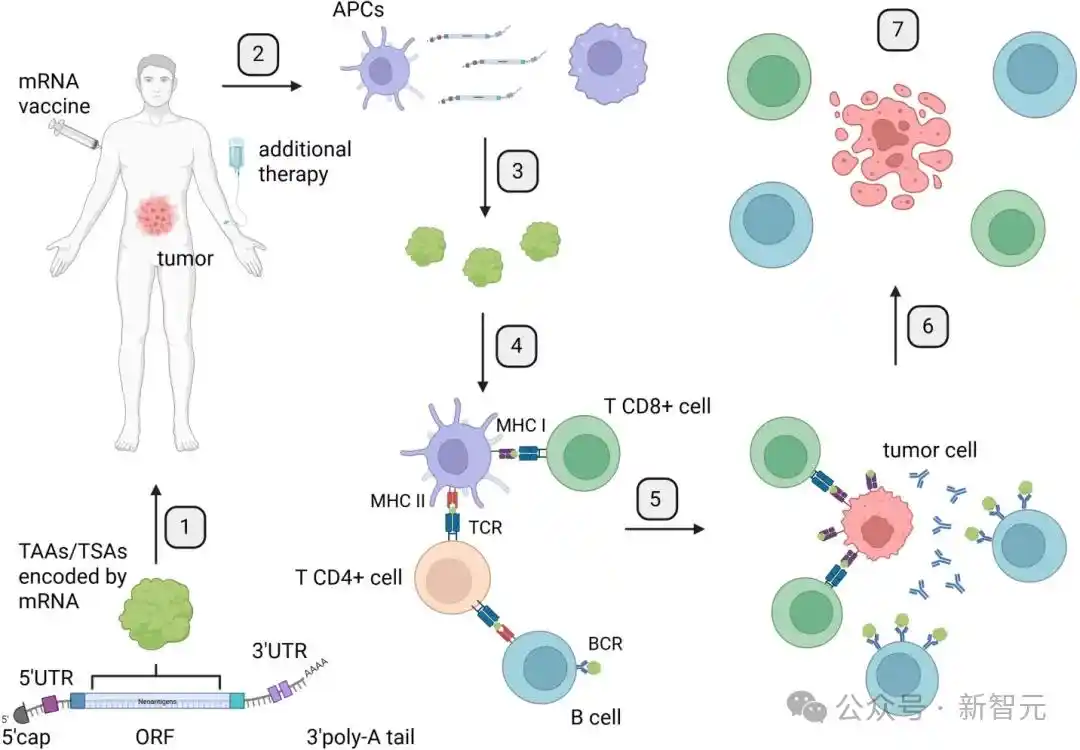
This process is essentially the "human premium version" of Paul's effort to save Rosie!

Similarly, tumor tissue is excised for genetic sequencing; similarly, AI models take the stage, running simulations within hours to precisely identify the most lethal "34 unique targets" from thousands of mutations.

The latter therapy has already significantly prolonged recurrence-free survival and markedly reduced the risk of tumors metastasizing to distant sites like the lungs, brain, and liver.

Moderna's clinical victory proves that the path of "tumor sequencing -> AI neoantigen selection -> custom mRNA -> immune activation" is entirely viable for human cancer.
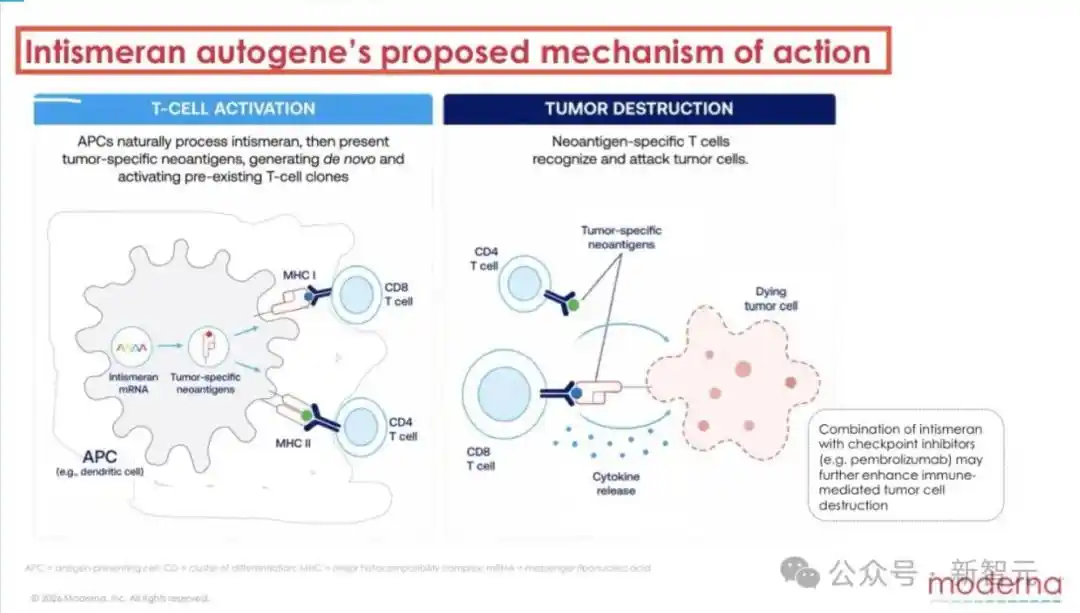
Clearly, we are on the eve of AI curing cancer.

The Legacy of Love

Rosie ultimately didn't get to receive the second vaccine dose.

But her story has given hope to 6 million dogs diagnosed with cancer each year.

In the tweet announcing Gamgee's funding, Paul ended with five words: "I love you, Rosie."

"We built Gamgee so that no other dog ever has to wait for that hope again."

Although Rosie has closed her eyes forever, the legacy she left may illuminate the path for millions of dogs, and even help humanity conquer cancer.

References:https://www.gamgee.io/https://x.com/paul_conyngham/status/2090502003449590254

https://x.com/paul_conyngham/status/2036940410363535823

This article is from the WeChat public account "New Zhiyuan," author: ASI Apocalypse, Editor: Aeneas


Criptomoedas em alta

Perguntas relacionadas

QWhat was the main reason why Rosie, the dog, ultimately passed away despite the initial success of the custom mRNA vaccine?

ARosie ultimately passed away because the production of the next personalized mRNA cancer vaccine could not be completed fast enough to keep pace with the aggressive recurrence and evolution of her cancer. The traditional lab processes and regulatory hurdles were too slow.

QWhat is the name of the startup founded by Paul Conyngham, and what is its primary mission?

AThe startup is named Gamgee. Its primary mission is to create and scale personalized mRNA cancer vaccines for dogs, aiming to make them accessible and affordable to prevent other dogs from suffering the same fate as Rosie.

QHow does Gamgee plan to drastically reduce the time and cost of creating a personalized dog cancer vaccine?

AGamgee plans to create an industrialized SaaS platform that automates the process from tumor sampling to vaccine delivery. Their goal is to compress the vaccine design time to within 48 hours and reduce the end-to-end cost of a full treatment course to around $2000.

QAccording to the article, why are dogs considered a perfect model for validating personalized cancer vaccines from a biological and AI training perspective?

ADogs are ideal because many breeds have a closed gene pool due to selective breeding, making them prone to specific, predictable cancers. Their cancers occur naturally (not artificially induced), and their intact immune systems and disease timelines provide excellent, fast data for clinical validation and AI model training.

QWhat is the broader, long-term vision for the technology being developed by Gamgee, as mentioned in the article?

AThe long-term vision is to establish a proven, industrialized 'N-of-1' (highly personalized) medical treatment model for cancer. By perfecting the process in dogs, the goal is to eventually adapt and apply this technology to create effective, rapid, and personalized mRNA cancer therapies for humans.

Leituras Relacionadas

The 'Saving U.S. Treasuries' Baton Pass: Bessent Fumbled Last Week, This Week It's Wash's Turn

"Rescuing US Treasuries" Relay: After Bessent's Miss, All Eyes Are on Walsh Last week, US Treasury Secretary Bessent's announcement to at least double long-term Treasury buybacks failed to sustainably lower yields, which quickly rebounded. The market response saw a drop in the dollar alongside surges in gold and Bitcoin, interpreted as a "pressure release valve" for anxiety. The focus now shifts to Fed Chairman Walsh's upcoming Jackson Hole speech. Markets are highly sensitive to his message, seeking clarity on the Fed's policy response to stubborn inflation and worsening fiscal conditions. Analysts warn that a lack of new guidance could disappoint markets and worsen the sell-off in long-dated bonds. Analysts question the scale of Bessent's operations, noting they are too small relative to the overall debt market and do not constitute quantitative easing. A key issue is the Fed's massive holdings of long-term bonds, which distorts the market. With the Fed holding low-yielding short-term bonds that are losing money relative to its policy rate, discussion is growing around a potential Fed-led "Operation Twist." This would involve selling short-term bonds to buy long-term ones, aiming to lower long-end yields without expanding the balance sheet. The upcoming PCE inflation data will set the stage for Walsh's speech. However, the window for action is narrowing amid political pressures. A critical threshold is the 30-year yield at 5%; holding above it could increase stress on the dollar and leveraged sectors. Overall, the article suggests that without coordinated Fed action to anchor inflation expectations, Treasury interventions may ultimately fail, with investors increasingly looking to assets like gold as hedges.

marsbitHá 13m

The 'Saving U.S. Treasuries' Baton Pass: Bessent Fumbled Last Week, This Week It's Wash's Turn

marsbitHá 13m

Hyperliquid's Compliance Journey: From Permissionless to Permissioned via HIP-3

Hyperliquid’s Compliance Path: From Permissionless to Permissioned HIP-3 Hyperliquid currently blocks U.S. access because its permissionless, on-chain infrastructure conflicts with U.S. market structure laws, which restrict futures trading to registered exchanges, clearinghouses, and brokers. Through its Hyperliquid Policy Center (HPC), the project is advocating for regulatory modernization, proposing that regulated entities be allowed to build products on HyperCore (its exchange and clearing layer) while fulfilling their compliance obligations. The platform’s modular stack separates roles like a traditional exchange (DCM), clearinghouse (DCO), and broker (FCM), but reconstructs them on-chain with code. This enables permissionless access, self-custody, and 24/7 global trading, but clashes with U.S. rules requiring KYC, specific margin models, and custodial arrangements. To resolve this, HPC is engaging with U.S. regulators (CFTC, SEC) to seek clarity that deploying on-chain software does not itself trigger licensing, and to establish exemptions allowing non-custodial wallets to route users to regulated derivatives. Recent political signals suggest openness to this approach. On the technical side, Hyperliquid Labs has introduced permissioned HIP-3 deployers on testnet. These allow regulated entities to launch markets, perform KYC, and whitelist compliant users. While these create separate order books, whitelisted market makers can bridge liquidity between them, ensuring deep, shared liquidity across the same L1. Features like payload-based “PA” permissions enable DEX-level account controls (e.g., reduce-only orders), mirroring traditional broker authorities. The strategy is not to open the native, permissionless front-end to U.S. users, but to position Hyperliquid as neutral infrastructure that U.S. regulated firms can use while meeting their legal duties. This paves a compliant path for U.S. investor access while preserving the protocol’s core, permissionless nature.

marsbitHá 37m

Hyperliquid's Compliance Journey: From Permissionless to Permissioned via HIP-3

marsbitHá 37m

Two Funding Rounds in Three Months: The Chinese Version of Palantir is on Fire

Investment Community AI has learned that Beijing Zhongshu Ruizhi Technology Co., Ltd., a domestic industrial-grade causal intelligence and high-reliability decision-making AI company, has recently completed a strategic financing round worth hundreds of millions of RMB. This round saw participation from China Internet Investment Fund, Suzhou Chuangtou National Social Security Fund, Financial Street Capital, ICBC Capital, Kunlun Capital, among others, with existing shareholders also increasing their investment. This follows a Series B funding round in the hundreds of millions completed just three months prior. The rapid succession of two major funding rounds signifies strong market recognition of the company's underlying original technology and scaled commercial implementation. Often referred to as the "Chinese version of Palantir," Zhongshu Ruizhi is entering a new phase of accelerated technological iteration, widespread scenario replication, and scaled performance release, mirroring the explosive growth of China's AI market. Founded in April 2020 by Dr. Han Han, a Tsinghua University Ph.D. and former core drafter of national AI policies, the company is mission-driven to "move AI from the digital world to the physical world." It focuses on the high-reliability, strong-decision industrial AI track and enterprise-grade AI Agent full-stack infrastructure. The team tackles the challenge of applying AI to China's vast and complex industrial and energy systems by developing a new intelligent operating system from scratch. Its core technological breakthrough lies in three proprietary底层 technologies: meta-causal cognitive theory, causal models, and a dynamic ontology engine. These address critical pain points of generative large models in industrial settings—such as AI hallucinations, insufficient reasoning, lack of temporal logic, unverifiable decisions, and multi-source rule conflicts—thereby providing trustworthy, explainable, and executable智能决策 capabilities. Commercially, Zhongshu Ruizhi has achieved scaled deployment, serving over 50 central state-owned enterprises and industrial groups in sectors like power, petroleum, and aerospace, with implementations in more than 800 highly complex production scenarios. The company reported doubled revenue in 2025, demonstrating strong self-sufficiency and a viable business model—a rarity among new-generation AI firms. The latest funds will be allocated towards advancing foundational theoretical research, replicating successful application models to expand market presence (including overseas), and attracting top-tier talent. Lead investor China Internet Investment Fund highlighted that in the current shift from general AI capability contests to deep industrial empowerment, industrial-grade causal intelligence is crucial for building China's modern digital foundation and fostering new quality productive forces. They expressed support for the company's efforts to define decision-making paradigms and trustworthy standards for industrial intelligence, aiming to secure a rule-making voice in the global physical AI arena.

marsbitHá 47m

Two Funding Rounds in Three Months: The Chinese Version of Palantir is on Fire

marsbitHá 47m

The Biggest Political Economy Question in the AI Era: As Robots Become More Capable, How Do Humans Share the Value?

In the AI era, the most pressing political economy question is: as machines become increasingly capable, how can humanity share in the value they create? An article originally critiquing China's tech focus has sparked a deeper debate on this global challenge. Historically, industrial progress improved efficiency but still relied on human labor for wealth creation and distribution. AI is fundamentally different—it is now replacing cognitive and knowledge work. As AI and robots take over more tasks, economic growth may continue while direct human participation in value creation shrinks, creating a core tension between productivity gains and widespread income generation. The issue is not unique to China. While leading tech companies amass enormous wealth, labor's share of income is declining globally. The core problem is a broken link: technological innovation and corporate profits are not translating into sufficient consumer income and demand. Three potential paths forward are outlined: a traditional capitalist model where profits primarily go to capital owners; a state-capitalist approach with public investment in AI; and more innovative models like digital sovereign wealth funds, universal shareholding, or AI-era basic income schemes to directly distribute AI-generated value. The future competitive advantage may lie not just in technological supremacy, but in which society can build a new, inclusive distribution system for the intelligent economy. The ultimate challenge is ensuring that as AI creates value, humans have a means to obtain income and share in the resulting widespread social benefits.

marsbitHá 58m

The Biggest Political Economy Question in the AI Era: As Robots Become More Capable, How Do Humans Share the Value?

marsbitHá 58m

Generating Profits for Seven Consecutive Quarters, Emerging Markets Carry Trade Outperforms Everything

For the seventh consecutive quarter, dollar-funded emerging market carry trades have delivered positive returns, marking the longest winning streak since 2008. According to Bloomberg's index, this strategy has gained approximately 22% since late 2024, outperforming U.S. Treasuries, emerging market sovereign, and corporate dollar debt. The core of the trade involves borrowing low-interest currencies like the U.S. dollar, euro, or yen to invest in high-yielding emerging market assets, such as Turkish lira bonds offering over 40% returns. Returns were amplified by favorable currency moves, with the dollar weakening against most emerging market currencies and other traditional funding currencies. For instance, the trade gained 48% on the Colombian peso in the past year. A key test came in August 2024 with a historic joint U.S.-Japan currency intervention, which caused only a modest 1% dip in the carry trade risk premium as investors shifted funding from the yen to the euro and Swiss franc. Looking ahead, the primary risk is the timing of Federal Reserve policy changes. While persistent inflation allows the Fed to hold rates, a rapid rise in long-term U.S. yields could threaten the trade. Another concern is crowding, as massive inflows increase vulnerability to a sudden reversal. High interest rates in regions like Latin America and Eastern Europe, supported by external factors like Middle East tensions and energy prices, continue to sustain the opportunity. Major investors remain engaged, favoring currencies like the Mexican peso, South African rand, and Turkish lira.

marsbitHá 1h

Generating Profits for Seven Consecutive Quarters, Emerging Markets Carry Trade Outperforms Everything

marsbitHá 1h

Trading

Spot

Artigos em Destaque

O que é $S$

Compreender o SPERO: Uma Visão Abrangente Introdução ao SPERO À medida que o panorama da inovação continua a evoluir, o surgimento de tecnologias web3 e projetos de criptomoeda desempenha um papel fundamental na formação do futuro digital. Um projeto que tem atraído atenção neste campo dinâmico é o SPERO, denotado como SPERO,$$s$. Este artigo tem como objetivo reunir e apresentar informações detalhadas sobre o SPERO, para ajudar entusiastas e investidores a compreender as suas bases, objetivos e inovações nos domínios web3 e cripto. O que é o SPERO,$$s$? O SPERO,$$s$ é um projeto único dentro do espaço cripto que procura aproveitar os princípios da descentralização e da tecnologia blockchain para criar um ecossistema que promove o envolvimento, a utilidade e a inclusão financeira. O projeto é concebido para facilitar interações peer-to-peer de novas maneiras, proporcionando aos utilizadores soluções e serviços financeiros inovadores. No seu núcleo, o SPERO,$$s$ visa capacitar indivíduos ao fornecer ferramentas e plataformas que melhoram a experiência do utilizador no espaço das criptomoedas. Isso inclui a possibilidade de métodos de transação mais flexíveis, a promoção de iniciativas impulsionadas pela comunidade e a criação de caminhos para oportunidades financeiras através de aplicações descentralizadas (dApps). A visão subjacente do SPERO,$$s$ gira em torno da inclusão, visando fechar lacunas dentro das finanças tradicionais enquanto aproveita os benefícios da tecnologia blockchain. Quem é o Criador do SPERO,$$s$? A identidade do criador do SPERO,$$s$ permanece algo obscura, uma vez que existem recursos publicamente disponíveis limitados que fornecem informações detalhadas sobre o(s) seu(s) fundador(es). Esta falta de transparência pode resultar do compromisso do projeto com a descentralização—uma ética que muitos projetos web3 partilham, priorizando contribuições coletivas em vez de reconhecimento individual. Ao centrar as discussões em torno da comunidade e dos seus objetivos coletivos, o SPERO,$$s$ incorpora a essência do empoderamento sem destacar indivíduos específicos. Assim, compreender a ética e a missão do SPERO é mais importante do que identificar um criador singular. Quem são os Investidores do SPERO,$$s$? O SPERO,$$s$ é apoiado por uma diversidade de investidores que vão desde capitalistas de risco a investidores-anjo dedicados a promover a inovação no setor cripto. O foco desses investidores geralmente alinha-se com a missão do SPERO—priorizando projetos que prometem avanço tecnológico social, inclusão financeira e governança descentralizada. Essas fundações de investidores estão tipicamente interessadas em projetos que não apenas oferecem produtos inovadores, mas que também contribuem positivamente para a comunidade blockchain e os seus ecossistemas. O apoio desses investidores reforça o SPERO,$$s$ como um concorrente notável no domínio em rápida evolução dos projetos cripto. Como Funciona o SPERO,$$s$? O SPERO,$$s$ emprega uma estrutura multifacetada que o distingue de projetos de criptomoeda convencionais. Aqui estão algumas das características-chave que sublinham a sua singularidade e inovação: Governança Descentralizada: O SPERO,$$s$ integra modelos de governança descentralizada, capacitando os utilizadores a participar ativamente nos processos de tomada de decisão sobre o futuro do projeto. Esta abordagem promove um sentido de propriedade e responsabilidade entre os membros da comunidade. Utilidade do Token: O SPERO,$$s$ utiliza o seu próprio token de criptomoeda, concebido para servir várias funções dentro do ecossistema. Esses tokens permitem transações, recompensas e a facilitação de serviços oferecidos na plataforma, melhorando o envolvimento e a utilidade gerais. Arquitetura em Camadas: A arquitetura técnica do SPERO,$$s$ suporta modularidade e escalabilidade, permitindo a integração contínua de funcionalidades e aplicações adicionais à medida que o projeto evolui. Esta adaptabilidade é fundamental para manter a relevância no panorama cripto em constante mudança. Envolvimento da Comunidade: O projeto enfatiza iniciativas impulsionadas pela comunidade, empregando mecanismos que incentivam a colaboração e o feedback. Ao nutrir uma comunidade forte, o SPERO,$$s$ pode melhor atender às necessidades dos utilizadores e adaptar-se às tendências do mercado. Foco na Inclusão: Ao oferecer taxas de transação baixas e interfaces amigáveis, o SPERO,$$s$ visa atrair uma base de utilizadores diversificada, incluindo indivíduos que anteriormente podem não ter participado no espaço cripto. Este compromisso com a inclusão alinha-se com a sua missão abrangente de empoderamento através da acessibilidade. Cronologia do SPERO,$$s$ Compreender a história de um projeto fornece insights cruciais sobre a sua trajetória de desenvolvimento e marcos. Abaixo está uma cronologia sugerida que mapeia eventos significativos na evolução do SPERO,$$s$: Fase de Conceituação e Ideação: As ideias iniciais que formam a base do SPERO,$$s$ foram concebidas, alinhando-se de perto com os princípios de descentralização e foco na comunidade dentro da indústria blockchain. Lançamento do Whitepaper do Projeto: Após a fase conceitual, um whitepaper abrangente detalhando a visão, os objetivos e a infraestrutura tecnológica do SPERO,$$s$ foi lançado para atrair o interesse e o feedback da comunidade. Construção da Comunidade e Primeiros Envolvimentos: Esforços ativos de divulgação foram feitos para construir uma comunidade de primeiros adotantes e investidores potenciais, facilitando discussões em torno dos objetivos do projeto e angariando apoio. Evento de Geração de Tokens: O SPERO,$$s$ realizou um evento de geração de tokens (TGE) para distribuir os seus tokens nativos a apoiantes iniciais e estabelecer liquidez inicial dentro do ecossistema. Lançamento da dApp Inicial: A primeira aplicação descentralizada (dApp) associada ao SPERO,$$s$ foi lançada, permitindo que os utilizadores interagissem com as funcionalidades principais da plataforma. Desenvolvimento Contínuo e Parcerias: Atualizações e melhorias contínuas nas ofertas do projeto, incluindo parcerias estratégicas com outros players no espaço blockchain, moldaram o SPERO,$$s$ em um jogador competitivo e em evolução no mercado cripto. Conclusão O SPERO,$$s$ é um testemunho do potencial do web3 e das criptomoedas para revolucionar os sistemas financeiros e capacitar indivíduos. Com um compromisso com a governança descentralizada, o envolvimento da comunidade e funcionalidades inovadoras, abre caminho para um panorama financeiro mais inclusivo. Como em qualquer investimento no espaço cripto em rápida evolução, potenciais investidores e utilizadores são incentivados a pesquisar minuciosamente e a envolver-se de forma ponderada com os desenvolvimentos em curso dentro do SPERO,$$s$. O projeto demonstra o espírito inovador da indústria cripto, convidando a uma exploração mais aprofundada das suas inúmeras possibilidades. Embora a jornada do SPERO,$$s$ ainda esteja a desenrolar-se, os seus princípios fundamentais podem, de facto, influenciar o futuro de como interagimos com a tecnologia, as finanças e uns com os outros em ecossistemas digitais interconectados.

400 Visualizações TotaisPublicado em {updateTime}Atualizado em 2024.12.17

O que é $S$

O que é AGENT S

Agent S: O Futuro da Interação Autónoma no Web3 Introdução No panorama em constante evolução do Web3 e das criptomoedas, as inovações estão constantemente a redefinir a forma como os indivíduos interagem com plataformas digitais. Um projeto pioneiro, o Agent S, promete revolucionar a interação humano-computador através do seu framework aberto e agente. Ao abrir caminho para interações autónomas, o Agent S visa simplificar tarefas complexas, oferecendo aplicações transformadoras em inteligência artificial (IA). Esta exploração detalhada irá aprofundar-se nas complexidades do projeto, nas suas características únicas e nas implicações para o domínio das criptomoedas. O que é o Agent S? O Agent S é um framework aberto e agente, especificamente concebido para abordar três desafios fundamentais na automação de tarefas computacionais: Aquisição de Conhecimento Específico de Domínio: O framework aprende inteligentemente a partir de várias fontes de conhecimento externas e experiências internas. Esta abordagem dupla capacita-o a construir um rico repositório de conhecimento específico de domínio, melhorando o seu desempenho na execução de tarefas. Planeamento ao Longo de Longos Horizontes de Tarefas: O Agent S emprega planeamento hierárquico aumentado por experiência, uma abordagem estratégica que facilita a decomposição e execução eficientes de tarefas intrincadas. Esta característica melhora significativamente a sua capacidade de gerir múltiplas subtarefas de forma eficiente e eficaz. Gestão de Interfaces Dinâmicas e Não Uniformes: O projeto introduz a Interface Agente-Computador (ACI), uma solução inovadora que melhora a interação entre agentes e utilizadores. Utilizando Modelos de Linguagem Multimodais de Grande Escala (MLLMs), o Agent S pode navegar e manipular diversas interfaces gráficas de utilizador de forma fluida. Através destas características pioneiras, o Agent S fornece um framework robusto que aborda as complexidades envolvidas na automação da interação humana com máquinas, preparando o terreno para uma infinidade de aplicações em IA e além. Quem é o Criador do Agent S? Embora o conceito de Agent S seja fundamentalmente inovador, informações específicas sobre o seu criador permanecem elusivas. O criador é atualmente desconhecido, o que destaca ou o estágio nascente do projeto ou a escolha estratégica de manter os membros fundadores em anonimato. Independentemente da anonimidade, o foco permanece nas capacidades e no potencial do framework. Quem são os Investidores do Agent S? Como o Agent S é relativamente novo no ecossistema criptográfico, informações detalhadas sobre os seus investidores e financiadores não estão explicitamente documentadas. A falta de informações disponíveis publicamente sobre as fundações de investimento ou organizações que apoiam o projeto levanta questões sobre a sua estrutura de financiamento e roteiro de desenvolvimento. Compreender o apoio é crucial para avaliar a sustentabilidade do projeto e o seu impacto potencial no mercado. Como Funciona o Agent S? No núcleo do Agent S reside uma tecnologia de ponta que lhe permite funcionar eficazmente em diversos ambientes. O seu modelo operacional é construído em torno de várias características-chave: Interação Humano-Computador Semelhante: O framework oferece planeamento avançado em IA, esforçando-se para tornar as interações com computadores mais intuitivas. Ao imitar o comportamento humano na execução de tarefas, promete elevar as experiências dos utilizadores. Memória Narrativa: Utilizada para aproveitar experiências de alto nível, o Agent S utiliza memória narrativa para acompanhar os históricos de tarefas, melhorando assim os seus processos de tomada de decisão. Memória Episódica: Esta característica fornece aos utilizadores orientações passo a passo, permitindo que o framework ofereça suporte contextual à medida que as tarefas se desenrolam. Suporte para OpenACI: Com a capacidade de funcionar localmente, o Agent S permite que os utilizadores mantenham o controlo sobre as suas interações e fluxos de trabalho, alinhando-se com a ética descentralizada do Web3. Fácil Integração com APIs Externas: A sua versatilidade e compatibilidade com várias plataformas de IA garantem que o Agent S possa integrar-se perfeitamente em ecossistemas tecnológicos existentes, tornando-o uma escolha apelativa para desenvolvedores e organizações. Estas funcionalidades contribuem coletivamente para a posição única do Agent S no espaço cripto, à medida que automatiza tarefas complexas e em múltiplos passos com mínima intervenção humana. À medida que o projeto evolui, as suas potenciais aplicações no Web3 podem redefinir a forma como as interações digitais se desenrolam. Cronologia do Agent S O desenvolvimento e os marcos do Agent S podem ser encapsulados numa cronologia que destaca os seus eventos significativos: 27 de Setembro de 2024: O conceito de Agent S foi lançado num artigo de pesquisa abrangente intitulado “Um Framework Agente Aberto que Usa Computadores como um Humano”, mostrando a base para o projeto. 10 de Outubro de 2024: O artigo de pesquisa foi disponibilizado publicamente no arXiv, oferecendo uma exploração aprofundada do framework e da sua avaliação de desempenho com base no benchmark OSWorld. 12 de Outubro de 2024: Uma apresentação em vídeo foi lançada, proporcionando uma visão visual das capacidades e características do Agent S, envolvendo ainda mais potenciais utilizadores e investidores. Estes marcos na cronologia não apenas ilustram o progresso do Agent S, mas também indicam o seu compromisso com a transparência e o envolvimento da comunidade. Pontos-Chave Sobre o Agent S À medida que o framework Agent S continua a evoluir, várias características-chave destacam-se, sublinhando a sua natureza inovadora e potencial: Framework Inovador: Concebido para proporcionar um uso intuitivo de computadores semelhante à interação humana, o Agent S traz uma abordagem nova à automação de tarefas. Interação Autónoma: A capacidade de interagir autonomamente com computadores através de GUI significa um avanço em direção a soluções computacionais mais inteligentes e eficientes. Automação de Tarefas Complexas: Com a sua metodologia robusta, pode automatizar tarefas complexas e em múltiplos passos, tornando os processos mais rápidos e menos propensos a erros. Melhoria Contínua: Os mecanismos de aprendizagem permitem que o Agent S melhore a partir de experiências passadas, aprimorando continuamente o seu desempenho e eficácia. Versatilidade: A sua adaptabilidade em diferentes ambientes operacionais, como OSWorld e WindowsAgentArena, garante que pode servir uma ampla gama de aplicações. À medida que o Agent S se posiciona no panorama do Web3 e das criptomoedas, o seu potencial para melhorar as capacidades de interação e automatizar processos significa um avanço significativo nas tecnologias de IA. Através do seu framework inovador, o Agent S exemplifica o futuro das interações digitais, prometendo uma experiência mais fluida e eficiente para os utilizadores em diversas indústrias. Conclusão O Agent S representa um ousado avanço na união da IA e do Web3, com a capacidade de redefinir a forma como interagimos com a tecnologia. Embora ainda esteja nas suas fases iniciais, as possibilidades para a sua aplicação são vastas e cativantes. Através do seu framework abrangente que aborda desafios críticos, o Agent S visa trazer interações autónomas para o primeiro plano da experiência digital. À medida que avançamos mais profundamente nos domínios das criptomoedas e da descentralização, projetos como o Agent S desempenharão, sem dúvida, um papel crucial na formação do futuro da tecnologia e da colaboração humano-computador.

994 Visualizações TotaisPublicado em {updateTime}Atualizado em 2025.01.14

O que é AGENT S

Como comprar S

Bem-vindo à HTX.com!Tornámos a compra de Sonic (S) simples e conveniente.Segue o nosso guia passo a passo para iniciar a tua jornada no mundo das criptos.Passo 1: cria a tua conta HTXUtiliza o teu e-mail ou número de telefone para te inscreveres numa conta gratuita na HTX.Desfruta de um processo de inscrição sem complicações e desbloqueia todas as funcionalidades.Obter a minha contaPasso 2: vai para Comprar Cripto e escolhe o teu método de pagamentoCartão de crédito/débito: usa o teu visa ou mastercard para comprar Sonic (S) instantaneamente.Saldo: usa os fundos da tua conta HTX para transacionar sem problemas.Terceiros: adicionamos métodos de pagamento populares, como Google Pay e Apple Pay, para aumentar a conveniência.P2P: transaciona diretamente com outros utilizadores na HTX.Mercado de balcão (OTC): oferecemos serviços personalizados e taxas de câmbio competitivas para os traders.Passo 3: armazena teu Sonic (S)Depois de comprar o teu Sonic (S), armazena-o na tua conta HTX.Alternativamente, podes enviá-lo para outro lugar através de transferência blockchain ou usá-lo para transacionar outras criptomoedas.Passo 4: transaciona Sonic (S)Transaciona facilmente Sonic (S) no mercado à vista da HTX.Acede simplesmente à tua conta, seleciona o teu par de trading, executa as tuas transações e monitoriza em tempo real.Oferecemos uma experiência de fácil utilização tanto para principiantes como para traders experientes.

1.8k Visualizações TotaisPublicado em {updateTime}Atualizado em 2026.06.02

Como comprar S

Discussões

Bem-vindo à Comunidade HTX. Aqui, pode manter-se informado sobre os mais recentes desenvolvimentos da plataforma e obter acesso a análises profissionais de mercado. As opiniões dos utilizadores sobre o preço de S (S) são apresentadas abaixo.

活动图片