Journalists Point to a Shift of Crypto-Treasury Companies Towards AI

cryptonews.ruPublicado em 2026-07-27Última atualização em 2026-07-27

Resumo

At least a dozen companies previously focused on acquiring digital assets for their treasuries have pivoted toward AI-related businesses in recent months, according to a Bloomberg report. This strategic shift, however, has failed to revive investor interest. The stocks of these US and Canadian data-asset treasury (DAT) firms have fallen a median 43% year-to-date, with many trading below their net asset value as management teams exit. Examples of this transformation include K Wave Media Ltd., which switched from accumulating Bitcoin to developing data centers, seeing its shares drop 71% since its May relaunch. Lixte Biotechnology Holdings Inc. and AlphaTON Capital (rebranded as Alpha Compute) also saw significant declines after strategic shifts. Analysts link the sector's weakness directly to the poor performance of the digital assets themselves. Legal experts note the term "crypto treasury" has become a "dirty word" for investors. The pivot to AI is seen as a logical move to attract the large capital flowing into tech infrastructure, driven by spending from giants like Alphabet and Microsoft and startups like OpenAI. While attempts to capitalize on the AI boom extend beyond crypto—exemplified by shoe maker Allbirds rebranding as Smartbird—bitcoin miners like CoreWeave, Hut 8, Iren, and TeraWulf have seen more success by repurposing their data centers for high-performance computing. Investors remain interested in other blockchain applications but have largely abandoned the ...

The stocks of DAT-structured companies continue to decline.

At least 12 companies that built their businesses around purchasing digital assets have recently shifted their focus to AI-related areas. Bloomberg emphasized that the change in strategy has not yet helped restore investor interest.

The stocks of DAT firms tracked by the publication in the US and Canada have shown a median decline of 43% since the beginning of the year. Many are trading below the net value of the assets they own, and management teams are exiting the business.
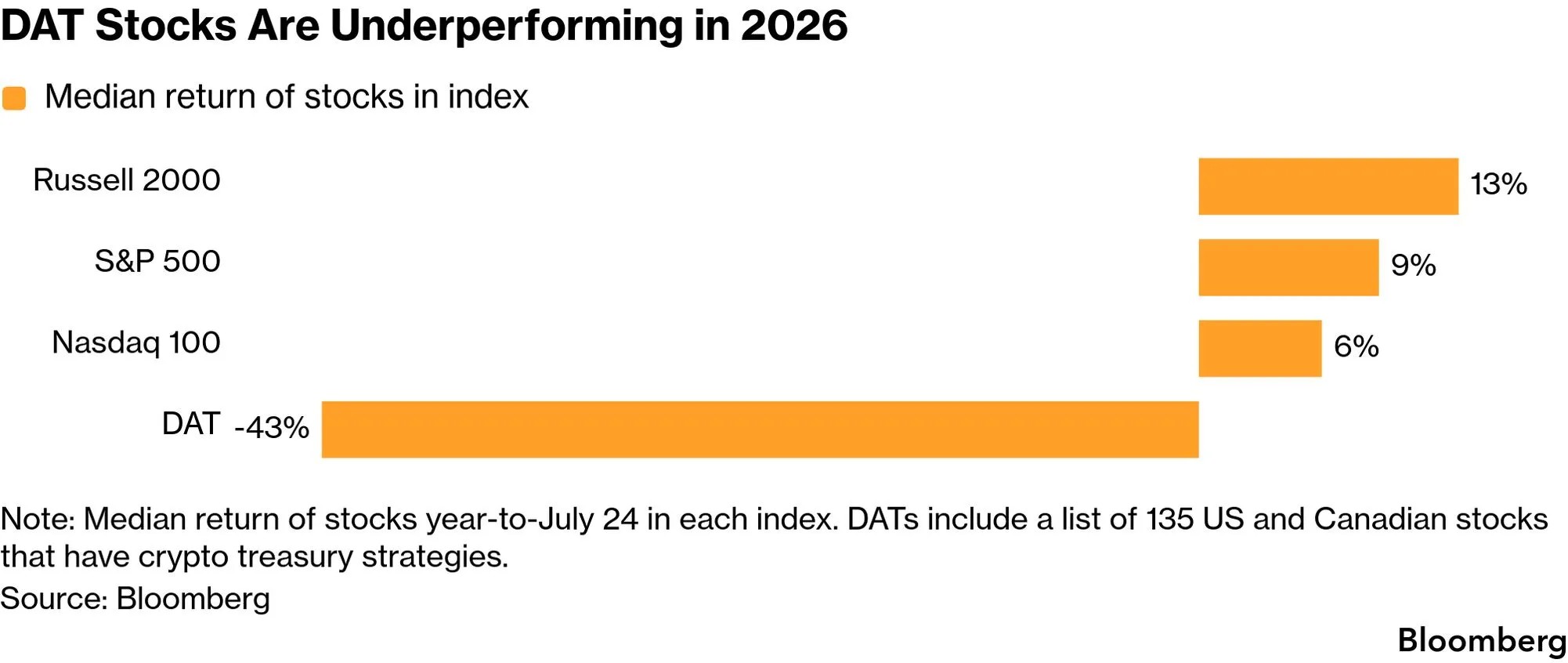
Source: Bloomberg.

The journalists provided specific examples of business "transformation." For instance, Bitcoin-accumulating K Wave Media Ltd. switched to developing data centers—since its relaunch in May, its stock has fallen by 71%.

The shares of Lixte Biotechnology Holdings Inc. dropped by 33% after the company agreed to merge with a firm from the energy sector in June. AlphaTON Capital, which holds altcoins on its balance sheet, lost 33% after rebranding to Alpha Compute in April.

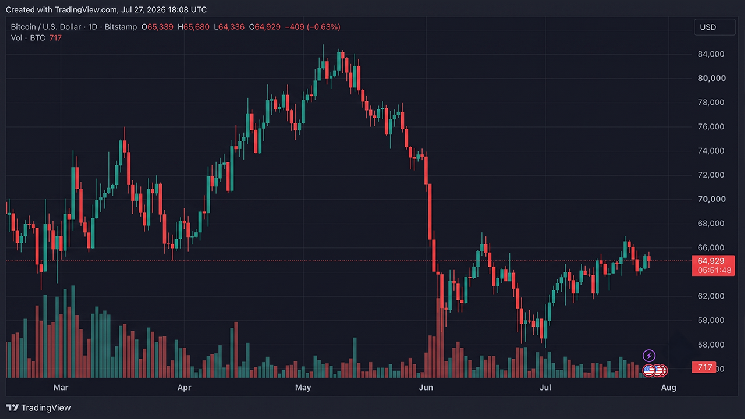
Bloomberg directly links the weakness of the DAT sector to the dynamics of the assets themselves.

Gregory Sichenzia, founder of the law firm Sichenzia Ross Ference Carmel LLP, succinctly described the change in sentiment: if last year nothing bad was expected from crypto-treasuries, this year the phrase itself has become a "dirty word."

In his opinion, the shift to AI looks logical—that is where major capital is currently flowing. The spending by tech giants like Alphabet and Microsoft, as well as startups OpenAI and Anthropic, on computing infrastructure has made companies related to data centers the best-performing stocks in major indices.

Nearly all firms in the top 10 by performance in the S&P 500 index produce products for data centers: among them are SanDisk, whose stock has risen more than 500%, as well as Dell Technologies, Intel, and Micron Technology.

Attempts to capitalize on the AI hype extend far beyond the crypto market. Bloomberg cites the example of shoe manufacturer Allbirds, which shifted toward computing infrastructure after its own stock plummeted and rebranded to Smartbird.

Among companies in the crypto industry, Bitcoin miners are currently having more success than DAT firms in reorienting towards AI. CoreWeave switched to cloud computing, which positively impacted its stock.

The quotes of Hut 8, Iren, and TeraWulf are also recovering after retooling their data centers for data centers.

Partner at Lowenstein Sandler Daniel Forman emphasized that investors are not completely abandoning the blockchain theme: interest remains in other areas of the technology, but not in the digital treasury model in its current form.

Recall that Coinbase CEO Brian Armstrong called the shift of crypto projects to AI a mistake.

end-content

Perguntas relacionadas

QAccording to the article, what is the current trend among many companies that were built around acquiring digital assets?

AAt least 12 such companies have reoriented their strategies towards AI-related directions in recent months, moving away from their original digital asset focus.

QHow have the stock prices of these reorienting DAT companies performed in general, based on the article's data?

ATheir stocks have shown a median decline of 43% since the beginning of the year, with many trading below the net value of their assets.

QWhat major reason does the article cite for the poor performance of the DAT sector despite the shift to AI?

ABloomberg directly links the weakness of the DAT sector to the poor performance dynamics of the digital assets themselves.

QWhy does the founder of Sichenzia Ross Ference Carmel LLP, Gregory Sichenzia, believe the shift to AI is logical for these companies?

AHe believes it is logical because that is where major capital is currently flowing, driven by heavy spending on computing infrastructure by tech giants and AI startups.

QWhich segment within the crypto industry has reportedly had more success in pivoting to AI compared to DAT firms, according to the article?

ABitcoin miners have reportedly had better success. For example, CoreWeave's shift to cloud computing positively impacted its stock, and miners like Hut 8 are recovering after repurposing their data centers.

Leituras Relacionadas

Trading

Spot
活动图片