Written by: Bao Yilong
Warsh formally took the helm of the Federal Reserve, only to be met with a sharp market rebuke on his very first day.
On Friday, May 22, Trump presided over a swearing-in ceremony at the White House, formally handing over the Fed's reins to Warsh. Warsh assumes leadership of the Fed at a time when soaring energy and transportation costs triggered by the Iran war are persistently feeding into inflation.
As noted by Wall Street News, on the same day, Fed Governor Waller delivered hawkish remarks, clearly stating that inflation is the "driving force" for future policy decisions, and said the likelihood of future rate hikes and cuts is "fifty-fifty." This statement directly spurred a sharp surge in rate hike expectations.
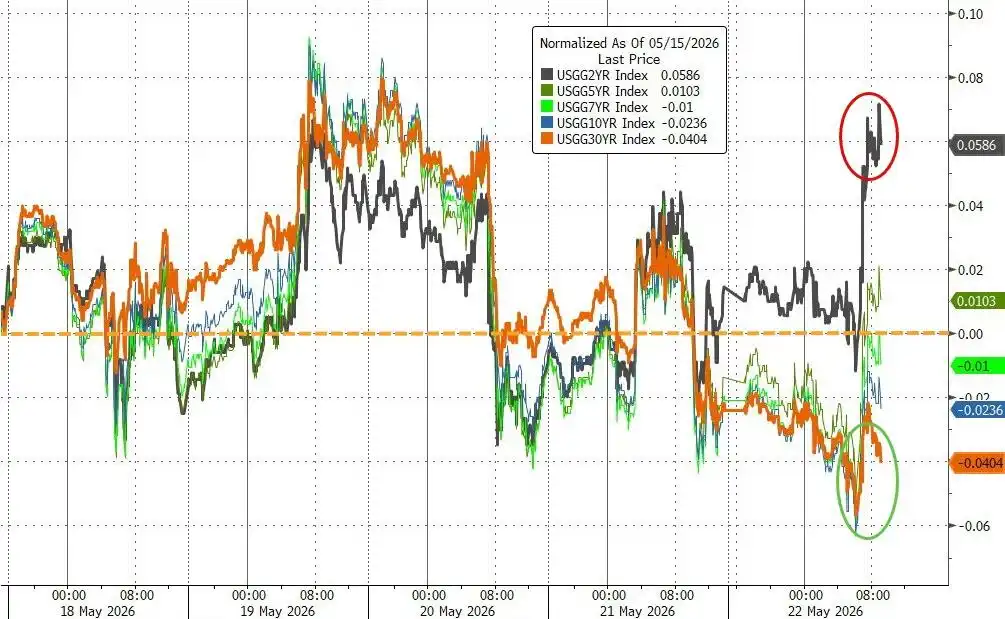
The U.S. Treasury market was sold off that day, with the interest-rate-sensitive 2-year Treasury yield rising 4 basis points to its highest level since February this year.
(Weekly performance of key U.S. Treasury yields)
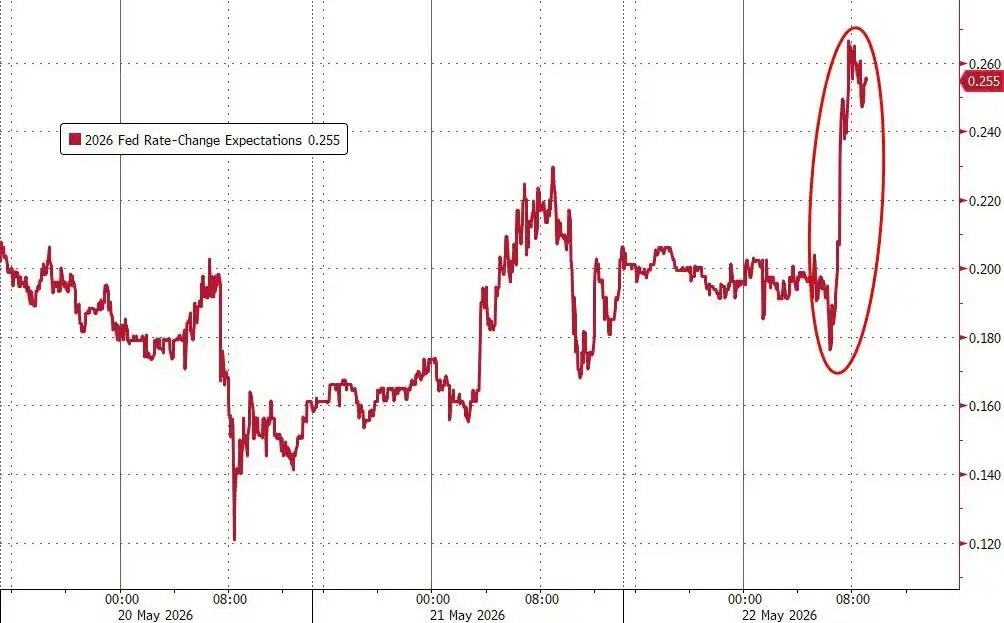
The futures market has now fully priced in a 25-basis-point rate hike expectation for this year.
(Market expects Fed to hike rates by 25 basis points within the year)
TS Lombard economist Steven Blitz bluntly stated that if Warsh chooses not to raise rates at his first monetary policy meeting in June, the market will grant him no leeway.
Waller's Sharp Pivot, Inflation Becomes Policy "Driving Force"
At the very moment Warsh was sworn in, Fed Governor Waller delivered his most hawkish signal to date in a speech titled "Policy Risks Have Changed" in Frankfurt, the significance of his shift in stance capturing the market's attention.
Waller stated:
Inflation is not moving in the right direction. I support removing the 'easing bias' wording from the policy statement to clearly convey that the likelihood of rate cuts and hikes is now roughly equal.
He further pointed out:
I can no longer rule out that future rate hikes may be necessary if inflation does not recede soon.
Waller admitted that recent labor market reports and inflation data have changed his previously long-held accommodative stance.
He also noted that the oil price shock might soon fade, but emphasized this does not mean "considering a rate hike in the near term is appropriate," and that rate hikes would require conditions where inflation expectations become "unanchored."
Previously, the Fed's April meeting minutes showed that "many" officials were already inclined to drop the easing bias, including three regional Fed presidents who had dissented on this issue in the April statement. Waller's latest remarks echo this trend.
Warsh's Debut Nears, Immense Pressure for June Meeting
Warsh will chair his first Federal Open Market Committee (FOMC) meeting in mid-June, and market observers are not optimistic about the situation he will face.
The Fed's preferred inflation gauge has risen to its highest level in three years, with the overall price growth rate reaching 6% in April. Market-implied one-year inflation expectations are around 4%.
TS Lombard economist Blitz added that if Warsh decides against a rate hike in June, even if economic growth remains solid and far from overheating at that time, the market will interpret it as de facto easing. Blitz said:
Against a backdrop of broadly rising inflation risks, failing to hike in June is effectively a form of easing.
Diane Swonk, chief economist at KPMG US, pointed out that the Middle East situation is adding pressure on top of already existing price pressures. She said:
This is one of many reasons why the Fed cannot ignore the war and its inflationary effects.
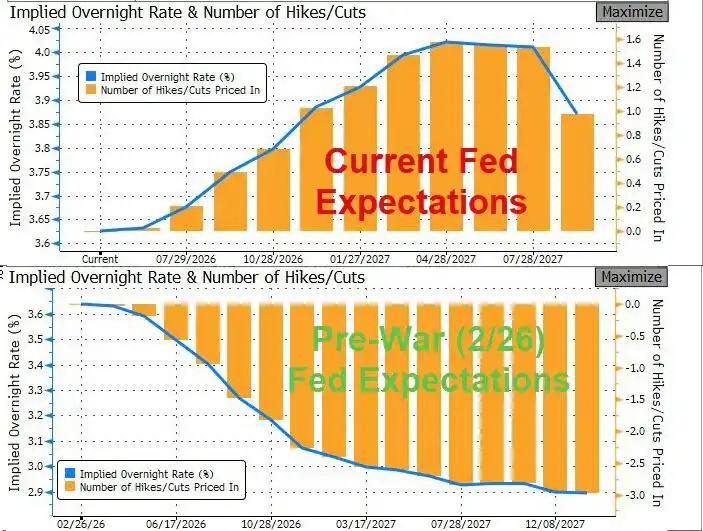
The current market expectation of a 25-basis-point Fed rate hike stands in stark contrast to the widespread market bets on multiple rate cuts at the beginning of the year.
(Comparison of market expectations for Fed rate path around February this year)
Although influenced by falling energy prices this week, the 10-year Treasury yield did not see a significant rise.
However, Goldman Sachs' George Cole noted that while long-end Treasuries appear slightly cheaper relative to fair value, the valuation has not deviated enough to support a deeper rebound.
(Long-end Treasuries slightly cheap relative to fair value)
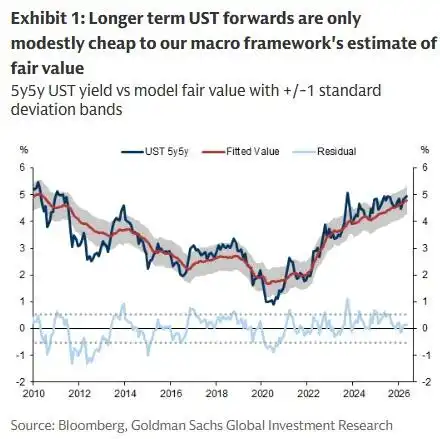
George Cole emphasized that until the macro risk landscape undergoes a substantive shift, long-end yields still face structural upward pressures from supply and the debt financing cycle.
Test of Independence, Underlying Concerns Behind Historic Inauguration Moment
Warsh is the first Fed chair since Greenspan to be sworn in at the White House, a detail itself seen by the market as a signal.
Trump hopes that this former Fed governor, whom he nominated in January this year, will be more amenable to demands for rate cuts. Warsh previously defeated White House economist Hassett, Waller, and BlackRock executive Rick Rieder in the nomination race.
The pressure on the Fed's independence has been particularly pronounced recently.
As noted by Wall Street News, Trump ally, Washington D.C. federal prosecutor Jeanine Pirro, had launched a criminal investigation into Powell regarding a $2.5 billion Fed headquarters renovation project. The investigation has been dropped, but Powell stated it was a pretext to pressure officials for rate cuts.
Warsh now begins a four-year term, becoming the 17th Chair of the Federal Reserve Board of Governors.
However, the market has already made it clear: regardless of the political environment, inflation is the most pressing issue at hand, and this new chair has little time for a measured approach.