Original|Odaily Planet Daily(@OdailyChina)
Author|Wenser(@wenser 2010 )
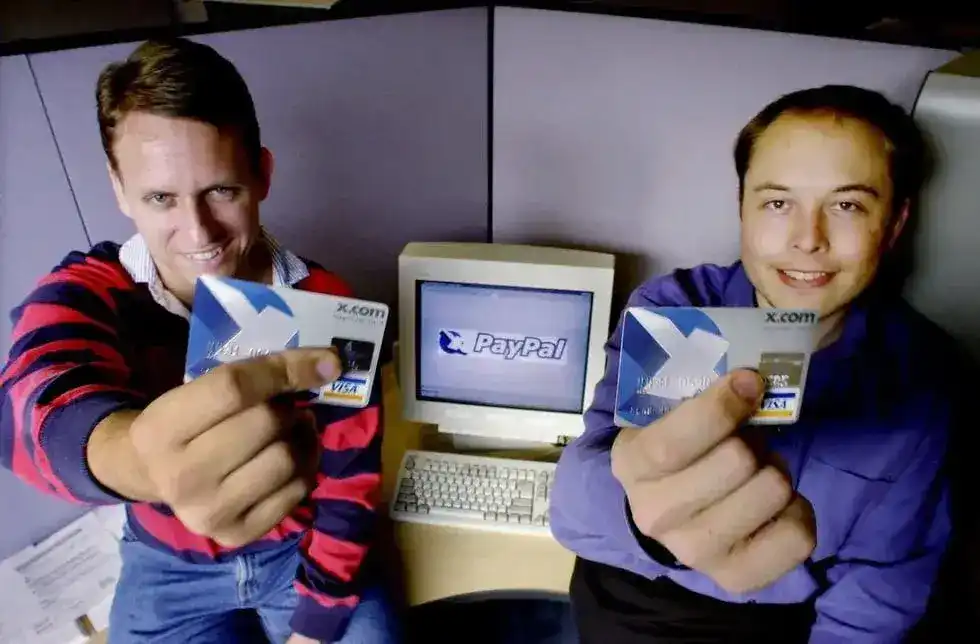
Recently, Musk once again released news about X Money, on one hand maintaining his consistent enthusiasm for "recreating a WeChat"; on the other hand, it also highlights the reality that the U.S. currently lacks an all-in-one payment platform like WeChat Pay or Alipay. A subsequent question arises: why hasn't the U.S., across the ocean, developed large-scale credit loan and consumer loan products like Huabei and Jiebei?
After careful research, the truth is somewhat surprising. On the fertile ground of American finance, a cage of层层围堵 (multi-layered blockades) has stifled what should have been small loans benefiting millions of households, instead allowing an entire ecosystem of "high-cost, wide-coverage" credit cards to continue sucking blood.
The Cruel Tale of America's Financial Underbelly: No One Cares If You Have Money to Spend
In reality, the financially developed United States is not without demand for small loans.
According to 2023 data from the U.S. FDIC, there are about 5.6 million "unbanked" households in the U.S. (approximately 4.2% of the population), and about 19 million "underbanked" households (approximately 14.2% of the population);另据 (Furthermore, according to) the Federal Reserve's 2024 Economic Well-Being Report, among adults with annual incomes below $25,000, 22% are unbanked; 6% of adults (about 15 million people) are in an "unbanked" state.
The primary reason these people don't open bank accounts is simple – "not having enough money to meet the minimum balance requirements"; followed by "distrust of the banking system." For many, banks are demonized vampires, only催促着你、逼着你 (pressing and forcing you) to pay loans; approximately two-thirds of unbanked households rely entirely on cash for daily life消费 (spending).
For these people living at the financial bottom, payday loans become one of the few lifelines. Even though the latter's annualized interest rates can be as high as 400%, they still had 12 million active users at their peak in 2014, with annual loan issuance of about $46 billion, and over 1,000 service providers offering such services. In other words, these people can only borrow extremely expensive money. For major U.S. banks, they are 'junk users' with extremely low FICO scores, who can't even get a credit card, the bottom of the bottom.
On this basis, the group using "Buy Now, Pay Later" (BNPL) services is slightly better off.
According to surveys, there were about 380 million global BNPL users in 2024,预计 (projected) to increase to about 670 million by 2028; in 2025, the number of BNPL users in the U.S. was 91.5 million;预计 (projected) to reach 96.3 million in 2026; in 2025, the GMV of the U.S. BNPL market was approximately $122.2 billion, with a CAGR of 20.3% between 2021-2024.
For young people with strong consumption desires and rapidly growing purchasing power,以及 (and) the main consumer force, slightly retro and冗长的 (cumbersome) credit card消费 (spending) is not as good as the flexible, convenient, zero-interest installment of BNPL, so it is in a stage of slow penetration. However, compared to the global scale of tens of millions of merchants and an even larger scale of consumers, this group is undoubtedly a minority. Of course, American Express, Citibank, etc., have launched installment functions similar to BNPL for credit card holders; traditional financial institutions are quickly catching up.
In contrast, the credit card system, leveraging first-mover advantage, network effects, cross-subsidization, and compliance cost advantages, is盛行 (prevalent) in the U.S., reaping all the benefits.
In terms of first-mover advantage and network effects, according to Federal Reserve statistics, 70%-80% of U.S. adults hold credit cards; at the end of 2025, outstanding credit card balances reached $1.28 trillion (New York Fed data, February 2026); 175 million cardholders hold about 648 million cards, with an average annualized interest rate of 22.3% (Q4 2025 data); additionally, the average APR for newly issued credit cards is 23.75%;另 (Furthermore) a CFPB 2025 report指出 (pointed out) that in 2024 alone, consumers paid a whopping $160 billion in credit card interest, a暴增 (sharp increase) of 52% compared to $105 billion in 2022. It is no exaggeration to say that credit cards are the largest legal predatory loan in the United States.In terms of cross-subsidization and compliance costs,据统计 (according to statistics), about 45%-50% of credit card holders choose to pay their balance in full each month. For them, credit cards are free short-term credit tools (equivalent to a 25-day interest-free period), and they can even make money through points and cashback; among credit card holders with annual incomes below $50,000, 56% carry a balance month to month; among those with annual incomes over $100,000, this number drops to 36%. In contrast, over 27 million Americans can only pay the minimum payment each month, equivalent to constantly paying interest rather than principal. Thus, the U.S. credit card system has formed a bizarre equilibrium where users who cannot pay in full are subsidizing the group of users who pay in full with their high annualized interest costs.
The supply and demand sides共同呈现出了 (jointly present) the cruel current state of the U.S. financial industry: some people cannot get credit cards; some credit card holders are supplying blood to banks and others; some people would rather choose consumer loans than use credit cards. The诱因 (inducing causes) of this现状 (situation) are undoubtedly complex and deep-seated.
The Forgotten U.S. Internet Finance Industry: Regulation, Privacy, Capital, and Giant Control
Examining the specific reasons why the U.S. does not have an internet finance industry as vigorous as China's, it is essentially a systemic, structural四面高墙 (four-walled enclosure).
First, is the stringent and fragmented regulatory system of the U.S. financial industry.
On one hand, the federal + 50-state dual-track regulatory framework makes financial compliance barriers extremely high. Regulatory fragmentation leads to non-linear growth in compliance costs for companies wanting to engage in lending业务 (business), resulting in a very low input-output ratio; on the other hand, the 2008 financial crisis also provided strong support for tightening financial regulation. After the "Dodd-Frank Act" was passed in 2010, the Consumer Financial Protection Bureau (CFPB)'s power boundaries further expanded, compliance costs increased further, objectively eliminating the possibility of non-bank institutions becoming large in the small loan领域 (field). To a certain extent, the U.S. regulatory system protects not consumers, but the banks who profit.
Second, is the legal red line of U.S. privacy data.
Theoretically, U.S. internet tech giants have more comprehensive user privacy data and personal information than domestic internet companies: Amazon knows what you bought, Google knows what you searched, Apple knows what you used—but the FCRA (Fair Credit Reporting Act, legislated in 1970, amended multiple times) strictly stipulates what data can be used for credit decisions (credit decisions) and what cannot; the CFPB further promoted the expansion of FCRA's scope of application in 2023-2024, bringing more data brokerage behaviors under regulation; California's CCPA and subsequent CPRA added another layer of state-level privacy protection. Various regulations mean that even if U.S. tech companies have rich user behavior data, they legally cannot directly feed this data into credit risk models. This is not a technical obstacle, it's a legal red line.
Third, is the capital market valuation penalty faced by internet companies.
In the eyes of Wall Street capital where money never sleeps, once internet tech companies are associated with financial业务 (business), the attractiveness of their revenue, profit, and other performance metrics will be greatly diminished—internet tech companies have always enjoyed the红利 (dividend) of high P/E ratios (light assets, high growth, network effects), while financial companies have lower market valuations due to heavy assets, strong regulation, and cyclicality. Previously, Apple partnered with Goldman Sachs in 2019 to create the Apple Card credit card business, which ultimately ended with the latter losing over $6 billion, a bad debt rate as high as 2.93%, and transferring the business to JPMorgan. The reasons for this failure certainly include the inadequacies of an investment bank like Goldman Sachs in retail credit and risk management, but Apple's unwillingness to get too deep or bear credit risk was a more important reason.
Fourth, credit pricing power is in the hands of financial giants.
The core players in U.S. consumer credit are large banks and financial groups like JPMorgan Chase, Bank of America, Citigroup, Capital One, Wells Fargo, etc. They control almost all consumer credit product lines: credit card issuance, personal loans, mortgages, auto loans, etc.据统计 (According to statistics), total U.S. consumer debt is about $17.86 trillion (Equifax data, June 2025),其中 (of which) mortgage debt is $13.21 trillion, non-mortgage debt is $4.65 trillion (including auto loans 36%, student loans 28.5%, credit cards 24.2%). A huge credit empire背后是 (is backed by) financial hands as rich as nations. Under the institutional design manipulated by banking lobbying groups and consumer behavior inertia, the cost of that 22% credit card利率 (interest rate) becomes a bitter pill that must be swallowed.
In summary, the current reality of the U.S. financial industry is that credit cards took the position first, regulation blocked the path, privacy laws cut off data support, Wall Street dislikes the valuation methods for financial businesses, and banking giants do not allow challengers to侵犯 (infringe upon) their authority and interests. Everything together has联手 (joined forces) to block the internet small loans that should benefit thousands of individuals and small businesses from the U.S. market.