GMO Legendary Prophet Shorts Again: AI Can't Save U.S. Stocks, Current Market as Dangerous as 2000

marsbitPublicado em 2026-04-21Última atualização em 2026-04-21

Resumo

Jeremy Grantham, co-founder of GMO and renowned for identifying major market bubbles, warns that the current U.S. stock market resembles the dangerous conditions of 2000, arguing that AI hype cannot prevent a significant downturn. He emphasizes that high valuations historically precede difficult periods, not higher growth, and cautions that despite AI-driven enthusiasm, underlying economic challenges—including geopolitical instability, climate costs, and demographic decline—are being ignored. Grantham notes that while non-U.S. equities appear reasonably priced, the U.S. market is excessively valued. He compares today’s AI narrative to the internet boom of 1999, stressing that expensive markets eventually correct. His approach relies on value investing principles, avoiding overpriced assets and focusing on long-term fundamentals rather than market timing. Grantham also highlights structural market inefficiencies, such as the persistent outperformance of high-quality stocks, and criticizes the financial industry for promoting optimism despite clear risks.

Source:"The Master Investor Podcast with Wilfred Frost" Podcast

Compiled by: Felix, PANews

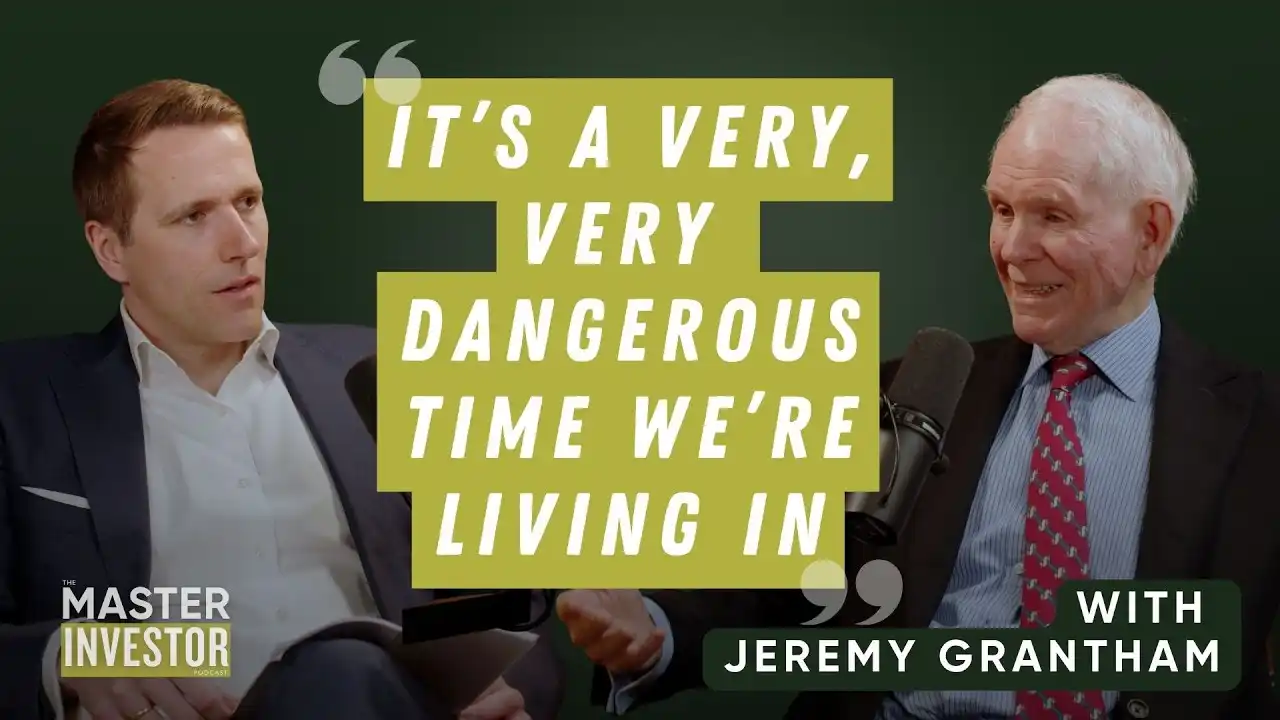
Jeremy Grantham founded and led the Boston investment firm Grantham Mayo Van Otterloo (GMO) for decades. At the peak of his career, the assets under management reached $150 billion. In his nearly 60-year investment career, Jeremy accurately predicted almost all major stock market bubbles of the past 60 years, along with the subsequent rebounds, achieving long-term excess returns.

Recently, Jeremy was a guest on the "The Master Investor Podcast with Wilfred Frost" podcast. He focused on the current market environment, assessed the impact of the Iran war on oil prices, AI, meme stocks, and the "Magnificent Seven," and compared it to the boom periods of the 1970s, 1999, 2007, and the post-pandemic era. PANews has compiled the highlights of this conversation.

Host: Jeremy, welcome back to the podcast, great to see you in person.

Jeremy: Pleasure to be here. However, I must object to the word "prediction" you mentioned earlier. I am not predicting bubbles; I am merely pointing them out when they arrive. If I could foresee their arrival out of thin air, that would be convenient, but all I can do is wait for them to appear—and they always seem obvious. Then I say, "Look, it's there."

Host: Your book published this January, "The Making of a Permabear," mentions that you are also a Yorkshireman. Every qualified Yorkshireman is born knowing that "cheap is always better than expensive," which gave you a keen eye for finding good value. You also talked about your "butterfly effect" thinking pattern, where ideas and thoughts flit around like butterflies in a garden, seemingly lacking focus. Can you explain why this was important for you to become an investment thinker?

Jeremy: This might be a form of self-justification. I find it hard to stay on one specific topic for too long; I always tend to shift to another, which often annoys my colleagues. But the key is that I am quite persistent. Anyone who has observed gardening will see that this is exactly how butterflies work: you think they've flown away, but they might return to the same flower repeatedly over a day or two. I find brainstorming should work the same way. If you fixate too hard on one topic, you just make your brain rigid, like banging your head against a wall. The best method is to move around and then return to the original topic; then your brain is more open, and perhaps an epiphany will occur.

Host: You also wrote that working very hard can actually hinder thinking because you are too busy receiving new data. You rarely have time to truly think. Do today's investment professionals spend too much time on Excel spreadsheets or AI modeling? What do you mean by "truly thinking"?

Jeremy: Truly thinking is not about typing numbers into a spreadsheet. Truly thinking is taking a walk through Boston Common, or while showering, letting your brain operate at a comfortable walking pace, thinking about where we are now? What's happening? See what it concludes. In the past, when I arrived at the office, I usually already had two or three ideas (though most of my colleagues thought these ideas were stupid). I was lucky to have a colleague named Chris Darnell, the only person in the world who could convince me in 20 seconds that an idea was foolish. You really need such a combination: someone who generates a lot of absurd or superficial ideas, plus an "idea crusher" who can instantly spot fatal flaws and keep you moving forward. We would review 10 to 20 ideas to find one worth further research.

Host: On this point, you said in your book: "Getting the big picture right is everything. One or two good ideas a year is enough." Is this what gave you your legendary investment status?

Jeremy: Yes, there were many years when I didn't even have one good idea. But if your thinking is high-level enough, like "Will small-cap stocks win this year?", you don't need to be right too many times. Just knowing that small-cap stocks are strengthening is enough to support outperforming the market for three or four years. As long as you get the big direction right, it's actually not difficult.

Host: From a micro perspective, if I'm not mistaken, the real winning formula for you is basically the dividend discount model, plus some adjustments you make. This is the core of your focus, right?

Jeremy: Yes, the dividend discount model is just a tool we use to measure the quality of other ideas. It gives the ratio of relative fair value for different stocks, used to test if our intuition is correct. We have a dividend discount ratio for each stock. What is the ratio to fair value? If it's 0.79, it's undervalued by 21%. If it's 1.12, it's overvalued by 12%. Then we add them up and find that the sum of all small-cap stocks is very cheap, and vice versa. It provides us with a measuring tool to test if our intuition is correct. Very convenient.

Host: Here you obviously weigh value more heavily than other factors like growth and momentum. I imagine you also appreciate the importance of those other factors.

Jeremy: No, actually I have a secret respect for anything that works, no matter how absurd. Of course, momentum is a fairly simple inefficiency. It really shouldn't work. But it has been very effective throughout my entire investment career, and for a long time before that. And it still works in many forms today. It just shows that an object in motion tends to stay in motion for a while. Market efficiency scholars like the author of "A Random Walk Down Wall Street" said that price alone provides no information. That is completely wrong. I think the biggest inefficiency has always been the pricing of "quality". High quality means less debt, higher returns, stronger stability, and a smaller chance of bankruptcy. No matter how you torture the data, you cannot convince anyone that "quality" is a risk factor.

From an academic perspective, lower risk should mean lower returns; but in fact, quality stocks always outperform the market. Due to lower risk, they should underperform by about one percentage point per year, right? AAA-rated bonds yield about one percentage point less per year than B-rated bonds. Based on the same low-risk logic, AAA-rated stocks should too. But they don't; they outperform the market by about 0.5% per year. Therefore, due to market inefficiency, there is about 1.5% of free excess return per year. You get the privilege return of holding these high-quality large-cap stocks, and academia hasn't discovered and made a big deal about this for decades.

Host: Has the market become more efficient over time? Has your job become harder?

Jeremy: As my career has progressed, I tend to focus on increasingly grand problems, from individual stocks to sectors to the entire market. To talk about those absurd inefficiencies and bubbles, like those meme stocks that soar 6 times in a year, the market might be a bit worse now than ever before.

Host: Regarding your investment method, you once mentioned: "We could never make big money without first suffering painful losses. You need the confidence to hold positions when they go against you and to add weight when they become more attractive. It is value that gives you this confidence." This must be very difficult.

Jeremy: It is indeed very difficult; you must believe in the data. If you want to capture those once-in-a-century super bubbles, you often have to go through an ordinary bubble that appears every 15 years first. If you want to make big money, you must watch the market go from "overpriced" to "extremely overpriced" to "oh my god, ridiculously overpriced." Only at that turning point can you make big money. But before that, you will endure immense pain. For example, in 2000, the market fell 50%, but our portfolio achieved substantial gains over three years.

Host: Many people say it's impossible to time the market. I think that's true at the individual stock level, but I admire the bold positions you take.

Jeremy: No, I don't think this is timing the market. I think this is just exiting obviously overpriced stocks and always focusing on those that are cheap. Every time you buy a small-cap stock, someone might say, "Oh, you're timing that stock. Is that it? Or is it that if you hold cheaper stocks, you will always win in the long run?" So, don't hold your ground in a severely overpriced stock market unless you eventually want to take a heavy punch. Of course, others will outperform you during this period, but in the long run, you will win.

Host: In the first 9 years after founding GMO, you achieved an excess return of 8% per year, which is amazing performance.

Jeremy: Compared to Buffett achieving 9% excess returns over a longer period, our results only make one realize how incredible Buffett is. Buffett made making money a simple and fun goal. And Jack Bogle (father of index funds) got the medal for "doing the most useful thing in investing" for saving tens of billions of dollars for millions of investors.

Host: Compare the historical bubbles. In 1999, clients complained to you about underperformance. At that time, you said "value is off the charts, TIPS yields are 4%, real estate investment trusts (REITs) are trading at a discount." Can you apply all this to today?

Jeremy: No. The 2000 one was great because it gave you many safe havens. Real estate investment trusts (REITs) were selling for even less than construction costs. Right at the market peak, the S&P 500's yield dropped to 1.6%, a low level not even seen in 1929. That was the situation then. Small-cap stocks were cheap then.

Then you look at other markets, like the 2007 real estate bubble, there was almost nowhere to hide. That was a risk bubble. All risky assets were overpriced. In 2008, there were no obviously cheap assets. The current market is somewhere in between; it's more like 2000. Half the time during bubbles you have excellent alternatives, the other half you don't. For this time, I remember saying on a podcast early last year that we have no bias against non-US stocks. We won't touch the US stock market, but the rest of the world: emerging markets, Europe, Australia, Canada, their stock market valuations are extremely reasonable.

Host: In 1999, many people talked about the productivity and GDP boost from the internet, just like everyone talks about AI today. Why is this bullish logic foolish?

Jeremy: There is no necessary relationship between high market prices in the past and future growth. In every bull market, people say the future must be bright, otherwise market prices wouldn't be so high, but the opposite is true. If you ask what the three or four worst periods in history were, they are not randomly distributed; they came right after huge bubbles. The Great Depression came right after the famous 1929 peak. Japan's "Lost Decade," "Lost Two Decades" came right after the astonishing 65 P/E ratio in 1989. There is no historical example where a high P/E ratio meant higher profits, faster growth, or higher productivity. What they truly预示 (portend) is the arrival of difficult times. If there ever was a possibility of this happening, it is now.

The current situation is that we are doing everything wrong. We are doing our utmost to mess up the beautiful growth of post-war international trade with tariffs and trade wars. We are doing our utmost to破坏 (undermine) geopolitical stability,破坏 (undermine) our relations with countries like Russia and China. I'm sure these relations have been worse at some times and with one side, but getting worse with both sides simultaneously is distinctly unsettling. Billion-dollar losses from floods, droughts, and fires are so frequent that they might shave 0.5% off global GDP annually, and the situation keeps worsening; then population begins to decline, in some countries like Japan, South Korea, China, the population is falling like a stone, and this trend will remain visible. So, the world will have to get used to slowing labor force growth.

Host: With the outbreak of the Iran conflict and its obvious impact on oil prices and inflation, does it remind you of some challenges from the 1970s?

Jeremy: Yes, as a species, humans have a tendency to wishful thinking. We are very good at wishful thinking. If you study the stock market now and in the past, you will conclude that given half a chance, we will interpret the future generously and say how good things will be. If economic data is bad, we say "Great, this gives the Fed an excuse to cut rates," and the market rises. If economic growth is good, we say "Great, profits will be high," and the market rises again. So the market is always looking for optimistic excuses and overinterprets good news.

We tend to extrapolate linearly and persistently. For example, in the summer of 1929, the economic situation was good; if you extrapolated persistently, people would expect an outrageously high P/E ratio. Then in 2000, profit margins reached historical highs, the P/E ratio was 35, and stock prices even rose to four times book value. These phenomena are not complicated, but most people failed to notice them. Why didn't these warnings make front-page news? Because it's not a business strategy. Any large company in the financial领域 (sector) must always tell you everything is fine, then lead everyone off the cliff and make as much money as possible cleaning up the mess. Goldman Sachs, JPMorgan Chase, Morgan Stanley—these companies would never tell you to get out of the market because market pricing is terrifyingly high. And they can all see that the pricing is terrifyingly high. So don't think the market is priced reasonably just because no professionals are telling you to sell; that is not the actual situation.

I often use an analogy: it's like dropping a bag of feathers from a high-rise in Miami on a hurricane day. In the short term, you absolutely don't know where those feathers will be blown. But you can be absolutely sure of one thing: eventually every single feather will fall to the ground. For me, "value" is equivalent to gravity. No matter how high you fly now, sooner or later, being expensive will make you pay the price.

Host: You wrote in your book about the strangest condition for a bubble burst: "When the previous market leaders fall sharply, but the broader market led by blue chips continues to rise." This happened in 1929, 1972, and 2000. Considering the MAG 7 (Magnificent Seven tech giants) have lost upward momentum in the past few months, but the rest of the market remains firm, would you add late 2025, early 2026 to that list?

Jeremy: Perhaps I should add it. Although I haven't added it before, I think I've been busy with the book tour. But I would also add 2021 to that list. Many speculative and unprofitable stocks started falling after their strong performance post the COVID-19 low, while the broader market kept rising, leading to a 25% drop in the S&P 500 in 2022 and a 40% drop in MAG 7 stocks. But then ChatGPT appeared. Without the AI investment frenzy, we might have already fallen into a mild or moderate recession, and the broader market might have fallen 40% or more. AI was like discovering railroads in 1930, forcibly扼杀 (strangling) a real bear market.

Host: In March 2009, you published the famous "Reinvesting in Fear." How did you judge when to enter the market when there was extreme panic?

Jeremy: That's because I was familiar with the panic of 1974, the fear that put the market in "ultimate paralysis." In 2009, I advocated making a plan, even a bad plan is better than paralysis. You must understand: the market's turning point does not appear when people see "light at the end of the tunnel," but when "everything looks pitch black, but just a tiny bit less black than the day before." Although it didn't reach the absolute low valuation of 1974, according to our dividend discount model, it was very cheap, destined to provide丰厚 (rich) returns far exceeding historical averages over the next 7 years (actual return reached 12%).

Related reading:Dialogue with Bitwise Advisor: From K-Shaped Economy to AI Stealing Jobs, How Can Bitcoin Save Young People?


Perguntas relacionadas

QAccording to Jeremy Grantham, why is the current market environment similar to the year 2000?

AHe states that the current market is similar to 2000 because, like then, there are excellent alternative investment opportunities outside of the overpriced US market, such as in emerging markets, Europe, Australia, and Canada, which have extremely reasonable valuations.

QWhat is Jeremy Grantham's view on the role of AI in the current market rally?

AGrantham believes that the AI investment boom has artificially propped up the market. He suggests that without the AI hype, the market might have already fallen into a moderate or even severe recession, with the S&P 500 potentially dropping 40% or more.

QHow does Jeremy Grantham describe the process of 'real thinking' in investing?

AHe describes 'real thinking' as not inputting numbers into a spreadsheet, but rather letting the mind work at a comfortable walking pace, such as by taking a walk through a park or during a shower, to contemplate the current situation and see what insights emerge.

QWhat does Jeremy Grantham identify as the greatest market inefficiency throughout his career?

AHe identifies the mispricing of 'quality' as the greatest inefficiency. High-quality stocks, which are less risky with lower debt and higher returns, consistently outperform the market, contrary to academic theory which suggests lower risk should yield lower returns.

QAccording to Grantham, when is the best time to enter the market during a crash?

AThe best time to enter is not when people see 'light at the end of the tunnel,' but at the moment when 'everything looks pitch black but is just a tiny bit less black than the day before.' This is the turning point when fear is at its peak and valuations are very cheap.

Leituras Relacionadas

Trading

Spot
Futuros

Artigos em Destaque

O que é GROK AI

Grok AI: Revolucionar a Tecnologia Conversacional na Era Web3 Introdução No panorama em rápida evolução da inteligência artificial, a Grok AI destaca-se como um projeto notável que liga os domínios da tecnologia avançada e da interação com o utilizador. Desenvolvida pela xAI, uma empresa liderada pelo renomado empreendedor Elon Musk, a Grok AI procura redefinir a forma como interagimos com a inteligência artificial. À medida que o movimento Web3 continua a florescer, a Grok AI visa aproveitar o poder da IA conversacional para responder a consultas complexas, proporcionando aos utilizadores uma experiência que é não apenas informativa, mas também divertida. O que é a Grok AI? A Grok AI é um sofisticado chatbot de IA conversacional projetado para interagir com os utilizadores de forma dinâmica. Ao contrário de muitos sistemas de IA tradicionais, a Grok AI abraça uma gama mais ampla de perguntas, incluindo aquelas tipicamente consideradas inadequadas ou fora das respostas padrão. Os principais objetivos do projeto incluem: Raciocínio Fiável: A Grok AI enfatiza o raciocínio de senso comum para fornecer respostas lógicas com base na compreensão contextual. Supervisão Escalável: A integração de assistência de ferramentas garante que as interações dos utilizadores sejam monitorizadas e otimizadas para qualidade. Verificação Formal: A segurança é primordial; a Grok AI incorpora métodos de verificação formal para aumentar a fiabilidade das suas saídas. Compreensão de Longo Contexto: O modelo de IA destaca-se na retenção e recordação de um extenso histórico de conversas, facilitando discussões significativas e contextualizadas. Robustez Adversarial: Ao focar na melhoria das suas defesas contra entradas manipuladas ou maliciosas, a Grok AI visa manter a integridade das interações dos utilizadores. Em essência, a Grok AI não é apenas um dispositivo de recuperação de informações; é um parceiro conversacional imersivo que incentiva um diálogo dinâmico. Criador da Grok AI A mente por trás da Grok AI não é outra senão Elon Musk, um indivíduo sinónimo de inovação em vários campos, incluindo automóvel, viagens espaciais e tecnologia. Sob a égide da xAI, uma empresa focada em avançar a tecnologia de IA de maneiras benéficas, a visão de Musk visa reformular a compreensão das interações com a IA. A liderança e a ética fundacional são profundamente influenciadas pelo compromisso de Musk em ultrapassar os limites tecnológicos. Investidores da Grok AI Embora os detalhes específicos sobre os investidores que apoiam a Grok AI permaneçam limitados, é reconhecido publicamente que a xAI, a incubadora do projeto, é fundada e apoiada principalmente pelo próprio Elon Musk. As anteriores empreitadas e participações de Musk fornecem um forte apoio, reforçando ainda mais a credibilidade e o potencial de crescimento da Grok AI. No entanto, até agora, informações sobre fundações ou organizações de investimento adicionais que apoiam a Grok AI não estão prontamente acessíveis, marcando uma área para exploração futura potencial. Como Funciona a Grok AI? A mecânica operacional da Grok AI é tão inovadora quanto a sua estrutura conceptual. O projeto integra várias tecnologias de ponta que facilitam as suas funcionalidades únicas: Infraestrutura Robusta: A Grok AI é construída utilizando Kubernetes para orquestração de contêineres, Rust para desempenho e segurança, e JAX para computação numérica de alto desempenho. Este trio assegura que o chatbot opere de forma eficiente, escale eficazmente e sirva os utilizadores prontamente. Acesso a Conhecimento em Tempo Real: Uma das características distintivas da Grok AI é a sua capacidade de aceder a dados em tempo real através da plataforma X—anteriormente conhecida como Twitter. Esta capacidade concede à IA acesso às informações mais recentes, permitindo-lhe fornecer respostas e recomendações oportunas que outros modelos de IA poderiam perder. Dois Modos de Interação: A Grok AI oferece aos utilizadores a escolha entre “Modo Divertido” e “Modo Regular”. O Modo Divertido permite um estilo de interação mais lúdico e humorístico, enquanto o Modo Regular foca em fornecer respostas precisas e exatas. Esta versatilidade assegura uma experiência adaptada que atende a várias preferências dos utilizadores. Em essência, a Grok AI combina desempenho com envolvimento, criando uma experiência que é tanto enriquecedora quanto divertida. Cronologia da Grok AI A jornada da Grok AI é marcada por marcos fundamentais que refletem as suas fases de desenvolvimento e implementação: Desenvolvimento Inicial: A fase fundamental da Grok AI ocorreu ao longo de aproximadamente dois meses, durante os quais o treinamento inicial e o ajuste do modelo foram realizados. Lançamento Beta do Grok-2: Numa evolução significativa, o beta do Grok-2 foi anunciado. Este lançamento introduziu duas versões do chatbot—Grok-2 e Grok-2 mini—cada uma equipada com capacidades para conversar, programar e raciocinar. Acesso Público: Após o seu desenvolvimento beta, a Grok AI tornou-se disponível para os utilizadores da plataforma X. Aqueles com contas verificadas por um número de telefone e ativas há pelo menos sete dias podem aceder a uma versão limitada, tornando a tecnologia disponível para um público mais amplo. Esta cronologia encapsula o crescimento sistemático da Grok AI desde a sua concepção até ao envolvimento público, enfatizando o seu compromisso com a melhoria contínua e a interação com o utilizador. Principais Características da Grok AI A Grok AI abrange várias características principais que contribuem para a sua identidade inovadora: Integração de Conhecimento em Tempo Real: O acesso a informações atuais e relevantes diferencia a Grok AI de muitos modelos estáticos, permitindo uma experiência de utilizador envolvente e precisa. Estilos de Interação Versáteis: Ao oferecer modos de interação distintos, a Grok AI atende a várias preferências dos utilizadores, convidando à criatividade e personalização na conversa com a IA. Base Tecnológica Avançada: A utilização de Kubernetes, Rust e JAX fornece ao projeto uma estrutura sólida para garantir fiabilidade e desempenho ótimo. Consideração de Discurso Ético: A inclusão de uma função de geração de imagens demonstra o espírito inovador do projeto. No entanto, também levanta considerações éticas em torno dos direitos autorais e da representação respeitosa de figuras reconhecíveis—uma discussão em curso dentro da comunidade de IA. Conclusão Como uma entidade pioneira no domínio da IA conversacional, a Grok AI encapsula o potencial para experiências transformadoras do utilizador na era digital. Desenvolvida pela xAI e impulsionada pela abordagem visionária de Elon Musk, a Grok AI integra conhecimento em tempo real com capacidades avançadas de interação. Esforça-se por ultrapassar os limites do que a inteligência artificial pode alcançar, mantendo um foco nas considerações éticas e na segurança do utilizador. A Grok AI não apenas incorpora o avanço tecnológico, mas também representa um novo paradigma de conversas no panorama Web3, prometendo envolver os utilizadores com conhecimento hábil e interação lúdica. À medida que o projeto continua a evoluir, ele permanece como um testemunho do que a interseção da tecnologia, criatividade e interação humana pode alcançar.

349 Visualizações TotaisPublicado em {updateTime}Atualizado em 2024.12.26

O que é GROK AI

O que é ERC AI

Euruka Tech: Uma Visão Geral do $erc ai e as suas Ambições no Web3 Introdução No panorama em rápida evolução da tecnologia blockchain e das aplicações descentralizadas, novos projetos surgem frequentemente, cada um com objetivos e metodologias únicas. Um desses projetos é a Euruka Tech, que opera no vasto domínio das criptomoedas e do Web3. O foco principal da Euruka Tech, particularmente do seu token $erc ai, é apresentar soluções inovadoras concebidas para aproveitar as capacidades crescentes da tecnologia descentralizada. Este artigo tem como objetivo fornecer uma visão abrangente da Euruka Tech, uma exploração das suas metas, funcionalidade, a identidade do seu criador, potenciais investidores e a sua importância no contexto mais amplo do Web3. O que é a Euruka Tech, $erc ai? A Euruka Tech é caracterizada como um projeto que aproveita as ferramentas e funcionalidades oferecidas pelo ambiente Web3, focando na integração da inteligência artificial nas suas operações. Embora os detalhes específicos sobre a estrutura do projeto sejam um tanto elusivos, ele é concebido para melhorar o envolvimento dos utilizadores e automatizar processos no espaço cripto. O projeto visa criar um ecossistema descentralizado que não só facilita transações, mas também incorpora funcionalidades preditivas através da inteligência artificial, daí a designação do seu token, $erc ai. O objetivo é fornecer uma plataforma intuitiva que facilite interações mais inteligentes e um processamento eficiente de transações dentro da crescente esfera do Web3. Quem é o Criador da Euruka Tech, $erc ai? Neste momento, a informação sobre o criador ou a equipa fundadora da Euruka Tech permanece não especificada e algo opaca. Esta ausência de dados levanta preocupações, uma vez que o conhecimento sobre o histórico da equipa é frequentemente essencial para estabelecer credibilidade no setor blockchain. Portanto, categorizamos esta informação como desconhecida até que detalhes concretos sejam disponibilizados no domínio público. Quem são os Investidores da Euruka Tech, $erc ai? De forma semelhante, a identificação de investidores ou organizações de apoio para o projeto Euruka Tech não é prontamente fornecida através da pesquisa disponível. Um aspeto que é crucial para potenciais partes interessadas ou utilizadores que consideram envolver-se com a Euruka Tech é a garantia que vem de parcerias financeiras estabelecidas ou apoio de empresas de investimento respeitáveis. Sem divulgações sobre afiliações de investimento, é difícil tirar conclusões abrangentes sobre a segurança financeira ou a longevidade do projeto. Em linha com a informação encontrada, esta seção também se encontra no estado de desconhecido. Como funciona a Euruka Tech, $erc ai? Apesar da falta de especificações técnicas detalhadas para a Euruka Tech, é essencial considerar as suas ambições inovadoras. O projeto procura aproveitar o poder computacional da inteligência artificial para automatizar e melhorar a experiência do utilizador no ambiente das criptomoedas. Ao integrar IA com tecnologia blockchain, a Euruka Tech visa fornecer funcionalidades como negociações automatizadas, avaliações de risco e interfaces de utilizador personalizadas. A essência inovadora da Euruka Tech reside no seu objetivo de criar uma conexão fluida entre os utilizadores e as vastas possibilidades apresentadas pelas redes descentralizadas. Através da utilização de algoritmos de aprendizagem automática e IA, visa minimizar os desafios enfrentados por utilizadores de primeira viagem e agilizar as experiências transacionais dentro do quadro do Web3. Esta simbiose entre IA e blockchain sublinha a importância do token $erc ai, que se apresenta como uma ponte entre interfaces de utilizador tradicionais e as capacidades avançadas das tecnologias descentralizadas. Cronologia da Euruka Tech, $erc ai Infelizmente, devido à informação limitada disponível sobre a Euruka Tech, não conseguimos apresentar uma cronologia detalhada dos principais desenvolvimentos ou marcos na jornada do projeto. Esta cronologia, tipicamente inestimável para traçar a evolução de um projeto e compreender a sua trajetória de crescimento, não está atualmente disponível. À medida que informações sobre eventos notáveis, parcerias ou adições funcionais se tornem evidentes, atualizações certamente aumentarão a visibilidade da Euruka Tech na esfera cripto. Esclarecimento sobre Outros Projetos “Eureka” É importante abordar que múltiplos projetos e empresas partilham uma nomenclatura semelhante com “Eureka.” A pesquisa identificou iniciativas como um agente de IA da NVIDIA Research, que se concentra em ensinar robôs a realizar tarefas complexas utilizando métodos generativos, bem como a Eureka Labs e a Eureka AI, que melhoram a experiência do utilizador na educação e na análise de serviços ao cliente, respetivamente. No entanto, estes projetos são distintos da Euruka Tech e não devem ser confundidos com os seus objetivos ou funcionalidades. Conclusão A Euruka Tech, juntamente com o seu token $erc ai, representa um jogador promissor, mas atualmente obscuro, dentro do panorama do Web3. Embora os detalhes sobre o seu criador e investidores permaneçam não divulgados, a ambição central de combinar inteligência artificial com tecnologia blockchain destaca-se como um ponto focal de interesse. As abordagens únicas do projeto em promover o envolvimento do utilizador através da automação avançada podem diferenciá-lo à medida que o ecossistema Web3 avança. À medida que o mercado cripto continua a evoluir, as partes interessadas devem manter um olhar atento sobre os avanços em torno da Euruka Tech, uma vez que o desenvolvimento de inovações documentadas, parcerias ou um roteiro definido pode apresentar oportunidades significativas no futuro próximo. Neste momento, aguardamos por insights mais substanciais que possam desvendar o potencial da Euruka Tech e a sua posição no competitivo panorama cripto.

397 Visualizações TotaisPublicado em {updateTime}Atualizado em 2025.01.02

O que é ERC AI

O que é DUOLINGO AI

DUOLINGO AI: Integrar a Aprendizagem de Línguas com Inovação Web3 e IA Numa era em que a tecnologia transforma a educação, a integração da inteligência artificial (IA) e das redes blockchain anuncia uma nova fronteira para a aprendizagem de línguas. Apresentamos DUOLINGO AI e a sua criptomoeda associada, $DUOLINGO AI. Este projeto aspira a unir o poder educativo das principais plataformas de aprendizagem de línguas com os benefícios da tecnologia descentralizada Web3. Este artigo explora os principais aspectos do DUOLINGO AI, analisando os seus objetivos, estrutura tecnológica, desenvolvimento histórico e potencial futuro, mantendo a clareza entre o recurso educativo original e esta iniciativa independente de criptomoeda. Visão Geral do DUOLINGO AI No seu cerne, DUOLINGO AI procura estabelecer um ambiente descentralizado onde os alunos podem ganhar recompensas criptográficas por alcançar marcos educativos em proficiência linguística. Ao aplicar contratos inteligentes, o projeto visa automatizar processos de verificação de habilidades e alocação de tokens, aderindo aos princípios do Web3 que enfatizam a transparência e a propriedade do utilizador. O modelo diverge das abordagens tradicionais de aquisição de línguas ao apoiar-se fortemente numa estrutura de governança orientada pela comunidade, permitindo que os detentores de tokens sugiram melhorias ao conteúdo dos cursos e à distribuição de recompensas. Alguns dos objetivos notáveis do DUOLINGO AI incluem: Aprendizagem Gamificada: O projeto integra conquistas em blockchain e tokens não fungíveis (NFTs) para representar níveis de proficiência linguística, promovendo a motivação através de recompensas digitais envolventes. Criação de Conteúdo Descentralizada: Abre caminhos para educadores e entusiastas de línguas contribuírem com os seus cursos, facilitando um modelo de partilha de receitas que beneficia todos os colaboradores. Personalização Através de IA: Ao empregar modelos avançados de aprendizagem de máquina, o DUOLINGO AI personaliza as lições para se adaptar ao progresso de aprendizagem individual, semelhante às características adaptativas encontradas em plataformas estabelecidas. Criadores do Projeto e Governança A partir de abril de 2025, a equipa por trás do $DUOLINGO AI permanece pseudónima, uma prática frequente no panorama descentralizado das criptomoedas. Esta anonimidade visa promover o crescimento coletivo e o envolvimento das partes interessadas, em vez de se concentrar em desenvolvedores individuais. O contrato inteligente implementado na blockchain Solana indica o endereço da carteira do desenvolvedor, o que significa o compromisso com a transparência em relação às transações, apesar da identidade dos criadores ser desconhecida. De acordo com o seu roteiro, o DUOLINGO AI pretende evoluir para uma Organização Autónoma Descentralizada (DAO). Esta estrutura de governança permite que os detentores de tokens votem em questões críticas, como implementações de funcionalidades e alocação de tesouraria. Este modelo alinha-se com a ética de empoderamento comunitário encontrada em várias aplicações descentralizadas, enfatizando a importância da tomada de decisão coletiva. Investidores e Parcerias Estratégicas Atualmente, não existem investidores institucionais ou capitalistas de risco publicamente identificáveis ligados ao $DUOLINGO AI. Em vez disso, a liquidez do projeto origina-se principalmente de trocas descentralizadas (DEXs), marcando um contraste acentuado com as estratégias de financiamento das empresas tradicionais de tecnologia educacional. Este modelo de base indica uma abordagem orientada pela comunidade, refletindo o compromisso do projeto com a descentralização. No seu whitepaper, o DUOLINGO AI menciona a formação de colaborações com “plataformas de educação blockchain” não especificadas, com o objetivo de enriquecer a sua oferta de cursos. Embora parcerias específicas ainda não tenham sido divulgadas, estes esforços colaborativos sugerem uma estratégia para misturar inovação em blockchain com iniciativas educativas, expandindo o acesso e o envolvimento dos utilizadores em diversas vias de aprendizagem. Arquitetura Tecnológica Integração de IA O DUOLINGO AI incorpora dois componentes principais impulsionados por IA para melhorar as suas ofertas educativas: Motor de Aprendizagem Adaptativa: Este motor sofisticado aprende a partir das interações dos utilizadores, semelhante a modelos proprietários de grandes plataformas educativas. Ele ajusta dinamicamente a dificuldade das lições para abordar desafios específicos dos alunos, reforçando áreas fracas através de exercícios direcionados. Agentes Conversacionais: Ao empregar chatbots alimentados por GPT-4, o DUOLINGO AI oferece uma plataforma para os utilizadores se envolverem em conversas simuladas, promovendo uma experiência de aprendizagem de línguas mais interativa e prática. Infraestrutura Blockchain Construído na blockchain Solana, o $DUOLINGO AI utiliza uma estrutura tecnológica abrangente que inclui: Contratos Inteligentes de Verificação de Habilidades: Esta funcionalidade atribui automaticamente tokens aos utilizadores que passam com sucesso em testes de proficiência, reforçando a estrutura de incentivos para resultados de aprendizagem genuínos. Emblemas NFT: Estes tokens digitais significam vários marcos que os alunos alcançam, como completar uma seção do seu curso ou dominar habilidades específicas, permitindo-lhes negociar ou exibir as suas conquistas digitalmente. Governança DAO: Membros da comunidade com tokens podem participar na governança votando em propostas-chave, facilitando uma cultura participativa que incentiva a inovação nas ofertas de cursos e funcionalidades da plataforma. Cronologia Histórica 2022–2023: Conceituação O trabalho preliminar para o DUOLINGO AI começa com a criação de um whitepaper, destacando a sinergia entre os avanços em IA na aprendizagem de línguas e o potencial descentralizado da tecnologia blockchain. 2024: Lançamento Beta Um lançamento beta limitado introduz ofertas em línguas populares, recompensando os primeiros utilizadores com incentivos em tokens como parte da estratégia de envolvimento comunitário do projeto. 2025: Transição para DAO Em abril, ocorre um lançamento completo da mainnet com a circulação de tokens, promovendo discussões comunitárias sobre possíveis expansões para línguas asiáticas e outros desenvolvimentos de cursos. Desafios e Direções Futuras Obstáculos Técnicos Apesar dos seus objetivos ambiciosos, o DUOLINGO AI enfrenta desafios significativos. A escalabilidade continua a ser uma preocupação constante, particularmente no equilíbrio dos custos associados ao processamento de IA e à manutenção de uma rede descentralizada responsiva. Além disso, garantir a criação e moderação de conteúdo de qualidade num ambiente descentralizado apresenta complexidades na manutenção dos padrões educativos. Oportunidades Estratégicas Olhando para o futuro, o DUOLINGO AI tem o potencial de aproveitar parcerias de micro-certificação com instituições académicas, proporcionando validações verificadas em blockchain das habilidades linguísticas. Além disso, a expansão cross-chain poderia permitir que o projeto acedesse a bases de utilizadores mais amplas e a ecossistemas de blockchain adicionais, melhorando a sua interoperabilidade e alcance. Conclusão DUOLINGO AI representa uma fusão inovadora de inteligência artificial e tecnologia blockchain, apresentando uma alternativa focada na comunidade aos sistemas tradicionais de aprendizagem de línguas. Embora o seu desenvolvimento pseudónimo e o modelo económico emergente tragam certos riscos, o compromisso do projeto com a aprendizagem gamificada, educação personalizada e governança descentralizada ilumina um caminho a seguir para a tecnologia educativa no domínio do Web3. À medida que a IA continua a avançar e o ecossistema blockchain evolui, iniciativas como o DUOLINGO AI poderão redefinir a forma como os utilizadores interagem com a educação linguística, empoderando comunidades e recompensando o envolvimento através de mecanismos de aprendizagem inovadores.

383 Visualizações TotaisPublicado em {updateTime}Atualizado em 2025.04.11

O que é DUOLINGO AI

Discussões

Bem-vindo à Comunidade HTX. Aqui, pode manter-se informado sobre os mais recentes desenvolvimentos da plataforma e obter acesso a análises profissionais de mercado. As opiniões dos utilizadores sobre o preço de AI (AI) são apresentadas abaixo.

活动图片