BRICS Nations Explore Integration of Central Bank Digital Currencies and Payment Systems, Says RBI Governor

cryptonews.ruPublicado em 2026-08-11Última atualização em 2026-08-11

Resumo

BRICS nations are exploring plans to integrate their central bank digital currencies (CBDCs) and fast payment systems, aiming to reduce the costs of cross-border money transfers within the bloc, stated Reserve Bank of India (RBI) Governor Sanjay Malhotra. He emphasized that cheaper cross-border payments are a shared priority, but noted discussions are at a very early stage, with various options under consideration. Linking the CBDCs of member countries could enable more direct and simplified payments by eliminating intermediary steps. This mechanism would leverage existing domestic channels to expedite international transfers for consumers and businesses, while also expanding the reach of currencies like the Indian rupee. India is actively pushing for the internationalization of the rupee and promoting the use of local currencies in trade. The RBI has reportedly asked the government to include the topic of linking CBDCs on the agenda for the 2026 BRICS summit, which India will host. Separately, Governor Malhotra also urged Indian financial institutions to catalog their AI models and implement board-approved AI governance policies.

BRICS members are exploring plans to link their Central Bank Digital Currencies (CBDCs) and fast payment systems, which could reduce the cost of transferring money between the bloc's economies, Reserve Bank of India Governor Sanjay Malhotra said on Tuesday.

Malhotra spoke at an event in Mumbai, naming cross-border remittances as a priority the group keeps returning to. However, he cautioned that the talks are at a very early stage. "Various options are being looked at, but they are still at a discussion stage, including central bank digital currencies (CBDCs) and integration of fast payment systems," he said.

The governor stated the reason for this focus is cost savings: "Cross-border payments are of interest to all of us, including the BRICS nations, because we feel there is great scope to reduce costs here."

Why Linking BRICS Nations' CBDCs Could Reduce Costs

Central Bank Digital Currencies (CBDCs) are digital forms of countries' official currencies, issued directly by their central banks. Creating a channel between these currencies would allow payments to be made in a more direct and simpler way between countries. This would remove the intermediaries money typically passes through and lower the cost of each transfer.

A payment mechanism using linked CBDCs would function differently, but its goal is to speed up the transfer of money abroad for consumers and businesses through already existing domestic channels. These channels would also expand the reach of the Indian rupee.

India Aims for Rupee Internationalization

RBI Governor Malhotra said the central bank will continue to work on internationalizing the rupee and promoting local currencies for trade and payments across borders. India is hosting the BRICS summit this year, an annual event bringing together the five countries: Brazil, Russia, India, China, and South Africa.

Earlier, the Reserve Bank of India had asked the Indian government to include a proposal on linking Central Bank Digital Currencies (CBDCs) on the summit's agenda in early 2026. The country's drive to internationalize its currency is one of the main reasons for pushing forward with efforts to link CBDCs within BRICS.

The governor also spoke at the event about Indian banks and financial institutions and their use of artificial intelligence. He urged them to catalog all AI models already operating in their institutions and to adopt an AI governance policy approved by their boards.

Criptomoedas em alta

Perguntas relacionadas

QWhat initiative are BRICS countries studying according to the governor of the Reserve Bank of India?

ABRICS countries are studying plans to link their Central Bank Digital Currencies (CBDCs) and fast payment systems.

QWhat is one of the main goals mentioned for linking BRICS CBDCs and payment systems?

AThe main goal is to reduce the cost of cross-border money transfers between the economies of the bloc.

QAccording to Governor Sanjay Malhotra, what is the current stage of negotiations on linking CBDCs?

AThe negotiations are at a very early stage and various options are still under discussion.

QHow could a mechanism using linked Central Bank Digital Currencies potentially work for cross-border payments?

AIt would allow payments to be made in a more direct and simple way between countries, using already established domestic channels, potentially eliminating intermediaries and speeding up transfers.

QWhat is one of India's key motivations for pursuing the linking of CBDCs within BRICS?

AA key motivation for India is the internationalization of the Indian rupee and promoting local currencies for cross-border trade and payments.

Leituras Relacionadas

OpenClaw Founder Peter Steinberg's Latest Speech: The Life and Death Revelation of an Open Source Project, How OpenClaw Emerged from the Eye of the Storm

Peter Steinberg, founder of the wildly popular open-source AI agent project OpenClaw, reflects on its turbulent journey from creation to near-collapse and resurgence. It began in late 2024 from his personal frustration with sending prompts from phone to computer. He built a WhatsApp relay that felt "magical," but initial excitement was limited to friends. After adding Discord support and launching a public server, the project exploded virally overnight, attracting massive attention, rebranding requests (from "Claudis" to OpenClaw), and even praise from NVIDIA's CEO. The intense scrutiny and pressure nearly broke Steinberg. The biggest technical crisis came from over-optimizing for a specific AI model provider, which suddenly canceled subscriptions, forcing a rushed shift to open-weight models. OpenClaw's weekly downloads plummeted before surging to a record high after being "declared dead." Steinberg realized he had stopped enjoying the build process and using his own product, making it a duty rather than a passion. His key lesson: "Fun is speed." Recovery came by refocusing on building for himself, forming a non-profit, and receiving crucial support (e.g., from NVIDIA for security). The team is now using OpenClaw to build OpenClaw itself, emphasizing its core value: a private, open alternative where "your agent, your machine, your life." He shares insights: the first user should be yourself; balance bug fixes with new features to maintain interest; the current bottleneck is reliable toolchains, especially for Mac testing. His story underscores that creation thrives on personal need, endures through storms when the joy of building returns, and persists by "living in the future and building what's missing."

marsbitHá 13m

OpenClaw Founder Peter Steinberg's Latest Speech: The Life and Death Revelation of an Open Source Project, How OpenClaw Emerged from the Eye of the Storm

marsbitHá 13m

US Stocks and Gold Rise Together, Bitcoin Rebound Absent, Have Bottom Signals Appeared?

While traditional assets like U.S. stocks and gold have rebounded strongly, Bitcoin continues to consolidate without following the uptrend. Since hitting an all-time high near $126,000 in October last year, Bitcoin has remained in a corrective phase, trading between $62,000 and $66,000 over the past month. Although U.S. spot Bitcoin ETFs have seen renewed net inflows recently—with the past week marking the best performance since mid-April—this buying pressure has been insufficient to counter persistent selling from miners and crypto companies. For instance, miner-linked wallets have seen their BTC balance drop by about 72% since late 2021. Some long-term indicators are showing early signs of a potential bottom. Metrics such as Reserve Risk, BTC price relative to its 2-year moving average, and the AHR999 index have entered historically oversold territory, suggesting improved long-term value. However, key indicators like MVRV Ratio, NUPL, and the Fear & Greed Index have not yet reached the extreme levels typically seen at major cycle lows. Furthermore, over 53% of Bitcoin supply remains in profit, and stablecoin liquidity is still contracting, indicating the market may need more time for a full capitulation phase. In summary, while select bottom signals are emerging, Bitcoin lacks the broad-based confirmation needed to declare a definitive cycle low. A sustained recovery will likely depend on continued ETF inflows, a reduction in structural selling pressure, and further deterioration in key on-chain metrics toward historical extremes.

marsbitHá 15m

US Stocks and Gold Rise Together, Bitcoin Rebound Absent, Have Bottom Signals Appeared?

marsbitHá 15m

After Yushu Got Hot, a 68-Year-Old Auto Parts Boss Bet 1.85 Billion

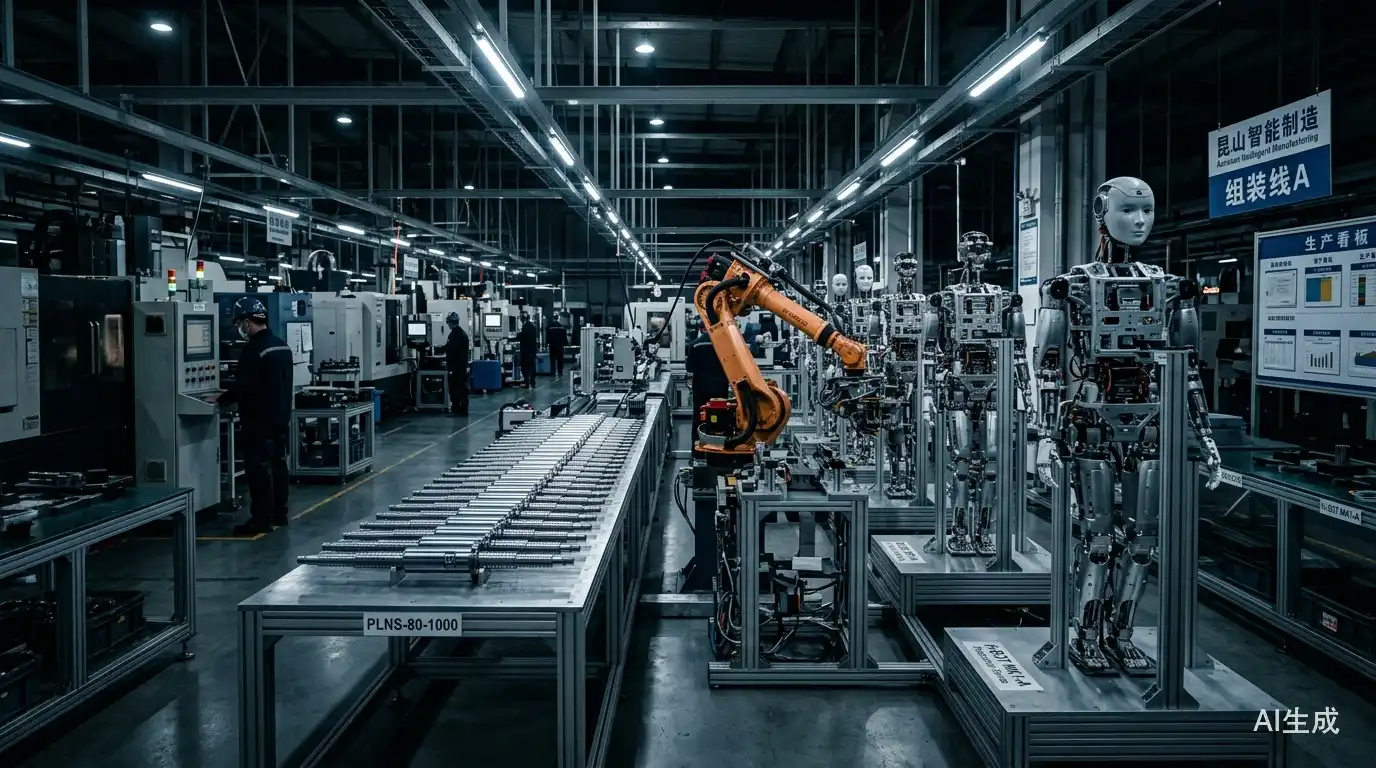
After staying relatively low-profile for years, Shanghai Bate Technology, a traditional auto parts supplier, has recently been thrust into the spotlight as a leading humanoid robotics concept stock. This shift is largely tied to the impending IPO of robotics company Unitree, with which Bate collaborates on prototype development. Bate's founder, 68-year-old Jin Kun, is making a bold bet on this new frontier. The company is investing 1.85 billion yuan to build a major R&D and production base in Kunshan for planetary roller screws—a key component in robot joints. With an annual capacity of 2.6 million sets planned, plus overseas expansion, this represents a massive, forward-looking commitment from a firm whose 2025 revenue of 2.3 billion yuan still relies almost entirely on its traditional automotive business (over 98%). The investment highlights a strategic pivot. Bate aims to leverage decades of expertise in metal processing, precision manufacturing, and heat treatment from the automotive sector and apply it to the burgeoning robotics industry. However, this move carries significant risk. The company has not yet secured formal supplier contracts or begun mass deliveries for its roller screws. It is essentially betting on future demand in a market that remains nascent. The broader industry context adds to the uncertainty. While multiple Chinese manufacturers are racing to invest in similar robotics component capacity (totaling over 6 billion yuan), the downstream humanoid robot market is still in its early stages. Estimates put 2025 global shipments at only around 18,000 units, primarily for entertainment, education, and data collection rather than large-scale industrial use. This creates a critical mismatch: the speed of upstream component factory construction and capital investment is far outpacing the commercialization and adoption of the robots themselves. Bate's story, driven by Jin Kun's decisive gamble, encapsulates the high-stakes transition facing traditional manufacturers seeking a "second growth curve" in robotics—a future full of potential but currently backed more by market anticipation than concrete financial results.

marsbitHá 18m

After Yushu Got Hot, a 68-Year-Old Auto Parts Boss Bet 1.85 Billion

marsbitHá 18m

EIP-8363 Explained: Burning Staking Rewards to Save Ethereum? Independent Node Operators Might Be the First to Leave

Analysis of EIP-8363: A Proposal to Burn Staking Rewards and its Potential Impacts on Ethereum A new Ethereum Improvement Proposal, EIP-8363, has sparked significant debate. Its core mechanism is to progressively burn validator consensus rewards, aiming to reduce the issuance rate to 0% once 50% of the total ETH supply is staked. Proponents argue this would cap the staked ETH ratio, enhancing credible neutrality and censorship resistance by discouraging excessive centralization among large staking operators and liquid staking token (LST) providers. However, a critical analysis suggests the proposal may create more problems than it solves. While it compresses the ETH staking range where profitability turns negative (from 70-100 million ETH down to 50-60 million ETH), it does not fundamentally alter the competitive disadvantage of independent stakers. Due to economies of scale, large operators would still retain advantages in costs and MEV opportunities. Independent stakers are predicted to be the first to face negative real returns under the new curve. The economic repercussions could be severe. A sharp decline in base staking yield would disrupt DeFi ecosystems built around this yield, potentially reversing incentives for borrowing ETH and triggering large-scale unwinding of leveraged staking strategies. This could lead to significant selling pressure on ETH as professional staking operations become unprofitable and exit. The proposal is criticized for being based on uncertain future market equilibriums and for potentially imposing costs that outweigh its stated benefits, without fully addressing the underlying issues of centralization it aims to solve.

marsbitHá 19m

EIP-8363 Explained: Burning Staking Rewards to Save Ethereum? Independent Node Operators Might Be the First to Leave

marsbitHá 19m

Trading

Spot

Artigos em Destaque

O que é $BANK

Bank AI: Um Passo Revolucionário no Futuro da Banca Introdução Em uma era marcada por avanços rápidos na tecnologia, o Bank AI está na interseção da inteligência artificial (IA) e dos serviços bancários. Este projeto inovador visa redefinir o panorama financeiro, melhorando a eficiência operacional, as medidas de segurança e as experiências dos clientes através do poder da IA. Ao embarcarmos nesta exploração do Bank AI, iremos aprofundar no que o projeto implica, suas dinâmicas operacionais, seu contexto histórico e marcos significativos. O que é o Bank AI? No seu cerne, o Bank AI representa uma iniciativa transformadora com o objetivo de integrar a inteligência artificial em várias operações bancárias. Este projeto aproveita as capacidades da IA para automatizar processos, melhorar os protocolos de gestão de risco e melhorar a interação com os clientes através de serviços personalizados. Os principais objetivos do Bank AI incluem: Automatização das Funções Bancárias: Ao aproveitar as tecnologias de IA, o Bank AI visa automatizar tarefas rotineiras, reduzindo o peso sobre os recursos humanos e aumentando a eficiência. Gestão de Risco Melhorada: O projeto utiliza algoritmos de IA para prever e identificar riscos, fortalecendo assim as medidas de segurança contra fraudes e outras ameaças. Personalização dos Serviços Bancários: O Bank AI foca em oferecer produtos e serviços financeiros ajustados, analisando dados e comportamentos dos clientes. Melhoria da Experiência do Cliente: A implementação de soluções impulsionadas por IA, como chatbots e assistentes virtuais, visa proporcionar aos usuários interações mais humanizadas, revolucionando a forma como os clientes se envolvem com os bancos. Com esses objetivos, o Bank AI posiciona-se como um ator crucial para tornar a banca mais eficiente, segura e centrada no usuário. Quem é o Criador do Bank AI? Os detalhes sobre o criador do Bank AI permanecem desconhecidos. Assim, nenhuma pessoa ou organização específica foi identificada nas informações disponíveis. O anonimato que cerca a origem do projeto levanta questões, mas não diminui a sua ambiciosa visão e objetivos. Quem são os Investidores do Bank AI? Semelhante ao criador do projeto, informações específicas sobre os investidores ou organizações que apoiam o Bank AI não foram divulgadas. Sem essas informações, é difícil delinear o apoio financeiro e institucional que pode estar impulsionando o projeto para frente. No entanto, a importância de ter uma sólida base de investimento é fundamental para sustentar o desenvolvimento em um campo tão inovador. Como Funciona o Bank AI? O Bank AI opera em várias frentes inovadoras, focando em fatores únicos que o diferenciam das estruturas bancárias tradicionais. Abaixo estão as principais características operacionais: Automatização: Ao aplicar algoritmos de aprendizado de máquina, o Bank AI automatiza vários processos manuais dentro dos bancos. Isso resulta na redução dos custos operacionais e permite que os trabalhadores humanos redirecionem os seus esforços para atividades mais estratégicas. Gestão de Risco Avançada: A integração da IA nas práticas de gestão de risco equipa os bancos com ferramentas para prever com precisão potenciais ameaças, como fraudes, garantindo que as informações e ativos dos clientes permaneçam seguros. Recomendações Financeiras Personalizadas: Através do aprendizado contínuo a partir das interações com os clientes, os sistemas de IA desenvolvem uma compreensão sutil das necessidades dos usuários, permitindo oferecer conselhos adaptados sobre decisões financeiras. Interações Melhoradas com os Clientes: Utilizando chatbots e assistentes virtuais alimentados por IA, o Bank AI permite uma experiência de cliente mais envolvente, permitindo que os usuários tenham suas dúvidas resolvidas rapidamente, reduzindo assim os tempos de espera e melhorando os níveis de satisfação. Juntas, estas características operacionais posicionam o Bank AI como um pioneiro no setor bancário, estabelecendo novos padrões para a prestação de serviços e a excelência operacional. Cronologia do Bank AI Compreender a trajetória do Bank AI requer uma análise do seu contexto histórico. Abaixo está uma cronologia que destaca marcos e desenvolvimentos importantes: Início de 2010: A conceituação da integração da IA nos serviços bancários começou a ganhar atenção à medida que instituições bancárias reconheciam os potenciais benefícios. 2018: Ocorreu um aumento significativo na implementação de tecnologias de IA, quando os bancos começaram a usar ferramentas de IA como chatbots para atendimento ao cliente básico e sistemas de gestão de risco para melhorar o tratamento de segurança. 2023: A sofisticação da IA continuou a avançar, com a introdução de IA generativa para tarefas mais complexas, como processamento de documentos e análise de investimentos em tempo real. Este ano marcou um salto significativo nas capacidades proporcionadas aos bancos pela tecnologia de IA. 2024-Estado Atual: Neste ano, o Bank AI está em uma trajetória ascendente, com pesquisas e desenvolvimentos em andamento prontos para aprimorar ainda mais as capacidades nas operações bancárias. A exploração contínua das aplicações de IA sugere desenvolvimentos emocionantes por vir. Pontos Chave Sobre o Bank AI Integração da IA na Banca: O Bank AI foca na adoção da inteligência artificial para simplificar os processos bancários e melhorar as experiências dos usuários. Automatização e Foco em Gestão de Risco: O projeto enfatiza fortemente essas áreas, visando transferir o peso das tarefas rotineiras enquanto melhora as estruturas de segurança através de análises preditivas. Soluções Bancárias Personalizadas: Ao aproveitar os dados dos clientes, o Bank AI possibilita serviços bancários ajustados que atendem às necessidades individuais dos usuários. Compromisso com o Desenvolvimento: O Bank AI permanece comprometido com contínuas pesquisas e esforços de desenvolvimento, garantindo a sua adaptabilidade e relevância contínua à medida que a tecnologia continua a evoluir. Conclusão Em resumo, o Bank AI exemplifica um passo crucial em frente na indústria bancária, aproveitando a inteligência artificial para remodelar paradigmas operacionais, melhorar a segurança e promover a satisfação do cliente. Apesar das lacunas de informação em torno do criador e dos investidores, os objetivos claros e os mecanismos funcionais do Bank AI fornecem uma base sólida para sua evolução contínua. À medida que a tecnologia de IA continua a avançar e se fundir com o setor bancário, o Bank AI está bem posicionado para impactar significativamente o futuro dos serviços financeiros, aprimorando a maneira como entendemos e interagimos com a banca.

203 Visualizações TotaisPublicado em {updateTime}Atualizado em 2024.12.03

O que é $BANK

Como comprar BANK

Bem-vindo à HTX.com!Tornámos a compra de Lorenzo Protocol (BANK) simples e conveniente.Segue o nosso guia passo a passo para iniciar a tua jornada no mundo das criptos.Passo 1: cria a tua conta HTXUtiliza o teu e-mail ou número de telefone para te inscreveres numa conta gratuita na HTX.Desfruta de um processo de inscrição sem complicações e desbloqueia todas as funcionalidades.Obter a minha contaPasso 2: vai para Comprar Cripto e escolhe o teu método de pagamentoCartão de crédito/débito: usa o teu visa ou mastercard para comprar Lorenzo Protocol (BANK) instantaneamente.Saldo: usa os fundos da tua conta HTX para transacionar sem problemas.Terceiros: adicionamos métodos de pagamento populares, como Google Pay e Apple Pay, para aumentar a conveniência.P2P: transaciona diretamente com outros utilizadores na HTX.Mercado de balcão (OTC): oferecemos serviços personalizados e taxas de câmbio competitivas para os traders.Passo 3: armazena teu Lorenzo Protocol (BANK)Depois de comprar o teu Lorenzo Protocol (BANK), armazena-o na tua conta HTX.Alternativamente, podes enviá-lo para outro lugar através de transferência blockchain ou usá-lo para transacionar outras criptomoedas.Passo 4: transaciona Lorenzo Protocol (BANK)Transaciona facilmente Lorenzo Protocol (BANK) no mercado à vista da HTX.Acede simplesmente à tua conta, seleciona o teu par de trading, executa as tuas transações e monitoriza em tempo real.Oferecemos uma experiência de fácil utilização tanto para principiantes como para traders experientes.

579 Visualizações TotaisPublicado em {updateTime}Atualizado em 2026.06.02

Como comprar BANK

Discussões

Bem-vindo à Comunidade HTX. Aqui, pode manter-se informado sobre os mais recentes desenvolvimentos da plataforma e obter acesso a análises profissionais de mercado. As opiniões dos utilizadores sobre o preço de BANK (BANK) são apresentadas abaixo.

活动图片